

Search results
Search for "superhydrophobic coatings" in Full Text gives 3 result(s) in Beilstein Journal of Nanotechnology.
Functional surface engineering for cultural heritage protection: the role of superhydrophobic and superoleophobic coatings – a comprehensive review
Beilstein J. Nanotechnol. 2026, 17, 63–96, doi:10.3762/bjnano.17.6
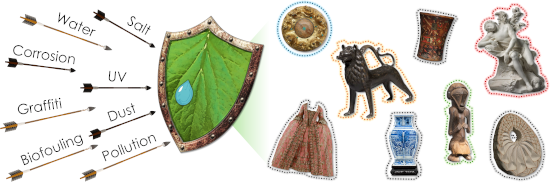
- protective materials; nanocomposite; substrate vulnerability; superhydrophobic coatings; sustainability; Introduction The conservation of cultural heritage is not only an endeavor to preserve the physical integrity of artifacts but also to maintain the cultural identity of societies [1]. With the growing
- (Figure 2a), and to superhydrophobic coatings (from 2010 to 2024, Figure 2b), both showing an outstanding increase over time for both topics. In 1964, the modern principles of conservation of cultural heritage were conceived on the occasion of the “2nd International Congress of Architects and Technicians
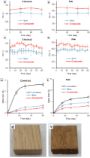
- protection of such substrates are mainly focused on providing superhydrophobic properties of the artworks (see the dedicated section on superhydrophobic coatings). Metal substrates Metals are exposed to a wide range of threats from the environment, as well as from human actions. Thus, approaches have been




Bioselectivity of silk protein-based materials and their bio-inspired applications
Beilstein J. Nanotechnol. 2022, 13, 902–921, doi:10.3762/bjnano.13.81

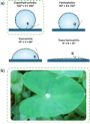
- composition, surface structuring on the micro-/nanoscale, and the introduction of low-surface-energy compounds [62]. Various studies demonstrated that the adhesion of Staphylococcus aureus, Pseudomonas aeruginosa, and Escherichia coli (E. coli) bacteria was significantly reduced on superhydrophobic coatings


Surface roughness rather than surface chemistry essentially affects insect adhesion
Beilstein J. Nanotechnol. 2016, 7, 1471–1479, doi:10.3762/bjnano.7.139

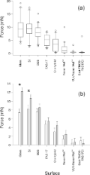
- )9Si(OC2H5)3) were purchased from Gelest Inc. (Morrisville, PA, USA). Never WetTM (superhydrophobic coatings) was purchased from Rust-Oleum Corporation (Vernon Hills, IL, USA). All chemicals were used as received without further purification. Preparation of flat and rough sample surfaces Two smooth



Other Beilstein-Institut Open Science Activities