Abstract
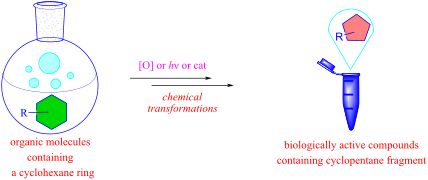
The review is devoted to strategies for contraction of six-membered cycles in the synthesis of functionalized cyclopentane/enones, which are biologically active compounds. The main synthetic methods of ring contraction (ozonolysis–aldol condensation, ozonolysis–Dieckmann reaction, Baeyer–Villiger cleavage–Dieckmann reaction) and rearrangements (benzil, semipinacol, with the participation of thallium- and iodine-based oxidants, photochemical, Wolff, Meinwald, Wagner–Meerwein and Favorskii) are presented. The review summarizes literature data covering the last 12 years, with some exceptions of earlier works due to the importance of the published information.
Graphical Abstract
Introduction
The functionalized cyclopentane/enone fragment is part of the structure of a large number of natural and synthetic biologically active compounds, including prostaglandins, terpenoids, alkaloids, steroids and carbanucleosides. The spectrum of biological activities of the listed classes is wide and unique in efficacy. Natural prostaglandins are polyoxygenated derivatives of a hypothetical twenty-atom prostanoic acid, the C8–C12 atoms of which are contained in a cyclopentane ring with two attached side chains – of seven (α-chain) and eight (β- or ω-chain) carbon atoms. Their main physiological role is to maintain the homeostatic harmony of the organism [1,2]. Among the terpenoids containing cyclopentane in their structure, we should mention jatrophane or latirane diterpenoids, in which the five-membered cycle is annelated with a functionally saturated dodecyl fragment [3,4], as well as iridoids – bicyclic compounds with a central cyclopentane unit [5]. Estrone (folliculin, estra-1,3,5(10)-trien-3-ol-17-one), a steroid containing a cyclopentane annelated with octahydrophenanthrene, is a natural follicular hormone essential for normal development of the female body [6]. An example of an alkaloid whose structure includes cyclopentane is lappaconitine, which is noteworthy because its hydrobromide is the active ingredient in the highly effective antiarrhythmic drug allapinine [7].
Syntheses of cyclopentanoids usually are based on cyclopentaannelation reactions:
Ring contraction reactions are among the most useful strategic transformations for the construction of carbocyclic and heterocyclic cyclopentanes. Six-membered carbocycles are convenient starting compounds for the synthesis of cyclopentanoids due to their widespread occurrence in nature and their synthetic availability. Undoubtedly, the development of practical approaches to the synthesis of known compounds and the synthesis of new biologically active functionalized compounds containing a cyclopentane/enone fragment through transformation of a cyclohexane/ene ring is an urgent task for synthetic chemists.
This review summarizes information on cyclohexane/ene ring contraction. The structure of the review includes examples of simple transformations (ozonolysis–aldol condensation, ozonolysis–Dieckmann reaction, and Baeyer–Villiger cleavage–Dieckmann reaction) and rearrangements (photochemical, benzil, semi-pinacol, Wolff, Meinwald, Wagner–Meerwein and Favorskii reaction), using oxidants based on thallium and iodine, with a focus on recent works published in the period from 2014 to 2024.
Review
1 Recyclization
A common method for converting cyclohexene 1 into cyclopentene 2 is the ozonolytic cleavage of the double bond followed by intramolecular aldol condensation of the resulting dialdehyde. This strategy is widely used at the key stage in the formation of a cyclopentane ring in the synthesis of various building blocks, including echinopine A (3) [10-12] (Scheme 1).
![[1860-5397-21-185-i1]](/bjoc/content/inline/1860-5397-21-185-i1.svg?scale=2.0&max-width=1024&background=FFFFFF)
Scheme 1: Ozonolysis–cyclization sequence in the synthesis of echinopine A (3).
Scheme 1: Ozonolysis–cyclization sequence in the synthesis of echinopine A (3).
The ozonolysis–cyclization sequence was used by Alvarez-Manzaneda et al. as a method for ring contraction of the cyclohexene ring to produce cytostatic taiwaniaquinoids [13-15]. Compound 4, derived from (–)-abietic acid, was subjected to an oxidative cleavage reaction to produce ketoaldehyde 5. Subsequent intramolecular aldol cyclization using 1,8-diazobicyclo[5.4.0]undec-7-ene (DBU) in benzene resulted in high yield of β-hydroxyaldehyde 6. Through a series of synthetic transformations, the target products (−)-taiwaniaquinones A (7), F (8), G (9), and H (11), (−)-taiwaniaquinol B (10) and (−)-dichroanone (12) were obtained from intermediate 6 (Scheme 2).
![[1860-5397-21-185-i2]](/bjoc/content/inline/1860-5397-21-185-i2.svg?scale=2.0&max-width=1024&background=FFFFFF)
Scheme 2: Ozonolysis–cyclization sequence in the synthesis of taiwaniaquinoids 7–12.
Scheme 2: Ozonolysis–cyclization sequence in the synthesis of taiwaniaquinoids 7–12.
An interesting transformation of a cyclohexene fragment into the cyclopentane fragment in Diels–Alder adducts of levoglucosenone (LG) and 1,3-dienes is presented in [16]. Diels–Alder adducts of LG and 1,3-dienes, containing in their structure fragments of cyclohexene and a carbohydrate residue, are attractive objects for investigating the possibility of using them in the synthesis of compounds of iridoid topology. Iridoids belong to the class of terpenoids and are secondary metabolites of plants, as well as multi-tasking objects [5,17,18]. Studies on the pharmacological properties of iridoids have shown their high potential for biological activity, such as anti-inflammatory, antimicrobial, immunomodulatory, neuroprotective, hepatoprotective, hypoglycemic, hypolipidemic, antioxidant, antispasmodic, antitumoral, antiviral, and antiallergic. The breadth of the biological action of these cyclopentanoids is explained to some extent by their structural diversity. Figure 1 shows the general formula of iridoids.
![[1860-5397-21-185-1]](/bjoc/content/figures/1860-5397-21-185-1.svg?scale=2.0&max-width=1024&background=FFFFFF)
The authors [16] have established regiocontrol of the effect of the 1,6-anhydro bridge on the Dieckmann condensation of dicarboxylic acid diester 16, obtained in four steps from 13, the Diels–Alder adduct of LG and 1,3-butadiene (Scheme 3). The ratio of the resulting regioisomers was 5:3 in favor of the 5-methoxycarbonyl derivative 17a. The synthesized cyclopentane derivatives 17a,b, 18, and 19 may be useful for the preparation of iridoids and other biologically active cyclopentanoids.
![[1860-5397-21-185-i3]](/bjoc/content/inline/1860-5397-21-185-i3.svg?scale=2.0&max-width=1024&background=FFFFFF)
Scheme 3: Ozonolysis–cyclization sequence in the synthesis of compounds 17a,b, 18 and 19 with iridoid topologies.
Scheme 3: Ozonolysis–cyclization sequence in the synthesis of compounds 17a,b, 18 and 19 with iridoid topolog...
An alternative method for the synthesis of cyclopentane derivatives through oxidative cleavage of the double bond in Diels–Alder adducts of LG with 1,3-butadiene and piperylene (3E-penta-1,3-diene), followed by an intramolecular aldol condensation of the resulting dialdehydes was described in [19]. The dicarbonyl compound was synthesized from the Diels–Alder adduct 14 between LG and 1,3-butadiene by two methods – vicinal hydroxylation of the double bond followed by periodate cleavage of the vic-diols and ozonolysis of the double bond. Alternatively, Wagner oxidation of the double bond in adduct 14 by treatment with KMnO4 in EtOH at 0 °C afforded vicinal diol 20 with a yield of 58%. The periodate cleavage of the latter under the action of NaIO4 led to the formation of a labile dialdehyde, which was treated with t-BuOK in THF without isolation. As a result of intramolecular aldol condensation, accompanied by the destruction of the main amount of dialdehyde, cyclopentanediol 21 was isolated with a yield of 24%. This synthetic block is promising for the synthesis of gibboside (22) [20].
Following the second direction, ozonolysis of the double bond in compound 14 and subsequent treatment of the ozonide with DBU resulted in a stable aldehyde 23. This aldehyde is a product of intramolecular aldol–croton condensation and can be used in the synthesis of bartsioside (24) or its analogues [21,22] (Scheme 4).
![[1860-5397-21-185-i4]](/bjoc/content/inline/1860-5397-21-185-i4.svg?scale=2.0&max-width=1024&background=FFFFFF)
Scheme 4: Oxidation–aldol condensation sequence in the synthesis of compounds 21 and 23 with iridoid topology.
Scheme 4: Oxidation–aldol condensation sequence in the synthesis of compounds 21 and 23 with iridoid topology....
The authors [19] performed similar oxidative transformations with Diels–Alder adduct 25 obtained from LG and piperylene, having previously protected its keto group as dioxolane (Scheme 5). Dioxolane 26 was converted to glycol 27 through vic-dihydroxylation in moderate yield. Then, dialdehyde 28 was obtained by treatment with NaIO4 with a yield of 74%. Subsequent intramolecular aldol condensation of dialdehyde 28 with MeONa or t-BuOK as base led to the formation of diol 29 with a yield of 40%, which is interesting for the synthesis of angeloside (31) [23].
![[1860-5397-21-185-i5]](/bjoc/content/inline/1860-5397-21-185-i5.svg?scale=2.0&max-width=1024&background=FFFFFF)
Scheme 5: Oxidation–aldol condensation sequence in the synthesis of compounds 29 and 30 with iridoid topology.
Scheme 5: Oxidation–aldol condensation sequence in the synthesis of compounds 29 and 30 with iridoid topology....
An alternative preparation of diol 29 involved ozonolysis of the double bond in dioxolane 26 at −78 °C in methanol, followed by reduction of the ozonide with Me2S to give dialdehyde 28 and reaction of compound 28 with colloidal potassium in toluene. During aldol condensation in the presence of morpholine-camphorsulfonic acid (CSA) or ʟ-proline, a stable aldehyde 30 was isolated in yields of 50% and 75%, respectively. Decarbonylation and corresponding modifications of the carbohydrate residue in compound 30 resulted in 8-epi-loganin (32) [24,25]. Thus, as a result of intriguing transformations based on Diels–Alder adducts of LG with butadiene and piperylene, cyclopentane derivatives were obtained, which are promising for the synthesis of natural compounds, particularly iridoids.
One of the promising methods for ring contraction in the absence of multiple bonds in the six-membered ring of terpenoids was proposed by Grishko et al. [26] (Scheme 6). The key step of 2,3-fragmentation was the cleavage of an enolized C–C bond at a keto group, followed by an intramolecular aldol reaction (recyclization or rearrangement). This method is applicable to triterpenoids, such as tirucallane, ursane, oleanane and dammarane types (pathway A), as well as for triterpenoids of the ursane and dammarane types (pathway B) [27].
![[1860-5397-21-185-i6]](/bjoc/content/inline/1860-5397-21-185-i6.svg?scale=2.0&max-width=1024&background=FFFFFF)
Scheme 6: Method for ring contraction in the absence of a double bond in a six-membered ring of triterpenoids.
Scheme 6: Method for ring contraction in the absence of a double bond in a six-membered ring of triterpenoids....
In [28], a convenient method for ring contraction is described, which is widely used in the synthesis of triterpenoids. In continuation of studies on skeletal and oxidative transformations of triterpenoids from licorice roots (Glycyrrhiza glabra L. and G. uralensis Fisher) (leguminosae) [29-31], the authors synthesized a derivative with an altered pentacyclic structure, 2,11-dioxo-A-norolean-12,18(19)-dien-30-oic acid 39, from pharmaceutical 18,19-dehydroglycyrrhetic acid (18,19-dehydro-GLA) 33. Compound 33 was converted to its methyl ester 34 and oxidized by pyridinium dichromate (PDC) in CH2Cl2 to 3-oxo-18,19-dehydro-GLA 35 with a 75% yield. α-Ethylformylation of compound 35 and subsequent oxidation of ketoenol 36 with 30% aqueous H2O2 in the presence of a 28% MeONa/MeOH solution resulted in the formation of a diacid, which was then converted into dimethyl ester 37 with a yield of 55%. Refluxing ester 37 with an excess of t-BuOK in benzene gave acid 39 with a yield of 53% yield. The excess of base (t-BuOK) caused simultaneous decarboxylation and hydrolysis of ester 37, forming the new nortriterpenoid 39 with a pentacyclic ring A (Scheme 7).
![[1860-5397-21-185-i7]](/bjoc/content/inline/1860-5397-21-185-i7.svg?scale=2.0&max-width=1024&background=FFFFFF)
Scheme 7: Oxidation–Dieckmann cyclization sequence in the synthesis of a new nortriterpenoid 39.
Scheme 7: Oxidation–Dieckmann cyclization sequence in the synthesis of a new nortriterpenoid 39.
In the work of Rath et al. [32], a similar method was proposed for the interconversion of cycles in the synthesis of the demethylated form of cholesterol, 18,19-di-nor-cholesterol (40) from commercially available 19-nortestosterone (41) (Scheme 8). Molecular modeling of 18,19-di-nor-cholesterol showed that cholesterol’s opposing rough β-face and smooth α-face play crucial roles in cholesterol’s membrane condensing abilities. Specific facial preferences are displayed as cholesterol interacts with different neighboring lipids and transmembrane proteins [33,34]. These biochemical interactions are poorly understood, so the synthesis of a «smoothed» cholesterol analogue provided an opportunity to experimentally measure the significance of the β-face methyl groups.
![[1860-5397-21-185-i8]](/bjoc/content/inline/1860-5397-21-185-i8.svg?scale=2.0&max-width=1024&background=FFFFFF)
Scheme 8: Oxidation–Dieckmann cyclization sequence in the synthesis of 18,19-di-nor-cholesterol (40).
Scheme 8: Oxidation–Dieckmann cyclization sequence in the synthesis of 18,19-di-nor-cholesterol (40).
The attractive synthesis of 3-ethyl-substituted betulinic acid derivatives with high cytotoxic and anti-inflammatory activity was described by Grishko et al. [35]. The 2,3-secotriterpenic 3-ethyl-3-ketone 46 was obtained in two steps from lupane α-ketoxime 45 by Grignard reduction alkylation, followed by a Beckmann fragmentation of the C2–C3 bond of the intermediate 3-ethyl-substituted hydroxyimino ketone in the SOCl2-CH2Cl2 system. The introduction of a carbonyl substituent into the isopropylidene fragment of ketone 46 was achieved either by allylic oxidation using H2SeO3-dioxane system to form the C30 aldehyde 47, or by the ozonolytic cleavage of the double bond between C20 and C29 to produce 20-methyl-3-ethyldiketone 48 [36]. Intramolecular nitrile–anionic cyclization of ketone 46 or diketone 48 under conditions of basic catalysis proceeded via the oxo-nitrile mechanism, with formation of the corresponding Α-pentacyclic 3-ethyl α,β-alkenenitriles 49 and 50 with yields of 44% to 45% (Scheme 9). Cytotoxic screening was performed using the MTT assay with a panel of 7 human tumor cell lines, and showed that the synthesized triterpenoids 47 and 51 showed high cytotoxic activity (IC50 1.38–15.91 μM).
![[1860-5397-21-185-i9]](/bjoc/content/inline/1860-5397-21-185-i9.svg?scale=2.0&max-width=1024&background=FFFFFF)
Scheme 9: Oxidation–cyclization sequence in the synthesis of 3-ethyl-substituted betulinic acid derivatives 49–51.
Scheme 9: Oxidation–cyclization sequence in the synthesis of 3-ethyl-substituted betulinic acid derivatives 49...
2 Rearrangements with 1,2-carbon migration
Rearrangements with 1,2-carbon migration are widely used in the synthesis of natural compounds [37]. These include benzilic acid and semipinacol-type rearrangements, reactions promoted by thallium(III) and iodine(III), and Wolff rearrangement.
2.1 Benzilic acid and semipinacol-type rearrangements
The strategy of ring contraction using the benzilic acid-type rearrangement was used by Zhang et al. [38] for the asymmetric synthesis of 4β-acetoxyprobotryane-9β,15α-diol (52). This compound contains a sterically compact [6-5-5] tricyclic skeleton, as well as a highly strained trans-fused bicyclo[3.3.0]octane ring system and seven contiguous stereocenters. A structurally interesting diol 52 was diastereoselectively obtained using a linear sequence of 14 steps starting from the readily available aldehyde 53 [39] (Scheme 10). The key steps in this synthesis are based on an asymmetric rhodium-catalyzed [4 + 2] cycloaddition reaction [40], followed by a unique benzilic acid-type rearrangement under very mild conditions [41]. A step-by-step mechanism for the benzilic acid-type rearrangement of compound 54 was proposed by the authors [38]. It involves deprotection of the TES group in 54 using tetrabutylammonium fluoride (TBAF) to give 55. In the presence of O2 and TBAF, 55 spontaneously oxidized to 56. Intramolecular hemiketalization of 56 resulted in the formation of hemiketal 57, followed by rearrangement to produce lactone 58 with a yield of 78%. The last stage of the synthesis proceeds through a chemo- and diastereoselective reduction of lactone 58, containing the desired trans-fused bicyclo[3.3.0]octane ring system, leading to the target 4β-acetoxyprobotryane-9β,15α-diol (52).
![[1860-5397-21-185-i10]](/bjoc/content/inline/1860-5397-21-185-i10.svg?scale=2.0&max-width=1024&background=FFFFFF)
Scheme 10: Benzilic acid-type rearrangement in the synthesis of 4β-acetoxyprobotryane-9β,15α-diol (52).
Scheme 10: Benzilic acid-type rearrangement in the synthesis of 4β-acetoxyprobotryane-9β,15α-diol (52).
An alternative approach to the synthesis of taiwaniaquinoids was applied by Gademann et al. [13,42] for the transition from an abietane structure to a five-membered system using a rearrangement of benzilic acid. The strong base promoted the intramolecular attack of the α-hydroxy group in compound 59 on the keto group at C7, forming synthon 60. Destruction of this tetrahedral intermediate with migration of the aryl group promoted the formation of intermediate 61, decarboxylation of which led to the cis-substituted product 62. The resulting ketone 62 was the key synthon in the synthesis of (−)-taiwaniaquinone H (11) (Scheme 11).
![[1860-5397-21-185-i11]](/bjoc/content/inline/1860-5397-21-185-i11.svg?scale=2.0&max-width=1024&background=FFFFFF)
Scheme 11: Benzilic acid-type rearrangement in the synthesis of (−)-taiwaniaquinone H (11).
Scheme 11: Benzilic acid-type rearrangement in the synthesis of (−)-taiwaniaquinone H (11).
The technique of regioselective oxidative contraction of a six-membered ring was described in the work by Luo, Zhang and co-workers [43] during their synthesis of the natural alkaloids, dactylicapnosines A (63) and B (64), which contain a 9,10-seco-7-dehydroaporphinoid skeleton with an unprecedentedly highly oxygenated five-membered D-ring. These compounds exhibit potent anti-inflammatory and analgesic activity both in vitro and in vivo [44]. The synthetic method for the preparation of dactylicapnosines A (63) and B (64) was based on the known phenol 65 and involved the ring contraction of p-quinone 66 through a Co-mediated benzilic acid rearrangement to give cyclopentanone 69 with a 68% yield. The target products 63 and 64 were obtained in 14 and 16 steps with a total yield of 12% and 5%, respectively, from compound 65 (Scheme 12). The presented improved method opens up the possibility of obtaining medically interesting dactylicapnosine-like analogues for detailed study of their biological activity.
![[1860-5397-21-185-i12]](/bjoc/content/inline/1860-5397-21-185-i12.svg?scale=2.0&max-width=1024&background=FFFFFF)
Scheme 12: Benzilic acid-type rearrangement in the synthesis of dactylicapnosines A (63) and B (64).
Scheme 12: Benzilic acid-type rearrangement in the synthesis of dactylicapnosines A (63) and B (64).
Matoba et al. [45] reported the first enantioselective synthesis of the hasubanane alkaloid (−)-metaphanine (70) and the norhasubanane alkaloid (+)-stephadiamine (71) using a cyclohexane ring contraction through aza-benzilic acid-type rearrangement (Scheme 13). Hasubanan-type alkaloids exhibit a wide range of biological activities, including antiviral, antimicrobial, and cytotoxic activities [46], while the biological activities and synthesis of structurally attractive norhasubanan-type alkaloids have been little studied, and are of interest to synthetic chemists. Thus, the interaction of (−)-metaphanine (70) with ammonia in CH3OH at room temperature led to the in situ formation of imine 72, which, as a result of an intramolecular aza-benzilic acid-type rearrangement, was converted in more than 90% yield to (+)-stephadiamine (71). The authors noted that the identification of the structure of (+)-stephadiamine (71) was carried out without purification of the reaction mixture due to its instability on a silica gel column under acidic or basic conditions.
![[1860-5397-21-185-i13]](/bjoc/content/inline/1860-5397-21-185-i13.svg?scale=2.0&max-width=1024&background=FFFFFF)
Scheme 13: Aza-benzilic acid-type rearrangement in the synthesis of (+)-stephadiamine (71).
Scheme 13: Aza-benzilic acid-type rearrangement in the synthesis of (+)-stephadiamine (71).
Zhang et al. [47] proposed an efficient seven-step synthesis of the new, structurally interesting p-hydroxycinnamylcyclopentenone C-glucoside saffloneoside (73), isolated from the inflorescences of сarthamus tinctorius. Carthamus tinctorius L. is a medicinal plant that can be used to treat ischemic stroke [48]. In their study [47] they reported a stereospecific reduction of an acyloin ring controlled by the chirality of a glucose fragment at position C5, and suggested a possible mechanism for hydrogen migration during the conversion of C5 (sp2) to C5 (sp3). The key 3,4,6-trihydroxycyclohexadienone 76 was obtained by a sequence of Friedel–Crafts-type glucosylation reactions of 2,4,6-trihydroxy-3-methylacetophenone (74) with glucosyl acetate 75 in the of presence Sc(OTf)3 (0.4 equiv) as a Lewis acid promoter and oxidative dearomatization of the C-glucoside precursor by O2 in the presence of pyridine in CH3OH. The key step in the acyloin ring contraction of compound 76 was the stereospecific formation of the cyclopentenone-containing intermediate 78, by α-ketol rearrangement under the action of NaOH solution. After cleavage of the acyl moiety in synthon 78 under basic conditions, diastereomerically pure cyclopentenone 79 was obtained with 52% yield (Scheme 14). The authors [47] provided convincing evidence that the acyloin ring contraction is stereospecific, by replacing the benzil ᴅ-glucose in compound 76 at the C5 atom with an achiral prenyl group.
![[1860-5397-21-185-i14]](/bjoc/content/inline/1860-5397-21-185-i14.svg?scale=2.0&max-width=1024&background=FFFFFF)
Scheme 14: α-Ketol rearrangement in the synthesis of saffloneoside (73).
Scheme 14: α-Ketol rearrangement in the synthesis of saffloneoside (73).
In [49], Zhang and co-workers carried out the first enantioselective synthesis of fungal meroterpenoids ((−)-preaustinoids A (80), B (81), B1 (82), B2 (83)) from commercially available 2,4,6-trihydroxybenzoic acid hydrate (84) using a cyclohexanone ring contraction strategy – α-ketol rearrangement. Fungal meroterpenoids derived from a simple aromatic polyketide, 3,5-dimethylorcellinic acid (DMOA), are a large series of hybrid natural products with a huge structural diversity and impressive biological activity [50]. Attempts by the authors to use acidic (TiCl4, TMSI, SnCl4), basic (NaOMe, t-BuONa, Et3N, DBU, DMAP) and thermal conditions (PhMe, 110 °C) failed to give the desired rearrangement product. However, treatment of (−)-preaustinoid A (80) with BF3·Et2O in MeCN led to an α-ketol rearrangement affording (−)-preaustinoid B (81) as the sole product in 86% yield. Presumably, this reaction proceeded through intermediate 85. Subsequently, the deacylation of the product 81 with 2.0 equivalents of aqueous NaOH in EtOH, afforded (−)-preaustinoid B2 (83) with 95% yield. Using 0.4 equivalents of aqueous NaOH, a mixture of (−)-preaustinoid B1 (82) and (−)-preaustinoid (83) was obtained (Scheme 15).
![[1860-5397-21-185-i15]](/bjoc/content/inline/1860-5397-21-185-i15.svg?scale=2.0&max-width=1024&background=FFFFFF)
Scheme 15: Conversion of (−)-preaustinoid A (80) to (−)-preaustinoid B (81) via α-ketol rearrangement.
Scheme 15: Conversion of (−)-preaustinoid A (80) to (−)-preaustinoid B (81) via α-ketol rearrangement.
Nagaraju and Prasad used the α-ketol rearrangement mediated by Lewis acids to carry out the ring contraction reaction on simple cyclohexanones to synthesize functionalized di- and triquinanes [51]. Treatment of 6-oxabicyclo[3.2.1]octan-8-one 86 with BF3·Et2O (2 equiv) promoted the activation of the carbonyl group in 87 by the Lewis acid, leading to the formation of an oxocarbenium ion 88. Next, ion 88 reacted with the isopropenyl group, forming intermediate 89, which was then converted into the desired 2,8-oxymethano-bridged diquinane 90 in 90% yield (Scheme 16).
![[1860-5397-21-185-i16]](/bjoc/content/inline/1860-5397-21-185-i16.svg?scale=2.0&max-width=1024&background=FFFFFF)
Scheme 16: α-Ketol rearrangement in the synthesis of 2,8-oxymethano-bridged diquinane 90.
Scheme 16: α-Ketol rearrangement in the synthesis of 2,8-oxymethano-bridged diquinane 90.
In the enantioselective synthesis of sesquiterpenoids (+)-cuparene (91) and (+)-tochuinyl acetate (92), Xie and co-workers [52] achieved high regioselectivity and stereospecific construction of contiguous all-carbon quaternary centers through an oxidative ring contraction of cyclic α-formyl ketones by the action of H2O2. This reaction is easy to perform, environmentally friendly, and does not require expensive catalysts.
Formylation of enantioenriched hexanone 93 (90% ee) with NaH/HCO2Et, followed by methylation produced two separable isomers, 94a and 94b, in yields of 24% and 31%, respectively. Treatment of these isomers with H2O2 smoothly delivered the carboxylic acids 96a and 96b stereospecifically with excellent regioselectivity (>99:1) and complete preservation of the stereochemistry at both quaternary carbon centers (Scheme 17). Through a series of synthetic transformations, the target products (+)-cuparene (91) and (+)-tochuinylacetate (92) were synthesized from acids 96a and 96b with high regioselectivity. In [53], the mechanism and factors controlling the selectivity of the oxidative ring contraction in cyclic α-formyl ketones under the action of H2O2 were studied in detail.
![[1860-5397-21-185-i17]](/bjoc/content/inline/1860-5397-21-185-i17.svg?scale=2.0&max-width=1024&background=FFFFFF)
Scheme 17: Oxidative ring contraction during the synthesis of (+)-cuparene (91) and (+)-tochuinylacetate (92).
Scheme 17: Oxidative ring contraction during the synthesis of (+)-cuparene (91) and (+)-tochuinylacetate (92).
Due to their complex architecture and diverse biological activities, including antiviral, antitumor, antimalarial, and antifungal activity [54], stemarenes 97, 98 and betaerene 99, 100 diterpenoids attracted the attention of synthetic chemists. In [55], Chen et al. described the elegant synthesis of these tetracyclic diterpenoids using a semipinacol rearrangement as a ring contraction technique (Scheme 18). The authors used commercially available (+)-sclareolide (101) as starting compound, from which key alcohol 102 was synthesized in 7 steps. Selective mesylation of the secondary alcohol in 102 followed by semipinacol rearrangement catalyzed by t-BuOK afforded diketone 104 as a pair of epimers at C12 in a 1:1 ratio, with 70% overall yield. Cleavage of diol 102 with silica-supported NaIO4 generated an unstable tricarbonyl intermediate, which without purification was rapidly treated with 1 M HCl to produce enone 105 with a yield of 58%. Through a series of synthetic transformations from the obtained diketones 104 and 105, the target diterpenoids 97–100 containing pseudoenantiomeric bridged C/D rings were obtained.
![[1860-5397-21-185-i18]](/bjoc/content/inline/1860-5397-21-185-i18.svg?scale=2.0&max-width=1024&background=FFFFFF)
Scheme 18: Semipinacol rearrangement in the synthesis of diterpenoids 97–100.
Scheme 18: Semipinacol rearrangement in the synthesis of diterpenoids 97–100.
Andrastins and terretonins represent a large subset of 3,5-dimethylorcellinic acid (DMOA)-derived members with interesting biological profiles and unique carbocyclic frameworks. In 2017, Newhouse, Maimone and colleagues [56] described the first total syntheses of racemic meroterpenes (±)-andrastin D (106), (±)-preterrenoid (107), (±)-terrenoid (108), and (±)-terretonin L (109) using a Co-catalyzed homoallyl-type rearrangement/hydrogen atom transfer (HAT) as ring contraction strategy. Radical hydrochlorination of olefin 110 [57] using Co(II) catalyst 113, in the presence of PhSiH3, TsCl in MeOH resulted in the formation of a cyclopentenone derivative 111 with a yield of 43% and a small amount (<5%) of cyclopentenone derivative 112. The remaining mass balance consisted mainly of the recovered starting material. Demethylation of 111 led to (±)-preterrenoid (107) with 68% yield, which was subjected to stereoselective oxidation with magnesium monoperoxyphthalate (MMPP) to give (±)-terrenoid (108) as a single diastereomer. Subsequent treatment of the key precursor 108 with catalytic amounts of NaOMe in MeOH resulted in (±)-terretonin L (109) as the main product with a yield of 46%. Radical hydrochlorination of olefin 110 under more powerful oxidizing conditions (Co(II) catalyst 113, N-fluoropyridinium salt (F+) 114), resulted in the formation of cyclopentenone derivative 112 with a yield of 90%. Demethylation of the latter led to (±)-andrastin D (106) at a yield of 77% (Scheme 19).
![[1860-5397-21-185-i19]](/bjoc/content/inline/1860-5397-21-185-i19.svg?scale=2.0&max-width=1024&background=FFFFFF)
Scheme 19: Co-catalyzed homoallyl-type rearrangement in the syntheses of meroterpenes 106–109.
Scheme 19: Co-catalyzed homoallyl-type rearrangement in the syntheses of meroterpenes 106–109.
2.2 Ring-contraction reactions promoted by thallium(III) and iodine(III)
Silva et al. [58,59] described a universal and efficient strategy for the synthesis of indanes using a ring contraction reaction mediated by iodine(III) and thallium(III) (Scheme 20). Indanes (benzocyclopentanes) and their derivatives are widely used in materials science and nanotechnology and have important biological properties such as anti-allergic, antitumor, anticonvulsive, antihypercholesteremic, herbicidal, fungicidal and antimicrobial activity [60]. In [58], a comparative study of two effective and practical oxidizing agents, hydroxy(tosyloxy)iodobenzene (HTIB) and thallium nitrate trihydrate (TTN·3H2O), was presented in the ring contraction reaction of protected 1,2-dihydronaphthalenes using trimethylorthoformate (TMOF). In addition, various protective groups were introduced to substrates, aiming to study their tolerance for both oxidizing agents (Table 1). The yields of the ring contraction products (indanes) 116a–g ranged from 61 to 88% when the reactions were carried out with TTN·3H2O in TMOF. When HTIB was used in TMOF, the yields were significantly lower, ranging from 18% to 34% (Scheme 20). Analysis of literature data [58] indicated that the thallium(III) salt is a much better oxidizing agent than iodine(III) for indane syntheses. Similarly, the TTN-mediated reactions are less prone to form addition by-products compared to the HTIB-mediated reactions of 1,2-dihydronaphthalenes.
![[1860-5397-21-185-i20]](/bjoc/content/inline/1860-5397-21-185-i20.svg?scale=2.0&max-width=1024&background=FFFFFF)
Scheme 20: Ring contraction reaction promoted by TTN·3H2O and HTIB in the synthesis of indanes.
Scheme 20: Ring contraction reaction promoted by TTN·3H2O and HTIB in the synthesis of indanes.
Table 1: Oxidative contraction of 1,2-dihydronaphthalene derivatives 115a–g under the action of TTN·3H2O and HTIB during the synthesis of indanes 116a–g.
| Entry | Substrate | Acetal (indane) | Indane yield under the action of | |
| HTIB in TMOF | TTN·3H2O in TMOF | |||
| 1 |
![[Graphic 1]](/bjoc/content/inline/1860-5397-21-185-i48.svg?max-width=637&scale=1.0)
115a |
![[Graphic 2]](/bjoc/content/inline/1860-5397-21-185-i49.svg?max-width=637&scale=1.0)
116a |
29% | 88% |
| 2 |
![[Graphic 3]](/bjoc/content/inline/1860-5397-21-185-i50.svg?max-width=637&scale=1.0)
115b |
![[Graphic 4]](/bjoc/content/inline/1860-5397-21-185-i51.svg?max-width=637&scale=1.0)
116b |
28% | 74% |
| 3 |
![[Graphic 5]](/bjoc/content/inline/1860-5397-21-185-i52.svg?max-width=637&scale=1.0)
115c |
![[Graphic 6]](/bjoc/content/inline/1860-5397-21-185-i53.svg?max-width=637&scale=1.0)
116c |
34% | 79% |
| 4 |
![[Graphic 7]](/bjoc/content/inline/1860-5397-21-185-i54.svg?max-width=637&scale=1.0)
115d |
![[Graphic 8]](/bjoc/content/inline/1860-5397-21-185-i55.svg?max-width=637&scale=1.0)
116d |
29% | 69% |
| 5 |
![[Graphic 9]](/bjoc/content/inline/1860-5397-21-185-i56.svg?max-width=637&scale=1.0)
115e |
![[Graphic 10]](/bjoc/content/inline/1860-5397-21-185-i57.svg?max-width=637&scale=1.0)
116e |
31% | 61% |
| 6 |
![[Graphic 11]](/bjoc/content/inline/1860-5397-21-185-i58.svg?max-width=637&scale=1.0)
115f |
![[Graphic 12]](/bjoc/content/inline/1860-5397-21-185-i59.svg?max-width=637&scale=1.0)
116f |
18% | 72% |
| 7 |
![[Graphic 13]](/bjoc/content/inline/1860-5397-21-185-i60.svg?max-width=637&scale=1.0)
115g |
![[Graphic 14]](/bjoc/content/inline/1860-5397-21-185-i61.svg?max-width=637&scale=1.0)
116g |
32% | 68% |
Silva et al. have also developed an effective method for the stereoselective oxidation of tetralone derivatives using chiral hypervalent iodine reagents [61,62]. Hypervalent iodine compounds are widely used in organic synthesis as selective oxidants and enantiomerically pure reagents. In terms of reactivity, they are environmentally sustainable alternatives to heavy metals. The advantage of hypervalent catalytic systems based on iodine lies in their reusability [63]. The oxidative contraction of the tetralone cycle 117 depended on the stoichiometric amounts of iodine(III)-based chiral reagent 118 using trifluoromethanesulfonic acid (TfOH) or TMSOTf as Lewis acids. The authors suggested that the reaction proceeded via the formation of an intermediate 119 followed by reaction with an alcohol nucleophile and a 1,2-carbon migration to produce a cyclopentane derivative 120 with a yield of 30% and a selectivity of 70% at −100 °C (Scheme 21).
![[1860-5397-21-185-i21]](/bjoc/content/inline/1860-5397-21-185-i21.svg?scale=2.0&max-width=1024&background=FFFFFF)
Scheme 21: Rearrangement involving a hypervalent iodine compound in the synthesis of derivative 120.
Scheme 21: Rearrangement involving a hypervalent iodine compound in the synthesis of derivative 120.
2.3 Wolff rearrangement
The Wolff rearrangement is the transformation of α-diazoketones into acids or their derivatives through heating, catalysis, or UV irradiation in the presence of water, alcohols, ammonia, amines, etc.
The Wolff rearrangement is a convenient method for forming a cyclopentane ring in the synthesis of racemic forms of taiwaniaquinones A (7), F (8), and taiwaniaquinols B (10), D (121) [64] and taiwaniadducts B, C and D 122 [65], proposed by Deng et al. (Scheme 22). Taiwaniaquinoids are a class of terpenoids with an unusual 6,5,6-abeoabietane scaffold and impressive antitumor activity. α-Diazoketone 124 was synthesized from commercially available 1,2,4-trimethoxybenzene (123) [64] by a series of synthetic transformations, and converted by Wolff rearrangement to esters 125 and 126 with a trans-fused 6,5,6-ring system. Irritation of a solution of 124 in CH3OH using a medium-pressure Hg lamp resulted in the formation of methyl ester 125 as a single diastereomer with a yield of 30%. Due to the decrease in the efficiency of this reaction at higher loads (>50 mg), the thermal conditions for the Wolff rearrangement were tested (BnOH, 2,4,6-collidine, 160 °C). The desired benzyl ester 126 was isolated as single diastereomer with a yield of 56% yield. Reduction of 126 with LiAlH4 followed by oxidation with Dess–Martin periodinane (DMP) led to the synthesis of a key aldehyde 127, with a yield of 75% in two steps. The target products were synthesized through a series of synthetic transformations starting with 127.
![[1860-5397-21-185-i22]](/bjoc/content/inline/1860-5397-21-185-i22.svg?scale=2.0&max-width=1024&background=FFFFFF)
Scheme 22: Wolff rearrangement in the synthesis of taiwaniaquinones A (7), F (8), taiwaniaquinols B (10), D (121), and taiwaniadducts B, C, and D 122.
Scheme 22: Wolff rearrangement in the synthesis of taiwaniaquinones A (7), F (8), taiwaniaquinols B (10), D (1...
In [66], it was shown that the Wolff rearrangement is an effective method for obtaining a transhydrindane system in norrisolide-type rearranged spongian diterpenes cheloviolene C (128), seconorrisolide B (129), and seconorrisolide C (130) from Wieland–Miescher ketone derivative 131. The spongian diterpenes are a large family of marine natural products that have pronounced effects on the Golgi apparatus [67]. The introduction of the diazo group into ketone 131 was achieved under standard conditions through an α-formyl intermediate. The Wolff rearrangement was carried out by heating 132 in collidine and BnOH to obtain trans-hydrindane 133 as a single diastereomer with a yield of 73% (Scheme 23).
![[1860-5397-21-185-i23]](/bjoc/content/inline/1860-5397-21-185-i23.svg?scale=2.0&max-width=1024&background=FFFFFF)
Scheme 23: Wolff rearrangement in the synthesis of cheloviolene C (128), seconorrisolide B (129), and seconorrisolide C (130).
Scheme 23: Wolff rearrangement in the synthesis of cheloviolene C (128), seconorrisolide B (129), and seconorr...
In the work of Ding et al. [68], an elegant synthesis of (−)-pavidolide B (134) was described using the Wolff rearrangement. In 2012, Lin and co-workers [69] isolated the membrane diterpenoid (−)-134 from the marine soft coral Sinularia pavida. The study showed that (−)-134 exhibits highly selective inhibition against the human promyelocytic leukemia cell line HL-60 with an IC50 of 2.7 μg/mL. Structurally, (−)-134 contains a challenging [6-5-5-7]-tetracyclic ring system embedded within a fully functionalized cyclopentane, as well as seven contiguous stereogenic centers. In 2017, (−)-pavidolide B (134) was prepared in 13 steps from the known chiral alcohol 135, which in turn was synthesized from commercially available (+)-carvone in two steps [70]. The intermediate tricyclic ketone 137 was converted to the corresponding α-diazoketone through treatment with 2,4,6-triisopropylbenzenesulfonyl azide (trisylN3), KOH, tetrabutylammonium bromide (TBAB), and 18-crown-6. Concurrent cleavage of the benzoyl group under basic conditions led to the isolation of alcohol 138 with a yield of 52%. The Wolff rearrangement was carried out upon irradiation of a solution of mesylate 139 in THF at 25 °C with a medium-pressure Hg lamp for 1 hour. The ring contraction proceeded diastereoselectively and the desired acid 140 was obtained as a single diastereomer with a yield of 72%. A subsequent series of synthetic transformations on acid 140 resulted in the target (−)-pavidolide B (134) (Scheme 24).
![[1860-5397-21-185-i24]](/bjoc/content/inline/1860-5397-21-185-i24.svg?scale=2.0&max-width=1024&background=FFFFFF)
Scheme 24: Wolff rearrangement in the synthesis of (−)-pavidolide B (134).
Scheme 24: Wolff rearrangement in the synthesis of (−)-pavidolide B (134).
Hu and Snyder [71] carried out the first enantioselective synthesis of the highly strained natural product (−)-presilphiperfolan-8-ol (141) in 13 steps from commercially available (R)-pulegone (142) using a ring contraction strategy based on the Wolff rearrangement. By irradiating diazo ketone 143 for 20 minutes at 23 °C in MeOH, the desired product 144 was obtained with a yield of 83%. The synthesis of (−)-presilphiperfolan-8-ol (141) was completed by converting the exocyclic methyl ester 144 to an aldehyde145 using a one-pot DIBAL-H/Dess–Martin procedure followed by the removal of TMS protecting group using a stoichiometric Wilkinson’s catalyst (Scheme 25). The authors noted that, in the final stages of reduction and oxidation, yields were lower when 145 was obtained (70% vs 93%). At the same time, the reaction with (PPh3)3Cl in small amounts (≈15 mg) proceeded smoothly.
![[1860-5397-21-185-i25]](/bjoc/content/inline/1860-5397-21-185-i25.svg?scale=2.0&max-width=1024&background=FFFFFF)
Scheme 25: Wolff rearrangement in the synthesis of presilphiperfolan-8-ol (141).
Scheme 25: Wolff rearrangement in the synthesis of presilphiperfolan-8-ol (141).
3 Photochemical rearrangements
Photochemical reactions are a powerful tool for quickly accessing a variety of structural and stereochemical compounds from relatively simple building blocks [72]. The main feature of light-induced transformations is the involvement of electronically excited states that occur during photon absorption, leading to the formation of reactive intermediates causing significant changes in chemical compound reactivity. As a result, light energy can be used to synthesize complex and unique compounds that cannot be produced by thermal reactions, making photochemical transformations preferable to classical ones, especially when considering the concept of «green chemistry» [73]. Therefore, photochemical rearrangements have great theoretical and practical importance when considering various transformations including the transformation of hexanes into cyclopentanes.
An interesting photochemical rearrangement of 5,6-epoxy derivatives of the Diels–Alder adduct of LG and piperylene was described in reference [74]. This reaction leads to the formation of cyclopentane derivatives, promising for the synthesis of iridoids and compounds, that stimulate the formation of receptors that prevent platelet aggregation [75]. The derivatives of the Diels–Alder adduct of LG and piperylene, keto epoxide 146 and its analogue 152 lacking the spiro-fused ethylenedioxy fragment (see below) are attractive substrates for studying the possibility of a photochemically induced contraction of the cyclohexane ring. Photoirradiation of keto oxirane 146 [76] in benzene containing 1% methanol afforded cyclopentane annulated derivative 147a along with keto ester 148a, a product of cyclohexane ring opening (Scheme 26). A decrease in the methanol content of the mixture to 0.5% was accompanied by a slowdown in the process and the appearance of keto enol 149 in solution. Replacing methanol with isopropanol under these conditions resulted in the formation of isopropyl esters 147b and 148b. The authors of [74] suggested that keto enol 149 was the intermediate from which the cyclopentane derivative 147 and fragmentation products 148 and 150 were formed. Irradiation of a solution of keto enol 149 in benzene containing 1% methanol resulted in the formation of the proposed products 147a and 148a. The authors of [74] believe that methyl ketones 148a,b were obtained as a result of breaking the C4–C5 bond, and cyclopentanes 147a,b were formed from methyl ketones through intramolecular aldol condensation.
![[1860-5397-21-185-i26]](/bjoc/content/inline/1860-5397-21-185-i26.svg?scale=2.0&max-width=1024&background=FFFFFF)
Scheme 26: Photochemical rearrangement in the synthesis of cyclopentane derivatives 147a,b.
Scheme 26: Photochemical rearrangement in the synthesis of cyclopentane derivatives 147a,b.
Treatment of keto ester 148a with NaH led to a complex mixture, from which cyclopentanone annulated derivative 151 was isolated with a yield of 36%. Performing the reaction under milder conditions (MeONa/MeOH) yielded cyclopentane derivative 147a with a yield of 28%. The latter compound, when boiled in THF solution in the presence of NaH produced cyclopentanone derivative 151 (Scheme 27). According to the authors, this transformation proceeded through stages of retro-Claisen condensation, intramolecular aldol-type condensation, and retro-Claisen deacetylation [77].
![[1860-5397-21-185-i27]](/bjoc/content/inline/1860-5397-21-185-i27.svg?scale=2.0&max-width=1024&background=FFFFFF)
Scheme 27: Synthesis of cyclopentane derivatives 147a and 151.
Scheme 27: Synthesis of cyclopentane derivatives 147a and 151.
Photolysis of compound 152 proceeded more efficiently in C6H6/MeOH (1%) resulting in cyclopentanone derivative 153 with a yield of 51% (Scheme 28).
![[1860-5397-21-185-i28]](/bjoc/content/inline/1860-5397-21-185-i28.svg?scale=2.0&max-width=1024&background=FFFFFF)
Scheme 28: Photochemical rearrangement in the synthesis of cyclopentane derivative 153.
Scheme 28: Photochemical rearrangement in the synthesis of cyclopentane derivative 153.
As a result of the photolysis of 5,6-epoxy ketones 146 and 152, valuable derivatives of cyclopentane, 147a,b, 151, and 153 were obtained.
Photochemistry is an important tool in the synthesis of natural and synthetic biologically active substances based on polycyclic compounds [78-82]. The work of Davis, Derksen and co-workers [83] presents interesting results on the use of UV light to study the reactivity of bicyclic divinyl ketones and the dependence of photochemical reaction products on wavelength. Under anhydrous conditions, irradiation of divinyl ketone 154 with UV-C (200–280 nm) light yielded approximately equal amounts of products 155 and 156 (1.25:1 after 85% conversion). In the presence of water (CH3CN/H2O 10:1), a crystalline cyclooctene compound 157 was obtained by irradiation of 154. However, compound 156 was not detected. When irradiating 154 with UV-A (315–400 nm) in the presence of water (CH3CN/H2O 10:1), cycloheptene compound 158 was obtained, but compound 155 could not be detected. These results are consistent with the selective conversion of ketone 155 to acid 158 by UV-A irradiation and the selective transformation of ketone 156 to acid 157 by UV-C, which occurred only in the presence of water (Scheme 29). In the work [83], it is shown that a vinylogous Norrish Type II cascade reaction can occur for unsaturated ketones substituted with cyclopropanes.
![[1860-5397-21-185-i29]](/bjoc/content/inline/1860-5397-21-185-i29.svg?scale=2.0&max-width=1024&background=FFFFFF)
Scheme 29: Photochemical rearrangement in the synthesis of tricyclic ketones 155, 156.
Scheme 29: Photochemical rearrangement in the synthesis of tricyclic ketones 155, 156.
Interesting results of photochemical ring contraction were described by Dotson et al. [84] for cis/trans salts 159 (Scheme 30). The authors noted that photochemical experiments carried out in benzene solutions with benzylic esters cis-159 or trans-159 gave complex product mixtures. To achieve higher conversion, a photochemical reaction was carried out in the crystalline phase. Benzyl esters were cleaved, and the resulting carboxylic acids were converted into corresponding benzylammonium salts by addition of two equivalents of benzylamine. Subsequent irradiation of these salts in the form of a crystalline suspension in hexane led to ring-contraction products with a 95% yield.
![[1860-5397-21-185-i30]](/bjoc/content/inline/1860-5397-21-185-i30.svg?scale=2.0&max-width=1024&background=FFFFFF)
Scheme 30: Photochemical rearrangement in the synthesis of cis/trans salts 160.
Scheme 30: Photochemical rearrangement in the synthesis of cis/trans salts 160.
Jin et al. [85] reported an efficient photoinduced carboborative ring contraction of monounsaturated six-membered carbo- and heterocycles, allowing the regio- and stereoselective synthesis of functionalized cyclopentanes at gram scales. This method leads to the formation of compounds with multiple stereocenters, including contiguous quaternary carbons. As a result, the carboborative ring contraction reaction is conveniently used for structural modification of natural products containing a cyclohexene ring and in the synthesis of new compounds to increase their activity, metabolic stability, and target specificity [86]. Impressive results were obtained by testing the photoinduced carboborative ring contraction reaction of terpenoids and steroids. The reactions proceeded with high regio- and stereoselectivity, leading to the formation of substituted cyclopentanes 162, 164a,b, 166, 168, 170, derivatives of cholesterol 171a,b,c,d, diosgenin 172a,b, pregnenolone 173–175, dehydroepiandrosterone 176, 177a,b, and azasteroids 178a,b, 179, in the form of single diastereomers (Table 2 and Figure 2) [85].
Table 2: Scope of the photoinduced carboborative ring contraction of terpenoids.
![[Graphic 15]](/bjoc/content/inline/1860-5397-21-185-i62.svg?max-width=637&scale=1.0)
|
|||
| Terpenoid | Product, yield, dr | Terpenoid | Product, yield, dr |
![[Graphic 16]](/bjoc/content/inline/1860-5397-21-185-i63.svg?max-width=637&scale=1.0)
terpinolene 161 |
![[Graphic 17]](/bjoc/content/inline/1860-5397-21-185-i64.svg?max-width=637&scale=1.0)
162, 91%, >20:1 |
![[Graphic 18]](/bjoc/content/inline/1860-5397-21-185-i65.svg?max-width=637&scale=1.0)
167 |
![[Graphic 19]](/bjoc/content/inline/1860-5397-21-185-i66.svg?max-width=637&scale=1.0)
168, 60% |
![[Graphic 20]](/bjoc/content/inline/1860-5397-21-185-i67.svg?max-width=637&scale=1.0)
(R,R)-carveol 163a, R = H 163b, R = TBS |
![[Graphic 21]](/bjoc/content/inline/1860-5397-21-185-i68.svg?max-width=637&scale=1.0)
164a, 86%, 10:1 164b, 63%, >15:1 |
![[Graphic 22]](/bjoc/content/inline/1860-5397-21-185-i69.svg?max-width=637&scale=1.0)
valencene 169 |
![[Graphic 23]](/bjoc/content/inline/1860-5397-21-185-i70.svg?max-width=637&scale=1.0)
170, 74% |
![[Graphic 24]](/bjoc/content/inline/1860-5397-21-185-i71.svg?max-width=637&scale=1.0)
nerol oxide 165 |
![[Graphic 25]](/bjoc/content/inline/1860-5397-21-185-i72.svg?max-width=637&scale=1.0)
166, 52% |
||
aReaction conditions: terpenoid (1 mmol), trialkyl borane (1–1.5 mmol), EtOH (5 mL), p-xylene (2 mL), UV (254 nm), then H2O2, NaOH, or Na2CO3·1.5H2O2.
![[1860-5397-21-185-2]](/bjoc/content/figures/1860-5397-21-185-2.svg?scale=2.0&max-width=1024&background=FFFFFF)
Figure 2: Scope of the photoinduced carboborative ring contraction of steroids. Reaction conditions: steroid derivative (0.23–0.5 mmol), trialkylborane (0.3–0.6 mmol), EtOH or THF (2–4 mL), p-xylene (0.5–1 mL), UV (254 nm), then H2O2, NaOH.
Figure 2: Scope of the photoinduced carboborative ring contraction of steroids. Reaction conditions: steroid ...
In the five-step synthesis of artalbic acid (180), the authors [85] used a photoinduced carboborative ring contraction of (S,S)-carveol-derived TBS ether 163b with triethylborane (Scheme 31). This reaction proceeded with isomerization and formation of the intermediate carbocation 181, which underwent 1,2-carbon migration to form the cyclopentane product 182. A sequence of oxidations of borane 182 with trimethylamine N-oxide and Dess–Martin periodinane, α-selenylation, and hydrogen peroxide-induced selenoxide elimination led to unsaturated ketone 183, from which artalbic acid (180) was obtained through a series of chemical transformations.
![[1860-5397-21-185-i31]](/bjoc/content/inline/1860-5397-21-185-i31.svg?scale=2.0&max-width=1024&background=FFFFFF)
Scheme 31: Photoinduced carboborative ring contraction in the synthesis of artalbic acid (180).
Scheme 31: Photoinduced carboborative ring contraction in the synthesis of artalbic acid (180).
The synthetic versatility of the photoinduced carboborative ring contraction is demonstrated by the example of converting organoborane intermediates into alcohols, amines, and E-alkenes (Scheme 32).
![[1860-5397-21-185-i32]](/bjoc/content/inline/1860-5397-21-185-i32.svg?scale=2.0&max-width=1024&background=FFFFFF)
Scheme 32: Synthetic versatility of the photoinduced carboborative ring contraction.
Scheme 32: Synthetic versatility of the photoinduced carboborative ring contraction.
4 Meinwald rearrangements of epoxides
The rearrangements of oxiranes annelated to cyclohexane occupy an important place in the synthesis of cyclopentanes due to the stereospecificity of the reactions. Lewis acids usually initiate this transformation, and the reaction is most efficient when there are electron-accepting groups present. Sometimes, the rearrangement of epoxides into cyclopentane is accompanied by competing reactions – the formation of cyclohexanone/ols – which are products of epoxide ring opening. It should be noted that the position of the epoxy ring in the 6-membered ring has a major influence on the composition of reaction products. Catalysts only affect the yield of the reaction. A striking confirmation of this is the work of Berteina-Raboin and co-workers [87], which describes the acid-catalyzed rearrangement of epoxides 189 and 190 derived from sesquiterpernic α-isocostic acid 188 under the action of various Lewis acids: BF3·Et2O, InCl3, TfOH, ZnBr2, Bi(OTf)3, p-TSA, or TFA. Under the action of the listed acids, the epoxy ring in compound 189 was opened to form three possible products: ketone 191, olefin 192, and cyclopentane 193 (Scheme 33). At the first stage, the epoxy ring was opened to form intermediate A. According to the authors [87], there are three possible ways of carbocation stabilization. The 1,2-shift of a proton at C3 to C4 led to the formation of ketone 191. This was observed when BF3·Et2O, InCl3, TfOH, or ZnBr2 were used as catalysts. Elimination of a proton from C15 led to formation of alcohol 192 with a second exocyclic double bond in reaction mediated by ZnBr2, Bi(OTf)3, p-TSA or TFA. A 1,2-rearrangement or migration of C2 results in the formation of a cyclopentane derivative 193 in the presence of InCl3 or Bi(OTf)3.
![[1860-5397-21-185-i33]](/bjoc/content/inline/1860-5397-21-185-i33.svg?scale=2.0&max-width=1024&background=FFFFFF)
Scheme 33: Methods of disclosure of epoxide 189.
Scheme 33: Methods of disclosure of epoxide 189.
The action of the same Lewis acids on the angular epoxide 190, a regioisomer of epoxide 189, led to other products (Scheme 34). According to the authors [87], depending on the nature of the Lewis acid, the reaction proceeded through the formation of intermediate carbocations B and C. The cyclopentane derivative 194, annelated with cycloheptanone, was obtained from carbocation C. As a result of the reaction, the C10 atom underwent migration, which led to the expansion of the cyclopentane ring. Compound 195 was the product of the double dehydration of carbocations B and C. The regioisomer of alcohol 192, a tertiary alcohol 196, was formed as a result of the elimination of a proton from the C15 atom. It is noteworthy that the reaction of 1,2-oxirane 190 with InCl3, ZnBr2, TfOH, or Bi(OTf)3 resulted in the formation of a mixture of ketone 194 and cyclic diene 195. Regio- and stereoselectivity was observed in the case of the epoxide 189. The cyclopentane derivative 194 was obtained stereoselectively and in high yield during the reaction with BF3·Et2O.
![[1860-5397-21-185-i34]](/bjoc/content/inline/1860-5397-21-185-i34.svg?scale=2.0&max-width=1024&background=FFFFFF)
Scheme 34: Methods of disclosure of epoxide 190.
Scheme 34: Methods of disclosure of epoxide 190.
An alternative example of the tandem epoxide rearrangement of α,β-epoxy ketone 197 using Lewis acids (Sc(OTf)3, TMSOTf, SnCl4, Yb(OTf)3, BF3·Et2O, BF3·CH3CO2H, BF3·THF, BF3·Bu2O) as a catalyst and different solvents (DCE, DCM, THF, CHCl3) has been described in [88]. By varying the temperature, solvent, and catalyst, optimal conditions were found for time, yield, and ratio of reaction products (Scheme 35). The authors [88] suggested that the 1,2-oxirane was opened by the Lewis acid at the first stage. This is accompanied by the contraction of the six-membered ring and the formation of an intermediate D. The spatially close reactive centers in molecule D promotes tandem transformations with the Lewis acid, resulting in oxygen-containing bicyclic compounds 198 and 199 through the formation of oxonium intermediates E and F.
![[1860-5397-21-185-i35]](/bjoc/content/inline/1860-5397-21-185-i35.svg?scale=2.0&max-width=1024&background=FFFFFF)
Scheme 35: Rearrangement of α,β-epoxy ketone 197.
Scheme 35: Rearrangement of α,β-epoxy ketone 197.
In the work of Kulciţki et al. [89], a very attractive acid-induced rearrangement of homodrimanic epoxide 200 was described. This reaction proceeded through two alternative directions with the formation of ring-contraction products – perhydrindane 202 (pathway I) and oxide 203, which has a halimanic bicyclic system (pathway II). The use of fluorosulfonic acid as a promoter at low temperature contributed to ring contraction to form the perhydrindanic structure. In contrast, the use of Al-H-Na-Lar pillared clay [90] as a heterogeneous catalyst and heating in 2-nitropropane at 100 °C induced angular methyl migration with formation of the halimanic bicyclic system 203 [90]. The acid-induced rearrangement of the drimanic epoxide 201 proceeded exclusively to the ring-contracted perhydrindanic ketone 205 in high to quantitative yields (Scheme 36). The authors suggest that the selectivity of the acid-induced rearrangement of epoxides 200 and 201, differing only by a single CH2 group, is influenced by the involvement of the lateral chain in the stabilization of cationic reaction intermediates [91,92].
![[1860-5397-21-185-i36]](/bjoc/content/inline/1860-5397-21-185-i36.svg?scale=2.0&max-width=1024&background=FFFFFF)
Scheme 36: Acid-induced rearrangement in the synthesis of perhydrindane ketones 202 and 205.
Scheme 36: Acid-induced rearrangement in the synthesis of perhydrindane ketones 202 and 205.
Yokoshima and co-workers [93,94] developed an elegant approach to the total synthesis of the alkaloid huperzine Q (206) in racemic form (Scheme 37). In the process of synthesis, a cis-hydrindane core was prepared from the known hydroxyketone 207 using the Diels–Alder reaction and the ring contraction reaction of epoxyketone 208. After treatment with TMSOTf in dichloromethane at −78 °C, epoxyketone 208 was subjected to selective cleavage of the epoxide, followed by а 1,2-shift of the carbonyl group and the formation of the ring-contracted ketoaldehyde 210 with a yield of 91%. Under the conditions of removal of the nosyl group, cleavage of the formyl group occurred concomitantly with the addition of methanol to afford hemiaminal 211 with a 74% yield. Subsequent two-step synthetic transformations of 211 yielded huperzine Q (206) in 50% yield.
![[1860-5397-21-185-i37]](/bjoc/content/inline/1860-5397-21-185-i37.svg?scale=2.0&max-width=1024&background=FFFFFF)
Scheme 37: Rearrangement of epoxyketone 208 in the synthesis of huperzine Q (206).
Scheme 37: Rearrangement of epoxyketone 208 in the synthesis of huperzine Q (206).
Banerjee et al. [95] demonstrated an alternative method for the synthesis of cyclopentane derivatives. The method included the cleavage of epoxides using Grignard reagents followed by ring contraction. Treatment of epoxide 212 with Grignard reagent through intermediates 213 and 214 produced aldehyde 215, and further reaction of 215 with the Grignard reagent gave alcohol 216 (Scheme 38).
![[1860-5397-21-185-i38]](/bjoc/content/inline/1860-5397-21-185-i38.svg?scale=2.0&max-width=1024&background=FFFFFF)
Scheme 38: Rearrangement of epoxide 212 under the action of Grignard reagent.
Scheme 38: Rearrangement of epoxide 212 under the action of Grignard reagent.
A promising method for the contraction of cyclohexane rings is the semipinacol rearrangement. For the enantioselective total synthesis of (−)-citrinadin A (217) and (+)-citrinadin B (218), the authors [96] used the semipinacol rearrangement as a key step in converting indole 219 to spirooxindole 221. The spirooxindole alkaloids, (−)-citrinadin A and (+)-citrinidin B, exhibit notable activity against murine leukemia L1210 (217, IC50 6.2 μg/mL; 229, 10 μg/mL) and human epidermoid KB cells (218, IC50 10 μg/mL). Sequential interaction of indole 219 with pyridinium p-toluenesulfonate (PPTS) and excess of Davis’ oxaziridine 222, an effective oxidizing agent for synthesis of spirooxindole alkaloids, led to epoxide 220. Labile oxirane 220, without isolation, was subjected to a semipinacol rearrangement with acetic acid. The yield of spirooxindole 221 as a single stereoisomer was 49% (Scheme 39).
![[1860-5397-21-185-i39]](/bjoc/content/inline/1860-5397-21-185-i39.svg?scale=2.0&max-width=1024&background=FFFFFF)
Scheme 39: Semipinacol rearrangement of epoxide 220 in the synthesis of (−)-citrinadin A (217) and (+)-citrinadin B (218).
Scheme 39: Semipinacol rearrangement of epoxide 220 in the synthesis of (−)-citrinadin A (217) and (+)-citrina...
In 2016 Gao and co-workers [97], reported the first total synthesis of the halogenated tetraterpenoid hamigeran G (223), which inhibited growth of the P388 tumor cell line and the HL-60 promyelocytic leukemia cell line (IC50 8 μM). The key step in this approach was the acid-promoted semipinacol rearrangement of epoxide 225 under the action of trifluoromethanesulfonic acid to produce aldehyde 226 with a quaternary carbon atom (C9) as a single diastereomer. The addition of 1,2-bis(trimethylsiloxy)ethane to the reaction mixture protected the aldehyde group as a dioxolane, providing cyclopentane 227 with a yield of 79% in two steps (Scheme 40).
![[1860-5397-21-185-i40]](/bjoc/content/inline/1860-5397-21-185-i40.svg?scale=2.0&max-width=1024&background=FFFFFF)
Scheme 40: Semipinacol rearrangement of epoxide 225 in the synthesis of hamigeran G (223).
Scheme 40: Semipinacol rearrangement of epoxide 225 in the synthesis of hamigeran G (223).
In the alternative stereoselective synthesis of (−)-spirochensilide A (228), proposed by Liang et al. [98], one of the key steps was the semipinacol rearrangement of alkyne 230 into aldehyde 232, which contains two vicinal quaternary chiral centers at C8 and C10 (Scheme 41). (−)-Spirochensilide A belongs to an emerging and biologically important class of natural products with a unique spirocyclic core [99-102]. It is also a promising compound for the study of inflammatory diseases and other bioactive properties. Epoxidation of 230 with m-chloroperoxybenzoic acid (m-CPBA) gave the epoxide 231. Subsequent addition of excess BF3·OEt2 led to a semipinacol rearrangement, affording 232 in 65% yield as a single diastereomer. The aldehyde 232 was then converted by a series of synthetic transformations to (−)-spirochensilide A (228) with a total yield of 2.2% in 22 steps starting from acetylenic epoxide 229.
![[1860-5397-21-185-i41]](/bjoc/content/inline/1860-5397-21-185-i41.svg?scale=2.0&max-width=1024&background=FFFFFF)
Scheme 41: Semipinacol rearrangement of epoxide 231 in the synthesis of (−)-spirochensilide A (228).
Scheme 41: Semipinacol rearrangement of epoxide 231 in the synthesis of (−)-spirochensilide A (228).
4.1 Wagner–Meerwein rearrangement
The isomerization of terpenes via cleavage, addition or nucleophilic substitution reactions accompanied by a redistribution of C–C bonds in the ring, is called the Wagner–Meerwein rearrangement. Although this rearrangement has been known since the 19th century, only a limited number of articles have been published about it in the last decade.
The Wagner–Meerwein and Favorskii contraction of a cyclohexene ring was studied by Faizullina et al. [76] using the epoxy derivative of enone 233. The required α-ketooxirane 146 was obtained from enone 233 by oxidation with a mixture of 30% H2O2 and NaOH in methanol with a yield of 80% (Scheme 42). After treatment of α-ketooxirane 146 with BF3·Et2O, two compounds, cyclopentanone 234 and the Grob fragmentation product, enone 235, were isolated from the reaction mixture. Cyclopentanone 234 can be used in the synthesis of 7-ketologanin (236) after optimization of the transformation. The product of the Wagner–Meerwein rearrangement, cyclopentanone 234, was formed according to the classical mechanism, and the process was completed by decarbonylation. Enone 235 was obtained by concurrent Grob fragmentation through an intermediate 1,3-dioxolan-2-ylium ion.
![[1860-5397-21-185-i42]](/bjoc/content/inline/1860-5397-21-185-i42.svg?scale=2.0&max-width=1024&background=FFFFFF)
Scheme 42: Wagner–Meerwein rearrangement in the synthesis of compound 234 with iridoid topology.
Scheme 42: Wagner–Meerwein rearrangement in the synthesis of compound 234 with iridoid topology.
In order to eliminate the influence of the dioxolane fragment on the transformation process, the same authors [76] deoxygenated ketone 25 by transforming it to the corresponding tosylhydrazone, followed by deamination to give derivative 237 [103]. This derivative was then converted to epoxide 152 using H2O2–NaOH in methanol (Scheme 43). Subsequent treatment of compound 152 with BF3·Et2O in benzene afforded the annelated methylcyclopentanone 238 with a yield of 26%. This compound can be used in the synthesis of isoboonein (239) [104].
![[1860-5397-21-185-i43]](/bjoc/content/inline/1860-5397-21-185-i43.svg?scale=2.0&max-width=1024&background=FFFFFF)
Scheme 43: Wagner–Meerwein rearrangement in the synthesis of compound 238 with iridoid topology.
Scheme 43: Wagner–Meerwein rearrangement in the synthesis of compound 238 with iridoid topology.
In compound 146, the effect of the keto group is more significant than that of the dioxolane fragment, as is known for this type of compounds. Therefore, changes to this functionality or its removal can affect the course of reactions. To clarify this issue, α-hydroxyoxirane 240 was stereospecifically obtained by borohydride reduction of α-ketooxirane 146. Subsequent treatment with BF3·Et2O resulted in the formation of aldehyde 241 with a yield of 39% and hydroxyketone 242 with a 19% yield (Scheme 44). An attempt to perform similar procedures on α-ketooxirane 152 lacking the the dioxolane fragment, led, as expected, to the formation of a difficult-to-separate mixture of products. It is interesting to note that in the studied series of oxiranes, derivatives of the Diels–Alder adduct of LG and piperylene, the structure of α-hydroxy derivative 240 was found to be most optimal for the Wagner–Meerwein rearrangement under the action of BF3·Et2O to an annelated cyclopentane derivative.
![[1860-5397-21-185-i44]](/bjoc/content/inline/1860-5397-21-185-i44.svg?scale=2.0&max-width=1024&background=FFFFFF)
Scheme 44: Wagner–Meerwein rearrangement in the synthesis of compound 241 with iridoid topology.
Scheme 44: Wagner–Meerwein rearrangement in the synthesis of compound 241 with iridoid topology.
In 2020, Pakulski and co-workers [105] applied a convenient ring-contraction strategy using the Wagner–Meerwein rearrangement to lupane derivatives containing the betulin framework. This reaction was induced by a number of catalysts, including hydrogen chloride, montmorillonite K10, and boron trifluoride etherate. As a result, promising derivatives for the synthesis of ceanothic acid analogues were obtained [106-109]. When treating betulin monoacetate 243 with hydrogen chloride in methanol, the deacetylation of the product to dihydrobetulin 244 was observed with a yield of 65%. Ring contraction was observed when compound 243 was treated with montmorillonite K10 in boiling chloroform, giving an unseparated mixture of abeolupanes 245 and 246, in a ratio of 1.5–3:1, with a total yield of 89%. The interaction of compound 243 with BF3·Et2O in benzene at 70 °C gave a mixture of olefins 245 and 246 in a 1:2 ratio, with an overall yield of 88%. Similar transformations were carried out with methyl dihydrobetulinate 247. In the presence of montmorillonite K10, a ring contraction was observed to form an unseparated mixture of olefins 248 and 249 at a ratio of 2–2.5:1, with a total yield of 96%. A highly selective rearrangement was observed when BF3·Et2O was present to form olefins 249 and 248 in a ratio of >4:1, with a yield of 94% (Scheme 45).
![[1860-5397-21-185-i45]](/bjoc/content/inline/1860-5397-21-185-i45.svg?scale=2.0&max-width=1024&background=FFFFFF)
Scheme 45: Wagner–Meerwein rearrangement in the synthesis of lupane derivatives 245, 246, 248, and 249.
Scheme 45: Wagner–Meerwein rearrangement in the synthesis of lupane derivatives 245, 246, 248, and 249.
The Wagner–Meerwein rearrangement is widely used in the synthesis of diterpenoid alkaloids of the aconitine-type (Scheme 46). Sarpong et al. [110] used the triflate derived from alcohol 250 as a substrate for the Wagner–Meerwein rearrangement, leading to the synthesis of weisaconitine D (252) and lilestrandinin. In 2016, Nishiyama et al. synthesized cardiopetaline (255) through the rearrangement of sulfonyloxirane 253 [111].
![[1860-5397-21-185-i46]](/bjoc/content/inline/1860-5397-21-185-i46.svg?scale=2.0&max-width=1024&background=FFFFFF)
Scheme 46: Wagner–Meerwein rearrangement in the synthesis of weisaconitine D (252) and cardiopetaline (255).
Scheme 46: Wagner–Meerwein rearrangement in the synthesis of weisaconitine D (252) and cardiopetaline (255).
In 2017, Nishiyama et al. presented an elegant synthesis of cardiopetaline (255) by converting the denudatine skeleton to the aconitine skeleton via the Wagner–Meerwein rearrangement of diol 256 [112]. The rearrangement was initiated by heating 256 with p-toluenesulfonic acid (TsOH) in pivalic acid (PivOH) to form a mixture of pivalates 259. The hydrolysis of this mixture allowed cardiopetaline (255) to be obtained with a yield of 84% (Scheme 47). This strategy does not require preactivation of the pivotal hydroxy group, the differentiation of several hydroxy groups in the polyoxygenated substrate molecule, and can be applied to the synthesis of highly oxygenated diterpenoid alkaloids of the aconitine-type.
![[1860-5397-21-185-i47]](/bjoc/content/inline/1860-5397-21-185-i47.svg?scale=2.0&max-width=1024&background=FFFFFF)
Scheme 47: Wagner–Meerwein rearrangement in the synthesis of cardiopetaline (255).
Scheme 47: Wagner–Meerwein rearrangement in the synthesis of cardiopetaline (255).
Conclusion
An analysis of literature data over the last 12 years has shown that ring-contraction reactions are widely used in the synthesis of various natural compounds and their structural analogues, which are useful for creating compound libraries. Indeed, ring interconversions play an important role in organic synthesis, allowing the creation of highly functional small carbocycles with high numbers of stereocenters, thereby being a powerful method for the total synthesis of biologically active compounds. The advantages of transformations and ring rearrangements are the reduction of synthetic steps, construction of complex structures of the reaction products, and use of chiral substrates, which solve the problem of controlling optical activity. We hope this review will serve as a stimulus for the further application of well-established ring-contraction reactions and inspire colleagues to develop new, practical and convenient strategies.
Funding
The work was completed on the topic of the state assignment "Development of a strategy and methods for targeted synthesis of practically important substances based on fundamental research into the properties of natural compounds and organic synthesis products" (state registration No. 125020601627-6).
Data Availability Statement
Data sharing is not applicable as no new data was generated or analyzed in this study.
References
-
Hajeyah, A. A.; Griffiths, W. J.; Wang, Y.; Finch, A. J.; O’Donnell, V. B. Front. Endocrinol. 2020, 11, 591819. doi:10.3389/fendo.2020.591819
Return to citation in text: [1] -
Burstein, S. H. Prostaglandins Other Lipid Mediators 2020, 148, 106408. doi:10.1016/j.prostaglandins.2020.106408
Return to citation in text: [1] -
Hu, R.; Gao, J.; Rozimamat, R.; Aisa, H. A. Eur. J. Med. Chem. 2018, 146, 157–170. doi:10.1016/j.ejmech.2018.01.027
Return to citation in text: [1] -
Fattahian, M.; Ghanadian, M.; Ali, Z.; Khan, I. A. Phytochem. Rev. 2020, 19, 265–336. doi:10.1007/s11101-020-09667-8
Return to citation in text: [1] -
Chawla, P. A.; Grover, P.; Mehta, L.; Malhotra, A.; Kapoor, G.; Nagarajan, K.; Kumar, P.; Chawla, V. Curr. Top. Med. Chem. 2023, 23, 371–388. doi:10.2174/1568026623666221222142217
Return to citation in text: [1] [2] -
Segawa, T.; Teramoto, S.; Omi, K.; Miyauchi, O.; Watanabe, Y.; Osada, H. Reprod. Biol. Endocrinol. 2015, 13, 54. doi:10.1186/s12958-015-0051-y
Return to citation in text: [1] -
Thawabteh, A. M.; Thawabteh, A.; Lelario, F.; Bufo, S. A.; Scrano, L. Molecules 2021, 26, 4103. doi:10.3390/molecules26134103
Return to citation in text: [1] -
Ramaiah, M. Synthesis 1984, 529–570. doi:10.1055/s-1984-30893
Return to citation in text: [1] -
Loza, V. V.; Gimazetdinov, A. M.; Miftakhov, M. S. Russ. J. Org. Chem. 2018, 54, 1585–1629. doi:10.1134/s1070428018110015
Return to citation in text: [1] -
Sanogo, Y.; Allievi, L.; Lecourt, C.; Dhambri, S.; Ardisson, J.; Sorin, G.; Lannou, M.-I. Tetrahedron 2016, 72, 3369–3377. doi:10.1016/j.tet.2016.04.005
Return to citation in text: [1] -
Kučera, R.; Ellis, S. R.; Yamazaki, K.; Hayward Cooke, J.; Chekshin, N.; Christensen, K. E.; Hamlin, T. A.; Dixon, D. J. J. Am. Chem. Soc. 2023, 145, 5422–5430. doi:10.1021/jacs.2c13710
Return to citation in text: [1] -
Dorel, R.; Echavarren, A. M. J. Org. Chem. 2016, 81, 8444–8454. doi:10.1021/acs.joc.6b01607
Return to citation in text: [1] -
Guardia, J. J.; Tapia, R.; Mahdjour, S.; Rodriguez-Serrano, F.; Mut-Salud, N.; Chahboun, R.; Alvarez-Manzaneda, E. J. Nat. Prod. 2017, 80, 308–318. doi:10.1021/acs.jnatprod.6b00700
Return to citation in text: [1] [2] -
Graham, M. S.; McErlean, C. S. P. Asian J. Org. Chem. 2021, 10, 2274–2286. doi:10.1002/ajoc.202100303
Return to citation in text: [1] -
Mut-Salud, N.; Guardia, J. J.; Fernández, A.; Blancas, I.; Zentar, H.; Garrido, J. M.; Álvarez-Manzaneda, E.; Chahboun, R.; Rodríguez-Serrano, F. Biomed. Pharmacother. 2023, 168, 115791. doi:10.1016/j.biopha.2023.115791
Return to citation in text: [1] -
Iskakova, M. M.; Biktagirov, I. M.; Faizullina, L. K.; Salikhov, S. M.; Safarov, M. G.; Valeev, F. A. Russ. J. Org. Chem. 2014, 50, 105–109. doi:10.1134/s1070428014010205
Return to citation in text: [1] [2] -
Huang, D.-Y.; Luo, Y.-X.; Zheng, W.-D.; Wu, S.-Y.; Huang, P.-Q.; Jin, J.-W.; Wu, P.-P.; Gan, L.-S. J. Nat. Med. 2024, 78, 1003–1012. doi:10.1007/s11418-024-01820-3
Return to citation in text: [1] -
Dinda, B.; Dinda, M.; Kulsi, G.; Chakraborty, A.; Dinda, S. Eur. J. Med. Chem. 2019, 169, 185–199. doi:10.1016/j.ejmech.2019.03.009
Return to citation in text: [1] -
Biktagirov, I. M.; Faizullina, L. K.; Salikhov, S. M.; Safarov, M. G.; Valeev, F. A. Russ. J. Org. Chem. 2015, 51, 1457–1463. doi:10.1134/s1070428015100188
Return to citation in text: [1] [2] -
DaBell, P.; Thomas, S. P. Synthesis 2020, 52, 949–963. doi:10.1055/s-0039-1690813
Return to citation in text: [1] -
Bello, O.; Ogbesejana, A.; Osibemhe, M. J. Appl. Sci. Environ. Manage. 2018, 22, 373–378. doi:10.4314/jasem.v22i3.14
Return to citation in text: [1] -
Kumar, V.; Chauhan, R. S.; Tandon, C. J. Plant Biochem. Biotechnol. 2017, 26, 1–13. doi:10.1007/s13562-016-0364-8
Return to citation in text: [1] -
Worawittayanon, P.; Ruadreo, J.; Disadee, W.; Sahakitpichan, P.; Sitthimonchai, S.; Thasana, N.; Ruchirawat, S.; Kanchanapoom, T. Biochem. Syst. Ecol. 2012, 40, 38–42. doi:10.1016/j.bse.2011.08.016
Return to citation in text: [1] -
Ma, W.; Wang, K.-J.; Cheng, C.-S.; Yan, G.-q.; Lu, W.-L.; Ge, J.-F.; Cheng, Y.-X.; Li, N. J. Ethnopharmacol. 2014, 153, 840–845. doi:10.1016/j.jep.2014.03.051
Return to citation in text: [1] -
Li, Y.; Zhai, X.; Ma, L.; Zhao, L.; An, N.; Feng, W.; Huang, L.; Zheng, X. Genes 2024, 15, 155. doi:10.3390/genes15020155
Return to citation in text: [1] -
Grishko, V. V.; Tolmacheva, I. A.; Pereslavtseva, A. V. Chem. Nat. Compd. 2015, 51, 1–21. doi:10.1007/s10600-015-1193-z
Return to citation in text: [1] -
Hill, R. A.; Connolly, J. D. Nat. Prod. Rep. 2020, 37, 962–998. doi:10.1039/c9np00067d
Return to citation in text: [1] -
Khudobko, M. V.; Mikhailova, L. R.; Baltina, L. A., Jr.; Spirikhin, L. V.; Baltina, L. A. Chem. Nat. Compd. 2011, 47, 76–78. doi:10.1007/s10600-011-9834-3
Return to citation in text: [1] -
Baltina, L. A.; Lai, H.-C.; Liu, Y.-C.; Huang, S.-H.; Hour, M.-J.; Baltina, L. A.; Nugumanov, T. R.; Borisevich, S. S.; Khalilov, L. M.; Petrova, S. F.; Khursan, S. L.; Lin, C.-W. Bioorg. Med. Chem. 2021, 41, 116204. doi:10.1016/j.bmc.2021.116204
Return to citation in text: [1] -
Baltina, L. A.; Khusnutdinova, N. S.; Karimova, E. R.; Saifullina, D. R.; Kondratenko, R. M. Pharm. Chem. J. 2023, 57, 637–641. doi:10.1007/s11094-023-02931-z
Return to citation in text: [1] -
Baltina, L. A.; Komissarova, N. G. Stud. Nat. Prod. Chem. 2023, 76, 331–407. doi:10.1016/b978-0-323-91296-9.00001-0
Return to citation in text: [1] -
Mydock-McGrane, L.; Rath, N. P.; Covey, D. F. J. Org. Chem. 2014, 79, 5636–5643. doi:10.1021/jo500813n
Return to citation in text: [1] -
Fantini, J.; Epand, R. M.; Barrantes, F. J. Adv. Exp. Med. Biol. 2019, 3–25. doi:10.1007/978-3-030-14265-0_1
Return to citation in text: [1] -
Fantini, J. Receptors 2024, 3, 107–121. doi:10.3390/receptors3010006
Return to citation in text: [1] -
Konysheva, A. V.; Eroshenko, D. V.; Grishko, V. V. Nat. Prod. Commun. 2019, 14, 1–7. doi:10.1177/1934578x19878919
Return to citation in text: [1] -
Borkova, L.; Hodon, J.; Urban, M. Asian J. Org. Chem. 2018, 7, 1542–1560. doi:10.1002/ajoc.201800163
Return to citation in text: [1] -
Hui, C.; Craggs, L.; Antonchick, A. P. Chem. Soc. Rev. 2022, 51, 8652–8675. doi:10.1039/d1cs01080h
Return to citation in text: [1] -
Zhang, W.; Zhou, Z.-X.; Zhu, X.-J.; Sun, Z.-H.; Dai, W.-M.; Li, C.-C. J. Am. Chem. Soc. 2020, 142, 19868–19873. doi:10.1021/jacs.0c10116
Return to citation in text: [1] [2] -
Qiao, C.; Zhang, W.; Han, J.-C.; Li, C.-C. Org. Lett. 2016, 18, 4932–4935. doi:10.1021/acs.orglett.6b02414
Return to citation in text: [1] -
Liao, W.; Yu, Z.-X. J. Org. Chem. 2014, 79, 11949–11960. doi:10.1021/jo5017844
Return to citation in text: [1] -
Wu, H.; Wang, Q.; Zhu, J. Angew. Chem., Int. Ed. 2020, 59, 7261–7265. doi:10.1002/anie.202001258
Return to citation in text: [1] -
Jana, C. K.; Scopelliti, R.; Gademann, K. Chem. – Eur. J. 2010, 16, 7692–7695. doi:10.1002/chem.201001085
Return to citation in text: [1] -
Zhao, Y.; Li, Y.; Wang, B.; Zhao, J.; Li, L.; Luo, X.-D.; Zhang, H. J. Org. Chem. 2020, 85, 13772–13778. doi:10.1021/acs.joc.0c01900
Return to citation in text: [1] -
Wang, B.; Zhao, Y.-J.; Zhao, Y.-L.; Liu, Y.-P.; Li, X.-N.; Zhang, H.; Luo, X.-D. Org. Lett. 2020, 22, 257–260. doi:10.1021/acs.orglett.9b04252
Return to citation in text: [1] -
Odagi, M.; Matoba, T.; Hosoya, K.; Nagasawa, K. J. Am. Chem. Soc. 2021, 143, 2699–2704. doi:10.1021/jacs.1c00047
Return to citation in text: [1] -
Li, G.; Wang, Q.; Zhu, J. Nat. Commun. 2021, 12, 36. doi:10.1038/s41467-020-20274-1
Return to citation in text: [1] -
Gao, W.; Jiang, J.-S.; Chen, Z.; Yang, Y.-N.; Feng, Z.-M.; Zhang, X.; Yuan, X.; Zhang, P.-C. Org. Chem. Front. 2019, 6, 1858–1862. doi:10.1039/c9qo00279k
Return to citation in text: [1] [2] [3] -
Yu, L.; Liu, Z.; He, W.; Chen, H.; Lai, Z.; Duan, Y.; Cao, X.; Tao, J.; Xu, C.; Zhang, Q.; Zhao, Z.; Zhang, J. Cell. Mol. Neurobiol. 2020, 40, 1271–1281. doi:10.1007/s10571-020-00812-7
Return to citation in text: [1] -
Zhang, Y.; Ji, Y.; Franzoni, I.; Guo, C.; Jia, H.; Hong, B.; Li, H. Angew. Chem., Int. Ed. 2021, 60, 14869–14874. doi:10.1002/anie.202104014
Return to citation in text: [1] -
Matsuda, Y.; Abe, I. Nat. Prod. Rep. 2016, 33, 26–53. doi:10.1039/c5np00090d
Return to citation in text: [1] -
Nagaraju, C.; Prasad, K. R. Angew. Chem., Int. Ed. 2014, 53, 10997–11000. doi:10.1002/anie.201407680
Return to citation in text: [1] -
Yu, X.; Hu, J.; Shen, Z.; Zhang, H.; Gao, J.-M.; Xie, W. Angew. Chem., Int. Ed. 2017, 56, 350–353. doi:10.1002/anie.201609975
Return to citation in text: [1] -
Xu, L.-P.; Hou, X.-D.; Wang, H.; Zhou, J.-B.; Ma, J.; Zhuo, S.; Wang, Q. Chem. – Asian J. 2019, 14, 4262–4267. doi:10.1002/asia.201901263
Return to citation in text: [1] -
Liu, M.; Wang, W.-G.; Sun, H.-D.; Pu, J.-X. Nat. Prod. Rep. 2017, 34, 1090–1140. doi:10.1039/c7np00027h
Return to citation in text: [1] -
Chen, R.; Zhang, F.; Hua, Y.; Shi, D.; Lei, X.; Xiao, H.; Wang, Y.; Ding, S.; Shen, Y.; Zhang, Y. CCS Chem. 2022, 4, 987–995. doi:10.31635/ccschem.021.202100821
Return to citation in text: [1] -
Xu, G.; Elkin, M.; Tantillo, D. J.; Newhouse, T. R.; Maimone, T. J. Angew. Chem., Int. Ed. 2017, 56, 12498–12502. doi:10.1002/anie.201705654
Return to citation in text: [1] -
Ting, C. P.; Xu, G.; Zeng, X.; Maimone, T. J. J. Am. Chem. Soc. 2016, 138, 14868–14871. doi:10.1021/jacs.6b10397
Return to citation in text: [1] -
Khan, A.; Silva, L. F.; Rabnawaz, M. New J. Chem. 2021, 45, 2078–2084. doi:10.1039/d0nj04700g
Return to citation in text: [1] [2] [3] -
Silva, L. F., Jr. Synlett 2014, 25, 466–476. doi:10.1055/s-0033-1340472
Return to citation in text: [1] -
Gabriele, B.; Mancuso, R.; Veltri, L. Chem. – Eur. J. 2016, 22, 5056–5094. doi:10.1002/chem.201503933
Return to citation in text: [1] -
Ahmad, A.; Silva, L. F., Jr. Synthesis 2012, 44, 3671–3677. doi:10.1055/s-0032-1317497
Return to citation in text: [1] -
Farid, U.; Malmedy, F.; Claveau, R.; Albers, L.; Wirth, T. Angew. Chem., Int. Ed. 2013, 52, 7018–7022. doi:10.1002/anie.201302358
Return to citation in text: [1] -
Yoshimura, A.; Zhdankin, V. V. Chem. Rev. 2016, 116, 3328–3435. doi:10.1021/acs.chemrev.5b00547
Return to citation in text: [1] -
Deng, J.; Li, R.; Luo, Y.; Li, J.; Zhou, S.; Li, Y.; Hu, J.; Li, A. Org. Lett. 2013, 15, 2022–2025. doi:10.1021/ol400717h
Return to citation in text: [1] [2] -
Deng, J.; Zhou, S.; Zhang, W.; Li, J.; Li, R.; Li, A. J. Am. Chem. Soc. 2014, 136, 8185–8188. doi:10.1021/ja503972p
Return to citation in text: [1] -
Qiao, T.; Wang, Y.; Zheng, S.; Kang, H.; Liang, G. Angew. Chem., Int. Ed. 2020, 59, 14111–14114. doi:10.1002/anie.202005600
Return to citation in text: [1] -
Tao, D. J.; Slutskyy, Y.; Muuronen, M.; Le, A.; Kohler, P.; Overman, L. E. J. Am. Chem. Soc. 2018, 140, 3091–3102. doi:10.1021/jacs.7b13799
Return to citation in text: [1] -
Rao, P.; Hu, J.; Xuan, J.; Ding, H. J. Org. Chem. 2019, 84, 9385–9392. doi:10.1021/acs.joc.9b01308
Return to citation in text: [1] -
Shen, S.; Zhu, H.; Chen, D.; Liu, D.; van Ofwegen, L.; Proksch, P.; Lin, W. Tetrahedron Lett. 2012, 53, 5759–5762. doi:10.1016/j.tetlet.2012.08.049
Return to citation in text: [1] -
Zhang, P.-P.; Yan, Z.-M.; Li, Y.-H.; Gong, J.-X.; Yang, Z. J. Am. Chem. Soc. 2017, 139, 13989–13992. doi:10.1021/jacs.7b07388
Return to citation in text: [1] -
Hu, P.; Snyder, S. A. J. Am. Chem. Soc. 2017, 139, 5007–5010. doi:10.1021/jacs.7b01454
Return to citation in text: [1] -
Kärkäs, M. D.; Porco, J. A., Jr.; Stephenson, C. R. J. Chem. Rev. 2016, 116, 9683–9747. doi:10.1021/acs.chemrev.5b00760
Return to citation in text: [1] -
Zhou, Q.-Q.; Zou, Y.-Q.; Lu, L.-Q.; Xiao, W.-J. Angew. Chem., Int. Ed. 2019, 58, 1586–1604. doi:10.1002/anie.201803102
Return to citation in text: [1] -
Biktagirov, I. M.; Faizullina, L. K.; Salikhov, S. M.; Galin, F. Z.; Valeev, F. A. Mendeleev Commun. 2017, 27, 237–239. doi:10.1016/j.mencom.2017.05.006
Return to citation in text: [1] [2] [3] -
Wadood, A.; Kim, H.; Park, C. M.; Song, J.-H.; Lee, S. Arch. Pharmacal Res. 2015, 38, 2029–2041. doi:10.1007/s12272-015-0623-6
Return to citation in text: [1] -
Biktagirov, I. M.; Faizullina, L. K.; Salikhov, S. M.; Valeev, F. A. Russ. J. Org. Chem. 2016, 52, 1468–1474. doi:10.1134/s107042801610016x
Return to citation in text: [1] [2] [3] -
Doronina, O. Y.; Khalilova, Y. A.; Sharipov, B. T.; Spirikhin, L. V.; Valeev, F. A. Russ. J. Org. Chem. 2012, 48, 1419–1423. doi:10.1134/s1070428012110036
Return to citation in text: [1] -
Majhi, S. Photochem. Photobiol. Sci. 2021, 20, 1357–1378. doi:10.1007/s43630-021-00100-3
Return to citation in text: [1] -
Liu, W.; Hong, B.; Wang, J.; Lei, X. Acc. Chem. Res. 2020, 53, 2569–2586. doi:10.1021/acs.accounts.0c00531
Return to citation in text: [1] -
Yu, X.-Y.; Chen, J.-R.; Xiao, W.-J. Chem. Rev. 2021, 121, 506–561. doi:10.1021/acs.chemrev.0c00030
Return to citation in text: [1] -
Jurczyk, J.; Lux, M. C.; Adpressa, D.; Kim, S. F.; Lam, Y.-h.; Yeung, C. S.; Sarpong, R. Science 2021, 373, 1004–1012. doi:10.1126/science.abi7183
Return to citation in text: [1] -
Rauscher, N.; Næsborg, L.; Jandl, C.; Bach, T. Angew. Chem., Int. Ed. 2021, 60, 24039–24042. doi:10.1002/anie.202110009
Return to citation in text: [1] -
Gorobets, E.; Papatzimas, J. W.; Dourado, J.; Yousefalizadeh, G.; Lee, J.; Brownsey, D. K.; Stamplecoskie, K.; Davis, R.; Derksen, D. J. Chem. Commun. 2022, 58, 2910–2913. doi:10.1039/d2cc00513a
Return to citation in text: [1] [2] -
Dotson, J. J.; Perez-Estrada, S.; Garcia-Garibay, M. A. J. Am. Chem. Soc. 2018, 140, 8359–8371. doi:10.1021/jacs.8b03988
Return to citation in text: [1] -
Jin, S.; Nguyen, V. T.; Dang, H. T.; Nguyen, D. P.; Arman, H. D.; Larionov, O. V. J. Am. Chem. Soc. 2017, 139, 11365–11368. doi:10.1021/jacs.7b07128
Return to citation in text: [1] [2] [3] -
Newman, D. J.; Cragg, G. M. J. Nat. Prod. 2016, 79, 629–661. doi:10.1021/acs.jnatprod.5b01055
Return to citation in text: [1] -
Zaki, M.; Tebbaa, M.; Hiebel, M.-A.; Benharref, A.; Akssira, M.; Berteina-Raboin, S. Tetrahedron 2015, 71, 2035–2042. doi:10.1016/j.tet.2014.12.061
Return to citation in text: [1] [2] [3] -
Wang, L.-F.; Shi, Z.-F.; Cao, X.-P.; Li, B.-S.; An, P. Chem. Commun. 2014, 50, 8061–8064. doi:10.1039/c4cc02641a
Return to citation in text: [1] [2] -
Sîrbu, T.; Girbu, V.; Harghel, P.; Rusu, V.; Ungur, N.; Kulciţki, V. Synthesis 2019, 51, 1995–2000. doi:10.1055/s-0037-1610686
Return to citation in text: [1] -
Rusu, V.; Maftuleac, A.; Petuhov, O.; Kulciţki, V.; Grinco, M.; Postolachi, L.; Rusu, M. Stud. Univ. Mold. Stiinte reale si ale naturii 2015, 1, 178–185.
Return to citation in text: [1] [2] -
Potter, K. C.; Jia, M.; Hong, Y. J.; Tantillo, D.; Peters, R. J. Org. Lett. 2016, 18, 1060–1063. doi:10.1021/acs.orglett.6b00181
Return to citation in text: [1] -
Xu, M.; Jia, M.; Hong, Y. J.; Yin, X.; Tantillo, D. J.; Proteau, P. J.; Peters, R. J. Org. Lett. 2018, 20, 1200–1202. doi:10.1021/acs.orglett.8b00121
Return to citation in text: [1] -
Tanimura, S.; Yokoshima, S.; Fukuyama, T. Org. Lett. 2017, 19, 3684–3686. doi:10.1021/acs.orglett.7b01633
Return to citation in text: [1] -
Yokoshima, S. Synlett 2020, 31, 1967–1975. doi:10.1055/s-0040-1707904
Return to citation in text: [1] -
Banerjee, A. K.; Arrieche, D.; Bedoya, L.; Vera, W. J.; Cabrera, E. V. J. Pharm. Drug Res. 2020, 3, 233–237.
Return to citation in text: [1] -
Bian, Z.; Marvin, C. C.; Pettersson, M.; Martin, S. F. J. Am. Chem. Soc. 2014, 136, 14184–14192. doi:10.1021/ja5074646
Return to citation in text: [1] -
Li, X.; Xue, D.; Wang, C.; Gao, S. Angew. Chem., Int. Ed. 2016, 55, 9942–9946. doi:10.1002/anie.201604070
Return to citation in text: [1] -
Liang, X.-T.; Chen, J.-H.; Yang, Z. J. Am. Chem. Soc. 2020, 142, 8116–8121. doi:10.1021/jacs.0c02522
Return to citation in text: [1] -
Hill, R. A.; Sutherland, A. Nat. Prod. Rep. 2015, 32, 1165–1169. doi:10.1039/c5np90032h
Return to citation in text: [1] -
Ferreira, R. J.; Kincses, A.; Gajdács, M.; Spengler, G.; dos Santos, D. J. V. A.; Molnár, J.; Ferreira, M.-J. U. J. Nat. Prod. 2018, 81, 2032–2040. doi:10.1021/acs.jnatprod.8b00326
Return to citation in text: [1] -
Umeyama, A.; Ohta, C.; Shino, Y.; Okada, M.; Nakamura, Y.; Hamagaki, T.; Imagawa, H.; Tanaka, M.; Ishiyama, A.; Iwatsuki, M.; Otoguro, K.; Ōmura, S.; Hashimoto, T. Tetrahedron 2014, 70, 8312–8315. doi:10.1016/j.tet.2014.09.013
Return to citation in text: [1] -
Tang, Y.; Zhao, Z.-Z.; Yao, J.-N.; Feng, T.; Li, Z.-H.; Chen, H.-P.; Liu, J.-K. J. Nat. Prod. 2018, 81, 2163–2168. doi:10.1021/acs.jnatprod.7b00845
Return to citation in text: [1] -
Biktagirov, I. M.; Faizullina, L. K.; Salikhov, S. M.; Galin, F. Z.; Safarov, M. G.; Valeev, F. A. Russ. J. Org. Chem. 2016, 52, 711–720. doi:10.1134/s107042801605016x
Return to citation in text: [1] -
Kaurav, M. S.; Kumar, V.; Kumar, D.; Khan, T. ChemistrySelect 2018, 3, 5566–5570. doi:10.1002/slct.201800421
Return to citation in text: [1] -
Pakulski, Z.; Cmoch, P.; Korda, A.; Luboradzki, R.; Gwardiak, K.; Karczewski, R. J. Org. Chem. 2021, 86, 1084–1095. doi:10.1021/acs.joc.0c02560
Return to citation in text: [1] -
Liu, S.-J.; Lv, Y.-P.; Tang, Z.-S.; Zhang, Y.; Xu, H.-B.; Zhang, D.-B.; Cui, C.-L.; Liu, H.-B.; Sun, H.-H.; Song, Z.-X.; Wei, S.-M. Phytochem. Rev. 2021, 20, 507–541. doi:10.1007/s11101-020-09709-1
Return to citation in text: [1] -
Hordyjewska, A.; Ostapiuk, A.; Horecka, A.; Kurzepa, J. Phytochem. Rev. 2019, 18, 929–951. doi:10.1007/s11101-019-09623-1
Return to citation in text: [1] -
Amiri, S.; Dastghaib, S.; Ahmadi, M.; Mehrbod, P.; Khadem, F.; Behrouj, H.; Aghanoori, M.-R.; Machaj, F.; Ghamsari, M.; Rosik, J.; Hudecki, A.; Afkhami, A.; Hashemi, M.; Los, M. J.; Mokarram, P.; Madrakian, T.; Ghavami, S. Biotechnol. Adv. 2020, 38, 107409. doi:10.1016/j.biotechadv.2019.06.008
Return to citation in text: [1] -
Castro, M. J.; Careaga, V. P.; Sacca, P. A.; Faraoni, M. B.; Murray, A. P.; Calvo, J. C. Anticancer Res. 2019, 39, 3835–3845. doi:10.21873/anticanres.13533
Return to citation in text: [1] -
Marth, C. J.; Gallego, G. M.; Lee, J. C.; Lebold, T. P.; Kulyk, S.; Kou, K. G. M.; Qin, J.; Lilien, R.; Sarpong, R. Nature 2015, 528, 493–498. doi:10.1038/nature16440
Return to citation in text: [1] -
Nishiyama, Y.; Yokoshima, S.; Fukuyama, T. Org. Lett. 2016, 18, 2359–2362. doi:10.1021/acs.orglett.6b00789
Return to citation in text: [1] -
Nishiyama, Y.; Yokoshima, S.; Fukuyama, T. Org. Lett. 2017, 19, 5833–5835. doi:10.1021/acs.orglett.7b02812
Return to citation in text: [1]
| 77. | Doronina, O. Y.; Khalilova, Y. A.; Sharipov, B. T.; Spirikhin, L. V.; Valeev, F. A. Russ. J. Org. Chem. 2012, 48, 1419–1423. doi:10.1134/s1070428012110036 |
| 78. | Majhi, S. Photochem. Photobiol. Sci. 2021, 20, 1357–1378. doi:10.1007/s43630-021-00100-3 |
| 79. | Liu, W.; Hong, B.; Wang, J.; Lei, X. Acc. Chem. Res. 2020, 53, 2569–2586. doi:10.1021/acs.accounts.0c00531 |
| 80. | Yu, X.-Y.; Chen, J.-R.; Xiao, W.-J. Chem. Rev. 2021, 121, 506–561. doi:10.1021/acs.chemrev.0c00030 |
| 81. | Jurczyk, J.; Lux, M. C.; Adpressa, D.; Kim, S. F.; Lam, Y.-h.; Yeung, C. S.; Sarpong, R. Science 2021, 373, 1004–1012. doi:10.1126/science.abi7183 |
| 82. | Rauscher, N.; Næsborg, L.; Jandl, C.; Bach, T. Angew. Chem., Int. Ed. 2021, 60, 24039–24042. doi:10.1002/anie.202110009 |
| 74. | Biktagirov, I. M.; Faizullina, L. K.; Salikhov, S. M.; Galin, F. Z.; Valeev, F. A. Mendeleev Commun. 2017, 27, 237–239. doi:10.1016/j.mencom.2017.05.006 |
| 74. | Biktagirov, I. M.; Faizullina, L. K.; Salikhov, S. M.; Galin, F. Z.; Valeev, F. A. Mendeleev Commun. 2017, 27, 237–239. doi:10.1016/j.mencom.2017.05.006 |
| 76. | Biktagirov, I. M.; Faizullina, L. K.; Salikhov, S. M.; Valeev, F. A. Russ. J. Org. Chem. 2016, 52, 1468–1474. doi:10.1134/s107042801610016x |
| 86. | Newman, D. J.; Cragg, G. M. J. Nat. Prod. 2016, 79, 629–661. doi:10.1021/acs.jnatprod.5b01055 |
| 84. | Dotson, J. J.; Perez-Estrada, S.; Garcia-Garibay, M. A. J. Am. Chem. Soc. 2018, 140, 8359–8371. doi:10.1021/jacs.8b03988 |
| 85. | Jin, S.; Nguyen, V. T.; Dang, H. T.; Nguyen, D. P.; Arman, H. D.; Larionov, O. V. J. Am. Chem. Soc. 2017, 139, 11365–11368. doi:10.1021/jacs.7b07128 |
| 83. | Gorobets, E.; Papatzimas, J. W.; Dourado, J.; Yousefalizadeh, G.; Lee, J.; Brownsey, D. K.; Stamplecoskie, K.; Davis, R.; Derksen, D. J. Chem. Commun. 2022, 58, 2910–2913. doi:10.1039/d2cc00513a |
| 83. | Gorobets, E.; Papatzimas, J. W.; Dourado, J.; Yousefalizadeh, G.; Lee, J.; Brownsey, D. K.; Stamplecoskie, K.; Davis, R.; Derksen, D. J. Chem. Commun. 2022, 58, 2910–2913. doi:10.1039/d2cc00513a |
| 87. | Zaki, M.; Tebbaa, M.; Hiebel, M.-A.; Benharref, A.; Akssira, M.; Berteina-Raboin, S. Tetrahedron 2015, 71, 2035–2042. doi:10.1016/j.tet.2014.12.061 |
| 88. | Wang, L.-F.; Shi, Z.-F.; Cao, X.-P.; Li, B.-S.; An, P. Chem. Commun. 2014, 50, 8061–8064. doi:10.1039/c4cc02641a |
| 112. | Nishiyama, Y.; Yokoshima, S.; Fukuyama, T. Org. Lett. 2017, 19, 5833–5835. doi:10.1021/acs.orglett.7b02812 |
| 87. | Zaki, M.; Tebbaa, M.; Hiebel, M.-A.; Benharref, A.; Akssira, M.; Berteina-Raboin, S. Tetrahedron 2015, 71, 2035–2042. doi:10.1016/j.tet.2014.12.061 |
| 87. | Zaki, M.; Tebbaa, M.; Hiebel, M.-A.; Benharref, A.; Akssira, M.; Berteina-Raboin, S. Tetrahedron 2015, 71, 2035–2042. doi:10.1016/j.tet.2014.12.061 |
| 85. | Jin, S.; Nguyen, V. T.; Dang, H. T.; Nguyen, D. P.; Arman, H. D.; Larionov, O. V. J. Am. Chem. Soc. 2017, 139, 11365–11368. doi:10.1021/jacs.7b07128 |
| 106. | Liu, S.-J.; Lv, Y.-P.; Tang, Z.-S.; Zhang, Y.; Xu, H.-B.; Zhang, D.-B.; Cui, C.-L.; Liu, H.-B.; Sun, H.-H.; Song, Z.-X.; Wei, S.-M. Phytochem. Rev. 2021, 20, 507–541. doi:10.1007/s11101-020-09709-1 |
| 107. | Hordyjewska, A.; Ostapiuk, A.; Horecka, A.; Kurzepa, J. Phytochem. Rev. 2019, 18, 929–951. doi:10.1007/s11101-019-09623-1 |
| 108. | Amiri, S.; Dastghaib, S.; Ahmadi, M.; Mehrbod, P.; Khadem, F.; Behrouj, H.; Aghanoori, M.-R.; Machaj, F.; Ghamsari, M.; Rosik, J.; Hudecki, A.; Afkhami, A.; Hashemi, M.; Los, M. J.; Mokarram, P.; Madrakian, T.; Ghavami, S. Biotechnol. Adv. 2020, 38, 107409. doi:10.1016/j.biotechadv.2019.06.008 |
| 109. | Castro, M. J.; Careaga, V. P.; Sacca, P. A.; Faraoni, M. B.; Murray, A. P.; Calvo, J. C. Anticancer Res. 2019, 39, 3835–3845. doi:10.21873/anticanres.13533 |
| 85. | Jin, S.; Nguyen, V. T.; Dang, H. T.; Nguyen, D. P.; Arman, H. D.; Larionov, O. V. J. Am. Chem. Soc. 2017, 139, 11365–11368. doi:10.1021/jacs.7b07128 |
| 105. | Pakulski, Z.; Cmoch, P.; Korda, A.; Luboradzki, R.; Gwardiak, K.; Karczewski, R. J. Org. Chem. 2021, 86, 1084–1095. doi:10.1021/acs.joc.0c02560 |
| 111. | Nishiyama, Y.; Yokoshima, S.; Fukuyama, T. Org. Lett. 2016, 18, 2359–2362. doi:10.1021/acs.orglett.6b00789 |
| 110. | Marth, C. J.; Gallego, G. M.; Lee, J. C.; Lebold, T. P.; Kulyk, S.; Kou, K. G. M.; Qin, J.; Lilien, R.; Sarpong, R. Nature 2015, 528, 493–498. doi:10.1038/nature16440 |
| 104. | Kaurav, M. S.; Kumar, V.; Kumar, D.; Khan, T. ChemistrySelect 2018, 3, 5566–5570. doi:10.1002/slct.201800421 |
| 90. | Rusu, V.; Maftuleac, A.; Petuhov, O.; Kulciţki, V.; Grinco, M.; Postolachi, L.; Rusu, M. Stud. Univ. Mold. Stiinte reale si ale naturii 2015, 1, 178–185. |
| 90. | Rusu, V.; Maftuleac, A.; Petuhov, O.; Kulciţki, V.; Grinco, M.; Postolachi, L.; Rusu, M. Stud. Univ. Mold. Stiinte reale si ale naturii 2015, 1, 178–185. |
| 88. | Wang, L.-F.; Shi, Z.-F.; Cao, X.-P.; Li, B.-S.; An, P. Chem. Commun. 2014, 50, 8061–8064. doi:10.1039/c4cc02641a |
| 89. | Sîrbu, T.; Girbu, V.; Harghel, P.; Rusu, V.; Ungur, N.; Kulciţki, V. Synthesis 2019, 51, 1995–2000. doi:10.1055/s-0037-1610686 |
| 58. | Khan, A.; Silva, L. F.; Rabnawaz, M. New J. Chem. 2021, 45, 2078–2084. doi:10.1039/d0nj04700g |
| 59. | Silva, L. F., Jr. Synlett 2014, 25, 466–476. doi:10.1055/s-0033-1340472 |
| 60. | Gabriele, B.; Mancuso, R.; Veltri, L. Chem. – Eur. J. 2016, 22, 5056–5094. doi:10.1002/chem.201503933 |
| 57. | Ting, C. P.; Xu, G.; Zeng, X.; Maimone, T. J. J. Am. Chem. Soc. 2016, 138, 14868–14871. doi:10.1021/jacs.6b10397 |
| 1. | Hajeyah, A. A.; Griffiths, W. J.; Wang, Y.; Finch, A. J.; O’Donnell, V. B. Front. Endocrinol. 2020, 11, 591819. doi:10.3389/fendo.2020.591819 |
| 2. | Burstein, S. H. Prostaglandins Other Lipid Mediators 2020, 148, 106408. doi:10.1016/j.prostaglandins.2020.106408 |
| 7. | Thawabteh, A. M.; Thawabteh, A.; Lelario, F.; Bufo, S. A.; Scrano, L. Molecules 2021, 26, 4103. doi:10.3390/molecules26134103 |
| 64. | Deng, J.; Li, R.; Luo, Y.; Li, J.; Zhou, S.; Li, Y.; Hu, J.; Li, A. Org. Lett. 2013, 15, 2022–2025. doi:10.1021/ol400717h |
| 6. | Segawa, T.; Teramoto, S.; Omi, K.; Miyauchi, O.; Watanabe, Y.; Osada, H. Reprod. Biol. Endocrinol. 2015, 13, 54. doi:10.1186/s12958-015-0051-y |
| 5. | Chawla, P. A.; Grover, P.; Mehta, L.; Malhotra, A.; Kapoor, G.; Nagarajan, K.; Kumar, P.; Chawla, V. Curr. Top. Med. Chem. 2023, 23, 371–388. doi:10.2174/1568026623666221222142217 |
| 64. | Deng, J.; Li, R.; Luo, Y.; Li, J.; Zhou, S.; Li, Y.; Hu, J.; Li, A. Org. Lett. 2013, 15, 2022–2025. doi:10.1021/ol400717h |
| 3. | Hu, R.; Gao, J.; Rozimamat, R.; Aisa, H. A. Eur. J. Med. Chem. 2018, 146, 157–170. doi:10.1016/j.ejmech.2018.01.027 |
| 4. | Fattahian, M.; Ghanadian, M.; Ali, Z.; Khan, I. A. Phytochem. Rev. 2020, 19, 265–336. doi:10.1007/s11101-020-09667-8 |
| 65. | Deng, J.; Zhou, S.; Zhang, W.; Li, J.; Li, R.; Li, A. J. Am. Chem. Soc. 2014, 136, 8185–8188. doi:10.1021/ja503972p |
| 13. | Guardia, J. J.; Tapia, R.; Mahdjour, S.; Rodriguez-Serrano, F.; Mut-Salud, N.; Chahboun, R.; Alvarez-Manzaneda, E. J. Nat. Prod. 2017, 80, 308–318. doi:10.1021/acs.jnatprod.6b00700 |
| 14. | Graham, M. S.; McErlean, C. S. P. Asian J. Org. Chem. 2021, 10, 2274–2286. doi:10.1002/ajoc.202100303 |
| 15. | Mut-Salud, N.; Guardia, J. J.; Fernández, A.; Blancas, I.; Zentar, H.; Garrido, J. M.; Álvarez-Manzaneda, E.; Chahboun, R.; Rodríguez-Serrano, F. Biomed. Pharmacother. 2023, 168, 115791. doi:10.1016/j.biopha.2023.115791 |
| 61. | Ahmad, A.; Silva, L. F., Jr. Synthesis 2012, 44, 3671–3677. doi:10.1055/s-0032-1317497 |
| 62. | Farid, U.; Malmedy, F.; Claveau, R.; Albers, L.; Wirth, T. Angew. Chem., Int. Ed. 2013, 52, 7018–7022. doi:10.1002/anie.201302358 |
| 10. | Sanogo, Y.; Allievi, L.; Lecourt, C.; Dhambri, S.; Ardisson, J.; Sorin, G.; Lannou, M.-I. Tetrahedron 2016, 72, 3369–3377. doi:10.1016/j.tet.2016.04.005 |
| 11. | Kučera, R.; Ellis, S. R.; Yamazaki, K.; Hayward Cooke, J.; Chekshin, N.; Christensen, K. E.; Hamlin, T. A.; Dixon, D. J. J. Am. Chem. Soc. 2023, 145, 5422–5430. doi:10.1021/jacs.2c13710 |
| 12. | Dorel, R.; Echavarren, A. M. J. Org. Chem. 2016, 81, 8444–8454. doi:10.1021/acs.joc.6b01607 |
| 63. | Yoshimura, A.; Zhdankin, V. V. Chem. Rev. 2016, 116, 3328–3435. doi:10.1021/acs.chemrev.5b00547 |
| 9. | Loza, V. V.; Gimazetdinov, A. M.; Miftakhov, M. S. Russ. J. Org. Chem. 2018, 54, 1585–1629. doi:10.1134/s1070428018110015 |
| 58. | Khan, A.; Silva, L. F.; Rabnawaz, M. New J. Chem. 2021, 45, 2078–2084. doi:10.1039/d0nj04700g |
| 58. | Khan, A.; Silva, L. F.; Rabnawaz, M. New J. Chem. 2021, 45, 2078–2084. doi:10.1039/d0nj04700g |
| 68. | Rao, P.; Hu, J.; Xuan, J.; Ding, H. J. Org. Chem. 2019, 84, 9385–9392. doi:10.1021/acs.joc.9b01308 |
| 69. | Shen, S.; Zhu, H.; Chen, D.; Liu, D.; van Ofwegen, L.; Proksch, P.; Lin, W. Tetrahedron Lett. 2012, 53, 5759–5762. doi:10.1016/j.tetlet.2012.08.049 |
| 66. | Qiao, T.; Wang, Y.; Zheng, S.; Kang, H.; Liang, G. Angew. Chem., Int. Ed. 2020, 59, 14111–14114. doi:10.1002/anie.202005600 |
| 67. | Tao, D. J.; Slutskyy, Y.; Muuronen, M.; Le, A.; Kohler, P.; Overman, L. E. J. Am. Chem. Soc. 2018, 140, 3091–3102. doi:10.1021/jacs.7b13799 |
| 74. | Biktagirov, I. M.; Faizullina, L. K.; Salikhov, S. M.; Galin, F. Z.; Valeev, F. A. Mendeleev Commun. 2017, 27, 237–239. doi:10.1016/j.mencom.2017.05.006 |
| 75. | Wadood, A.; Kim, H.; Park, C. M.; Song, J.-H.; Lee, S. Arch. Pharmacal Res. 2015, 38, 2029–2041. doi:10.1007/s12272-015-0623-6 |
| 72. | Kärkäs, M. D.; Porco, J. A., Jr.; Stephenson, C. R. J. Chem. Rev. 2016, 116, 9683–9747. doi:10.1021/acs.chemrev.5b00760 |
| 73. | Zhou, Q.-Q.; Zou, Y.-Q.; Lu, L.-Q.; Xiao, W.-J. Angew. Chem., Int. Ed. 2019, 58, 1586–1604. doi:10.1002/anie.201803102 |
| 70. | Zhang, P.-P.; Yan, Z.-M.; Li, Y.-H.; Gong, J.-X.; Yang, Z. J. Am. Chem. Soc. 2017, 139, 13989–13992. doi:10.1021/jacs.7b07388 |
| 71. | Hu, P.; Snyder, S. A. J. Am. Chem. Soc. 2017, 139, 5007–5010. doi:10.1021/jacs.7b01454 |
| 38. | Zhang, W.; Zhou, Z.-X.; Zhu, X.-J.; Sun, Z.-H.; Dai, W.-M.; Li, C.-C. J. Am. Chem. Soc. 2020, 142, 19868–19873. doi:10.1021/jacs.0c10116 |
| 39. | Qiao, C.; Zhang, W.; Han, J.-C.; Li, C.-C. Org. Lett. 2016, 18, 4932–4935. doi:10.1021/acs.orglett.6b02414 |
| 40. | Liao, W.; Yu, Z.-X. J. Org. Chem. 2014, 79, 11949–11960. doi:10.1021/jo5017844 |
| 46. | Li, G.; Wang, Q.; Zhu, J. Nat. Commun. 2021, 12, 36. doi:10.1038/s41467-020-20274-1 |
| 47. | Gao, W.; Jiang, J.-S.; Chen, Z.; Yang, Y.-N.; Feng, Z.-M.; Zhang, X.; Yuan, X.; Zhang, P.-C. Org. Chem. Front. 2019, 6, 1858–1862. doi:10.1039/c9qo00279k |
| 44. | Wang, B.; Zhao, Y.-J.; Zhao, Y.-L.; Liu, Y.-P.; Li, X.-N.; Zhang, H.; Luo, X.-D. Org. Lett. 2020, 22, 257–260. doi:10.1021/acs.orglett.9b04252 |
| 45. | Odagi, M.; Matoba, T.; Hosoya, K.; Nagasawa, K. J. Am. Chem. Soc. 2021, 143, 2699–2704. doi:10.1021/jacs.1c00047 |
| 13. | Guardia, J. J.; Tapia, R.; Mahdjour, S.; Rodriguez-Serrano, F.; Mut-Salud, N.; Chahboun, R.; Alvarez-Manzaneda, E. J. Nat. Prod. 2017, 80, 308–318. doi:10.1021/acs.jnatprod.6b00700 |
| 42. | Jana, C. K.; Scopelliti, R.; Gademann, K. Chem. – Eur. J. 2010, 16, 7692–7695. doi:10.1002/chem.201001085 |
| 43. | Zhao, Y.; Li, Y.; Wang, B.; Zhao, J.; Li, L.; Luo, X.-D.; Zhang, H. J. Org. Chem. 2020, 85, 13772–13778. doi:10.1021/acs.joc.0c01900 |
| 41. | Wu, H.; Wang, Q.; Zhu, J. Angew. Chem., Int. Ed. 2020, 59, 7261–7265. doi:10.1002/anie.202001258 |
| 38. | Zhang, W.; Zhou, Z.-X.; Zhu, X.-J.; Sun, Z.-H.; Dai, W.-M.; Li, C.-C. J. Am. Chem. Soc. 2020, 142, 19868–19873. doi:10.1021/jacs.0c10116 |
| 48. | Yu, L.; Liu, Z.; He, W.; Chen, H.; Lai, Z.; Duan, Y.; Cao, X.; Tao, J.; Xu, C.; Zhang, Q.; Zhao, Z.; Zhang, J. Cell. Mol. Neurobiol. 2020, 40, 1271–1281. doi:10.1007/s10571-020-00812-7 |
| 47. | Gao, W.; Jiang, J.-S.; Chen, Z.; Yang, Y.-N.; Feng, Z.-M.; Zhang, X.; Yuan, X.; Zhang, P.-C. Org. Chem. Front. 2019, 6, 1858–1862. doi:10.1039/c9qo00279k |
| 47. | Gao, W.; Jiang, J.-S.; Chen, Z.; Yang, Y.-N.; Feng, Z.-M.; Zhang, X.; Yuan, X.; Zhang, P.-C. Org. Chem. Front. 2019, 6, 1858–1862. doi:10.1039/c9qo00279k |
| 55. | Chen, R.; Zhang, F.; Hua, Y.; Shi, D.; Lei, X.; Xiao, H.; Wang, Y.; Ding, S.; Shen, Y.; Zhang, Y. CCS Chem. 2022, 4, 987–995. doi:10.31635/ccschem.021.202100821 |
| 56. | Xu, G.; Elkin, M.; Tantillo, D. J.; Newhouse, T. R.; Maimone, T. J. Angew. Chem., Int. Ed. 2017, 56, 12498–12502. doi:10.1002/anie.201705654 |
| 53. | Xu, L.-P.; Hou, X.-D.; Wang, H.; Zhou, J.-B.; Ma, J.; Zhuo, S.; Wang, Q. Chem. – Asian J. 2019, 14, 4262–4267. doi:10.1002/asia.201901263 |
| 54. | Liu, M.; Wang, W.-G.; Sun, H.-D.; Pu, J.-X. Nat. Prod. Rep. 2017, 34, 1090–1140. doi:10.1039/c7np00027h |
| 51. | Nagaraju, C.; Prasad, K. R. Angew. Chem., Int. Ed. 2014, 53, 10997–11000. doi:10.1002/anie.201407680 |
| 52. | Yu, X.; Hu, J.; Shen, Z.; Zhang, H.; Gao, J.-M.; Xie, W. Angew. Chem., Int. Ed. 2017, 56, 350–353. doi:10.1002/anie.201609975 |
| 49. | Zhang, Y.; Ji, Y.; Franzoni, I.; Guo, C.; Jia, H.; Hong, B.; Li, H. Angew. Chem., Int. Ed. 2021, 60, 14869–14874. doi:10.1002/anie.202104014 |
| 98. | Liang, X.-T.; Chen, J.-H.; Yang, Z. J. Am. Chem. Soc. 2020, 142, 8116–8121. doi:10.1021/jacs.0c02522 |
| 99. | Hill, R. A.; Sutherland, A. Nat. Prod. Rep. 2015, 32, 1165–1169. doi:10.1039/c5np90032h |
| 100. | Ferreira, R. J.; Kincses, A.; Gajdács, M.; Spengler, G.; dos Santos, D. J. V. A.; Molnár, J.; Ferreira, M.-J. U. J. Nat. Prod. 2018, 81, 2032–2040. doi:10.1021/acs.jnatprod.8b00326 |
| 101. | Umeyama, A.; Ohta, C.; Shino, Y.; Okada, M.; Nakamura, Y.; Hamagaki, T.; Imagawa, H.; Tanaka, M.; Ishiyama, A.; Iwatsuki, M.; Otoguro, K.; Ōmura, S.; Hashimoto, T. Tetrahedron 2014, 70, 8312–8315. doi:10.1016/j.tet.2014.09.013 |
| 102. | Tang, Y.; Zhao, Z.-Z.; Yao, J.-N.; Feng, T.; Li, Z.-H.; Chen, H.-P.; Liu, J.-K. J. Nat. Prod. 2018, 81, 2163–2168. doi:10.1021/acs.jnatprod.7b00845 |
| 96. | Bian, Z.; Marvin, C. C.; Pettersson, M.; Martin, S. F. J. Am. Chem. Soc. 2014, 136, 14184–14192. doi:10.1021/ja5074646 |
| 97. | Li, X.; Xue, D.; Wang, C.; Gao, S. Angew. Chem., Int. Ed. 2016, 55, 9942–9946. doi:10.1002/anie.201604070 |
| 93. | Tanimura, S.; Yokoshima, S.; Fukuyama, T. Org. Lett. 2017, 19, 3684–3686. doi:10.1021/acs.orglett.7b01633 |
| 94. | Yokoshima, S. Synlett 2020, 31, 1967–1975. doi:10.1055/s-0040-1707904 |
| 95. | Banerjee, A. K.; Arrieche, D.; Bedoya, L.; Vera, W. J.; Cabrera, E. V. J. Pharm. Drug Res. 2020, 3, 233–237. |
| 91. | Potter, K. C.; Jia, M.; Hong, Y. J.; Tantillo, D.; Peters, R. J. Org. Lett. 2016, 18, 1060–1063. doi:10.1021/acs.orglett.6b00181 |
| 92. | Xu, M.; Jia, M.; Hong, Y. J.; Yin, X.; Tantillo, D. J.; Proteau, P. J.; Peters, R. J. Org. Lett. 2018, 20, 1200–1202. doi:10.1021/acs.orglett.8b00121 |
| 21. | Bello, O.; Ogbesejana, A.; Osibemhe, M. J. Appl. Sci. Environ. Manage. 2018, 22, 373–378. doi:10.4314/jasem.v22i3.14 |
| 22. | Kumar, V.; Chauhan, R. S.; Tandon, C. J. Plant Biochem. Biotechnol. 2017, 26, 1–13. doi:10.1007/s13562-016-0364-8 |
| 19. | Biktagirov, I. M.; Faizullina, L. K.; Salikhov, S. M.; Safarov, M. G.; Valeev, F. A. Russ. J. Org. Chem. 2015, 51, 1457–1463. doi:10.1134/s1070428015100188 |
| 19. | Biktagirov, I. M.; Faizullina, L. K.; Salikhov, S. M.; Safarov, M. G.; Valeev, F. A. Russ. J. Org. Chem. 2015, 51, 1457–1463. doi:10.1134/s1070428015100188 |
| 20. | DaBell, P.; Thomas, S. P. Synthesis 2020, 52, 949–963. doi:10.1055/s-0039-1690813 |
| 5. | Chawla, P. A.; Grover, P.; Mehta, L.; Malhotra, A.; Kapoor, G.; Nagarajan, K.; Kumar, P.; Chawla, V. Curr. Top. Med. Chem. 2023, 23, 371–388. doi:10.2174/1568026623666221222142217 |
| 17. | Huang, D.-Y.; Luo, Y.-X.; Zheng, W.-D.; Wu, S.-Y.; Huang, P.-Q.; Jin, J.-W.; Wu, P.-P.; Gan, L.-S. J. Nat. Med. 2024, 78, 1003–1012. doi:10.1007/s11418-024-01820-3 |
| 18. | Dinda, B.; Dinda, M.; Kulsi, G.; Chakraborty, A.; Dinda, S. Eur. J. Med. Chem. 2019, 169, 185–199. doi:10.1016/j.ejmech.2019.03.009 |
| 103. | Biktagirov, I. M.; Faizullina, L. K.; Salikhov, S. M.; Galin, F. Z.; Safarov, M. G.; Valeev, F. A. Russ. J. Org. Chem. 2016, 52, 711–720. doi:10.1134/s107042801605016x |
| 16. | Iskakova, M. M.; Biktagirov, I. M.; Faizullina, L. K.; Salikhov, S. M.; Safarov, M. G.; Valeev, F. A. Russ. J. Org. Chem. 2014, 50, 105–109. doi:10.1134/s1070428014010205 |
| 76. | Biktagirov, I. M.; Faizullina, L. K.; Salikhov, S. M.; Valeev, F. A. Russ. J. Org. Chem. 2016, 52, 1468–1474. doi:10.1134/s107042801610016x |
| 16. | Iskakova, M. M.; Biktagirov, I. M.; Faizullina, L. K.; Salikhov, S. M.; Safarov, M. G.; Valeev, F. A. Russ. J. Org. Chem. 2014, 50, 105–109. doi:10.1134/s1070428014010205 |
| 76. | Biktagirov, I. M.; Faizullina, L. K.; Salikhov, S. M.; Valeev, F. A. Russ. J. Org. Chem. 2016, 52, 1468–1474. doi:10.1134/s107042801610016x |
| 26. | Grishko, V. V.; Tolmacheva, I. A.; Pereslavtseva, A. V. Chem. Nat. Compd. 2015, 51, 1–21. doi:10.1007/s10600-015-1193-z |
| 23. | Worawittayanon, P.; Ruadreo, J.; Disadee, W.; Sahakitpichan, P.; Sitthimonchai, S.; Thasana, N.; Ruchirawat, S.; Kanchanapoom, T. Biochem. Syst. Ecol. 2012, 40, 38–42. doi:10.1016/j.bse.2011.08.016 |
| 24. | Ma, W.; Wang, K.-J.; Cheng, C.-S.; Yan, G.-q.; Lu, W.-L.; Ge, J.-F.; Cheng, Y.-X.; Li, N. J. Ethnopharmacol. 2014, 153, 840–845. doi:10.1016/j.jep.2014.03.051 |
| 25. | Li, Y.; Zhai, X.; Ma, L.; Zhao, L.; An, N.; Feng, W.; Huang, L.; Zheng, X. Genes 2024, 15, 155. doi:10.3390/genes15020155 |
| 36. | Borkova, L.; Hodon, J.; Urban, M. Asian J. Org. Chem. 2018, 7, 1542–1560. doi:10.1002/ajoc.201800163 |
| 37. | Hui, C.; Craggs, L.; Antonchick, A. P. Chem. Soc. Rev. 2022, 51, 8652–8675. doi:10.1039/d1cs01080h |
| 33. | Fantini, J.; Epand, R. M.; Barrantes, F. J. Adv. Exp. Med. Biol. 2019, 3–25. doi:10.1007/978-3-030-14265-0_1 |
| 34. | Fantini, J. Receptors 2024, 3, 107–121. doi:10.3390/receptors3010006 |
| 35. | Konysheva, A. V.; Eroshenko, D. V.; Grishko, V. V. Nat. Prod. Commun. 2019, 14, 1–7. doi:10.1177/1934578x19878919 |
| 29. | Baltina, L. A.; Lai, H.-C.; Liu, Y.-C.; Huang, S.-H.; Hour, M.-J.; Baltina, L. A.; Nugumanov, T. R.; Borisevich, S. S.; Khalilov, L. M.; Petrova, S. F.; Khursan, S. L.; Lin, C.-W. Bioorg. Med. Chem. 2021, 41, 116204. doi:10.1016/j.bmc.2021.116204 |
| 30. | Baltina, L. A.; Khusnutdinova, N. S.; Karimova, E. R.; Saifullina, D. R.; Kondratenko, R. M. Pharm. Chem. J. 2023, 57, 637–641. doi:10.1007/s11094-023-02931-z |
| 31. | Baltina, L. A.; Komissarova, N. G. Stud. Nat. Prod. Chem. 2023, 76, 331–407. doi:10.1016/b978-0-323-91296-9.00001-0 |
| 32. | Mydock-McGrane, L.; Rath, N. P.; Covey, D. F. J. Org. Chem. 2014, 79, 5636–5643. doi:10.1021/jo500813n |
| 27. | Hill, R. A.; Connolly, J. D. Nat. Prod. Rep. 2020, 37, 962–998. doi:10.1039/c9np00067d |
| 28. | Khudobko, M. V.; Mikhailova, L. R.; Baltina, L. A., Jr.; Spirikhin, L. V.; Baltina, L. A. Chem. Nat. Compd. 2011, 47, 76–78. doi:10.1007/s10600-011-9834-3 |
© 2025 Akhmetdinova et al.; licensee Beilstein-Institut.
This is an open access article licensed under the terms of the Beilstein-Institut Open Access License Agreement (https://www.beilstein-journals.org/bjoc/terms), which is identical to the Creative Commons Attribution 4.0 International License (https://creativecommons.org/licenses/by/4.0). The reuse of material under this license requires that the author(s), source and license are credited. Third-party material in this article could be subject to other licenses (typically indicated in the credit line), and in this case, users are required to obtain permission from the license holder to reuse the material.