Abstract
Arenes and heteroarenes are easily available building blocks in organic chemistry, and saturation the aromatic ring facilitates synthetic chemists to efficiently synthesize natural products with complex three-dimensional structures. Recent advances in catalyst and ligand design have enabled unprecedented progress in the catalytic hydrogenation of (hetero)aromatic systems. Quinoline, isoquinoline, pyridine, and related substrates can now be reduced with high efficiency and stereoselectivity, providing efficient access to saturated and partially saturated architectures vital to synthetic chemistry. Furthermore, catalytic asymmetric aromatic hydrogenation has facilitated the asymmetric total synthesis of complex natural products and pharmaceutical agents. This review highlights recent advances in catalytic (hetero)arene hydrogenation, with a focus on its application in natural product synthesis.
Graphical Abstract
Introduction
For decades, a principal objective in natural product synthesis has been the development and utilization of efficient methods to access molecular frameworks with defined stereochemical complexity [1]. Natural products, such as taxol [2], strychnine [3-5], and tetrodotoxin [6-8], which contain complex three-dimensional structures, make total synthesis challenging. The retrosynthetic analysis [9], alongside the evolution of methodologies such as “two-phase synthesis” [10], “biomimetic synthesis” [11], or “protecting-group-free synthesis” [12], has progressively streamlined synthetic strategies. The integration of photochemistry [13] and electrochemistry [14] into total synthesis has further extended the realm. Synthesis of complex natural product structures can promote the discovery of new reactions and the generation of new strategies [15]. However, despite careful design, the primary building blocks used in natural product syntheses are often difficult to prepare or scale-up, constrained by subtle chemical reactivity, functional group compatibility, and control of stereoselectivity. Together, these factors continue to shape the pursuit of concise and practical synthetic routes to complex natural products [16,17].
Arenes and heteroarenes have long been readily accessible, as many can be obtained through industrial synthesis or microbial fermentation. The diverse reactivity of aromatic compounds has made them indispensable starting materials in synthetic and medicinal chemistry [18-20]. In recent years, promoted by the rapid development of asymmetric catalysis, a wealth of reactions applicable to aromatic systems – including substitution reactions, transition-metal-coupling reactions, and even dearomatization [21-23] – have been reported, further extending their utility in complex molecule synthesis.
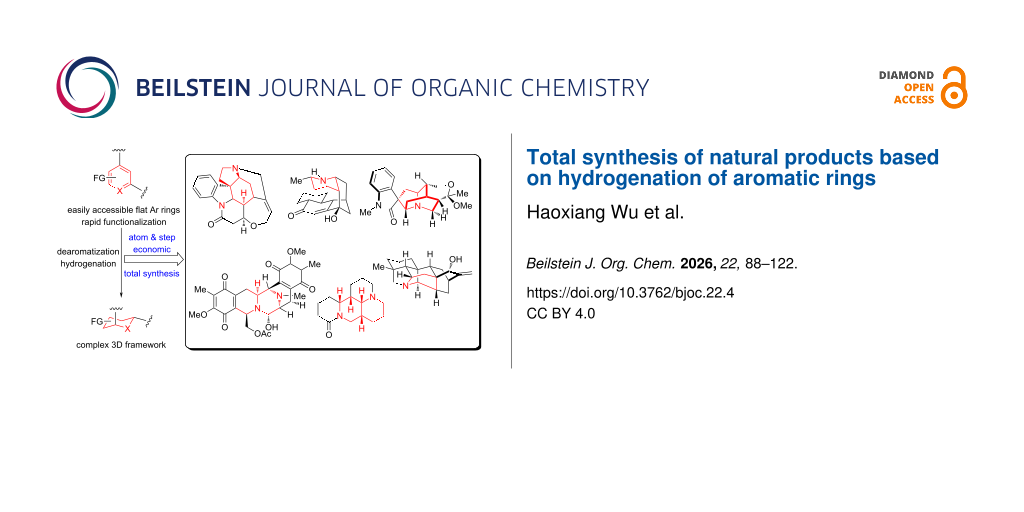
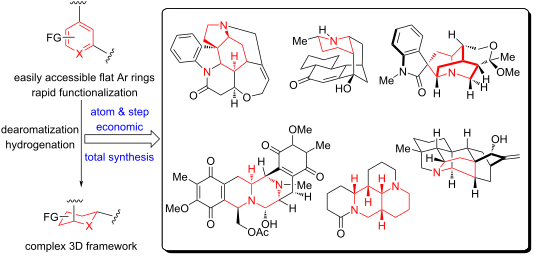
Saturated heterocycles containing sp3-hybridized carbons play a pivotal role in natural products as well as pharmaceutical agents, as their three-dimensional structures enable more precise interactions in biological systems [24]. Among the various strategies to access these saturated frameworks, catalytic hydrogenation of unsaturated arenes stands out as the most efficient one: it directly transforms planar sp2 systems into three-dimensional sp3-rich scaffolds via the shortest possible synthetic route, embodying both step economy and atom economy (Scheme 1) [25].
![[1860-5397-22-4-i1]](/bjoc/content/inline/1860-5397-22-4-i1.svg?scale=2.0&max-width=1024&background=FFFFFF)
Scheme 1: The association between dearomatization and natural product synthesis.
Scheme 1: The association between dearomatization and natural product synthesis.
Although oxidative dearomatization has been a widely studied and powerful approach in synthetic chemistry [21,26-28], researchers have gradually recognized its inherent limitations, including narrow substrate scope, poor selectivity, and low functional group compatibility. Under the circumstance of atom economy and concise synthesis, catalytic hydrogenation of (hetero)arenes has re-emerged as an attractive and practical alternative, offering a complementary pathway to transform planar aromatic systems into saturated or partially saturated, three-dimensional structures.
Key challenges in hydrogenation of aromatic rings
The catalytic hydrogenation of arenes offers a powerful route to disrupt aromaticity and access synthetically valuable intermediates. However, its implementation in strategic synthesis has been hindered by the persistent challenge of controlling selectivity across diverse substrate electronic environments [29]. Reactivity is governed by the electron density of arenes, which directly influences kinetics and product distributions [30,31]. The inability to generically modulate this interaction has confined most catalytic systems to narrow substrate scopes. Addressing this limitation requires the design of catalysts that achieve precise electronic complementarity, enabling selective activation across a broad spectrum of aromatic compounds (Scheme 2) [32].
![[1860-5397-22-4-i2]](/bjoc/content/inline/1860-5397-22-4-i2.svg?scale=2.0&max-width=1024&background=FFFFFF)
Scheme 2: Key challenges in hydrogenation of aromatic rings.
Scheme 2: Key challenges in hydrogenation of aromatic rings.
From the standpoint of scalable synthesis, catalyst cost is a major bottleneck in aromatic hydrogenation. Most state-of-the-art systems depend on expensive transition metals such as platinum, ruthenium, or palladium, inflating the cost of large-scale applications. In addition, precious-metal catalysts often display poor selectivity, while heteroatoms in heteroarenes – acting as Lewis bases – tend to coordinate to the metal center and complicate catalysis. Consequently, designing cost-effective catalytic systems with enhanced efficiency, particularly for the selective hydrogenation of complex substrates, remains an essential direction for future research [33].
Hydrogenation of arenes has rapidly evolved from a specialized transformation into a broadly enabling strategy in complex molecule synthesis, yet a unified perspective connecting recent methodological advances with their strategic applications in the total synthesis of natural products remains lacking. Although several reviews discuss catalyst development for (hetero)arene hydrogenation, they typically treat the topic from a purely methodological angle and seldom address its growing influence on retrosynthetic analysis [30,32,34-36]. Meanwhile, the capability to convert flat, readily accessible aromatic feedstocks into stereochemically defined, three-dimensional scaffolds with exceptional step and atom economy has begun to reshape how to design synthetic routes toward architecturally complex natural products.
The past five years have witnessed significant methodological evolution in the hydrogenation of (hetero)arenes. However, a systematic analysis correlating catalyst innovation with its application in complex natural product synthesis – remains lacking. This review would offer a strategic framework for synthetic chemists and identifies prevailing challenges and future opportunities of the field.
Review
The methodologies in hydrogenation of aromatic rings
Encompassing both homogeneous and heterogeneous systems, the hydrogenation of (hetero)arenes has become a cornerstone of modern synthesis for constructing saturated carbocycles and heterocycles [37]. When an appropriate ligand is paired with a transition-metal catalyst, stereoselective hydrogenation of aromatic rings becomes achievable, enabling access to reduced products with well-defined configurations [38]. Although the repertoire of ligands capable of exerting precise stereocontrol remains limited, each provides distinct advantages that suit different metals and reaction conditions. From the perspective of the catalyst itself, a central scientific challenge is how to maintain high catalytic activity throughout the reaction, while preventing deactivation caused by coordination of heteroatoms that may be present in the reduced products.
While the following subsections categorize hydrogenation strategies by substrate class (monocyclic vs fused; heterocycle vs carbocycle), all catalytic systems must still address the fundamental selectivity challenges inherent to arene reduction – chemo-, regio-, and stereoselectivity. Chemoselectivity becomes particularly demanding when reducible groups such as olefins or carbonyls are present, often requiring fine-tuning of the reaction conditions to prevent overreduction. Disruption of aromaticity also creates multiple potential reduction sites, and subtle electronic or substituent differences can lead to regioisomers, especially in polysubstituted or fused systems. In addition, converting a planar sp2-hybridized-atoms-enriched framework into three-dimensional sp3-hybridized-atoms-enriched architectures inherently generates new stereocenters, making stereocontrol essential in asymmetric variants. As highlighted in the methods below, recent advances in catalyst and ligand design showcase complementary solutions to these selectivity issues, with each substrate class imposing its own opportunities on hydrogenation outcomes.
With these considerations in mind, the following section categorizes catalytic hydrogenation strategies by arene substrate type and highlights representative examples that illustrate recent synthetic advances [35,36].
Hydrogenation of monocyclic aromatic rings
Hydrogenation of heterocyclic aromatic rings: Despite the widespread application of six-membered aromatic heterocycles in various fields of organic chemistry, reports on their catalytic hydrogenation are relatively rare. This is partly due to the high stability of six-membered aromatic heterocycles, such as pyridine, making it difficult to interrupt the aromaticity under mild conditions [34]. Furthermore, the heteroatoms (such as nitrogen and oxygen atoms) within the saturated heterocycles exhibit strong Lewis basicity, potentially complexing and deactivating catalysts. Consequently, the catalytic hydrogenation of six-membered aromatic heterocycles such as pyridine often requires the introduction of substituents or activation of the aromatic heterocycle to facilitate hydrogenation.
Between 2020 and 2021, the research groups of Zhang [39], Bao [40], Zhou [41], and Glorius [42] reported four different methods for the reductive hydrogenation of pyridine or pyridine derivatives (Scheme 3). By activating pyridine to a pyridinium salt, the hydrogenated product can be efficiently obtained in the presence of metal catalysts including Pd or Ir and different ligands. In 2021 and 2022, Wang and co-workers reported two impressive hydroboration–hydrogenation reactions catalyzed by FLP (triarylphenylborane) that reduced pyridine compounds 11 or 15 to dihydropyridine compounds 12 or chiral piperidine 17 (Scheme 3) [43,44]. Mechanistic studies demonstrated that the nitrogen atoms present in both pyridine and piperidine complexed with the triarylborane, cleaving the H–H bond and reducing the pyridine. In 2022, Xiao and co-workers reported a study on the conversion of isolated pyridinium salts 18, 20 to piperidine compounds using [CpRhCl2]2 as a metal catalyst and formic acid as a hydrogen source (Scheme 3) [45]. Different with other previous studies, this method allows for substituents at the 3-position of pyridine, enabling the rapid preparation of chiral piperidine compounds. It should be noted that in the presence of water, the reaction would undergo transamination with the pyridinium nitrogen moiety while inducing chirality on the ring.
![[1860-5397-22-4-i3]](/bjoc/content/inline/1860-5397-22-4-i3.svg?scale=2.0&max-width=1024&background=FFFFFF)
Scheme 3: Hydrogenation of heterocyclic aromatic rings.
Scheme 3: Hydrogenation of heterocyclic aromatic rings.
Hydrogenation of carbocyclic aromatic rings: In 2021, Andersson and co-workers reported a rhodium-catalyst precursor capable of operating in both homogeneous and heterogeneous phases to achieve asymmetric complete hydrogenation of vinyl aromatics – a long-standing challenge in arene reduction (Scheme 4) [46]. By tuning the ratio of phosphine ligand to rhodium precursor, they controlled the formation of distinct catalytic species, which remained mutually compatible, and rationalized facial selectivity through insights from asymmetric styrene hydrogenation. In 2024, Glorius and co-workers developed a chemoselective hydrogenation strategy capable of selectively reducing benzene rings in the presence of pyridine rings (Scheme 4) [47]. Supported by fragment-based screening across a broad substrate set, their method efficiently provides cyclohexane and piperidine frameworks commonly found in bioactive molecules and pharmaceutical intermediates. In the same year, Yu and co-worker described another mild and convenient approach to reduce monocyclic aromatic rings (Scheme 4) [48]. Using [Rh(nbd)Cl]2 and Pd/C as catalysts, aromatic hydrocarbons with various functional groups can be hydrogenated at room temperature and 1 atmosphere of hydrogen, thus simplifying the reaction operation and cost.
![[1860-5397-22-4-i4]](/bjoc/content/inline/1860-5397-22-4-i4.svg?scale=2.0&max-width=1024&background=FFFFFF)
Scheme 4: Hydrogenation of the carbocyclic aromatic rings.
Scheme 4: Hydrogenation of the carbocyclic aromatic rings.
Hydrogenation of fused aromatic rings
Hydrogenation of the heterocycle part: Quinoline, one of the most accessible heteroaromatic feedstocks from natural and commercial sources, has long attracted interest in both synthetic and medicinal chemistry. A central challenge, however, is the selective catalytic hydrogenation of quinolines to the synthetically valuable partially or fully saturated derivatives [49]. Over the past years, several research groups worldwide have reported significant progress toward addressing these selectivity and reactivity issues (Scheme 5 and Scheme 6). Nevertheless, despite these advances, the field still suffers from fundamental limitations in terms of substrate scope, stereoselectivity, and scalability, leaving ample room for innovation in catalyst design and mechanistic understanding.
![[1860-5397-22-4-i5]](/bjoc/content/inline/1860-5397-22-4-i5.svg?scale=2.0&max-width=1024&background=FFFFFF)
Scheme 5: Hydrogenation of the heterocycle part in bicyclic aromatic rings.
Scheme 5: Hydrogenation of the heterocycle part in bicyclic aromatic rings.
![[1860-5397-22-4-i6]](/bjoc/content/inline/1860-5397-22-4-i6.svg?scale=2.0&max-width=1024&background=FFFFFF)
Scheme 6: Hydrogenation of the heterocycle part in bicyclic aromatic rings.
Scheme 6: Hydrogenation of the heterocycle part in bicyclic aromatic rings.
Fan and co-workers have long been dedicated to the asymmetric catalysis of chiral diamine ruthenium complexes. In 2020, they reported the efficient hydrogenation of the polycyclic aromatic compound PyBQ to PyBTHQ using this catalyst in HFIP (Scheme 5) [50]. Under the optimized conditions, only the heteroaromatic part of quinoline was reduced selectively, while the benzene ring and pyridine remained unchanged. In 2020, Beller and co-workers used a manganese catalyst to achieve the hydrogenation of the nitrogen heterocyclic moiety in quinoline, that yielded the target product in near-quantitative amounts [51]. In 2021, the research groups of Sun [52] and Zhang [53] reported the use of iridium or manganese as catalysts to convert quinoline derivatives into tetrahydroquinolines by using dihydrogen or formic acid as the hydrogen source. In 2021 and 2024, Liu and co-workers demonstrated that with [NNP-Mn] catalysts, the hydrogenation of quinoline and its derivatives can proceed with high regio- and stereoselectivity [54,55] (Scheme 5).
In 2022, Stoltz and co-workers reported for the first time the reduction of 1,3-disubstituted isoquinoline compounds 45 to trans-quinoxalines 46 (Scheme 6) [56]. By using iridium catalysts and commercially available chiral JosiPhos ligands, a batch of enantioriched trans-tetrahydroisoquinolines could be prepared efficiently and stereoselectively. In 2023, Chen in collaboration with Zhang, reported a simple and efficient rhodium–thiourea-catalyzed asymmetric hydrogenation reaction for the synthesis of highly optically pure tetrahydroquinoxaline 48 and dihydroquinoxalinones 50 (Scheme 6) [57]. Due to the mild conditions and broad substrate range, the reaction was scaled up to the gram scale with high yield and high enantioselectivity. Recently, Du and co-workers reported a transition-metal-free asymmetric transfer hydrogenation reaction (Scheme 6) [58]. Under a hydrogen atmosphere, using chiral phosphoric acid and achiral borane as catalysts, they synthesized 2-substituted quinoxalines 52 in high yield.
For benzofuran, indole and other heteroarenes, hydrogenation of these easily accessible building blocks is rare. In 2020, Ding and co-workers demonstrated the selective reduction of benzoannelated five-membered heteroaromatic compounds 53 while retaining the benzene ring structure using an iridium catalyst to selectively hydrogenate indoles and benzofurans (Scheme 7) [59]. The hydrogenated products were obtained in 90% yield with 98% ee on average. In 2024, Yin and co-workers reported an innovative palladium-catalyzed asymmetric hydrogenation reaction (Scheme 7) [60]. Using an acid-assisted dynamic kinetic resolution method, they obtained a series of chiral indolines 56 containing exocyclic stereocenters in high yields and excellent enantioselectivity. Mechanistic studies of the reaction revealed that the dynamic kinetic resolution process relies on the rapid interconversion of the enantiomers in the racemic substrate, which in turn relies on the acid-promoted isomerization between the aromatic indole and the nonaromatic exocyclic enamine intermediate. Very recently, Chen and co-workers reported that using a Mn catalyst with different PNN-ligands, multi-nitrogen heteroaromatic compounds, including substituted pyrazolo[1,5-a]pyrimidines, pyrrolo[1,2-a]pyrazines, and imidazo[1,2-a]pyrazines can be hydrogenated efficiently, providing the corresponding reduced products with high enantioselectivity, reactivity, and broad substrate scope [61].
![[1860-5397-22-4-i7]](/bjoc/content/inline/1860-5397-22-4-i7.svg?scale=2.0&max-width=1024&background=FFFFFF)
Scheme 7: Hydrogenation of benzofuran, indole, and their analogues.
Scheme 7: Hydrogenation of benzofuran, indole, and their analogues.
Hydrogenation of the carbocycle part: The hydrogenation of the benzene ring in bicyclic aromatic systems has always been very challenging, since the aromaticity of the benzene ring is stronger than that of heteroaromatic rings, and the lack of heteroatoms in the ring makes it even more difficult for the substrate to coordinate with the metal catalyst.
In 2021, Glorius and co-workers reported an enantio- and diastereoselective complete hydrogenation of substituted benzofurans 65 in a one-pot cascade reaction (Scheme 8) [62]. This method facilitates the controlled installation of up to six new stereocenters, producing architecturally complex 6–5 fused ring systems. The key points lie in the utility of a chiral homogeneous ruthenium-N-heterocyclic carbene complex, as well as an in-situ activated rhodium catalyst. In 2022, Bach and co-workers reported a modular approach for the highly diastereoselective hydrogenation of symmetrical 2,5-DKP (2,5-dipiperazinone) 67 using a rhodium complex (Scheme 8) [63]. The saturated pentacyclic compound 68 was obtained in high yield and excellent diastereoselectivity. The hydrogen atoms in the final product were all arranged in cis configuration. Key features of the reaction include high functional group tolerance and excellent stereocontrol. In the same year, Zhou and co-workers reported a rhodium/bisphosphine-catalyzed asymmetric hydrogenation reaction of all-carbon aromatic rings 69 (Scheme 8) [64]. Through desymmetrization or kinetic resolution, a series of axially chiral cyclic compounds with high enantioselectivity could be synthesized. In addition, the authors also obtained central chiral cyclic compounds by asymmetric hydrogenation of phenanthrene with directing groups.
![[1860-5397-22-4-i8]](/bjoc/content/inline/1860-5397-22-4-i8.svg?scale=2.0&max-width=1024&background=FFFFFF)
Scheme 8: Hydrogenation of benzofuran, indole, and their analogues.
Scheme 8: Hydrogenation of benzofuran, indole, and their analogues.
In 2022 and 2024, Chirik and co-workers reported the use of molybdenum as a metal catalyst to completely hydrogenate substituted naphthalene to saturated 6–6 fused bicycle (Scheme 8) [65,66]. The target decahydronaphthalene was obtained in high yield and high enantioselectivity. In 2024, Ding and co-workers reported a method for the selective hydrogenation of the carbon ring in quinoline to generate hexahydroquinoline using a Ru catalyst (Scheme 8) [67]. When (S,S,S)-DKP was used as a ligand, the hydrogenation of the carbon ring was highly selective.
Reduction of aromatic rings via hydride or electron transfer pathways
Beyond catalytic hydrogenation, aromatic rings can also be reduced through hydride-based or electron-transfer pathways, which provide complementary modes of reactivity that are often orthogonal to metal-catalyzed hydrogenation systems. Classical dissolving-metal reductions such as the Birch reduction convert arenes into 1,4-dihydro intermediates via sequential electron transfer and protonation, enabling regioselective partial dearomatization that is difficult to achieve under hydrogenation conditions. Likewise, hydride reagents – including NaBH3CN, DIBAL-H, and other aluminum or borohydride derivatives – have been widely employed for the selective reduction of activated aromatic cations (e.g., pyridinium, quinolinium, or benzopyrylium salts), offering mild and chemoselective access to partially or fully saturated heterocycles. More recent advances in single-electron transfer (SET) chemistry, particularly those mediated by photoredox catalysts or electrochemical systems, have expanded the toolbox further by enabling reductive dearomatization under exceptionally mild conditions and with high functional-group compatibility. Collectively, these hydride- and electron-transfer approaches enrich the landscape of arene reduction by providing tunable control over regioselectivity, degree of saturation, and stereochemical induction – features that are increasingly leveraged in total synthesis to access complex, three-dimensional natural products [68-70].
Total synthesis based on hydrogenation of aromatic rings
Beyond catalyst and substrate diversity, arene hydrogenation fundamentally proceeds through either partial or complete loss of aromaticity. Partial hydrogenation delivers dihydro- or tetrahydro intermediates that retain useful unsaturation for further transformation. Complete hydrogenation typically requires stronger reductive conditions or more reactive catalyst–ligand systems to overcome higher aromatic stabilization energies. Thus, chemoselectively distinguishing between partial and complete reduction is crucial: depending on the substrate, the catalyst must either halt the process at a defined stage or drive it to full saturation without affecting other functionalities. The following sections highlight representative examples of both modes in complex molecule synthesis.
Total synthesis of (±)-keramaphidin B by Baldwin, 1996
Although the methodologies for aromatic ring hydrogenations have only recently flourished, the reduction of aromatic rings to obtain saturated aliphatic or heterocyclic rings and their subsequent application in the total synthesis of natural products has a long history. A brilliant early work is Baldwin's total synthesis of the macrocyclic diamine natural product (±)-keramaphidin B in the year of 1996 (Scheme 9) [71,72].
![[1860-5397-22-4-i9]](/bjoc/content/inline/1860-5397-22-4-i9.svg?scale=2.0&max-width=1024&background=FFFFFF)
Scheme 9: Total synthesis of (±)-keramaphidin B by Baldwin and co-workers.
Scheme 9: Total synthesis of (±)-keramaphidin B by Baldwin and co-workers.
Starting from compounds 77 and 78, Baldwin and co-workers converted them into pyridine derivative 79 in high yield over three steps including a Wittig reaction and tosylation. Subsequent reduction with sodium borohydride furnished the dimer 80 bearing partially reduced pyridine rings. From 80, intermediate 81 was prepared via a Polonovski–Polish reaction and isomerization, which, when adopting the proper conformation, spontaneously underwent an intramolecular [4 + 2] cycloaddition to construct the unsaturated bridged ring of (±)-keramaphidin B in a single transformation. Subsequently, the iminium ion 83 was reduced, completing the total synthesis of (±)-keramaphidin B. Although the yield of the [4 + 2] cycloaddition step is not ideal, this work on (±)-keramaphidin B exemplifies the application of an aromatic ring hydrogenation strategy in the total synthesis of natural products and its promising development potential.
Total synthesis of ergolines by Vollhardt (1994), Boger (2015), and Smith (2023)
Dearomative ionic hydrogenations have been widely applied in alkaloid synthesis, including that of the ergot alkaloids – a bioactive compounds family with a long synthetic history [73]. In the synthesis of (±)-LSD by Vollhardt and co-workers, the pyridine part was constructed by a Co-catalyzed [2 + 2 + 2] cycloaddition between alkyne 84 and nitrile 85, constructing the ergoline core 86. Methylation with MeOTf provided pyridinium 87, and subsequent NaBH4-mediated hydrogenation selectively generated the tetrahydropyridine and completed the synthesis of (±)-LSD (Scheme 10) [74,75].
![[1860-5397-22-4-i10]](/bjoc/content/inline/1860-5397-22-4-i10.svg?scale=2.0&max-width=1024&background=FFFFFF)
Scheme 10: Total synthesis of (±)-LSD by Vollhardt and co-workers.
Scheme 10: Total synthesis of (±)-LSD by Vollhardt and co-workers.
In the synthesis of (±)-dihydrolysergic acid, Boger and co-workers constructed the tetracyclic core via an inverse-electron demand Diels–Alder cycloaddition between an enamine derived from ketone 88 and triazine, giving pyridine 90 in 75% yield over two steps [76]. Alkylation with MeI furnished pyridinium 91, which was hydrogenated in two steps with NaBH3CN to the fully saturated piperidine 92. Acidic removal of the benzoyl group triggered auto-oxidation to the indole, and subsequent hydrolysis of methyl ester delivered the target (±)-dihydrolysergic acid (Scheme 11).
![[1860-5397-22-4-i11]](/bjoc/content/inline/1860-5397-22-4-i11.svg?scale=2.0&max-width=1024&background=FFFFFF)
Scheme 11: Total synthesis of (±)-dihydrolysergic acid by Boger and co-workers.
Scheme 11: Total synthesis of (±)-dihydrolysergic acid by Boger and co-workers.
Smith and co-workers recently reported a six-step synthesis of (±)-lysergic acid [77]. In contrast to previous approaches, the pyridine was introduced via a magnesium–halogen exchange of pyridyl iodide 93, followed by addition to aldehyde 94. Subsequent reduction of the resulting benzylic alcohol with TFA/Et₃SiH afforded pyridine 95, which underwent a one-pot sequence of indole protection, methylation, and hydrogenation to furnish tetrahydropyridine 96. In contrast to Vollhardt’s synthesis, the unsaturation was misaligned with that of the natural product, most likely arising from protonation during reduction or an isomerization event. Kinetic translocation of the double bond to the correct position enabled an intramolecular Heck reaction, a transformation originally developed by Fukuyama (Scheme 12) [78].
![[1860-5397-22-4-i12]](/bjoc/content/inline/1860-5397-22-4-i12.svg?scale=2.0&max-width=1024&background=FFFFFF)
Scheme 12: Total synthesis of (±)-lysergic acid by Smith and co-workers.
Scheme 12: Total synthesis of (±)-lysergic acid by Smith and co-workers.
Hydrogenation of (−)-tabersonine to (−)-decahydrotabersonine by Catherine Dacquet, 1997
An unavoidable challenge for aromatic ring hydrogenations is controlling the stereochemistry of the product during the hydrogenation reduction process. In 1997, Dacquet and co-workers conducted a hydrogenation reduction of the natural product (−)-tabersonine using platinum dioxide as a catalyst in the presence of perchloric acid to obtain (−)-decahydrotabersonine, a product with a completely reduced aromatic ring (Scheme 13) [79]. Through the structural characterization of the product, the authors found that the hydrogenation was highly stereoselective, yielding only cis-hydrogenated products. This suggests that substrate induction during hydrogenation could effectively direct the process, enabling stereoselective product formation.
![[1860-5397-22-4-i13]](/bjoc/content/inline/1860-5397-22-4-i13.svg?scale=2.0&max-width=1024&background=FFFFFF)
Scheme 13: Hydrogenation of (−)-tabersonine to (−)-decahydrotabersonine by Catherine Dacquet and co-workers.
Scheme 13: Hydrogenation of (−)-tabersonine to (−)-decahydrotabersonine by Catherine Dacquet and co-workers.
Total synthesis of (±)-nominine by Natsume, 2004
Natural products with complex ring systems, such as bridged rings, spirocycles or highly rigid ring systems, have long captivated synthetic chemists. Designing and completing the total synthesis of these molecules not only leads to the development and application of novel methodologies but also elevates the field to a new level, embodying the artistry of synthesis [80]. In 2004, Natsume and co-workers achieved the first total synthesis of the hepta-ring-containing natural product (±)-nominine applying a palladium-catalyzed intramolecular α-acylation and Birch reduction as key steps (Scheme 14) [81,82].
![[1860-5397-22-4-i14]](/bjoc/content/inline/1860-5397-22-4-i14.svg?scale=2.0&max-width=1024&background=FFFFFF)
Scheme 14: Total synthesis of (±)-nominine by Natsume and co-workers.
Scheme 14: Total synthesis of (±)-nominine by Natsume and co-workers.
Starting with a simple trisubstituted benzene 97, they obtained the ketal 98 in 39% yield over six steps. The authors then utilized their own palladium-catalyzed intramolecular α-acylation followed by protection of the carbonyl group to obtain the diketal 99. Birch reduction of 99 afforded the enone, which was then subjected to a Luche reduction to get the allylic alcohol 100. A Johnson–Claisen rearrangement and Lewis acid-promoted acetal–ene reaction provided the tetracyclic skeleton 101. With 101 in hands, a 6 step transformation afforded the alkyne 102 in an overall yield of 45%. After obtaining 102, the authors used a free radical reaction to initiate a one-step 6-exo-trig cyclization, constructing the [2.2.2]-bridged ring within the (+)-nominine followed by protection of the primary alcohol as mesylate. Using lithium bromide as the bromine source, an SN2 reaction was performed, and the allylic position was oxidized with tert-butyl peroxide and selenium dioxide to generate the enone 104. After obtaining 104, the unsaturated ketone was stereoselectively reduced to a specifically oriented hydroxy group using a Luche reduction, which was then protected with acetic anhydride to yield 105. Compound 105 then gave rise to the tertiary alcohol 106 in the presence of zinc powder and ammonium chloride. Finally, through a sequence of removal of the Cbz protecting group, alcohol chlorination, proximal nucleophilic substitution, and deprotection of the secondary alcohol, the first total synthesis of nominine was completed. Although the synthetic route seemed to be lengthy, this challenging total synthesis provided a promising strategy for the subsequent synthesis of this family of natural products.
Total synthesis of (+)-nominine by Gin, 2006
Only two years after Natsume completed the total synthesis of (+)-nominine, Gin and co-workers reported another total synthesis of (+)-nominine via a brilliant dearomatization strategy (Scheme 15) [83]. Starting from a para-disubstituted benzene 107 and an unsaturated aldehyde 108, they obtained 109 via a Staudinger aza-Wittig reaction. Compound 109 isomerized to the internal salt 110 in the presence of TFA, and 110 spontaneously underwent two different transition states to give the intramolecular [5 + 2] products 111 and 112, respectively. While the desired cycloadduct 112 was formed as the minor constituent (112/111 = 1:3.6), the isomeric ratio was verified to be the result of thermodynamic selection. The cycloaddition process is reversible under the conditions, thereby permitting iterative thermal re-equilibration of the undesired cycloadduct 111, which enhanced the formation of 112 while minimizing material loss.
![[1860-5397-22-4-i15]](/bjoc/content/inline/1860-5397-22-4-i15.svg?scale=2.0&max-width=1024&background=FFFFFF)
Scheme 15: Total synthesis of (+)-nominine by Gin and co-workers.
Scheme 15: Total synthesis of (+)-nominine by Gin and co-workers.
Cycloadduct 112 was converted to 113 in high yield through a three-step sequence of carbonyl hydroboration, alcohol chlorination with thionyl chloride, and radical reduction. Subsequently, reduction of the cyanide group with DIBAL-H and a Wittig reaction afford alkene 114 in 82% yield. Sodium metal was then used as a single-electron reducing agent to provide the second cycloaddition precursor 115, which was converted to the enamine. The enamine spontaneously underwent an intramolecular cycloaddition to yield the highly rigid [2.2.2]-bridged ring skeleton in ketone 116. Finally, nominine was generated via a two-step sequence comprising a Wittig reaction followed by tert-butyl peroxide/selenium dioxide-mediated allylic oxidation, thereby completing another impressive total synthesis. Relative to Natsume’s strategy, Gin and co-workers leveraged two intramolecular cycloaddition reactions to efficiently construct the carbon framework, resulting in a efficient total synthesis of nominine.
Total synthesis of (±)-lemonomycinone and (±)-renieramycin by Magnus, 2005
Tetrahydroisoquinoline alkaloids have long captivated chemical and biological interest; among them, lemonomycin and renieramycins (A–S) are especially notable for their potent antitumor and antimicrobial activities [84]. In 2005, Magnus and co-worker achieved the total synthesis of two bis-tetrahydroisoquinoline natural products, (±)-lemonomycinone and (±)-renieramycin, featuring as key steps a dearomative nucleophilic addition and diastereoselective hydrogenation of a dihydroisoquinoline (Scheme 16) [85].
![[1860-5397-22-4-i16]](/bjoc/content/inline/1860-5397-22-4-i16.svg?scale=2.0&max-width=1024&background=FFFFFF)
Scheme 16: Total synthesis of (±)-lemonomycinone and (±)-renieramycin by Magnus.
Scheme 16: Total synthesis of (±)-lemonomycinone and (±)-renieramycin by Magnus.
Starting from pentasubstituted isoquinoline 117, the authors utilized a dearomative nucleophilic addition to indirectly reduce the heteroaromatic ring of the isoquinoline to yield compound 118. This was followed by desilylation with TBAF and spontaneous intramolecular cyclization to yield the tricyclic 119. With 119 in hand, the double bond was diastereoselectively hydrogenated using Et3SiH and TFA, followed by hydrazinolysis to generate alcohol 120. Starting from the common intermediate 120, the total syntheses of renieramycin and lemonomycinone were accomplished through 11 and 13 steps, respectively.
Total synthesis to the alkaloids GB13 by Sarpong, 2009
In 2009, Sarpong and co-workers reported a total synthesis of the galbulimima alkaloid GB13. Mander and co-workers had already completed an earlier total synthesis of GB13 in 2003 [86]. However, a key difference between the Sarpong and Mander strategies lies in the construction of the piperidine ring: Sarpong’s route features a catalytic hydrogenation of a pyridine precursor, whereas Mander’s strategy relied on an Eschenmoser fragmentation as well as a reductive amination (Scheme 17) [87].
![[1860-5397-22-4-i17]](/bjoc/content/inline/1860-5397-22-4-i17.svg?scale=2.0&max-width=1024&background=FFFFFF)
Scheme 17: Total synthesis of GB13 by Sarpong and co-workers.
Scheme 17: Total synthesis of GB13 by Sarpong and co-workers.
Pyridine analogue 121 was converted to tetracyclic compound 123 via a 1,2-addition. A five-step transformation, including allylic hydroxy group transposition, olefin hydrogenation, and DMP oxidation, provided diketone 125. The two carbonyl groups in 125 were then chemoselectively and stereoselectively reduced using rhodium as a catalyst to yield hydroxylated ketone 126. A further three-step transformation provided the catalytic hydrogenation precursor 127. Catalytic hydrogenation of 127 yielded the piperidine ring with a dr ratio of 8:1, completing the total synthesis of GB13 in overall 18 steps.
Total synthesis to the alkaloids GB13 by Shenvi, 2022
In 2022, Shenvi and co-workers completed another concise and efficient total synthesis of GB13 (Scheme 18) [88]. Starting from pyridine derivatives 129, they obtained the key intermediate 131 via a Simmon–Smith reaction and a bimetallic-mediated photocatalytic radical coupling reaction. Intermediate 132 was then constructed by Friedel–Crafts alkylation using diethylaluminum chloride as a Lewis acid. The pyridine ring was then hydrogenated to the piperidine by direct hydrogenation, and the benzene ring was then reduced to an unsaturated ketone structure by Birch reduction, completing the highly efficient total synthesis of GB13 in 6 steps with an overall yield of 10%.
![[1860-5397-22-4-i18]](/bjoc/content/inline/1860-5397-22-4-i18.svg?scale=2.0&max-width=1024&background=FFFFFF)
Scheme 18: Total synthesis of GB13 by Shenvi and co-workers.
Scheme 18: Total synthesis of GB13 by Shenvi and co-workers.
Total synthesis of (±)-corynoxine and (±)-corynoxine B by Xia, 2014
In 2014, Xia and co-workers completed an outstanding total synthesis of (±)-croynoxine and (±)-croynoxine B, two oxindoline-type tetracyclic natural products [89]. Starting from 2-oxoindole derivative 134 and the 3-substituted pyridine 135, the pyridinium salt 136 was synthesized, which perfomed as a key substrate for the aerobic oxidation. The formation of the tetracyclic 3-spirooxindole structure 137 was achieved through a transition-metal-free intramolecular cross-dehydrogenative coupling. With 137 in hand, a sequence of transformations including ketone reduction with NaBH4, Johnson–Claisen rearrangement, enol ester formation, and methylation afforded 140. Finally, hydrogenation of 140 via PtO2/H2 generated the target molecule (±)-corynoxine, and under acidic conditions, (±)-corynoxine could be isomerized to (±)-corynoxine B (Scheme 19).
![[1860-5397-22-4-i19]](/bjoc/content/inline/1860-5397-22-4-i19.svg?scale=2.0&max-width=1024&background=FFFFFF)
Scheme 19: Total synthesis of (±)-corynoxine and (±)-corynoxine B by Xia and co-workers.
Scheme 19: Total synthesis of (±)-corynoxine and (±)-corynoxine B by Xia and co-workers.
Total synthesis of (+)-serratezomine E, (±)-serralongamine A and (−)-huperzine N by Bonjoch, 2015 and 2016
In 2015, Bonjoch and co-workers reported a method for the selective hydrogenation of an exocyclic double bond conjugated to an aromatic ring [90]. For the pyridine derivative 141, rhodium catalysis provided the chiral reduction product in quantitative yield and excellent stereoselectivity. Leveraging this unique reaction strategy, Bonjoch completed the total synthesis of the tricyclic natural product serratezomine E and the putative structure of huperzine N (Scheme 20).
![[1860-5397-22-4-i20]](/bjoc/content/inline/1860-5397-22-4-i20.svg?scale=2.0&max-width=1024&background=FFFFFF)
Scheme 20: Total synthesis of (+)-serratezomine E and the putative structure of huperzine N by Bonjoch and co-workers.
Scheme 20: Total synthesis of (+)-serratezomine E and the putative structure of huperzine N by Bonjoch and co-...
Starting from simple 5-aminopentanoic acid (144), they synthesized the reduction precursor 145 in 53% yield over six steps. Subsequent catalytic hydrogenation afforded the diastereomeric product 146 in high yield. With compound 146 in hand, they completed the total synthesis of serratezomine E through a three-step sequence comprising removal of the Ts group, acetylation, and pyridine hydrogenation. Simultaneously, starting from 149, they employed a similar route involving rhodium-catalyzed double-bond reduction, nitrogen methylation, pyridine reduction, and formation of the nitrogen oxide to give the putative structure of huperzine N.
In 2016, Bonjoch and co-workers reported another synthesis work to revise the structure of huperzine N. Similar to their previous study, the synthesis started with a 1,3-dicarbonyl compound 154 to synthesize the hydrogenation precursor 155. A three-step process, including hydrogenation of the olefin, hydride reduction and methylation, afforded (±)-serralongamine A. With (±)-serralongamine A in hand, huperzine N and N-epi-huperzine N could be obtained via a reduction–oxidation sequence [91] (Scheme 21).
![[1860-5397-22-4-i21]](/bjoc/content/inline/1860-5397-22-4-i21.svg?scale=2.0&max-width=1024&background=FFFFFF)
Scheme 21: Total synthesis of (±)-serralongamine A and the revised structure of huperzine N and N-epi-huperzine N.
Scheme 21: Total synthesis of (±)-serralongamine A and the revised structure of huperzine N and N-epi-huperzin...
Asymmetric synthesis towards indenopiperidine core of an 11-β-HSD-1 inhibitor, 2016
Growing interest has focused on inhibiting 11-β-hydroxysteroid dehydrogenase type 1 (11-β-HSD-1), a key enzyme that alleviates insulin resistance by lowering cortisol production. Compound 157 emerged as a promising 11-β-HSD-1 inhibitor candidate. In 2016, researchers from Boehringer Ingelheim Pharmaceuticals and the University of Pennsylvania reported a concise and stereoselective synthesis of 157, which strategically combined a Pd-catalyzed pyridine C–H acylation and an Ir-catalyzed asymmetric hydrogenation of the aromatic core [92].
The synthesis began with the coupling of trisubstituted benzene 158 and 2-substituted pyridine 159, furnishing the bicyclic intermediate 160. Three subsequent steps (74% overall yield) then provided the key hydrogenation precursor 161. Hydrogenation of 161 under heterogeneous catalytic conditions (Pd/C, Pt/C, Raney Ni, Rh/C, Ru/C) proved inefficient, giving complex mixtures that included partially or fully hydrogenated pyridines, over-reduced products and even dimers of reduced species.
The authors proposed that the cyano substituent on the benzene ring might coordinate with or deactivate the metal catalysts, or undergo reduction under the reaction conditions, thereby diminishing catalytic activity. To address this challenge, they hydrolyzed the cyano group to an amide (162) under acidic conditions, which then allowed successful Pd/C-mediated hydrogenation to 163. Subsequent dehydration with POCl3 and chiral resolution using ᴅ-DBTA provided the optically enriched compound 165 (Scheme 22).
![[1860-5397-22-4-i22]](/bjoc/content/inline/1860-5397-22-4-i22.svg?scale=2.0&max-width=1024&background=FFFFFF)
Scheme 22: Early attempts to indenopiperidine core.
Scheme 22: Early attempts to indenopiperidine core.
While this approach rendered catalytic hydrogenation feasible, it also increased the complexity of the synthetic route, limiting its suitability for large-scale preparation of 157. Consequently, the authors redirected their efforts toward homogeneous catalytic hydrogenation, a field that has seen rapid progress in recent years. Upon converting 161 into the zwitterionic salt 166, extensive screening revealed that iridium catalysis with MeO-BoQPhos afforded the highest stereoselectivity. This approach furnished the reduced product 167 in high yield. After five further transformations (overall yield: 67%), the final coupling with a benzimidazole fragment efficiently delivered the target compound 157 (Scheme 23).
![[1860-5397-22-4-i23]](/bjoc/content/inline/1860-5397-22-4-i23.svg?scale=2.0&max-width=1024&background=FFFFFF)
Scheme 23: Homogeneous hydrogenation and completion of the synthesis.
Scheme 23: Homogeneous hydrogenation and completion of the synthesis.
This study highlights the pivotal role of controlled aromatic hydrogenation, especially of pyridine derivatives, in modern drug discovery, and illustrates how the choice of the catalytic system (heterogeneous vs homogeneous) together with functional group management can decisively shape the success of complex molecule synthesis.
Total synthesis of jorunnamycin A and jorumycin by Stoltz, 2019
The bistetrahydroisoquinoline (bis-THIQ) alkaloids, a class of polycyclic natural products with significant physiological activities, have drawn sustained interest from synthetic chemists worldwide due to their pronounced antibacterial and anticancer properties. Since their discovery, bis-THIQ scaffolds have been constructed primarily through the Pictet–Spengler reaction, a cyclization strategy that continues to be widely employed in total synthesis. In 2019, Stoltz and co-workers developed an elegant substrate-directed asymmetric hydrogenation approach to construct the bis-THIQ framework, achieving the concise total syntheses of two structurally complex natural products [93] (Scheme 24).
![[1860-5397-22-4-i24]](/bjoc/content/inline/1860-5397-22-4-i24.svg?scale=2.0&max-width=1024&background=FFFFFF)
Scheme 24: Total synthesis of jorunnamycin A and jorumycin by Stoltz and co-workers.
Scheme 24: Total synthesis of jorunnamycin A and jorumycin by Stoltz and co-workers.
Starting from the polysubstituted aromatic precursors 170 and 172, the Stoltz group accomplished the synthesis of N-oxide 171 and isoquinoline compound 173 in two steps with 76% and 42% yield, respectively. These intermediates were then elaborated through a four-step sequence to afford the coupled intermediate 174 in 23% overall yield, which served as the substrate for catalytic hydrogenation.
During the hydrogenation of compound 174, Stoltz and co-workers observed that the addition of the first two molecules of hydrogen to the substrate proceeded with high stereoselectivity. They proposed that this selectivity arises from chelation between the nitrogen and oxygen atoms from the substrate and the metal catalyst, which fixed the conformation of the polycyclic scaffold. As a result, the top face is sterically less favored, thereby hydrogen approaches from the opposite face. The subsequent addition of another two equivalents of hydrogen also supported this mechanistic hypothesis. Based on this stereochemical control, the Stoltz team successfully obtained the asymmetric hydrogenation product 176, which spontaneously underwent intramolecular cyclization to furnish the bridged cyclic compound 177.
With compound 177 in hand, a series of three transformations, including hydroxylation of aryl halide, partial lactam reduction with cyanide trapping, and oxidation of the phenol, enabled the total synthesis of jorunnamycin A in 15 steps. The acetylation of the hydroxy group in jorunnamycin A followed by cyano hydrolysis led to the total synthesis of another natural product, jorumycin.
Total synthesis of (−)-finerenone by Aggarwal, 2021
(−)-Finerenone is a non-steroidal mineralocorticoid receptor antagonist currently under investigation for the treatment of chronic kidney disease (CKD) associated with type 2 diabetes. Its molecular structure features a rare dihydronaphthyridine core, which presents a unique synthetic challenge. Given that (−)-finerenone is presently undergoing phase III clinical trials, the development of efficient and scalable methods for constructing the dihydronaphthyridine scaffold has become a focal point of interest in synthetic chemistry. In 2020, Aggarwal and co-workers reported a concise and enantioselective synthesis of (−)-finerenone via an asymmetric hydrogen atom transfer (HAT) strategy, completing the total synthesis in just six steps with high efficiency and stereoselectivity [94].
Starting from the 2-pyridone derivative 178, the authors synthesized the bicyclic intermediate 179 in four steps with an overall yield of 31%. Initially, they attempted a formal [4 + 2] cycloaddition between 179 and a 1,3-dicarbonyl compound, catalyzed by the chiral phosphoric acid (R)-TRIP, aiming to construct (−)-finerenone in a single step. However, this approach delivered the target compound in only 19% yield and a low 15% ee (Scheme 25). Given that high enantiopurity is critical for subsequent clinical studies, the authors needed to revise their strategy.
![[1860-5397-22-4-i25]](/bjoc/content/inline/1860-5397-22-4-i25.svg?scale=2.0&max-width=1024&background=FFFFFF)
Scheme 25: Early attempt towards (−)-finerenone by Aggarwal and co-workers.
Scheme 25: Early attempt towards (−)-finerenone by Aggarwal and co-workers.
Instead of pursuing a direct asymmetric cyclization, they performed a formal [4 + 2] cycloaddition between 179 and the dicarbonyl compound, followed by in-situ oxidation of the resulting intermediate 180 to afford compound 181 in a one-pot sequence. At this step, the key challenge was to obtain (−)-finerenone with high enantioselectivity through asymmetric hydrogenation of intermediate 181 (Scheme 25).
During attempts to reduce intermediate 181 via asymmetric hydrogen atom transfer (HAT), the authors found that 181 exists as a racemic mixture, with chirality originating from its axially chiral biaryl structure. Owing to the steric hindrance introduced by substituents, 181 exists as a pair of atropisomers, which inspired a new strategy for achieving asymmetric hydrogenation.
The authors proposed that the two atropisomers exhibit different reactivity and selectivity under catalytic conditions, enabling a process of kinetic resolution. More importantly, they envisioned that this inherent resolution could be transformed into a dynamic kinetic resolution, thereby allowing for the selective formation of optically enriched finerenone.
Subsequent experiments confirmed this hypothesis: by employing chiral phosphoric acids of different configurations as catalysts, the authors successfully obtained (+)-finerenone in 42% yield with 94% ee, and (−)-finerenone in 67–82% yield with 94:6 er, respectively (Scheme 26).
![[1860-5397-22-4-i26]](/bjoc/content/inline/1860-5397-22-4-i26.svg?scale=2.0&max-width=1024&background=FFFFFF)
Scheme 26: Enantioselective synthesis towards (−)-finerenone.
Scheme 26: Enantioselective synthesis towards (−)-finerenone.
Total synthesis of (+)-N-methylaspidospermidine by Smith and Grigolo, 2022
In 2021 and 2022, Smith, Grigolo and co-workers reported a total synthesis of the monoterpene indole alkaloid N-methylaspidospermidine (Scheme 27) [95,96].
![[1860-5397-22-4-i27]](/bjoc/content/inline/1860-5397-22-4-i27.svg?scale=2.0&max-width=1024&background=FFFFFF)
Scheme 27: Total synthesis of (+)-N-methylaspidospermidine by Smith, Grigolo and co-workers.
Scheme 27: Total synthesis of (+)-N-methylaspidospermidine by Smith, Grigolo and co-workers.
In a single-step reaction, pyridine 182 was activated with 2-chloroethyl triflate and the resulting pyridinium salt was dearomatized with a Grignard reagent to produce ketone 184. In this step, the Grignard nucleophile added regio- and diastereoselectively at the 2-position of the pyridinium, consistent with established reactivity models from prior studies [97]. A three-step sequence involved Raney Ni hydrogenation of the dihydropyridine, TFA-mediated indole deprotection, and base-promoted formation of a C3 quaternary carbon center provided piperidine compound 185. The resulting intermediate was trapped with a side chain enolate (derived from a methyl ketone), successfully constructing the pentacyclic aspidospermidine core. The next three steps comprised nitrogen methylation, ketone reduction, and hydroxyl elimination to afford 186. In the final two steps, an ethyl group was introduced via Fe-mediated HAT and sulfone cleavage. This 10-step asymmetric synthesis demonstrates that, in the case of indole monoterpene alkaloids, the rational application of aromatic ring hydrogenation can markedly reduce step count and enhance overall efficiency.
Total synthesis of matrine-type alkaloids by Reisman, 2022
The tetracyclic alkaloids (+)-matrine and (+)-isomatrine, isolated from Sophora flavescens, are thought to originate biosynthetically from (−)-lysine. In 2022, Reisman and co-workers reported a pyridine hydrogenation strategy that provided collective access to matrine-type alkaloids [98]. That same year, Sherburn and co-workers described a complementary synthesis employing an aza-Diels–Alder cycloaddition followed by olefin hydrogenation [99].
Starting from pyridine and glutaryl chloride, tetracyclic intermediate 192 was efficiently generated in a single step through sequential nucleophilic attack and intramolecular cyclization. (+)-Isomatrine was subsequently synthesized through catalytic hydrogenation via Rh/C, LAH reduction, and tertiary amine oxidation (Scheme 28).
![[1860-5397-22-4-i28]](/bjoc/content/inline/1860-5397-22-4-i28.svg?scale=2.0&max-width=1024&background=FFFFFF)
Scheme 28: Dearomatization approach towards matrine-type alkaloids.
Scheme 28: Dearomatization approach towards matrine-type alkaloids.
After synthesizing (+)-isomatrine, the effects of catalyst type, loading, temperature, and reaction time on the hydrogenation process were systematically examined. The results revealed that appropriate tuning of the conditions enabled the selective synthesis of different natural products, including (+)-matrine, (+)-allomatrine, and other tetracyclic alkaloids, thereby achieving an efficient collective synthesis of matrine-type alkaloids.
Asymmetric total synthesis of senepodine F by Ishikawa, 2023
Lycopodium alkaloids, isolated from plants of the Lycopodium genus (Lycopodiaceae family), represent a vast and structurally diverse family of natural products. To date, over 500 members of this family have been reported, with some known to exhibit acetylcholinesterase inhibitory activity and other notable bioactivities. Their architecturally complex and unique polycyclic frameworks have attracted sustained interest from synthetic, natural product, and medicinal chemists alike. In 2023, Ishikawa and co-workers reported the first asymmetric total synthesis of (−)-senepodine F, a tetracyclic Lycopodium alkaloid (Scheme 29) [100].
![[1860-5397-22-4-i29]](/bjoc/content/inline/1860-5397-22-4-i29.svg?scale=2.0&max-width=1024&background=FFFFFF)
Scheme 29: Asymmetric total synthesis to (−)-senepodine F via an asymmetric hydrogenation of pyridine.
Scheme 29: Asymmetric total synthesis to (−)-senepodine F via an asymmetric hydrogenation of pyridine.
The synthesis commenced with a stereoselective Diels–Alder reaction between compounds 194 and 195 under asymmetric amine catalysis, directly affording the bicyclic intermediate 196, which was further elaborated over seven steps (overall yield: 74%) to give 197. In parallel, the authors adopted Glorius’ protocol, applying an Evans chiral auxiliary to achieve asymmetric catalytic hydrogenation of the pyridine derivative 198, delivering the lactam 199 in 66% yield and with excellent enantioselectivity (96% ee). Subsequent transformations over six steps (overall yield: 71%) provided the piperidine building block 200.
Coupling of the key fragments 197 and 200 was achieved in two steps (77% yield), affording alkyne intermediate 201. This was followed by a sequence of strategic functional group manipulations, including a pivotal intramolecular SN2 cyclization, ultimately completing the total synthesis of (−)-senepodine F. Notably, this work also led to the structural revision of the originally assigned natural product, as reported in earlier isolation studies.
Hydrogenation strategy in total synthesis by Qi, 2023 and 2024
Indole-containing natural products have long attracted considerable interest in synthetic chemistry, owing to their pronounced biological activities and the biosynthetic relevance of indole as a key metabolite in diverse pathways. These biosynthetic processes frequently inspire new synthetic methodologies and retrosynthetic strategies. Simple indole derivatives – such as indole-3-acetic acid, tryptophan, and indole-2-carboxylic acid – are accessible on a large scale via biological routes. Nevertheless, for arenes containing both a benzene ring and a heteroaromatic core, achieving regioselective catalytic hydrogenation that discriminates between the phenyl and heteroaromatic moieties remains a persistent challenge.
A recent work by Qi and co-workers has substantially advanced the selective hydrogenation of indole-containing compounds. Systematic tuning of reaction parameters such as catalyst loading, solvent, reaction time, and temperature enabled the selective access to diverse hydrogenated products. These developments have established a valuable foundation for the total synthesis of indole-derived alkaloids, facilitating more concise and efficient synthetic routes (Scheme 30) [101].
![[1860-5397-22-4-i30]](/bjoc/content/inline/1860-5397-22-4-i30.svg?scale=2.0&max-width=1024&background=FFFFFF)
Scheme 30: Selective hydrogenation of indole derivatives and application.
Scheme 30: Selective hydrogenation of indole derivatives and application.
As an illustration, compound 203 underwent hydrogenation with 50 wt % Pd/C in HFIP/THF 50:1 to give the debenzyloxylated product 204 in 48% yield. The reaction selectively reduced the indole ring while preserving the conjugated olefin adjacent to the carbonyl group, thereby providing a valuable synthetic handle that was exploited in the formal synthesis of pancracine.
Skeletal rearrangements enable the rapid conversion of simple molecules into complex architectures and represent a powerful strategy in natural product synthesis. Qi and co-workers recently reported a one-pot reaction featuring a double oxidative rearrangement cascade of furans and indoles followed by nucleophilic cyclization. This methodology was applied to the formal synthesis of rhynchophylline/isorhynchophylline and the first total syntheses of (±)-(7R)- and (±)-(7S)-geissoschizol oxindoles (Scheme 31) [102].
![[1860-5397-22-4-i31]](/bjoc/content/inline/1860-5397-22-4-i31.svg?scale=2.0&max-width=1024&background=FFFFFF)
Scheme 31: Synthetic approaches to the oxindole alkaloids by Qi and co-workers.
Scheme 31: Synthetic approaches to the oxindole alkaloids by Qi and co-workers.
In the presence of NBS as the oxidant, precursor 206 undergoes an aza-Achmatowicz rearrangement to give the monobrominated intermediate 207, which upon treatment with NaHCO3 furnishes the spirocyclic scaffold 208. From this versatile intermediate, a range of oxindole natural products can be accessed. Notably, compound 208 also can be selectively hydrogenated either at the pyridine or indole ring by adjusting the reaction conditions, thereby enabling divergent access to a range of related natural products.
Total synthesis of annotinolide B via sequential quinoline dearomatization, Smith, 2025
Very recently, Smith and co-workers disclosed an elegant total synthesis of the cyclobutane-containing Lycopodium alkaloid annotinolide B (Scheme 32) [103]. Beginning from bromo-substituted quinoline 216, the authors prepared methyl ester 217 through a concise three-step sequence. A key photochemical dearomatization – originally developed by Ma and co-workers in 2023 – then transformed 217 into dihydroquinoline 219, accompanied by a minor amount of tetrahydroquinoline 218 [104]. Subsequent transformations over five steps delivered protected intermediate 220 with a primary alcohol group, which was debenzylated and the resulting pyridone intermediate subjected to oxidative cyclization to provide tricyclic intermediate 221. From this scaffold, a sequence comprising olefin hydrogenation, a [2 + 2] cycloaddition, Pd-catalyzed reduction, Vaska’s catalyst-mediated amide reduction, and final lactonization furnished annotinolide B in 20 steps and 2.7% overall yield.
![[1860-5397-22-4-i32]](/bjoc/content/inline/1860-5397-22-4-i32.svg?scale=2.0&max-width=1024&background=FFFFFF)
Scheme 32: Total synthesis of annotinolide B by Smith and co-workers.
Scheme 32: Total synthesis of annotinolide B by Smith and co-workers.
Conclusion
Over the past decade, advances in catalyst platforms and ligand architecture have transformed arene hydrogenation from a niche reactivity into a broadly general strategy. Enantioselective hydrogenations now encompass quinolines, isoquinolines, benzofurans, pyridines, and related heteroarenes, with stereocontrol enabled by finely tuned ligand classes – N-heterocyclic carbenes, chiral diamines, bisoxazolines, bisphosphines, and pincer frameworks. These systems create discriminating steric/electronic environments and compatible H2-activation manifolds that deliver site-, chemo-, and enantioselectivity even in the presence of coordinating heteroatoms.
Critically, these developments have moved beyond method demonstration to strategic application in complex settings. Arene hydrogenation is increasingly used to install multiple stereocenters in a single operation, streamline protecting-group and redox economies, and unlock divergent routes from common intermediates – thereby improving step economy and scalability in total synthesis and medicinal chemistry. For example, Stoltz and co-workers leveraged a substrate-directed asymmetric hydrogenation of isoquinolines to accomplish concise total syntheses of jorunnamycin A and jorumycin, providing a compelling alternative to the Pictet–Spengler reaction and underscoring the strategic value of arene hydrogenation in modern synthesis.
Despite the impressive advances achieved thus far, several fundamental questions remain unresolved and continue to shape the research frontier. A critical issue concerns the influence of substituents with distinct electronic and steric properties on hydrogenation reactivity and selectivity; subtle differences in substitution patterns can dramatically alter reaction pathways, yet predictive models remain underdeveloped. Equally important is the role of heteroatoms, whose tendency to coordinate to transition-metal centers may attenuate catalytic activity or redirect selectivity. Even the archetypal aromatic substrate – benzene – poses a formidable challenge: achieving asymmetric hydrogenation under mild and practical conditions remains an unmet goal. Beyond these challenges, the broader problems of chemo-, regio-, and stereoselectivity underscore the need for new paradigms in catalyst design.
Looking ahead, future progress will hinge on three interrelated directions. First, the deployment of earth-abundant, inexpensive metals will be essential to reduce cost and ensure sustainability, thereby expanding the scope of practical applications. Second, innovation in catalyst and ligand architecture must aim not only at higher levels of stereo- and site-selectivity but also at expanding functional group tolerance and enabling transformations previously considered inaccessible. Third, deeper mechanistic insight into the interplay between substituents, electronic structure, and catalyst behavior is urgently required, as this knowledge will guide the rational design of more general catalytic systems.
With sustained methodological innovation, asymmetric hydrogenation of arenes is poised to evolve from a specialized transformation into a central strategy in synthesis. Its impact will likely extend far beyond methodological studies, driving progress in the streamlined construction of natural products, the design of bioactive molecules, and the discovery of new therapeutic agents. In this sense, the next decade holds the promise not merely of incremental improvements, but of a paradigm shift in how chemists harness arene hydrogenation in complex molecule synthesis.
Data Availability Statement
Data sharing is not applicable as no new data was generated or analyzed in this study.
References
-
Nicolaou, K. C.; Vourloumis, D.; Winssinger, N.; Baran, P. S. Angew. Chem., Int. Ed. 2000, 39, 44–122. doi:10.1002/(sici)1521-3773(20000103)39:1<44::aid-anie44>3.0.co;2-l
Return to citation in text: [1] -
Min, L.; Han, J.-C.; Zhang, W.; Gu, C.-C.; Zou, Y.-P.; Li, C.-C. Chem. Rev. 2023, 123, 4934–4971. doi:10.1021/acs.chemrev.2c00763
Return to citation in text: [1] -
He, W.; Wang, P.; Chen, J.; Xie, W. Org. Biomol. Chem. 2020, 18, 1046–1056. doi:10.1039/c9ob02627d
Return to citation in text: [1] -
Cannon, J. S.; Overman, L. E. Angew. Chem., Int. Ed. 2012, 51, 4288–4311. doi:10.1002/anie.201107385
Return to citation in text: [1] -
Bonjoch, J.; Solé, D. Chem. Rev. 2000, 100, 3455–3482. doi:10.1021/cr9902547
Return to citation in text: [1] -
Makarova, M.; Rycek, L.; Hajicek, J.; Baidilov, D.; Hudlicky, T. Angew. Chem., Int. Ed. 2019, 58, 18338–18387. doi:10.1002/anie.201901564
Return to citation in text: [1] -
Nißl, B.; Mülbaier, M.; Grisoni, F.; Trauner, D.; Bermúdez, M.; Dialer, C.; Konrad, D. B. Angew. Chem., Int. Ed. 2025, 64, e202502404. doi:10.1002/anie.202502404
Return to citation in text: [1] -
Chen, P.; Wang, J.; Zhang, S.; Wang, Y.; Sun, Y.; Bai, S.; Wu, Q.; Cheng, X.; Cao, P.; Qi, X. Nat. Commun. 2024, 15, 679. doi:10.1038/s41467-024-45037-0
Return to citation in text: [1] -
Corey, E. J. Chem. Soc. Rev. 1988, 17, 111–133. doi:10.1039/cs9881700111
Return to citation in text: [1] -
Kawamura, S.; Chu, H.; Felding, J.; Baran, P. S. Nature 2016, 532, 90–93. doi:10.1038/nature17153
Return to citation in text: [1] -
Bao, R.; Zhang, H.; Tang, Y. Acc. Chem. Res. 2021, 54, 3720–3733. doi:10.1021/acs.accounts.1c00459
Return to citation in text: [1] -
Young, I. S.; Baran, P. S. Nat. Chem. 2009, 1, 193–205. doi:10.1038/nchem.216
Return to citation in text: [1] -
Kärkäs, M. D.; Porco, J. A., Jr.; Stephenson, C. R. J. Chem. Rev. 2016, 116, 9683–9747. doi:10.1021/acs.chemrev.5b00760
Return to citation in text: [1] -
Munda, M.; Niyogi, S.; Shaw, K.; Kundu, S.; Nandi, R.; Bisai, A. Org. Biomol. Chem. 2022, 20, 727–748. doi:10.1039/d1ob02115j
Return to citation in text: [1] -
Schreiber, S. L. Science 2000, 287, 1964–1969. doi:10.1126/science.287.5460.1964
Return to citation in text: [1] -
Nicolaou, K. C.; Edmonds, D. J.; Bulger, P. G. Angew. Chem., Int. Ed. 2006, 45, 7134–7186. doi:10.1002/anie.200601872
Return to citation in text: [1] -
Li, L.; Chen, Z.; Zhang, X.; Jia, Y. Chem. Rev. 2018, 118, 3752–3832. doi:10.1021/acs.chemrev.7b00653
Return to citation in text: [1] -
Taylor, R. D.; MacCoss, M.; Lawson, A. D. G. J. Med. Chem. 2014, 57, 5845–5859. doi:10.1021/jm4017625
Return to citation in text: [1] -
Scott, K. A.; Cox, P. B.; Njardarson, J. T. J. Med. Chem. 2022, 65, 7044–7072. doi:10.1021/acs.jmedchem.2c00223
Return to citation in text: [1] -
Vitaku, E.; Smith, D. T.; Njardarson, J. T. J. Med. Chem. 2014, 57, 10257–10274. doi:10.1021/jm501100b
Return to citation in text: [1] -
Wertjes, W. C.; Southgate, E. H.; Sarlah, D. Chem. Soc. Rev. 2018, 47, 7996–8017. doi:10.1039/c8cs00389k
Return to citation in text: [1] [2] -
Zhuo, C.-X.; Zhang, W.; You, S.-L. Angew. Chem., Int. Ed. 2012, 51, 12662–12686. doi:10.1002/anie.201204822
Return to citation in text: [1] -
Roche, S. P.; Porco, J. A., Jr. Angew. Chem., Int. Ed. 2011, 50, 4068–4093. doi:10.1002/anie.201006017
Return to citation in text: [1] -
Walters, W. P.; Green, J.; Weiss, J. R.; Murcko, M. A. J. Med. Chem. 2011, 54, 6405–6416. doi:10.1021/jm200504p
Return to citation in text: [1] -
Lovering, F.; Bikker, J.; Humblet, C. J. Med. Chem. 2009, 52, 6752–6756. doi:10.1021/jm901241e
Return to citation in text: [1] -
Quideau, S.; Pouységu, L.; Deffieux, D. Synlett 2008, 467–495. doi:10.1055/s-2008-1032094
Return to citation in text: [1] -
Yu, L.-M.; Chen, H.; Fang, W.; Cai, R.; Tao, Y.; Li, Y.; Dong, H. Org. Biomol. Chem. 2024, 22, 7074–7091. doi:10.1039/d4ob00766b
Return to citation in text: [1] -
Huck, C. J.; Boyko, Y. D.; Sarlah, D. Nat. Prod. Rep. 2022, 39, 2231–2291. doi:10.1039/d2np00042c
Return to citation in text: [1] -
Wiesenfeldt, M. P.; Nairoukh, Z.; Dalton, T.; Glorius, F. Angew. Chem., Int. Ed. 2019, 58, 10460–10476. doi:10.1002/anie.201814471
Return to citation in text: [1] -
Wang, D.-S.; Chen, Q.-A.; Lu, S.-M.; Zhou, Y.-G. Chem. Rev. 2012, 112, 2557–2590. doi:10.1021/cr200328h
Return to citation in text: [1] [2] -
Kita, Y.; Yamaji, K.; Higashida, K.; Sathaiah, K.; Iimuro, A.; Mashima, K. Chem. – Eur. J. 2015, 21, 1915–1927. doi:10.1002/chem.201405408
Return to citation in text: [1] -
Kim, A. N.; Stoltz, B. M. ACS Catal. 2020, 10, 13834–13851. doi:10.1021/acscatal.0c03958
Return to citation in text: [1] [2] -
Kuwano, R.; Kameyama, N.; Ikeda, R. J. Am. Chem. Soc. 2011, 133, 7312–7315. doi:10.1021/ja201543h
Return to citation in text: [1] -
Lückemeier, L.; Pierau, M.; Glorius, F. Chem. Soc. Rev. 2023, 52, 4996–5012. doi:10.1039/d3cs00329a
Return to citation in text: [1] [2] -
Faísca Phillips, A. M.; Pombeiro, A. J. L. Org. Biomol. Chem. 2017, 15, 2307–2340. doi:10.1039/c7ob00113d
Return to citation in text: [1] [2] -
Gunasekar, R.; Goodyear, R. L.; Proietti Silvestri, I.; Xiao, J. Org. Biomol. Chem. 2022, 20, 1794–1827. doi:10.1039/d1ob02331d
Return to citation in text: [1] [2] -
Dyson, P. J. Dalton Trans. 2003, 2964–2974. doi:10.1039/b303250g
Return to citation in text: [1] -
Moock, D.; Wiesenfeldt, M. P.; Freitag, M.; Muratsugu, S.; Ikemoto, S.; Knitsch, R.; Schneidewind, J.; Baumann, W.; Schäfer, A. H.; Timmer, A.; Tada, M.; Hansen, M. R.; Glorius, F. ACS Catal. 2020, 10, 6309–6317. doi:10.1021/acscatal.0c01074
Return to citation in text: [1] -
Zheng, L.-S.; Wang, F.; Ye, X.-Y.; Chen, G.-Q.; Zhang, X. Org. Lett. 2020, 22, 8882–8887. doi:10.1021/acs.orglett.0c03261
Return to citation in text: [1] -
Li, W.; Zhang, S.; Yu, X.; Feng, X.; Yamamoto, Y.; Bao, M. J. Org. Chem. 2021, 86, 10773–10781. doi:10.1021/acs.joc.1c00958
Return to citation in text: [1] -
Feng, G.-S.; Zhao, Z.-B.; Shi, L.; Zhou, Y.-G. Org. Chem. Front. 2021, 8, 6273–6278. doi:10.1039/d1qo01144h
Return to citation in text: [1] -
Wagener, T.; Lückemeier, L.; Daniliuc, C. G.; Glorius, F. Angew. Chem., Int. Ed. 2021, 60, 6425–6429. doi:10.1002/anie.202016771
Return to citation in text: [1] -
Yang, Z.-Y.; Luo, H.; Zhang, M.; Wang, X.-C. ACS Catal. 2021, 11, 10824–10829. doi:10.1021/acscatal.1c02876
Return to citation in text: [1] -
Liu, Z.; He, J.-H.; Zhang, M.; Shi, Z.-J.; Tang, H.; Zhou, X.-Y.; Tian, J.-J.; Wang, X.-C. J. Am. Chem. Soc. 2022, 144, 4810–4818. doi:10.1021/jacs.2c00962
Return to citation in text: [1] -
Wu, J.; Chen, Z.; Barnard, J. H.; Gunasekar, R.; Pu, C.; Wu, X.; Zhang, S.; Ruan, J.; Xiao, J. Nat. Catal. 2022, 5, 982–992. doi:10.1038/s41929-022-00857-5
Return to citation in text: [1] -
Wu, H.; Yang, J.; Peters, B. B. C.; Massaro, L.; Zheng, J.; Andersson, P. G. J. Am. Chem. Soc. 2021, 143, 20377–20383. doi:10.1021/jacs.1c09975
Return to citation in text: [1] -
Zhang, F.; Sasmal, H. S.; Rana, D.; Glorius, F. J. Am. Chem. Soc. 2024, 146, 18682–18688. doi:10.1021/jacs.4c05883
Return to citation in text: [1] -
Li, H.-X.; Yu, Z.-X. Org. Lett. 2024, 26, 3458–3462. doi:10.1021/acs.orglett.4c01029
Return to citation in text: [1] -
Kuwano, R.; Ikeda, R.; Hirasada, K. Chem. Commun. 2015, 51, 7558–7561. doi:10.1039/c5cc01971k
Return to citation in text: [1] -
Li, C.; Pan, Y.; Feng, Y.; He, Y.-M.; Liu, Y.; Fan, Q.-H. Org. Lett. 2020, 22, 6452–6457. doi:10.1021/acs.orglett.0c02268
Return to citation in text: [1] -
Papa, V.; Cao, Y.; Spannenberg, A.; Junge, K.; Beller, M. Nat. Catal. 2020, 3, 135–142. doi:10.1038/s41929-019-0404-6
Return to citation in text: [1] -
Wang, L.; Lin, J.; Xia, C.; Sun, W. J. Org. Chem. 2021, 86, 16641–16651. doi:10.1021/acs.joc.1c01925
Return to citation in text: [1] -
Han, Z.; Liu, G.; Yang, X.; Dong, X.-Q.; Zhang, X. ACS Catal. 2021, 11, 7281–7291. doi:10.1021/acscatal.1c01353
Return to citation in text: [1] -
Liu, C.; Wang, M.; Liu, S.; Wang, Y.; Peng, Y.; Lan, Y.; Liu, Q. Angew. Chem., Int. Ed. 2021, 60, 5108–5113. doi:10.1002/anie.202013540
Return to citation in text: [1] -
Wang, Y.; Li, H.; Yang, H.; Fan, M.; Liu, Q. CCS Chem. 2024, 6, 1535–1546. doi:10.31635/ccschem.023.202303289
Return to citation in text: [1] -
Kim, A. N.; Ngamnithiporn, A.; Bartberger, M. D.; Stoltz, B. M. Chem. Sci. 2022, 13, 3227–3232. doi:10.1039/d1sc06729j
Return to citation in text: [1] -
Xu, A.; Li, C.; Huang, J.; Pang, H.; Zhao, C.; Song, L.; You, H.; Zhang, X.; Chen, F.-E. Chem. Sci. 2023, 14, 9024–9032. doi:10.1039/d3sc00803g
Return to citation in text: [1] -
Han, Z.; Feng, X.; Du, H. J. Org. Chem. 2024, 89, 3666–3671. doi:10.1021/acs.joc.3c02954
Return to citation in text: [1] -
Ge, Y.; Wang, Z.; Han, Z.; Ding, K. Chem. – Eur. J. 2020, 26, 15482–15486. doi:10.1002/chem.202002532
Return to citation in text: [1] -
Rong, N.; Zhou, A.; Liang, M.; Wang, S.-G.; Yin, Q. J. Am. Chem. Soc. 2024, 146, 5081–5087. doi:10.1021/jacs.4c00298
Return to citation in text: [1] -
Liu, Z.; Yu, Y.-J.; Wang, G.-W.; Lu, S.-M.; Zhou, Y.-G.; Chen, M.-W. Org. Lett. 2025, 27, 9890–9895. doi:10.1021/acs.orglett.5c02777
Return to citation in text: [1] -
Moock, D.; Wagener, T.; Hu, T.; Gallagher, T.; Glorius, F. Angew. Chem., Int. Ed. 2021, 60, 13677–13681. doi:10.1002/anie.202103910
Return to citation in text: [1] -
Schiwek, C. H.; Jandl, C.; Bach, T. ACS Catal. 2022, 12, 3628–3633. doi:10.1021/acscatal.2c00400
Return to citation in text: [1] -
Ding, Y.-X.; Zhu, Z.-H.; Chen, M.-W.; Yu, C.-B.; Zhou, Y.-G. Angew. Chem., Int. Ed. 2022, 61, e202205623. doi:10.1002/anie.202205623
Return to citation in text: [1] -
Viereck, P.; Hierlmeier, G.; Tosatti, P.; Pabst, T. P.; Puentener, K.; Chirik, P. J. J. Am. Chem. Soc. 2022, 144, 11203–11214. doi:10.1021/jacs.2c02007
Return to citation in text: [1] -
Gupta, P.; Hierlmeier, G.; Baete, C.; Pecoraro, M. V.; Tosatti, P.; Puentener, K.; Chirik, P. J. ACS Catal. 2024, 14, 15545–15552. doi:10.1021/acscatal.4c04620
Return to citation in text: [1] -
Luo, C.; Wu, C.; Wang, X.; Han, Z.; Wang, Z.; Ding, K. J. Am. Chem. Soc. 2024, 146, 35043–35056. doi:10.1021/jacs.4c05365
Return to citation in text: [1] -
Hook, J. M.; Mander, L. N. Nat. Prod. Rep. 1986, 3, 35–85. doi:10.1039/np9860300035
Return to citation in text: [1] -
Donohoe, T. J.; Garg, R.; Stevenson, C. A. Tetrahedron: Asymmetry 1996, 7, 317–344. doi:10.1016/0957-4166(96)00001-8
Return to citation in text: [1] -
Liu, D.-H.; Ma, J. Angew. Chem., Int. Ed. 2024, 63, e202402819. doi:10.1002/anie.202402819
Return to citation in text: [1] -
Baldwin, J. E.; Claridge, T. D. W.; Culshaw, A. J.; Heupel, F. A.; Smrcková, S.; Whitehead, R. C. Tetrahedron Lett. 1996, 37, 6919–6922. doi:10.1016/0040-4039(96)01516-x
Return to citation in text: [1] -
Baldwin, J. E.; Claridge, T. D. W.; Culshaw, A. J.; Heupel, F. A.; Lee, V.; Spring, D. R.; Whitehead, R. C.; Boughtflower, R. J.; Mutton, I. M.; Upton, R. J. Angew. Chem., Int. Ed. 1998, 37, 2661–2663. doi:10.1002/(sici)1521-3773(19981016)37:19<2661::aid-anie2661>3.0.co;2-d
Return to citation in text: [1] -
Liu, H.; Jia, Y. Nat. Prod. Rep. 2017, 34, 411–432. doi:10.1039/c6np00110f
Return to citation in text: [1] -
Saá, C.; Crotts, D. D.; Hsu, G.; Vollhardt, K. P. C. Synlett 1994, 487–489. doi:10.1055/s-1994-22898
Return to citation in text: [1] -
Nichols, D. E. ACS Chem. Neurosci. 2018, 9, 2331–2343. doi:10.1021/acschemneuro.8b00043
Return to citation in text: [1] -
Lee, K.; Poudel, Y. B.; Glinkerman, C. M.; Boger, D. L. Tetrahedron 2015, 71, 5897–5905. doi:10.1016/j.tet.2015.05.093
Return to citation in text: [1] -
Knight, B. J.; Harbit, R. C.; Smith, J. M. J. Org. Chem. 2023, 88, 2158–2165. doi:10.1021/acs.joc.2c02564
Return to citation in text: [1] -
Fukuyama, T.; Inoue, T.; Yokoshima, S. Heterocycles 2009, 79, 373–378. doi:10.3987/com-08-s(d)42
Return to citation in text: [1] -
Lewin, G.; Schaeffer, C.; Dacquet, C. J. Nat. Prod. 1997, 60, 419–420. doi:10.1021/np960482l
Return to citation in text: [1] -
Doering, N. A.; Sarpong, R.; Hoffmann, R. W. Angew. Chem., Int. Ed. 2020, 59, 10722–10731. doi:10.1002/anie.201909656
Return to citation in text: [1] -
Muratake, H.; Natsume, M. Angew. Chem., Int. Ed. 2004, 43, 4646–4649. doi:10.1002/anie.200460332
Return to citation in text: [1] -
Muratake, H.; Natsume, M. Tetrahedron Lett. 2002, 43, 2913–2917. doi:10.1016/s0040-4039(02)00453-7
Return to citation in text: [1] -
Peese, K. M.; Gin, D. Y. J. Am. Chem. Soc. 2006, 128, 8734–8735. doi:10.1021/ja0625430
Return to citation in text: [1] -
Scott, J. D.; Williams, R. M. Chem. Rev. 2002, 102, 1669–1730. doi:10.1021/cr010212u
Return to citation in text: [1] -
Magnus, P.; Matthews, K. S. J. Am. Chem. Soc. 2005, 127, 12476–12477. doi:10.1021/ja0535817
Return to citation in text: [1] -
Mander, L. N.; McLachlan, M. M. J. Am. Chem. Soc. 2003, 125, 2400–2401. doi:10.1021/ja029725o
Return to citation in text: [1] -
Larson, K. K.; Sarpong, R. J. Am. Chem. Soc. 2009, 131, 13244–13245. doi:10.1021/ja9063487
Return to citation in text: [1] -
Landwehr, E. M.; Baker, M. A.; Oguma, T.; Burdge, H. E.; Kawajiri, T.; Shenvi, R. A. Science 2022, 375, 1270–1274. doi:10.1126/science.abn8343
Return to citation in text: [1] -
Xu, J.; Shao, L.-D.; Li, D.; Deng, X.; Liu, Y.-C.; Zhao, Q.-S.; Xia, C. J. Am. Chem. Soc. 2014, 136, 17962–17965. doi:10.1021/ja5121343
Return to citation in text: [1] -
Bosch, C.; Fiser, B.; Gómez-Bengoa, E.; Bradshaw, B.; Bonjoch, J. Org. Lett. 2015, 17, 5084–5087. doi:10.1021/acs.orglett.5b02581
Return to citation in text: [1] -
Saborit, G. V.; Bosch, C.; Parella, T.; Bradshaw, B.; Bonjoch, J. J. Org. Chem. 2016, 81, 2629–2634. doi:10.1021/acs.joc.6b00025
Return to citation in text: [1] -
Wei, X.; Qu, B.; Zeng, X.; Savoie, J.; Fandrick, K. R.; Desrosiers, J.-N.; Tcyrulnikov, S.; Marsini, M. A.; Buono, F. G.; Li, Z.; Yang, B.-S.; Tang, W.; Haddad, N.; Gutierrez, O.; Wang, J.; Lee, H.; Ma, S.; Campbell, S.; Lorenz, J. C.; Eckhardt, M.; Himmelsbach, F.; Peters, S.; Patel, N. D.; Tan, Z.; Yee, N. K.; Song, J. J.; Roschangar, F.; Kozlowski, M. C.; Senanayake, C. H. J. Am. Chem. Soc. 2016, 138, 15473–15481. doi:10.1021/jacs.6b09764
Return to citation in text: [1] -
Welin, E. R.; Ngamnithiporn, A.; Klatte, M.; Lapointe, G.; Pototschnig, G. M.; McDermott, M. S. J.; Conklin, D.; Gilmore, C. D.; Tadross, P. M.; Haley, C. K.; Negoro, K.; Glibstrup, E.; Grünanger, C. U.; Allan, K. M.; Virgil, S. C.; Slamon, D. J.; Stoltz, B. M. Science 2019, 363, 270–275. doi:10.1126/science.aav3421
Return to citation in text: [1] -
Lerchen, A.; Gandhamsetty, N.; Farrar, E. H. E.; Winter, N.; Platzek, J.; Grayson, M. N.; Aggarwal, V. K. Angew. Chem., Int. Ed. 2020, 59, 23107–23111. doi:10.1002/anie.202011256
Return to citation in text: [1] -
Grigolo, T. A.; Smith, J. M. Chem. – Eur. J. 2022, 28, e202202813. doi:10.1002/chem.202202813
Return to citation in text: [1] -
Grigolo, T. A.; Subhit, A. R.; Smith, J. M. Org. Lett. 2021, 23, 6703–6708. doi:10.1021/acs.orglett.1c02276
Return to citation in text: [1] -
Knight, B. J.; Tolchin, Z. A.; Smith, J. M. Chem. Commun. 2021, 57, 2693–2696. doi:10.1039/d1cc00056j
Return to citation in text: [1] -
Kerkovius, J. K.; Stegner, A.; Turlik, A.; Lam, P. H.; Houk, K. N.; Reisman, S. E. J. Am. Chem. Soc. 2022, 144, 15938–15943. doi:10.1021/jacs.2c06584
Return to citation in text: [1] -
Magann, N. L.; Westley, E.; Sowden, M. J.; Gardiner, M. G.; Sherburn, M. S. J. Am. Chem. Soc. 2022, 144, 19695–19699. doi:10.1021/jacs.2c09804
Return to citation in text: [1] -
Nakashima, Y.; Inoshita, T.; Kitajima, M.; Ishikawa, H. Org. Lett. 2023, 25, 1151–1155. doi:10.1021/acs.orglett.3c00133
Return to citation in text: [1] -
Qi, X.; Han, S.; Lou, M. Synlett 2024, 35, 586–592. doi:10.1055/a-2021-7944
Return to citation in text: [1] -
Wang, X.; Zhang, M.; Liu, X.; Lou, M.; Li, G.; Qi, X. Org. Lett. 2024, 26, 824–828. doi:10.1021/acs.orglett.3c03938
Return to citation in text: [1] -
Duvvuru, B.; Smith, M. W. J. Am. Chem. Soc. 2025, 147, 39042–39046. doi:10.1021/jacs.5c14142
Return to citation in text: [1] -
Liu, D.-H.; Nagashima, K.; Liang, H.; Yue, X.-L.; Chu, Y.-P.; Chen, S.; Ma, J. Angew. Chem., Int. Ed. 2023, 62, e202312203. doi:10.1002/anie.202312203
Return to citation in text: [1]
| 40. | Li, W.; Zhang, S.; Yu, X.; Feng, X.; Yamamoto, Y.; Bao, M. J. Org. Chem. 2021, 86, 10773–10781. doi:10.1021/acs.joc.1c00958 |
| 41. | Feng, G.-S.; Zhao, Z.-B.; Shi, L.; Zhou, Y.-G. Org. Chem. Front. 2021, 8, 6273–6278. doi:10.1039/d1qo01144h |
| 93. | Welin, E. R.; Ngamnithiporn, A.; Klatte, M.; Lapointe, G.; Pototschnig, G. M.; McDermott, M. S. J.; Conklin, D.; Gilmore, C. D.; Tadross, P. M.; Haley, C. K.; Negoro, K.; Glibstrup, E.; Grünanger, C. U.; Allan, K. M.; Virgil, S. C.; Slamon, D. J.; Stoltz, B. M. Science 2019, 363, 270–275. doi:10.1126/science.aav3421 |
| 42. | Wagener, T.; Lückemeier, L.; Daniliuc, C. G.; Glorius, F. Angew. Chem., Int. Ed. 2021, 60, 6425–6429. doi:10.1002/anie.202016771 |
| 94. | Lerchen, A.; Gandhamsetty, N.; Farrar, E. H. E.; Winter, N.; Platzek, J.; Grayson, M. N.; Aggarwal, V. K. Angew. Chem., Int. Ed. 2020, 59, 23107–23111. doi:10.1002/anie.202011256 |
| 91. | Saborit, G. V.; Bosch, C.; Parella, T.; Bradshaw, B.; Bonjoch, J. J. Org. Chem. 2016, 81, 2629–2634. doi:10.1021/acs.joc.6b00025 |
| 92. | Wei, X.; Qu, B.; Zeng, X.; Savoie, J.; Fandrick, K. R.; Desrosiers, J.-N.; Tcyrulnikov, S.; Marsini, M. A.; Buono, F. G.; Li, Z.; Yang, B.-S.; Tang, W.; Haddad, N.; Gutierrez, O.; Wang, J.; Lee, H.; Ma, S.; Campbell, S.; Lorenz, J. C.; Eckhardt, M.; Himmelsbach, F.; Peters, S.; Patel, N. D.; Tan, Z.; Yee, N. K.; Song, J. J.; Roschangar, F.; Kozlowski, M. C.; Senanayake, C. H. J. Am. Chem. Soc. 2016, 138, 15473–15481. doi:10.1021/jacs.6b09764 |
| 90. | Bosch, C.; Fiser, B.; Gómez-Bengoa, E.; Bradshaw, B.; Bonjoch, J. Org. Lett. 2015, 17, 5084–5087. doi:10.1021/acs.orglett.5b02581 |
| 50. | Li, C.; Pan, Y.; Feng, Y.; He, Y.-M.; Liu, Y.; Fan, Q.-H. Org. Lett. 2020, 22, 6452–6457. doi:10.1021/acs.orglett.0c02268 |
| 51. | Papa, V.; Cao, Y.; Spannenberg, A.; Junge, K.; Beller, M. Nat. Catal. 2020, 3, 135–142. doi:10.1038/s41929-019-0404-6 |
| 48. | Li, H.-X.; Yu, Z.-X. Org. Lett. 2024, 26, 3458–3462. doi:10.1021/acs.orglett.4c01029 |
| 100. | Nakashima, Y.; Inoshita, T.; Kitajima, M.; Ishikawa, H. Org. Lett. 2023, 25, 1151–1155. doi:10.1021/acs.orglett.3c00133 |
| 49. | Kuwano, R.; Ikeda, R.; Hirasada, K. Chem. Commun. 2015, 51, 7558–7561. doi:10.1039/c5cc01971k |
| 46. | Wu, H.; Yang, J.; Peters, B. B. C.; Massaro, L.; Zheng, J.; Andersson, P. G. J. Am. Chem. Soc. 2021, 143, 20377–20383. doi:10.1021/jacs.1c09975 |
| 98. | Kerkovius, J. K.; Stegner, A.; Turlik, A.; Lam, P. H.; Houk, K. N.; Reisman, S. E. J. Am. Chem. Soc. 2022, 144, 15938–15943. doi:10.1021/jacs.2c06584 |
| 47. | Zhang, F.; Sasmal, H. S.; Rana, D.; Glorius, F. J. Am. Chem. Soc. 2024, 146, 18682–18688. doi:10.1021/jacs.4c05883 |
| 99. | Magann, N. L.; Westley, E.; Sowden, M. J.; Gardiner, M. G.; Sherburn, M. S. J. Am. Chem. Soc. 2022, 144, 19695–19699. doi:10.1021/jacs.2c09804 |
| 43. | Yang, Z.-Y.; Luo, H.; Zhang, M.; Wang, X.-C. ACS Catal. 2021, 11, 10824–10829. doi:10.1021/acscatal.1c02876 |
| 44. | Liu, Z.; He, J.-H.; Zhang, M.; Shi, Z.-J.; Tang, H.; Zhou, X.-Y.; Tian, J.-J.; Wang, X.-C. J. Am. Chem. Soc. 2022, 144, 4810–4818. doi:10.1021/jacs.2c00962 |
| 95. | Grigolo, T. A.; Smith, J. M. Chem. – Eur. J. 2022, 28, e202202813. doi:10.1002/chem.202202813 |
| 96. | Grigolo, T. A.; Subhit, A. R.; Smith, J. M. Org. Lett. 2021, 23, 6703–6708. doi:10.1021/acs.orglett.1c02276 |
| 45. | Wu, J.; Chen, Z.; Barnard, J. H.; Gunasekar, R.; Pu, C.; Wu, X.; Zhang, S.; Ruan, J.; Xiao, J. Nat. Catal. 2022, 5, 982–992. doi:10.1038/s41929-022-00857-5 |
| 97. | Knight, B. J.; Tolchin, Z. A.; Smith, J. M. Chem. Commun. 2021, 57, 2693–2696. doi:10.1039/d1cc00056j |
| 52. | Wang, L.; Lin, J.; Xia, C.; Sun, W. J. Org. Chem. 2021, 86, 16641–16651. doi:10.1021/acs.joc.1c01925 |
| 53. | Han, Z.; Liu, G.; Yang, X.; Dong, X.-Q.; Zhang, X. ACS Catal. 2021, 11, 7281–7291. doi:10.1021/acscatal.1c01353 |
| 54. | Liu, C.; Wang, M.; Liu, S.; Wang, Y.; Peng, Y.; Lan, Y.; Liu, Q. Angew. Chem., Int. Ed. 2021, 60, 5108–5113. doi:10.1002/anie.202013540 |
| 55. | Wang, Y.; Li, H.; Yang, H.; Fan, M.; Liu, Q. CCS Chem. 2024, 6, 1535–1546. doi:10.31635/ccschem.023.202303289 |
| 103. | Duvvuru, B.; Smith, M. W. J. Am. Chem. Soc. 2025, 147, 39042–39046. doi:10.1021/jacs.5c14142 |
| 104. | Liu, D.-H.; Nagashima, K.; Liang, H.; Yue, X.-L.; Chu, Y.-P.; Chen, S.; Ma, J. Angew. Chem., Int. Ed. 2023, 62, e202312203. doi:10.1002/anie.202312203 |
| 101. | Qi, X.; Han, S.; Lou, M. Synlett 2024, 35, 586–592. doi:10.1055/a-2021-7944 |
| 102. | Wang, X.; Zhang, M.; Liu, X.; Lou, M.; Li, G.; Qi, X. Org. Lett. 2024, 26, 824–828. doi:10.1021/acs.orglett.3c03938 |
| 62. | Moock, D.; Wagener, T.; Hu, T.; Gallagher, T.; Glorius, F. Angew. Chem., Int. Ed. 2021, 60, 13677–13681. doi:10.1002/anie.202103910 |
| 63. | Schiwek, C. H.; Jandl, C.; Bach, T. ACS Catal. 2022, 12, 3628–3633. doi:10.1021/acscatal.2c00400 |
| 60. | Rong, N.; Zhou, A.; Liang, M.; Wang, S.-G.; Yin, Q. J. Am. Chem. Soc. 2024, 146, 5081–5087. doi:10.1021/jacs.4c00298 |
| 61. | Liu, Z.; Yu, Y.-J.; Wang, G.-W.; Lu, S.-M.; Zhou, Y.-G.; Chen, M.-W. Org. Lett. 2025, 27, 9890–9895. doi:10.1021/acs.orglett.5c02777 |
| 58. | Han, Z.; Feng, X.; Du, H. J. Org. Chem. 2024, 89, 3666–3671. doi:10.1021/acs.joc.3c02954 |
| 59. | Ge, Y.; Wang, Z.; Han, Z.; Ding, K. Chem. – Eur. J. 2020, 26, 15482–15486. doi:10.1002/chem.202002532 |
| 56. | Kim, A. N.; Ngamnithiporn, A.; Bartberger, M. D.; Stoltz, B. M. Chem. Sci. 2022, 13, 3227–3232. doi:10.1039/d1sc06729j |
| 57. | Xu, A.; Li, C.; Huang, J.; Pang, H.; Zhao, C.; Song, L.; You, H.; Zhang, X.; Chen, F.-E. Chem. Sci. 2023, 14, 9024–9032. doi:10.1039/d3sc00803g |
| 65. | Viereck, P.; Hierlmeier, G.; Tosatti, P.; Pabst, T. P.; Puentener, K.; Chirik, P. J. J. Am. Chem. Soc. 2022, 144, 11203–11214. doi:10.1021/jacs.2c02007 |
| 66. | Gupta, P.; Hierlmeier, G.; Baete, C.; Pecoraro, M. V.; Tosatti, P.; Puentener, K.; Chirik, P. J. ACS Catal. 2024, 14, 15545–15552. doi:10.1021/acscatal.4c04620 |
| 67. | Luo, C.; Wu, C.; Wang, X.; Han, Z.; Wang, Z.; Ding, K. J. Am. Chem. Soc. 2024, 146, 35043–35056. doi:10.1021/jacs.4c05365 |
| 64. | Ding, Y.-X.; Zhu, Z.-H.; Chen, M.-W.; Yu, C.-B.; Zhou, Y.-G. Angew. Chem., Int. Ed. 2022, 61, e202205623. doi:10.1002/anie.202205623 |
| 1. | Nicolaou, K. C.; Vourloumis, D.; Winssinger, N.; Baran, P. S. Angew. Chem., Int. Ed. 2000, 39, 44–122. doi:10.1002/(sici)1521-3773(20000103)39:1<44::aid-anie44>3.0.co;2-l |
| 24. | Walters, W. P.; Green, J.; Weiss, J. R.; Murcko, M. A. J. Med. Chem. 2011, 54, 6405–6416. doi:10.1021/jm200504p |
| 78. | Fukuyama, T.; Inoue, T.; Yokoshima, S. Heterocycles 2009, 79, 373–378. doi:10.3987/com-08-s(d)42 |
| 6. | Makarova, M.; Rycek, L.; Hajicek, J.; Baidilov, D.; Hudlicky, T. Angew. Chem., Int. Ed. 2019, 58, 18338–18387. doi:10.1002/anie.201901564 |
| 7. | Nißl, B.; Mülbaier, M.; Grisoni, F.; Trauner, D.; Bermúdez, M.; Dialer, C.; Konrad, D. B. Angew. Chem., Int. Ed. 2025, 64, e202502404. doi:10.1002/anie.202502404 |
| 8. | Chen, P.; Wang, J.; Zhang, S.; Wang, Y.; Sun, Y.; Bai, S.; Wu, Q.; Cheng, X.; Cao, P.; Qi, X. Nat. Commun. 2024, 15, 679. doi:10.1038/s41467-024-45037-0 |
| 25. | Lovering, F.; Bikker, J.; Humblet, C. J. Med. Chem. 2009, 52, 6752–6756. doi:10.1021/jm901241e |
| 3. | He, W.; Wang, P.; Chen, J.; Xie, W. Org. Biomol. Chem. 2020, 18, 1046–1056. doi:10.1039/c9ob02627d |
| 4. | Cannon, J. S.; Overman, L. E. Angew. Chem., Int. Ed. 2012, 51, 4288–4311. doi:10.1002/anie.201107385 |
| 5. | Bonjoch, J.; Solé, D. Chem. Rev. 2000, 100, 3455–3482. doi:10.1021/cr9902547 |
| 18. | Taylor, R. D.; MacCoss, M.; Lawson, A. D. G. J. Med. Chem. 2014, 57, 5845–5859. doi:10.1021/jm4017625 |
| 19. | Scott, K. A.; Cox, P. B.; Njardarson, J. T. J. Med. Chem. 2022, 65, 7044–7072. doi:10.1021/acs.jmedchem.2c00223 |
| 20. | Vitaku, E.; Smith, D. T.; Njardarson, J. T. J. Med. Chem. 2014, 57, 10257–10274. doi:10.1021/jm501100b |
| 76. | Lee, K.; Poudel, Y. B.; Glinkerman, C. M.; Boger, D. L. Tetrahedron 2015, 71, 5897–5905. doi:10.1016/j.tet.2015.05.093 |
| 2. | Min, L.; Han, J.-C.; Zhang, W.; Gu, C.-C.; Zou, Y.-P.; Li, C.-C. Chem. Rev. 2023, 123, 4934–4971. doi:10.1021/acs.chemrev.2c00763 |
| 21. | Wertjes, W. C.; Southgate, E. H.; Sarlah, D. Chem. Soc. Rev. 2018, 47, 7996–8017. doi:10.1039/c8cs00389k |
| 22. | Zhuo, C.-X.; Zhang, W.; You, S.-L. Angew. Chem., Int. Ed. 2012, 51, 12662–12686. doi:10.1002/anie.201204822 |
| 23. | Roche, S. P.; Porco, J. A., Jr. Angew. Chem., Int. Ed. 2011, 50, 4068–4093. doi:10.1002/anie.201006017 |
| 77. | Knight, B. J.; Harbit, R. C.; Smith, J. M. J. Org. Chem. 2023, 88, 2158–2165. doi:10.1021/acs.joc.2c02564 |
| 13. | Kärkäs, M. D.; Porco, J. A., Jr.; Stephenson, C. R. J. Chem. Rev. 2016, 116, 9683–9747. doi:10.1021/acs.chemrev.5b00760 |
| 15. | Schreiber, S. L. Science 2000, 287, 1964–1969. doi:10.1126/science.287.5460.1964 |
| 12. | Young, I. S.; Baran, P. S. Nat. Chem. 2009, 1, 193–205. doi:10.1038/nchem.216 |
| 16. | Nicolaou, K. C.; Edmonds, D. J.; Bulger, P. G. Angew. Chem., Int. Ed. 2006, 45, 7134–7186. doi:10.1002/anie.200601872 |
| 17. | Li, L.; Chen, Z.; Zhang, X.; Jia, Y. Chem. Rev. 2018, 118, 3752–3832. doi:10.1021/acs.chemrev.7b00653 |
| 74. | Saá, C.; Crotts, D. D.; Hsu, G.; Vollhardt, K. P. C. Synlett 1994, 487–489. doi:10.1055/s-1994-22898 |
| 75. | Nichols, D. E. ACS Chem. Neurosci. 2018, 9, 2331–2343. doi:10.1021/acschemneuro.8b00043 |
| 11. | Bao, R.; Zhang, H.; Tang, Y. Acc. Chem. Res. 2021, 54, 3720–3733. doi:10.1021/acs.accounts.1c00459 |
| 68. | Hook, J. M.; Mander, L. N. Nat. Prod. Rep. 1986, 3, 35–85. doi:10.1039/np9860300035 |
| 69. | Donohoe, T. J.; Garg, R.; Stevenson, C. A. Tetrahedron: Asymmetry 1996, 7, 317–344. doi:10.1016/0957-4166(96)00001-8 |
| 70. | Liu, D.-H.; Ma, J. Angew. Chem., Int. Ed. 2024, 63, e202402819. doi:10.1002/anie.202402819 |
| 10. | Kawamura, S.; Chu, H.; Felding, J.; Baran, P. S. Nature 2016, 532, 90–93. doi:10.1038/nature17153 |
| 14. | Munda, M.; Niyogi, S.; Shaw, K.; Kundu, S.; Nandi, R.; Bisai, A. Org. Biomol. Chem. 2022, 20, 727–748. doi:10.1039/d1ob02115j |
| 71. | Baldwin, J. E.; Claridge, T. D. W.; Culshaw, A. J.; Heupel, F. A.; Smrcková, S.; Whitehead, R. C. Tetrahedron Lett. 1996, 37, 6919–6922. doi:10.1016/0040-4039(96)01516-x |
| 72. | Baldwin, J. E.; Claridge, T. D. W.; Culshaw, A. J.; Heupel, F. A.; Lee, V.; Spring, D. R.; Whitehead, R. C.; Boughtflower, R. J.; Mutton, I. M.; Upton, R. J. Angew. Chem., Int. Ed. 1998, 37, 2661–2663. doi:10.1002/(sici)1521-3773(19981016)37:19<2661::aid-anie2661>3.0.co;2-d |
| 30. | Wang, D.-S.; Chen, Q.-A.; Lu, S.-M.; Zhou, Y.-G. Chem. Rev. 2012, 112, 2557–2590. doi:10.1021/cr200328h |
| 31. | Kita, Y.; Yamaji, K.; Higashida, K.; Sathaiah, K.; Iimuro, A.; Mashima, K. Chem. – Eur. J. 2015, 21, 1915–1927. doi:10.1002/chem.201405408 |
| 21. | Wertjes, W. C.; Southgate, E. H.; Sarlah, D. Chem. Soc. Rev. 2018, 47, 7996–8017. doi:10.1039/c8cs00389k |
| 26. | Quideau, S.; Pouységu, L.; Deffieux, D. Synlett 2008, 467–495. doi:10.1055/s-2008-1032094 |
| 27. | Yu, L.-M.; Chen, H.; Fang, W.; Cai, R.; Tao, Y.; Li, Y.; Dong, H. Org. Biomol. Chem. 2024, 22, 7074–7091. doi:10.1039/d4ob00766b |
| 28. | Huck, C. J.; Boyko, Y. D.; Sarlah, D. Nat. Prod. Rep. 2022, 39, 2231–2291. doi:10.1039/d2np00042c |
| 29. | Wiesenfeldt, M. P.; Nairoukh, Z.; Dalton, T.; Glorius, F. Angew. Chem., Int. Ed. 2019, 58, 10460–10476. doi:10.1002/anie.201814471 |
| 81. | Muratake, H.; Natsume, M. Angew. Chem., Int. Ed. 2004, 43, 4646–4649. doi:10.1002/anie.200460332 |
| 82. | Muratake, H.; Natsume, M. Tetrahedron Lett. 2002, 43, 2913–2917. doi:10.1016/s0040-4039(02)00453-7 |
| 83. | Peese, K. M.; Gin, D. Y. J. Am. Chem. Soc. 2006, 128, 8734–8735. doi:10.1021/ja0625430 |
| 79. | Lewin, G.; Schaeffer, C.; Dacquet, C. J. Nat. Prod. 1997, 60, 419–420. doi:10.1021/np960482l |
| 80. | Doering, N. A.; Sarpong, R.; Hoffmann, R. W. Angew. Chem., Int. Ed. 2020, 59, 10722–10731. doi:10.1002/anie.201909656 |
| 34. | Lückemeier, L.; Pierau, M.; Glorius, F. Chem. Soc. Rev. 2023, 52, 4996–5012. doi:10.1039/d3cs00329a |
| 39. | Zheng, L.-S.; Wang, F.; Ye, X.-Y.; Chen, G.-Q.; Zhang, X. Org. Lett. 2020, 22, 8882–8887. doi:10.1021/acs.orglett.0c03261 |
| 38. | Moock, D.; Wiesenfeldt, M. P.; Freitag, M.; Muratsugu, S.; Ikemoto, S.; Knitsch, R.; Schneidewind, J.; Baumann, W.; Schäfer, A. H.; Timmer, A.; Tada, M.; Hansen, M. R.; Glorius, F. ACS Catal. 2020, 10, 6309–6317. doi:10.1021/acscatal.0c01074 |
| 88. | Landwehr, E. M.; Baker, M. A.; Oguma, T.; Burdge, H. E.; Kawajiri, T.; Shenvi, R. A. Science 2022, 375, 1270–1274. doi:10.1126/science.abn8343 |
| 35. | Faísca Phillips, A. M.; Pombeiro, A. J. L. Org. Biomol. Chem. 2017, 15, 2307–2340. doi:10.1039/c7ob00113d |
| 36. | Gunasekar, R.; Goodyear, R. L.; Proietti Silvestri, I.; Xiao, J. Org. Biomol. Chem. 2022, 20, 1794–1827. doi:10.1039/d1ob02331d |
| 89. | Xu, J.; Shao, L.-D.; Li, D.; Deng, X.; Liu, Y.-C.; Zhao, Q.-S.; Xia, C. J. Am. Chem. Soc. 2014, 136, 17962–17965. doi:10.1021/ja5121343 |
| 30. | Wang, D.-S.; Chen, Q.-A.; Lu, S.-M.; Zhou, Y.-G. Chem. Rev. 2012, 112, 2557–2590. doi:10.1021/cr200328h |
| 32. | Kim, A. N.; Stoltz, B. M. ACS Catal. 2020, 10, 13834–13851. doi:10.1021/acscatal.0c03958 |
| 34. | Lückemeier, L.; Pierau, M.; Glorius, F. Chem. Soc. Rev. 2023, 52, 4996–5012. doi:10.1039/d3cs00329a |
| 35. | Faísca Phillips, A. M.; Pombeiro, A. J. L. Org. Biomol. Chem. 2017, 15, 2307–2340. doi:10.1039/c7ob00113d |
| 36. | Gunasekar, R.; Goodyear, R. L.; Proietti Silvestri, I.; Xiao, J. Org. Biomol. Chem. 2022, 20, 1794–1827. doi:10.1039/d1ob02331d |
| 86. | Mander, L. N.; McLachlan, M. M. J. Am. Chem. Soc. 2003, 125, 2400–2401. doi:10.1021/ja029725o |
| 87. | Larson, K. K.; Sarpong, R. J. Am. Chem. Soc. 2009, 131, 13244–13245. doi:10.1021/ja9063487 |
| 32. | Kim, A. N.; Stoltz, B. M. ACS Catal. 2020, 10, 13834–13851. doi:10.1021/acscatal.0c03958 |
| 84. | Scott, J. D.; Williams, R. M. Chem. Rev. 2002, 102, 1669–1730. doi:10.1021/cr010212u |
| 33. | Kuwano, R.; Kameyama, N.; Ikeda, R. J. Am. Chem. Soc. 2011, 133, 7312–7315. doi:10.1021/ja201543h |
| 85. | Magnus, P.; Matthews, K. S. J. Am. Chem. Soc. 2005, 127, 12476–12477. doi:10.1021/ja0535817 |
© 2026 Wu and Qi; licensee Beilstein-Institut.
This is an open access article licensed under the terms of the Beilstein-Institut Open Access License Agreement (https://www.beilstein-journals.org/bjoc/terms), which is identical to the Creative Commons Attribution 4.0 International License (https://creativecommons.org/licenses/by/4.0). The reuse of material under this license requires that the author(s), source and license are credited. Third-party material in this article could be subject to other licenses (typically indicated in the credit line), and in this case, users are required to obtain permission from the license holder to reuse the material.