


Search results
Search for "ab initio calculations" in Full Text gives 27 result(s) in Beilstein Journal of Organic Chemistry.
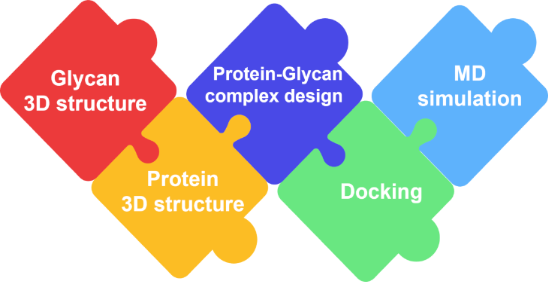
Computational toolbox for the analysis of protein–glycan interactions
- Ferran Nieto-Fabregat,
- Maria Pia Lenza,
- Angela Marseglia,
- Cristina Di Carluccio,
- Antonio Molinaro,
- Alba Silipo and
- Roberta Marchetti
Beilstein J. Org. Chem. 2024, 20, 2084–2107, doi:10.3762/bjoc.20.180
- , modifications can sometimes be required and can be achieved through ab initio calculations or programs like for example VFFDT [71]. Tools for the conformational analysis of glycans in the free state The structure and biological functions of glycans are closely intertwined; the roles they play are influenced not

Graphical Abstract

Figure 1: Carbohydrate conformational variability. a) Illustration of Φ, Ψ and ω dihedral angles for a repres...

Figure 2: Monosaccharides diversity in eukaryotes and bacteria. a) Eukaryotic monosaccharides. b) Examples of...

Figure 3: Different glycan representations. The 3’-sialyllactosamine is depicted according to the a) IUPAC no...

Figure 4: Visualisation programs. Different representation of a protein–ligand complex by using the most used...
Figure 5: A schematic representation of useful computational methods to study protein–glycan interactions. a)...
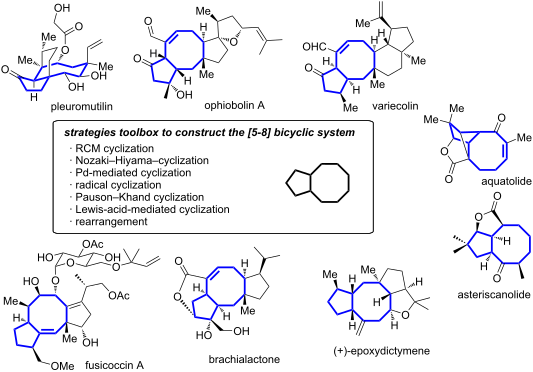
Strategies to access the [5-8] bicyclic core encountered in the sesquiterpene, diterpene and sesterterpene series
- Cécile Alleman,
- Charlène Gadais,
- Laurent Legentil and
- François-Hugues Porée
Beilstein J. Org. Chem. 2023, 19, 245–281, doi:10.3762/bjoc.19.23

Graphical Abstract

Figure 1: Examples of terpenes containing a bicyclo[3.6.0]undecane motif.

Figure 2: Commercially available first and second generation Grubbs and Hoveyda–Grubbs catalysts.

Figure 3: Examples of strategies to access the fusicoccan and ophiobolin tricyclic core structure by RCM.

Scheme 1: Synthesis of bicyclic core structure 12 of ophiobolin M (13) and cycloaraneosene (14).

Scheme 2: Synthesis of the core structure 21 of ophiobolins and fusicoccanes.

Scheme 3: Ring-closing metathesis attempts starting from thioester 22.

Scheme 4: Total synthesis of ent-fusicoauritone (28).

Figure 4: General structure of ophiobolins and congeners.

Scheme 5: Total synthesis of (+)-ophiobolin A (8).

Scheme 6: Investigation of RCM for the synthesis of ophiobolin A (8). Path A) RCM with TBDPS-protected alcoho...

Scheme 7: Synthesis of the core structure of cotylenin A aglycon, cotylenol (50).

Scheme 8: Synthesis of tricyclic core structure of fusicoccans.

Scheme 9: Total synthesis of (−)-teubrevin G (59).

Scheme 10: Synthesis of the core skeleton 63 of the basmane family.

Scheme 11: Total synthesis of (±)-schindilactone A (68).

Scheme 12: Total synthesis of dactylol (72).

Scheme 13: Ring-closing metathesis for the total synthesis of (±)-asteriscanolide (2).

Scheme 14: Synthesis of the simplified skeleton of pleuromutilin (1).

Scheme 15: Total synthesis of (−)-nitidasin (93) using a ring-closing metathesis to construct the eight-member...

Scheme 16: Total synthesis of (±)-naupliolide (97).

Scheme 17: Synthesis of the A-B ring structure of fusicoccane (101).

Scheme 18: First attempts of TRCM of dienyne substrates.

Scheme 19: TRCM on optimized substrates towards the synthesis of ophiobolin A (8).

Scheme 20: Tandem ring-closing metathesis for the synthesis of variecolin intermediates 114 and 115.

Scheme 21: Synthesis of poitediol (118) using the allylsilane ring-closing metathesis.

Scheme 22: Access to scaffold 122 by a NHK coupling reaction.

Scheme 23: Key step to construct the [5-8] bicyclooctanone core of aquatolide (4).

Scheme 24: Initial strategy to access aquatolide (4).

Scheme 25: Synthetic plan to cotylenin A (130).

Scheme 26: [5-8] Bicyclic structure of brachialactone (7) constructed by a Mizoroki–Heck reaction.

Scheme 27: Influence of the replacement of the allylic alcohol moiety.

Scheme 28: Formation of variecolin intermediate 140 through a SmI2-mediated Barbier-type reaction.

Scheme 29: SmI2-mediated ketyl addition. Pleuromutilin (1) eight-membered ring closure via C5–C14 bond formati...

Scheme 30: SmI2-mediated dialdehyde cyclization cascade of [5-8-6] pleuromutilin scaffold 149.

Scheme 31: A) Modular synthetic route to mutilin and pleuromutilin family members by Herzon’s group. B) Scaffo...

Scheme 32: Photocatalyzed oxidative ring expansion in pleuromutilin (1) total synthesis.

Scheme 33: Reductive radical cascade cyclization route towards (−)-6-epi-ophiobolin N (168).

Scheme 34: Reductive radical cascade cyclization route towards (+)-6-epi-ophiobolin A (173).

Scheme 35: Radical 8-endo-trig-cyclization of a xanthate precursor.

Figure 5: Structural representations of hypoestin A (177), albolic acid (178), and ceroplastol II (179) beari...

Scheme 36: Synthesis of the common [5-8-5] tricyclic intermediate of hypoestin A (177), albolic acid (178), an...

Scheme 37: Asymmetric synthesis of hypoestin A (177), albolic acid (178), and ceroplastol II (179).

Figure 6: Scope of the Pauson–Khand reaction.

Scheme 38: Nazarov cyclization revealing the fusicoauritone core structure 192.

Scheme 39: Synthesis of fusicoauritone (28) through Nazarov cyclization.

Scheme 40: (+)-Epoxydictymene (5) synthesis through a Nicholas cyclization followed by a Pauson–Khand reaction...

Scheme 41: Synthesis of aquatolide (4) by a Mukaiyama-type aldolisation.

Scheme 42: Tandem Wolff/Cope rearrangement furnishing the A-B bicyclic moiety 204 of variecolin.

Scheme 43: Asymmetric synthesis of the A-B bicyclic core 205 and 206 of variecolin.

Scheme 44: Formation of [5-8]-fused rings by cyclization under thermal activation.

Scheme 45: Construction of the [5-8-6] tricyclic core structure of variecolin (3) by Diels–Alder reaction.

Scheme 46: Synthesis of the [6-4-8-5]-tetracyclic skeleton by palladium-mediated cyclization.

Scheme 47: Access to the [5-8] bicyclic core structure of asteriscanolide (227) through rhodium-catalyzed cycl...

Scheme 48: Total syntheses of asterisca-3(15),6-diene (230) and asteriscanolide (2) with a Rh-catalyzed cycliz...

Scheme 49: Photocyclization of 2-pyridones to access the [5-8-5] backbone of fusicoccanes.

Scheme 50: Total synthesis of (+)-asteriscunolide D (245) and (+)-aquatolide (4) through photocyclization.

Scheme 51: Biocatalysis pathway to construct the [5-8-5] tricyclic scaffold of brassicicenes.

Scheme 52: Influence of the CotB2 mutant over the cyclization’s outcome of GGDP.
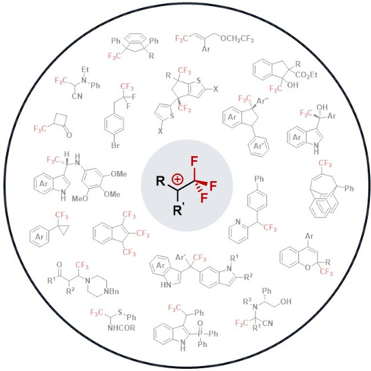
CF3-substituted carbocations: underexploited intermediates with great potential in modern synthetic chemistry
- Anthony J. Fernandes,
- Armen Panossian,
- Bastien Michelet,
- Agnès Martin-Mingot,
- Frédéric R. Leroux and
- Sébastien Thibaudeau
Beilstein J. Org. Chem. 2021, 17, 343–378, doi:10.3762/bjoc.17.32
- certain extent upon the electron demand in the system to which it is attached”. Thus, despite the strong intrinsic electron-withdrawing character, the trifluoromethyl group was shown to modestly act as a π-electron donor when substituting a carbenium ion. Ab initio calculations were performed to account

Graphical Abstract

Figure 1: Stabilizing interaction in the CF3CH2+ carbenium ion (top) and structure of the first observable fl...

Scheme 1: Isodesmic equations accounting for the destabilizing effect of the CF3 group. ΔE in kcal⋅mol−1, cal...

Scheme 2: Stabilizing effect of fluorine atoms by resonance electron donation in carbenium ions (δ in ppm).
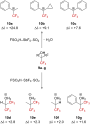
Scheme 3: Direct in situ NMR observation of α-(trifluoromethyl)carbenium ion or protonated alcohols. Δδ = δ19...

Scheme 4: Reported 13C NMR chemical shifts for the α-(trifluoromethyl)carbenium ion 10c (δ in ppm).
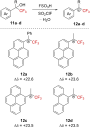
Scheme 5: Direct NMR observation of α-(trifluoromethyl)carbenium ions in situ (δ in ppm).

Scheme 6: Illustration of the ion pair solvolysis mechanism for sulfonate 13f. YOH = solvent.
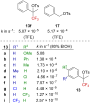
Figure 2: Solvolysis rate for 13a–i and 17.

Figure 3: Structures of allyl triflates 18 and 19 and allyl brosylate 20. Bs = p-BrC6H4SO2.

Figure 4: Structure of tosylate derivatives 21.
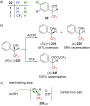
Figure 5: a) Structure of triflate derivatives 22. b) Stereochemistry outcomes of the reaction starting from (...

Scheme 7: Solvolysis reaction of naphthalene and anthracenyl derivatives 26 and 29.

Figure 6: Structure of bisarylated derivatives 34.

Figure 7: Structure of bisarylated derivatives 36.

Scheme 8: Reactivity of 9c in the presence of a Brønsted acid.
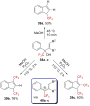
Scheme 9: Cationic electrocyclization of 38a–c under strongly acidic conditions.

Scheme 10: Brønsted acid-catalyzed synthesis of indenes 42 and indanes 43.

Scheme 11: Reactivity of sulfurane 44 in triflic acid.

Scheme 12: Solvolysis of triflate 45f in alcoholic solvents.

Scheme 13: Synthesis of labeled 18O-52.

Scheme 14: Reactivity of sulfurane 53 in triflic acid.

Figure 8: Structure of tosylates 56 and 21f.

Scheme 15: Resonance forms in benzylic carbenium ions.

Figure 9: Structure of pyrrole derivatives 58 and 59.

Scheme 16: Resonance structure 60↔60’.
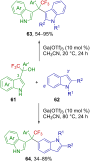
Scheme 17: Ga(OTf)3-catalyzed synthesis of 3,3’- and 3,6’-bis(indolyl)methane from trifluoromethylated 3-indol...

Scheme 18: Proposed reaction mechanism.

Scheme 19: Metal-free 1,2-phosphorylation of 3-indolylmethanols.
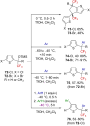
Scheme 20: Superacid-mediated arylation of thiophene derivatives.

Scheme 21: In situ mechanistic NMR investigations.
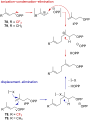
Scheme 22: Proposed mechanisms for the prenyltransferase-catalyzed condensation.

Scheme 23: Influence of a CF3 group on the allylic SN1- and SN2-mechanism-based reactions.

Scheme 24: Influence of the CF3 group on the condensation reaction.

Scheme 25: Solvolysis of 90 in TFE.

Scheme 26: Solvolysis of allyl triflates 94 and 97 and isomerization attempt of 96.

Scheme 27: Proposed mechanism for the formation of 95.

Scheme 28: Formation of α-(trifluoromethyl)allylcarbenium ion 100 in a superacid.
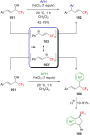
Scheme 29: Lewis acid activation of CF3-substituted allylic alcohols.
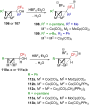
Scheme 30: Bimetallic-cluster-stabilized α-(trifluoromethyl)carbenium ions.
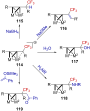
Scheme 31: Reactivity of cluster-stabilized α-(trifluoromethyl)carbenium ions.
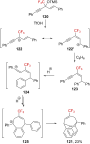
Scheme 32: α-(Trifluoromethyl)propargylium ion 122↔122’ generated from silyl ether 120 in a superacid.
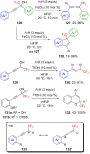
Scheme 33: Formation of α-(trifluoromethyl)propargylium ions from CF3-substituted propargyl alcohols.
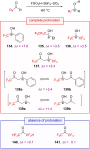
Scheme 34: Direct NMR observation of the protonation of some trifluoromethyl ketones in situ and the correspon...

Scheme 35: Selected resonance forms in protonated fluoroketone derivatives.

Scheme 36: Acid-catalyzed Friedel–Crafts reactions of trifluoromethyl ketones 143a,b and 147a–c.

Scheme 37: Enantioselective hydroarylation of CF3-substituted ketones.
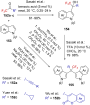
Scheme 38: Acid-catalyzed arylation of ketones 152a–c.

Scheme 39: Reactivity of 156 in a superacid.
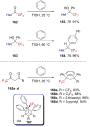
Scheme 40: Reactivity of α-CF3-substituted heteroaromatic ketones and alcohols as well as 1,3-diketones.

Scheme 41: Reactivity of 168 with benzene in the presence of a Lewis or Brønsted acid.

Scheme 42: Acid-catalyzed three-component asymmetric reaction.

Scheme 43: Anodic oxidation of amines 178a–c and proposed mechanism.
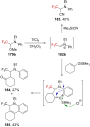
Scheme 44: Reactivity of 179b in the presence of a strong Lewis acid.

Scheme 45: Trifluoromethylated derivatives as precursors of trifluoromethylated iminium ions.

Scheme 46: Mannich reaction with trifluoromethylated hemiaminal 189.

Scheme 47: Suitable nucleophiles reacting with 192 after Lewis acid activation.
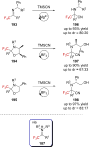
Scheme 48: Strecker reaction involving the trifluoromethylated iminium ion 187.
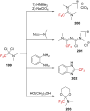
Scheme 49: Reactivity of 199 toward nucleophiles.

Scheme 50: Reactivity of 204a with benzene in the presence of a Lewis acid.

Scheme 51: Reactivity of α-(trifluoromethyl)-α-chloro sulfides in the presence of strong Lewis acids.

Scheme 52: Anodic oxidation of sulfides 213a–h and Pummerer rearrangement.

Scheme 53: Mechanism for the electrochemical oxidation of the sulfide 213a.

Scheme 54: Reactivity of (trifluoromethyl)diazomethane (217a) in HSO3F.

Figure 10: a) Structure of diazoalkanes 217a–c and b) rate-limiting steps of their decomposition.

Scheme 55: Deamination reaction of racemic 221 and enantioenriched (S)-221.

Scheme 56: Deamination reaction of labeled 221-d2. Elimination products were formed in this reaction, the yiel...
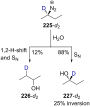
Scheme 57: Deamination reaction of 225-d2. Elimination products were also formed in this reaction in undetermi...

Scheme 58: Formation of 229 from 228 via 1,2-H-shift.

Scheme 59: Deamination reaction of 230. Elimination products were formed in this reaction, the yield of which ...

Scheme 60: Deamination of several diazonium ions. Elimination products were formed in these reactions, the yie...

Scheme 61: Solvolysis reaction mechanism of alkyl tosylates.

Scheme 62: Solvolysis outcome for the tosylates 248 and 249 in HSO3FSbF5.

Figure 11: Solvolysis rate of 248, 249, 252, and 253 in 91% H2SO4.

Scheme 63: Illustration of the reaction pathways. TsCl, pyridine, −5 °C (A); 98% H2SO4, 30 °C (B); 98% H2SO4, ...

Scheme 64: Proposed solvolysis mechanism for the aliphatic tosylate 248.

Scheme 65: Solvolysis of the derivatives 259 and 260.

Scheme 66: Solvolysis of triflate 261. SOH = solvent.

Scheme 67: Intramolecular Friedel–Crafts alkylations upon the solvolysis of triflates 264 and 267.

Scheme 68: α-CF3-enhanced γ-silyl elimination of cyclobutyltosylates 270a,b.
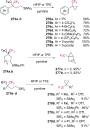
Scheme 69: γ-Silyl elimination in the synthesis of a large variety of CF3-substituted cyclopropanes. Pf = pent...

Scheme 70: Synthetic pathways to 281. aNMR yields.

Scheme 71: The cyclopropyl-substituted homoallylcyclobutylcarbenium ion manifold.
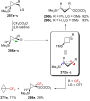
Scheme 72: Reactivity of CF3-substituted cyclopropylcarbinyl derivatives 287a–c. LG = leaving group.

Scheme 73: Reactivity of CF3-substituted cyclopropylcarbinyl derivatives 291a–c.

Scheme 74: Superacid-promoted dimerization or TFP.

Scheme 75: Reactivity of TFP in a superacid.
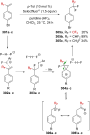
Scheme 76: gem-Difluorination of α-fluoroalkyl styrenes via the formation of a “hidden” α-RF-substituted carbe...

Scheme 77: Solvolysis of CF3-substituted pentyne 307.

Scheme 78: Photochemical rearrangement of 313.

Figure 12: Structure of 2-norbornylcarbenium ion 318 and argued model for the stabilization of this cation.

Figure 13: Structures and solvolysis rate (TFE, 25 °C) of the sulfonates 319–321. Mos = p-MeOC6H4SO2.

Scheme 79: Mechanism for the solvolysis of 323. SOH = solvent.

Scheme 80: Products formed by the hydrolysis of 328.

Scheme 81: Proposed carbenium ion intermediates in an equilibrium during the solvolysis of tosylates 328, 333,...
Models of necessity
- Timothy Clark and
- Martin G. Hicks
Beilstein J. Org. Chem. 2020, 16, 1649–1661, doi:10.3762/bjoc.16.137

- calculations use very space-extensive atomic orbitals (AOs, basis functions) that extend into the neighborhood of adjacent atoms (however that is defined). This problem manifests itself concretely as basis-set superposition error (BSSE) [21] in ab initio calculations but rears its ugly head in every AO-based

Graphical Abstract

Figure 1: Representation of clozapine to emphasize the quantum mechanical characteristics of the molecule. Th...

Figure 2: Jacobus van’t Hoff’s molecular models. The photography was reproduced from: https://rijksmuseumboer...

Figure 3: IUPAC name, canonical SMILES, InChI and InChI key, Lewis structure (2D line diagram) and 3D ball-an...

Figure 4: Conceptual distinction between polarization and charge transfer. The distinction depends entirely o...
Influence of per-O-sulfation upon the conformational behaviour of common furanosides
- Alexey G. Gerbst,
- Vadim B. Krylov,
- Dmitry A. Argunov,
- Maksim I. Petruk,
- Arsenii S. Solovev,
- Andrey S. Dmitrenok and
- Nikolay E. Nifantiev
Beilstein J. Org. Chem. 2019, 15, 685–694, doi:10.3762/bjoc.15.63

- and β-galactose. Full exploration of the furanoside ring by means of ab initio calculations was performed and coupling constants were calculated for each of the low-energy conformers. The results demonstrated preferred trans-orientation of H4–H5 protons in the non-sulfated molecules which changed to
- of sulfates. Keywords: ab initio calculations; conformational analysis; furanosides; NMR; sulfation; Introduction Changes in the conformations of monosaccharides expectedly accompany their modification with different functional groups. Thus, spatial repulsion of silyl groups results in inversion or

Graphical Abstract

Scheme 1: Studied monosaccharides 1–3 and 1s–3s and their preparation.
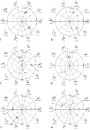
Figure 1: The pseudo-rotation wheels showing different optimized structures of furanosides 1–3 and 1s–3s. The...

Figure 2: Schematic views of low energy conformers A–M. The minimal energy conformers are embedded in red fra...

Figure 3: Denotation of conformers obtained during rotation around C5–C6 bond.
Synthesis, biophysical properties, and RNase H activity of 6’-difluoro[4.3.0]bicyclo-DNA
- Sibylle Frei,
- Adam K. Katolik and
- Christian J. Leumann
Beilstein J. Org. Chem. 2019, 15, 79–88, doi:10.3762/bjoc.15.9
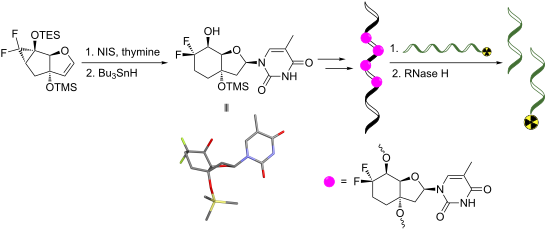
- oligonucleotides hybridized to RNA showed a similar structure than the natural DNA/RNA duplex. Furthermore, since the structural investigation on the nucleoside level by X-ray crystallography and ab initio calculations pointed to a furanose conformation in the southern region, a RNase H cleavage assay was

Graphical Abstract

Figure 1: Chemical structure of selected fluorine-modified nucleic acids.

Scheme 1: Synthesis of the bicyclic nucleoside 6. Reagents and conditions: a) BSA, thymine, NIS, DCM, 0 °C to...

Scheme 2: Synthesis of the thymidine phosphoramidite building block 9. Reagents and conditions: a) HF-pyridin...

Figure 2: X-ray structure of nucleoside 6a (left) and 6b (right).

Figure 3: a) Potential energy profile versus pseudorotation phase angle of nucleoside 7 and b) its minimal en...

Figure 4: CD spectra of ON1–4 with complementary a) DNA, and b) RNA. Total strand conc. 2 μM in 10 mM NaH2PO4...

Figure 5: Hydrolysis products of the RNase H activation assay. The DNA served as positive control, whereas C1...
Correlation effects and many-body interactions in water clusters
- Andreas Heßelmann
Beilstein J. Org. Chem. 2018, 14, 979–991, doi:10.3762/bjoc.14.83
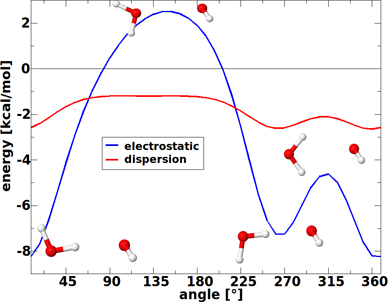
- methods on an adequate level, e.g., random-phase approximation electron correlation methods. The relative magnitudes of the different interaction energy contributions obtained by accurate ab initio calculations can therefore provide useful insights that can be exploited to develop enhanced force field

Graphical Abstract

Figure 1: Number of two-body, three-body and four-body clusters for systems with up to 13 molecules.

Figure 2: Water clusters from [23] studied in this work.

Figure 3: Cyclic-chair structure of the water hexamer.

Figure 4: Comparison of the structures of the first seven water clusters optimized on the Hartree–Fock and MP...

Figure 5: Electrostatic and dispersion interaction energy for three different structures of the water dimer. ...

Figure 6: Two- and three-body dispersion energies for three structures of the water trimer. In all conformati...

Figure 7: Number of three-body subclusters for which the three-body dispersion energy is attractive (red) or ...

Figure 8: DFT-SAPT energy decomposition of the three-body interaction energy of the water trimer calculated u...

Figure 9: DFT-SAPT energy decomposition of the sum of the three- and four-body interaction energy of the wate...

Figure 10: Sum of three- and four-body dispersion interactions compared to the total many-body interactions Δ3...

Figure 11: Relative contribution of the two-body dispersion interaction energy to the complete two-body and to...
Synthesis, effect of substituents on the regiochemistry and equilibrium studies of tetrazolo[1,5-a]pyrimidine/2-azidopyrimidines
- Elisandra Scapin,
- Paulo R. S. Salbego,
- Caroline R. Bender,
- Alexandre R. Meyer,
- Anderson B. Pagliari,
- Tainára Orlando,
- Geórgia C. Zimmer,
- Clarissa P. Frizzo,
- Helio G. Bonacorso,
- Nilo Zanatta and
- Marcos A. P. Martins
Beilstein J. Org. Chem. 2017, 13, 2396–2407, doi:10.3762/bjoc.13.237

- tendency while studying a series of substituents at the 5-position of tetrazolo[1,5-a]pyridines using ab initio calculations. Their findings indicated that electron-withdrawing groups stabilize the azide isomer while electron-donating groups stabilize the tetrazole ring. Additionally, it was observed that

Graphical Abstract

Figure 1: Hydrogen coupling constants (3JH-H) of (a) H6–H7 for 3a and (b) H5–H6 for 5h.

Figure 2: LUMO coefficients for (a) β-enaminones 1a,h, and their (b) conjugated acids.
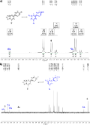
Figure 3:
(a) 1H and (b) 13C NMR spectra demonstrating the 3d![[Graphic 9]](/bjoc/content/inline/1860-5397-13-237-i9.svg?max-width=637&scale=1.18182) 4d equilibrium in DMSO-d6 at 25 °C.
4d equilibrium in DMSO-d6 at 25 °C.

Figure 4: ORTEP® [45] plot of 7a with thermal ellipsoids drawn at 50% probability level.

Figure 5: Tetrazolo[1,5-a]pyrimidine observed in solution (CDCl3 and DMSO-d6) and 2-azidopyrimidine observed ...

Figure 6: ORTEP® [45] plot of 8i with thermal ellipsoids drawn at 50% probability level.

Figure 7: Representation of the possible equilibrium existing between 6i, 7i, and 8i.
Enzymatic synthesis and phosphorolysis of 4(2)-thioxo- and 6(5)-azapyrimidine nucleosides by E. coli nucleoside phosphorylases
- Vladimir A. Stepchenko,
- Anatoly I. Miroshnikov,
- Frank Seela and
- Igor A. Mikhailopulo
Beilstein J. Org. Chem. 2016, 12, 2588–2601, doi:10.3762/bjoc.12.254

- only 5-phenyl- and 5-tert-butyl-6-azauracils displayed very low substrate activity. The role of structural peculiarities and electronic properties in the substrate recognition by E. coli nucleoside phosphorylases is discussed. Keywords: enzymatic glycosylation; PM3 and ab initio calculations

Graphical Abstract

Scheme 1: Enzymatic synthesis of 2-deoxy-β-D-ribofuranosides 1b–5b of the heterocyclic bases 1a–5a. Regents a...

Scheme 2: Phosphorolysis of nucleosides 1b–5b and related pyrimidine nucleosides (2’-deoxyuridine, thymidine,...

Figure 1: Phosphorolysis of a number of 2’-deoxy-β-D-ribofuranosides of uracil and thymine, and their 6-aza d...

Figure 2: Phosphorolysis of 2′-deoxyuridine and thymidine, their 4- and 2-thio derivatives and 6-aza-2-thioth...

Figure 3: Supposed monoanionic forms of 4-thiouracil and 2-thiouracil in aqueous medium [48,49].

Figure 4: Phosphorolysis of 6-aza-2-thiothymidine (5b), 4-thiothymidine (11a) and 4-thio-2′-deoxyuridine (1b)...

Figure 5: Structures of 2-thiopyrimidine(9–12) and 5-azacytidine (13 and 14) nucleosides.

Figure 6: Energy minimized structures of N3-(β-D-ribofuranosyl)adenine (left) and 5-aza-2′-deoxycytidine (rig...

Figure 7: Structures of 6-azapyrimidines 15–18 tested for E. coli UP and TP.

Figure 8: Geometry optimized structures (PM3 method) of 5-tert-butyl-6-azauracil (15) and 5-phenyl-6-azauraci...

Figure 9: The UV spectra of 4-thio-2′-deoxyuridine (1b).

Figure 10: The UV spectra of 6-aza-2-thiothymidine (5b).
Towards inhibitors of glycosyltransferases: A novel approach to the synthesis of 3-acetamido-3-deoxy-D-psicofuranose derivatives
- Maroš Bella,
- Miroslav Koóš and
- Chun-Hung Lin
Beilstein J. Org. Chem. 2015, 11, 1547–1552, doi:10.3762/bjoc.11.170

- carbohydrate substrates [9][16]. Investigations of the catalytic mechanism of inverting glycosyltransferases [18] and N-acetylglucosaminyltransferase I [19] by employing ab initio calculations resulted in the design of inhibitors based on carbohydrate mimetics that simulate the transition state of the

Graphical Abstract

Figure 1: Proposed structure of GnTs inhibitors.

Scheme 1: Reagents and conditions: a) MsCl, Et3N, CH2Cl2, 0 °C → rt, overnight, 93%; b) NaN3, H2O/DMF 1:20 (v...

Scheme 2: Reagents and conditions: a) H2SO4, MeOH, rt, overnight, 71%; b) H2SO4, 70% AcOH, 0 °C → rt, 4 h, 84...

Figure 2: Molecular structure (ORTEP drawing with adjacent ChemDraw image) of compound 12. Atomic displacemen...

Scheme 3: Reagents and conditions: a) EtSH, BF3·OEt2, CH2Cl2, −5 °C → rt, 4 h, 13: 55%, 14: 34%.
Single-molecule conductance of a chemically modified, π-extended tetrathiafulvalene and its charge-transfer complex with F4TCNQ
- Raúl García,
- M. Ángeles Herranz,
- Edmund Leary,
- M. Teresa González,
- Gabino Rubio Bollinger,
- Marius Bürkle,
- Linda A. Zotti,
- Yoshihiro Asai,
- Fabian Pauly,
- Juan Carlos Cuevas,
- Nicolás Agraït and
- Nazario Martín
Beilstein J. Org. Chem. 2015, 11, 1068–1078, doi:10.3762/bjoc.11.120
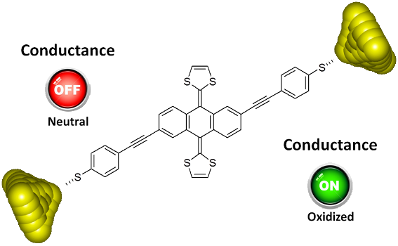
- experimental resolution, based on the value we measure for the CT complex. Ab initio calculations To gain insight into the conduction mechanism of compound 5, we performed theoretical calculations based on a combination of density functional theory (DFT) and Green’s functions techniques within the framework of

Graphical Abstract

Figure 1: Depictions of 9,10-bis(1,3-dithiol-2-ylidene)-9,10-dihydroanthracene (exTTF) in the (a) neutral for...

Scheme 1: Synthetic route to the target exTTF-based molecular wire 5.

Figure 2: Cyclic voltammograms of compound 5 and pristine exTTF (at concentrations of approximately 0.2 mM) u...

Figure 3: 2D histograms resulting from break junction experiments on an unmodified gold sample (a), OPE3-dith...

Figure 4: 2D histograms corresponding to compound 5 after exposing a gold substrate to the solution of the co...

Figure 5: 2D histograms corresponding to compound 5 after exposing a gold substrate to a solution of the comp...

Figure 6: a) Examples of individual G(z) traces showing clear conductance plateaus. b–e) 2D histograms corres...
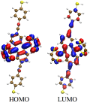
Figure 7: Frontier orbitals of compound 5 in the gas phase.

Figure 8: Top a) and hollow b) binding geometries of 5 to a gold cluster in metal–molecule–metal junctions.

Figure 9: Transmission as a function of energy for the top and hollow binding geometries.
Mechanical stability of bivalent transition metal complexes analyzed by single-molecule force spectroscopy
- Manuel Gensler,
- Christian Eidamshaus,
- Maurice Taszarek,
- Hans-Ulrich Reissig and
- Jürgen P. Rabe
Beilstein J. Org. Chem. 2015, 11, 817–827, doi:10.3762/bjoc.11.91
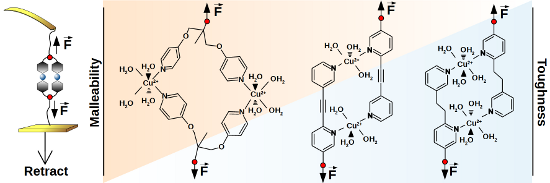
- aqueous solutions of CuSO4 (Figure 1). As a result, rupture forces of both valencies were similar. Combining DFS with ab-initio calculations we suggested a stepwise bond-rupture including a hydrogen-bound intermediate. Thus in our system the bivalent effect did not increase the mechanical stability, but
- single-molecular level. For example, a Pd2+ pincer complex with two different pyridine ligands shows rupture lengths around 0.2 nm in DMSO [28]. Using ab-initio calculations we could show that a hydrogen-bound intermediate state stabilizes the interaction over a longer distance [27]. In this case, a
- in aqueous solution. The octahedral conformation of 1 with additional water ligands was suggested by ab-initio calculations [27]. For 2a a quasi-octahedral configuration was calculated with only three water ligands per Cu2+ due to steric reasons [27]. Schemes for 2b and 2c are suggested accordingly

Graphical Abstract

Figure 1: Expected coordination complexes of monovalent and bivalent structures (1 and 2a–c, respectively) wi...
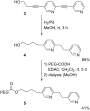
Scheme 1: Synthesis of pyridine-PEG conjugate 5.
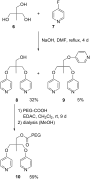
Scheme 2: Synthesis of pyridine-PEG conjugate 10.

Figure 2: Principle of the SMFS experiment. During retraction of the sample, possible interactions are probed...

Figure 3: Potential energy diagrams according to the KBE model for simultaneous and successive bond rupture a...

Figure 4: Most probable rupture forces plotted over their corresponding loading rate. Each point denotes for ...

Figure 5: Possible rupture mechanism describing the extraordinary long rupture length of system 2c. Starting ...

Figure 6: Most probable rupture forces at a logarithmic loading rate of 8.5 in relation to the corresponding ...
Synthesis and characterization of a new photoinduced switchable β-cyclodextrin dimer
- Florian Hamon,
- Claire Blaszkiewicz,
- Marie Buchotte,
- Estelle Banaszak-Léonard,
- Hervé Bricout,
- Sébastien Tilloy,
- Eric Monflier,
- Christine Cézard,
- Laurent Bouteiller,
- Christophe Len and
- Florence Djedaini-Pilard
Beilstein J. Org. Chem. 2014, 10, 2874–2885, doi:10.3762/bjoc.10.304
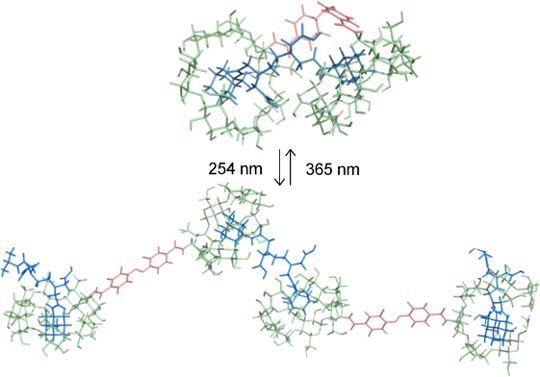
- high solubility in water. The photoisomerization properties were studied by UV–vis and HPLC and supported by ab initio calculations. The cis/trans ratio of AZO-CDim 1 is 7:93 without irradiation and 37:63 after 120 min of irradiation at 365 nm; the reaction is reversible after irradiation at 254 nm
- times without causing side effects, as shown in Figure 3. Ab initio calculations were also performed but the cis/trans transition was not observed since molecular modeling methods are unable to break bonds. In order to collect data on this phenomenon, the two configurations of the system had to be taken
- into account separately. Thus, ab initio calculations were performed on the two configurations of the azobenzene linker, the so-called 4,4’-bis(N-methylcarboxamide)azobenzene linker, to determine the structures of minimal energy (Figure 4a and Figure 4b). Once optimized, the measured C4–C4’ distances

Graphical Abstract

Scheme 1: Synthesis pathway of the dimer AZO-CDim 1.

Figure 1: Overlaid UV spectra of the irradiation of AZO-CDim 1 (a) from 0 to 120 min at 365 nm and then (b) f...

Figure 2: HPLC quantification of the cis/trans ratio of AZO-CDim 1 before irradiation (left) and after irradi...

Figure 3: Percentage of cis isomer of AZO-CDim 1 produced during photoisomerization cycles (c = 10−4 M, water...

Figure 4: Representation of the most stable structures obtained for the azobenzene linker (a) for the trans c...

Figure 5: Structure of the ditopic guest ADAdim 4.

Figure 6: Titration of (a) β-CD (c = 0.8 mM) and (b) β-CD-NH2 (c = 0.8 mM) by ADAdim 4 (c = 4 mM). (c) Diluti...
Figure 7: (a) 1H NMR spectra of AZO-CDim 1 (500 MHz, D2O, 2.5 mM) in the absence (bottom) and presence of ADA...

Figure 8: Proposed structures of inclusion complexes with the ditopic host AZO-CDim 1 and the ditopic guest A...
The chemoenzymatic synthesis of clofarabine and related 2′-deoxyfluoroarabinosyl nucleosides: the electronic and stereochemical factors determining substrate recognition by E. coli nucleoside phosphorylases
- Ilja V. Fateev,
- Konstantin V. Antonov,
- Irina D. Konstantinova,
- Tatyana I. Muravyova,
- Frank Seela,
- Roman S. Esipov,
- Anatoly I. Miroshnikov and
- Igor A. Mikhailopulo
Beilstein J. Org. Chem. 2014, 10, 1657–1669, doi:10.3762/bjoc.10.173

- ab initio calculations in terms of the electronic structure (natural purines vs analogues) and stereochemical features (2FAra-1P vs Ara-1P) of the studied compounds to determine the substrate recognition by E. coli nucleoside phosphorylases. The second approach starts with the cascade one-pot
- ), their analogues (5-aza-7-deazaguanine and 8-aza-7-deazahypoxanthine) and thymine. The results were compared with those of a similar reaction with α-D-arabinofuranose-1-phosphate (13a; Ara-1P). Differences of the reactivity of various substrates were analyzed by ab initio calculations in terms of the
- stereochemistry of both anomers as dilithium salts was analyzed by the ab initio calculations (3-21G; total charge equal to zero; Polak–Ribiere conjugate gradient) employing AMBER force field geometry optimization as a starting approximation. Two structures with the C-3-exo conformation of the pentofuranose ring

Graphical Abstract

Figure 1: The structures of purine nucleosides studied in the chemoenzymatic synthesis and in a cascade one-p...

Scheme 1: Chemical synthesis of 2-deoxy-2-fluoro-α/β-D-arabinofuranose-1-phosphates (12a,b). Reagents and con...

Figure 2: The structures of 1-phosphates of α-D-arabinofuranose (13a; AraFur-1P) and β-D-arabinopyranose (13b...

Figure 3: Geometry optimization of 1-phosphates of 2-deoxy-2-fluoro-α-D-arabinofuranose (12a) and the β-anome...

Figure 4: Progress of the formation of 9-(2-deoxy-2-fluoro-β-D-arabinofuranosyl)-2-chloroadenine (1), 2-amino...

Figure 5: Clofarabine content in the reaction mixture vs time (hours) of the reaction.

Scheme 2: Suggested mechanism of purine nucleoside synthesis catalyzed by E. coli purine nucleoside phosphory...

Figure 6: Progress of the formation of β-D-arabinofuranosides and 2-deoxy-2-fluoro-β-D-arabinofuranosides of ...

Figure 7: Tautomeric structures of 5-aza-7-deazaguanine (17).

Figure 8: Progress of the formation of clofarabine (1), 9-(β-D-arabinofuranosyl)-2-chloroadenine (6), 9-(β-D-...
Theoretical studies on the intramolecular cyclization of 2,4,6-t-Bu3C6H2P=C: and effects of conjugation between the P=C and aromatic moieties
- Masaaki Yoshifuji and
- Shigekazu Ito
Beilstein J. Org. Chem. 2014, 10, 1032–1036, doi:10.3762/bjoc.10.103
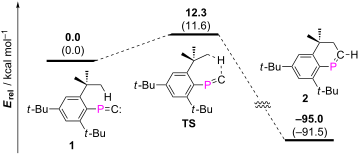
- Abstract The intramolecular C–H insertion of the Mes*-substituted phosphanylidenecarbene [Mes*P=C:] (Mes* = 2,4,6-t-Bu3C6H2) and physicochemical properties of the cyclized product, 6,8-di-tert-butyl-3,4-dihydro-4,4-dimethyl-1-phosphanaphthalene were studied based on ab initio calculations. Whereas the

Graphical Abstract

Scheme 1: (a) The original FBW rearrangement reaction and (b) the phosphorus version of FBW rearrangement.

Scheme 2: Intramolecular C–H insertion of phosphanylidenecarbene.

Figure 1: Optimized structure of the transition state (TS) for the intramolecular C–H insertion of 1 [MP2(Ful...

Figure 2: Computationally characterized cyclization procedures of 1 affording 2 [MP2(full)/6-31G(d)]. Values ...

Figure 3: Displacement vectors of the transition state (ν = 216.93 i cm–1).

Figure 4: Optimized structure of 2 [MP2(full)/6-31G(d)]. Bond distances (Å): P1–C1 1.678, C1–C2 1.491, P1–C3 ...

Figure 5: HOMO (left) and LUMO (right) of 2.
Advancements in the mechanistic understanding of the copper-catalyzed azide–alkyne cycloaddition
- Regina Berg and
- Bernd F. Straub
Beilstein J. Org. Chem. 2013, 9, 2715–2750, doi:10.3762/bjoc.9.308

Graphical Abstract

Scheme 1: Exemplary 1,3-dipolar cycloaddition of phenylacetylene with phenyl azide [6].

Scheme 2: CuAAC reaction of benzyl azide with (prop-2-yn-1-yloxy)benzene [12].

Scheme 3: Bioconjugation reaction of capsid-bound azide groups with alkynyl-functionalized dye molecules (cow...

Figure 1: Tris(triazolylmethyl)amine ligands for CuAAC applications in bioorganic chemistry: TBTA = tris[(1-b...

Figure 2: Derivatives of 2,2’-bipyridine and 1,10-phenanthroline, commonly used ligands in CuAAC reactions un...

Scheme 4: CuAAC reaction with copper(II) precursor salt and rate-accelerating monodentate phosphoramidite lig...

Scheme 5: Synthesis of 1-(adamant-1-yl)-1H-1,2,3-triazol-4-ylcarbonyl-Phe-Gly-OH by solid-supported Click cat...

Scheme 6: CuAAC reaction with re-usable copper(I)-tren catalyst [129].

Scheme 7: CuAAC test reaction with chlorido[tris(1-benzyl-1H-1,2,3-triazol-4-yl)methanol-κ3N3]copper(I) and a...

Scheme 8: CuAAC model reaction with [Cu2(μ-TBTA-κ4N2,N3,N3’,N3’’)2][BF4]2 [131].

Scheme 9: Application of a (2-aminoarenethiolato)copper(I) complex as homogeneous catalyst for the CuAAC test...

Scheme 10: Application of [CuBr(PPh3)3] as homogeneous catalyst for the CuAAC test reaction of benzyl azide wi...

Figure 3: Phosphinite and phosphonite copper(I) complexes presented by Díez-González [144].

Scheme 11: Effect of additives on the CuAAC test reaction with [(SIMes)CuCl] [149].

Scheme 12: Initiation of the catalytic cycle by formation of the copper acetylide intermediate from [(ICy)2Cu]...

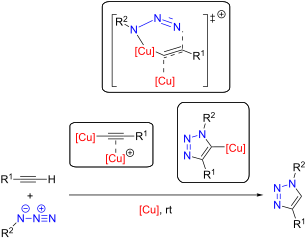
Scheme 13: Early mechanistic proposal by Sharpless [12,42].

Scheme 14: Chemoselective synthesis of a 5-iodo-1,4-disubstituted 1,2,3-triazole [156].

Scheme 15: Mechanistic proposals for the copper-catalyzed azide–iodoalkyne cycloaddition [156].

Scheme 16: 1,3-Dipolar cycloaddition of 3-hexyne catalyzed by [(SIMes)CuBr] [146].

Scheme 17: Mechanistic picture for the cycloaddition of internal alkynes catalyzed by NHC-copper(I) complexes ...

Scheme 18: Catalytic cycle of the CuAAC reaction on the basis of the proposed mechanistic scheme by Fokin and ...

Figure 4: Schematic representation of the single crystal X-ray structures of copper(I) acetylide complexes [Cu...

Figure 5: Acetylide-bridged dicopper complexes with tris(heteroarylmethyl)amine ligand(s) as key intermediate...

Scheme 19: Off-cycle equilibrium between unreactive polymeric copper(I) acetylide species (right) and reactive...
Figure 6: Categories of tris(heteroarylmethyl)amine ligands regarding their binding ability to copper(I) ions ...

Scheme 20: Mechanistic scheme for ligand-accelerated catalysis with tripodal tris(heteroarylmethyl)amine ligan...

Scheme 21: Synthesis of supposed intermediates in the CuAAC’s catalytic cycle [164,187].

Figure 7: Tetranuclear copper acetylide complexes as reported by Weiss (left) [176] and Tasker (middle) [185] and model...

Figure 8: Gibbs free energy diagram for the computed mechanistic pathway of the CuAAC reaction starting from ...

Figure 9: Energy diagram by Ahlquist and Fokin [125].

Scheme 22: Mechanistic proposal for the CuAAC reaction based on DFT calculations by Fokin [125] and our group [186] ([Cu...

Figure 10: ORTEP plot [202,203] of the X-ray powder diffraction crystal structure of (phenylethynyl)copper(I) [(PhC≡CCu)...

Scheme 23: Synthesis of [(PhC≡CCu)2]n as co-product in the Glaser coupling of phenylacetylene in the presence ...

Scheme 24: Mechanistic explanation for the isotopic enrichment in the product triazolide in the presence of th...

Scheme 25: Homogeneous CuAAC catalysis with a bistriazolylidene dicopper complex (0.5 mol %) and comparison wi...
Stereoselectively fluorinated N-heterocycles: a brief survey
- Xiang-Guo Hu and
- Luke Hunter
Beilstein J. Org. Chem. 2013, 9, 2696–2708, doi:10.3762/bjoc.9.306
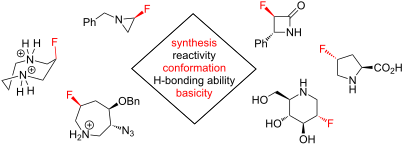
- investigated the reactivity of mono- and difluoroaziridines 2 and 3 (Figure 1) [15][16]. As well as the enhanced reactivity that 2 and 3 both show towards nucleophilic ring opening, there is an additional subtlety regarding the regioselectivity. While ab initio calculations predict that both 2 and 3 should

Graphical Abstract

Figure 1: Fluorination alters the reactivity of aziridines.

Scheme 1: Fluorination makes β-lactam derivatives more reactive towards lipase-catalysed methanolysis.

Figure 2: The ring pucker in azetidine derivatives can be influenced by a C–F…N+ charge–dipole interaction.

Figure 3: Fluorination ridifies the pyrrolidine rings of ligand 10, with several consequences for its G-quadr...

Figure 4: Proline 11 readily undergoes a ring-flip process, but (4R)-fluoroproline 12 is more rigid because o...

Scheme 2: Hyperconjugation rigidifies the ring pucker of a fluorinated organocatalyst 14, leading to higher e...

Figure 5: Fluorinated piperidines prefer the axial conformation, due to stabilising C–F…N+ interactions.

Figure 6: Fluorination can rigidify a substituted azepane, but only if it acts in synergy with the other subs...

Figure 7: The eight-membered N-heterocycle 24 prefers an axial orientation of the fluorine substituent, givin...

Figure 8: Some iminosugars are “privileged structures” that serve as valuable drug leads.

Figure 9: Fluorinated iminosugar analogues 32–34 illuminate the binding interactions of the α-glycosidase inh...

Figure 10: Fluorinated miglitol analogues, and their inhibitory activity towards yeast α-glycosidase.

Figure 11: Analogues of isofagomine (31) have different pKaH values, and therefore exhibit maximal β-glucosida...

Scheme 3: General strategy for the synthesis of fluorinated N-heterocycles via deoxyfluorination.

Figure 12: Late stage deoxyfluorination in the synthesis of multifunctional N-heterocycles.

Scheme 4: During the deoxyfluorination of N-heterocycles, neighbouring group participation can sometimes lead...

Scheme 5: A building block approach for the synthesis of fluorinated aziridines 2 and 3.

Scheme 6: Building block approach for the synthesis of a difluorinated analogue of calystegine B (63).

Scheme 7: Synthesis of fluorinated analogues of brevianamide E (65) and gypsetin (68) via electrophilic fluor...

Scheme 8: Organocatalysed enantioselective fluorocyclisation.

Scheme 9: Synthesis of 3-fluoroazetidine 73 via radical fluorination.

Scheme 10: Synthesis of 3,3-difluoropyrrolidine 78 via a radical cyclisation.

Scheme 11: Chemoenzymatic synthesis of fluorinated β-lactam 4b.
Establishing the concept of aza-[3 + 3] annulations using enones as a key expansion of this unified strategy in alkaloid synthesis
- Aleksey I. Gerasyuto,
- Zhi-Xiong Ma,
- Grant S. Buchanan and
- Richard P. Hsung
Beilstein J. Org. Chem. 2013, 9, 1170–1178, doi:10.3762/bjoc.9.131
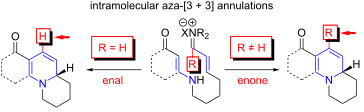
- readily interconvertable 12 and 14. We found this controversy in the isolation and total synthesis papers an interesting one that deserves further investigations. Consequently, we performed ab initio calculations on 12 and 14 to gain insight into their relative thermodynamic stability. Models of the most

Graphical Abstract

Figure 1: An aza-[3 + 3] annulation.

Scheme 1: Aza-[3 + 3] annulations with enones.

Figure 2: Possible natural-product targets.

Scheme 2: Synthesis of the annulation precursor enone 10.

Scheme 3: Propyleine-isopropeleine interconversion.

Figure 3: Relative stabilities of propyleine and isopropyleine.

Scheme 4: Retrosynthesis of propyleine (12).

Scheme 5: Synthesis of allyl alcohol 25.
Synthesis and evaluation of new guanidine-thiourea organocatalyst for the nitro-Michael reaction: Theoretical studies on mechanism and enantioselectivity
- Tatyana E. Shubina,
- Matthias Freund,
- Sebastian Schenker,
- Timothy Clark and
- Svetlana B. Tsogoeva
Beilstein J. Org. Chem. 2012, 8, 1485–1498, doi:10.3762/bjoc.8.168
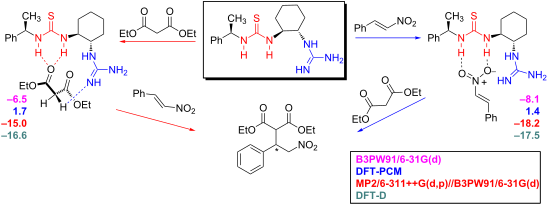
- . Extensive DFT calculations, including solvent effects and dispersion corrections, as well as ab initio calculations provide a plausible description of the reaction mechanism. Keywords: bifunctional organocatalyst; DFT calculations; guanidine-thiourea; Michael addition; organocatalysis; transition states

Graphical Abstract

Scheme 1: Synthesis of guanidine-thiourea organocatalyst 7.

Scheme 2: Henry reaction of 3-phenylpropionaldehyde (8) with nitromethane (9).

Scheme 3: Michael addition of (12) and (14) to trans-β-nitrostyrene (11).

Figure 1: Optimized geometries of four conformers of catalyst 7. Energies are in kcal·mol−1, B3PW91/6–31G(d) ...

Scheme 4: Energy profile for the first step of the reaction between catalyst 7 and malonate 14. Energies are ...

Figure 2: Complexes (CatN1–CatN5) between catalyst 7 and nitrostyrene 11. Energies are in kcal·mol−1, B3PW91/...

Scheme 5: Two possible routes for ternary complex formation. Energies are in kcal·mol−1, B3PW91/6–31G(d) (fir...
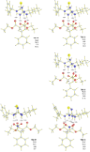
Figure 3: Geometries of transition states for R and S products. Relative energies (with respect to Init10) ar...
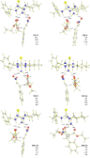
Figure 4: Geometries of transition states for R and S products. Relative energies (with respect to Init10) ar...

Figure 5: B3PW91/6–31G(d) (first entry), DFT-PCM (second entry), MP2/6–31G(d)//B3PW91/6–31G(d) (third entry) ...
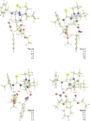
Figure 6: Geometries of transition states for R and S products with 7-TABD catalyst. Relative energies (to In...
NMR studies of anion-induced conformational changes in diindolylureas and diindolylthioureas
- Damjan Makuc,
- Jennifer R. Hiscock,
- Mark E. Light,
- Philip A. Gale and
- Janez Plavec
Beilstein J. Org. Chem. 2011, 7, 1205–1214, doi:10.3762/bjoc.7.140
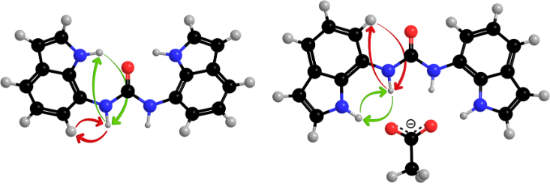
- along the C7–N7α bonds and the syn–syn conformer was preferred for anion–receptor complexes. The conformational changes upon anion binding are in good agreement with energetic preferences established by ab initio calculations. Keywords: anion recognition; conformation analysis; host–guest systems; NMR
- -anions, were studied by NMR spectroscopy and supported by energetic preferences established from ab initio calculations. Results and Discussion Synthesis Compounds 1–3 were synthesized following a previously reported methodology [36][37][38][39]. Compound 4 was prepared by reaction of 7-amino-N-phenyl-1H
- . Furthermore, binding of anions caused conformational changes along the C7–N7α bonds, and the syn–syn conformer was predominant in the anion–receptor complexes according to both NOE enhancements and ab initio calculations in solution. The freely optimized syn–syn conformer of the 1·AcO− complex retained a

Graphical Abstract

Figure 1: Anion receptors 1–4 together with their atomic numbering scheme.
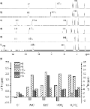
Figure 2: 1H NMR spectra of 1 in the absence of anions (a) and upon addition of one equivalent of the followi...

Figure 3: Three representative conformational families of rotamers of 1. Notations refer to the orientations ...

Figure 4: NOE enhancements of 1 in the absence of anions (a) and upon addition of one equivalent of acetate a...

Figure 5: Surface plot of the relative potential energy of 1 as a function of the two constitutive [C6–C7–N7α...

Figure 6: Freely optimized structure at the B3LYP/6-311+G(d,p) level of theory and side view showing deviatio...
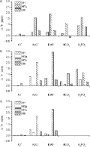
Figure 7: 1H NMR chemical shift changes, Δδ = δ (in the presence of anions) – δ (in the absence of anions), i...

Figure 8: Freely optimized structures at the B3LYP/6-311+G(d,p) level of theory and side view showing deviati...

Figure 9: Conformational preferences and proposed binding mode for the 3·AcO− 1:1 complex.
Molecular rearrangements of superelectrophiles
- Douglas A. Klumpp
Beilstein J. Org. Chem. 2011, 7, 346–363, doi:10.3762/bjoc.7.45
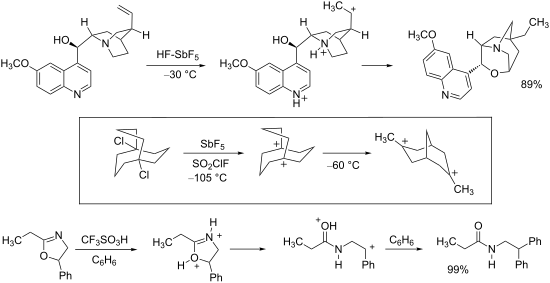
- initio calculations were performed and revealed that the isomerization lowers the energy of the dication by about 26 kcal/mol. Moreover, isomerization increased the distance between the carbocation sites from 2.80 Å in 87 to 3.58 Å in 88. Olah and coworkers have described [30] an attempt to generate the
- (87) which was found to be stable at −105 °C. However, upon warming to −60 °C, the 3,7-dimethylbicyclo[3.3.1]nona-3,7-diyl dication (88) was formed. This isomerization is thought to occur through a series of hydride shifts, Wagner–Meerwein shifts, ring contractions, and methyl shifts (Scheme 18). Ab

Graphical Abstract

Scheme 1: Superelectrophilic activation of the acetyl cation.

Scheme 2: Ring opening of diprotonated 2-oxazolines.

Scheme 3: AlCl3-promoted ring opening of isoxaolidine 16.

Scheme 4: Ring-opening reactions of cyclopropyl derivatives.

Scheme 5: Condensations of ninhydrin (28) with benzene.

Scheme 6: Rearrangement of 29 to 30.

Scheme 7: Superacid promoted ring opening of succinic anhydride (33).

Scheme 8: Reaction of phthalic acid (36) in FSO3H-SbF5.

Scheme 9: Ring expansion of superelectrophile 42.

Scheme 10: Reaction of camphor (44) in superacid.

Scheme 11: Isomerization of 2-cyclohexen-1-one (48).

Scheme 12: Isomerization of 2-decalone (51).

Scheme 13: Rearrangement of the acyl-dication 58.

Scheme 14: Reaction of dialkylketone 64.

Scheme 15: Ozonolysis in superacid.

Scheme 16: Rearrangement of 1-hydroxy-2-methylcyclohexane carboxylic acid (79) in superacid.

Scheme 17: Isomerization of the 1,5-manxyl dication 87.

Scheme 18: Energetics of isomerization.

Scheme 19: Rearrangement of dication 90.

Scheme 20: Superacid promoted rearrangement of pivaldehyde (92).

Scheme 21: Rearrangement of a superelectrophilic carboxonium ion 100.

Scheme 22: Proposed mechanism for the Wallach rearrangement.

Scheme 23: Wallach rearrangement of azoxypyridines 108 and 109.

Scheme 24: Proposed mechanism of the benzidine rearrangement.

Scheme 25: Superacid-promoted reaction of quinine (122).

Scheme 26: Superacid-promoted reaction of vindoline derivative 130.

Scheme 27: Charge migration by hydride shift and acid–base chemistry.

Scheme 28: Reactions of 1-hydroxycyclohexanecarboxylic acid (137).

Scheme 29: Reaction of alcohol 143 with benzene in superacid.

Scheme 30: Reaction of alcohol 148 in superacid with benzene.

Scheme 31: Mechanism of aza-polycyclic aromatic compound formation.

Scheme 32: Superacid-promoted reaction of ethylene glycol (159).

Scheme 33: Reactions of 1,3-propanediol (165) and 2-methoxyethanol (169).

Scheme 34: Rearrangement of superelelctrophilic acyl dication 173.
Accuracy in determining interproton distances using Nuclear Overhauser Effect data from a flexible molecule
- Catharine R. Jones,
- Craig P. Butts and
- Jeremy N. Harvey
Beilstein J. Org. Chem. 2011, 7, 145–150, doi:10.3762/bjoc.7.20
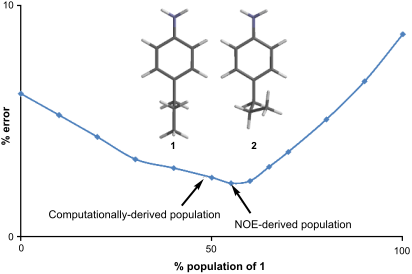
- 0.03, 0.00, 0.20 and 0.14 kJ/mol, very close to the coupled-cluster values, suggesting that these quantities are reliable to ± 0.5 kJ/mol and perhaps better. Including the corrections for zero-point energy, thermal and entropic corrections, and solvation, these correlated ab initio calculations lead to

Graphical Abstract

Figure 1: Four low energy conformations of 4-propylaniline obtained from B3LYP/6-31G* conformational search a...

Figure 2: Plot of the mean calculated error arising from fitting the population distribution of conformers 1a...
Molecular recognition of organic ammonium ions in solution using synthetic receptors
- Andreas Späth and
- Burkhard König
Beilstein J. Org. Chem. 2010, 6, No. 32, doi:10.3762/bjoc.6.32
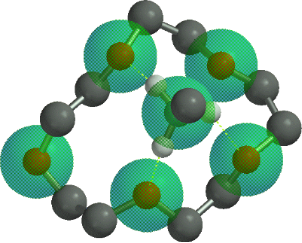
- from Kebarle et al. who showed that binding of potassium ions to benzene and water in the gas phase is of similar energy [9][12]. Ammonium–π-interactions were experimentally investigated in detail as well as by ab initio calculations and are mainly based on electrostatic interactions. The binding

Graphical Abstract

Figure 1: Biologically important amines and quaternary ammonium salts: histamine (1), dopamine (2) and acetyl...

Figure 2: Crown ether 18-crown-6.

Figure 3: Conformations of 18-crown-6 (4) in solvents of different polarity.

Figure 4: Binding topologies of the ammonium ion depending on the crown ring size.
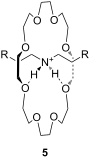
Figure 5: A “pseudorotaxane” structure consisting of 24-crown-8 and a secondary ammonium ion (5); R = Ph.

Figure 6: Typical examples of azacrown ethers, cryptands and related aza macrocycles.

Figure 7: Binding of ammonium to azacrown ethers and cryptands [111-113].

Figure 8: A 19-crown-6-ether with decalino blocking groups (11) and a thiazole-dibenzo-18-crown-6-ether (12).

Figure 9: 1,3-Bis(6-oxopyridazin-1-yl)propane derivatives 13 and 14 by Campayo et al.

Figure 10: Fluorescent azacrown-PET-sensors based on coumarin.

Figure 11: Two different pyridino-cryptands (17 and 18) compared to a pyridino-crown (19); chiral ammonium ion...

Figure 12: Pyridino-18-crown-6 ligand (21), a similar acridino-18-crown-6 ligand (22) and a structurally relat...

Figure 13: Ciral pyridine-azacrown ether receptors 24.

Figure 14: Chiral 15-crown-5 receptors 26 and an analogue 18-crown-6 ligand 27 derived from amino alcohols.

Figure 15: C2-symmetric chiral 18-crown-6 amino alcohol derivatives 28 and related macrocycles.

Figure 16: Macrocycles with diamide-diester groups (30).

Figure 17: C2-symmetric chiral aza-18-crown-6 ethers (31) with phenethylamine residues.

Figure 18: Chiral C-pivot p-methoxy-phenoxy-lariat ethers.

Figure 19: Chiral lariat crown ether 34.

Figure 20: Sucrose-based chiral crown ether receptors 36.
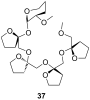
Figure 21: Permethylated fructooligosaccharide 37 showing induced-fit chiral recognition.

Figure 22: Biphenanthryl-18-crown-6 derivative 38.

Figure 23: Chiral lariat crown ethers derived from binol by Fuji et al.

Figure 24: Chiral phenolic crown ether 41 with “aryl chiral barriers” and guest amines.
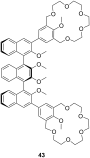
Figure 25: Chiral bis-crown receptor 43 with a meso-ternaphthalene backbone.

Figure 26: Chromogenic pH-dependent bis-crown chemosensor 44 for diamines.

Figure 27: Triamine guests for binding to receptor 44.

Figure 28: Chiral bis-crown phenolphthalein chemosensors 46.

Figure 29: Crown ether amino acid 47.

Figure 30: Luminescent receptor 48 for bis-alkylammonium guests.

Figure 31: Luminescent CEAA (49a), a bis-CEAA receptor for amino acids (49b) and the structure of lysine bindi...

Figure 32: Luminescent CEAA tripeptide for binding small peptides.

Figure 33: Bis crown ether 51a self assembles co-operatively with C60-ammonium ion 51b.

Figure 34: Triptycene-based macrotricyclic dibenzo-[24]-crown-8 ether host 52 and guests.

Figure 35: Copper imido diacetic acid azacrown receptor 53a and the suggested His-Lys binding motif; a copper ...

Figure 36: Urea (54) and thiourea (55) benzo crown receptor for transport and extraction of amino acids.

Figure 37: Crown pyryliums ion receptors 56 for amino acids.

Figure 38: Ditopic sulfonamide bridged crown ether receptor 57.

Figure 39: Luminescent peptide receptor 58.

Figure 40: Luminescent receptor 59 for the detection of D-glucosamine hydrochloride in water/ethanol and lumin...

Figure 41: Guanidinium azacrown receptor 61 for simple amino acids and ditopic receptor 62 with crown ether an...

Figure 42: Chiral bicyclic guanidinium azacrown receptor 63 and similar receptor 64 for the enantioselective t...

Figure 43: Receptors for zwitterionic species based on luminescent CEAAs.

Figure 44: 1,10-Azacrown ethers with sugar podand arms and the anticancer agent busulfan.

Figure 45: Benzo-18-crown-6 modified β-cyclodextrin 69 and β-cyclodextrin functionalized with diaza-18-crown-6...

Figure 46: Receptors for colorimetric detection of primary and secondary ammonium ions.

Figure 47: Porphyrine-crown-receptors 72.

Figure 48: Porphyrin-crown ether conjugate 73 and fullerene-ammonium ion guest 74.

Figure 49: Calix[4]arene (75a), homooxocalix[4]arene (75b) and resorcin[4]arene (75c) compared (R = H, alkyl c...

Figure 50: Calix[4]arene and ammonium ion guest (R = H, alkyl, OAcyl etc.), possible binding sites; A: co-ordi...

Figure 51: Typical guests for studies with calixarenes and related molecules.
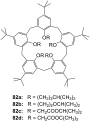
Figure 52: Lower rim modified p-tert-butylcalix[5]arenes 82.

Figure 53: The first example of a water soluble calixarene.

Figure 54: Sulfonated water soluble calix[n]arenes that bind ammonium ions.
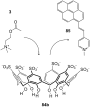
Figure 55: Displacement assay for acetylcholine (3) with a sulfonato-calix[6]arene (84b).

Figure 56: Amino acid inclusion in p-sulfonatocalix[4]arene (84a).

Figure 57: Calixarene receptor family 86 with upper and lower rim functionalization.

Figure 58: Calix[6]arenes 87 with one carboxylic acid functionality.
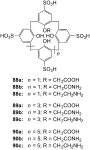
Figure 59: Sulfonated calix[n]arenes with mono-substitution at the lower rim systematically studied on their r...

Figure 60: Cyclotetrachromotropylene host (91) and its binding to lysine (81c).

Figure 61: Calixarenes 92 and 93 with phosphonic acids groups.

Figure 62: Calix[4]arene tetraphosphonic acid (94a) and a double bridged analogue (94b).
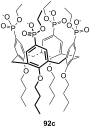
Figure 63: Calix[4]arene tetraphosphonic acid ester (92c) for surface recognition experiments.

Figure 64: Calixarene receptors 95 with α-aminophosphonate groups.

Figure 65: A bridged homocalix[3]arene 95 and a distally bridged homocalix[4]crown 96.

Figure 66: Homocalix[3]arene ammonium ion receptor 97a and the Reichardt’s dye (97b) for colorimetric assays.

Figure 67: Chromogenic diazo-bridged calix[4]arene 98.

Figure 68: Calixarene receptor 99 by Huang et al.
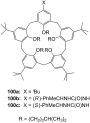
Figure 69: Calixarenes 100 reported by Parisi et al.

Figure 70: Guest molecules for inclusion in calixarenes 100: DAP × 2 HCl (101a), APA (101b) and Lys-OMe × 2 HC...

Figure 71: Different N-linked peptido-calixarenes open and with glycol chain bridges.

Figure 72: (S)-1,1′-Bi-2-naphthol calixarene derivative 104 published by Kubo et al.

Figure 73: A chiral ammonium-ion receptor 105 based on the calix[4]arene skeleton.

Figure 74: R-/S-phenylalaninol functionalized calix[6]arenes 106a and 106b.

Figure 75: Capped homocalix[3]arene ammonium ion receptor 107.

Figure 76: Two C3 symmetric capped calix[6]arenes 108 and 109.

Figure 77: Phosphorous-containing rigidified calix[6]arene 110.

Figure 78: Calix[6]azacryptand 111.

Figure 79: Further substituted calix[6]azacryptands 112.

Figure 80: Resorcin[4]arene (75c) and the cavitands (113).

Figure 81: Tetrasulfonatomethylcalix[4]resorcinarene (114).
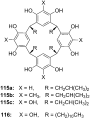
Figure 82: Resorcin[4]arenes (115a/b) and pyrogallo[4]arenes (115c, 116).
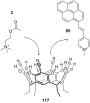
Figure 83: Displacement assay for acetylcholine (3) with tetracyanoresorcin[4]arene (117).

Figure 84: Tetramethoxy resorcinarene mono-crown-5 (118).

Figure 85: Components of a resorcinarene based displacement assay for ammonium ions.

Figure 86: Chiral basket resorcin[4]arenas 121.

Figure 87: Resorcinarenes with deeper cavitand structure (122).

Figure 88: Resorcinarene with partially open deeper cavitand structure (123).
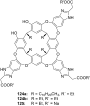
Figure 89: Water-stabilized deep cavitands with partially structure (124, 125).
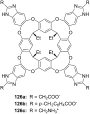
Figure 90: Charged cavitands 126 for tetralkylammonium ions.

Figure 91: Ditopic calix[4]arene receptor 127 capped with glycol chains.

Figure 92: A calix[5]arene dimer for diammonium salt recognition.

Figure 93: Calixarene parts 92c and 129 for the formation molecular capsules.
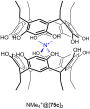
Figure 94: Encapsulation of a quaternary ammonium cation by two resorcin[4]arene molecules (NMe4+@[75c]2 × Cl−...

Figure 95: Encapsulation of a quaternary ammonium cation by six resorcin[4]arene molecules (NMe3D+@[130]6 × Cl−...

Figure 96: Structure and schematic of cucurbit[6]uril (CB[6], 131a).
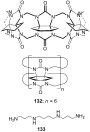
Figure 97: Cyclohexanocucurbit[6]uril (CB′[6], 132) and the guest molecule spermine (133).

Figure 98: α,α,δ,δ-Tetramethylcucurbit[6]uril (134).

Figure 99: Structure of the cucurbituril-phthalhydrazide analogue 135.

Figure 100: Organic cavities for the displacement assay for amine differentiation.

Figure 101: Displacement assay methodology for diammonium- and related guests involving cucurbiturils and some ...

Figure 102: Nor-seco-Cucurbituril (±)-bis-ns-CB[6] (140) and guest molecules.

Figure 103: The cucurbit[6]uril based complexes 141 for chiral discrimination.
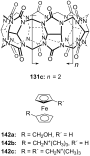
Figure 104: Cucurbit[7]uril (131c) and its ferrocene guests (142) opposed.

Figure 105: Cucurbit[7]uril (131c) guest inclusion and representative guests.

Figure 106: Cucurbit[7]uril (131c) binding to succinylcholine (145) and different bis-ammonium and bis-phosphon...

Figure 107: Paraquat-cucurbit[8]uril complex 149.
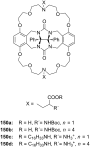
Figure 108: Gluconuril-based ammonium receptors 150.
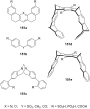
Figure 109: Examples of clefts (151a), tweezers (151b, 151c, 151d) and clips (151e).

Figure 110: Kemp’s triacid (152a), on example of Rebek’s receptors (152b) and guests.

Figure 111: Amino acid receptor (154) by Rebek et al.

Figure 112: Hexagonal lattice designed hosts by Bell et al.

Figure 113: Bell’s amidinium receptor (156) and the amidinium ion (157).
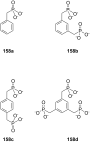
Figure 114: Aromatic phosphonic acids.

Figure 115: Xylene phosphonates 159 and 160a/b for recognition of amines and amino alcohols.
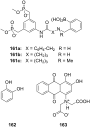
Figure 116: Bisphosphonate recognition motif 161 for a colorimetric assay with alizarin complexone (163) for ca...

Figure 117: Bisphosphonate/phosphate clip 164 and bisphosphonate cleft 165.

Figure 118: N-Methylpyrazine 166a, N-methylnicotinamide iodide (166b) and NAD+ (166c).

Figure 119: Bisphosphate cavitands.
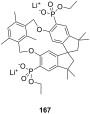
Figure 120: Bisphosphonate 167 of Schrader and Finocchiaro.
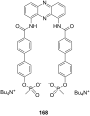
Figure 121: Tweezer 168 for noradrenaline (80b).

Figure 122: Different tripods and heparin (170).
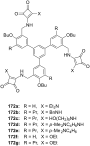
Figure 123: Squaramide based receptors 172.
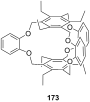
Figure 124: Cage like NH4+ receptor 173 of Kim et al.

Figure 125: Ammonium receptors 174 of Chin et al.

Figure 126: 2-Oxazolin-based ammonium receptors 175a–d and 176 by Ahn et al.

Figure 127: Racemic guest molecules 177.

Figure 128: Tripods based on a imidazole containing macrocycle (178) and the guest molecules employed in the st...

Figure 129: Ammonium ion receptor 180.

Figure 130: Tetraoxa[3.3.3.3]paracyclophanes 181 and a cyclophanic tetraester (182).

Figure 131: Peptidic bridged paraquat-cyclophane.
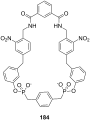
Figure 132: Shape-selective noradrenaline host.

Figure 133: Receptor 185 for binding of noradrenaline on surface layers from Schrader et al.

Figure 134: Tetraphosphonate receptor for binding of noradrenaline.

Figure 135: Tetraphosphonate 187 of Schrader and Finocchiaro.

Figure 136: Zinc-Porphyrin ammonium-ion receptors 188 and 189 of Mizutani et al.
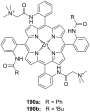
Figure 137: Zinc porphyrin receptor 190.

Figure 138: Zinc porphyrin receptors 191 capable of amino acid binding.

Figure 139: Zinc-porphyrins with amino acid side chains for stereoinduction.

Figure 140: Bis-zinc-bis-porphyrin based on Tröger’s base 193.

Figure 141: BINAP-zinc-prophyrin derivative 194 and it’s guests.

Figure 142: Bisaryl-linked-zinc-porphyrin receptors.
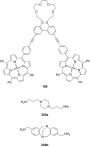
Figure 143: Bis-zinc-porphyrin 199 for diamine recognition and guests.

Figure 144: Bis-zinc-porphyrin crown ether 201.

Figure 145: Bis-zinc-porphyrin 202 for stereodiscrimination (L = large substituent; S = small substituent).

Figure 146: Bis-zinc-porphyrin[3]rotaxane and its copper complex and guests.

Figure 147: Dien-bipyridyl ligand 206 for co-ordination of two metal atoms.

Figure 148: The ligand and corresponding tetradentate co-complex 207 serving as enantioselective receptor for a...

Figure 149: Bis(oxazoline)–copper(II) complex 208 for the recognition of amino acids in aqueous solution.

Figure 150: Zinc-salen-complexes 209 for the recognition tertiary amines.

Figure 151: Bis(oxazoline)–copper(II) 211 for the recognition of amino acids in aqueous solution.

Figure 152: Zn(II)-complex of a C2 terpyridine crown ether.

Figure 153: Displacement assay and receptor for aspartate over glutamate.

Figure 154: Chiral complex 214 for a colorimetric displacement assay for amino acids.

Figure 155: Metal complex receptor 215 with tripeptide side arms.

Figure 156: A sandwich complex 216 and its displaceable dye 217.

Figure 157: Lanthanide complexes 218–220 for amino acid recognition.
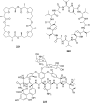
Figure 158: Nonactin (221), valinomycin (222) and vancomycin (223).

Figure 159: Monesin (224a) and a chiral analogue for enantiodiscrimination of ammonium guests (224b).

Figure 160: Chiral podands (226) compared to pentaglyme-dimethylether (225) and 18-crown-6 (4).

Figure 161: Lasalocid A (228).

Figure 162: Lasalocid derivatives (230) of Sessler et al.

Figure 163: The Coporphyrin I tetraanion (231).

Figure 164: Linear and cyclic peptides for ammonium ion recognition.

Figure 165: Cyclic and bicyclic depsipeptides for ammonium ion recognition.
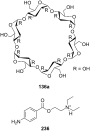
Figure 166: α-Cyclodextrin (136a) and novocaine (236).
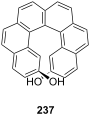
Figure 167: Helical diol receptor 237 by Reetz and Sostmann.

Figure 168: Ammonium binding spherand by Cram et al. (238a) and the cyclic[6]metaphenylacetylene 238b in compar...

Figure 169: Receptor for peptide backbone and ammonium binding (239).

Figure 170: Anion sensor principle with 3-hydroxy-2-naphthanilide of Jiang et al.

Figure 171: 7-bromo-3-hydroxy-N-(2-hydroxyphenyl)naphthalene 2-carboxamide (241) and its amine binding.

Figure 172: Naturally occurring catechins with affinity to quaternary ammonium ions.

Figure 173: Spiropyran (244) and merocyanine form (244a) of the amino acid receptors of Fuji et al.

Figure 174: Coumarin aldehyde (245) and its iminium species with amino acid bound (245a) by Glass et al.
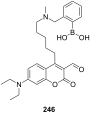
Figure 175: Coumarin aldehyde appended with boronic acid.

Figure 176: Quinolone aldehyde dimers by Glass et al.

Figure 177: Chromogenic ammonium ion receptors with trifluoroacetophenone recognition motifs.

Figure 178: Chromogenic ammonium ion receptor with trifluoroacetophenone recognition motif bound on different m...
An enantiomerically pure siderophore type ligand for the diastereoselective 1 : 1 complexation of lanthanide(III) ions
- Markus Albrecht,
- Olga Osetska,
- Thomas Abel,
- Gebhard Haberhauer and
- Eva Ziegler
Beilstein J. Org. Chem. 2009, 5, No. 78, doi:10.3762/bjoc.5.78
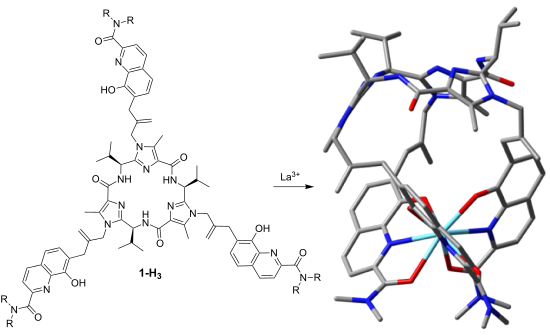
- calculations In order to determine the configuration at the metal centres of the 1a·Ln (R = Et) complexes ab initio calculations were performed for the stereoisomers of complex 1b·La (R = Me) [37]. The difference between 1a and 1b is only the substitution of the ethyl groups in 1a by methyl groups in 1b. This
- ) ions, while smaller cations lead to an unspecific complex formation (probably oligomerization or polymerization). On the basis of ab initio calculations and CD spectroscopy we could show that the formed complex (1a)La exhibits exclusively Λ helicity. We were able to isolate the corresponding lanthanum
- following the absorption at 279 nm. Analysis of the titration data reveals high binding constants for lanthanum(III) (Ka = 8.3 × 10⁵ M−1) as well as europium(III) (Ka = 7.8 × 10⁵ M−1) for the reaction of deprotonated ligand 1a3− with the Ln3+ ion to form [(1a)Ln] in methanol at room temperature. Ab initio

Graphical Abstract

Figure 1: Structural formula of the siderophore enterobactine.

Scheme 1: Preparation of the compound 1a-H3 by utilization of a multiple Claisen-rearrangement.

Figure 2: 1H NMR spectra (300 MHz, CDCl3) of the ether compound 4 (top) and the ligand 1a-H3 (bottom).

Figure 3: Positive ESI MS of [(1a)La] in chloroform showing the peaks of {K[(1a)La]}+ (m/z = 1600.8) as well ...
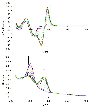
Figure 4: CD and UV absorption titration curves for complexation of ligand 1a-H3 with lanthanum(III)nitrate h...

Figure 5: Titration curve observed for ligand 1a-H3 upon addition of lanthanum(III) nitrate hexahydrate.

Figure 6: Molecular structures of the Λ2 (left) and Δ2 (right) isomers of complex 1b·La calculated by using B...
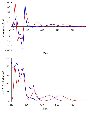
Figure 7: UV and CD spectra of the complex (Λ)-1·La. Blue and violet curve: experimentally determined spectra...
The role of an aromatic group in remote chiral induction during conjugate addition of α-sulfonylallylic carbanions to ethyl crotonate
- Shlomo Levinger,
- Ranjeet Nair and
- Alfred Hassner
Beilstein J. Org. Chem. 2008, 4, No. 32, doi:10.3762/bjoc.4.32

- geometry of the aromatic ring during chelation with the lithiated species is as yet unknown, it evidently plays an important role in determining the approach of the carbanion to the conjugate acceptor and thus the stereoselectivity of the conjugate addition. Preliminary ab initio calculations [17] for the
- yields are obtained with aromatic rings possessing higher electron density (4-methoxyphenyl, 2-thienyl) while the employment of the 9-anthryl nucleus results in complete transmission of chirality to the newly formed stereogenic centers. Ab initio calculations assign an important role to Li+–aromatic π

Graphical Abstract

Scheme 1: Transmission of asymmetry in the conjugate addition of allyl sulfones to ethyl crotonate depending ...

Scheme 2: Preparation of donor precursors for conjugate addition (1), bearing a remote stereogenic center.

Scheme 3: Borch reductive amination of acetophenones.

Scheme 4: Preparation of [(9-anthryl)alkyl]- and (mesitylalkyl)amines 6h and 6j from nitriles via imines 8.

Figure 1: Calculated minimum energy conformation of lithiated amino-substituted sulfone 1a showing π-interact...



