


Search results
Search for "rotaxanes" in Full Text gives 54 result(s) in Beilstein Journal of Organic Chemistry.
Harnessing light energy with molecules
Beilstein J. Org. Chem. 2026, 22, 680–682, doi:10.3762/bjoc.22.52
- , García-López and co-workers [10] describe how the integration of a variety of molecular photoswitches into mechanically interlocked systems, i.e., rotaxanes, can be explored for light-controlled movements, and hence for controlling advanced functions of smart materials and biofunctional systems. In
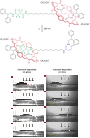
Effect of a photoswitchable rotaxane on membrane permeabilization across lipid compositions
Beilstein J. Org. Chem. 2025, 21, 2498–2512, doi:10.3762/bjoc.21.192
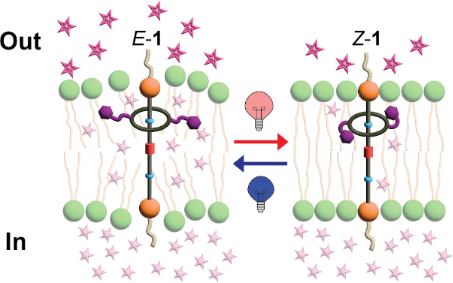
- spatiotemporal precision [9]. Rotaxanes have emerged as promising tools for performing various functions in lipid membranes, owing to their multiple sites for derivatization, which allow fine-tuning of their structure and function in membranes. For instance, they have been used to transport ions across lipid
- transport [12]. Our group later demonstrated that non-switchable rotaxanes can transport chloride anions and exhibit bactericidal activity against methicillin-resistant Staphylococcus aureus (MRSA) [13]. In a separate study, Smith reported that incorporating non-switchable rotaxanes can induce phospholipid
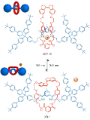
- , control rotaxane 2 [13] has the same dibenzo 24-crown-8 ring but lacks the azobenzene units. Both rotaxanes use axle 3, which consists of an amphiphilic chain with three positively charged sites serving as recognition sites for the macrocycle: two benzylalkylammonium groups (BAA) and one N




Rotaxanes with integrated photoswitches: design principles, functional behavior, and emerging applications
Beilstein J. Org. Chem. 2025, 21, 2345–2366, doi:10.3762/bjoc.21.179
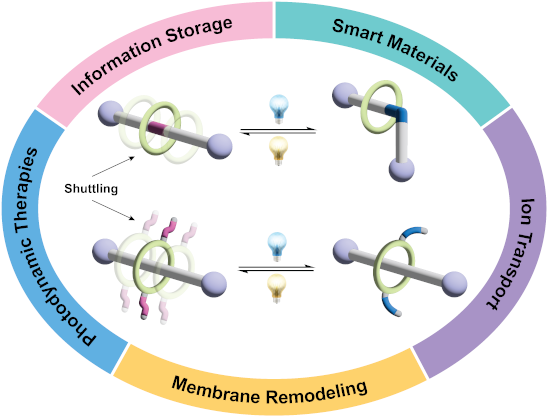
- Jullyane Emi Matsushima Khushbu Zuliah Abdulsalam Udyogi Navodya Kulathilaka Conthagamage Victor Garcia-Lopez Department of Chemistry, Louisiana State University, Baton Rouge, LA 70803, USA 10.3762/bjoc.21.179 Abstract Integrating molecular photoswitches into rotaxanes offers unique opportunities
- for precise control over their structural, dynamic, and functional properties. By harnessing light as a non-invasive stimulus with high spatial and temporal resolution, these photoswitches allow for the modulation of the rotaxanes’ intra- and intermolecular interactions, optoelectronic properties, and
- shuttling dynamics. In this review, we discuss key examples of photoswitchable rotaxanes, organized according to the position of the photoswitch, either embedded in the axle or incorporated into the macrocycle. We examine the major classes of photoswitches used, including their switching mechanisms and the





Measuring the stereogenic remoteness in non-central chirality: a stereocontrol connectivity index for asymmetric reactions
Beilstein J. Org. Chem. 2025, 21, 1995–2006, doi:10.3762/bjoc.21.155
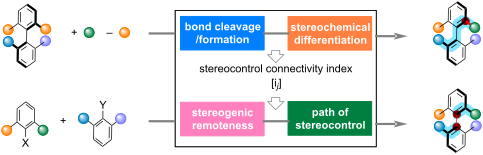
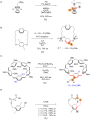
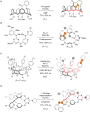
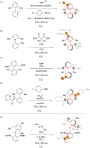
- addition, the 3-step procedure is not applicable to asymmetric synthesis of interlocked molecules including mechanically planar chiral rotaxanes and catenanes, where the bond connectivity between stereogenic components is absent [40][41][42][43]. Finally, we explored the automated process for the




Research progress on calixarene/pillararene-based controlled drug release systems
Beilstein J. Org. Chem. 2025, 21, 1757–1785, doi:10.3762/bjoc.21.139
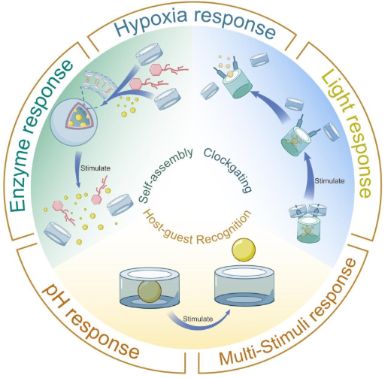
- prepared a novel supramolecular ternary polymer DiCh@a-CD-bisSC4A and binary polymers DiCh@bisSC4A Compared to binary DiCh@bisSC4A, ternary DiCh@a-CD-bisSC4A has not only a larger polymer size but also a better size distribution and topological structure due to the integration of quasi rotaxanes with






Hydrogen-bonded macrocycle-mediated dimerization for orthogonal supramolecular polymerization
Beilstein J. Org. Chem. 2025, 21, 179–188, doi:10.3762/bjoc.21.10
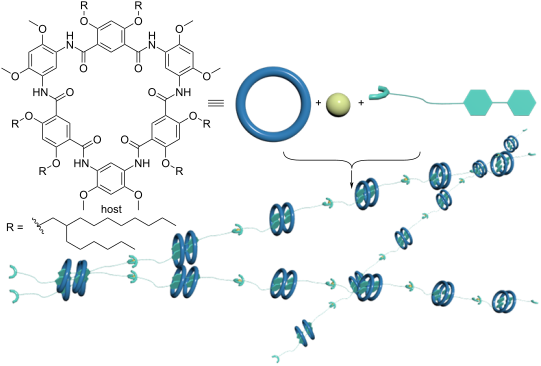
- tunable to suit desired functions. These macrocycles have found widespread applications owing to their unique host–guest behaviors in the fields of recognition [43], ion channels [44], catalysis [45], rotaxanes [46], as well as molecular machines [47]. We envisioned that the use of a H-bonded aromatic



Cyclodextrin-based rotaxanes for polymer materials: challenge on simultaneous realization of inexpensive production and defined structures
Beilstein J. Org. Chem. 2024, 20, 3026–3049, doi:10.3762/bjoc.20.252
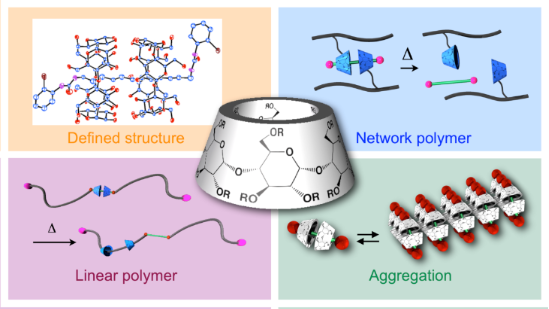
- . Keywords: cyclodextrin; defined structure; precise synthesis; rotaxanes; stimuli-responsive material; Introduction Stimuli-responsive materials can satisfy the existing high demands on such materials owing to their multiple functionalities (e.g., for effective energy storage or as decomposables under mild
- materials and fabricate polymer materials featuring a defined rotaxane structure. In this review, this issue is discussed in three sections: (1) synthesis and structure of CD-based (poly)rotaxanes, (2) structural control of the (poly)rotaxane framework, and (3) properties and applications of rotaxane-based
- polymer materials (Figure 1). Although this study mainly explored the CD-based framework, other studies on rotaxanes based on other ring units were occasionally considered for comparison. After exploring the current status of this issue, the challenge and future outlook are also discussed. Review






Perspectives on push–pull chromophores derived from click-type [2 + 2] cycloaddition–retroelectrocyclization reactions of electron-rich alkynes and electron-deficient alkenes
Beilstein J. Org. Chem. 2024, 20, 125–154, doi:10.3762/bjoc.20.13
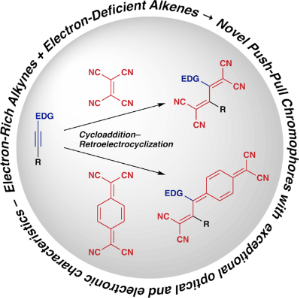
- wormlike nanoparticles. In rotaxanes, the utilization of metal–ligand bonding involving CuI is a common strategy for immobilizing a thread moiety within a macrocycle. However, the efficacy of such a bonding is compromised when catalysts are used in stoppering reactions, e.g., the copper-catalyzed azide


Active-metal template clipping synthesis of novel [2]rotaxanes
Beilstein J. Org. Chem. 2023, 19, 1776–1784, doi:10.3762/bjoc.19.130
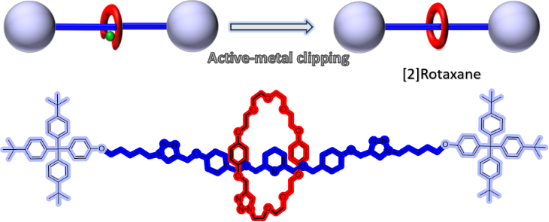
- beautiful structures and intriguing properties. We present herein a new synthetic strategy to access [2]rotaxanes, namely active-metal template clipping. We discuss the design of the target [2]rotaxanes, synthesis and characterization of the axle, macrocycle precursors and macrocycles as well as preparation
- of the final [2]rotaxanes by active template copper(I)-catalyzed alkyne–azide cycloaddition (CuAAC) as key step of the synthesis. HRMS and NMR experiments have been performed to confirm the formation of the interlocked structures. Keywords: active-metal template; clipping; copper(I)-catalyzed alkyne
- –azide cycloaddition; mechanically interlocked structures; [2]rotaxanes; Introduction Since its birth, in the late sixties [1][2][3], the field of mechanically interlocked molecules (MIMs), including rotaxanes, has gained significant attention culminating by recognition with a Nobel prize in Chemistry


Tying a knot between crown ethers and porphyrins
Beilstein J. Org. Chem. 2023, 19, 1630–1650, doi:10.3762/bjoc.19.120
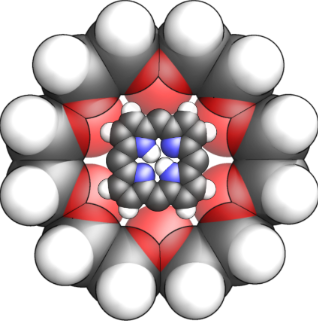
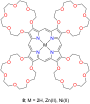
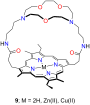
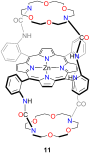
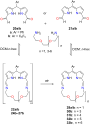
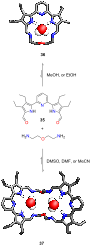
- supramolecular architectures [45], e.g., catenanes [73], rotaxanes [74], and catalytic systems [75]. Pelegrino and co-workers reported on crowned porphyrinoids demonstrating interesting photophysical properties [71]. The crown ether part was also demonstrated to play a role of a linker between two porphyrin
- molecules, e.g., catenanes and rotaxanes (Figure 16C). The formation of such compounds would eventually result in the formation of a unique group of three-dimensional ligands with co-existing porphyrin-like and crown ether cavities. The perspective article has highlighted the wide range of crown ether









Cyclodextrins as building blocks for new materials
Beilstein J. Org. Chem. 2023, 19, 889–891, doi:10.3762/bjoc.19.66
- science that require high performance with minimal environmental impact. They are involved in the construction of interlocked molecules (rotaxanes and catenanes), supramolecular polymers, artificial enzymes, hydrogels, metal–organic frameworks, supramolecular solvents, fibers, nanotubes, nanoparticles
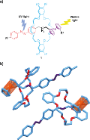
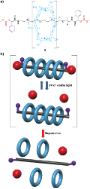
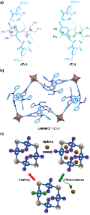
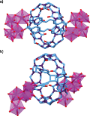
Light-responsive rotaxane-based materials: inducing motion in the solid state
Beilstein J. Org. Chem. 2023, 19, 873–880, doi:10.3762/bjoc.19.64
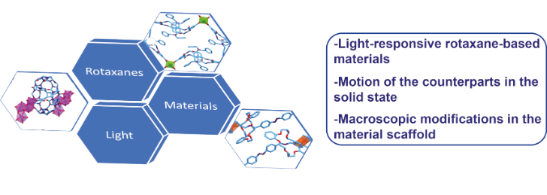
- -responsive materials; mechanical bond; mechanically interlocked materials; rotaxanes; Introduction Light turns out to be a suitable and tailorable stimulus in order to develop materials showing improved functionalities, such as those of smart materials [1][2][3][4][5]. The characteristics of light which
- scaffolds [11]. In particular, rotaxanes and pseudorotaxanes have led to a greater number of applications due to their inherent dynamics and the switching possibility through a rational design [12]. Thus, rotaxane-based materials have attracted the interest of the scientific community due to their enhanced
- properties and functionalities [13][14][15][16][17]. Although great strides have been made in the development of photoresponsive rotaxanes [18][19][20][21][22][23][24][25][26][27][28][29], progress on interlocked materials working via photoirradiation is less abundant in the literature. However

Supramolecular approaches to mediate chemical reactivity
Beilstein J. Org. Chem. 2022, 18, 1463–1465, doi:10.3762/bjoc.18.152
- rotaxanes. MIMs show interesting structural and topological features and offer conceptually new possibilities as catalysts. In their minireview, Krajnc and Niemeyer [21] highlighted the use of the axially chiral 1,1'-binaphthyl-2,2'-diol (BINOL) unit as a stereogenic element in MIMs. The authors comment on
Cyclodextrin-based Schiff base pro-fragrances: Synthesis and release studies
Beilstein J. Org. Chem. 2022, 18, 1346–1354, doi:10.3762/bjoc.18.140
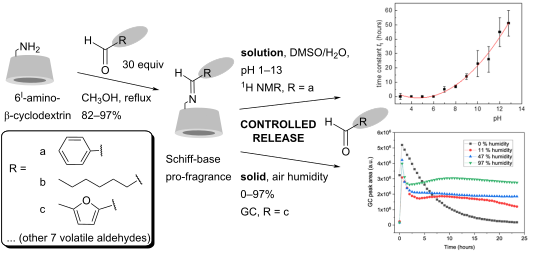
- hydrolysis, oxidation, or light (Figure 1) [18]. Different substrates were used to synthesize pro-fragrances, like polymers [19], ionic liquids [20], rotaxanes [21], or saccharides [22]. To the best of our knowledge, no studies investigate the use of CDs as substrate. Linking the fragrance to CDs could
Heteroleptic metallosupramolecular aggregates/complexation for supramolecular catalysis
Beilstein J. Org. Chem. 2022, 18, 597–630, doi:10.3762/bjoc.18.62
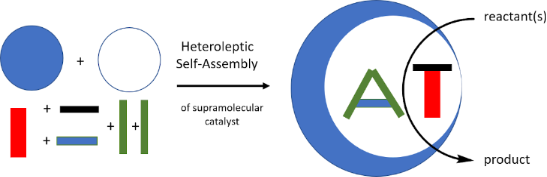
- complex [FeCu2(104)2]4+ (Figure 23), the latter controlling a double-click catalytic access to rotaxanes 109, by addition/removal of iron(II) ions [110]. Although [FeCu2(104)2]4+ is an open and flexible structure, the availability of two catalytic copper(I) centers positioned at 34 Å in the transition
- preparation of rotaxanes, the exploitation of cooperative and strain effects in double-click strategies is a promising strategy. A completely different approach to switchable supramolecular catalysis made use of a supramolecular cage-to-device transformation under dissipative conditions (Figure 24) [112






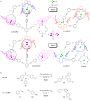


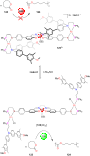

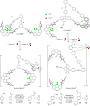


BINOL as a chiral element in mechanically interlocked molecules
Beilstein J. Org. Chem. 2022, 18, 508–523, doi:10.3762/bjoc.18.53
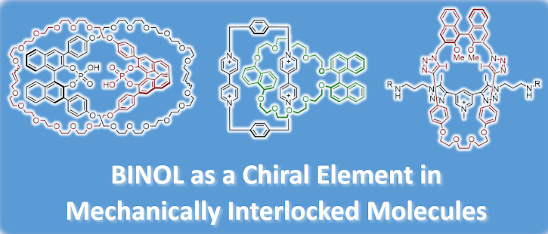
- ; interlocked molecules; rotaxanes; Introduction In the last decades the synthesis and application of mechanically interlocked molecules (MIMs), such as catenanes and rotaxanes, has gained more and more attention [1][2][3][4]. MIMs offer conceptually new possibilities through their unique structure, with
- rotaxanes, the helicity is predetermined by the planar chirality (based on the underlying macrocycle–macrocycle interactions), so that only two diastereoisomers remain for a given BINOL configuration (e.g., (R)-(Rp) and (R)-(Sp) in case of (R)-BINOL). In contrast to the axial chirality of the BINOL unit
- 6a). Subsequently, Takata and co-workers presented a highly diastereoselective synthesis of [2]rotaxane amine N-oxides via intercomponent chirality transfer (see Figure 6b) [53]. For the synthesis of the rotaxanes, complexes of hydroxy-terminated ammonium salts 28a–d and BINOL-based macrocycle (R)-12




Trichloroacetic acid fueled practical amine purifications
Beilstein J. Org. Chem. 2022, 18, 225–231, doi:10.3762/bjoc.18.26
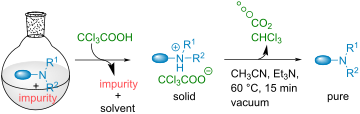
- from rotaxanes, cucurbit[8]uril, to supramolecular smart materials [11][12][13][14][15][16]. TCA is also known for its application in the precipitation of proteins through what is believed to be an unfolding of the proteins structures [17][18]. In this context, we hypothesized that TCA could be used to


Construction of pillar[4]arene[1]quinone–1,10-dibromodecane pseudorotaxanes in solution and in the solid state
Beilstein J. Org. Chem. 2020, 16, 2954–2959, doi:10.3762/bjoc.16.245
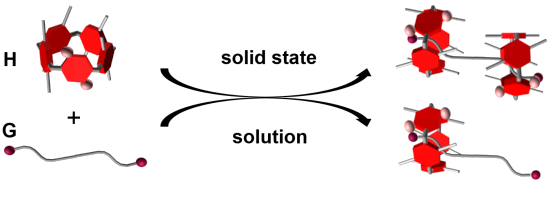
- the further capping of the pseudorotaxanes to construct rotaxanes. Keywords: host–guest chemistry; pillar[4]arene[1]quinones; pillararenes; pseudorotaxanes; supramolecular chemistry; Introduction Relying on the research of basic science, supramolecular chemistry has become an important mean for
- , including molecular switches, molecular logic gates, molecular machines, supramolecular polymers, etc. [6][7][8][9][10][11]. Pseudorotaxanes not only are used as the supramolecular precursors for the synthesis of rotaxanes and catenanes but also play an important role in the construction of supramolecular
- pseudorotaxanes to construct rotaxanes, which will broaden the range of potential applications of pillararene derivatives for the manufacture of sophisticated supramolecular architectures and functional supramolecular systems. Crystal structures of the [3]pseudorotaxane composed of H and G in the solid state


Thermodynamic and electrochemical study of tailor-made crown ethers for redox-switchable (pseudo)rotaxanes
Beilstein J. Org. Chem. 2020, 16, 2576–2588, doi:10.3762/bjoc.16.209
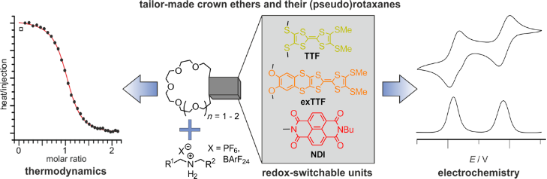
- described with regard to their potential to form redox-switchable rotaxanes. A combination of isothermal titration calorimetry and voltammetric techniques reveals correlations between the binding energies and redox-switching properties of the corresponding pseudorotaxanes with secondary ammonium ions. For
- ; redox chemistry; rotaxanes; supramolecular chemistry; Introduction Pedersen discovered crown ethers in 1967 while searching for multidentate ligands for the vanadyl group [1][2][3]. He was later awarded the Nobel Prize in Chemistry for his studies on the crown ether selective binding properties towards
- synthesis of crown ether-based rotaxanes in 1995, crown ethers played a crucial role in the development of mechanically interlocked molecules (MIMs) [22][23]. This rotaxane synthesis was facilitated by the formation of a threaded complex (pseudorotaxane) between a secondary ammonium ion and dibenzo-24-crown


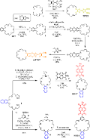


Design and synthesis of a bis-macrocyclic host and guests as building blocks for small molecular knots
Beilstein J. Org. Chem. 2020, 16, 2314–2321, doi:10.3762/bjoc.16.192

- Sauvage, Stoddart, and Feringa for their work on molecular machines [4]. Sauvage [5] and Stoddart [6] extensively used macrocycles in their ground-breaking work on catenanes, rotaxanes, knots, and other topologically novel compounds. Exciting advances in the field of molecular topology continue with novel


Five-component, one-pot synthesis of an electroactive rotaxane comprising a bisferrocene macrocycle
Beilstein J. Org. Chem. 2020, 16, 1564–1571, doi:10.3762/bjoc.16.128
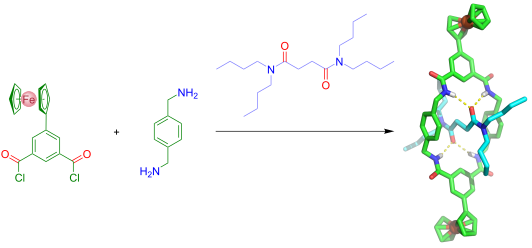
- to perform several functions as artificial molecular switches [1]. The template-directed synthesis of such sophisticated catenane and rotaxane molecular architectures allowed the expansion of chemical diversity and properties. Among these architectures, electroactive rotaxanes have been described to
- prove a valuable component for the construction of novel redox-active supramolecular systems, such as rotaxanes with strongly binding H-bonding templating sites, or indeed juxtaposed into existing functional architectures and benchmark variants. Results and Discussion Synthesis Our first approach to the
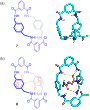
- structure 2025 conformers were examined (see text) and the obtained conformers were ordered by relative energy to obtain the most stable one. (a) Non-functionalized rotaxanes previously described in the literature. (b) The redox-active rotaxane developed in this work. Synthesis of the redox-active rotaxanes


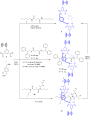


1,2,3-Triazolium macrocycles in supramolecular chemistry
Beilstein J. Org. Chem. 2019, 15, 2142–2155, doi:10.3762/bjoc.15.211
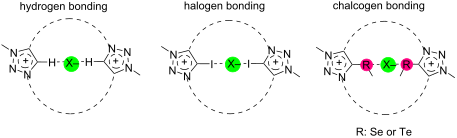
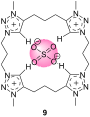
- groups due to the anion binding, including chloride and other oxoanion salts. They also proved that the anions binding strength falls in line with their basicity as seen in the series AcO− > H2PO4− > Cl− > SO42− >NO3−. 2.5. 1,2,3-Triazolium macrocycles and [2]rotaxanes Supramolecular interactions could
- (chalcogen = Se, Te) motif as a novel ChB donor for anion binding. By exploiting the possibility of the chalcogen atoms to orient within the macrocycle cavity to chelate the copper(I) endotopically, the first examples of mechanically interlocked [2]rotaxanes containing ChB donor groups has been prepared via




Multiple threading of a triple-calix[6]arene host
Beilstein J. Org. Chem. 2019, 15, 2092–2104, doi:10.3762/bjoc.15.207
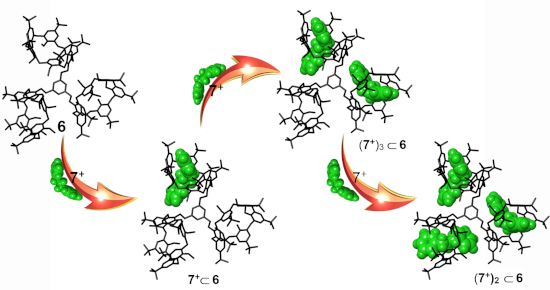
- ]. Among the self-assembly processes, those that lead to the formation of interlocked and/or interpenetrated supramolecular structures have inspired many scientists [5][6][7][8]. The synthesis of interlocked molecules such as rotaxanes, catenanes, and high-order architectures (e.g., polyrotaxanes, suitanes
- , daisy-chain pseudorotaxanes, olympiadane, Janus rotaxanes [5]) is generally obtained through a template-approach [9] exploiting the threading process between linear (axle) and macrocyclic (wheel) components. In order to synthesize high-order interpenetrated architectures, much attention has been
- alkylammonium cations, as TFPB− salts, inside the aromatic cavity of calixarene [20] and dihomooxacalixarene hosts [21][22]. Thus, through this ‘superweak anion’ approach, we have synthesized interesting examples of calixarene/ammonium-based interlocked structures such as calix-rotaxanes [23][24] and calix


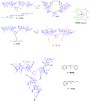


![[Graphic 2]](/bjoc/content/inline/1860-5397-15-207-i6.svg?max-width=637&scale=1.18182) 6, (7+)2
6, (7+)2


Synthesis of a [6]rotaxane with singly threaded γ-cyclodextrins as a single stereoisomer
Beilstein J. Org. Chem. 2019, 15, 1829–1837, doi:10.3762/bjoc.15.177
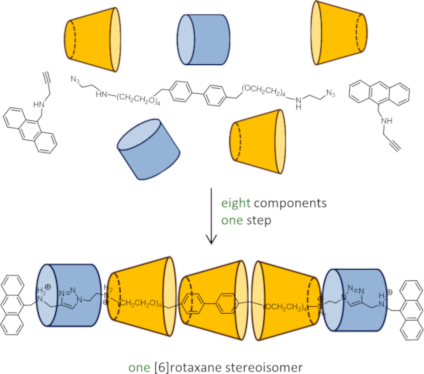
- Jason Yin Hei Man Ho Yu Au-Yeung Department of Chemistry, The University of Hong Kong, Pokfulam Road, Hong Kong, P. R. China 10.3762/bjoc.15.177 Abstract A series of hetero [4]-, [5]- and [6]rotaxanes containing both cucurbit[6]uril (CB[6]) and γ-cyclodextrin (γ-CD) as the macrocyclic components
- have been synthesized via a threading-followed-by-stoppering approach. Due to the orthogonal binding of CB[6] to ammonium and γ-CD to biphenylene/tetra(ethylene glycol), the [n]rotaxanes display a specific sequence of the interlocked macrocycles. In addition, despite of the asymmetry of γ-CD with
- building blocks for the construction of complex molecular topology such as rotaxanes and catenanes [12][13][14][15]. For example, by making use of hydrophobic-driven binding of simple alkyl groups in water to α-CD, Ogino has reported one first example of a rotaxane assembly featuring an alkyldiamine





Understanding the unexpected effect of frequency on the kinetics of a covalent reaction under ball-milling conditions
Beilstein J. Org. Chem. 2019, 15, 1226–1235, doi:10.3762/bjoc.15.120
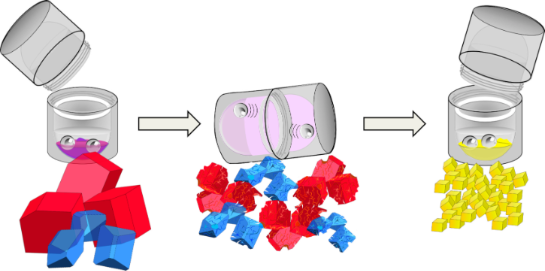
- for a wide range of different syntheses and chemical reactions of inorganic [8][9] and organic [10][11] compounds. Even supramolecular architectures such as co-crystals and metal-organic frameworks [4][12][13][14], cages [15] and rotaxanes [16] could be formed mechanochemically. Crucially, the





