Search results
Search for "ECD" in Full Text gives 66 result(s) in Beilstein Journal of Organic Chemistry.
A Streptomyces P450 enzyme dimerizes isoflavones from plants
Beilstein J. Org. Chem. 2022, 18, 1107–1115, doi:10.3762/bjoc.18.113
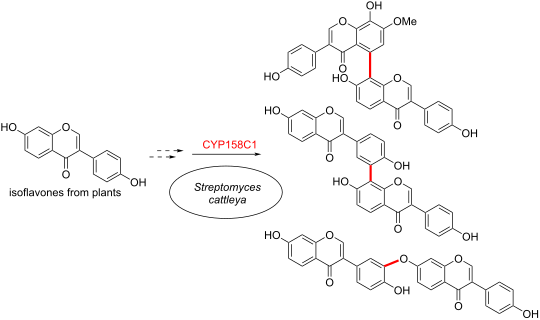
- and 2 with respect to atropisomerism was assessed by chiral HPLC analysis and the comparison of experimental and calculated ECD spectra. While 1 showed a ≈3:1 atropisomer ratio, with the M-atropisomer being the major form, 2 did not exhibit a Cotton effect in the ECD measurement, suggesting that it is
- compound for calculation of ABTS-reducing activity (in %). Computational ECD calculation of compound 1 Merck molecular force field (MMFF) and DFT as well as TDDFT calculations were carried out with the Spartan 14 software (Wavefunction Inc.) and the Gaussian 16 program [41], respectively. Conformers within
- conformers were chosen for ECD calculations in methanol at the B3LYP/6-311+G (d,p) level. Solvent effects were taken into consideration using the self-consistent reaction field (SCRF) method with the polarizable continuum model (PCM). The ECD spectrum was generated by the SpecDis program [42] using a


Anti-inflammatory aromadendrane- and cadinane-type sesquiterpenoids from the South China Sea sponge Acanthella cavernosa
Beilstein J. Org. Chem. 2022, 18, 916–925, doi:10.3762/bjoc.18.91
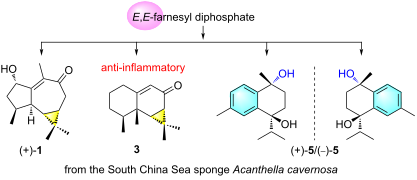
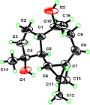
- -dependent density functional theory/electronic circular dichroism (TDDFT-ECD) calculations or X-ray diffraction analysis. A plausible biosynthetic pathway of these sesquiterpenoids and their internal correlation were proposed and discussed. In an in vitro bioassay, (+)-aristolone (3) exhibited promising
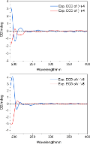
- product of squamulosone [aromadendr-1(10)-en-9-one] by the fungus Curvularia lunata ATCC 12017 [19], indicating (+)-1 and (−)-1 were enantiomeric each other. To secure the absolute configuration of optically pure (+)-1, a TDDFT-ECD calculation, which has proven to be a reliable tool for the absolute
- configuration determination of natural products with stereogenic centers near the chromophore groups [20], was applied, since there is an α,β-unsaturated ketone chromophore nearby C-5 and C-2 in compound (+)-1. Thus, the theoretical ECD spectrum of (+)-1 was calculated by the DFT calculation method at the b3lyp






Terpenoids from Glechoma hederacea var. longituba and their biological activities
Beilstein J. Org. Chem. 2022, 18, 555–566, doi:10.3762/bjoc.18.58
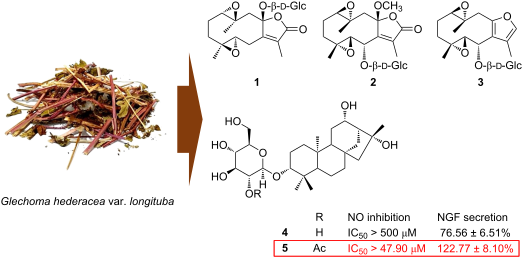
- structure elucidation was performed for the five new compounds (1–5) using 1D and 2D NMR, HRESIMS, DP4+ and ECD calculations, and chemical methods. All the isolates (1–9) were assessed for their antineuroinflammatory activities on nitric oxide (NO) production in lipopolysaccharide (LPS)-activated BV-2 cells
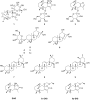
- compounds (1–5) were isolated and characterized from G. hederacea var. longituba (Figure 1). Structures of these compounds were established by 1D and 2D NMR and HRESIMS, comparison of experimental and calculated ECD data, DP4+ analysis, and hydrolysis. Herein, the isolation and structural elucidation of the
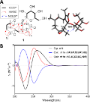
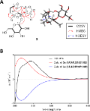
- implied based on comparison of the calculated ECD spectra of 1a (aglycone of 1) and experimental ECD spectra of 1 (Figure 2B). The experimental ECD spectrum of 1 showed a negative Cotton effect at 230 nm and a positive Cotton effect at 260 nm, which showed a similarity with those of the calculated ECD



Sesquiterpenes from the soil-derived fungus Trichoderma citrinoviride PSU-SPSF346
Beilstein J. Org. Chem. 2022, 18, 479–485, doi:10.3762/bjoc.18.50
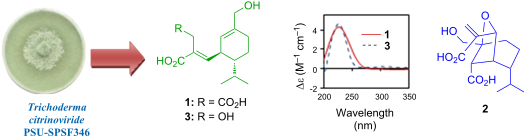
- were identified by analysis of their spectroscopic data. The relative configuration was assigned based on NOEDIFF data. The absolute configuration of compound 1 was established according to specific rotations and ECD data while that of compound 2 was proposed based on biosynthetic considerations
- electronic circular dichroism (ECD) data with those of compound 3, whereas that of compound 2 was proposed based on biosynthetic considerations. The structures of the known compounds were further confirmed by comparison of their 1H and 13C NMR spectroscopic data, specific rotations, and ECD data with those
- the trisubstituted α,β-unsaturated carboxylic acid. In addition, a trans relationship between H-6 and H-11 was established according to signal enhancement of H-12 (δH 1.71), H3-13, and H3-14 after irradiation of H-6. The absolute configuration at C-6 was assigned as R based on the experimental ECD


Strategies for the synthesis of brevipolides
Beilstein J. Org. Chem. 2021, 17, 2399–2416, doi:10.3762/bjoc.17.157
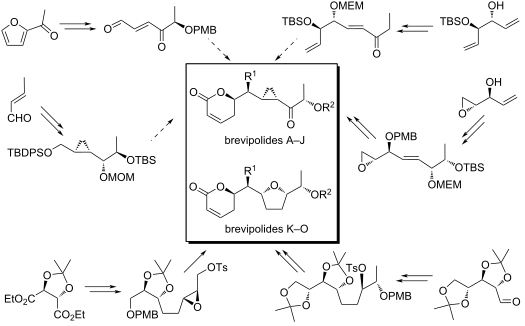
- comprehensive combination of quantum mechanical calculations and experimental spectroscopic analysis of their NMR and ECD data, to have a unique tetrahydrofuran ring instead of the cyclopropane functionality. The absolute configuration of these five compounds were evaluated and all conserved as C6R, C1’S, C2’R


Phenolic constituents from twigs of Aleurites fordii and their biological activities
Beilstein J. Org. Chem. 2021, 17, 2329–2339, doi:10.3762/bjoc.17.151

- 14 known analogues (4–14 and 17–19). The structural elucidation of the new compounds was performed through the analysis of their NMR, HRMS, and ECD spectra and by chemical methods. All isolated compounds were tested for their antineuroinflammatory and neuroprotective activities. Keywords: Aleurites
- [15]. The relative configuration at C-7/C-8 of 1 was established as trans through the relatively small coupling constant (6.1 Hz) [10][16]. The analysis of the ECD spectrum of 1 determined the absolute configuration of 1 to be 7S and 8R (positive Cotton effects (CEs) at 292 and 248 nm, and a negative
- relatively large coupling constant (8.8 Hz) between H-7 and H-8 in 2, as opposed to the relatively small coupling constant (6.1 Hz) between H-7 and H-8 in 1, verified that H-7 and H-8 are cis-oriented [10][16], which was supported by the NOESY correlations of H-7/H-8, H-2/H-9, and H-6/H-9 (Figure 2). The ECD


Nomimicins B–D, new tetronate-class polyketides from a marine-derived actinomycete of the genus Actinomadura
Beilstein J. Org. Chem. 2021, 17, 2194–2202, doi:10.3762/bjoc.17.141
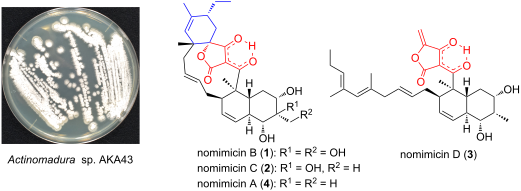
- absolute configuration was determined by combination of NOESY/ROESY and ECD analyses. Nomimicins B, C, and D showed antimicrobial activity against Gram-positive bacteria, Kocuria rhizophila and Bacillus subtilis, with MIC values in the range of 6.5 to 12.5 μg/mL. Nomimicins B and C also displayed
- (Table S1, Supporting Information File 1) and 3JHH coupling constants [15]. The absolute configuration of 1 was deduced to be the same as 4 in consideration of the overall similarity of the electronic circular dichroism (ECD) spectra of 1 and 4 (Figure 4). This proposition was evidenced by the density
- functional theory (DFT) calculation of the ECD spectrum for 4, for which the absolute configuration was established by the modified Mosher’s method in our previous work [15]. Since the acyltetronic acid exists as a mixture of keto–enol tautomers, the calculation was carried out using the four possible



Chemical syntheses and salient features of azulene-containing homo- and copolymers
Beilstein J. Org. Chem. 2021, 17, 2164–2185, doi:10.3762/bjoc.17.139
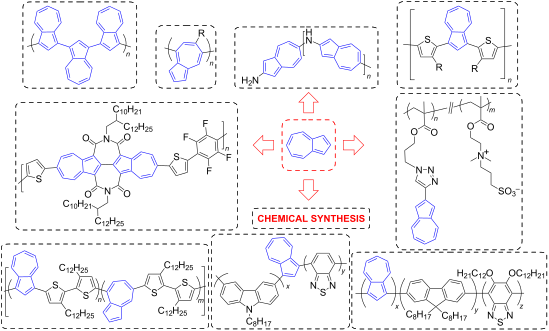
- 141–144 was low compared to all-azulene-carbazole polymer 140 due to the electron transfer from azulene to benzothiadiazole and, due to this, they exhibited better electrochromism. An electrochromic device (ECD) constructed with polymer 143 exhibited black to transmissive electrochromism with high





Asymmetric organocatalyzed synthesis of coumarin derivatives
Beilstein J. Org. Chem. 2021, 17, 1952–1980, doi:10.3762/bjoc.17.128
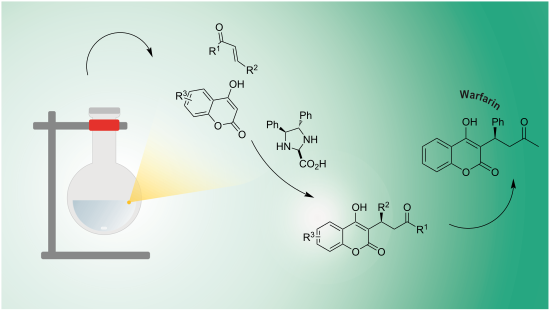
- with high ee in the two first cycles, although the yield of the product in the first cycle was lower (Scheme 28b). Finally, the absolute configuration of the products was determined by ECD analysis. Zheng et al. described an asymmetric organocatalyzed domino reaction between 4-hydroxycoumarins 1 and




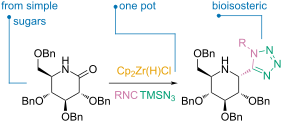
Direct synthesis of anomeric tetrazolyl iminosugars from sugar-derived lactams
Beilstein J. Org. Chem. 2021, 17, 115–123, doi:10.3762/bjoc.17.12
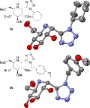
- an attempt at resolving this problem by means of the electronic circular dichroism (ECD) technique. We recorded an ECD spectrum of both compounds and compared it with simulated spectra, generated for both possible diastereomers (2-(R) and 2-(S)) using computational chemistry software. Unfortunately
- Information File 98: Experimental procedures, characterization data, ECD analyses for 5a and 2-epi-5a, calculations of appropriate ECD and UV spectra, crystallographic data for 3a and 3e, atomic coordinates, energies, and number of imaginary frequencies for computed stationary points, and copies of 1H and 13C




Chemical constituents of Chaenomeles sinensis twigs and their biological activity
Beilstein J. Org. Chem. 2020, 16, 3078–3085, doi:10.3762/bjoc.16.257
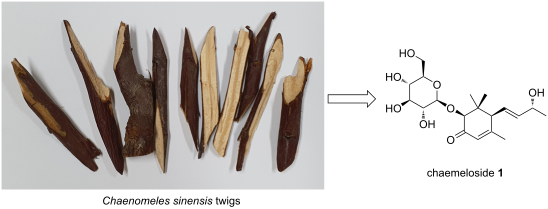
- together with 11 known phytochemicals through chromatographic methods. The chemical structure of the new isolate 1 was determined by conventional 1D and 2D NMR data analysis, ECD experiment, hydrolysis followed by a modified Mosher’s method, and LC–MS analysis. The characterized compounds’ biological
- Supporting Information File 1). The strong NOESY cross-peaks of H-2 with H-6 and H-11 and H-6 with H-11 indicated that these three protons are co-facial (Figure 2B and Supporting Information File 1). The absolute configuration of C-6 was assigned as S by a well-established ECD empirical rule [22]. In brief
- , a systemic analysis of the ECD data of 13 with its diastereomers and simple derivatives showed that a positive or negative Cotton effect around 240–245 nm is indicative of the 6R or 6S configuration, respectively. From a positive Cotton effect at 245 nm of compound 1 (Figure 2C, left), the absolute


Muyocopronones A and B: azaphilones from the endophytic fungus Muyocopron laterale
Beilstein J. Org. Chem. 2020, 16, 2100–2107, doi:10.3762/bjoc.16.177
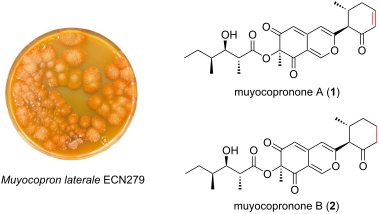
- wavelength around 360 nm corresponding to 7S and 7R [22][23][24]. Therefore, positive Cotton effects at 325 and 355 nm in the electronic circular dichroism (ECD) spectrum of 1 indicated that the absolute configuration of the C-7 position was S (Figure 3). Furthermore, the coupling constant between H-10/H-11
- experimental ECD spectra to elucidate the absolute configuration. In the quantum-chemical calculations, the generation of an excessive number of conformers was avoided using a molecular model in which the β-hydroxycarboxylic acid side chain at the C-7 position was simplified to an acetyloxy group (Figure 4A
- ) [25]. After conformational analysis, geometry optimization was performed for two possible stereoisomers with the (7S,10R,11R)- and (7S,10S,11S)-configurations using density functional theory (DFT) at the CAM-B3LYP/6-311+G(d,p) level of theory. In addition, the ECD spectra of the DFT-optimized




A cyclopeptide and three oligomycin-class polyketides produced by an underexplored actinomycete of the genus Pseudosporangium
Beilstein J. Org. Chem. 2020, 16, 1100–1110, doi:10.3762/bjoc.16.97
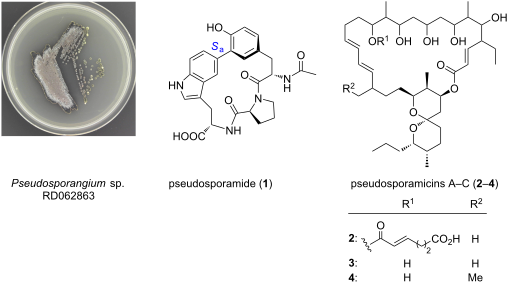
- -acetyl-ʟ-Tyr-ʟ-Pro-ʟ-Trp, was determined by a combination of spectroscopic analyses, chemical derivatization, ECD calculation, and DFT-based theoretical chemical shift calculation, revealing the presence of an (Sa)-axial chirality around the biaryl bond. Compounds 2–4 lacked hydroxylation on the side
- comparison of experimental and simulated ECD spectra [26][27]. Quite interestingly, the DFT calculation suggested that 1a and 1b would possess the opposite axial chirality around the biaryl bond between C-6 and C-7'': Ra for 1a and Sa for 1b as dominant atropisomers (Figure 4). This conformational difference
- around the biaryl axis was likely caused by the steric repulsion between the acetamido group at C-2 and the H-5' methylene protons, by which the H-2 methine proton was directed in close proximity toward the H-5' protons. The experimental ECD spectrum of 1 displayed intense negative and positive Cotton


Absolute configurations of talaromycones A and B, α-diversonolic ester, and aspergillusone B from endophytic Talaromyces sp. ECN211
Beilstein J. Org. Chem. 2020, 16, 290–296, doi:10.3762/bjoc.16.28
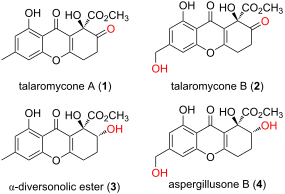
- planar structures of 1 and 2 were elucidated by extensive spectroscopic analyses. Furthermore, the absolute configurations of 1–4 were determined by single-crystal X-ray diffraction and electronic circular dichroism spectroscopy (ECD). In addition, the crystallographic data for 5 were updated for the
- determination of the absolute configuration of 1–4 by single-crystal X-ray diffraction and ECD spectroscopy. In addition, we also updated the crystallographic data for glauconic acid (5), a known nonadride. Results and Discussion Talaromyces sp. ECN211 was isolated from healthy leaves of Selaginella tamariscana
- ); δC 64.2) instead of the aromatic methyl signals observed for 1 (Table 1). Therefore, C-11 was proposed to be an oxymethylene group, which was also confirmed by HMBC correlations (Figure 2) from the oxymethylene unit to C-2 (δC 109.3), C-3 (δC 150.7), and C-4 (δC 104.3). Since the ECD data of 2 were


Pigmentosins from Gibellula sp. as antibiofilm agents and a new glycosylated asperfuran from Cordyceps javanica
Beilstein J. Org. Chem. 2019, 15, 2968–2981, doi:10.3762/bjoc.15.293
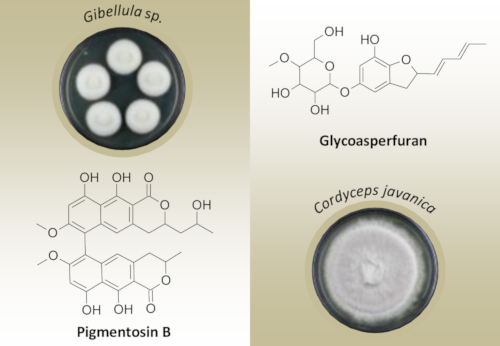
- -forming S. aureus. The structure elucidation and determination of the absolute configuration were accomplished using a combination of spectroscopy, including 1D and 2D NMR, HRMS, Mosher ester analysis, and comparison of calculated/experimental ECD spectra. A chemotaxonomic investigation of the secondary
- ) were not elucidated previously. Therefore, electronic circular dichroism (ECD) measurements combined with time-dependent density functional theory (TDDFT) calculations of ECD data of compound 1 in MeOH at the B3LYP/6-311+G* level of theory were carried out. The CD spectrum of 1 showed strong Cotton
- effects: a first negative at 274 nm (Δε −196) and a positive second one at 252 nm (Δε +203), indicating the helicity of the 6-6′ axis as aR, according to the exciton chirality method [13]. Furthermore, the TDDFT-ECD calculations were performed on three isomers, namely (3R,3′R,6R)-1, (3S,3′S,6S)-1, and (3S


Influence of the cis/trans configuration on the supramolecular aggregation of aryltriazoles
Beilstein J. Org. Chem. 2019, 15, 2881–2888, doi:10.3762/bjoc.15.282
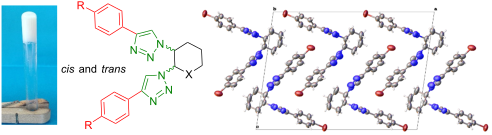
- stacking interactions, in addition to hydrogen bonding, with the aromatic rings adopting a high degree of parallelism, as seen in crystal packings and ECD data. Furthermore, π–bromine interactions between the bromine atom of the aryl substituents and the triazole units might also contribute to an overall
- hydroxymethyl group in position 6 in the gg rotamer, likely linked through hydrogen bonds. Electronic circular dichroism (ECD) is a powerful technique to study supramolecular systems [20][21], since many interactions responsible for the presence of CD Cotton effects occur through space, such as the well-known
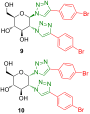
- ECD exciton chirality method [22][23][24]. ECD of compound 10 in a DMSO/H2O (1:2, v/v) solution and in gel form were successfully measured (Figure 6). ECD of the solution exhibited negative first/positive second exciton Cotton effects at 262 (Δε = −8.6) and 242 nm (Δε = +3.3), respectively (Figure 6







Isolation of fungi using the diffusion chamber device FIND technology
Beilstein J. Org. Chem. 2019, 15, 2191–2203, doi:10.3762/bjoc.15.216
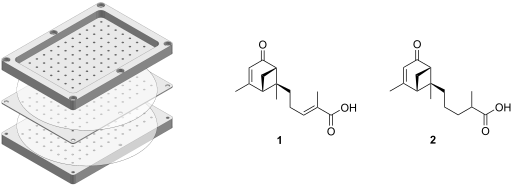
- (Sterlitech corp., Kent, WA). The device is sealed by six hex bolts size M3. General experimental procedures Optical rotations were measured with a Jasco DIP 140 polarimeter. ECD spectra were taken on a Jasco J-810 CD spectropolarimeter. UV and IR spectra were obtained using Perkin-Elmer Lambda 40 and Perkin


α-Photooxygenation of chiral aldehydes with singlet oxygen
Beilstein J. Org. Chem. 2019, 15, 2076–2084, doi:10.3762/bjoc.15.205

- dichroism (ECD) and TD-DFT methods. Keywords: 1,2-diols; ECD; enamines; organocatalysis; porphyrins; silyl ethers of diarylprolinols; singlet oxygen; Introduction Carbonyl compounds are one of the most important building blocks in organic synthesis. As a consequence, there is a constant need for new
- anti’-6 obtained from the reaction with diarylprolinol silyl ether (R)-18 (Table 1, entry 5) were analyzed using electronic circular dichroism spectroscopy (ECD) and TD-DFT methods. So-called in situ methodology with dimolybdenum tetraacetate (19) acting as auxiliary chromophores which proved a very
- useful tool in solving stereochemical problems [24][25][26], allowed to determine the absolute configuration at the C2 carbon atom of obtained diols (Scheme 5) [27][28]. In this method the achiral Mo complex 19 forms optically active complexes with chiral vic-diols allowing the application of ECD to



Bipolenins K–N: New sesquiterpenoids from the fungal plant pathogen Bipolaris sorokiniana
Beilstein J. Org. Chem. 2019, 15, 2020–2028, doi:10.3762/bjoc.15.198
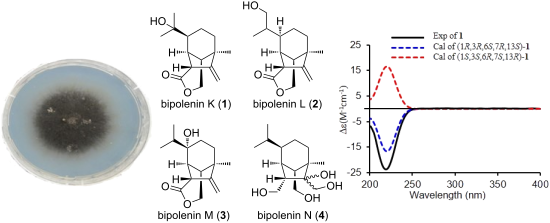
- -13 were α-oriented. The absolute configuration of 1 was determined to be 1R,3R,6S,7R,13S by comparison of the experimental electronic circular dichroism (ECD) spectrum with time-dependent density functional theory (TDDFT)-calculated ECD spectra of the two possible enantiomers of 1 (Figure 4
- investigation of the proton coupling constants (Table 1), NOESY correlations (Figure 3) and ECD spectra (Figure 4). The configuration at C-9 was not determined. Hence, structure 2 was determined as shown in Figure 1. Bipolenin M (3) was purified as a colourless oil. The molecular formula C15H22O3 was based on a
- coupling constants (Table 1), NOESY correlations (Figure 3) and ECD spectra (Figure 4). Bipolenin N (4) was acquired as a colourless oil. Its molecular formula was determined to be C15H28O4 from the HRESIMS [M + H − 2H2O]+ ion at m/z 237.1859 (calcd for C15H25O2+, 237.1849). The UV–vis spectra of 1–3


Complexation of chiral amines by resorcin[4]arene sulfonic acids in polar media – circular dichroism and diffusion studies of chirality transfer and solvent dependence
Beilstein J. Org. Chem. 2019, 15, 1913–1924, doi:10.3762/bjoc.15.187
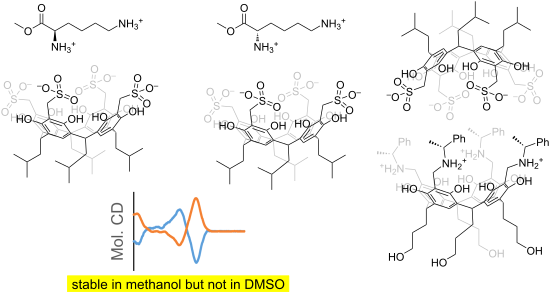
- , respectively. Other parameters include the following: a sweep width of 12 000 Hz, 32 K data points. The data were processed using Varian DOSY software [26]. ECD spectra were recorded on ECD Jasco J-715 spectropolarimeter. 2,8,14,20–Tetraisobutylresorcin[4]arene was obtained according to a literature procedure


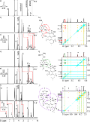
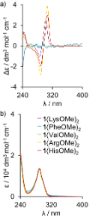
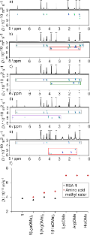


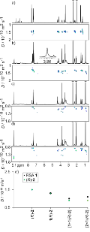
Efficient resolution of racemic crown-shaped cyclotriveratrylene derivatives and isolation and characterization of the intermediate saddle isomer
Beilstein J. Org. Chem. 2019, 15, 1339–1346, doi:10.3762/bjoc.15.133
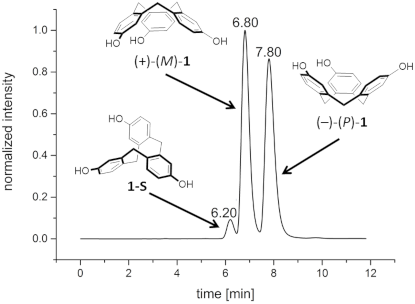
- phase (Figure 1). This simple procedure was successfully used for the semi-preparative separation of 156 mg of (rac)-1. It was possible to separate more than 25 mg substance per injection giving both enantiomers of 1 in an enantiomeric excess of >99%. Electronic circular dichroism spectra (ECD) were
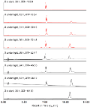
- from a couple of days at 40 °C to only a few hours at 70 °C in ethanol which sets the limits for further derivatization. a) Chromatogram of an analytical separation of (rac)-1 on a CHIRALPAK IB column as the stationary phase and MeOH as the mobile phase, 298 K, flow rate: 0.5 mL min−1; b) ECD-spectra


Correction: Varioloid A, a new indolyl-6,10b-dihydro-5aH-[1]benzofuro[2,3-b]indole derivative from the marine alga-derived endophytic fungus Paecilomyces variotii EN-291
Beilstein J. Org. Chem. 2018, 14, 2394–2395, doi:10.3762/bjoc.14.215
- benzenoid derivatives; cytotoxicity; marine alga-derived fungus; Paecilomyces variotii; TDDFT-ECD calculation; The authors wish to rename compounds 1 and 2 (shown in Figure 1 of the original article [1]) as varioloids C and D, respectively (Figure 1), as the synonyms varioloids A and B have already been

Synthesis and in vitro biochemical evaluation of oxime bond-linked daunorubicin–GnRH-III conjugates developed for targeted drug delivery
Beilstein J. Org. Chem. 2018, 14, 756–771, doi:10.3762/bjoc.14.64
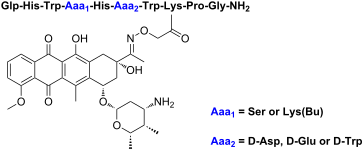
- formaldehyde (e.g., from the softeners of the plastic tubes) not only during the reaction steps (cleavage, ligation) but also under the HPLC purification conditions which has a high impact on the yield [35]. Secondary structure determination by electronic circular dichroism spectroscopy ECD spectra of GnRH-III
- influence of ECD spectra from the exchange of D-Asp to D-Glu. The ECD spectra of all four GnRH-III peptide conjugates reveal two distinct bands: one negative at 200 nm and one positive at 235 nm (Figure 1, Supporting Information File 1, Figures S15 and S16). The negative band is also present in the GnRH-III
- peptide without the daunorubicin (Dau) part. This indicates that the main conformational preferences are not changed by the conjugation. The shapes of the ECD curves show a highly dynamic peptide structure in water. This is in agreement with the NMR study made by Pappa et al. that presented an extended



Polarization spectroscopy methods in the determination of interactions of small molecules with nucleic acids – tutorial
Beilstein J. Org. Chem. 2018, 14, 84–105, doi:10.3762/bjoc.14.5
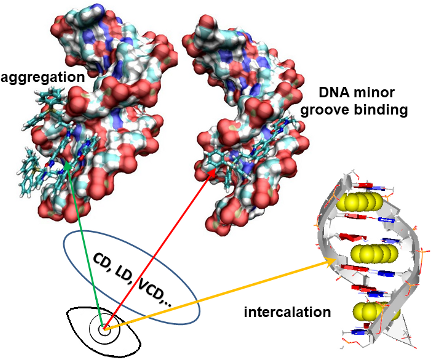
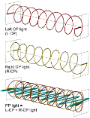
- compatible conditions and are extensively time consuming. Therefore, in search for faster methods which can be applied to conditions that are at least similar to the naturally occurring ones, a set of polarization spectroscopy methods has shown highly promising results. Electronic circular dichroism (ECD) is
- the most commonly used method for the characterization of the helical structure of DNA and RNA and their complexes with ligands. Less common but complementary to ECD, is flow-oriented linear dichroism (LD). Other methods such as vibrational CD (VCD) and emission-based methods (FDCD, CPL), can also be
- of these methods are found in structural studies of biomacromolecules [3]. For instance electronic circular dichroism (ECD), the most commonly used method, is indispensable in the structural studies of proteins and also intensively used in the characterization of the helical structure of DNA and RNA






Cycloheximide congeners produced by Streptomyces sp. SC0581 and photoinduced interconversion between (E)- and (Z)-2,3-dehydroanhydrocycloheximides
Beilstein J. Org. Chem. 2017, 13, 1039–1049, doi:10.3762/bjoc.13.103
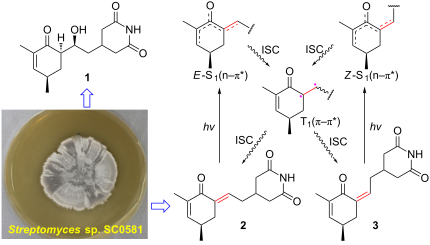
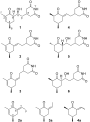
- , anhydroisoheximide (4), cycloheximide (5), and isocycloheximide (6), were obtained from the cultures of Streptomyces sp. SC0581. Their structures were elucidated by extensive spectroscopic analysis in combination with theoretical conformational analysis and ECD computations. The photoinduced interconversion between
- , anhydroisoheximide (4) [6], together with cycloheximide (5) and isocycloheximide (6) [10]. Their structures were elucidated by spectroscopic analysis, theoretical conformational analysis, and ECD/TDDFT calculations. The photoinduced interconversion between 2 and 3 was observed and verified, and the possible reaction
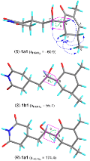
- conformers of both stereoisomers were subjected to TDDFT calculations of the electronic circular dichroism (ECD) spectra. As shown in Figure 3, the calculated ECD spectra of (4R,6R,αS)-1 and (4R,6R,αR)-1 were similar to one another and both in good agreement with the measured spectrum of 1, which indicated a