


Search results
Search for "Negishi cross-coupling" in Full Text gives 30 result(s) in Beilstein Journal of Organic Chemistry.
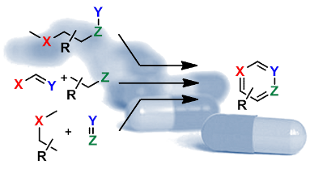
An overview of the synthetic routes to the best selling drugs containing 6-membered heterocycles
- Marcus Baumann and
- Ian R. Baxendale
Beilstein J. Org. Chem. 2013, 9, 2265–2319, doi:10.3762/bjoc.9.265
- recently reported an approach to forming the first aryl–aryl C–C bond by a directed lithiation of a pyridine 1.91 followed by conversion to its organozinc derivative. This intermediate then undergoes a high-yielding Negishi cross-coupling reaction with an arylbromide (Scheme 17) [52]. After acidic

Graphical Abstract

Scheme 1: Scaled industrial processes for the synthesis of simple pyridines.

Scheme 2: Synthesis of nicotinic acid from 2-methyl-5-ethylpyridine (1.11).

Scheme 3: Synthesis of 3-picoline and nicotinic acid.

Scheme 4: Synthesis of 3-picoline from 2-methylglutarodinitrile 1.19.

Scheme 5: Picoline-based synthesis of clarinex (no yields reported).

Scheme 6: Mode of action of proton-pump inhibitors and structures of the API’s.

Scheme 7: Hantzsch-like route towards the pyridine rings in common proton pump inhibitors.

Figure 1: Structures of rosiglitazone (1.40) and pioglitazone (1.41).

Scheme 8: Synthesis of rosiglitazone.

Scheme 9: Syntheses of 2-pyridones.

Scheme 10: Synthesis and mechanism of 2-pyrone from malic acid.

Scheme 11: Polymer-assisted synthesis of rosiglitazone.

Scheme 12: Synthesis of pioglitazone.

Scheme 13: Meerwein arylation reaction towards pioglitazone.

Scheme 14: Route towards pioglitazone utilising tyrosine.

Scheme 15: Route towards pioglitazone via Darzens ester formation.

Scheme 16: Syntheses of the thiazolidinedione moiety.

Scheme 17: Synthesis of etoricoxib utilising Negishi and Stille cross-coupling reactions.

Scheme 18: Synthesis of etoricoxib via vinamidinium condensation.

Figure 2: Structures of nalidixic acid, levofloxacin and moxifloxacin.

Scheme 19: Synthesis of moxifloxacin.

Scheme 20: Synthesis of (S,S)-2,8-diazabicyclo[4.3.0]nonane 1.105.

Scheme 21: Synthesis of levofloxacin.

Scheme 22: Alternative approach to the levofloxacin core 1.125.

Figure 3: Structures of nifedipine, amlodipine and clevidipine.

Scheme 23: Mg3N2-mediated synthesis of nifedipine.

Scheme 24: Synthesis of rac-amlodipine as besylate salt.

Scheme 25: Aza Diels–Alder approach towards amlodipine.

Scheme 26: Routes towards clevidipine.

Figure 4: Examples of piperidine containing drugs.

Figure 5: Discovery of tiagabine based on early leads.

Scheme 27: Synthetic sequences to tiagabine.

Figure 6: Structures of solifenacin (2.57) and muscarine (2.58).

Scheme 28: Enantioselective synthesis of solifenacin.

Figure 7: Structures of DPP-4 inhibitors of the gliptin-type.

Scheme 29: Formation of inactive diketopiperazines from cis-rotameric precursors.

Figure 8: Co-crystal structure of carmegliptin bound in the human DPP-4 active site (PDB 3kwf).

Scheme 30: Improved route to carmegliptin.

Figure 9: Structures of lamivudine and zidovudine.

Scheme 31: Typical routes accessing uracil, thymine and cytosine.

Scheme 32: Coupling between pyrimidones and riboses via the Vorbrüggen nucleosidation.

Scheme 33: Synthesis of lamivudine.

Scheme 34: Synthesis of raltegravir.

Scheme 35: Mechanistic studies on the formation of 3.22.

Figure 10: Structures of selected pyrimidine containing drugs.

Scheme 36: General preparation of pyrimidines and dihydropyrimidones.

Scheme 37: Synthesis of imatinib.

Scheme 38: Flow synthesis of imatinib.

Scheme 39: Syntheses of erlotinib.

Scheme 40: Synthesis of erlotinib proceeding via Dimroth rearrangement.

Scheme 41: Synthesis of lapatinib.

Scheme 42: Synthesis of rosuvastatin.

Scheme 43: Alternative preparation of the key aldehyde towards rosuvastatin.

Figure 11: Structure comparison between nicotinic acetylcholine receptor agonists.

Scheme 44: Syntheses of varenicline and its key building block 4.5.

Scheme 45: Synthetic access to eszopiclone and brimonidine via quinoxaline intermediates.

Figure 12: Bortezomib bound in an active site of the yeast 20S proteasome ([114], pdb 2F16).

Scheme 46: Asymmetric synthesis of bortezomib.

Figure 13: Structures of some prominent piperazine containing drugs.

Figure 14: Structural comparison between the core of aplaviroc (4.35) and a type-1 β-turn (4.36).

Scheme 47: Examplary synthesis of an aplaviroc analogue via the Ugi-MCR.

Scheme 48: Syntheses of azelastine (5.1).

Figure 15: Structures of captopril, enalapril and cilazapril.

Scheme 49: Synthesis of cilazapril.

Figure 16: Structures of lamotrigine, ceftriaxone and azapropazone.

Scheme 50: Synthesis of lamotrigine.

Scheme 51: Alternative synthesis of lamotrigine (no yields reported).

Figure 17: Structural comparison between imiquimod and the related adenosine nucleoside.

Scheme 52: Conventional synthesis of imiquimod (no yields reported).

Scheme 53: Synthesis of imiquimod.

Scheme 54: Synthesis of imiquimod via tetrazole formation (not all yields reported).

Figure 18: Structures of various anti HIV-medications.

Scheme 55: Synthesis of abacavir.

Figure 19: Structures of diazepam compared to modern replacements.

Scheme 56: Synthesis of ocinaplon.

Scheme 57: Access to zaleplon and indiplon.

Scheme 58: Different routes towards the required N-methylpyrazole 6.65 of sildenafil.

Scheme 59: Polymer-supported reagents in the synthesis of key aminopyrazole 6.72.

Scheme 60: Early synthetic route to sildenafil.

Scheme 61: Convergent preparations of sildenafil.

Figure 20: Comparison of the structures of sildenafil, tadalafil and vardenafil.

Scheme 62: Short route to imidazotriazinones.

Scheme 63: Alternative route towards vardenafils core imidazotriazinone (6.95).

Scheme 64: Bayer’s approach to the vardenafil core.

Scheme 65: Large scale synthesis of vardenafil.

Scheme 66: Mode of action of temozolomide (6.105) as methylating agent.

Scheme 67: Different routes to temozolomide.

Scheme 68: Safer route towards temozolomide.

Figure 21: Some unreported heterocyclic scaffolds in top market drugs.
Intramolecular carbolithiation of N-allyl-ynamides: an efficient entry to 1,4-dihydropyridines and pyridines – application to a formal synthesis of sarizotan
- Wafa Gati,
- Mohamed M. Rammah,
- Mohamed B. Rammah and
- Gwilherm Evano
Beilstein J. Org. Chem. 2012, 8, 2214–2222, doi:10.3762/bjoc.8.250
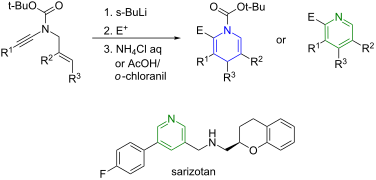
- isolated in modest yields (30–33%), even in the presence of additional HMPA, which might may constitute the major limitation of our process. Other attempts involving electrophiles such as acid chlorides and allyl bromide or transmetallation with zinc chloride and Negishi cross-coupling were unsuccessful

Graphical Abstract

Scheme 1: Strategy for the synthesis of (1,4-dihydro)pyridines by deprotonation/intramolecular carbolithiatio...

Scheme 2: Feasibility of the deprotonation/intramolecular carbolithiation.

Scheme 3: Synthesis of the starting N-allyl-ynamides.
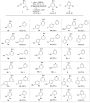
Scheme 4: Intramolecular carbolithiation of N-allyl-ynamides to 1,4-dihydropyridines and pyridines.

Scheme 5: 2,3-Disubstituted pyridines by trapping of the intermediate metallated 1,4-dihydropyridine.

Scheme 6: Formal synthesis of the anti-dyskinesia agent, 5-HT1A receptor agonist, dopamine D2 receptor ligand...
Stereoselective synthesis of tetrasubstituted alkenes via a sequential carbocupration and a new sulfur–lithium exchange
- Andreas Unsinn,
- Cora Dunst and
- Paul Knochel
Beilstein J. Org. Chem. 2012, 8, 2202–2206, doi:10.3762/bjoc.8.248
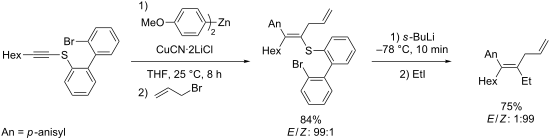
- 9 in 77% yield. Direct Pd-catalyzed Negishi cross-coupling [24][25][26][27][28] of 9 with an arylzinc derivative failed. However, the bromide 9 could be readily converted to the corresponding iodide 10 by a bromine–magnesium exchange using iPrMgCl·LiCl [29][30][31][32][33][34][35] followed by
- iodolysis leading to the iodide 10 in 93% yield. Treatment of 1,2-dibromobenzene with iPrMgCl·LiCl at −15 °C for 2 h followed by a transmetalation with ZnCl2 gives the required zinc reagent 11, which undergoes a Negishi cross-coupling with the iodide 10 at 50 °C (5 h) leading to the alkynyl thioether 1a in

Graphical Abstract

Scheme 1: Synthesis of tetrasubstituted olefins by a successive carbocupration and S–Li exchange.

Scheme 2: Proposed mechanism of the sulfur–lithium exchange starting with the alkenyl thioether 4.

Scheme 3: Synthesis of the precursor 1a.

Scheme 4: Carbocupration of the thioether 1a leading to the tetrasubstituted alkene 4a.

Scheme 5: Synthesis of the alkenyllithium reagent 7a by an S–Li exchange.

Scheme 6: Quenching of the alkynyllithium 7a. (Product ratios and diastereoselectivities were determined by 1...

Scheme 7: Synthesis and quenching of Z-styryllithium.
Recent advances in direct C–H arylation: Methodology, selectivity and mechanism in oxazole series
- Cécile Verrier,
- Pierrik Lassalas,
- Laure Théveau,
- Guy Quéguiner,
- François Trécourt,
- Francis Marsais and
- Christophe Hoarau
Beilstein J. Org. Chem. 2011, 7, 1584–1601, doi:10.3762/bjoc.7.187
- the ring-close oxazole, a trend that is evidenced by 1H NMR spectroscopy and attributed to the strong covalent carbon–zinc bond along with the zinc’s low oxophilicity, and this thus allows subsequent palladium-catalyzed Negishi cross-coupling [31][32][33]. This first, highly efficient, stoichiometric
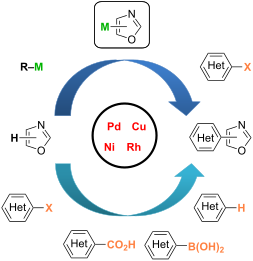
- dehydrogenative couplings of (benz)oxazoles with (hetero)arenes have been developed. Stoichiometric and catalytic direct (hetero)arylation of arenes. Stille and Negishi cross-coupling methodologies in oxazole series [28][30][31][33][34]. Stoichiometric direct (hetero)arylation of (benz)oxazole with magnesate

Graphical Abstract

Scheme 1: Stoichiometric and catalytic direct (hetero)arylation of arenes.

Scheme 2: Stille and Negishi cross-coupling methodologies in oxazole series [28,30,31,33,34].

Scheme 3: Stoichiometric direct (hetero)arylation of (benz)oxazole with magnesate bases [35].

Scheme 4: Ohta's pioneering catalytic direct C5-selective pyrazinylation of oxazole [36,37].

Scheme 5: Preparation of pharmaceutical compounds by following the pioneering Ohta protocol [38,39].

Scheme 6: Miura’s pioneering catalytic direct arylations of (benz)oxazoles [40]. aIsolated yield.

Scheme 7: Pd(0)- and Cu(I)-catalyzed direct C2-selective arylation of (benz)oxazoles [41-44].

Scheme 8: Cu(I)-catalyzed direct C2-selective arylations of (benz)oxazoles [40,45-47].

Scheme 9: Copper-free Pd(0)-catalyzed direct C5- and C2-selective arylation of oxazole-4-carboxylate esters [48-50,52].
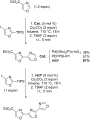
Scheme 10: Iterative synthesis of bis- and trioxazoles [51].
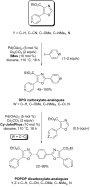
Scheme 11: Preparation of DPO- and POPOP-analogues [53].

Scheme 12: Pd(0)-catalyzed direct arylation of benzoxazole with aryl chlorides [54].

Scheme 13: Pd(0)-catalyzed direct C2-selective arylation of (benz)oxazoles with bromides and chlorides using b...

Scheme 14: Palladium-catalyzed direct arylation of oxazoles under green conditions; (a) Zhuralev direct arylat...

Scheme 15: Pd(0)-catalyzed C2- and C5-selective (hetero)arylation of oxazole [63].

Scheme 16: Pd(0)-catalyzed C2- and C5-selective (hetero)arylation of ethyl oxazole-4-carboxylate [64].

Scheme 17: Pd(0)-catalyzed direct C4-phenylation of oxazoles; (a) Miura’s procedure [65]; (b) Fagnou’s procedure [66].

Scheme 18: Catalytic cycles for Cu(I)-catalyzed (routeA) and Pd(0)/Cu(I)-catalyzed (route B) direct arylation ...
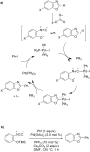
Scheme 19: Base-assisted, Pd(0)-catalyzed, C2-selective, direct arylation of benzoxazole proposed by Zhuralev [58]...

Scheme 20: Electrophilic substitution-type mechanism proposed by Hoarau [64].

Scheme 21: CMD-proceeding C5-selective direct arylation of oxazole proposed by Strotman and Chobabian [63].

Scheme 22: DFT calculations on methyl oxazole-4-carboxylate and consequently developed methodologies for the P...

Scheme 23: Pd(0)-catalyzed direct arylation of (benz)oxazoles with tosylates and mesylates [71].

Scheme 24: Pd(0)-catalyzed direct arylation of oxazoles with sulfamates [72].

Scheme 25: Pd(II)- and Cu(II)-catalyzed decarboxylative direct C–H coupling of oxazoles with 4- and 5-carboxyo...

Scheme 26: Pd(II)- and Ag(II)-catalyzed decarboxylative direct arylation of (benzo)oxazoles [74]; (a) procedure; (...

Scheme 27: Pd(II)- and Cu(II)-catalyzed direct arylation of benzoxazole with arylboronic acids [76]; (a) procedure...

Scheme 28: Ni(II)-catalyzed direct arylation of benzoxazoles with arylboronic acids under O2 [76]; (a) procedure; ...

Scheme 29: Rhodium-catalyzed direct arylation of benzoxazole [78,79].

Scheme 30: Ni(II)-catalyzed direct arylation of (benz)oxazoles with aryl halides; (a) Itami's procedure [80]; (b) ...
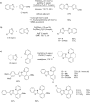
Scheme 31: Dehydrogenative cross-coupling of (benz)oxazoles; (a) Pd(II)- and Cu(II)-catalyzed cross-coupling o...
Functionalization of heterocyclic compounds using polyfunctional magnesium and zinc reagents
- Paul Knochel,
- Matthias A. Schade,
- Sebastian Bernhardt,
- Georg Manolikakes,
- Albrecht Metzger,
- Fabian M. Piller,
- Christoph J. Rohbogner and
- Marc Mosrin
Beilstein J. Org. Chem. 2011, 7, 1261–1277, doi:10.3762/bjoc.7.147
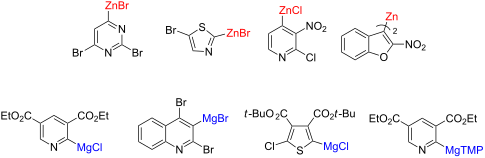
- obtained in 63% yield. Also, the dibromothiazole 19 allows insertion of zinc only into the most labile C–Br bond (in position 2) leading to the zincated thiazole 20. After Negishi cross-coupling [10][11][12], the 2-arylated thiazole 21 is obtained in 85% yield. Polar functional groups, such as a tosyloxy
- is obtained in 75% yield. Coumarine (46) can be directed zincated leading to the zinc reagent 47. After a Negishi cross-coupling with an aromatic iodide, the substituted coumarine 48 is obtained in 83% yield (Scheme 8 and Supporting Information File 1, Procedure 3) [28]. This procedure tolerates most
- iPrMgCl·LiCl (64) at −40 °C for 1 h leading to an intermediate magnesium reagent, which after transmetalation to the corresponding zinc reagent using ZnBr2 provides, after Negishi cross-coupling reaction with the bromoquinoline 80, the polyfunctinal triazene 81 in 75% yield. The conversion of the triazene

Graphical Abstract

Scheme 1: Preparation of polyfunctional heteroarylzinc reagents.

Scheme 2: LiCl-mediated insertion of zinc dust to aryl and heteroaryl iodides.

Scheme 3: Selective insertions of Zn in the presence of LiCl.

Scheme 4: Chemoselective insertion of zinc in the presence of LiCl.

Scheme 5: Preparation and reactions of benzylic zinc reagents.

Scheme 6: Ni-catalyzed cross-coupling of benzylic zinc reagent 34 with ethyl 2-chloronicotinate.

Scheme 7: In situ generation of arylzinc reagents using Mg in the presence of LiCl and ZnCl2.

Scheme 8: Zincation of heterocycles with TMP2Zn (42).

Scheme 9: Preparation of highly functionalized zincated heterocycles using TMP2Zn·2MgCl2·2LiCl (42).

Scheme 10: Microwave-accelerated zincation of heterocycles using TMP2Zn·2MgCl2·2LiCl (42).

Scheme 11: The I/Mg-exchange as a metal-metathesis reaction.

Scheme 12: Regioselective Br/Mg-exchange of dibromoquinolines 65 and 68.

Scheme 13: Improved reagents for the regioselective Br/Mg-exchange on bromoquinolines.

Scheme 14: Synthesis of ellipticine (83) using an I/Mg-exchange reaction.

Scheme 15: An oxidative amination leading to the biologically active adenine, purvalanol A (84).

Scheme 16: Preparation of polyfunctional arylmagnesium reagents using Mg in the presence of LiCl.

Scheme 17: Preparation of polyfunctional magnesium reagents starting from organic chlorides.

Scheme 18: Selective multiple magnesiation of the pyrimidine ring.

Scheme 19: Synthesis of a p38 kinase inhibitor 119 and of a sPLA2 inhibitor 123.

Scheme 20: Synthesis of highly substituted indoles of type 128.

Scheme 21: Efficient magnesiations of polyfunctional aromatics and heterocycles using TMP2Mg·2LiCl (129).

Scheme 22: Negishi cross-coupling in the presence of substrates bearing an NH- or an OH-group.

Scheme 23: Negishi cross-coupling in the presence of a serine moiety.

Scheme 24: Radical catalysis for the performance of very fast Kumada reactions.

Scheme 25: MgCl2-mediated addition of functionalized aromatic, heteroaromatic, alkyl and benzylic organozincs ...



