Search results
Search for "antifungal activity" in Full Text gives 62 result(s) in Beilstein Journal of Organic Chemistry.
Steroid diversification by multicomponent reactions
Beilstein J. Org. Chem. 2019, 15, 1236–1256, doi:10.3762/bjoc.15.121
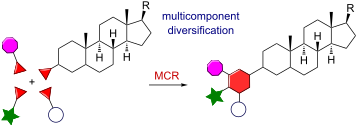
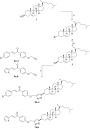
- library of androstanic derivatives 21 (Figure 2B) and their reduced analogues bearing the 3β-hydroxy group were biologically tested showing antifungal activity against Fusarium virguliforme and Fusarium solani. The generation of this compound library suffered from the formation of the Passerini reaction



Metal-free C–H mercaptalization of benzothiazoles and benzoxazoles using 1,3-propanedithiol as thiol source
Beilstein J. Org. Chem. 2019, 15, 279–284, doi:10.3762/bjoc.15.24

- cancer cells [3][4][5]. 2-Mercapto-N-(substituted arylidine)benzoxazole-5-carbohydrazide derivatives have promising anti-inflammatory activities [6]. 2-Mercapto-5-nitro-1,3-benzoxazole and its derivatives shows strong anthelmintic activity [7]. 2-Mercapto-5-chloro-1,3-benzothiazoles possess antifungal
- activity against Candida albicans and Candida tropicalis [8] and 2-mercapto-1,3-benzothiol and its derivatives exhibit inhibitory effects against thyroid peroxidase [9]. (Hetero)aryl thiols are often prepared from the corresponding halides through direct nucleophilic substitution [10][11][12] or metal


Lanyamycin, a macrolide antibiotic from Sorangium cellulosum, strain Soce 481 (Myxobacteria)
Beilstein J. Org. Chem. 2018, 14, 1554–1562, doi:10.3762/bjoc.14.132
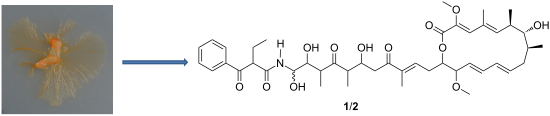
- of which were found to exert anti-HIV activity while sorazolones, argyrins and tubulysins showed antitumor activity or cytotoxicity [4][5][6][7][8]. In our studies on the secondary metabolites of Sorangium cellulosum (strain Soce 481), we observed strong antifungal activity in the raw extract. On RP
- activity against bacteria and fungi and showed moderate antifungal activity in addition to a good inhibition of Micrococcus luteus (Table 3). When lanyamycin (1/2) was evaluated for cytotoxicity against growing primary cell lines, mouse fibroblasts (L929), and human cancer cell lines, nasopharyngeal cells


Two new 2-alkylquinolones, inhibitory to the fish skin ulcer pathogen Tenacibaculum maritimum, produced by a rhizobacterium of the genus Burkholderia sp.
Beilstein J. Org. Chem. 2018, 14, 1446–1451, doi:10.3762/bjoc.14.122
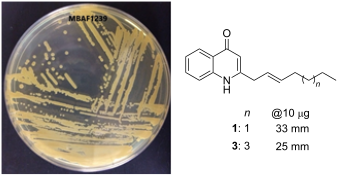
- (23,200); IR ν max (ATR) cm−1: 2923, 2853, 1730, 1635, 1593, 1554, 1500, 1471, 1443, 1354, 1320, 1247, 1137, 1028, 965, 836, 759, 672; HRESIMS–TOF (m/z): [M + H]+ calcd for C18H24NO, 270.18524; found, 270.1855. Evaluation of antimicrobial activity The antibacterial and antifungal activity of 1–8 was


Cycloheximide congeners produced by Streptomyces sp. SC0581 and photoinduced interconversion between (E)- and (Z)-2,3-dehydroanhydrocycloheximides
Beilstein J. Org. Chem. 2017, 13, 1039–1049, doi:10.3762/bjoc.13.103
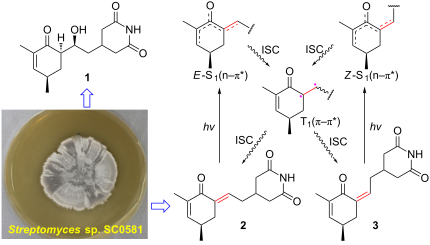
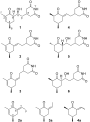
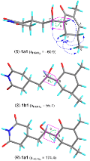
- important to the activities of cycloheximide congeners. Keywords: antifungal activity; cycloheximide derivatives; E/Z photoisomerization; Streptomyces sp; theoretical conformational analysis; Introduction The glutarimide-containing antibiotics represent a fascinating class of natural products that exhibit
- without the toxic side-effects could provide a viable lead of therapeutic drugs or agricultural pesticides. During the course of our searching for bioactive microbial metabolites [8][9], a culture extract of Streptomyces sp. SC0581 was found to show antifungal activity against the phytopathogen
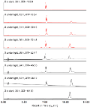
- path and mechanism were proposed by theoretical computations. All the isolated compounds were evaluated for antifungal activity and cancer cell toxicity. Herein are reported the isolation, structural elucidation, and biological activities of these compounds and the interconversion between 2 and 3




Synthesis of 1-indanones with a broad range of biological activity
Beilstein J. Org. Chem. 2017, 13, 451–494, doi:10.3762/bjoc.13.48
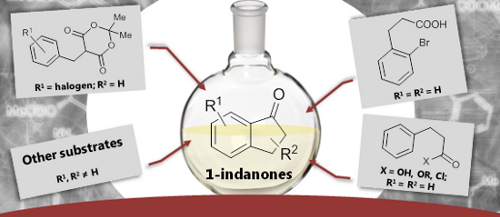
- antibacterial activity against Escherichia coli and Bacillus subtilis, and antifungal activity against Aspergillus niger and Penicillium notatum. Among the synthesized series of 1-indanone derivatives 64, the highest antibacterial activity was exhibited by derivatives 64k and 64l, whereas the most potent
- antifungal activity was revealed for derivatives 64h and 64j. The authors have also studied anti-inflammatory properties of these derivatives using the carrageenan induced paw edema method in rats. The anti-inflammatory activity of the synthesized compounds was compared with standard indomethacin (a non


Synthesis of the C8’-epimeric thymine pyranosyl amino acid core of amipurimycin
Beilstein J. Org. Chem. 2016, 12, 1765–1771, doi:10.3762/bjoc.12.165
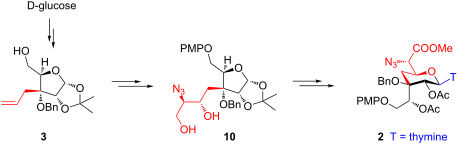
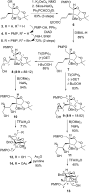
- miharamycin that are known as antifungal agents [2]. Amipurimycin (1) isolated from Streptomyces novoguineensis sp. nov., displays antifungal activity against pyricularia oryzae – a causative agent in rice blast disease [3][4]. Goto and co-workers have proposed the primary structure of amipurimycin (1, Figure
- configurations at the C6’, C2” and C3” of the cis-pentacin are still undefined. Thus, the partially unresolved structure, a potent antifungal activity, the unexplored mode of action and the limited synthetic study make amipurimycin (1) an attractive target for futher investigation. As of now, a total synthesis






Modular synthesis of the pyrimidine core of the manzacidins by divergent Tsuji–Trost coupling
Beilstein J. Org. Chem. 2016, 12, 1111–1121, doi:10.3762/bjoc.12.107
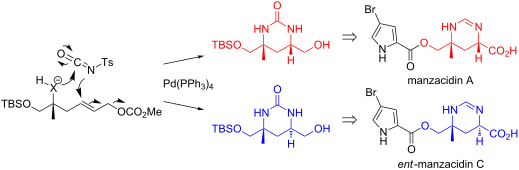
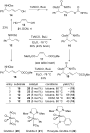
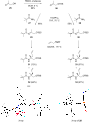
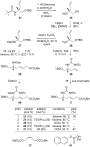
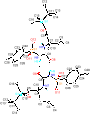
- last century [2]. The compounds have demonstrated potent antifungal activity [3], and acted as α-adrenoceptor blockers, antagonists of the serotonergic receptor and/or actomyosin ATPase activators [23][24][25]. As shown in Figure 1 for the most prominent representatives, manzacidins A (1) and C (2



Marine-derived myxobacteria of the suborder Nannocystineae: An underexplored source of structurally intriguing and biologically active metabolites
Beilstein J. Org. Chem. 2016, 12, 969–984, doi:10.3762/bjoc.12.96
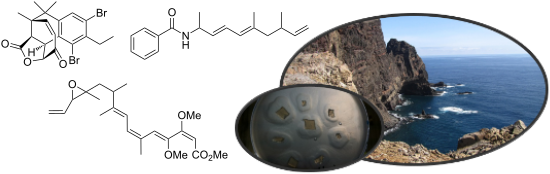
- strain Na a174, is supposed to be a result of degradation processes due to long-time cultivation. Additionally, the known compound 1,6-dihydroxyphenazin (19) and its arabinofuranoside 20 were obtained. To date, 14 has shown marginal antifungal activity towards Mucor hiemalis (DSM 2656, MIC: 33.3 μg/mL
- testing, revealed that the lactone moiety and the configuration of the methoxyacrylate partial structure are crucial for antifungal activity. The latter structural motif is well known from a range of antifungal compounds produced by fungi and myxobacteria, e.g., the strobilurins and the melithiazols [67






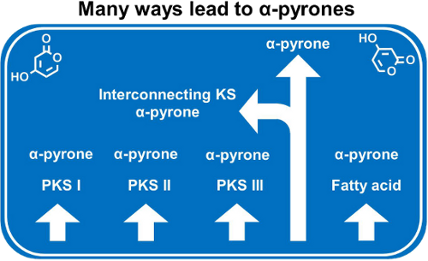
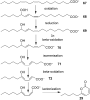
Biosynthesis of α-pyrones
Beilstein J. Org. Chem. 2016, 12, 571–588, doi:10.3762/bjoc.12.56
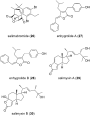
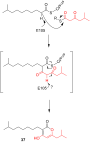
- (29) showed antifungal activity against Rhizoctonia cerealis, Gaeumannomyces graminis and Botrytis cinerea (Figure 6) [34]. The structural related trichopyrone (30) instead showed no antimicrobial activity [35]. For compound 29 it was further revealed that it represents the prominent headspace
- kill their prey [45][46]. Fusapyrone (32) and the derivative deoxyfusapyrone (33) had been isolated from Fusarium semitectum [39]. These compounds show considerable antifungal activity, e.g., a minimum inhibitory concentration against Botrytis cinerea, Aspergillus parasiticus, and Penicillium brevi
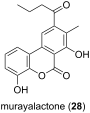
- been used against skin diseases due to its mutagenic effect [71]. Bacterial monobenzo-α-pyrones were isolated from the myxobacterium Stigmatella aurantiaca MYX-030. Myxocoumarins A (65) and B (66) were identified, and 65 was tested for antifungal activity [72]. It showed a promising activity against






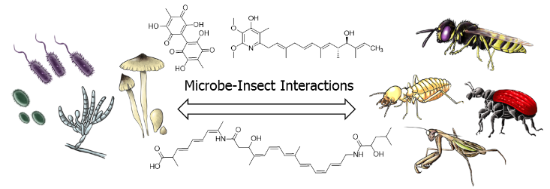
Natural products from microbes associated with insects
Beilstein J. Org. Chem. 2016, 12, 314–327, doi:10.3762/bjoc.12.34
- an additional chlorine and/or hydroxy substituent. In contrast to dentigerumycin, gerumycins do not exhibit significant antifungal activity in vitro against dentigerumycin-sensitive Escovopsis strains. A detailed biosynthetic analysis of gerumycins revealed that the biosynthetic gene clusters are
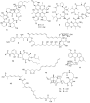
- microtermolides A (16) and B (17) (Figure 6), products by an unusual hybrid non-ribosomal–polyketide pathway [95]. In a follow-up study, a Streptomyces isolate with exceptional high antifungal activity was investigated, and an unusual geldanamycin-derived natalamycin A (18), 19-S-methylgeldanamycin (19), and a
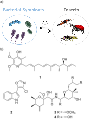
- (e.g., bafilomycin A1 (21) and B1 (22), Figure 7), but also a novel polyunsaturated and polyoxygenated 26-membered macrolactam named sceliphrolactam (23) (Figure 7) [101]. Sceliphrolactam showed strong antifungal activity against amphotericin B-resistant Candida albicans, but its functional role in





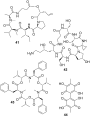
2-Hetaryl-1,3-tropolones based on five-membered nitrogen heterocycles: synthesis, structure and properties
Beilstein J. Org. Chem. 2015, 11, 2179–2188, doi:10.3762/bjoc.11.236

- -1,2-tropolone) isolated from Chamacyparis taiwanensis possesses antimicrobial and antifungal activity [4][5][6], pronounced insecticidal properties [7][8], and the capability of inhibiting the growth of plants [9]. It also exerts a cytotoxic effect on tumor cells [10] and serves as a potent inhibitor


![[Graphic 3]](/bjoc/content/inline/1860-5397-11-236-i8.png?max-width=637&scale=1.18182) N···H–O equilibrium in solutions of 2-hetaryl-5,6,7-trichloro- and 4,...
N···H–O equilibrium in solutions of 2-hetaryl-5,6,7-trichloro- and 4,...


Synthesis, antimicrobial and cytotoxicity evaluation of new cholesterol congeners
Beilstein J. Org. Chem. 2015, 11, 1922–1932, doi:10.3762/bjoc.11.208

- that were as active as ampicillin. However, conjugate VI from the previous investigation was still more active than these conjugates [24]. The antifungal activity of selected newly synthesized chalcone conjugates was evaluated in vitro against A. flavus (Link) and Candida albicans (ATCC 7102) similarly




Pyridinoacridine alkaloids of marine origin: NMR and MS spectral data, synthesis, biosynthesis and biological activity
Beilstein J. Org. Chem. 2015, 11, 1667–1699, doi:10.3762/bjoc.11.183
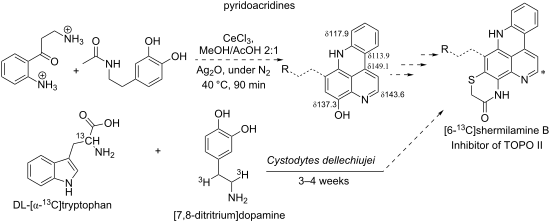
- alkaloids such as meridine (56) that are found to exert its antifungal activity via the inhibition of nucleic acid biosynthesis [87]. Petrosamine B (99), isolated from the sponge Oceanapia sp., inhibited the Helicobacter pylori enzyme aspartyl semialdehyde dehydrogenase explaining it as an antibacterial











Aspergiloid I, an unprecedented spirolactone norditerpenoid from the plant-derived endophytic fungus Aspergillus sp. YXf3
Beilstein J. Org. Chem. 2014, 10, 2677–2682, doi:10.3762/bjoc.10.282
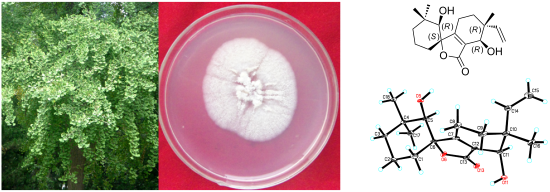
- , Alternaria solani Jones et Grout, Sclerotinia sclerotiorum de Bary, Fusarium graminearum Schw., Fusarium coeruleum Sacc., and Botrytis cinerea Pers.) were tested. Aspergiloid I (1) showed no antibacterial or antifungal activity at a concentration of 20 μg/mL. It also had no antifungal activity against


Encapsulation of biocides by cyclodextrins: toward synergistic effects against pathogens
Beilstein J. Org. Chem. 2014, 10, 2603–2622, doi:10.3762/bjoc.10.273
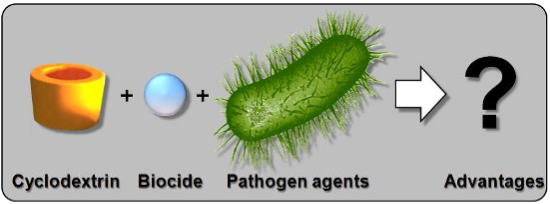
- higher compared to the unmodified one (up to 8.2-fold). As expected, the antifungal activity against C. albicans was enhanced for the MCT-β-CD grafted textile impregnated with miconazole nitrate. The finished fabric retains its antibacterial property even after ten washes unlike the unmodified textile
- mechanism described in Scheme 6. In 2012, the same group reported on the antifungal activity of CD–didecyldimethylammonium chloride inclusion complexes against C. albicans [74]. In this work, the biocidal mechanism was confirmed in vitro by monitoring the mean colony count data, the uncomplexed
- absorption is significantly increased. In other words, the rate of absorption is accelerated because of bioavailability improvement. In 2002, Schirra et al. reported on the inclusion of 1-[2-(allyloxy)-2-(2,4-dichlorophenyl)ethyl]-1H-imidazole (named enilconazole, see Figure 2) in the β-CD and the antifungal


De novo macrolide–glycolipid macrolactone hybrids: Synthesis, structure and antibiotic activity of carbohydrate-fused macrocycles
Beilstein J. Org. Chem. 2014, 10, 2215–2221, doi:10.3762/bjoc.10.229
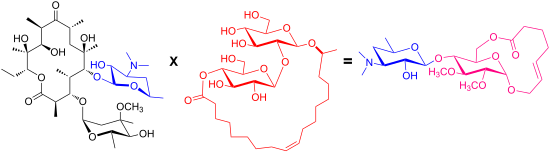
- part of ester linkages; in 4 they are a carbamate and ether, respectively. Modest antifungal activity against C. neoformans and A. fumigatis were also noted for 4 [13]. Here we report on two new natural product-like 12-membered ring macrolides 5 and 6 (Scheme 1) where the pyranose is fused to the


Sacrolide A, a new antimicrobial and cytotoxic oxylipin macrolide from the edible cyanobacterium Aphanothece sacrum
Beilstein J. Org. Chem. 2014, 10, 1808–1816, doi:10.3762/bjoc.10.190
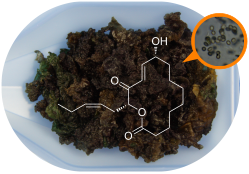
- chrysogenum) revealed that all these layers varied in the extent of activity against certain test organism(s). Especially intriguing was the antifungal activity exhibited by the n-hexane-soluble fraction, which, in most cases, comprises lipids. To identify the responsible constituent, the fraction was
- fractionation scheme used at the initial antimicrobial screening. The aqueous 90% MeOH fraction of the raw sample exhibited significant antifungal activity (12 mm/6 mm Φ disk) against Penicillium chrysogenum at 200 μg/disk and an intense molecular ion of 1 at m/z 307 [M – H]− in negative mode LC–MS analysis
- fact, by boiling the alga in 3% aqueous NaHCO3 for 1 min prior to extraction, the antifungal activity and a peak for 1 in the LC–MS analysis completely disappeared (Figure 4). Although the exact degradation pathway of 1 was not identified during this treatment, a facile deactivation of 1 in the raw


Cuevaenes C–E: Three new triene carboxylic derivatives from Streptomyces sp. LZ35ΔgdmAI
Beilstein J. Org. Chem. 2014, 10, 858–862, doi:10.3762/bjoc.10.82
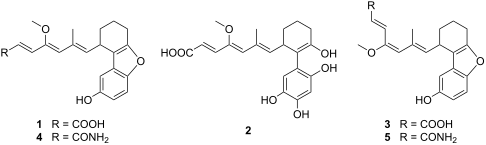
- for 48 h for antifungal activity and at 37 °C for 24 h for antibacterial activity and examined for the presence of a zone of inhibition. Cuevaenes A–E (1–5) isolated from Streptomyces sp. LZ35. Selected NOESY correlations of compounds 1, 3 and 4, 5. 1H and 13C NMR spectroscopy data for compounds 3, 4


The myxocoumarins A and B from Stigmatella aurantiaca strain MYX-030
Beilstein J. Org. Chem. 2013, 9, 2579–2585, doi:10.3762/bjoc.9.293

- described in this work. These compounds comprise an unusual structural framework and exhibit remarkable antifungal properties. Keywords: antifungal activity; myxobacteria; natural products; Stigmatella aurantiaca; structure elucidation; Introduction Despite declining interest of most big R&D-driven
- ) data. Taken together these results indicated the presence of the known antifungal myxobacterial compound myxothiazole A (5), as well as the aurachins A (6) and C in the extract. In addition to these metabolites, a series of non-polar compounds exhibiting strong antifungal activity was detected
- Magnaporthe grisea and Phaeosphaeria nodorum at 67 mg/L. Partial effects were found against Blumeria graminis (67 mg/L). The compound was, however, inactive against Drechslera teres and Phytophthora infestans. These findings indicate a broad range antifungal activity of 7, comparable to commercial standard


The regulation and biosynthesis of antimycins
Beilstein J. Org. Chem. 2013, 9, 2556–2563, doi:10.3762/bjoc.9.290
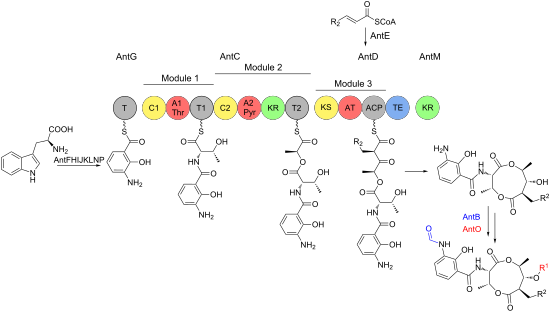
- bioactivity of 5-fluoroantimycins and reported they retained potent antifungal activity against Candida albicans, but were significantly reduced in cytotoxity in a leukemia P388 mouse cell line compared to the parent compounds [25]. Sandy et al. recently showed AntB can accept both acyl-CoAs and acyl-SNACs to


The chemistry of isoindole natural products
Beilstein J. Org. Chem. 2013, 9, 2048–2078, doi:10.3762/bjoc.9.243
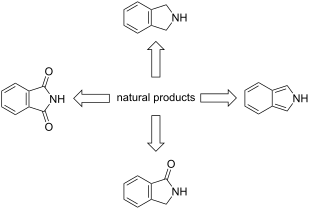
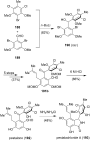
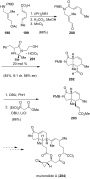
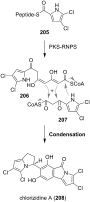
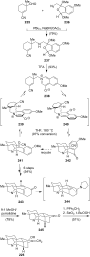
- trichlorocarbinol ester. A first biological evaluation showed that 204 displays antifungal activity. However, only 90 µg could be isolated and further biological screening was not possible [151]. Several sponge-derived macrolides have proven to be effective cytotoxic agents [152][153] and one could speculate that









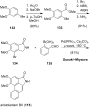


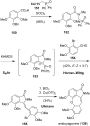
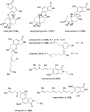


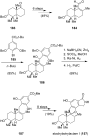



ML212: A small-molecule probe for investigating fluconazole resistance mechanisms in Candida albicans
Beilstein J. Org. Chem. 2013, 9, 1501–1507, doi:10.3762/bjoc.9.171
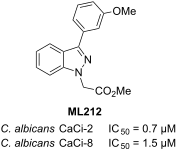
- -8 strain. Secondary assay 2 eliminated anything with inherently antifungal activity. These three assays cooperatively removed almost 80% of the original hits, leaving 350 candidates. A final assay (secondary assay 3) was incorporated to discard any compound displaying toxicity to mammalian



Chemoenzymatic synthesis and biological evaluation of enantiomerically enriched 1-(β-hydroxypropyl)imidazolium- and triazolium-based ionic liquids
Beilstein J. Org. Chem. 2013, 9, 516–525, doi:10.3762/bjoc.9.56

- bacteria and yeasts we used the agar diffusion test (Table 4) in order to select the most promising compounds for further determination of minimal inhibitory concentrations (MICs) by the broth dilution method (Table 5). In turn, the antifungal activity was tested by the agar dilution method. The results
- 5). Moreover, the chemical nature of the cationic head group influenced the overall toxicity of the CILs, which is in good agreement with several previous studies [60]. The imidazolium CILs exhibited visibly stronger antibacterial and antifungal activity than triazolium CILs (Tables 4–6). However
- , the filamentous fungi displayed high tolerance towards the tested CILs. Nevertheless, the relation between the alkyl chain substituent and the antifungal activity of the tested compounds could still be observed, with the strongest toxicity demonstrated by CILs with an alkyl chain substituent of 12


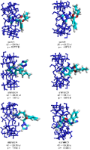
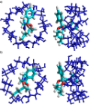
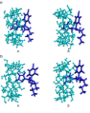
Theoretical study on β-cyclodextrin inclusion complexes with propiconazole and protonated propiconazole
Beilstein J. Org. Chem. 2012, 8, 2191–2201, doi:10.3762/bjoc.8.247
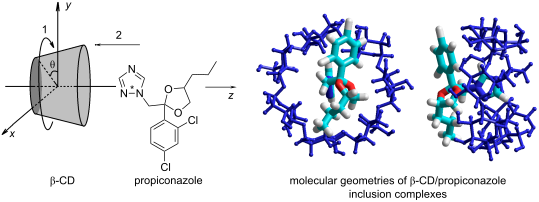
- fungicide and, lately, for its fungistatic action. Propiconazole nitrate was tested in order to reduce the toxicity of the unmodified PP, but little information is available on this topic. Recently synthesized positively charged protonated propiconazole (PPH+) showed an increased antifungal activity
- compared to unmodified PP. The inclusion compound based on β-cyclodextrin (β-CD) and PPH+ (further abbreviated as β-CD/PPH+) was preliminarily investigated in vitro, and its antifungal activity was reported [4]. Cyclodextrins (CDs) are macrocyclic oligosaccharides consisting of six to twelve glucopyranose