Search results
Search for "binding site" in Full Text gives 186 result(s) in Beilstein Journal of Organic Chemistry.
Synthesis of ether lipids: natural compounds and analogues
Beilstein J. Org. Chem. 2023, 19, 1299–1369, doi:10.3762/bjoc.19.96
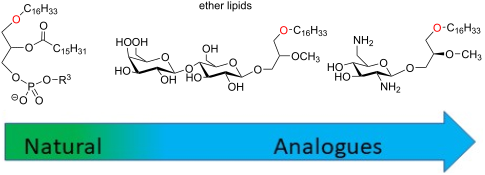
- ). The review of Lemaire et al., dedicated to the synthesis of glycerol ether, is complemental to this review article [57]. Of note, the review of Godfroid and Braquet attempted to decipher the binding site of PAF via a QSAR study [58]. 1.1 Synthesis of PAF and some building blocks The platelet






CO2 complexation with cyclodextrins
Beilstein J. Org. Chem. 2023, 19, 1021–1027, doi:10.3762/bjoc.19.78
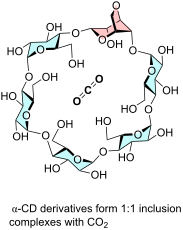
- change in spectrum of 7 provided 7 and CO2 compete for the binding site. To avoid problems with formation of hydrogencarbonate the experiments were conducted in a buffer at pH 3 where only a minor fraction of the carbonic acid (pKa1 = 3.6) is dissociated and since the hydration constant of CO2 is small


Dipeptide analogues of fluorinated aminophosphonic acid sodium salts as moderate competitive inhibitors of cathepsin C
Beilstein J. Org. Chem. 2023, 19, 434–439, doi:10.3762/bjoc.19.33
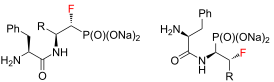
- pocket of the enzyme. In contrast, the S2 pocket preferably accommodates amino acids having short aliphatic side-chains, but also recognizes aromatic amino acids, preferably phenylalanine. To study the structural requirements of the S1 binding site of the enzyme, we synthesized a series of ten dipeptide


Preparation of β-cyclodextrin-based dimers with selectively methylated rims and their use for solubilization of tetracene
Beilstein J. Org. Chem. 2022, 18, 1596–1606, doi:10.3762/bjoc.18.170
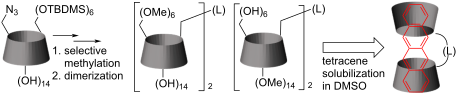
- , USA), to the two independent binding sites model. From the fit, the stoichiometry (n), binding enthalpy change (ΔH, kJ·mol−1), affinity constant (Ka, M−1), binding free energy change (ΔG, kJ·mol−1), and binding entropy change (ΔS, J·mol–1·K−1) for the first binding site were calculated. The
- thermodynamic parameters for the second binding site were not discussed but used to subtract the nonlinear residual heat at high molar ratios. Separate titration experiments of pure DMSO to the solution of tetracene in DMSO and DMSO to the solution of water in DMSO were carried out to account for potential


Microelectrode arrays, electrosynthesis, and the optimization of signaling on an inert, stable surface
Beilstein J. Org. Chem. 2022, 18, 1488–1498, doi:10.3762/bjoc.18.156
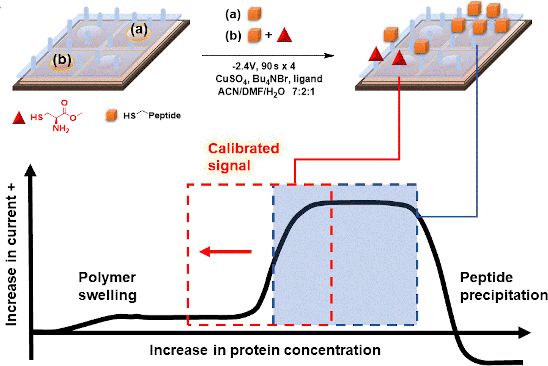
- 5) [21]. Gαi1 was selected as a positive control for subsequent studies because it can be expressed easily, has roughly 55% homology with the much more difficult to express Gαq [15], and chimeric proteins are available that have Gαi1 modified with a Gαq binding site for YM and FR [22]. R6A was


Computational model predicts protein binding sites of a luminescent ligand equipped with guanidiniocarbonyl-pyrrole groups
Beilstein J. Org. Chem. 2022, 18, 1322–1331, doi:10.3762/bjoc.18.137
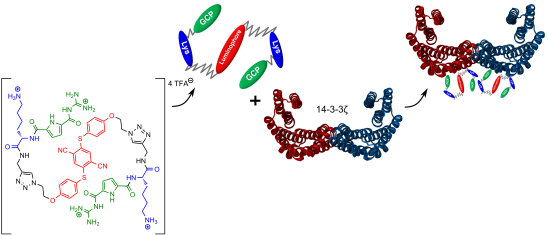
- area above and below the central pore of the dimeric 14-3-3ζ protein is the most probable binding site for the ligand. Moreover, we predict that the position of the ligand is sensitive to the presence of phosphorylated C-Raf peptides. With a series of experiments, we confirmed the computational
- pairs of proteins (Figure 2b). Knowledge of the binding site is of critical importance for a potential bioanalytics application: if 1 would block one or both wells of the ω, it could prevent binding of ligand proteins, whereas a 1 binding site in the outer parts of the ω would not interfere with
- 1.5.2 [41]. To validate our method, we applied it to the QQJ-096/14-3-3/c-Raf complex for which the potential binding site was available from all-atom molecular dynamics simulations in a previous study [26]. Our results for this system are reported in the first part of the Supporting Information File 1




Post-synthesis from Lewis acid–base interaction: an alternative way to generate light and harvest triplet excitons
Beilstein J. Org. Chem. 2022, 18, 825–836, doi:10.3762/bjoc.18.83
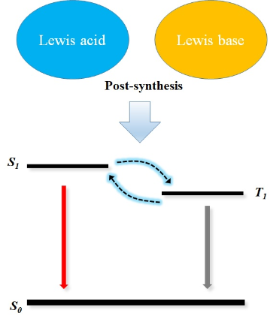
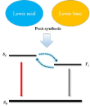
- determined from the optimized structures of compounds 21 and 22 (Figure 13a) by DFT suggest that pyridine is a better binding site than thiophene [43]. The effect of steric hindrance on the Lewis acid–base binding should not be ignored. If there is large steric hindrance of the Lewis basic molecules, it will


Structural basis for endoperoxide-forming oxygenases
Beilstein J. Org. Chem. 2022, 18, 707–721, doi:10.3762/bjoc.18.71
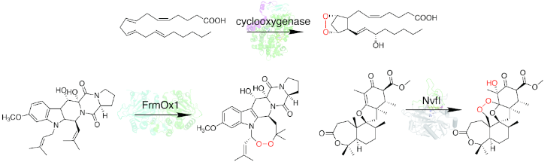
- observed in typical Fe/2OG-dependent oxygenases (Figure 3A). The Fe(II) is coordinated by His129, Asp131, His205, and 2OG in the binary complex structure of FtmOx1 with 2OG. In this structure, Tyr224 is close to the putative oxygen binding site (Figure 3B). Furthermore, the variants in which Tyr224 is


Heteroleptic metallosupramolecular aggregates/complexation for supramolecular catalysis
Beilstein J. Org. Chem. 2022, 18, 597–630, doi:10.3762/bjoc.18.62
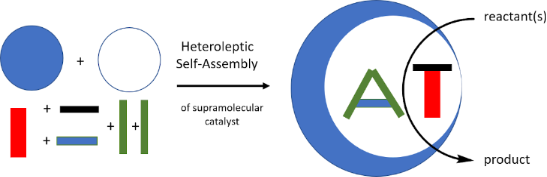
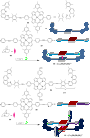
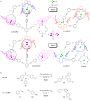
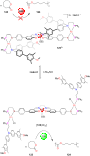
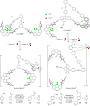
- procedure developed by Sauvage on the basis of topological control [33] has found ample use in the preparation of rotaxane-based machines and devices [34]. A key element is a macrocyclic phenanthroline with an endotopic binding site as it precludes homoleptic complex formation. A further principle











(Phenylamino)pyrimidine-1,2,3-triazole derivatives as analogs of imatinib: searching for novel compounds against chronic myeloid leukemia
Beilstein J. Org. Chem. 2021, 17, 2260–2269, doi:10.3762/bjoc.17.144
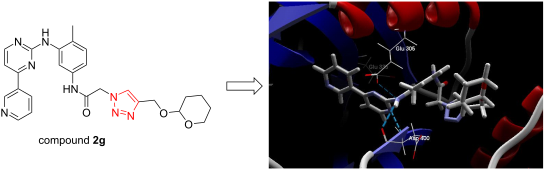
- , with IC50 values between 1.0 and 7.3 μM, and were subjected to molecular docking studies. The results suggest that such compounds can interact at the same binding site as imatinib, probably sharing a competitive inhibition mechanism. One compound showed the greatest interaction affinity for BCR-Abl-1
- TKIs that are even more potent than IMT, such as nilotinib [6][7]. These drugs act as inhibitors at the ATP binding site in the inactive form of BCR-Abl-1, preventing the binding of the protein to ATP in a competitive manner and resulting in the interruption of the substrate phosphorylation process and
- interact with BCR-Abl-1 at the same binding site as IMT but show differences in the binding modes and with higher values of interaction energy. Compound 2c presented a MolDock value of −152.993 a.u. For compound 2d, the value was −152.127 a.u., and for compound 2g, it was −167.520 a.u. (Table 2


A systems-based framework to computationally describe putative transcription factors and signaling pathways regulating glycan biosynthesis
Beilstein J. Org. Chem. 2021, 17, 1712–1724, doi:10.3762/bjoc.17.119
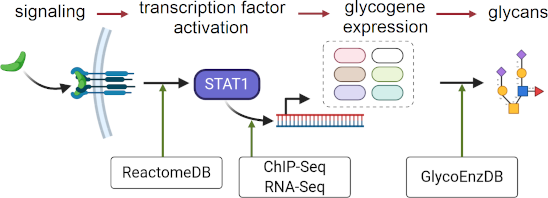
- relationships must be supported by ChIP-Seq evidence. Here, a nonlinear weighted sum called regulatory potential (RP) quantifies the strength of TF–gene interactions based on the proximity of TF binding site to the gene TSS and also the number of TF–gene binding interactions based experimentally detected ChIP




Chemical approaches to discover the full potential of peptide nucleic acids in biomedical applications
Beilstein J. Org. Chem. 2021, 17, 1641–1688, doi:10.3762/bjoc.17.116









Synthetic strategies of phosphonodepsipeptides
Beilstein J. Org. Chem. 2021, 17, 461–484, doi:10.3762/bjoc.17.41
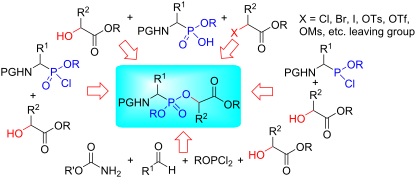
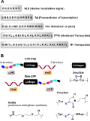
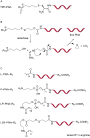
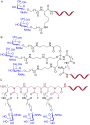
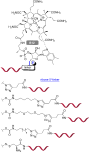
- -aminophosphonodichloride 92 with phenol and methyl (S)-2-hydroxypentanoate (18). All synthetic phosphonodepsipeptides 99, 102, and 104 were considered as glutathione-analogue phosphonopeptides as mechanism-based inhibitors of γ-glutamyl transpeptidase for probing the cysteinyl-glycine binding site (Scheme 16) [31




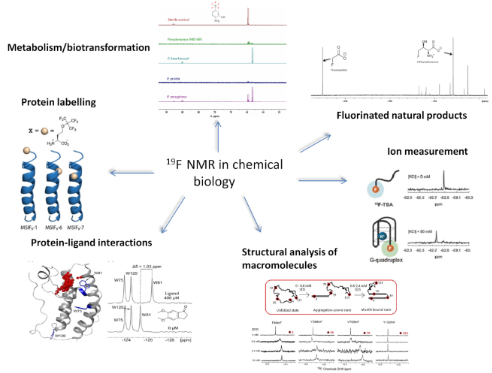
19F NMR as a tool in chemical biology
Beilstein J. Org. Chem. 2021, 17, 293–318, doi:10.3762/bjoc.17.28


Multiswitchable photoacid–hydroxyflavylium–polyelectrolyte nano-assemblies
Beilstein J. Org. Chem. 2021, 17, 166–185, doi:10.3762/bjoc.17.17
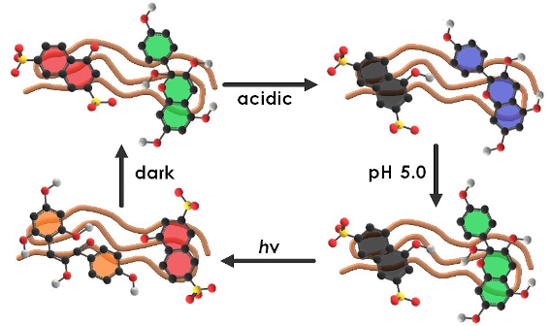
- transformation to the hydrolyzed form of the hydroxyflavylium molecule at state D leads to the removal of the positive charge and the addition of an extra binding site. Due to that, the ζ-potential increases while at the same time the effective surface charge density decreases followed by a destabilization of
- pH 7 (Figure 8), the data reveal that the first and third binding site are exothermic with ΔH1 = −4.3 kJ/mol and ΔH3 = −172.7 kJ/mol per polyelectrolyte binding site, respectively, which shows that strong ionic interactions and hydrogen bonding constitute these binding processes. Probably these




Insight into functionalized-macrocycles-guided supramolecular photocatalysis
Beilstein J. Org. Chem. 2021, 17, 139–155, doi:10.3762/bjoc.17.15
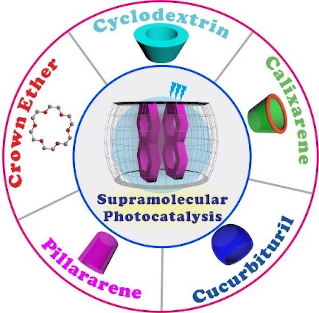
- quantum yield of 3.8 × 10⁻² and 0.4, respectively. In contrast, for flavins without the zinc(II)–cyclen unit, only small amounts of product were observed, and the quantum yield was 30 times lower compared to that of the assembly with the flavin chromophore possessing a binding site. The mechanism may be


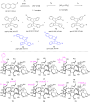


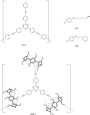


Supramolecular polymerization of sulfated dendritic peptide amphiphiles into multivalent L-selectin binders
Beilstein J. Org. Chem. 2021, 17, 97–104, doi:10.3762/bjoc.17.10
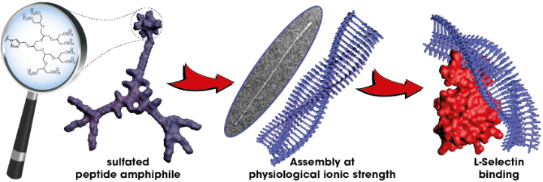
- of multivalent interactions is the extracellular adhesion protein L-selectin. L-Selectin plays a critical role in inflammation processes by supporting the migration of leukocytes to inflammatory sites via adhesion to endothelial cells [19][20][21]. On a molecular level, a cationic binding site [22


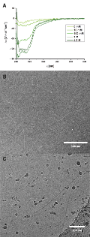

Selected peptide-based fluorescent probes for biological applications
Beilstein J. Org. Chem. 2020, 16, 2971–2982, doi:10.3762/bjoc.16.247

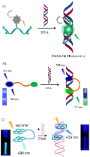
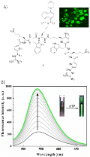
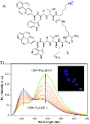
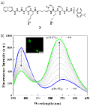
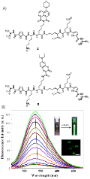
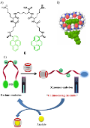
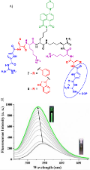
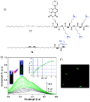
- peptidic arms equipped with lysine and an artificial strong anion binding site, the guanidinocarbonylpyrrole (GCP) moiety (Figure 2A). These arms also contain tryptophan for dissimilar aromatic interactions with different nucleobases. The fluorescence intensity of probe 1 increases by more than 4-fold at
- -polyU) (log K = 3.8 and log K = 4.4 respectively for 4 and 5). Significant differential fluorescence responses of these probes with nucleic acids are due to the positioning of fluorophores within the polynucleotide binding site. Different studies explain their different mode of binding with dsDNA. Probe




UV resonance Raman spectroscopy of the supramolecular ligand guanidiniocarbonyl indole (GCI) with 244 nm laser excitation
Beilstein J. Org. Chem. 2020, 16, 2911–2919, doi:10.3762/bjoc.16.240
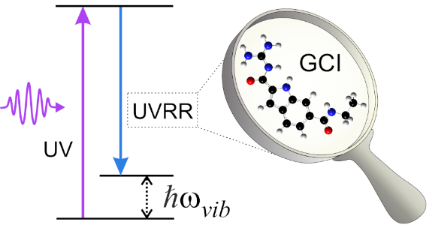
- (GCPs). The use of UV laser excitation enables Raman binding studies of this class of supramolecular ligands at submillimolar concentrations in aqueous solution and provides a selective signal enhancement of the carboxylate binding site (CBS). A current limitation for the extension of this promising
- -covalent interactions namely hydrogen bonds, van der Waals, and/or hydrophobic interactions [1][2][3][4][5]. In this context, Schmuck and co-workers have introduced a class of synthetic receptors based on the guanidiniocarbonyl pyrrole (GCP) moiety (cf. Figure 1 top right) as a carboxylate binding site


Using multiple self-sorting for switching functions in discrete multicomponent systems
Beilstein J. Org. Chem. 2020, 16, 2831–2853, doi:10.3762/bjoc.16.233

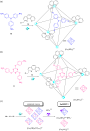
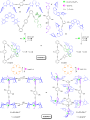
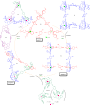
- binding site to nanoswitch [Cu(68)]+ preventing its action as an organocatalyst (OFF-1), while the copper catalyst [Cu(69)]+ was available to catalyze a click reaction between 4-nitrophenylacetylene (47) and benzyl azide (46) (ON-2). The addition of 1 equiv of phenanthroline 69 to the state SelfSORT-I









Synthesis and investigation of quadruplex-DNA-binding, 9-O-substituted berberine derivatives
Beilstein J. Org. Chem. 2020, 16, 2795–2806, doi:10.3762/bjoc.16.230
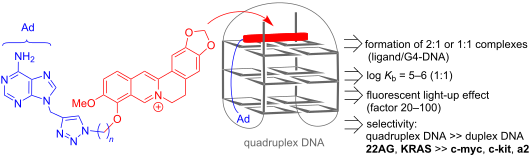
- ICD bands, which are mostly pronounced with a linker length of n = 4 (with a2) and n = 5 (with 22AG), thus indicating that each ligand–G4-DNA complex has a specific structure with respect to relative alignment and conformational flexibility of the ligand in the binding site. It was shown exemplarily
- , cyclodextrins or micelles [55][56][57][58]. Presumably the radiationless deactivation of the excited state by conformational changes, that leads to the low emission intensity in aqueous solution, is suppressed in the sterically restricted binding site. Therefore, it can be deduced that the increased emission of
- other parameters such as binding-site size, cooperativity between ligands, ionic strength, the enthalpy of the DNA denaturation, and on the binding constant and enthalpy of the ligand binding at the melting temperature. However, the binding constant is determined at temperatures below Tm and the


Vicinal difluorination as a C=C surrogate: an analog of piperine with enhanced solubility, photostability, and acetylcholinesterase inhibitory activity
Beilstein J. Org. Chem. 2020, 16, 2663–2670, doi:10.3762/bjoc.16.216
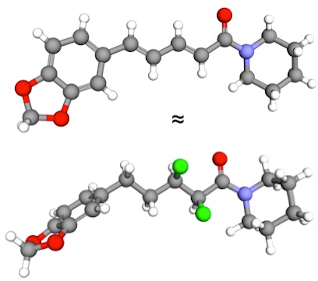
- microenvironment of a protein binding site could also change the relative energies of the various F–C–C–F and F–C–C=O rotamers, offering the possibility that analog 2 might be an effective conformational mimic of 1 in some environments but not in others. Herein, we describe the optimisation of a synthetic route to


Thermodynamic and electrochemical study of tailor-made crown ethers for redox-switchable (pseudo)rotaxanes
Beilstein J. Org. Chem. 2020, 16, 2576–2588, doi:10.3762/bjoc.16.209
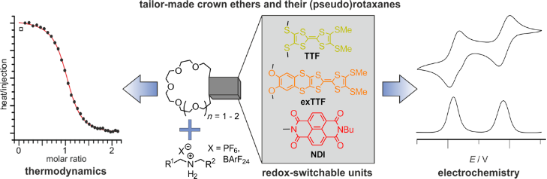
- -functionalized crown ether as for the TTF crown ethers, where the NDI unit is in a position more remote from the crown ether binding site. Yet, keeping the formal C2-symmetry of the macrocycle is important to avoid mixtures of isomers upon the threading of directional axles, such as A1·PF6 (Figure 1c) [40
- comparison of all absorption spectra clearly demonstrates that the rotaxane formation does not significantly influence the optoelectronic properties of the NDI unit. This can be explained by the position of the NDI moiety being rather remote from the binding site of the crown ether. Conclusion In conclusion
- binding and redox-switching properties can be fine-tuned for the construction of a desired crown ether-based switchable MIM: while bisTTFC8 shows interesting redox properties but very low binding constants and exTTFC8 displays a high binding constant, yet no strong interaction of the ammonium-binding site




NMR Spectroscopy of supramolecular chemistry on protein surfaces
Beilstein J. Org. Chem. 2020, 16, 2505–2522, doi:10.3762/bjoc.16.203
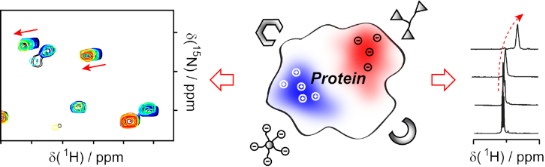
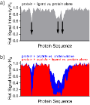
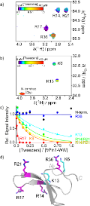
- binding site. Here we discuss protein-based solution NMR techniques including classic 1H,15N-HSQC spectra, TROSY variants for large proteins, fast acquisition techniques and specific isotope labeling strategies, as well as the use of 13C-edited spectra and side chain specific spectra for lysine and
- the ligand needs to dissociate again from the protein in order to be detected. Therefore, strong (nM or better) binders are not suitable for these experiments. No information about the binding site(s) on the protein is obtained. Magnetization transfer via NOE depends on a molecule’s correlation
- and this residue must also be in close enough proximity to the ligand binding site. In cases where supramolecular ligands contain peptidic scaffolds with methyl-bearing residues (like alanine, valine, leucine or isoleucine) whose NMR signals overlap with the protein methyl signals, finding a protein




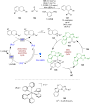
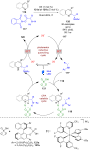
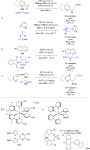
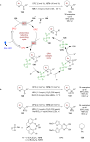
Recent developments in enantioselective photocatalysis
Beilstein J. Org. Chem. 2020, 16, 2363–2441, doi:10.3762/bjoc.16.197