Search results
Search for "cyclodextrin" in Full Text gives 233 result(s) in Beilstein Journal of Organic Chemistry. Showing first 200.
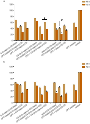
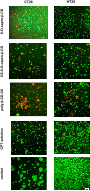
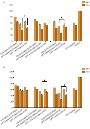
Insight into oral amphiphilic cyclodextrin nanoparticles for colorectal cancer: comprehensive mathematical model of drug release kinetic studies and antitumoral efficacy in 3D spheroid colon tumors
Beilstein J. Org. Chem. 2023, 19, 139–157, doi:10.3762/bjoc.19.14
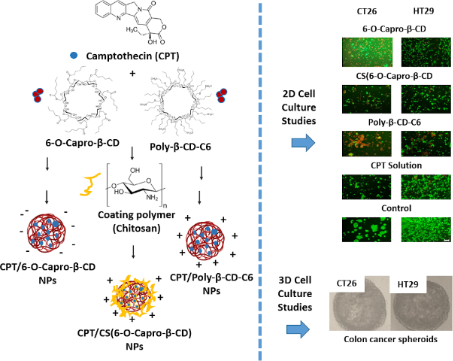
- in cancer-related deaths. With the current treatment possibilities, a definitive, safe, and effective treatment approach for CRC has not been presented yet. However, new drug delivery systems show promise in this field. Amphiphilic cyclodextrin-based nanocarriers are innovative and interesting
- , and furthermore in vivo antitumoral and antimetastatic efficacy in early and late-stage colon cancer models and biodistribution after single dose oral administration. This study was carried out to further elucidate oral camptothecin (CPT)-loaded amphiphilic cyclodextrin nanoparticles for the local
- -loaded polycationic-β-cyclodextrin nanoparticles caused reduced cell viability in CT26 and HT29 colon carcinoma spheroid tumors of mice and human origin, respectively. In addition, the release profile, which is one of the critical quality parameters in new drug delivery systems, was investigated




Preparation of β-cyclodextrin/polysaccharide foams using saponin
Beilstein J. Org. Chem. 2023, 19, 78–88, doi:10.3762/bjoc.19.7
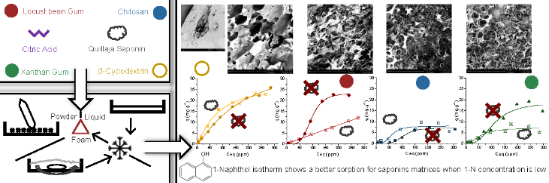
- polysaccharides. Xanthan gum, locust bean gum or chitosan can be crosslinked using citric acid in the presence of β-cyclodextrin to produce insoluble matrices. In this work, polymeric foams based on those polysaccharides and saponin have been prepared using a green synthesis method to increase the porosity of the
- matrices. The saponin of soapbark (Quillaja saponaria) has been used to obtain foams using different procedures. The influence of the synthesis path on the porosity of the materials and their corresponding sorption capacities in the aqueous phase were evaluated. Keywords: chitosan; cyclodextrin polymers
- potential uses can be either for oral delivery targeting intestine [33] or for an anti-skin cancer treatment [35], for example. This complexation step is also interesting for the synthesis of molecular imprinted polymers containing cyclodextrin [36]. In previous works, we have produced crosslinked



Inclusion complexes of the steroid hormones 17β-estradiol and progesterone with β- and γ-cyclodextrin hosts: syntheses, X-ray structures, thermal analyses and API solubility enhancements
Beilstein J. Org. Chem. 2022, 18, 1749–1762, doi:10.3762/bjoc.18.184
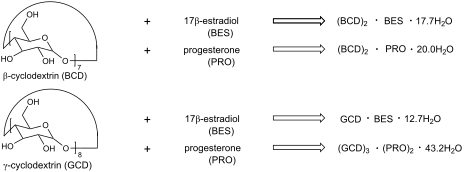
- : cyclodextrin; complexation; 17β-estradiol; progesterone; solubility; X-ray diffraction; Introduction The insolubility of active pharmaceutical ingredients (APIs) and other bioactive compounds in aqueous media and the associated challenges for effective drug delivery are well known to have beleaguered the
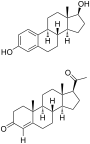
- their chemical instability, adverse side effects such as gastrointestinal irritation, and unpleasant tastes and odours [1][2][3][4][5]. Here we report an investigation of the cyclodextrin (CD) inclusion of two notable bioactive compounds (Figure 1), namely the most potent human estrogen, 17β-estradiol
- ,) with purity >98% and progesterone (C21H30O2) with purity >98% were purchased from Sigma-Aldrich Chemie GmbH (Steinheim, Germany). β-Cyclodextrin (β-CD; C42H70O35) with purity >98% and water content 13.7(1)% (n = 2) was purchased from Cyclolab (Budapest, Hungary), while γ-cyclodextrin (γ-CD; C48H80O40



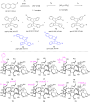
Preparation of β-cyclodextrin-based dimers with selectively methylated rims and their use for solubilization of tetracene
Beilstein J. Org. Chem. 2022, 18, 1596–1606, doi:10.3762/bjoc.18.170
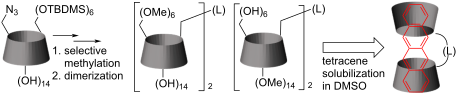
- , 162 06 Prague, Czech Republic 10.3762/bjoc.18.170 Abstract A series of β-cyclodextrin dimers selectively permethylated on the primary or secondary rim with two different types of spacers have been synthesized effectively utilizing conventional and newly developed methods. Their structure analyses by
- better effectiveness than other tested supramolecular hosts. Keywords: cyclodextrin; dimer; methylation; solubilization; tetracene; Introduction Cyclodextrins (CDs) are cyclic oligomers of glucose that play an important role in supramolecular chemistry [1]. The structure of any CD contains a
- pentacene and other larger linear acenes if we would achieve some success with it. In this work, we report on the efficient synthesis of new cyclodextrin supramolecular hosts based on selectively methylated β-CD derivatives and their dimers; moreover, we compare their effectiveness in the solubilization of


A study of the DIBAL-promoted selective debenzylation of α-cyclodextrin protected with two different benzyl groups
Beilstein J. Org. Chem. 2022, 18, 1553–1559, doi:10.3762/bjoc.18.165
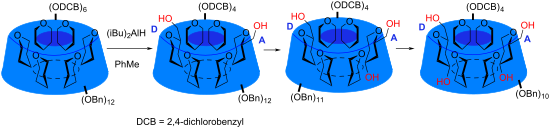
- Naser-Abdul Yousefi Morten L. Zimmermann Mikael Bols Department of chemistry, University of Copenhagen, Universitetsparken 5, 2100, Copenhagen, Denmark 10.3762/bjoc.18.165 Abstract An α-cyclodextrin protected with 2,4-dichlorobenzyl groups on the primary alcohols and ordinary benzyl groups on the
- ; cyclodextrin; debenzylation; 2,4-dichlorobenzyl; selective; Introduction α-Cyclodextrin (1) is a cyclic carbohydrate consisting of six α-1,4-linked ᴅ-glucose molecules (Figure 1). It has a donut-like structure with the glucose residues all aligned with the α-side towards the center of the ring and the polar
- electron-poor benzyl groups reacting much more sluggishly. Indeed the per-2,4-dichlorobenzyl (DCB) protected compound 1 was completely resistant to DIBAL even when treated for several days [15]. This led us to wonder if an α-cyclodextrin protected on the primary hydroxy groups with DCB groups and on the


Supramolecular approaches to mediate chemical reactivity
Beilstein J. Org. Chem. 2022, 18, 1463–1465, doi:10.3762/bjoc.18.152
- supramolecular catalysts were based on covalent hosts, typically cyclodextrin macrocycles [1], which had an interior hydrophobic cavity decorated with catalytically useful functional groups. Recently, increased emphasis has been placed on catalysis that takes use of noncovalent hosts, including self-assembled
Cyclodextrin-based Schiff base pro-fragrances: Synthesis and release studies
Beilstein J. Org. Chem. 2022, 18, 1346–1354, doi:10.3762/bjoc.18.140
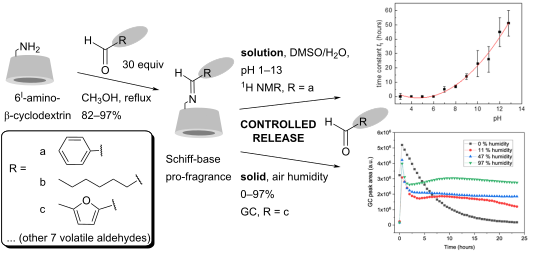
- ), Dunkerque, France 10.3762/bjoc.18.140 Abstract A simple method for the preparation of β-cyclodextrin derivatives containing covalently bonded aldehydes via an imine bond was developed and used to prepare a series of derivatives from 6I-amino-6I-deoxy-β-cyclodextrin and the following volatile aldehydes
- benzaldehyde) and static headspace-gas chromatography (for benzaldehyde, heptanal, and 5-methylfurfural). The aldehyde release rate from the imine was shown to depend substantially on the pH from the solution and the air humidity from the solid state. Keywords: aldehyde; controlled release; cyclodextrin
- , we describe the synthesis of ten pro-fragrances – Schiff bases prepared from amino-β-cyclodextrin and common volatile aldehydes. Aldehydes constitute a prominent class of molecules broadly used as food product additives and are also key components of perfumes [24]. They were therefore chosen as an
Derivatives of benzo-1,4-thiazine-3-carboxylic acid and the corresponding amino acid conjugates
Beilstein J. Org. Chem. 2022, 18, 1195–1202, doi:10.3762/bjoc.18.124
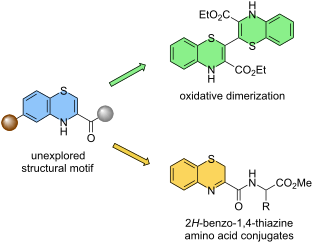
- significantly accelerated by ultrasonic irradiation [16]. Cyclocondensation of 1,3-dicarbonyl compounds with substituted diaryl disulfides in water in the presence of β-cyclodextrin gave 2,3-disubstituted benzo-1,4-thiazines in 70–91% yield in 50 min [17]. A highly efficient visible-light-mediated one-pot
Heteroleptic metallosupramolecular aggregates/complexation for supramolecular catalysis
Beilstein J. Org. Chem. 2022, 18, 597–630, doi:10.3762/bjoc.18.62
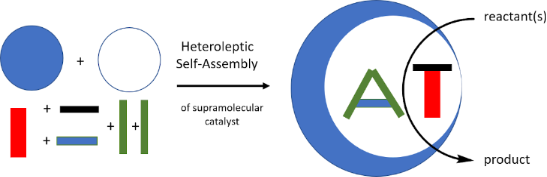
- , organic host molecules such as cyclodextrin [50], pillararenes, and cucurbiturils [51] have been developed in the last decades. Although, these exhibit excellent host–guest encapsulation properties with a variety of organic molecules, there are major drawbacks associated with them: variation of the shape











Site-selective reactions mediated by molecular containers
Beilstein J. Org. Chem. 2022, 18, 309–324, doi:10.3762/bjoc.18.35
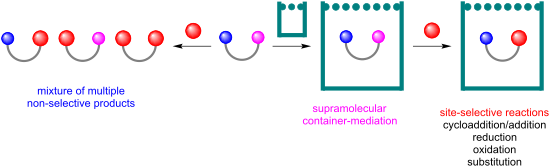
- mode, the molecular container selectively binds with and shields a certain part of the guest molecule and leaves the remaining part exposed to the reaction medium. This methodology was firstly applied to the site-selective reduction reaction mediated by a cyclodextrin host. In 1991, the Takahashi group
- reported the cyclodextrin-mediated site-selective ring-opening reductive reaction of epoxide 16 by sodium borohydride in aqueous solution (Figure 4b) [58]. The sugar-based hosts show good water solubility and can be used for driving organic reactions in water. In this case, the cyclodextrin host and the
- epoxide guest formed a 2:1 complex, and the internal reactive site of the epoxide was protected by the cyclodextrin host. Therefore, only the terminal site was attacked by the incoming hydride leading to epoxide-ring opening and formation of 1-phenyl-2-propanol (17). Utilizing the similar molecular






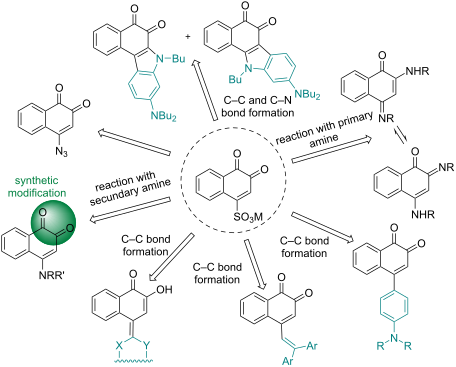
1,2-Naphthoquinone-4-sulfonic acid salts in organic synthesis
Beilstein J. Org. Chem. 2022, 18, 53–69, doi:10.3762/bjoc.18.5
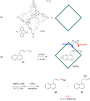
- recognition of cholylglycine, which is a combination of cholic acid and glycine. The β-cyclodextrin/graphene oxide composite forms an inclusion complex with a β-NQS guest. The amino group of cholylglycine can bind to β-NQS by a nucleophilic substitution reaction, resulting in a decrease in the electrochemical


Host–guest interaction and properties of cucurbit[8]uril with chloramphenicol
Beilstein J. Org. Chem. 2021, 17, 2832–2839, doi:10.3762/bjoc.17.194
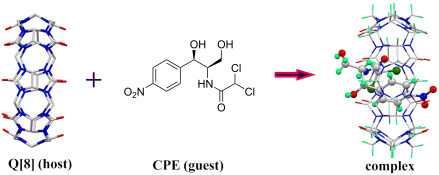
- in water and has a bitter taste. Upon forming an inclusion complex with cyclodextrin, the solubility and bitter taste of CPE can be improved [4][5]. Ramesh Gannimani et al. [6] reported that the inclusion complex of cyclodextrin and CPE loaded silver nanoparticles possessed stronger antibacterial
- properties than CPE alone. Ana I. Ramos et al. [7] studied the inclusion compound of CPE and cyclodextrin and reported its effect on Enterococcus, Bacillus, Staphylococcus and other bacteria. As a new type of supramolecular host compound, cucurbit[n]urils [8][9][10][11][12][13][14][15][16][17][18][19] (Q[n]s


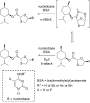
Synthetic strategies toward 1,3-oxathiolane nucleoside analogues
Beilstein J. Org. Chem. 2021, 17, 2680–2715, doi:10.3762/bjoc.17.182
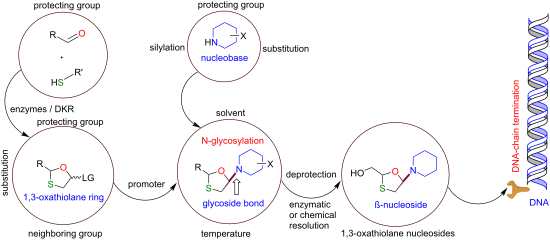


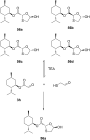


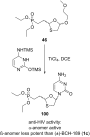




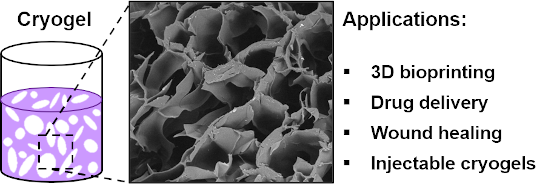
Cryogels: recent applications in 3D-bioprinting, injectable cryogels, drug delivery, and wound healing
Beilstein J. Org. Chem. 2021, 17, 2553–2569, doi:10.3762/bjoc.17.171
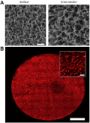
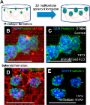
- addition, the ceramic can enhance the mechanical properties of composite within the cryogel and can be tailored for specific drugs and drug-release profiles [96]. The drug aripiprazole used to treat schizophrenia was recently investigated for delivery using cryogels comprising β-cyclodextrin (β-CD






Constrained thermoresponsive polymers – new insights into fundamentals and applications
Beilstein J. Org. Chem. 2021, 17, 2123–2163, doi:10.3762/bjoc.17.138
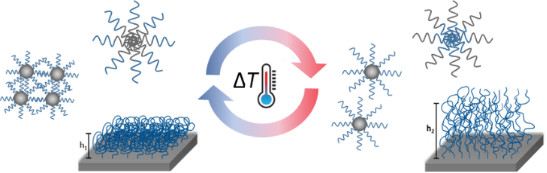
- irradiation as well as by host molecule (α-cyclodextrin) complexation [278]. Due to the high number of proton acceptor/donor sites, ureido-modified copolymers such as poly(allylamine-co-allylurea) are also becoming more and more important. The critical phase transition temperature can often be finely tuned


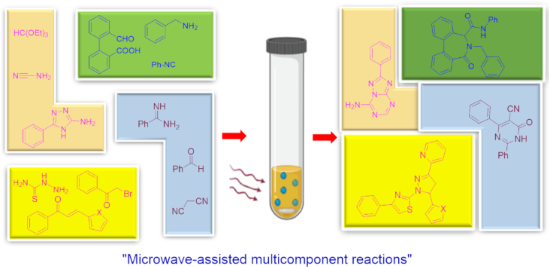
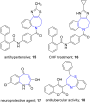
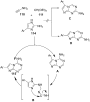
Microwave-assisted multicomponent reactions in heterocyclic chemistry and mechanistic aspects
Beilstein J. Org. Chem. 2021, 17, 819–865, doi:10.3762/bjoc.17.71






Insight into functionalized-macrocycles-guided supramolecular photocatalysis
Beilstein J. Org. Chem. 2021, 17, 139–155, doi:10.3762/bjoc.17.15
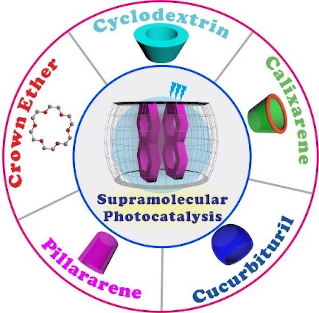
- substrate with suitable binding sites for photochemical transformations. Cyclodextrin-based photocatalysis CDs represent a family of macrocyclic compounds in which the ᴅ-glucopyranose units are connected to each other via an α-1,4-glycosidic bond. The inside of a cyclodextrin is a hydrophobic cavity, and
- the outside possesses the polyhydroxy structure. This unique asymmetric barrel-shaped cavity allows them to combine with various guests. The driving forces for the formation of cyclodextrin-based supramolecular complexes are hydrophobic and van der Waals interactions between the cavity and the
- hydrophobic part of the guests. α-, β-, and γ-CDs are the most common macrocycles, consisting of 6, 7, and 8 ᴅ-glucopyranose residues, respectively. Due to the differences in the cavity size, each cyclodextrin has the ability to form a complex with a specific guest, and the binding force depends on the size






Supramolecular polymerization of sulfated dendritic peptide amphiphiles into multivalent L-selectin binders
Beilstein J. Org. Chem. 2021, 17, 97–104, doi:10.3762/bjoc.17.10
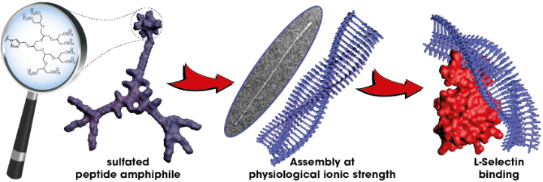
- to its functionalization with negatively charged sulfate groups. The binding behavior of dPGS to L-selectin has been thoroughly probed as dendrimer [26][27], conjugated to a polymer [28] or as amphiphilic adamantyl conjugates that are able to self-assemble on cyclodextrin vesicles [29]. Our group


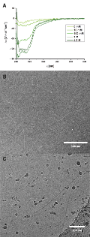

Using multiple self-sorting for switching functions in discrete multicomponent systems
Beilstein J. Org. Chem. 2020, 16, 2831–2853, doi:10.3762/bjoc.16.233

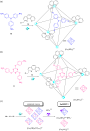
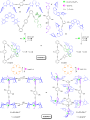
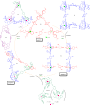
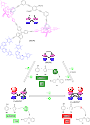
- aggregates is converted to an n-fold completive mixture. Alike the material presented later we do not start from the ensemble of constituents, but already from aggregates. Basilio and Parola demonstrated the pH-triggered 2-fold completive self-sorting of four components comprising β-cyclodextrin (4








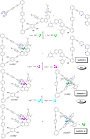

Particle size effect in the mechanically assisted synthesis of β-cyclodextrin mesitylene sulfonate
Beilstein J. Org. Chem. 2020, 16, 2598–2606, doi:10.3762/bjoc.16.211

- study, we found that the reactivity depended more upon diffusion phenomena in the crystalline parts of the material than on the increase in the surface area of the CD particles resulting from grinding. Keywords: beta-cyclodextrin; chemoselectivity; grinding; mechanosynthesis; reactivity; Introduction
- characterized upon grinding over various grinding times, we carried out the synthesis of mono-6-O-(2-mesitylenesulfonyl)-β-cyclodextrin (β-CDMts, see Supporting Information File 1 for NMR spectra). Ground β-CD and MtsCl were placed in the jar and milled at 30 Hz and the conversion into the product was plotted
- %) and potassium hydroxide (90%) were purchased from Sigma-Aldrich. All chemicals were used without further purification. Preparation of β-CD samples Analogously as described in [14]. General procedure for the synthesis of mono-6-O-(2-mesitylenesulfonyl)-β-cyclodextrin β-CD (1500 mg, 1.32 mmol) and MtsCl


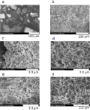


Mechanochemical green synthesis of hyper-crosslinked cyclodextrin polymers
Beilstein J. Org. Chem. 2020, 16, 1554–1563, doi:10.3762/bjoc.16.127
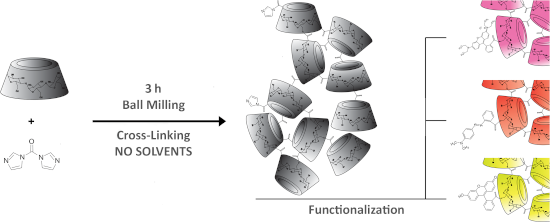
- Alberto Rubin Pedrazzo Fabrizio Caldera Marco Zanetti Silvia Lucia Appleton Nilesh Kumar Dhakar Francesco Trotta Dipartimento di Chimica, Università degli Studi di Torino, Via Giuria 7, Torino 10125, Italy 10.3762/bjoc.16.127 Abstract Cyclodextrin nanosponges (CD-NS) are nanostructured
- , and rhodamine B) and the still reactive imidazoyl carbonyl group of the NS. Keywords: β-cyclodextrin; ball-milling; crosslinking; green chemistry; mechanochemistry; nanosponges; Introduction The research in the fields of nanomedicine and nanotechnology has nowadays become predominant
- . Polysaccharides and, among them, starch derivatives such as cyclodextrins (CD), have recently emerged as they are safe, of low cost and biodegradable. Cyclodextrin nanosponges (CD-NS) are crosslinked cyclodextrin polymers characterized by a nanosized three-dimensional network. The reactive hydroxy groups of CDs

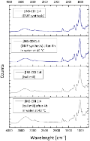



[3 + 2] Cycloaddition with photogenerated azomethine ylides in β-cyclodextrin
Beilstein J. Org. Chem. 2020, 16, 1296–1304, doi:10.3762/bjoc.16.110
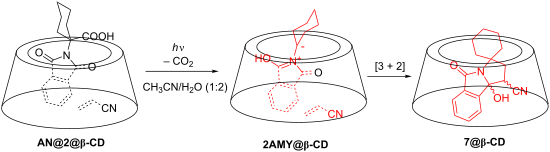
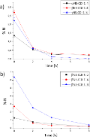
- Zagreb, Croatia 10.3762/bjoc.16.110 Abstract Stability constants for the inclusion complexes of cyclohexylphthalimide 2 and adamantylphthalimide 3 with β-cyclodextrin (β-CD) were determined by 1H NMR titration, K = 190 ± 50 M−1, and K = 2600 ± 600 M−1, respectively. Photochemical reactivity of the
- systems for the control of photoreactivity. Keywords: [3 + 2] cycloadditions; β-cyclodextrin; inclusion complexes; photochemistry; phthalimides; Introduction Cycloadditions are highly useful reactions in organic synthesis providing complex cyclic structures from easily available precursors [1][2]. Among


A review of asymmetric synthetic organic electrochemistry and electrocatalysis: concepts, applications, recent developments and future directions
Beilstein J. Org. Chem. 2019, 15, 2710–2746, doi:10.3762/bjoc.15.264
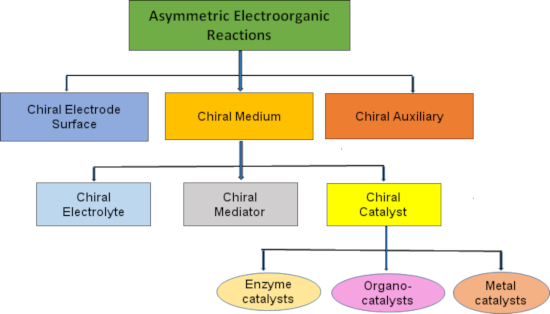
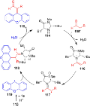
- -cyclodextrin as the cocatalyst provide 196 in a good yield and excellent stereoselectivity (Scheme 61). In 2011, Hurvois and his group reported a stereoselective electrochemical total synthesis of the tetrahydroisoquinoline alkaloid (−)-crispine A (200) and its natural enantiomer [108]. The initial steps






Morphology-tunable and pH-responsive supramolecular self-assemblies based on AB2-type host–guest-conjugated amphiphilic molecules for controlled drug delivery
Beilstein J. Org. Chem. 2019, 15, 1925–1932, doi:10.3762/bjoc.15.188
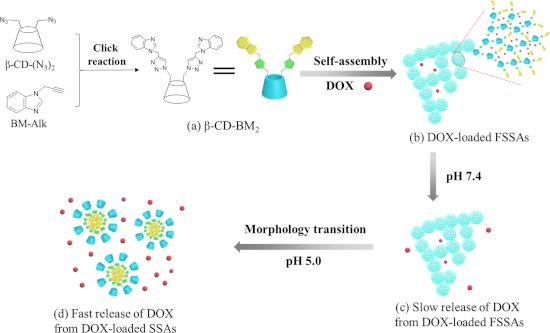
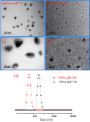
- ., β-cyclodextrin-benzimidazole2 (β-CD-BM2), were investigated at neutral and acidic pH conditions, respectively. Specifically, β-CD-BM2 first self-assembled into fan-shaped supramolecular self-assemblies with a hydrodynamic diameter of 163 nm at neutral pH, whereas they were further dissociated into
- varied morphology could inhibit cancer cell proliferation, indicating their potential application in the field of drug delivery. Keywords: β-cyclodextrin; controlled drug delivery; host–guest interaction; stimuli-responsive; supramolecular self-assemblies; Introduction Supramolecular self-assemblies
- stimuli-responsive supramolecular self-assemblies with regulated self-assembly morphologies due to their response to various external stimuli, such as temperature [12], light [13][14][15], redox [16][17][18], and pH [19][20]. In addition, β-cyclodextrin (β-CD), pillararene and cucurbituril have been




Synthesis of a [6]rotaxane with singly threaded γ-cyclodextrins as a single stereoisomer
Beilstein J. Org. Chem. 2019, 15, 1829–1837, doi:10.3762/bjoc.15.177
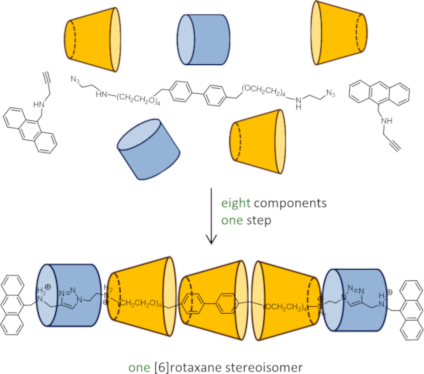
- Jason Yin Hei Man Ho Yu Au-Yeung Department of Chemistry, The University of Hong Kong, Pokfulam Road, Hong Kong, P. R. China 10.3762/bjoc.15.177 Abstract A series of hetero [4]-, [5]- and [6]rotaxanes containing both cucurbit[6]uril (CB[6]) and γ-cyclodextrin (γ-CD) as the macrocyclic components
- respect to the orthogonal plane of the axle, only one stereoisomer of the [6]rotaxane was obtained. Keywords: cucurbit[6]uril; cyclodextrin; macrocycles; mechanostereoisomer; rotaxane; Introduction Cyclodextrins (CDs) are macrocycles composed of glucoses linked via α-1,4-glycosidic bonds. CDs of six (α
- interlocking at one of the tetra(ethylene glycol) moieties, possibly as a result of the stabilizing interactions between the γ-CD and CB[6]. Indeed, due to the strong interactions between CB[6] and cyclodextrin, it has been reported that CB[6] can dissemble a [3]pseudorotaxane consisting of two linear axles