


Search results
Search for "depression" in Full Text gives 34 result(s) in Beilstein Journal of Organic Chemistry.
Application of cyclic phosphonamide reagents in the total synthesis of natural products and biologically active molecules
- Thilo Focken and
- Stephen Hanessian
Beilstein J. Org. Chem. 2014, 10, 1848–1877, doi:10.3762/bjoc.10.195
- metabotropic process. There is ongoing interest in mGluRs as drug targets, and the therapeutic potential of mGluR ligands for the treatment of CNS disorders and ailments such as Alzheimer’s and Parkinson’s disease, depression, anxiety, and schizophrenia is being validated [121][122]. The discovery of group II

Graphical Abstract

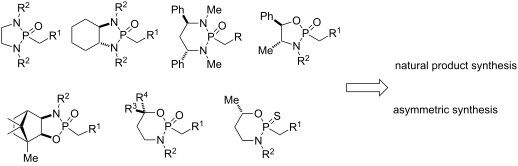
Figure 1: Examples of phosphonamide reagents used in stereoselective synthesis.

Figure 2: Natural products and bioactive molecules synthesized using phosphonamide-based chemistry (atoms, bo...

Scheme 1: Olefination with cyclic phosphonamide anions, mechanistic rationale, and selected examples 27a–d [18].

Scheme 2: Asymmetric olefination with chiral phosphonamide anions and selected examples 31a–d [1,22].

Scheme 3: Synthesis of α-substituted phosphonic acids 33a–e by asymmetric alkylation of chiral phosphonamide ...

Scheme 4: Asymmetric conjugate additions of C2-symmetric chiral phosphonamide anions to cyclic enones, lacton...

Scheme 5: Asymmetric conjugate additions of P-chiral phosphonamide anions generated from 40a and 44a to cycli...

Scheme 6: Asymmetric cyclopropanation with chiral chloroallyl phosphonamide 47, mechanistic rationale, and se...

Scheme 7: Asymmetric cyclopropanation with chiral chloromethyl phosphonamide 28d [59].

Scheme 8: Stereoselective synthesis of cis-aziridines 57 from chiral chloroallyl phosphonamide 47a [62].

Scheme 9: Synthesis of phosphonamides by (A) Arbuzov reaction, (B) condensation of diamines with phosphonic a...

Figure 3: Original and revised structure of polyoxin A (69) [24-26].
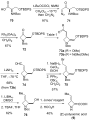
Scheme 10: Synthesis of (E)-polyoximic acid (9) [24-26].

Figure 4: Key assembly strategy of acetoxycrenulide (10) [41,42].

Scheme 11: Total synthesis of (+)-acetoxycrenulide (10) [41,42].

Scheme 12: Synthesis squalene synthase inhibitor 19 by asymmetric sulfuration (A) and asymmetric alkylation (B...
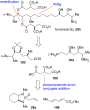
Figure 5: Key assembly strategy of fumonisin B2 (20) and its tricarballylic acid fragment 105 [45,46].

Scheme 13: Final steps of the total synthesis of fumonisin B2 (20) [45,46].

Figure 6: Selected examples of two subclasses of β-lactam antibiotics – carbapenems (111 and 112) and trinems...

Scheme 14: Synthesis of tricyclic β-lactam antibiotic 123 [97].

Scheme 15: Total synthesis of (−)-anthoplalone (8) [56].
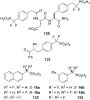
Figure 7: Protein tyrosine phosphatase (PTP) inhibitors 130, 131 and model compounds 16, 132 and 133 [68].

Scheme 16: Synthesis of model PTP inhibitors 16a,b [68].
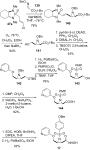
Scheme 17: Synthesis of aziridine hydroxamic acid 17 as MMP inhibitor [63].
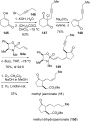
Scheme 18: Synthesis of methyl jasmonate (11) [48].

Figure 8: Structures of nudiflosides A (137) and D (13) [49].

Scheme 19: Total synthesis of the pentasubstituted cyclopentane core 159 of nudiflosides A (151) and D (13) an...

Figure 9: L-glutamic acid (161) and constrained analogues [57,124].

Scheme 20: Stereoselective synthesis of DCG-IV (162) [57].

Scheme 21: Stereoselective synthesis of mGluR agonist 21 [124].
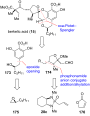
Figure 10: Key assembly strategy of berkelic acid (15) [43].

Scheme 22: Total synthesis of berkelic acid (15) [43].
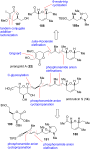
Figure 11: Key assembly strategy of jerangolid A (22) and ambruticin S (14) [27,28].
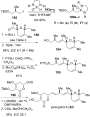
Scheme 23: Final assembly steps in the total synthesis of jerangolid A [27].

Scheme 24: Key assembly steps in the total synthesis of ambruticin S (14) [28].

Figure 12: General steroid construction strategy based on conjugate addition of 212 to cyclopentenone 48, exem...

Scheme 25: Total synthesis of estrone (12) [44].
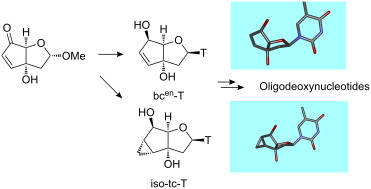
Structure/affinity studies in the bicyclo-DNA series: Synthesis and properties of oligonucleotides containing bcen-T and iso-tricyclo-T nucleosides
- Branislav Dugovic,
- Michael Wagner and
- Christian J. Leumann
Beilstein J. Org. Chem. 2014, 10, 1840–1847, doi:10.3762/bjoc.10.194
- ]. Duplexes with RNA as complement are also destabilized albeit to a lesser extent (ΔTm/mod −0.8 to −2.2 °C). The same sequence dependence as for DNA as complement appears and again, two consecutive modifications are associated with the least depression in Tm/modification. Thus, it turns out that bcen-DNA

Graphical Abstract
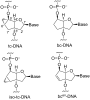
Figure 1: Chemical structures and carbon numbering scheme of tricyclo(tc)-DNA (top, left), bicyclo(bc)-DNA (t...

Scheme 1: Conditions: (a) NaBH4, CeCl3·7H2O, MeOH, −78 °C → rt, 1.5 h, 73% (+9% of C6-epimer); (b) TBS-Cl, im...

Scheme 2: Conditions: (a) thymine, BSA, TMSOTf, TMSCl, CH3CN, rt, 2.5 h; (b) DMTrCl, pyridine, rt, 16 h, 29% ...

Figure 2: X-ray structure of top row: nucleosides 8β (left), 11β (center) and overlay of both structures (rig...

Scheme 3: Pathways for elimination of the modified nucleotides during the oxidation step in oligonucleotide a...
Stereocontrolled synthesis of 5-azaspiro[2.3]hexane derivatives as conformationally “frozen” analogues of L-glutamic acid
- Beatrice Bechi,
- David Amantini,
- Cristina Tintori,
- Maurizio Botta and
- Romano di Fabio
Beilstein J. Org. Chem. 2014, 10, 1114–1120, doi:10.3762/bjoc.10.110
- -glutamic acid (L-Glu, 1) is of particular importance since it is the primary excitatory neurotransmitter in the mammalian central nervous system (CNS) and plays a critical role in a wide range of disorders like schizophrenia, depression, neurodegenerative diseases such as Parkinson’s and Alzheimer’s and in
- coupled or metabotropic glutamate receptors (mGluRs) [6][7]. To date, eight different metabotropic receptor subtypes (mGluR1–8) have been identified. Compounds that modulate the function of the mGluRs might be useful for treating a wide range of CNS disorders including schizophrenia, depression, anxiety

Graphical Abstract

Figure 1: Glutamate receptor ligands.

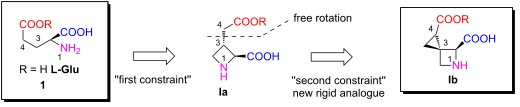
Scheme 1: Proposed synthetic plan for the preparation of compound of type Ib.

Scheme 2: Synthesis of 3-azetidinone derivative 16.

Scheme 3: Synthetic routes to prepare target cyclopropyl derivatives 20. Reagents and conditions: a) (EtO)2PO...

Figure 2: Mechanism for the attack of the carbene intermediate to the olefin moiety 18.

Figure 3: Representation of the lowest energy conformation of each diastereoisomers.

Scheme 4: Synthesis of glutamate “frozen” analogues 4-carboxy-1-(ethoxycarbonyl)-5-azaspiro[2.3]hexane.
End-group-functionalized poly(N,N-diethylacrylamide) via free-radical chain transfer polymerization: Influence of sulfur oxidation and cyclodextrin on self-organization and cloud points in water
- Sebastian Reinelt,
- Daniel Steinke and
- Helmut Ritter
Beilstein J. Org. Chem. 2014, 10, 680–691, doi:10.3762/bjoc.10.61
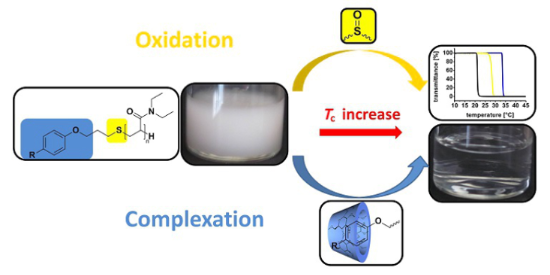
- regarding the cloud point depression of thermoresponsive polymers containing hydrophobic end-groups with decreasing molecular weight [20][24][30][44] or the effect of an increasing hydrophobic environment in amphiphilic conetworks [45] are in accordance with previous studies. Theoretically a stronger

Graphical Abstract

Scheme 1: Synthetic route for the synthesis of thiol functionalized 4-alkylphenols.

Scheme 2: Synthetic route for the chain transfer polymerization of N,N-diethylacrylamide (7) with CTA 6a and ...

Figure 1: Section of the MALDI –TOF spectrum of polymer 8b, indicating the high degree of end-group functiona...

Figure 2: 1H NMR spectrum of polymer 9b in CDCl3 (300 MHz, rt).

Figure 3: Top left: Section of the FTIR-spectrum of polymer 8b (black line) in comparison to 8bOx (red line);...

Figure 4: Dependency of the cloud point values on the degree of polymerization (calculated by end-group analy...

Figure 5: Shifts of the cloud points after the oxidation of the polymers (8a–d, 9a–d) to its corresponding su...

Figure 6: Turbidimetry measurements of polymer 8b (straight black line – heating curve; dotted black line – c...

Figure 7: 2D NMR NOESY spectrum of polymer 8b with two equivalents RAMEB-CD in D2O (600 MHz, rt).

Figure 8: Left: Schematic illustration of the micellar-like structures and reversibility by addition of RAMEB...

Figure 9: Schematic illustration of the micellar-like structures, its deformation upon addition of one equiva...
Isocyanide-based multicomponent reactions towards cyclic constrained peptidomimetics
- Gijs Koopmanschap,
- Eelco Ruijter and
- Romano V.A. Orru
Beilstein J. Org. Chem. 2014, 10, 544–598, doi:10.3762/bjoc.10.50

- numerous pharmaceutical and biological active compounds. For example, they are found in compounds used for the treatment of epilepsy [65][66], HIV [67][68], and depression [69]. Multicomponent reactions towards γ-lactam peptidomimetics were earlier described by Ugi [70], Mjalli [71] and Harriman [72

Graphical Abstract

Scheme 1: The proposed mechanism of the Passerini reaction.

Scheme 2: The PADAM-strategy to α-hydroxy-β-amino amide derivatives 7. An additional oxidation provides α-ket...

Scheme 3: The general accepted Ugi-mechanism.

Scheme 4: Three commonly applied Ugi/cyclization approaches. a) UDC-process, b) UAC-sequence, c) UDAC-combina...

Scheme 5: Ugi reaction that involves the condensation of Armstrong’s convertible isocyanide.

Scheme 6: Mechanism of the U-4C-3CR towards bicyclic β-lactams.

Scheme 7: The Ugi 4C-3CR towards oxabicyclo β-lactams.

Scheme 8: Ugi MCR between an enantiopure monoterpene based β-amino acid, aldehyde and isocyanide resulting in...

Scheme 9: General MCR for β-lactams in water.

Scheme 10: a) Ugi reaction for β-lactam-linked peptidomimetics. b) Varying the β-amino acid resulted in β-lact...

Scheme 11: Ugi-4CR followed by a Pd-catalyzed Sn2 cyclization.

Scheme 12: Ugi-3CR of dipeptide mimics from 2-substituted pyrrolines.

Scheme 13: Joullié–Ugi reaction towards 2,5-disubstituted pyrrolidines.

Scheme 14: Further elaboration of the Ugi-scaffold towards bicyclic systems.

Scheme 15: Dihydroxyproline derivatives from an Ugi reaction.

Scheme 16: Diastereoselective Ugi reaction described by Banfi and co-workers.

Scheme 17: Similar Ugi reaction as in Scheme 16 but with different acids and two chiral isocyanides.

Scheme 18: Highly diastereoselective synthesis of pyrrolidine-dipeptoids via a MAO-N/MCR-procedure.

Scheme 19: MAO-N/MCR-approach towards the hepatitis C drug telaprevir.

Scheme 20: Enantioselective MAO-U-3CR procedure starting from chiral pyrroline 64.

Scheme 21: Synthesis of γ-lactams via an UDC-sequence.

Scheme 22: Utilizing bifunctional groups to provide bicyclic γ-lactam-ketopiperazines.

Scheme 23: The Ugi reaction provided both γ- as δ-lactams depending on which inputs were used.

Scheme 24: The sequential Ugi/RCM with olefinic substrates provided bicyclic lactams.

Scheme 25: a) The structural and dipole similarities of the triazole unit with the amide bond. b) The copper-c...

Scheme 26: The Ugi/Click sequence provided triazole based peptidomimetics.

Scheme 27: The Ugi/Click reaction as described by Nanajdenko.

Scheme 28: The Ugi/Click-approach by Pramitha and Bahulayan.

Scheme 29: The Ugi/Click-combination by Niu et al.

Scheme 30: Triazole linked peptidomimetics obtained from two separate MCRs and a sequential Click reaction.

Scheme 31: Copper-free synthesis of triazoles via two MCRs in one-pot.

Scheme 32: The sequential Ugi/Paal–Knorr reaction to afford pyrazoles.

Scheme 33: An intramolecular Paal–Knorr condensation provided under basic conditions pyrazolones.

Scheme 34: Similar cyclization performed under acidic conditions provided pyrazolones without the trifluoroace...

Scheme 35: The Ugi-4CR towards 2,4-disubstituted thiazoles.

Scheme 36: Solid phase approach towards thiazoles.

Scheme 37: Reaction mechanism of formation of thiazole peptidomimetics containing an additional β-lactam moiet...

Scheme 38: The synthesis of the trisubstituted thiazoles could be either performed via an Ugi reaction with pr...

Scheme 39: Performing the Ugi reaction with DMB-protected isocyanide gave access to either oxazoles or thiazol...

Scheme 40: Ugi/cyclization-approach towards 2,5-disubstituted thiazoles. The Ugi reaction was performed with d...

Scheme 41: Further derivatization of the thiazole scaffold.

Scheme 42: Three-step procedure towards the natural product bacillamide C.

Scheme 43: Ugi-4CR to oxazoles reported by Zhu and co-workers.

Scheme 44: Ugi-based synthesis of oxazole-containing peptidomimetics.

Scheme 45: TMNS3 based Ugi reaction for peptidomimics containing a tetrazole.

Scheme 46: Catalytic cycle of the enantioselective Passerini reaction towards tetrazole-based peptidomimetics.

Scheme 47: Tetrazole-based peptidomimetics via an Ugi reaction and a subsequent sigmatropic rearrangement.

Scheme 48: Resin-bound Ugi-approach towards tetrazole-based peptidomimetics.

Scheme 49: Ugi/cyclization approach towards γ/δ/ε-lactam tetrazoles.

Scheme 50: Ugi-3CR to pipecolic acid-based peptidomimetics.

Scheme 51: Staudinger–Aza-Wittig/Ugi-approach towards pipecolic acid peptidomimetics.

Figure 1: The three structural isomers of diketopiperazines. The 2,5-DKP isomer is most common.

Scheme 52: UDC-approach to obtain 2,5-DKPs, either using Armstrong’s isocyanide or via ethylglyoxalate.

Scheme 53: a) Ugi reaction in water gave either 2,5-DKP structures or spiro compounds. b) The Ugi reaction in ...

Scheme 54: Solid-phase approach towards diketopiperazines.

Scheme 55: UDAC-approach towards DKPs.

Scheme 56: The intermediate amide is activated as leaving group by acid and microwave assisted organic synthes...

Scheme 57: UDC-procedure towards active oxytocin inhibitors.

Scheme 58: An improved stereoselective MCR-approach towards the oxytocin inhibitor.

Scheme 59: The less common Ugi reaction towards DKPs, involving a Sn2-substitution.

Figure 2: Spatial similarities between a natural β-turn conformation and a DKP based β-turn mimetic [158].

Scheme 60: Ugi-based syntheses of bicyclic DKPs. The amine component is derived from a coupling between (R)-N-...

Scheme 61: Ugi-based synthesis of β-turn and γ-turn mimetics.

Figure 3: Isocyanide substituted 3,4-dihydropyridin-2-ones, dihydropyridines and the Freidinger lactams. Bio-...

Scheme 62: The mechanism of the 4-CR towards 3,4-dihydropyridine-2-ones 212.

Scheme 63: a) Multiple MCR-approach to provide DHP-peptidomimetic in two-steps. b) A one-pot 6-CR providing th...

Scheme 64: The MCR–alkylation–MCR procedure to obtain either tetrapeptoids or depsipeptides.

Scheme 65: U-3CR/cyclization employing semicarbazone as imine component gave triazine based peptidomimetics.

Scheme 66: 4CR towards triazinane-diones.

Scheme 67: The MCR–alkylation–IMCR-sequence described by our group towards triazinane dione-based peptidomimet...

Scheme 68: Ugi-4CR approaches followed by a cyclization to thiomorpholin-ones (a) and pyrrolidines (b).

Scheme 69: UDC-approach for benzodiazepinones.

Scheme 70: Ugi/Mitsunobu sequence to BDPs.

Scheme 71: A UDAC-approach to BDPs with convertible isocyanides. The corresponding amide is cleaved by microwa...

Scheme 72: microwave assisted post condensation Ugi reaction.

Scheme 73: Benzodiazepinones synthesized via the post-condensation Ugi/ Staudinger–Aza-Wittig cyclization.

Scheme 74: Two Ugi/cyclization approaches utilizing chiral carboxylic acids. Reaction (a) provided the product...

Scheme 75: The mechanism of the Gewald-3CR includes three base-catalysed steps involving first a Knoevnagel–Co...

Scheme 76: Two structural 1,4-thienodiazepine-2,5-dione isomers by U-4CR/cyclization.

Scheme 77: Tetrazole-based diazepinones by UDC-procedure.

Scheme 78: Tetrazole-based BDPs via a sequential Ugi/hydrolysis/coupling.

Scheme 79: MCR synthesis of three different tricyclic BPDs.

Scheme 80: Two similar approaches both involving an Ugi reaction and a Mitsunobu cyclization.

Scheme 81: Mitsunobu–Ugi-approach towards dihydro-1,4-benzoxazepines.

Scheme 82: Ugi reaction towards hetero-aryl fused 5-oxo-1,4-oxazepines.

Scheme 83: a) Ugi/RCM-approach towards nine-membered peptidomimetics b) Sequential peptide-coupling, deprotect...

Scheme 84: Ugi-based synthesis towards cyclic RGD-pentapeptides.

Scheme 85: Ugi/MCR-approach towards 12–15 membered macrocycles.

Scheme 86: Stereoselective Ugi/RCM approach towards 16-membered macrocycles.

Scheme 87: Passerini/RCM-sequence to 22-membered macrocycles.

Scheme 88: UDAC-approach towards 12–18-membered depsipeptides.

Figure 4: Enopeptin A with its more active derivative ADEP-4.

Scheme 89: a) The Joullié–Ugi-approach towards ADEP-4 derivatives b) Ugi-approach for the α,α-dimethylated der...

Scheme 90: Ugi–Click-strategy for 15-membered macrocyclic glyco-peptidomimetics.

Scheme 91: Ugi/Click combinations provided macrocycles containing both a triazole and an oxazole moiety.

Scheme 92: a) A solution-phase procedure towards macrocycles. b) Alternative solid-phase synthesis as was repo...

Scheme 93: Ugi/cyclization towards cyclophane based macrocycles.

Scheme 94: PADAM-strategy towards eurystatin A.

Scheme 95: PADAM-approach for cyclotheanamide.

Scheme 96: A triple MCR-approach affording RGD-pentapeptoids.

Scheme 97: Ugi-MiBs-approach towards peptoid macrocycles.

Scheme 98: Passerini-based MiB approaches towards macrocycles 345 and 346.

Scheme 99: Macrocyclic peptide formation by the use of amphoteric aziridine-based aldehydes.
Automated three-component synthesis of a library of γ-lactams
- Erik Fenster,
- David Hill,
- Oliver Reiser and
- Jeffrey Aubé
Beilstein J. Org. Chem. 2012, 8, 1804–1813, doi:10.3762/bjoc.8.206
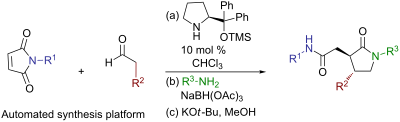
- been significant in the treatment of epilepsy [6][7], HIV [8][9], neurodegenerative disease and depression [10][11]. Having identified the lactam ring as a target of opportunity in chemical-screening efforts, we previously reported a method to prepare γ-lactams from readily available maleimides

Graphical Abstract

Scheme 1: Three-step sequence for the preparation of γ-lactams from maleimides, aldehydes and amines. Potenti...

Scheme 2: The transfer of the diastereoselective ratio of 3 to the enantioselectivity of the overall process ...

Scheme 3: Combination of the Michael addition step with the reductive amination/lactamization step and of the...

Scheme 4: Combination of the Michael addition, the reductive amination/lactamization, and the epimerization s...

Scheme 5: Chemspeed 4 × 8 × 8 library of γ-lactams 6.
Antifreeze glycopeptide diastereomers
- Lilly Nagel,
- Carsten Budke,
- Axel Dreyer,
- Thomas Koop and
- Norbert Sewald
Beilstein J. Org. Chem. 2012, 8, 1657–1667, doi:10.3762/bjoc.8.190

- ; ice recrystallization; microwave chemistry; Introduction Several fish species living in polar and subpolar oceans have developed a strategy to survive in water at an average temperature of −1.8 °C. This non-colligative freezing-point depression is based on the prevention of ice growth in

Graphical Abstract

Scheme 1: Synthesis of the monosaccharide-substituted threonine building block (A = allo-L-threonine; B = D-t...

Scheme 2: Structures of monosaccharide-substituted AFGP analogues containing allo-L-threonine and L-alanine 5...

Figure 1: CD spectra of the monosaccharide-substituted AFGP analogues (5 and 7) and their corresponding aglyc...

Figure 2: (a) Temperature dependent CD spectra of the glycosylated allo-L-Thr containing peptide 5 from −10 t...

Figure 3: (a) Temperature-dependent CD spectra of the aglycon comprising allo-L-Thr 6 from −10 to 80 °C in wa...

Figure 4: (a) Temperature-dependent CD spectra of the glycosylated D-Thr and D-Ala containing peptide 7 from ...
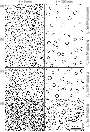
Figure 5: Optical microphotographs taken after 0 and 120 min during the recrystallization process of polycrys...
Palladium- and copper-mediated N-aryl bond formation reactions for the synthesis of biological active compounds
- Carolin Fischer and
- Burkhard Koenig
Beilstein J. Org. Chem. 2011, 7, 59–74, doi:10.3762/bjoc.7.10

- synthesis of an atropisomeric N-(2-tert-butylphenyl)lactam as an intermediate for norepinephrine transporter (NET) inhibitor 16. NET inhibitors were developed to treat a variety of mental disorders such as depression and attention deficit hyperactivity disorder (ADHD). Screening different ligands, SERGPHOS

Graphical Abstract

Scheme 1: Synthesis of selective D3 receptor ligands.

Scheme 2: Synthesis of a novel 5-HT1B receptor antagonist.

Scheme 3: Synthesis of A-366833, a selective α4β2 neural nicotinic receptor agonist.

Scheme 4: A new route to oxcarbazepine.

Scheme 5: Synthesis of key intermediates for norepinephrine transporter (NET) inhibitors.

Scheme 6: N-Annulation yielding substituted indole for the synthesis of demethylasterriquinone A1.

Scheme 7: Palladium-catalysed double N-arylation contributing to the synthesis of murrazoline.

Scheme 8: Synthesis of vitamin E amines.
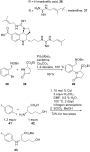
Scheme 9: Improved synthesis of martinellic acid.
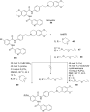
Scheme 10: New tariquidar-derived ABCB1 inhibitors.

Scheme 11: β-Carbolin-1-ones as inhibitors of tumour cell proliferation.

Scheme 12: Copper-catalysed synthesis of promazine drugs.

Scheme 13: Palladium-catalysed multicomponent reaction for the synthesis of promazine drugs.

Scheme 14: Key intermediate for imatinib.

Scheme 15: Synthesis of an effective Chek1/KDR kinase inhibitor.

Scheme 16: Macrocyclization as final step of the synthesis of heat shock protein inhibitor.

Scheme 17: Synthesis of N-arylimidazoles.

Scheme 18: Synthesis of benzolactam V8.

Scheme 19: Synthesis of an intermediate for lotrafiban (SB-214857).

Scheme 20: Intermolecular effort towards lotrafiban.

Scheme 21: Synthesis of matrix metalloproteases (MMPs) inhibitor.

Scheme 22: Regioselective 9-N-arylation of purines.

Scheme 23: N-Arylation of adenine and cytosine.

Scheme 24: 9-N-Arylpurines as enterovirus inhibitors.

Scheme 25: Xanthine analogues as kinase inhibitors.

Scheme 26: Synthesis of dual PPARα/γ agonists.

Scheme 27: N-Aryltriazole ribonucleosides with anti-proliferative activity.
8-epi-Salvinorin B: crystal structure and affinity at the κ opioid receptor
- Thomas A. Munro,
- Katharine K. Duncan,
- Richard J. Staples,
- Wei Xu,
- Lee-Yuan Liu-Chen,
- Cécile Béguin,
- William A. Carlezon Jr. and
- Bruce M. Cohen
Beilstein J. Org. Chem. 2007, 3, No. 1, doi:10.1186/1860-5397-3-1
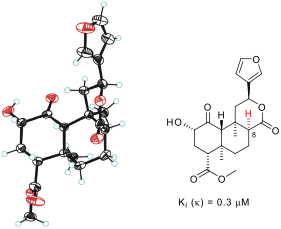
- stability or solubility.[7] Others have increased affinity and potency, [8] or altered subtype selectivity.[9] As yet, however, no derivatives of 1a appear to be KOR partial agonists or antagonists, classes of agents that may have utility in the treatment of psychiatric conditions such as depression or

Graphical Abstract

Figure 1: Stereoview of the molecular structure of 2b, showing 50% probability displacement ellipsoids and th...

Figure 2: Stereoview of the packing of 2b. H atoms are not shown.

Scheme 1: Koreeda et al's proposed mechanism for the epimerization.



