Search results
Search for "enantiomeric purity" in Full Text gives 79 result(s) in Beilstein Journal of Organic Chemistry.
Copper-catalysed alkylation of heterocyclic acceptors with organometallic reagents
Beilstein J. Org. Chem. 2020, 16, 1006–1021, doi:10.3762/bjoc.16.90
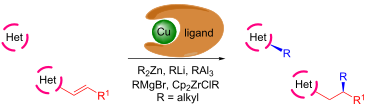
- the synthesis of the corresponding products with good yield and enantiomeric purity (up to 83% yield and 97% ee). Furthermore, a large variety of vinylalanes was investigated, and the product 2l was further derivatised into a chiral bicyclic structure (5, Scheme 2A). In addition, simple vinyl





Combining enyne metathesis with long-established organic transformations: a powerful strategy for the sustainable synthesis of bioactive molecules
Beilstein J. Org. Chem. 2020, 16, 738–755, doi:10.3762/bjoc.16.68
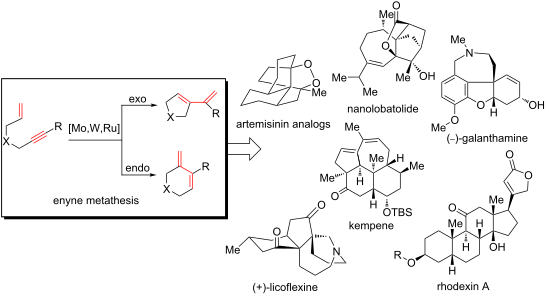
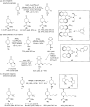
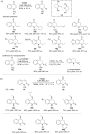
- et. al. [82]. The starting dienynes were obtained in a high enantiomeric purity starting form 2,6-dimethyl-1,4-benzoquinone and isoprene via an asymmetric Diels–Alder reaction. The domino metathesis reactions induced by the Grubbs second-generation catalyst proceeded in good yield (92%) thereby




Synthesis of disparlure and monachalure enantiomers from 2,3-butanediacetals
Beilstein J. Org. Chem. 2020, 16, 616–620, doi:10.3762/bjoc.16.57
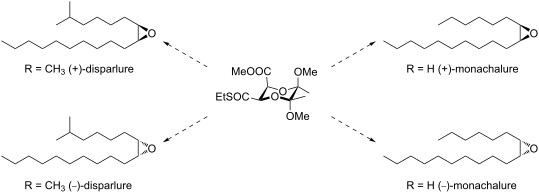
- ), (−)-monachalure (4, (7S,8R)-cis-7,8-epoxyoctadecane) and their olefinic precursors in addition to (+)-disparlure (1) [11][12]. For the gypsy moth a high enantiomeric purity of (+)-disparlure (>98% ee) is required to evoke the male’s sexual response and even a small percentage of (−)-disparlure abolishes the
- also been described [29]. However, many of these methods have some drawbacks – the most important one being the insufficient enantiomeric purity for biological and commercial applications [29]. (+)-Disparlure used in most commercial lures is prepared by the Sharpless epoxidation reaction, which gives
- disparlure and monachalure with high enantiomeric purity. It can also be adapted for preparation of other chiral cis-epoxides. 2,3-Butanediacetals obtained from tartaric acid dimethyl diester contain protected hydroxy groups and two functional groups suitable for the attachment of various substituents. trans


Synthesis and circularly polarized luminescence properties of BINOL-derived bisbenzofuro[2,3-b:3’,2’-e]pyridines (BBZFPys)
Beilstein J. Org. Chem. 2020, 16, 325–336, doi:10.3762/bjoc.16.32
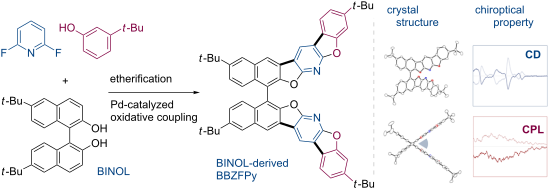
- ), 7.94 (d, J = 8.9 Hz, 2H); 13C NMR (100 MHz, CDCl3) δ 31.25, 34.61, 110.62, 117.54, 123.49, 124.01, 126.36, 129.35, 131.34, 131.42, 146.69, 152.29; HRMS–APCI (m/z): [M + H]+ calcd for C28H31O2, 399.2330; found, 399.2319. The enantiomeric purity was confirmed by HPLC analysis: CHIRAL ART Amylose-SA
- ), 19F NMR (376 MHz, CDCl3) δ 69.06; HRMS–APCI (m/z): [M + H]+ calcd for C38H35F2N2O2, 589.2644; found, 589.2661. The enantiomeric purity was confirmed by HPLC analysis: CHIRAL ART Cellulose-SB column, n-hexane/chloroform 95:5, 1.0 mL/min, 40 °C; (S)-2: tR = 9.86 min, (R)-2: tR = 21.29 min, UV detection
- , 121.55, 122.67, 123.15, 124.27, 125.03, 126.13, 129.10, 129.30, 130.90, 132.04, 141.35, 147.49, 149.54, 154.00, 161.86, 162.48; HRMS–APCI (m/z): [M + H]+ calcd for C50H45N2O4, 737.3367; found, 737.3374. The enantiomeric purity was confirmed by HPLC analysis: CHIRAL ART Amylose-SA column, n-hexane


A review of asymmetric synthetic organic electrochemistry and electrocatalysis: concepts, applications, recent developments and future directions
Beilstein J. Org. Chem. 2019, 15, 2710–2746, doi:10.3762/bjoc.15.264
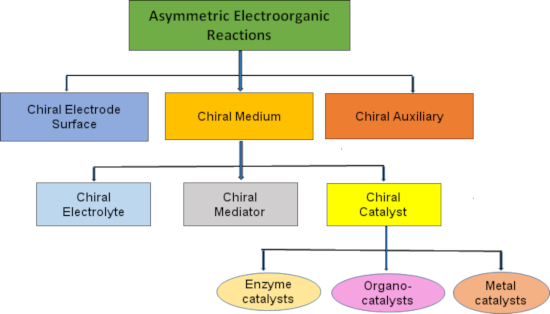
- electrohydrogenation of 12b that resulted in improved yield and enantiomeric purity as compared to previously reported methods (Scheme 11). In another report the same reaction was discovered to be catalyzed by applying copper nanoparticle (CuNP) as a cathode for elelctrohydrogenation of 12 [39]. The asymmetry was






Chiral terpene auxiliaries V: Synthesis of new chiral γ-hydroxyphosphine oxides derived from α-pinene
Beilstein J. Org. Chem. 2019, 15, 2493–2499, doi:10.3762/bjoc.15.242

- % yield) allowed to upgrade the enantiomeric purity of dIpc2BH [25]. Oxidation of the resulting dialkylborane with hydrogen peroxide provided enantiomerically pure (−)-isopinocampheol (7) in 78% yield. The Brown–Garg protocol [26] was employed to oxidize 7 with an aqueous solution of sodium dichromate and


α-Photooxygenation of chiral aldehydes with singlet oxygen
Beilstein J. Org. Chem. 2019, 15, 2076–2084, doi:10.3762/bjoc.15.205

- P-2000 polarimeter. The enantiomeric purity of diols was determined by chiral-phase HPLC analysis on Daicel Chiralpak ID (250 mm × 4.6 mm inside diameter) using a hexane/iPrOH mixture as a mobile phase. Thin-layer chromatography (TLC) was performed using Merck Silica Gel GF254, 0.20 mm thickness



N-(1-Phenylethyl)aziridine-2-carboxylate esters in the synthesis of biologically relevant compounds
Beilstein J. Org. Chem. 2019, 15, 1722–1757, doi:10.3762/bjoc.15.168

- for structural enlargement and at least one stereogenic center which is usually transferred into the final product. To assure the highest possible enantiomeric purity chirons are obtained in most instances from natural products like carbohydrates, amino acids, hydroxy acids or terpenes. The


Synthesis, enantioseparation and photophysical properties of planar-chiral pillar[5]arene derivatives bearing fluorophore fragments
Beilstein J. Org. Chem. 2019, 15, 1601–1611, doi:10.3762/bjoc.15.164
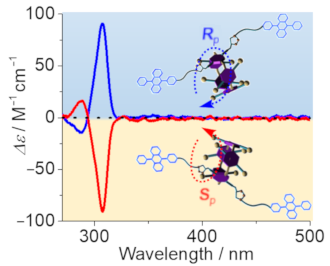
- and 10.0 min, respectively, demonstrating that P5A-DPA was the racemic mixture of Rp and Sp configuration. The two fractions were collected separately and re-injected into the chiral column to confirm the enantiomeric purity and to check if racemization of the enantiomers takes place in solution at



Synthesis of nonracemic hydroxyglutamic acids
Beilstein J. Org. Chem. 2019, 15, 236–255, doi:10.3762/bjoc.15.22
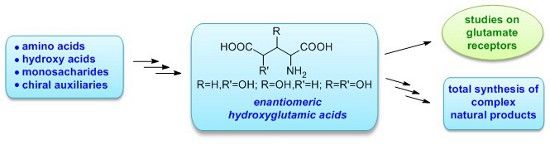
- was much lower (2.6:1 and 1:1, respectively). Acid hydrolysis of 64 gave (4S)-4-hydroxy-L-glutamic acid [(2S,4S)-3] as the hydrochloride, however, its enantiomeric purity was not checked. In connection with the total synthesis of thiopeptide antibiotic nosiheptide an orthogonally protected (4S)-4


Silanediol versus chlorosilanol: hydrolyses and hydrogen-bonding catalyses with fenchole-based silanes
Beilstein J. Org. Chem. 2019, 15, 167–186, doi:10.3762/bjoc.15.17
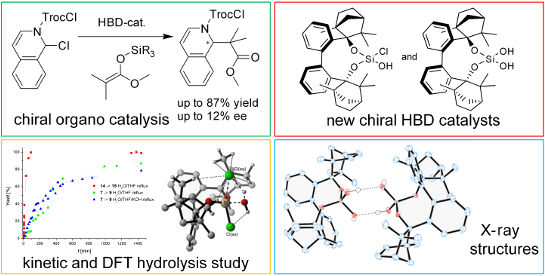
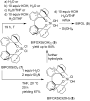
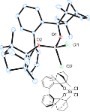
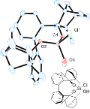
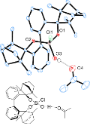
- available (+)-fenchone has 98% enantiomeric purity, BIFOXSi(OH)2 can be further purified. rac-BIFOXSi(OH)2 crystallizes as a dimer from toluene (Figure 14). BIFOXSi(OH)2 (9) crystallizes as a tetramer from n-hexane (Figure 15), where six OH groups build a network of hydrogen bonds. Thus the polar core is








β-Hydroxy sulfides and their syntheses
Beilstein J. Org. Chem. 2018, 14, 1668–1692, doi:10.3762/bjoc.14.143
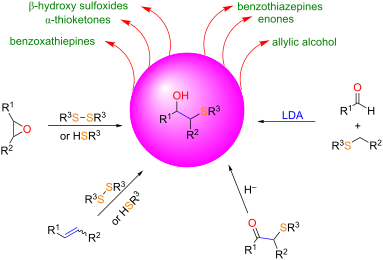
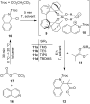
- -oxazaborolidine-catalyzed asymmetric borane reduction of β-keto sulfides 68 for the synthesis of β-hydroxy sulfides with high enantiomeric purity (Scheme 20) [54][55]. The enantioselectivity was highly dependent on the nature and bulkiness of the substituents on both ends of the carbonyl group. While the


Diastereoselective auxiliary- and catalyst-controlled intramolecular aza-Michael reaction for the elaboration of enantioenriched 3-substituted isoindolinones. Application to the synthesis of a new pazinaclone analogue
Beilstein J. Org. Chem. 2018, 14, 593–602, doi:10.3762/bjoc.14.46

- -receptor agonists [8][9][10][11][12][13][14][15][16]. Indeed, the copper-catalyzed N-arylation of (3S)-26 was performed in dioxane with N,N-dimethylethylenediamine as ligand [27] to deliver the targeted pazinaclone analogue (3S)-27 in a fair yield (66%) without significant loss in enantiomeric purity


Investigations towards the stereoselective organocatalyzed Michael addition of dimethyl malonate to a racemic nitroalkene: possible route to the 4-methylpregabalin core structure
Beilstein J. Org. Chem. 2018, 14, 553–559, doi:10.3762/bjoc.14.42
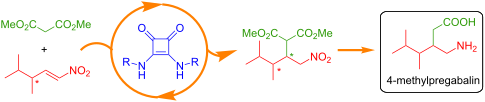
- Michael addition of dimethyl malonate to nitroalkene 6 in several other solvents (Table 2). The best results were obtained in toluene. We have observed a dramatic increase of the yield of compound 7. Its enantiomeric purity was also the highest (er 99:1) in toluene. Similarly, high enantiomeric purities
- were also observed in acetonitrile and methanol, but yields were lower in these solvents. This transformation likely operates as a kinetic resolution that creates a further stereocenter. We have also recovered unreacted nitroalkene 6 with enantiomeric purity of approx. 67:33 er. Given the recent
- synthesized from ethyl 3-methylbutanoate. The key step is an organocatalytic Michael addition of dimethyl malonate to racemic nitroalkene 6. Using chiral squaramide organocatalyst, the desired Michael adduct 7 was obtained in 75% yield as a mixture of diastereomers (dr 68:32) with very high enantiomeric


The chemistry and biology of mycolactones
Beilstein J. Org. Chem. 2017, 13, 1596–1660, doi:10.3762/bjoc.13.159


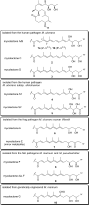


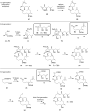


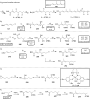


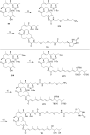

Bifunctional organocatalysts for the asymmetric synthesis of axially chiral benzamides
Beilstein J. Org. Chem. 2017, 13, 1518–1523, doi:10.3762/bjoc.13.151

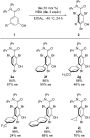
- analysis of the reaction selectivity (the decrease of the enantiomeric purity of 2b was negligible after a day). Furthermore, the reaction of benzamide 5, bearing a protected phenol, was carried out (Scheme 6). It failed to give the corresponding product 6, indicating the significance of multipoint




Synthesis of the heterocyclic core of the D-series GE2270
Beilstein J. Org. Chem. 2017, 13, 1407–1412, doi:10.3762/bjoc.13.137

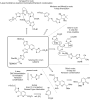
- using the recommended TFAA reagent providing the expected heterocyclic core of D-series GE2270 18 with a high diastereoisomeric ratio (91:9) and high enantiomeric purity (>99%) in 41% yield over 3 steps (Scheme 3). Conclusion In summary, the fully orthogonally protected and enantiomerically pure



Phosphated cyclodextrins as water-soluble chiral NMR solvating agents for cationic compounds
Beilstein J. Org. Chem. 2017, 13, 43–53, doi:10.3762/bjoc.13.6
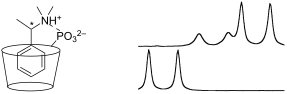
- observed with the phosphated cyclodextrins. Keywords: chiral; chiral differentiation; cyclodextrin; enantiomer; enantiomeric purity; NMR; Introduction Chiral NMR solvating agents are commonly used for determining enantiomeric purity. In some cases, these compounds cause reproducible perturbations in




Characterization of the synthetic cannabinoid MDMB-CHMCZCA
Beilstein J. Org. Chem. 2016, 12, 2808–2815, doi:10.3762/bjoc.12.279

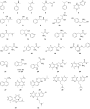
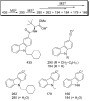
- and comparison of the data with DFT calculations, while ECD spectroscopy was found to be inconclusive in this case. The enantiomeric purity of samples from test purchases and police seizures was assessed by a self-developed chiral HPLC method. Keywords: chiral HPLC; ECD spectroscopy; NPS; synthetic
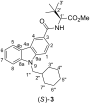
- saturated solution of (S)-3 in cyclohexane (Figure 6, see also CCDC 1521512 for details). To assess the enantiomeric purity of the material, racemization of a small sample of (S)-3 was attempted by treatment with sodium methoxide in methanol at 80 °C for 12 h under rigorous exclusion of moisture, yielding
- ) by VCD spectroscopy and comparison with DFT calculations. Thus, the readily available (S)-tert-leucine would be a starting material for the synthesis of (S)-3. ECD spectroscopy was inferior to VCD in this case. The enantiomeric purity of material from five test purchases and three police seizures




Determination of the absolute stereostructure of a cyclic azobenzene from the crystal structure of the precursor containing a heavy element
Beilstein J. Org. Chem. 2016, 12, 2211–2215, doi:10.3762/bjoc.12.212
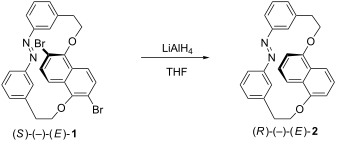
- chromatogram recorded for the crystalline sample of S-(−)-(E)-1 which is used for the reductive debromination. The chromatogram shows a single peak at 15.9 min ascertaining the enantiomeric purity of the sample. After reduction of S-(−)-(E)-1 we have carried out the HPLC of the reduced sample where the


One-pot synthesis of enantiomerically pure N-protected allylic amines from N-protected α-amino esters
Beilstein J. Org. Chem. 2016, 12, 957–962, doi:10.3762/bjoc.12.94

- treatment. Although we have demonstrated earlier that no loss of enantiomeric purity was observed in the synthesis of anti-β-amino alcohols [16], we submitted commercially available DL-alanine to the aforementioned one-pot procedure to give rac-2a. Both rac-2a and 2a were analyzed by chiral HPLC. The
- analysis confirmed that the enantiomeric purity was not affected by the process. The literature procedure reported the use of 2 equiv of DIBAL-H, whilst we found that only one equivalent is enough to avoid the excess of the reducing reagent. We hypothesized that compound 1 is half reduced by DIBAL-H


A convenient route to symmetrically and unsymmetrically substituted 3,5-diaryl-2,4,6-trimethylpyridines via Suzuki–Miyaura cross-coupling reaction
Beilstein J. Org. Chem. 2016, 12, 835–845, doi:10.3762/bjoc.12.82
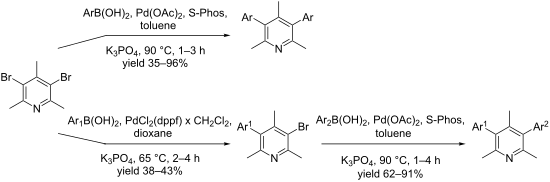
- approach in the determination of the enantiomeric purity of (+)-crispine [81] and (R)-(+)-harmicine after their stereoselective synthesis [82]. The results of a more detailed study on the stereochemistry of atropisomeric enantiomers will be published elsewhere. Conclusion Herein, we described an easy and




Unconventional application of the Mitsunobu reaction: Selective flavonolignan dehydration yielding hydnocarpins
Beilstein J. Org. Chem. 2016, 12, 662–669, doi:10.3762/bjoc.12.66

- like leprosy caused by M. leprae. Recently, hydnocarpin (isolated from Brucea javanica; which was named as (−)-hydnocarpin, even though the enantiomeric purity was not determined) has been described as potentiator of vincristine’s cytotoxicity due to MDR inhibition [18]. Furthermore, 5


Bifunctional phase-transfer catalysis in the asymmetric synthesis of biologically active isoindolinones
Beilstein J. Org. Chem. 2015, 11, 2591–2599, doi:10.3762/bjoc.11.279
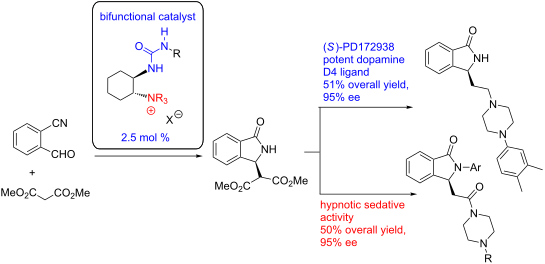
- the Belliotti (S)-PD172938 and arylated analogues with hypnotic sedative activity, obtained in good overall total yield (50%) and high enantiomeric purity (95% ee). The synthetic routes developed herein are particularly convenient in comparison with the current methods available in literature and are
- previous version developed on the racemates (Scheme 5) [36]. This method also allowed us to obtain the analogues 21 and 22 of the bioactive isoindolinones described in Figure 1 in high overall yield (50%) without loss in enantiomeric purity. Conclusion Recently developed (R,R)-1,2-cyclohexanediamine-based


First chemoenzymatic stereodivergent synthesis of both enantiomers of promethazine and ethopropazine
Beilstein J. Org. Chem. 2014, 10, 3038–3055, doi:10.3762/bjoc.10.322

- active ester (R)-(−)-6a of high enantiomeric excess (95% ee) and leaving thereby slower reacting enantiomer (S)-(+)-5 of very high enantiomeric purity (98% ee). On the other hand, from the view point of remaining the enatiopurity of alcohol (S)-(+)-5, ethereal solvents (Et2O and MTBE) which yielded (S
- enantiomeric purity of (S)-(+)-5 increased over 77% ee and reached the 98% ee after 48 h (Table 2, entry 1). Complete optical purification (>99% ee) of the remaining alcohol (S)-(+)-5 was observed after a reaction time of 4 days (Table 2, entry 4). As can be also seen from data presented in Table 2, both the
- of the chiral substrate of unknown stereochemistry [in this case slower reacting alcohol (+)-5 with an absolute enantiomeric purity (>99% ee)] was assigned by its independent reaction with the two enantiomers of an appropriate chiral derivatizing agent (CDA) followed by comparison of the 1H NMR