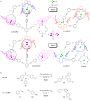
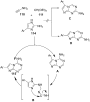
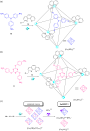
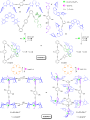
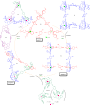
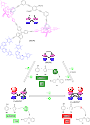
Search for "four-component" in Full Text gives 101 result(s) in Beilstein Journal of Organic Chemistry.
Beilstein J. Org. Chem. 2023, 19, 1379–1385, doi:10.3762/bjoc.19.99
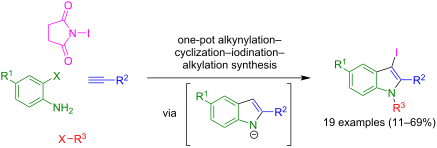
Graphical Abstract
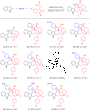
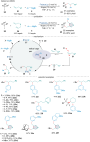
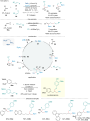
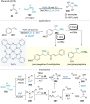
Scheme 1: Consecutive alkynylation–cyclization–alkylation three-component synthesis and conception of a conse...
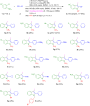
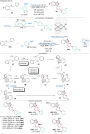
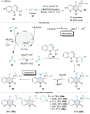
Scheme 2: Consecutive alkynylation–cyclization–iodination–alkylation four-component synthesis of trisubstitut...
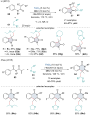
Scheme 3: Consecutive double alkynylation–cyclization–iodination–alkylation pseudo-five-component synthesis o...
Scheme 4: Suzuki coupling of 3-iodoindole 5a with arylboronic acids 7 to give 1,2,3-trisubstituted indoles 8.
Figure 1: A: Absorption and emission spectra of 1-methyl-2-phenyl-3-(p-tolyl)-1H-indole (8b), recorded in dic...
Beilstein J. Org. Chem. 2023, 19, 1234–1242, doi:10.3762/bjoc.19.91
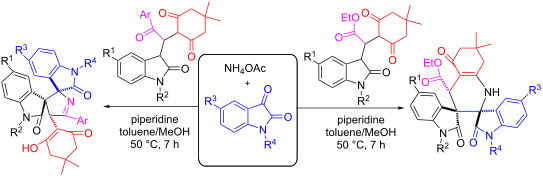
Graphical Abstract
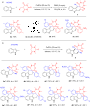
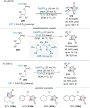
Scheme 1: Representative cascade reactions of Michael adducts of 3-methyleneoxindoles.
Figure 1: Crystal structure of dispiro compound 3a.
Figure 2: Crystal structure of compound 4a.
Scheme 2: Proposed reaction mechanism.
Beilstein J. Org. Chem. 2023, 19, 1216–1224, doi:10.3762/bjoc.19.89
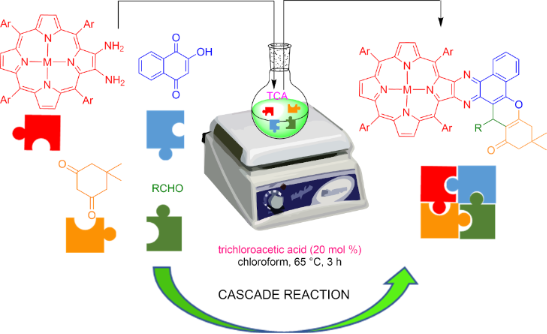
Graphical Abstract
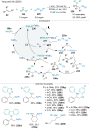
Scheme 1: Synthesis of benzo[f]chromeno[2,3-h]quinoxalinoporphyrins 3–16.
Figure 1: Plausible mechanism for the formation of copper(II) benzo[f]chromeno[2,3-h]quinoxalinoporphyrins.
Scheme 2: Sequential synthesis of copper(II) benzo[f]chromeno[2,3-h]quinoxalinoporphyrin 3.
Figure 2: Electronic absorption spectra of copper(II) benzo[f]chromeno[2,3-h]quinoxalinoporphyrins 3–8 in CHCl...
Figure 3: Electronic absorption spectra of free-base benzo[f]chromeno[2,3-h]quinoxalinoporphyrins 9–13 in CHCl...
Figure 4: Electronic absorption spectra of zinc(II) benzo[f]chromeno[2,3-h]quinoxalinoporphyrins 14–16 in CHCl...
Figure 5: (a) Emission spectra of free-base benzo[f]chromeno[2,3-h]quinoxalinoporphyrins 9–13 and (b) emissio...
Beilstein J. Org. Chem. 2023, 19, 727–735, doi:10.3762/bjoc.19.53
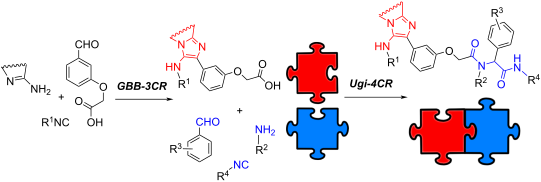
Graphical Abstract
Scheme 1: Diversity of structures synthesized by combining IMCR’s.
Figure 1: Drugs possessing imidazo[1,2-a]pyridine unit.
Figure 2: Drugs possessing peptide unit.
Scheme 2: Diversity of GBB reaction products as precursors for Ugi reaction.
Scheme 3: Synthesis of new acids containing a substituted imidazo[1,2-a]pyridine fragment.
Scheme 4: Synthesis of new peptidomimetics containing a substituted imidazo[1,2-a]pyridine fragment.
Scheme 5: Synthesis and reactivity of new acids containing a substituted imidazo[1,2-a]pyridine fragment with...
Beilstein J. Org. Chem. 2023, 19, 593–634, doi:10.3762/bjoc.19.44
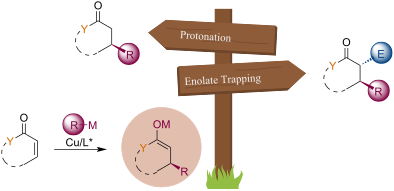
Graphical Abstract
Scheme 1: General scheme depicting tandem reactions based on an asymmetric conjugate addition followed by an ...
Scheme 2: Cu-catalyzed tandem conjugate addition of R2Zn/aldol reaction with chiral acetals.
Scheme 3: Cu-catalyzed asymmetric desymmetrization of cyclopentene-1,3-diones using a tandem conjugate additi...
Scheme 4: Stereocontrolled assembly of dialkylzincs, cyclic enones, and sulfinylimines utilizing a Cu-catalyz...
Scheme 5: Cu-catalyzed tandem conjugate addition/Mannich reaction (A). Access to chiral isoindolinones and tr...
Scheme 6: Cu-catalyzed tandem conjugate addition/nitro-Mannich reaction (A) with syn–anti or syn–syn selectiv...
Figure 1: Various chiral ligands utilized for the tandem conjugate addition/Michael reaction sequences.
Scheme 7: Cu-catalyzed tandem conjugate addition/Michael reaction: side-product formation with chalcone (A) a...
Scheme 8: Zn enolate trapping using allyl iodides (A), Stork–Jung vinylsilane reagents (B), and allyl bromide...
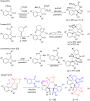
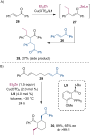
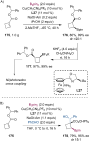
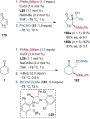
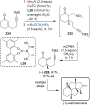
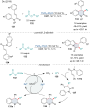
Scheme 9: Cu-catalyzed tandem conjugate addition/acylation through Li R2Zn enolate (A). A four-component coup...
Scheme 10: Selected examples for the Cu-catalyzed tandem conjugate addition/trifluoromethylthiolation sequence....
Scheme 11: Zn enolates trapped by vinyloxiranes: synthesis of allylic alcohols.
Scheme 12: Stereoselective cyclopropanation of Mg enolates formed by ACA of Grignard reagents to chlorocrotona...
Scheme 13: Domino aldol reactions of Mg enolates formed from coumarin and chromone.
Scheme 14: Oxidative coupling of ACA-produced Mg enolates.
Scheme 15: Tandem ACA of Grignard reagents to enones and Mannich reaction.
Scheme 16: Diastereodivergent Mannich reaction of Mg enolates with differently N-protected imines.
Scheme 17: Tandem Grignard–ACA–Mannich using Taddol-based phosphine-phosphite ligands.
Scheme 18: Tandem reaction of Mg enolates with aminomethylating reagents.
Scheme 19: Tandem reaction composed of Grignard ACA to alkynyl enones.
Scheme 20: Rh/Cu-catalyzed tandem reaction of diazo enoates leading to cyclobutanes.
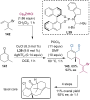
Scheme 21: Tandem Grignard-ACA of cyclopentenones and alkylation of enolates.
Scheme 22: Tandem ACA of Grignard reagents followed by enolate trapping reaction with onium compounds.
Scheme 23: Mg enolates generated from unsaturated lactones in reaction with activated alkenes.
Scheme 24: Lewis acid mediated ACA to amides and SN2 cyclization of a Br-appended enolate.
Scheme 25: Trapping reactions of aza-enolates with Michael acceptors.
Scheme 26: Si enolates generated by TMSOTf-mediated ACA of Grignard reagents and enolate trapping reaction wit...
Scheme 27: Trapping reactions of enolates generated from alkenyl heterocycles (A) and carboxylic acids (B) wit...
Scheme 28: Reactions of heterocyclic Mg enolates with onium compounds.
Scheme 29: Synthetic transformations of cycloheptatrienyl and benzodithiolyl substituents.
Scheme 30: Aminomethylation of Al enolates generated by ACA of trialkylaluminum reagents.
Scheme 31: Trapping reactions of enolates with activated alkenes.
Scheme 32: Alkynylation of racemic aluminum or magnesium enolates.
Scheme 33: Trapping reactions of Zr enolates generated by Cu-ACA of organozirconium reagents.
Scheme 34: Chloromethylation of Zr enolates using the Vilsmeier–Haack reagent.
Scheme 35: Tandem conjugate borylation with subsequent protonation or enolate trapping by an electrophile.
Scheme 36: Tandem conjugate borylation/aldol reaction of cyclohexenones.
Scheme 37: Selected examples for the tandem asymmetric borylation/intramolecular aldol reaction; synthesis of ...
Scheme 38: Cu-catalyzed tandem methylborylation of α,β-unsaturated phosphine oxide in the presence of (R,Sp)-J...
Scheme 39: Cu-catalyzed tandem transannular conjugated borylation/aldol cyclization of macrocycles containing ...
Scheme 40: Stereoselective tandem conjugate borylation/Mannich cyclization: selected examples (A) and a multi-...
Scheme 41: Some examples of Cu-catalyzed asymmetric tandem borylation/aldol cyclization (A). Application to di...
Scheme 42: Atropisomeric P,N-ligands used in tandem conjugate borylation/aldol cyclization sequence.
Scheme 43: Selected examples for the enantioselective Cu-catalyzed borylation/intramolecular Michael addition ...
Scheme 44: Selected examples for the preparation of enantioenriched spiroindanes using a Cu-catalyzed tandem c...
Scheme 45: Enantioselective conjugate borylation of cyclobutene-1-carboxylic acid diphenylmethyl ester 175 wit...
Scheme 46: Cu-catalyzed enantioselective tandem conjugate silylation of α,β-unsaturated ketones with subsequen...
Scheme 47: Cu-catalyzed enantioselective tandem conjugate silylation of α,β-unsaturated ketones with subsequen...
Scheme 48: Cu-catalyzed tandem conjugate silylation/aldol condensation. The diastereoselectivity is controlled...
Scheme 49: Chiral Ru-catalyzed three-component coupling reaction.
Scheme 50: Rh-Phebox complex-catalyzed reductive cyclization and subsequent reaction with Michael acceptors th...
Scheme 51: Rh-catalyzed tandem asymmetric conjugate alkynylation/aldol reaction (A) and subsequent spiro-cycli...
Scheme 52: Rh-bod complex-catalyzed tandem asymmetric conjugate arylation/intramolecular aldol addition (A). S...
Scheme 53: Co-catalyzed C–H-bond activation/asymmetric conjugate addition/aldol reaction.
Scheme 54: (Diisopinocampheyl)borane-promoted 1,4-hydroboration of α,β-unsaturated morpholine carboxamides and...
Figure 2: Some examples of total syntheses that have been recently reviewed.
Scheme 55: Stereoselective synthesis of antimalarial prodrug (+)-artemisinin utilizing a tandem conjugate addi...
Scheme 56: Amphilectane and serrulatane diterpenoids: preparation of chiral starting material via asymmetric t...
Scheme 57: Various asymmetric syntheses of pleuromutilin and related compounds based on a tandem conjugate add...
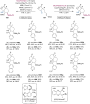
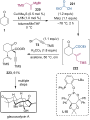
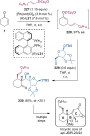
Scheme 58: Total synthesis of glaucocalyxin A utilizing a tandem conjugate addition/acylation reaction sequenc...
Scheme 59: Installation of the exocyclic double bond using a tandem conjugate addition/aminomethylation sequen...
Scheme 60: Synthesis of the taxol core using a tandem conjugate addition/enolate trapping sequence with Vilsme...
Scheme 61: Synthesis of the tricyclic core of 12-epi-JBIR-23/24 utilizing a Rh-catalyzed asymmetric conjugate ...
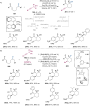
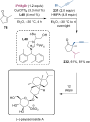
Scheme 62: Total synthesis of (−)-peyssonoside A utilizing a Cu-catalyzed enantioselective tandem conjugate ad...
Beilstein J. Org. Chem. 2022, 18, 1607–1616, doi:10.3762/bjoc.18.171
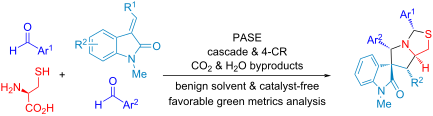
Graphical Abstract
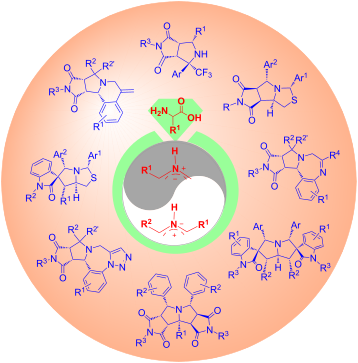
Scheme 1: The diastereoselective synthesis of spirooxindoles through MCRs.
Figure 1: Bioactive Spirooxindole-pyrrolothiazoles.
Scheme 2: The synthesis of spirooxindolepyrrolothiazoles.
Scheme 3: Four-component reaction for the synthesis of compound 5.
Scheme 4: Proposed mechanism for the double [3 + 2] cycloadditions.
Scheme 5: The synthesis of compound 5a with ᴅ- and ʟ-cysteine.
Scheme 6: Two-step (process A) vs cascade (process B) synthesis of 5a. i) 1.0:1.15 of 1a/2, EtOH (0.05 M), 25...
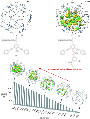
Figure 2: Graphical representation of the green metrics (AE, AEf, CE, RME, OE and MP) analysis for processes ...
Figure 3: Graphical representation of the green metrics (PMI, E-factor, and SI) analysis for processes A and ...
Beilstein J. Org. Chem. 2022, 18, 991–998, doi:10.3762/bjoc.18.99

Graphical Abstract
Scheme 1: Representative cycloaddition reactions of phenacylmalononitriles.
Figure 1: Single crystal structure of compound 3k.
Figure 2: Single crystal structure of compound 4a.
Figure 3: Single crystal structure of compound 4c.
Scheme 2: Proposed reaction mechanism for compounds 3, 4, and 5.
Figure 4: Single crystal structure of compound 5.
Scheme 3: Control experiment.
Beilstein J. Org. Chem. 2022, 18, 796–808, doi:10.3762/bjoc.18.80
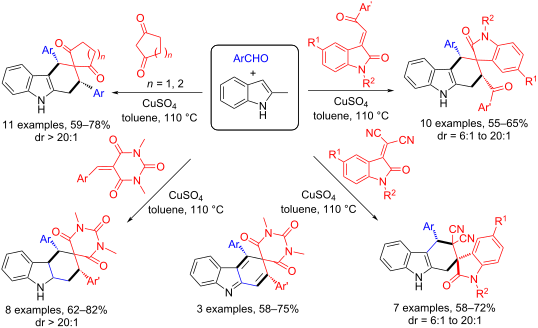
Graphical Abstract
Scheme 1: Construction of diverse tetrahydrocarbazoles via Levy-type reaction.
Scheme 2: Synthesis of spiro[carbazole-3,3'-inolines]. Reaction conditions: 2-methylindole (0.5 mmol), aromat...
Scheme 3: Synthesis of spiro[carbazole-2,3'-indolines]. Reaction conditions: 2-methylindole (0.5 mmol), aroma...
Scheme 4: Synthesis of tetrahydrospiro[carbazole-3,5'-pyrimidines]. Reaction conditions: 2-methylindole (0.5 ...
Scheme 5: Synthesis of tetrahydrospiro[carbazole-3,1'-cycloalkane]-diones. Reaction conditions: 2-methylindol...
Scheme 6: Synthesis of 3,3'-(arylmethylene)bis(2-methyl-1H-indole). Reaction conditions: 2-methylindole (1.0 ...
Scheme 7: Proposed reaction mechanism for the multicomponent reaction.
Beilstein J. Org. Chem. 2022, 18, 597–630, doi:10.3762/bjoc.18.62
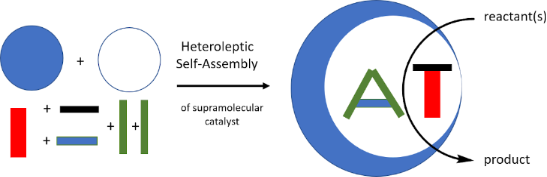
Graphical Abstract
Figure 1: Butterfly 1 (Figure was reprinted with permission from [45]. Copyright 2012 American Chemical Society. ...
Figure 2: Synthesis of the three-component heteroleptic molecular boat 8 and its use as a catalyst for the Kn...
Figure 3: Synthesis of the two-component triangle 14 and three-component heteroleptic prism 15 [59]. Figure was a...
Figure 4: Catalytic Michael addition reaction using the urea-decorated molecular prism 15 [59].
Figure 5: Self-assembly of two-component tetragonal prismatic architectures with different cavity size. Figur...
Figure 6: Construction of artificial LHS using rhodamine B as an acceptor and 24b as donor generating a photo...
Figure 7: Synthesis of supramolecular spheres with varying [AuCl] concentration inside the cavity. Figure was...
Figure 8: Hydroalkoxylation reaction of γ-allenol 34 in the presence of [AuCl]-encapsulated molecular spheres ...
Figure 9: Two-component heteroleptic triangles of different size containing a BINOL functionality. Figure was...
Figure 10: Asymmetric conjugate addition of chalcone 42 with trans-styrylboronic acid (43) catalyzed by BINOL-...
Figure 11: Encapsulation of monophosphoramidite-Rh(I) catalyst into a heteroleptic tetragonal prismatic cage 47...
Figure 12: (a) Representations of the basic HETPYP, HETPHEN, and HETTAP complex motifs. (b) The three-componen...
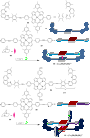
Figure 13: Two representative four-component rotors, with a (top) two-arm stator and (bottom) a four-arm stato...
Figure 14: Four-component rotors with a monohead rotator. Figure was adapted with permission from [94]. Copyright ...
Figure 15: (left) Click reaction catalyzed by rotors [Cu2(55)(60)(X)]2+. (right) Yield as a function of the ro...
Figure 16: A supramolecular AND gate. a) In truth table state (0,0) two nanoswitches serve as the receptor ens...
Figure 17: Two supramolecular double rotors (each has two rotational axes) and reference complex [Cu(78)]+ for...
Figure 18: The slider-on-deck system (82•X) (X = 83, 84, or 85). Figure is from [98] and was reprinted from the jo...
Figure 19: Catalysis of a conjugated addition reaction in the presence of the slider-on-deck system (82•X) (X ...
Figure 20: A rotating catalyst builds a catalytic machinery. For catalysis of the catalytic machinery, see Figure 21. F...
Figure 21: Catalytic machinery. Figure was adapted from [100] (“Evolution of catalytic machinery: three-component n...
Figure 22: An information system based on (re)shuffling components between supramolecular structures [99]. Figure ...
Figure 23: Switching between dimeric heteroleptic and homoleptic complex for OFF/ON catalytic formation of rot...
Figure 24: A chemically fueled catalytic system [112]. Figure was adapted from [112]. Copyright 2021 American Chemical S...
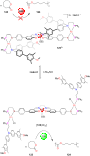
Figure 25: (Top) Operation of a fuel acid. (Bottom) Knoevenagel addition [112].
Figure 26: Development of the yield of Knoevenagel product 118 in a fueled system [112]. Figure was reprinted with ...
Figure 27: Weak-link strategy to increased catalytic activity in epoxide opening [119]. Figure was adapted from [24]. C...
Figure 28: A ON/OFF polymerization switch based on the weak-link approach [118]. Figure was reprinted with permissi...
Figure 29: A weak-link switch turning ON/OFF a Diels–Alder reaction [132]. Figure was reprinted with permission fro...
Figure 30: A catalyst duo allowing selective activation of one of two catalytic acylation reactions [133] upon subs...
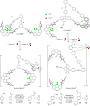
Figure 31: A four-state switchable nanoswitch (redrawn from [134]).
Figure 32: Sequential catalysis as regulated by nanoswitch 138 and catalyst 139 in the presence of metal ions ...
Figure 33: Remote control of ON/OFF catalysis administrated by two nanoswitches through ion signaling (redrawn...
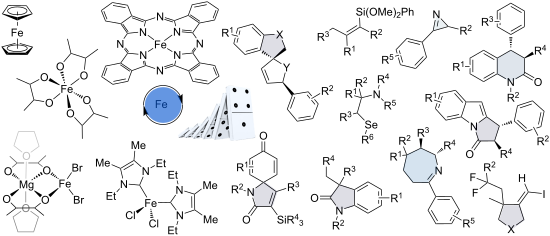
Beilstein J. Org. Chem. 2021, 17, 2848–2893, doi:10.3762/bjoc.17.196
Graphical Abstract
Figure 1: Price comparison among iron and other transition metals used in catalysis.
Scheme 1: Typical modes of C–C bond formation.
Scheme 2: The components of an iron-catalyzed domino reaction.
Scheme 3: Iron-catalyzed tandem cyclization and cross-coupling reactions of iodoalkanes 1 with aryl Grignard ...
Scheme 4: Three component iron-catalyzed dicarbofunctionalization of vinyl cyclopropanes 14.
Scheme 5: Three-component iron-catalyzed dicarbofunctionalization of alkenes 21.
Scheme 6: Double carbomagnesiation of internal alkynes 31 with alkyl Grignard reagents 32.
Scheme 7: Iron-catalyzed cycloisomerization/cross-coupling of enyne derivatives 35 with alkyl Grignard reagen...
Scheme 8: Iron-catalyzed spirocyclization/cross-coupling cascade.
Scheme 9: Iron-catalyzed alkenylboration of alkenes 50.
Scheme 10: N-Alkyl–N-aryl acrylamide 60 CDC cyclization with C(sp3)–H bonds adjacent to a heteroatom.
Scheme 11: 1,2-Carboacylation of activated alkenes 60 with aldehydes 65 and alcohols 67.
Scheme 12: Iron-catalyzed dicarbonylation of activated alkenes 68 with alcohols 67.
Scheme 13: Iron-catalyzed cyanoalkylation/radical dearomatization of acrylamides 75.
Scheme 14: Synergistic photoredox/iron-catalyzed 1,2-dialkylation of alkenes 82 with common alkanes 83 and 1,3...
Scheme 15: Iron-catalyzed oxidative coupling/cyclization of phenol derivatives 86 and alkenes 87.
Scheme 16: Iron-catalyzed carbosulfonylation of activated alkenes 60.
Scheme 17: Iron-catalyzed oxidative spirocyclization of N-arylpropiolamides 91 with silanes 92 and tert-butyl ...
Scheme 18: Iron-catalyzed free radical cascade difunctionalization of unsaturated benzamides 94 with silanes 92...
Scheme 19: Iron-catalyzed cyclization of olefinic dicarbonyl compounds 97 and 100 with C(sp3)–H bonds.
Scheme 20: Radical difunctionalization of o-vinylanilides 102 with ketones and esters 103.
Scheme 21: Dehydrogenative 1,2-carboamination of alkenes 82 with alkyl nitriles 76 and amines 105.
Scheme 22: Iron-catalyzed intermolecular 1,2-difunctionalization of conjugated alkenes 107 with silanes 92 and...
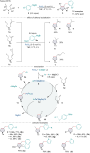
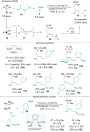
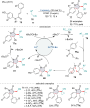
Scheme 23: Four-component radical difunctionalization of chemically distinct alkenes 114/115 with aldehydes 65...
Scheme 24: Iron-catalyzed carbocarbonylation of activated alkenes 60 with carbazates 117.
Scheme 25: Iron-catalyzed radical 6-endo cyclization of dienes 119 with carbazates 117.
Scheme 26: Iron-catalyzed decarboxylative synthesis of functionalized oxindoles 130 with tert-butyl peresters ...
Scheme 27: Iron‑catalyzed decarboxylative alkylation/cyclization of cinnamamides 131/134.
Scheme 28: Iron-catalyzed carbochloromethylation of activated alkenes 60.
Scheme 29: Iron-catalyzed trifluoromethylation of dienes 142.
Scheme 30: Iron-catalyzed, silver-mediated arylalkylation of conjugated alkenes 115.
Scheme 31: Iron-catalyzed three-component carboazidation of conjugated alkenes 115 with alkanes 101/139b and t...
Scheme 32: Iron-catalyzed carboazidation of alkenes 82 and alkynes 160 with iodoalkanes 20 and trimethylsilyl ...
Scheme 33: Iron-catalyzed asymmetric carboazidation of styrene derivatives 115.
Scheme 34: Iron-catalyzed carboamination of conjugated alkenes 115 with alkyl diacyl peroxides 163 and acetoni...
Scheme 35: Iron-catalyzed carboamination using oxime esters 165 and arenes 166.
Scheme 36: Iron-catalyzed iminyl radical-triggered [5 + 2] and [5 + 1] annulation reactions with oxime esters ...
Scheme 37: Iron-catalyzed decarboxylative alkyl etherification of alkenes 108 with alcohols 67 and aliphatic a...
Scheme 38: Iron-catalyzed inter-/intramolecular alkylative cyclization of carboxylic acid and alcohol-tethered...
Scheme 39: Iron-catalyzed intermolecular trifluoromethyl-acyloxylation of styrene derivatives 115.
Scheme 40: Iron-catalyzed carboiodination of terminal alkenes and alkynes 180.
Scheme 41: Copper/iron-cocatalyzed cascade perfluoroalkylation/cyclization of 1,6-enynes 183/185.
Scheme 42: Iron-catalyzed stereoselective carbosilylation of internal alkynes 187.
Scheme 43: Synergistic photoredox/iron catalyzed difluoroalkylation–thiolation of alkenes 82.
Scheme 44: Iron-catalyzed three-component aminoazidation of alkenes 82.
Scheme 45: Iron-catalyzed intra-/intermolecular aminoazidation of alkenes 194.
Scheme 46: Stereoselective iron-catalyzed oxyazidation of enamides 196 using hypervalent iodine reagents 197.
Scheme 47: Iron-catalyzed aminooxygenation for the synthesis of unprotected amino alcohols 200.
Scheme 48: Iron-catalyzed intramolecular aminofluorination of alkenes 209.
Scheme 49: Iron-catalyzed intramolecular aminochlorination and aminobromination of alkenes 209.
Scheme 50: Iron-catalyzed intermolecular aminofluorination of alkenes 82.
Scheme 51: Iron-catalyzed aminochlorination of alkenes 82.
Scheme 52: Iron-catalyzed phosphinoylazidation of alkenes 108.
Scheme 53: Synergistic photoredox/iron-catalyzed three-component aminoselenation of trisubstituted alkenes 82.
Beilstein J. Org. Chem. 2021, 17, 1335–1351, doi:10.3762/bjoc.17.93
Graphical Abstract
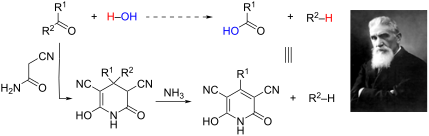
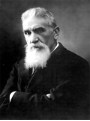
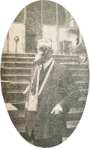
Figure 1: Icilio Guareschi (1847–1918). (Source: Annali della Reale Accademia di Agricoltura di Torino 1919, ...
Scheme 1: Vitamin B6 (pyridoxine, 1), gabapentin (2), and thymol (3).
Figure 2: Baliatico (Nursing) by Francesco Scaramuzza (275 cm × 214 cm, Parma, Complesso Museale della Pilott...
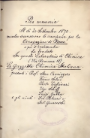
Figure 3: Schiff’s fictitious report on the foundation of the Gazzetta Chimica Italiana (Image reproduced fro...
Scheme 2: Reaction of thymol (3) with chloroform under the basic conditions of the Guareschi–Lustgarten react...
Figure 4: The chemistry building of Turin University in a historical picture. Note, that one of the “mysterio...
Scheme 3: Triacetonamine (6) and the related compounds phorone (7), α-eucaine (8), and tropinone (9).
Scheme 4: Taxonomy of the Guareschi pyridone syntheses.
Scheme 5: The catalytic cycle of the “1897 reaction”.
Scheme 6: Resonance forms of the radical 10.
Figure 5: The wet chamber used by Guareschi to restore parchments (Gorrini, G. L'incendio della R. Biblioteca...
Figure 6: The Guareschi mask. (Servizio Chimico Militare. L'opera di Icilio Guareschi precursore della masche...
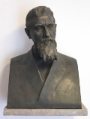
Figure 7: Guareschi’s bust at the Dipartimento di Scienza e Tecnologia del Farmaco of Turin University. Permi...
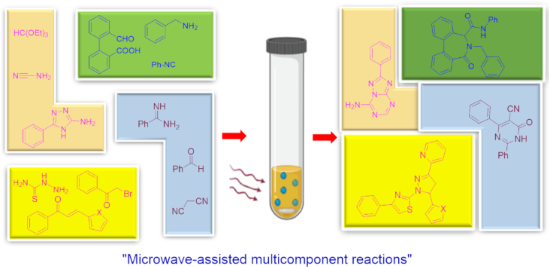
Beilstein J. Org. Chem. 2021, 17, 819–865, doi:10.3762/bjoc.17.71
Graphical Abstract
Figure 1: Marketed drugs with acridine moiety.
Scheme 1: Synthesis of 4-arylacridinediones.
Scheme 2: Proposed mechanism for acridinedione synthesis.
Scheme 3: Synthesis of tetrahydrodibenzoacridinones.
Scheme 4: Synthesis of naphthoacridines.
Scheme 5: Plausible mechanism for naphthoacridines.
Figure 2: Benzoazepines based potent molecules.
Scheme 6: Synthesis of azepinone.
Scheme 7: Proposed mechanism for azepinone formation.
Scheme 8: Synthesis of benzoazulenen-1-one derivatives.
Scheme 9: Proposed mechanism for benzoazulene-1-one synthesis.
Figure 3: Indole-containing pharmacologically active molecules.
Scheme 10: Synthesis of functionalized indoles.
Scheme 11: Plausible mechanism for the synthesis of functionalized indoles.
Scheme 12: Synthesis of spirooxindoles.
Scheme 13: Synthesis of substituted spirooxindoles.
Scheme 14: Plausible mechanism for the synthesis of substituted spirooxindoles.
Scheme 15: Synthesis of pyrrolidinyl spirooxindoles.
Scheme 16: Proposed mechanism for pyrrolidinyl spirooxindoles.
Figure 4: Pyran-containing biologically active molecules.
Scheme 17: Synthesis of functionalized benzopyrans.
Scheme 18: Plausible mechanism for synthesis of benzopyran.
Scheme 19: Synthesis of indoline-spiro-fused pyran derivatives.
Scheme 20: Proposed mechanism for indoline-spiro-fused pyran.
Scheme 21: Synthesis of substituted naphthopyrans.
Figure 5: Marketed drugs with pyrrole ring.
Scheme 22: Synthesis of tetra-substituted pyrroles.
Scheme 23: Mechanism for silica-supported PPA-SiO2-catalyzed pyrrole synthesis.
Scheme 24: Synthesis of pyrrolo[1,10]-phenanthrolines.
Scheme 25: Proposed mechanism for pyrrolo[1,10]-phenanthrolines.
Figure 6: Marketed drugs and molecules containing pyrimidine and pyrimidinones skeletons.
Scheme 26: MWA-MCR pyrimidinone synthesis.
Scheme 27: Two proposed mechanisms for pyrimidinone synthesis.
Scheme 28: MWA multicomponent synthesis of dihydropyrimidinones.
Scheme 29: Proposed mechanism for dihydropyrimidinones.
Figure 7: Biologically active fused pyrimidines.
Scheme 30: MWA- MCR for the synthesis of pyrrolo[2,3-d]pyrimidines.
Scheme 31: Proposed mechanism for pyrrolo[2,3-d]pyrimidines.
Scheme 32: Synthesis of substituted pyrrolo[2,3-d]pyrimidine-2,4-diones.
Scheme 33: Probable pathway for pyrrolo[2,3-d]pyrimidine-2,4-diones.
Scheme 34: Synthesis of pyridopyrimidines.
Scheme 35: Plausible mechanism for the synthesis of pyridopyrimidines.
Scheme 36: Synthesis of dihydropyridopyrimidine and dihydropyrazolopyridine.
Scheme 37: Proposed mechanism for the formation of dihydropyridopyrimidine.
Scheme 38: Synthesis of thiopyrano[4,3-d]pyrimidines.
Scheme 39: Plausible mechanism for the synthesis of thiopyrano[4,3-d]pyrimidines.
Scheme 40: Synthesis of decorated imidazopyrimidines.
Scheme 41: Proposed mechanism for imidazopyrimidine synthesis.
Figure 8: Pharmacologically active molecules containing purine bases.
Scheme 42: Synthesis of aza-adenines.
Scheme 43: Synthesis of 5-aza-7-deazapurines.
Scheme 44: Proposed mechanism for deazapurines synthesis.
Figure 9: Biologically active molecules containing pyridine moiety.
Scheme 45: Synthesis of steroidal pyridines.
Scheme 46: Proposed mechanism for steroidal pyridine.
Scheme 47: Synthesis of N-alkylated 2-pyridones.
Scheme 48: Two possible mechanisms for pyridone synthesis.
Scheme 49: Synthesis of pyridone derivatives.
Scheme 50: Postulated mechanism for synthesis of pyridone.
Figure 10: Biologically active fused pyridines.
Scheme 51: Benzimidazole-imidazo[1,2-a]pyridines synthesis.
Scheme 52: Mechanism for the synthesis of benzimidazole-imidazo[1,2-a]pyridines.
Scheme 53: Synthesis of pyrazolo[3,4-b]pyridine-5-spirocycloalkanedione derivatives.
Scheme 54: Proposed mechanism for spiro-pyridines.
Scheme 55: Functionalized macrocyclane-fused pyrazolo[3,4-b]pyridine derivatives.
Scheme 56: Mechanism postulated for macrocyclane-fused pyrazolo[3,4-b]pyridine.
Scheme 57: Generation of pyrazolo[3,4-b]pyridines.
Scheme 58: Proposed mechanism for the synthesis of pyrazolo[3,4-b]pyridines.
Scheme 59: Proposed mechanism for the synthesis of azepinoindole.
Figure 11: Pharmaceutically important molecules with quinoline moiety.
Scheme 60: Povarov-mediated quinoline synthesis.
Scheme 61: Proposed mechanism for Povarov reaction.
Scheme 62: Synthesis of pyrazoloquinoline.
Scheme 63: Plausible mechanism for pyrazoloquinoline synthesis.
Figure 12: Quinazolinones as pharmacologically significant scaffolds.
Scheme 64: Four-component reaction for dihydroquinazolinone.
Scheme 65: Proposed mechanism for dihydroquinazolinones.
Scheme 66: Synthesis purine quinazolinone and PI3K-δ inhibitor.
Scheme 67: Synthesis of fused benzothiazolo/benzoimidazoloquinazolinones.
Scheme 68: Proposed mechanism for fused benzothiazolo/benzoimidazoloquinazolinones.
Scheme 69: On-water reaction for synthesis of thiazoloquinazolinone.
Scheme 70: Proposed mechanism for the thiazoloquinazolinone synthesis.
Scheme 71: β-Cyclodextrin-mediated synthesis of indoloquinazolinediones.
Scheme 72: Proposed mechanism for synthesis of indoloquinazolinediones.
Figure 13: Triazoles-containing marketted drugs and pharmacologically active molecules.
Scheme 73: Cu(I) DAPTA-catalyzed 1,2,3-triazole formation.
Scheme 74: Mechanism for Cu(I) DAPTA-catalyzed triazole formation.
Scheme 75: Synthesis of β-hydroxy-1,2,3-triazole.
Scheme 76: Proposed mechanism for synthesis of β-hydroxy-1,2,3-triazoles.
Scheme 77: Synthesis of bis-1,2,4-triazoles.
Scheme 78: Proposed mechanism for bis-1,2,4-triazoles synthesis.
Figure 14: Thiazole containing drugs.
Scheme 79: Synthesis of a substituted thiazole ring.
Scheme 80: Synthesis of pyrazolothiazoles.
Figure 15: Chromene containing drugs.
Scheme 81: Magnetic nanocatalyst-mediated aminochromene synthesis.
Scheme 82: Proposed mechanism for the synthesis of chromenes.
Beilstein J. Org. Chem. 2021, 17, 678–687, doi:10.3762/bjoc.17.57
Graphical Abstract
Figure 1: Benzodiazepine-based azolo-containing drugs.
Figure 2: Novel potential 1,2,3-triazolobenziadiazepine drugs.
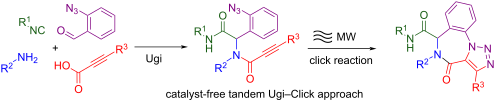
Scheme 1: Examples of synthesis of 1,2,3-triazolobenzodiazepines via tandem approach Ugi reaction/IAAC. Reage...
Scheme 2: Azide precursor synthesis.
Scheme 3: Synthesis of Ugi products 6, their structures and yields.
Figure 3: Code legend for Ugi products 6 and molecular structure (X-ray analysis) of compound 6aaa.
Scheme 4: Cyclization of Ugi-product 6aab with terminal alkyne fragment.
Figure 4: 1H NMR spectra of the reactant and the product of IAAC.
Figure 5: Molecular structure of compound 7aaa (X-ray analysis) and comparison of 1H NMR spectra of compounds ...
Scheme 5: The substrate scope of intermolecular cycloaddition.
Beilstein J. Org. Chem. 2021, 17, 461–484, doi:10.3762/bjoc.17.41
Graphical Abstract
Figure 1: Phosphonopeptides, phosphonodepsipeptides, peptides, and depsipeptides.
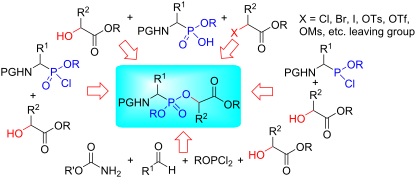
Figure 2: The diverse strategies for phosphonodepsipeptide synthesis.
Scheme 1: Synthesis of α-phosphonodepsidipeptides as inhibitors of leucine aminopeptidase.
Figure 3: Structure of 2-hydroxy-2-oxo-3-[(phenoxyacetyl)amino]-1,2-oxaphosphorinane-6-carboxylic acid (16).
Scheme 2: Synthesis of α-phosphonodepsidipeptide 17 as coupling partner for cyclen-containing phosphonodepsip...
Scheme 3: Synthesis of α-phosphonodepsidipeptides containing enantiopure hydroxy ester as VanX inhibitors.
Scheme 4: Synthesis of α-phosphonodepsidipeptides as VanX inhibitors.
Scheme 5: Synthesis of optically active α-phosphonodepsidipeptides as VanX inhibitors.
Scheme 6: The synthesis of phosphonodepsipeptides through a thionyl chloride-catalyzed esterification of N-Cb...
Scheme 7: Synthesis of α-phosphinodipeptidamide as a hapten.
Scheme 8: Synthesis of α-phosphonodepsioctapeptide 41.
Scheme 9: Synthesis of phosphonodepsipeptides via an in situ-generated phosphonochloridate.
Scheme 10: Synthesis of α-phosphonodepsitetrapeptides 58 as inhibitors of the aspartic peptidase pepsin.
Scheme 11: Synthesis of a β-phosphonodepsidipeptide library 64.
Scheme 12: Synthesis of another β-phosphonodepsidipeptide library.
Scheme 13: Synthesis of γ-phosphonodepsidipeptides.
Scheme 14: Synthesis of phosphonodepsipeptides 85 as folylpolyglutamate synthetase inhibitors.
Scheme 15: Synthesis of the γ-phosphonodepsitripeptide 95 as an inhibitor of γ-gutamyl transpeptidase.
Scheme 16: Synthesis of phosphonodepsipeptides as inhibitors and probes of γ-glutamyl transpeptidase.
Scheme 17: Synthesis of phosphonyl depsipeptides 108 via DCC-mediated condensation and oxidation.
Scheme 18: Synthesis of phosphonodepsipeptides 111 with BOP and PyBOP as coupling reagents.
Scheme 19: Synthesis of optically active phosphonodepsipeptides with BOP and PyBOP as coupling reagents.
Scheme 20: Synthesis of phosphonodepsipeptides with BroP and TPyCIU as coupling reagents.
Scheme 21: Synthesis of a phosphonodepsipeptide hapten with BOP as coupling reagent.
Scheme 22: Synthesis of phosphonodepsitripeptide with BOP as coupling reagent.
Scheme 23: Synthesis of norleucine-derived phosphonodepsipeptides 135 and 138.
Scheme 24: Synthesis of norleucine-derived phosphonodepsipeptides 141 and 144.
Scheme 25: Solid-phase synthesis of phosphonodepsipeptides.
Scheme 26: Synthesis of phosphonodepsidipeptides via the Mitsunobu reaction.
Scheme 27: Synthesis of γ-phosphonodepsipeptide via the Mitsunobu reaction.
Scheme 28: Synthesis of phosphonodepsipeptides via a multicomponent condensation reaction.
Scheme 29: Synthesis of phosphonodepsipeptides with a functionalized side-chain via a multicomponent condensat...
Scheme 30: High yielding synthesis of phosphonodepsipeptides via a multicomponent condensation.
Scheme 31: Synthesis of optically active phosphonodepsipeptides via a multicomponent condensation reaction.
Scheme 32: Synthesis of N-phosphoryl phosphonodepsipeptides.
Scheme 33: Synthesis of phosphonodepsipeptides via the alkylation of phosphonic monoesters.
Scheme 34: Synthesis of phosphonodepsipeptides as inhibitors of aspartic protease penicillopepsin.
Scheme 35: Synthesis of phosphonodepsipeptides as prodrugs.
Scheme 36: Synthesis of phosphonodepsithioxopeptides 198.
Scheme 37: Synthesis of phosphonodepsipeptides.
Scheme 38: Synthesis of phosphonodepsipeptides with C-1-hydroxyalkylphosphonic acid.
Scheme 39: Synthesis of phosphonodepsipeptides with C-1-hydroxyalkylphosphonate via the rhodium-catalyzed carb...
Scheme 40: Synthesis of phosphonodepsipeptides with a C-1-hydroxyalkylphosphonate motif via a copper-catalyzed...
Beilstein J. Org. Chem. 2020, 16, 2831–2853, doi:10.3762/bjoc.16.233
Graphical Abstract
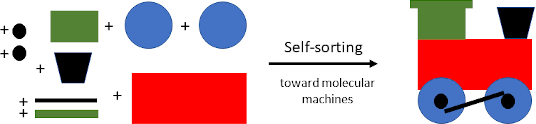
Figure 1: Some selected self-sorting outcomes and their qualitative and quantitative assessment.
Figure 2: Illustration of an integrative vs a non-integrative self-sorting.
Figure 3: The pH-driven four-component 2-fold completive self-sorting based on host–guest chemistry.
Figure 4: (a) The monomers 5 and 6 and their H-bonding array. (b) The hydrogen-bonded octameric and tetrameri...
Figure 5: (a) Two new Zn4L6-type cages. (b) The encapsulation of C70 induced distinct reconstitutions within ...
Figure 6: The formation of octahedral cages (a) [Co6(10')4]12+ and (b) [Co6(11')4]12+. (c) The 2-fold complet...
Figure 7: Exchange of Ag+ for Au+ ions in poly-NHC ligand-based organometallic assemblies.
Figure 8: The reversible interconversion between the three-component rectangle [Cu4(16)2(17)2]4+ and the four...
Figure 9: a) Chemical structure of the monomer 20 with its quadruple hydrogen-bonding array and a metal-affin...
Figure 10: Communication between the nanoswitch 21 and the supramolecular assemblies [Cu4(22)2(24)2]4+ or [Cu6(...
Figure 11: (a) The chemical structures and cartoon representations of the switch 25, the decks 26 and 27, and ...
Figure 12: Double self-sorting leads to a catalytic machinery in SelfSORT-II, in which the 46 kHz-nanorotor ac...
Figure 13: ON/OFF control of a networked catalytic catch–release system.
Figure 14: A multicomponent information system for the reversible reconfiguration of switchable dual catalysis....
Figure 15: a) The chemically fueled cascaded ion translocation, monitored by distinct emission colors. b) Work...
Figure 16: Cyclic metallosupramolecular transformations.
Figure 17: Fully reversible multiple-state rearrangement of metallosupramolecular architectures depending upon...
Figure 18: The selective encapsulation and sequential release of guests in a self-sorted mixture of three tetr...
Figure 19: Two catalytic reactions are alternately controlled by a toggle nanoswitch.
Figure 20: A biped walking along a tetrahedral track and unfolding its catalytic action. Adapted with permissi...
Figure 21: A three state supramolecular AND logic gate.
Figure 22: Four-component nanorotor and its catalytic activity. Adapted with permission from (Biswas, P. K.; S...
Beilstein J. Org. Chem. 2020, 16, 1963–1973, doi:10.3762/bjoc.16.163
Graphical Abstract
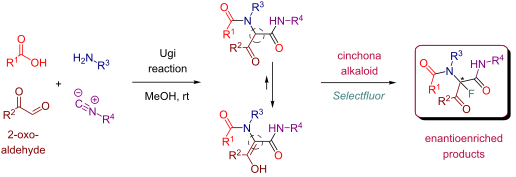
Scheme 1: Post-transformations of 2-oxo-aldehyde-derived Ugi adducts 8.
Scheme 2: Synthesis of 2-oxo-aldehyde-derived Ugi adducts.
Figure 1: Molecular representation of the X-ray crystal structure of (S)-12e (slow enantiomer).
Beilstein J. Org. Chem. 2020, 16, 1084–1091, doi:10.3762/bjoc.16.95
Graphical Abstract
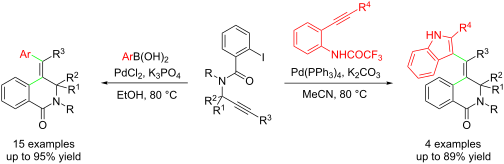
Scheme 1: Planned approach to tetrasubstituted-4-methylene-3,4-dihydroisoquinolin-1(2H)-ones 4 and 6.
Scheme 2: Preparation of the starting N-propargyl-2-iodobenzamides 2.
Scheme 3: Substrate scope of the reaction of N-propargyl-2-iodobenzamide 2a with arylboronic acids 3b–i.
Scheme 4: Substrate scope of the reaction of N-propargyl-2-iodobenzamides 2c–f with arylboronic acids 3a–c/j.
Scheme 5: Reaction of N-propargyl-2-iodobenzamides 2b,f with the 2-alkynyltrifluoroacetanilides 5a–c.
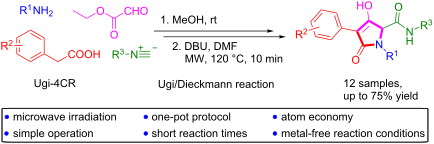
Beilstein J. Org. Chem. 2020, 16, 663–669, doi:10.3762/bjoc.16.63
Graphical Abstract
Figure 1: Structures of natural tetramic acid derivatives with more clinical relevance.
Scheme 1: Synthetic strategy of compound 7a.
Scheme 2: Scope of the Ugi/Dieckmann cyclization reaction route to lead to pyrrolopyridinones 7a–l. aYield of...
Scheme 3: Postulated reaction mechanism.
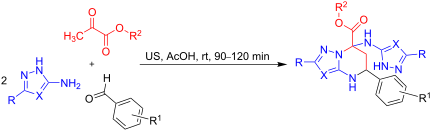
Beilstein J. Org. Chem. 2020, 16, 281–289, doi:10.3762/bjoc.16.27
Graphical Abstract
Scheme 1: Synthesis of tetrahydroazolopyrimidine derivatives.
Scheme 2: Various multicomponent reactions involving pyruvic acids (pyruvates) and different α-aminoazoles.
Scheme 3: Synthesis of 4-arylamino-substituted tetrahydroquinolines.
Scheme 4: Ultrasound-assisted multicomponent reactions of 3-amino-1,2,4-triazole or 5-amino-1H-pyrazole-4-car...
Scheme 5: Synthesis of 3-cyano-7-(4-methoxyphenyl)-4,7-dihydropyrazolo[1,5-a]pyrimidine-5-carboxylic acid (7)....
Scheme 6: Proposed reaction mechanism.
Figure 1: Alternative structures A and B for the tetrahydroazolopyrimidines 4.
Figure 2: Molecular structure of ethyl 5-(4-bromophenyl)-3-cyano-7-((4-cyano-1H-pyrazol-5-yl)amino)-4,5,6,7-t...
Figure 3: Chains of 4g molecules in the crystal phase.
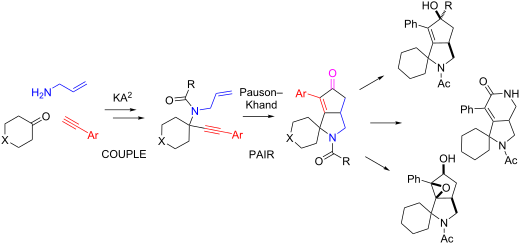
Beilstein J. Org. Chem. 2020, 16, 200–211, doi:10.3762/bjoc.16.23
Graphical Abstract
Figure 1: Chemical structure of representative approved drugs containing a spirocyclic moiety.
Scheme 1: Synthetic strategies for accessing pyrrolocyclopentenone derivatives, including the novel couple/pa...
Scheme 2: Couple/pair approach using combined KA2 and Pauson–Khand multicomponent reactions.
Scheme 3: Follow-up chemistry on compound 5 taking advantage of the enone chemistry. Reaction conditions. (i)...
Figure 2: Top: Selected NOE contacts from NOESY 1D spectra of compound 36; bottom: low energy conformer of 36...
Figure 3: PCA plot resulting from the correlation between PC1 vs PC2, showing the positioning in the chemical...
Figure 4: PMI plot showing the skeletal diversity of compounds 3–39 (blue diamonds) with respect to the refer...
Beilstein J. Org. Chem. 2019, 15, 2684–2703, doi:10.3762/bjoc.15.262
Graphical Abstract
Scheme 1: Consecutive three-component alkynylation–Michael addition–cyclocondensation (AMAC) synthesis of α-p...
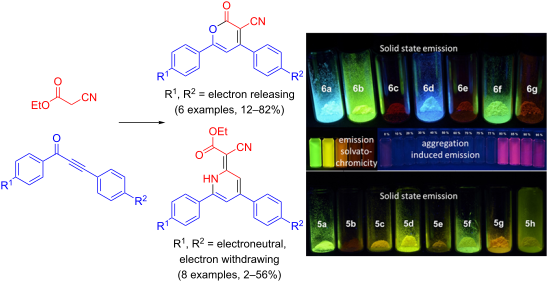
Scheme 2: Consecutive pseudo-four-component alkynylation–Michael addition–cyclocondensation (AMAC) synthesis ...
Scheme 3: Consecutive pseudo-four-component alkynylation–Michael addition–cyclocondensation (AMAC) synthesis ...
Scheme 4: Model system for the optimization of the Michael addition–cyclocondensation reaction step to 1H-pyr...
Scheme 5: Formation of α-pyrone 6a and 1H-pyridine 5a at 20 °C.
Scheme 6: Formation of α-pyrone 6a starting from alkynone 3b having an electron-donating substituent.
Scheme 7: Formation of 1H-pyridine 5b starting from alkynone 3d having an electron-withdrawing substituent.
Scheme 8: Formation of 1H-pyridine 8a by Michael addition–cyclocondensation reaction.
Scheme 9: Mechanistic rationale for the formation of the 1H-pyridine 5a.
Scheme 10: Formation of 1H-pyridine 8a from alkynone 3b and dimer 7.
Figure 1: Molecular structure of 1H-pyridine 5a (50% thermal ellipsoids), showing the intramolecular N–H···O ...
Figure 2: Supramolecular C–H···N [36-39] and C–H···π [40-49] interactions around the 6-positioned phenyl ring in 5a. Detail...
Figure 3: 1H-Pyridine derivatives 5 as solids under daylight (top), under UV light (λexc = 365 nm, c(5) = 10−4...
Figure 4: Selected normalized absorption (solid lines) and emission (dashed lines) spectra of 1H-pyridines 5a...
Figure 5: Selected normalized emission spectra of 1H-pyridine 5a and 5b in the solid state at T = 298 K.
Figure 6: Selected normalized absorption (solid lines) and emission (dashed lines) spectra of 1H-pyridines 8a...
Figure 7: Solid-state luminescence of 1H-pyridines 5a, 8a and 8b (λexc = 365 nm).
Figure 8: α-Pyrones 6 as solids under daylight (top), selected derivatives under UV light (λexc = 365 nm, c(6...
Figure 9: Selected normalized absorption spectra of α-pyrones 6a, 6b, 6d, and 6e recorded in dichloromethane ...
Figure 10: Selected normalized absorption (solid lines) and emission (dashed lines) spectra of α-pyrones 6c, 6e...
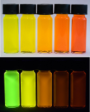
Figure 11: Absorption (top) and fluorescence (bottom) of compound 6c with variable solvent polarity (left to t...
Figure 12: Absorption (solid lines) and emission (dashed lines) spectra of α-pyrone 6c in five solvents of dif...
Figure 13: Lippert plot for α-pyrone 6c (n = x, r2 = 0.970).
Figure 14: Normalized emission spectra of selected α-pyrones 6a–d,f in the solid state at T = 298 K.
Figure 15: Fluorescence of compound 6e in different THF/water fractions (top, λexc = 365 nm, handheld UV lamp)...
Figure 16: Selected DFT-computed (B3LYP 6-311G**) Kohn–Sham FMOs for 1H-pyridines 5f and 5g representing contr...
Figure 17: Selected DFT-computed (B3LYP 6-311G**) Kohn–Sham FMOs for 1H-pyridines 6a, 6c, 6e, 6f, and 6g and r...
Beilstein J. Org. Chem. 2019, 15, 2447–2457, doi:10.3762/bjoc.15.237
Graphical Abstract
Figure 1: Bioactive molecules containing a tetrazole, pyridone or isoquinolone ring.
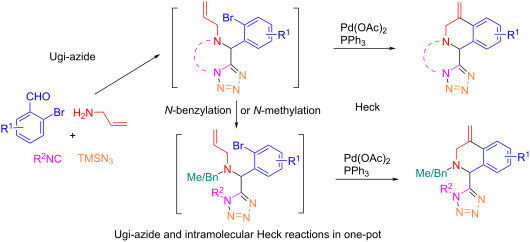
Scheme 1: Approaches for the synthesis of tetrazoles and isoquinolones and their interplay as designed in thi...
Scheme 2: Scope of the Ugi-azide-4CR/deprotection/acylation sequence. Ugi-azide-4CR conducted at the 2.0 mmol...
Scheme 3: Influence of substituents R and R2 on the reaction outcome. For compounds 4k–m the overall yield in...
Scheme 4: Influence of the alkyne and R1 substituent on the reaction outcome.
Scheme 5: Scope of acrylic, heterocyclic and ring-fused N-acylaminomethyl tetrazole substrates.
Scheme 6: Proposed reaction mechanism using substrates 1a and 3a.
Beilstein J. Org. Chem. 2019, 15, 1822–1828, doi:10.3762/bjoc.15.176
Graphical Abstract
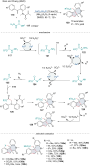
Scheme 1: Concept: Alkene difuctionalization by four-component radical reaction using xanthates, alkenes, CO ...
Figure 1: Vicinal difunctionalization of alkenes by four-component radical cascade reaction using xanthogenat...
Figure 2: Proposed radical chain mechanism.
Beilstein J. Org. Chem. 2019, 15, 1612–1704, doi:10.3762/bjoc.15.165
Graphical Abstract
Figure 1: Various drugs having IP nucleus.
Figure 2: Participation percentage of various TMs for the syntheses of IPs.
Scheme 1: CuI–NaHSO4·SiO2-catalyzed synthesis of imidazo[1,2-a]pyridines.
Scheme 2: Experimental examination of reaction conditions.
Scheme 3: One-pot tandem reaction for the synthesis of 2-haloimidazopyridines.
Scheme 4: Mechanistic scheme for the synthesis of 2-haloimidazopyridine.
Scheme 5: Copper-MOF-catalyzed three-component reaction (3-CR) for imidazo[1,2-a]pyridines.
Scheme 6: Mechanism for copper-MOF-driven synthesis.
Scheme 7: Heterogeneous synthesis via titania-supported CuCl2.
Scheme 8: Mechanism involving oxidative C–H functionalization.
Scheme 9: Heterogeneous synthesis of IPs.
Scheme 10: One-pot regiospecific synthesis of imidazo[1,2-a]pyridines.
Scheme 11: Vinyl azide as an unprecedented substrate for imidazo[1,2-a]pyridines.
Scheme 12: Radical pathway.
Scheme 13: Cu(I)-catalyzed transannulation approach for imidazo[1,5-a]pyridines.
Scheme 14: Plausible radical pathway for the synthesis of imidazo[1,5-a]pyridines.
Scheme 15: A solvent-free domino reaction for imidazo[1,2-a]pyridines.
Scheme 16: Cu-NPs-mediated synthesis of imidazo[1,2-a]pyridines.
Scheme 17: CuI-catalyzed synthesis of isoxazolylimidazo[1,2-a]pyridines.
Scheme 18: Functionalization of 4-bromo derivative via Sonogashira coupling reaction.
Scheme 19: A plausible reaction pathway.
Scheme 20: Cu(I)-catalyzed intramolecular oxidative C–H amidation reaction.
Scheme 21: One-pot synthetic reaction for imidazo[1,2-a]pyridine.
Scheme 22: Plausible reaction mechanism.
Scheme 23: Cu(OAc)2-promoted synthesis of imidazo[1,2-a]pyridines.
Scheme 24: Mechanism for aminomethylation/cycloisomerization of propiolates with imines.
Scheme 25: Three-component synthesis of imidazo[1,2-a]pyridines.
Figure 3: Scope of pyridin-2(1H)-ones and acetophenones.
Scheme 26: CuO NPS-promoted A3 coupling reaction.
Scheme 27: Cu(II)-catalyzed C–N bond formation reaction.
Scheme 28: Mechanism involving Chan–Lam/Ullmann coupling.
Scheme 29: Synthesis of formyl-substituted imidazo[1,2-a]pyridines.
Scheme 30: A tandem sp3 C–H amination reaction.
Scheme 31: Probable mechanistic approach.
Scheme 32: Dual catalytic system for imidazo[1,2-a]pyridines.
Scheme 33: Tentative mechanism.
Scheme 34: CuO/CuAl2O4/ᴅ-glucose-promoted 3-CCR.
Scheme 35: A tandem CuOx/OMS-2-based synthetic strategy.
Figure 4: Biomimetic catalytic oxidation in the presence of electron-transfer mediators (ETMs).
Scheme 36: Control experiment.
Scheme 37: Copper-catalyzed C(sp3)–H aminatin reaction.
Scheme 38: Reaction of secondary amines.
Scheme 39: Probable mechanistic pathway.
Scheme 40: Coupling reaction of α-azidoketones.
Scheme 41: Probable pathway.
Scheme 42: Probable mechanism with free energy calculations.
Scheme 43: MCR for cyanated IP synthesis.
Scheme 44: Substrate scope for the reaction.
Scheme 45: Reaction mechanism.
Scheme 46: Probable mechanistic pathway for Cu/ZnAl2O4-catalyzed reaction.
Scheme 47: Copper-catalyzed double oxidative C–H amination reaction.
Scheme 48: Application towards different coupling reactions.
Scheme 49: Reaction mechanism.
Scheme 50: Condensation–cyclization approach for the synthesis of 1,3-diarylated imidazo[1,5-a]pyridines.
Scheme 51: Optimized reaction conditions.
Scheme 52: One-pot 2-CR.
Scheme 53: One-pot 3-CR without the isolation of chalcone.
Scheme 54: Copper–Pybox-catalyzed cyclization reaction.
Scheme 55: Mechanistic pathway catalyzed by Cu–Pybox complex.
Scheme 56: Cu(II)-promoted C(sp3)-H amination reaction.
Scheme 57: Wider substrate applicability for the reaction.
Scheme 58: Plausible reaction mechanism.
Scheme 59: CuI assisted C–N cross-coupling reaction.
Scheme 60: Probable reaction mechanism involving sp3 C–H amination.
Scheme 61: One-pot MCR-catalyzed by CoFe2O4/CNT-Cu.
Scheme 62: Mechanistic pathway.
Scheme 63: Synthetic scheme for 3-nitroimidazo[1,2-a]pyridines.
Scheme 64: Plausible mechanism for CuBr-catalyzed reaction.
Scheme 65: Regioselective synthesis of halo-substituted imidazo[1,2-a]pyridines.
Scheme 66: Synthesis of 2-phenylimidazo[1,2-a]pyridines.
Scheme 67: Synthesis of diarylated compounds.
Scheme 68: CuBr2-mediated one-pot two-component oxidative coupling reaction.
Scheme 69: Decarboxylative cyclization route to synthesize 1,3-diarylimidazo[1,5-a]pyridines.
Scheme 70: Mechanistic pathway.
Scheme 71: C–H functionalization reaction of enamines to produce diversified heterocycles.
Scheme 72: A plausible mechanism.
Scheme 73: CuI-promoted aerobic oxidative cyclization reaction of ketoxime acetates and pyridines.
Scheme 74: CuI-catalyzed pathway for the formation of imidazo[1,2-a]pyridine.
Scheme 75: Mechanistic pathway.
Scheme 76: Mechanistic rationale for the synthesis of products.
Scheme 77: Copper-catalyzed synthesis of vinyloxy-IP.
Scheme 78: Regioselective product formation with propiolates.
Scheme 79: Proposed mechanism for vinyloxy-IP formation.
Scheme 80: Regioselective synthesis of 3-hetero-substituted imidazo[1,2-a]pyridines with different reaction su...
Scheme 81: Mechanistic pathway.
Scheme 82: CuI-mediated synthesis of 3-formylimidazo[1,2-a]pyridines.
Scheme 83: Radical pathway for 3-formylated IP synthesis.
Scheme 84: Pd-catalyzed urea-cyclization reaction for IPs.
Scheme 85: Pd-catalyzed one-pot-tandem amination and intramolecular amidation reaction.
Figure 5: Scope of aniline nucleophiles.
Scheme 86: Pd–Cu-catalyzed Sonogashira coupling reaction.
Scheme 87: One-pot amide coupling reaction for the synthesis of imidazo[4,5-b]pyridines.
Scheme 88: Urea cyclization reaction for the synthesis of two series of pyridines.
Scheme 89: Amidation reaction for the synthesis of imidazo[4,5-b]pyridines.
Figure 6: Amide scope.
Scheme 90: Pd NPs-catalyzed 3-component reaction for the synthesis of 2,3-diarylated IPs.
Scheme 91: Plausible mechanistic pathway for Pd NPs-catalyzed MCR.
Scheme 92: Synthesis of chromenoannulated imidazo[1,2-a]pyridines.
Scheme 93: Mechanism for the synthesis of chromeno-annulated IPs.
Scheme 94: Zinc oxide NRs-catalyzed synthesis of imidazo[1,2-a]azines/diazines.
Scheme 95: Zinc oxide-catalyzed isocyanide based GBB reaction.
Scheme 96: Reaction pathway for ZnO-catalyzed GBB reaction.
Scheme 97: Mechanistic pathway.
Scheme 98: ZnO NRs-catalyzed MCR for the synthesis of imidazo[1,2-a]azines.
Scheme 99: Ugi type GBB three-component reaction.
Scheme 100: Magnetic NPs-catalyzed synthesis of imidazo[1,2-a]pyridines.
Scheme 101: Regioselective synthesis of 2-alkoxyimidazo[1,2-a]pyridines catalyzed by Fe-SBA-15.
Scheme 102: Plausible mechanistic pathway for the synthesis of 2-alkoxyimidazopyridine.
Scheme 103: Iron-catalyzed synthetic approach.
Scheme 104: Iron-catalyzed aminooxygenation reaction.
Scheme 105: Mechanistic pathway.
Scheme 106: Rh(III)-catalyzed double C–H activation of 2-substituted imidazoles and alkynes.
Scheme 107: Plausible reaction mechanism.
Scheme 108: Rh(III)-catalyzed non-aromatic C(sp2)–H bond activation–functionalization for the synthesis of imid...
Scheme 109: Reactivity and selectivity of different substrates.
Scheme 110: Rh-catalyzed direct C–H alkynylation by Li et al.
Scheme 111: Suggested radical mechanism.
Scheme 112: Scandium(III)triflate-catalyzed one-pot reaction and its mechanism for the synthesis of benzimidazo...
Scheme 113: RuCl3-assisted Ugi-type Groebke–Blackburn condensation reaction.
Scheme 114: C-3 aroylation via Ru-catalyzed two-component reaction.
Scheme 115: Regioselective synthetic mechanism.
Scheme 116: La(III)-catalyzed one-pot GBB reaction.
Scheme 117: Mechanistic approach for the synthesis of imidazo[1,2-a]pyridines.
Scheme 118: Synthesis of imidazo[1,2-a]pyridine using LaMnO3 NPs under neat conditions.
Scheme 119: Mechanistic approach.
Scheme 120: One-pot 3-CR for regioselective synthesis of 2-alkoxy-3-arylimidazo[1,2-a]pyridines.
Scheme 121: Formation of two possible products under optimization of the catalysts.
Scheme 122: Mechanistic strategy for NiFe2O4-catalyzed reaction.
Scheme 123: Two-component reaction for synthesizing imidazodipyridiniums.
Scheme 124: Mechanistic scheme for the synthesis of imidazodipyridiniums.
Scheme 125: CuI-catalyzed arylation of imidazo[1,2-a]pyridines.
Scheme 126: Mechanism for arylation reaction.
Scheme 127: Cupric acetate-catalyzed double carbonylation approach.
Scheme 128: Radical mechanism for double carbonylation of IP.
Scheme 129: C–S bond formation reaction catalyzed by cupric acetate.
Scheme 130: Cupric acetate-catalyzed C-3 formylation approach.
Scheme 131: Control experiments for signifying the role of DMSO and oxygen.
Scheme 132: Mechanism pathway.
Scheme 133: Copper bromide-catalyzed CDC reaction.
Scheme 134: Extension of the substrate scope.
Scheme 135: Plausible radical pathway.
Scheme 136: Transannulation reaction for the synthesis of imidazo[1,5-a]pyridines.
Scheme 137: Plausible reaction pathway for denitrogenative transannulation.
Scheme 138: Cupric acetate-catalyzed C-3 carbonylation reaction.
Scheme 139: Plausible mechanism for regioselective C-3 carbonylation.
Scheme 140: Alkynylation reaction at C-2 of 3H-imidazo[4,5-b]pyridines.
Scheme 141: Two-way mechanism for C-2 alkynylation of 3H-imidazo[4,5-b]pyridines.
Scheme 142: Palladium-catalyzed SCCR approach.
Scheme 143: Palladium-catalyzed Suzuki coupling reaction.
Scheme 144: Reaction mechanism.
Scheme 145: A phosphine free palladium-catalyzed synthesis of C-3 arylated imidazopyridines.
Scheme 146: Palladium-mediated Buchwald–Hartwig cross-coupling reaction.
Figure 7: Structure of the ligands optimized.
Scheme 147: Palladium acetate-catalyzed direct arylation of imidazo[1,2-a]pyridines.
Scheme 148: Palladium acetate-catalyzed mechanistic pathway.
Scheme 149: Palladium acetate-catalyzed regioselective arylation reported by Liu and Zhan.
Scheme 150: Mechanism for selective C-3 arylation of IP.
Scheme 151: Pd(II)-catalyzed alkenylation reaction with styrenes.
Scheme 152: Pd(II)-catalyzed alkenylation reaction with acrylates.
Scheme 153: A two way mechanism.
Scheme 154: Double C–H activation reaction catalyzed by Pd(OAc)2.
Scheme 155: Probable mechanism.
Scheme 156: Palladium-catalyzed decarboxylative coupling.
Scheme 157: Mechanistic cycle for decarboxylative arylation reaction.
Scheme 158: Ligand-free approach for arylation of imidazo[1,2-a]pyridine-3-carboxylic acids.
Scheme 159: Mechanism for ligandless arylation reaction.
Scheme 160: NHC-Pd(II) complex assisted arylation reaction.
Scheme 161: C-3 arylation of imidazo[1,2-a]pyridines with aryl bromides catalyzed by Pd(OAc)2.
Scheme 162: Pd(II)-catalyzed C-3 arylations with aryl tosylates and mesylates.
Scheme 163: CDC reaction for the synthesis of imidazo[1,2-a]pyridines.
Scheme 164: Plausible reaction mechanism for Pd(OAc)2-catalyzed synthesis of imidazo[1,2-a]pyridines.
Scheme 165: Pd-catalyzed C–H amination reaction.
Scheme 166: Mechanism for C–H amination reaction.
Scheme 167: One-pot synthesis for 3,6-di- or 2,3,6-tri(hetero)arylimidazo[1,2-a]pyridines.
Scheme 168: C–H/C–H cross-coupling reaction of IPs and azoles catalyzed by Pd(II).
Scheme 169: Mechanistic cycle.
Scheme 170: Rh-catalyzed C–H arylation reaction.
Scheme 171: Mechanistic pathway for C–H arylation of imidazo[1,2-a]pyridine.
Scheme 172: Rh(III)-catalyzed double C–H activation of 2-phenylimidazo[1,2-a]pyridines and alkynes.
Scheme 173: Rh(III)-catalyzed mechanistic pathway.
Scheme 174: Rh(III)-mediated oxidative coupling reaction.
Scheme 175: Reactions showing functionalization of the product obtained by the group of Kotla.
Scheme 176: Mechanism for Rh(III)-catalyzed oxidative coupling reaction.
Scheme 177: Rh(III)-catalyzed C–H activation reaction.
Scheme 178: Mechanistic cycle.
Scheme 179: Annulation reactions of 2-arylimidazo[1,2-a]pyridines and alkynes.
Scheme 180: Two-way reaction mechanism for annulations reaction.
Scheme 181: [RuCl2(p-cymene)]2-catalyzed C–C bond formation reaction.
Scheme 182: Reported reaction mechanism.
Scheme 183: Fe(III) catalyzed C-3 formylation approach.
Scheme 184: SET mechanism-catalyzed by Fe(III).
Scheme 185: Ni(dpp)Cl2-catalyzed KTC coupling.
Scheme 186: Pd-catalyzed SM coupling.
Scheme 187: Vanadium-catalyzed coupling of IP and NMO.
Scheme 188: Mechanistic cycle.
Scheme 189: Selective C3/C5–H bond functionalizations by mono and bimetallic systems.
Scheme 190: rGO-Ni@Pd-catalyzed C–H bond arylation of imidazo[1,2-a]pyridine.
Scheme 191: Mechanistic pathway for heterogeneously catalyzed arylation reaction.
Scheme 192: Zinc triflate-catalyzed coupling reaction of substituted propargyl alcohols.
Beilstein J. Org. Chem. 2019, 15, 1371–1378, doi:10.3762/bjoc.15.137
Graphical Abstract
Figure 1: Molecular structures of ligands 1, 2, 3, and 4 and of the resulting products, i.e., rectangle 5, sa...
Scheme 1: Guest addition/removal and reversible interconversion between supramolecular architectures.
Scheme 2: Completive and incomplete self-sorting in presence of copper(I) and rhodium complex 3.
Figure 2: Comparison of partial 1H NMR spectra (400 MHz, CD2Cl2, 298 K) of (a) ligand 2; (b) ligand 1; (c) po...
Figure 3: (a) UV–vis titration of rectangle 5 (2.98 μM) with DABCO (4); (b) several reversible cycles of inte...
Scheme 3: The high selectivity for DABCO in the transformation.
Figure 4: Partial spectra (400 MHz, CD2Cl2, 298 K) showing the reversible switching between rectangle and san...