Search for "gold nanoparticles" in Full Text gives 28 result(s) in Beilstein Journal of Organic Chemistry.
Beilstein J. Org. Chem. 2011, 7, 897–936, doi:10.3762/bjoc.7.103
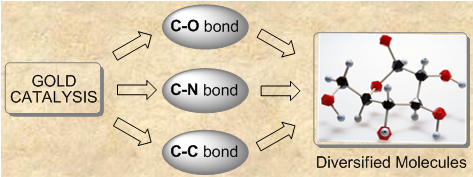
Graphical Abstract
Scheme 1: Gold-catalyzed addition of alcohols.
Scheme 2: Gold-catalyzed cycloaddition of alcohols.
Scheme 3: Ionic liquids as the solvent in gold-catalyzed cycloaddition.
Scheme 4: Gold-catalyzed cycloaddition of diynes.
Scheme 5: Gold(I) chloride catalyzed cycloisomerization of 2-alkynyl-1,5-diols.
Scheme 6: Gold-catalyzed cycloaddition of glycols and dihydroxy compounds.
Scheme 7: Gold-catalyzed ring-opening of cyclopropenes.
Scheme 8: Gold-catalyzed intermolecular hydroalkoxylation of alkynes. PR3 = 41–45.
Scheme 9: Gold-catalyzed intramolecular 6-endo-dig cyclization of β-hydroxy-α,α-difluoroynones.
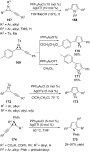
Scheme 10: Gold-catalyzed intermolecular hydroalkoxylation of non-activated olefins.
Scheme 11: Preparation of unsymmetrical ethers from alcohols.
Scheme 12: Expedient synthesis of dihydrofuran-3-ones.
Scheme 13: Catalytic approach to functionalized divinyl ketones.
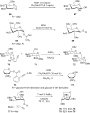
Scheme 14: Gold-catalyzed glycosylation.
Scheme 15: Gold-catalyzed cycloaddition of aldehydes and ketones.
Scheme 16: Gold-catalyzed annulations of 2-(ynol)aryl aldehydes and o-alkynyl benzaldehydes.
Scheme 17: Gold-catalyzed addition of carboxylates.
Scheme 18: Dual-catalyzed rearrangement reaction of allenoates.
Scheme 19: Meyer–Schuster rearrangement of propargylic alcohols.
Scheme 20: Propargylic alcohol rearrangements.
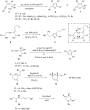
Scheme 21: Gold-catalyzed synthesis of imines and amine alkylation.
Scheme 22: Hydroamination of allenes and allenamides.
Scheme 23: Gold-catalyzed inter- and intramolecular amination of alkynes and alkenes.
Scheme 24: Gold-catalyzed cycloisomerization of O-propioloyl oximes and β-allenylhydrazones.
Scheme 25: Intra- and intermolecular amination with ureas.
Scheme 26: Gold-catalyzed cyclization of ortho-alkynyl-N-sulfonylanilines and but-3-yn-1-amines.
Scheme 27: Gold-catalyzed piperidine ring synthesis.
Scheme 28: Ring expansion of alkylnyl cyclopropanes.
Scheme 29: Gold-catalyzed annulations of N-propargyl-β-enaminones and azomethine imines.
Scheme 30: Gold(I)-catalyzed cycloisomerization of aziridines.
Scheme 31: AuCl3/AgSbF6-catalyzed intramolecular amination of 2-(tosylamino)phenylprop-1-en-3-ols.
Scheme 32: Gold-catalyzed cyclization via a 7-endo-dig pathway.
Scheme 33: Gold-catalyzed synthesis of fused xanthines.
Scheme 34: Gold-catalyzed synthesis of amides and isoquinolines.
Scheme 35: Gold-catalyzed oxidative cross-coupling reactions of propargylic acetates.
Scheme 36: Gold-catalyzed nucleophilic addition to allenamides.
Scheme 37: Gold-catalyzed direct carbon–carbon bond coupling reactions.
Scheme 38: Gold-catalyzed C−H functionalization of indole/pyrrole heterocycles and non-activated arenes.
Scheme 39: Gold-catalyzed cycloisomerization of cyclic compounds.
Scheme 40: Gold-catalyzed cycloaddition of 1-aryl-1-allen-6-enes and propargyl acetates.
Scheme 41: Gold(I)-catalyzed cycloaddition with ligand-controlled regiochemistry.
Scheme 42: Gold(I)-catalyzed cycloaddition of dienes and enynes.
Scheme 43: Gold-catalyzed intramolecular cycloaddition of 3-alkoxy-1,5-enynes and 2,2-dipropargylmalonates.
Scheme 44: Gold-catalyzed intramolecular cycloaddition of 1,5-allenynes.
Scheme 45: Gold(I)-catalyzed cycloaddition of indoles.
Scheme 46: Gold-catalyzed annulation reactions.
Scheme 47: Gold–carbenoid induced cleavage of a sp3-hybridized C−H bond.
Scheme 48: Furan- and indole-based cascade reactions.
Scheme 49: Tandem process using aromatic alkynes.
Scheme 50: Gold-catalyzed cycloaddition of 1,3-dien-5-ynes.
Scheme 51: Gold-catalyzed cascade cyclization of diynes, propargylic esters, and 1,3-enynyl ketones.
Scheme 52: Tandem reaction of β-phenoxyimino ketones and alkynyl oxime ethers.
Scheme 53: Gold-catalyzed tandem cyclization of enynes, 2-(tosylamino)phenylprop-1-yn-3-ols, and allenoates.
Scheme 54: Cyclization of 2,4-dien-6-yne carboxylic acids.
Scheme 55: Gold(I)-catalyzed tandem cyclization approach to tetracyclic indolines.
Scheme 56: Gold-catalyzed tandem reactions of alkynes.
Scheme 57: Aminoarylation and oxyarylation of alkenes.
Scheme 58: Cycloaddition of 2-ethynylnitrobenzene with various alkenes.
Scheme 59: Gold-catalyzed tandem reactions of allenoates and alkynes.
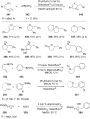
Scheme 60: Gold-catalyzed asymmetric synthesis of 2,3-dihydropyrroles.
Scheme 61: Chiral [NHC–Au(I)]-catalyzed cyclization of enyne.
Scheme 62: Gold-catalyzed hydroaminations and hydroalkoxylations.
Scheme 63: Gold(I)-catalyzed asymmetric hydroalkoxylation of 1,3-dihydroxymethyl-2-alkynylbenzene chromium com...
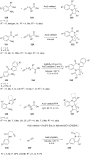
Scheme 64: Gold-catalyzed synthesis of julolidine derivatives.
Scheme 65: Gold-catalyzed the synthesis of chiral fused heterocycles.
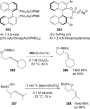
Scheme 66: Gold-catalyzed asymmetric reactions with 3,5-(t-Bu)2-4-MeO-MeOBIPHEP.
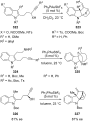
Scheme 67: Gold-catalyzed cyclization of o-(alkynyl) styrenes.
Scheme 68: Asymmetric gold(I)-catalyzed redox-neutral domino reactions of enynes.
Scheme 69: Gold(I)-catalyzed enantioselective polyene cyclization reaction.
Scheme 70: Gold(I)-catalyzed enantioselective synthesis of benzopyrans.
Scheme 71: Gold(I)-catalyzed enantioselective ring expansion of allenylcyclopropanols.
Beilstein J. Org. Chem. 2011, 7, 94–103, doi:10.3762/bjoc.7.13
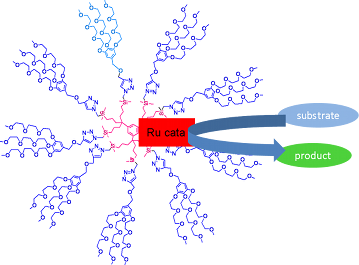
Graphical Abstract
Scheme 1: Strategy for the ROMP of norbornene by Ru-benzylidene dendrimers to form dendrimer-cored stars.
Scheme 2: Third-generation (16 Ru atoms) ruthenium-benzylidene dendrimer that catalyzes the ROMP of norbornen...
Scheme 3: Multiple carbon–carbon bond formation upon RCM and CM, and the complete switch of selectivity in th...
Scheme 4: Example of chemo-, regio- and stereoselective CM of polyolefin dendrimers catalyzed by the 2nd gene...
Scheme 5: Example of chemo-, regio- and stereoselective CM of polyolefin dendrimers catalyzed by the 2nd gene...
Scheme 6: Dendrimer construction scheme from a 9-olefinic dendrimer to a 27-olefinic dendrimer by regio-and s...
Scheme 7: Synthesis of the water-soluble dendritic nanoreactor 7 for olefin metathesis in water without co-so...
Beilstein J. Org. Chem. 2010, 6, No. 75, doi:10.3762/bjoc.6.75
Graphical Abstract
Scheme 1: Synthesis of 3,6-dihydro-2H-pyrans D.
Scheme 2: Addition of lithiated enol ether 1a to nitrone 2c/Et2AlCl.
Scheme 3: Mechanistic proposal for the transformation of syn-4a into cis-5a in the presence of TMSOTf.
Scheme 4: Unsuccessful attempt to cyclize hydroxylamine derivative syn-4f.
Scheme 5: Functionalizations of the enol ether moiety of cis-5a leading to compounds 8–11.
Scheme 6: Transformations of the enol ether moiety of trans-5a leading to products 13–15.
Scheme 7: Bromination of bicyclic dihydropyran trans-5b affording 16.
Scheme 8: Synthesis of epoxypyran 18 by bromination of cis-5d.
Scheme 9: Oxidative cleavage of dihydropyran 19 to lactone 20.
Scheme 10: Transformation of α-bromoketone 15 into nitrone 21 by an internal redox reaction.
Scheme 11: Transformation of α-bromoketone 11 into nitrone 21.
Scheme 12: Synthesis of diastereomeric aminopyrans 24 and 26.
Scheme 13: Synthesis of diastereomeric aminopyrans 28 and 30.
Scheme 14: Synthesis of triamides 31 and 32.