


Search results
Search for "hybrid materials" in Full Text gives 31 result(s) in Beilstein Journal of Organic Chemistry.
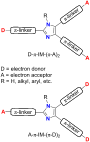
Imidazole as a parent π-conjugated backbone in charge-transfer chromophores
Beilstein J. Org. Chem. 2012, 8, 25–49, doi:10.3762/bjoc.8.4
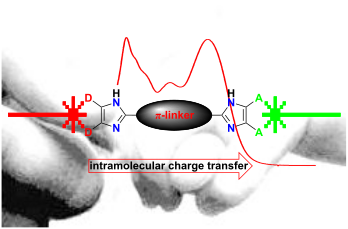
- –organic hybrid materials and showed high, stable, and tunable NLO performances, very good thermal stability, and, last but not least, easy synthesis from low-cost commercial precursors (Table 7). Raposo and co-workers investigated benzimidazole derivatives 44–47 with either a donor- or acceptor




Pseudo five-component synthesis of 2,5-di(hetero)arylthiophenes via a one-pot Sonogashira–Glaser cyclization sequence
Beilstein J. Org. Chem. 2011, 7, 1499–1503, doi:10.3762/bjoc.7.174
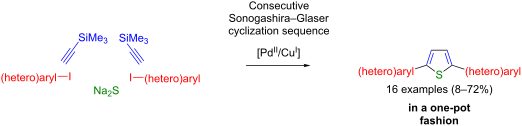
- strikingly simple methodology is highly practical and leads to a straightforward protocol for the preparation of the title compounds. Studies addressing more-sophisticated 2,5-disubstituted thiophenes for surface modification and also mesoporous hybrid materials are currently underway. Experimental 2c: An 80


Stereoselectivity of supported alkene metathesis catalysts: a goal and a tool to characterize active sites
Beilstein J. Org. Chem. 2011, 7, 13–21, doi:10.3762/bjoc.7.3
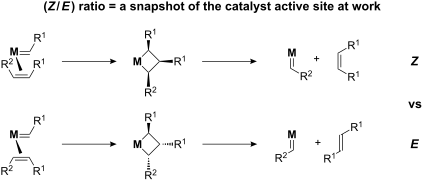
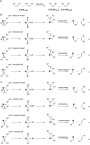
- improving the selectivity requires tuning the structure of the active sites to favour one isomer over the other (modification of the first coordination sphere). Hybrid materials containing Ru–NHC units New strategies to develop supported homogeneous catalysts involves the preparation of hybrid organic




ROMP-Derived cyclooctene-based monolithic polymeric materials reinforced with inorganic nanoparticles for applications in tissue engineering
Beilstein J. Org. Chem. 2010, 6, 1199–1205, doi:10.3762/bjoc.6.137
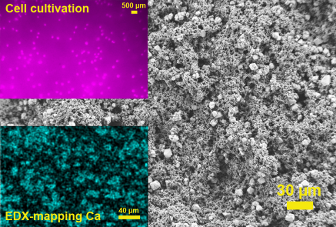
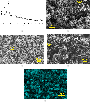
- /bjoc.6.137 Abstract Porous monolithic inorganic/polymeric hybrid materials have been prepared via ring-opening metathesis copolymerization starting from a highly polar monomer, i.e., cis-5-cyclooctene-trans-1,2-diol and a 7-oxanorborn-2-ene-derived cross-linker in the presence of porogenic solvents and
- the nanoparticle type and content. Moreover, the reinforced monoliths were tested for the possible use as scaffold materials in tissue engineering, by carrying out cell cultivation experiments with human adipose tissue-derived stromal cells. Keywords: hybrid materials; monoliths; nanoparticles; ring
- well as heterogeneous catalysis [16][17][18]. Generally, cyclooctene-derived monoliths differ from their NBE-based counterparts in that they are less prone to oxidation and display higher elastic moduli. With the aim to synthesize organic-inorganic monolithic hybrid materials for application as



Hybrid biofunctional nanostructures as stimuli-responsive catalytic systems
Beilstein J. Org. Chem. 2010, 6, 922–931, doi:10.3762/bjoc.6.98
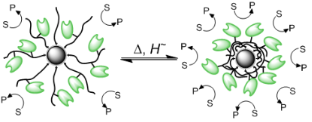
- [4]. Other systems use a photodynamic process to force a medical effect by the photochemical drug release during light irradiation [5]. By combining thermoresponsive polymers with magnetic nanoparticles, hybrid materials become accessible that can be manipulated by two different stimuli, temperature
- three carbonyl double bonds of the SIMA function, indicating that the succinimidyl ester is still existent and is neither hydrolysed nor deactivated [33]. The composition of the obtained hybrid materials is determined from mass loss between 150 °C and 480 °C in thermogravimetric analysis (TGA) (Table 1


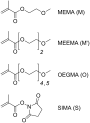


![[Graphic 1]](/bjoc/content/inline/1860-5397-6-98-i6.png?max-width=637&scale=0.1536366) ).
).


Progress in liquid crystal chemistry
Beilstein J. Org. Chem. 2009, 5, No. 48, doi:10.3762/bjoc.5.48
- diverse topics such as phthalocyanine-fullerene hybrid materials for photovoltaic devices, functional metallomesogens, coaxial electrospinning of liquid crystal-containing microfibers, banana-discotic hybrid systems, ionic liquid crystals, relations between molecular length distribution and formation of
Other Beilstein-Institut Open Science Activities



