Search results
Search for "linkers" in Full Text gives 193 result(s) in Beilstein Journal of Organic Chemistry.
Extension of the π-system of monoaryl-substituted norbornadienes with acetylene bridges: influence on the photochemical conversion and storage of light energy
Beilstein J. Org. Chem. 2024, 20, 3061–3068, doi:10.3762/bjoc.20.254
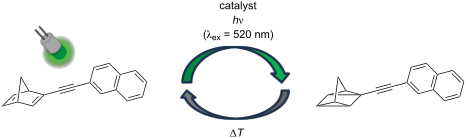
- quadricyclane signals, so that the quantitative analysis of the photostationary state was not possible with NMR spectroscopy. These observations are surprising, since the 3-acceptor-substituted derivatives and the ones without acetylene linkers have been reported to be converted quantitatively into their


Improved deconvolution of natural products’ protein targets using diagnostic ions from chemical proteomics linkers
Beilstein J. Org. Chem. 2024, 20, 2323–2341, doi:10.3762/bjoc.20.199
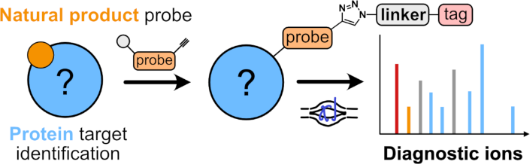
- discuss the properties and applications of different chemical proteomics linkers with special focus on their fragmentation releasing diagnostic ions and how these may improve the confidence in identified active compound–peptide conjugates. The application of advanced search options improves the
- comprehensively in several reviews [45][46][47][48]. Applications of cleavable linkers, which might be considered as pioneers of MS fragmentation-based platforms to search peptide-linker remainders, were reviewed thoroughly as well [49][50][51]. Recent advances in mass spectrometers technology and analysis
- pipelines enable to obtain more information from already established workflows, because they are becoming practically feasible only now. These will be discussed further in this review. We primarily focus on the linkers utilized for enrichment and identification of the probe–protein conjugates resembling




Factors influencing the performance of organocatalysts immobilised on solid supports: A review
Beilstein J. Org. Chem. 2024, 20, 2129–2142, doi:10.3762/bjoc.20.183
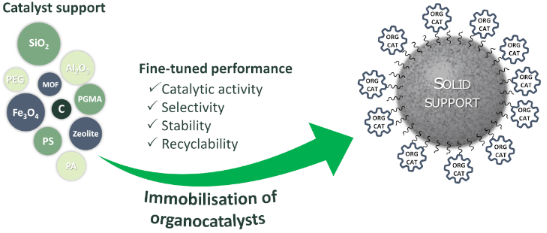
- influence of various linkers of cinchona squaramide organocatalysts immobilised on a poly(glycidyl methacrylate) (PGMA) solid support [127]. The support consisted of well-defined monodispersed PGMA microspheres, which were prepared through thorough parameter optimisation. Three amine-functionalised cinchona


New triazinephosphonate dopants for Nafion proton exchange membranes (PEM)
Beilstein J. Org. Chem. 2024, 20, 1623–1634, doi:10.3762/bjoc.20.145
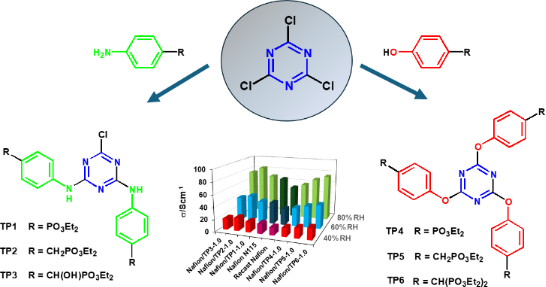
- molecular cages [46][47] and at porous materials, as linkers in metal-organic frameworks (MOFs) [48], used in the evaluation of the cycloaddition of CO2 to epoxides [49] and CO2 uptake [50]. Taking in consideration the strategy of the incorporation of dopants to promote the proton conduction in Nafion




Generation of multimillion chemical space based on the parallel Groebke–Blackburn–Bienaymé reaction
Beilstein J. Org. Chem. 2024, 20, 1604–1613, doi:10.3762/bjoc.20.143

- , extended Bemis–Murcko scaffolds were generated by cutting off the side chains of the molecules and retaining ring systems and linkers between them. After removal of duplicates, Tanimoto similarity coefficients were calculated for each pair of the molecules in the compared databases (T = 1 and 0 for similar


Supramolecular assemblies of amphiphilic donor–acceptor Stenhouse adducts as macroscopic soft scaffolds
Beilstein J. Org. Chem. 2024, 20, 1590–1603, doi:10.3762/bjoc.20.142
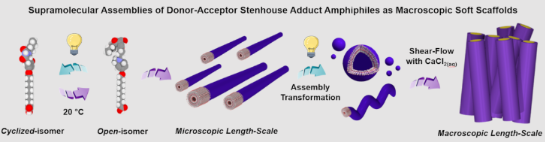
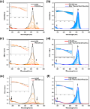
- reversibility of the other compounds, DAn with shorter alkyl linkers were also examined in THF solvent by UV–vis absorption spectroscopy, where they showed photochemical properties similar to those of DA11 (Figure 1a and Figure 1b). THF solutions of DA7 and DA6 showed a strong absorption band at 470–685 nm
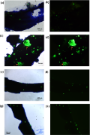
- cellular compatibility was good. These DAn biocompatibility results are the first example showing the intrinsic cytocompatibility of macroscopic soft DA scaffolds. Conclusion Amphiphilic DASAs with alkyl linkers of different length connecting to a carboxylic acid were prepared. Photochemical properties of




Synthesis of substituted triazole–pyrazole hybrids using triazenylpyrazole precursors
Beilstein J. Org. Chem. 2024, 20, 1396–1404, doi:10.3762/bjoc.20.121
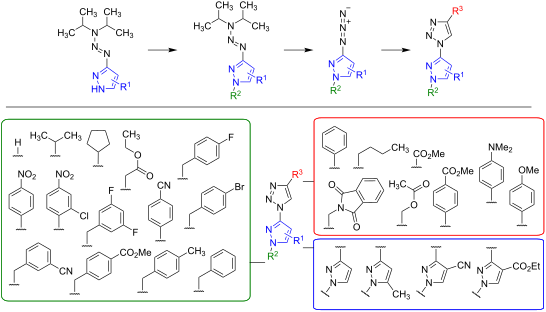
- systematically. Results and Discussion Triazenes have previously been established as versatile intermediates and linkers for conventional and solid-phase synthesis [22][23][24][25] that can be considered as protected diazonium salts [3]. According to the previous work [3], triazenylpyrazoles could serve as azide




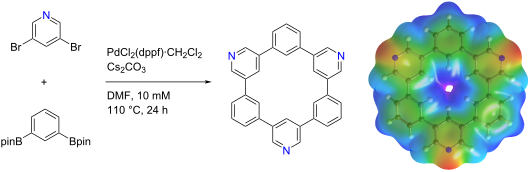
Introduction of peripheral nitrogen atoms to cyclo-meta-phenylenes
Beilstein J. Org. Chem. 2024, 20, 1207–1212, doi:10.3762/bjoc.20.103
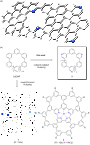
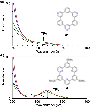
- π-stacking may also enable exploration of molecular assemblies. The experimental lone-pair electron densities were directed outward in 3a and could be used as linkers for metal atoms to assemble trigonal pyramidal macrocycles, for instance, in networks of metal organic frameworks [23][24



Synthesis of new representatives of A3B-type carboranylporphyrins based on meso-tetra(pentafluorophenyl)porphyrin transformations
Beilstein J. Org. Chem. 2024, 20, 767–776, doi:10.3762/bjoc.20.70
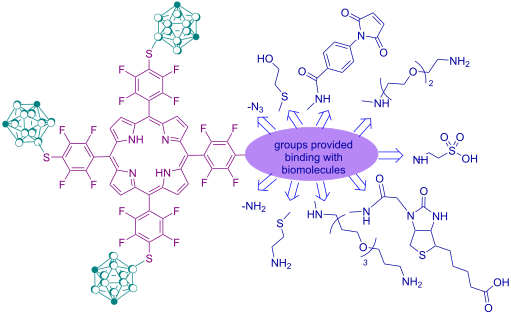
- -dioxaoctane (21) and 1,13-diamino-4,7,10-trioxatridecane (22) in DMSO at 70 °C for 30 min to form amino-conjugates 23 and 24 in 71 and 84% yield, respectively, containing ethylene glycol linkers with terminal primary amino groups (Scheme 6). The presence of ethylene glycol residues in bioactive molecules is
- linkers capable to connect these porphyrins with biomolecules, thus improving their biomedical characteristics and theraputic efficacy for PDT and BNCT due to the combination of different substituents within porphyrin framework. Amide coupling of A3B-type carboranylporphyrin containing an amino



Possible bi-stable structures of pyrenebutanoic acid-linked protein molecules adsorbed on graphene: theoretical study
Beilstein J. Org. Chem. 2024, 20, 570–577, doi:10.3762/bjoc.20.49
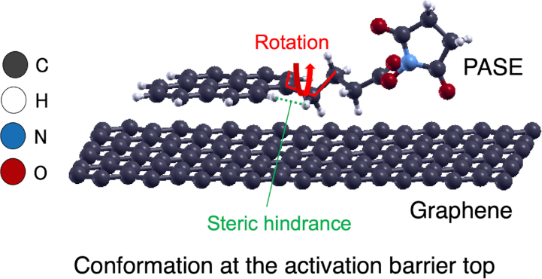
- ) linkers on graphene. The activation barrier between two bi-stable conformations exhibited by PASE is confirmed to be based on the steric hindrance effect between a hydrogen on the pyrene group and a hydrogen on the alkyl group of this molecule. Even after the protein is supplemented, this steric hindrance
- the steric hindrance effect between two hydrogen atoms in the molecule. A discussion on how the activation barrier between possible conformations of a protein immobilized on graphene by linkers appears is also provided. We consider the adsorption of the linker molecule forming a bond with a protein
- , the magnitude of the activation barrier is expected to be close to that in PASE. This is expected to be the case since a protein weakly bound to the carbon graphitic network can be supplemented onto graphene only by linkers as PASE, which has often been observed experimentally [1]. This type of


Elucidating the glycan-binding specificity and structure of Cucumis melo agglutinin, a new R-type lectin
Beilstein J. Org. Chem. 2024, 20, 306–320, doi:10.3762/bjoc.20.31
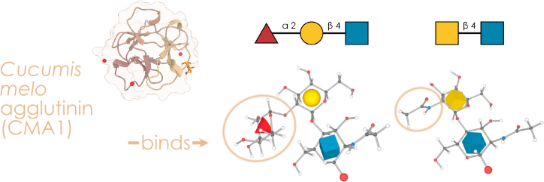
- a variety of linkers with which these molecules are immobilized. In general, we observed two binding preferences that were strongly enriched among bound sequences, namely glycans containing Fucα1-2Gal epitopes and glycans containing terminal GalNAc residues (Figure 2c). Amongst the bound sequences



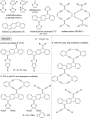
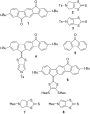
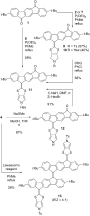
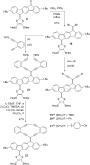
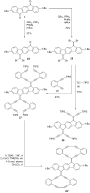
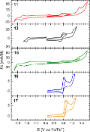
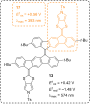
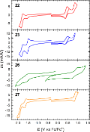
Multi-redox indenofluorene chromophores incorporating dithiafulvene donor and ene/enediyne acceptor units
Beilstein J. Org. Chem. 2024, 20, 59–73, doi:10.3762/bjoc.20.8
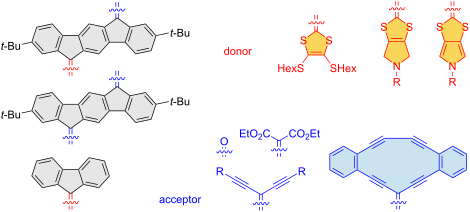
- pyrrole unit to one of the dithiole rings of an IF-TTF, allowing for dimerization of extended TTFs via the nitrogen atom by different linkers [14]. Donor–acceptor chromophores can be obtained by replacing one of the dithiafulvene (DTF) rings of the IF-TTF by an electron acceptor. Cyclic and acyclic







Active-metal template clipping synthesis of novel [2]rotaxanes
Beilstein J. Org. Chem. 2023, 19, 1776–1784, doi:10.3762/bjoc.19.130
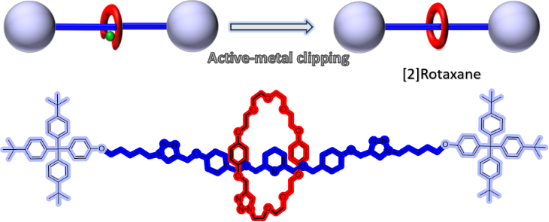
- ). Thanks to the symmetry of the axle and non-symmetry of the macrocycle the signals of the components could be easily distinguished by integrals. The aliphatic region is crowded with triplets corresponding to the ethyleneglycole and pentyl linkers. However, the difference in symmetry allowed the


Tying a knot between crown ethers and porphyrins
Beilstein J. Org. Chem. 2023, 19, 1630–1650, doi:10.3762/bjoc.19.120
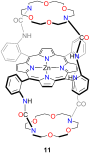
- linked through alkyl ether linkers, creating a crown ether-like core around the periphery of the calix[4]arene macrocycle (Scheme 3) [104]. The conformationally cone-locked receptor 7 showed the binding of monohydrated fluoride within the core. The F− anion was encapsulated within the central cavity
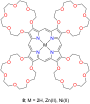
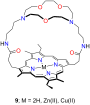
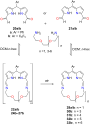
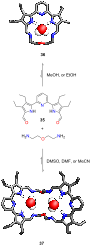
- accordion porphyrins with various linkers [54][125]. Their formation typically relied on a template synthesis approach [126][127]. The first reported accordion porphyrin was synthesised as a binucleated lead(II) complex 13 (Scheme 4) [52]. The reaction of diformyldipyrromethane 12, lead(II) thiocyanate, and
- 1,3-diaminopropane yielded 13 selectively. Later, Bowman-James and co-workers introduced a series of binucleated accordion porphyrins differing in the linkers connecting two parts of the dimeric macrocycle exploiting the barium(II)-templated reactions [53]. The coordination chemistry of accordion









Linker, loading, and reaction scale influence automated glycan assembly
Beilstein J. Org. Chem. 2023, 19, 1015–1020, doi:10.3762/bjoc.19.77
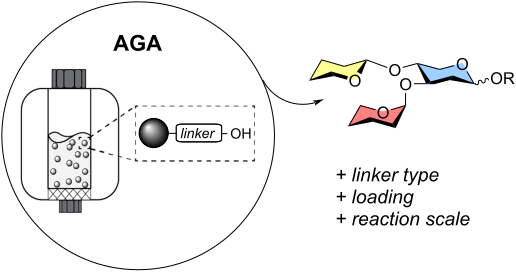
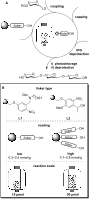
- mostly performed on cross-linked polystyrene resins equipped with photocleavable linkers [3], offering orthogonality to all the synthetic steps of the assembly, while selectively releasing the glycan at the end of the synthesis. In recent years, the implementation of new synthetic strategies [4][5][6][7
- scale [19], and linkers [20][21] affect the overall yield of solid phase peptide synthesis (SPPS). In the past decades, several supports and linkers have been developed and commercialized for SPPS, enabling a wide range of applications. Solid supports are available with different linker loadings, with
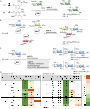
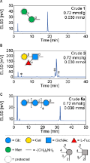
- productivity of AGA. Results and Discussion We selected three glycan sequences as models to analyze the effect of different parameters on the AGA outcome. Each sequence was prepared on four batches of Merrifield resin functionalized with two photolabile linkers (L1 [22] vs L2 [3]), at two linker loadings (low

Light-responsive rotaxane-based materials: inducing motion in the solid state
Beilstein J. Org. Chem. 2023, 19, 873–880, doi:10.3762/bjoc.19.64
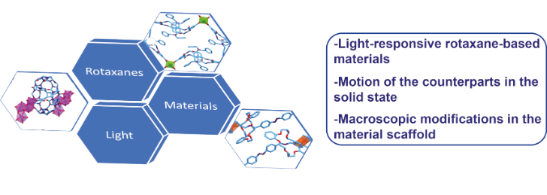
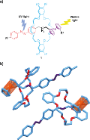
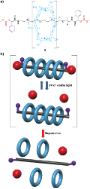
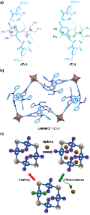
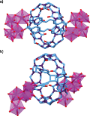
- struts and the photoresponsive linkers. The use of ditopic interlocked building blocks, such as that employed to form mainly a cyclic hetero[4]pseudorotaxane from a self-complementary [2]rotaxane [73], is also envisioned as a strategy that will be employed in the future to dynamically change the

Construction of hexabenzocoronene-based chiral nanographenes
Beilstein J. Org. Chem. 2023, 19, 736–751, doi:10.3762/bjoc.19.54
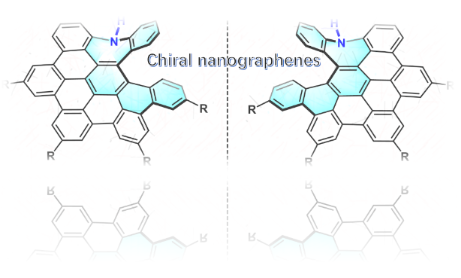
- this [7]helicene family by introducing different linkers such as nitrogen, sulfur, sulfone, ketone, methylene, and derivatives of ketone [44]. Due to the varied nature of the different linkers, the photophysical and semiconductor properties can be effectively tuned. Feng and co-workers reported a
- reported a new family of chiral NGs, which constituted by two orthogonal dibenzo[fg,ij]phenanthro-[9,10,1,2,3-pqrst]pentaphene (DBPP) units covalently connected through tetrafluorophenylene (61) [49] or octafluoro-9,10-anthracenylene (65) [50] linkers. The synthesis started with a double Pd-catalyzed
- nanographenes 96 and 100 using helicene or oxa-helicene as the linkers, respectively [56]. The first π-extension started from the borylated penta-tert-butyl HBC 92. The chemical selective Suzuki−Miyaura cross-coupling reaction between 92 and 93 followed by Scholl oxidation produced compound 94 in an overall 50




Strategies in the synthesis of dibenzo[b,f]heteropines
Beilstein J. Org. Chem. 2023, 19, 700–718, doi:10.3762/bjoc.19.51
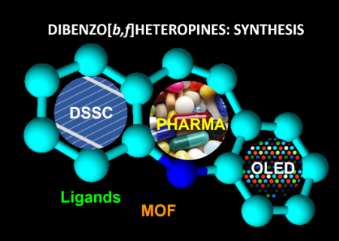
- ) [77][78]. The allyl moiety in 144 allows for facile further functionalization. Amidation of the dihydrodibenzo[b,f]azepine (2a) derivatives with acyl halides 145 allowed for the introduction of variable length amide linkers by Kastrinsky et al. [3] (Scheme 33B). An industrial synthesis of opipramol (5


Synthesis, structure, and properties of switchable cross-conjugated 1,4-diaryl-1,3-butadiynes based on 1,8-bis(dimethylamino)naphthalene
Beilstein J. Org. Chem. 2023, 19, 674–686, doi:10.3762/bjoc.19.49
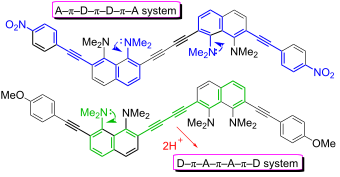
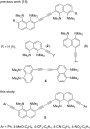
- , including naphthalene cores, butadiyne and acetylene linkers. The main structural parameters of diynes 5 that characterize the degree of this distortion are presented in Table 2, where ϕ1 is the angle between the planes of the benzene ring and the neighboring naphthalene system, ϕ2 is the angle between the
- characterized by the least distortion of the DMAN fragments in the series (twisting Θ = 9.45 and 12.83°, torsions φA = 20.9° and φB = 8.4°, bond angle deviations in both butadiyne and acetylene linkers do not exceed 6°). In the crystal packing of 5d (see Supporting Information File 1, Figures S64 and S65), the



CuAAC-inspired synthesis of 1,2,3-triazole-bridged porphyrin conjugates: an overview
Beilstein J. Org. Chem. 2023, 19, 349–379, doi:10.3762/bjoc.19.29
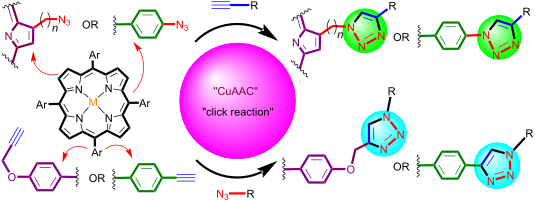
- -triazole-ruthenium(II) conjugates 112a,b and 116a,b in 18–20% yield. Their photophysical and electrochemical studies revealed that the orbital energies depend on the ligands/linker, connecting pattern of linkers, and the presence of Zn metal ions in the porphyrin core. Ligand exchange studies also
- 126, it was used to form water-soluble porphyrin nanospheres by self-inclusion complex formation in water. Tritriazole-bridged porphyrin system This section contains the synthesis of porphyrin conjugates having three 1,2,3-triazole groups as linkers. In 2012, Beletskaya and co-workers [55] described
- % yield using Cu(MeCN)4PF6 and triethylamine in anhydrous DMF. This ‘capped’ porphyrin was designed so that the rigid triazole linkers prevent the capping group from collapsing onto the porphyrin. Gilday et al. [60] also synthesized porphyrin 142 and studied its anion-binding properties and found that it




A study of the DIBAL-promoted selective debenzylation of α-cyclodextrin protected with two different benzyl groups
Beilstein J. Org. Chem. 2022, 18, 1553–1559, doi:10.3762/bjoc.18.165
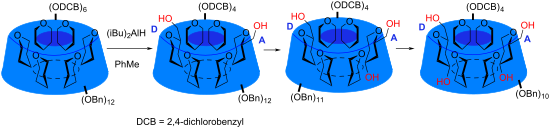
- linkers, lids or catalytic groups can be installed which is no simple task due to the many similar functionalities in 1 [5][6][7]. A very useful way to access the hydroxy groups in a selective manner is the perbenzylation of 1 and the subsequent selective debenzylation of 2 using DIBAL [8][9][10]. This


An alternative C–P cross-coupling route for the synthesis of novel V-shaped aryldiphosphonic acids
Beilstein J. Org. Chem. 2022, 18, 1518–1523, doi:10.3762/bjoc.18.160
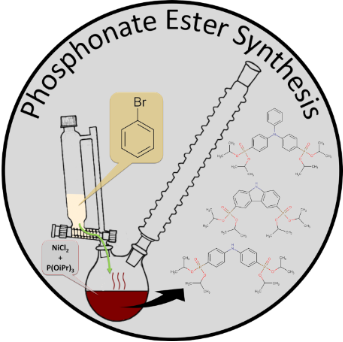
- Abstract The synthesis of phosphonate esters is a topic of interest for various fields, including the preparation of phosphonic acids to be employed as organic linkers for the construction of metal phosphonate materials. We report an alternative method that requires no solvent and involves a different
- . Phosphonates can also be employed as organic linkers in combination with metal ions to afford coordination polymers and metal-organic frameworks (MOFs), or more aptly, metal phosphonate frameworks [19][20]. One of the main challenges in the synthesis of metal phosphonates is that the linkers are rarely
- organic linkers for the synthesis of open framework metal phosphonate materials. The proposed protocol does not require a solvent, while featuring reaction times and yields comparable, if not better, to those of most procedures commonly employed in the literature. Results and Discussion The goal of this


Naphthalimide-phenothiazine dyads: effect of conformational flexibility and matching of the energy of the charge-transfer state and the localized triplet excited state on the thermally activated delayed fluorescence
Beilstein J. Org. Chem. 2022, 18, 1435–1453, doi:10.3762/bjoc.18.149
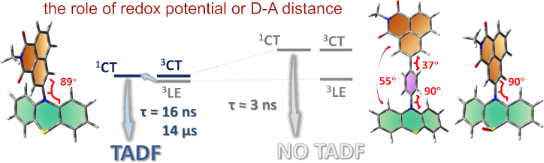
- above, various approaches (different connection, linkers, oxidation of the PTZ, and addition of methyl groups) have been used to tune the relative energies of the key states and the geometry. Scheme 1 summarizes the synthetic routes used to obtain the various compounds and shows the molecular structures
Mechanochemical bottom-up synthesis of phosphorus-linked, heptazine-based carbon nitrides using sodium phosphide
Beilstein J. Org. Chem. 2022, 18, 1203–1209, doi:10.3762/bjoc.18.125
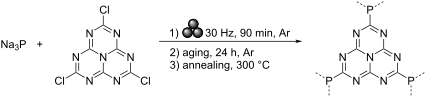
- constitutes the building block of g-CN, as opposed to in a linking position. Computational studies by Hartley and Martsinovich have investigated the influence of various linkers, including phosphorus atoms, on both the structure and optical behavior of heptazine-based graphitic carbon nitrides [3]. Yet
- , examples of carbon nitride materials linked together via phosphorus atoms are limited, likely due to challenges in controlling the insertion of phosphorus atoms as linkers under high energy conditions. Mechanochemistry [9][10][11][12] has proven to be effective for the synthesis of a variety of polymers
- establish phosphorus atoms are linkers between heptazine units, X-ray photoelectron spectroscopy (XPS) was used to probe the surface. In g-h-PCN, XPS scans focused on carbon 1s showed three major peaks at 284.7, 286.4, and 288.6 eV, corresponding to C=N, C–OH and C=O signals, respectively (Figure 2a), as


Post-synthesis from Lewis acid–base interaction: an alternative way to generate light and harvest triplet excitons
Beilstein J. Org. Chem. 2022, 18, 825–836, doi:10.3762/bjoc.18.83
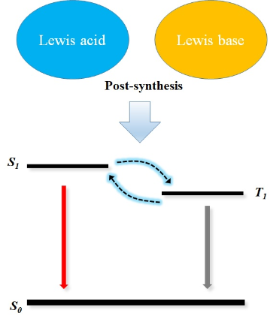
- highly depends on the molecular design and structures, including linkers, donor and acceptor units, which requires complex and time-consuming molecular synthesis and optimization [21][22][23]. In contrast, the introduction of specific Lewis acid–base pairs in existing molecules can be utilized to achieve