


Search results
Search for "oxa-Michael" in Full Text gives 31 result(s) in Beilstein Journal of Organic Chemistry.
Preparation of conjugated dienoates with Bestmann ylide: Towards the synthesis of zampanolide and dactylolide using a facile linchpin approach
Beilstein J. Org. Chem. 2015, 11, 1815–1822, doi:10.3762/bjoc.11.197

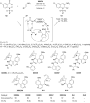
- aldehyde fragment 6 by asymmetric alkynylation, and form the pyran using an oxa-Michael addition, in a manner reminiscent of that employed by Uenishi and co-workers [34]. Finally, macrocyclisation will be achieved through the well-established strategy of ring-closing metathesis at C8–C9. Results and


Diastereoselective and enantioselective conjugate addition reactions utilizing α,β-unsaturated amides and lactams
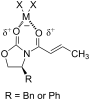
Beilstein J. Org. Chem. 2015, 11, 530–562, doi:10.3762/bjoc.11.60




Cyclization–endoperoxidation cascade reactions of dienes mediated by a pyrylium photoredox catalyst
Beilstein J. Org. Chem. 2014, 10, 1272–1281, doi:10.3762/bjoc.10.128
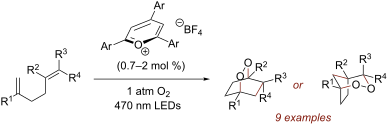
- hydroperoxides with pendant alkenes or alkynes have been developed. Selected examples include Pd(II)-catalyzed hydroalkoxylation reactions of unsaturated hydroperoxides [9], Au(I)-catalyzed endoperoxidation of alkynes [10] and Brønsted acid-catalyzed enantioselective acetalization/oxa-Michael addition cascade


4-Hydroxy-6-alkyl-2-pyrones as nucleophilic coupling partners in Mitsunobu reactions and oxa-Michael additions
Beilstein J. Org. Chem. 2014, 10, 1159–1165, doi:10.3762/bjoc.10.116

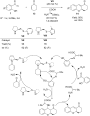
- using them as nucleophilic partners in oxa-Michael additions and the Mitsunobu reaction. The reactions proceed in moderate to excellent yields on a range of substrates containing useful functionality. The reactions serve as practical and valuable synthetic methods to construct complex 2-pyronyl ethers
- , which are found embedded in a number of natural products. Keywords: heterocycles; Mitsunobu reaction; oxa-Michael addition; 2-pyrone; vinyl ethers; Introduction The 2-pyrone motif is a prevalent structural feature of many complex natural products and biologically active compounds [1][2]. Various
- part of our extensive studies on reactions involving 2-pyrone derivatives, we report herein a significant expansion of the Mitsunobu protocol to a variety of different coupling partners, along with an alternative route to the formation of 2-pyronyl enol ethers using an oxa-Michael addition to


Bioinspired total synthesis of katsumadain A by organocatalytic enantioselective 1,4-conjugate addition
Beilstein J. Org. Chem. 2013, 9, 1601–1606, doi:10.3762/bjoc.9.182
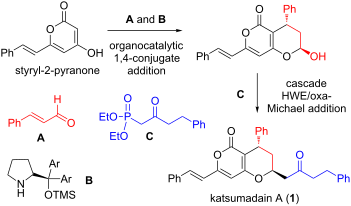
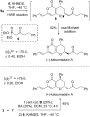
- neuraminidase (NA) inhibitor, was synthesized by using a bioinspired, organocatalytic enantioselective 1,4-conjugate addition of styryl-2-pyranone with cinnamaldehyde, followed by a tandem Horner–Wadsworth–Emmons/oxa Michael addition. Keywords: bioinspired synthesis; catalysis; katsumadain A; natural product
- the way for their application in further biomedical investigations. Biosynthetically, katsumadain A is assumed to be derived from styryl-2-pyranone 3 and alnustone (4) [9] through a 1,6-conjugate addition/oxa-Michael addition cascade reaction (path a, Scheme 1). Indeed, both 3 and 4 are known natural
- strategy was designed as a fallback, in which katsumadain A could be accessed from the lactol 5a and phosphonate 6 via a tandem Horner–Wadsworth–Emmons (HWE)/oxa-Michael addition reaction [16]. In turn, 5a could be derived from 3 and cinnamaldehyde (7) by an organocatalytic enantioselective 1,4-conjugate


Organocatalytic tandem Michael addition reactions: A powerful access to the enantioselective synthesis of functionalized chromenes, thiochromenes and 1,2-dihydroquinolines
Beilstein J. Org. Chem. 2012, 8, 1668–1694, doi:10.3762/bjoc.8.191

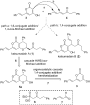
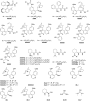
- these one-pot enantioselective syntheses. Wherever possible, working mechanistic models are presented. This review work is systematized under the headings (1) Organocatalytic oxa-Michael reactions to access functionalized chromenes; (2) Organocatalytic thio-Michael reactions to access functionalized
- organocatalysts with their percentage of conversion (% yield) and enantiomeric excess (ee) is presented in tabular form, and the best catalyst is used for the given individual scheme. Review 1 Organocatalytic oxa-Michael additions to access functionalized chromenes 1.1. Reactions of 2-hydroxybenzaldehydes with
- acyclic/cyclic α,β-unsaturated compounds The racemic synthesis of 2H-chromene was reported by Bräse et al. in 2005 [39][40]. A strategy based on the organocatalytic enantioselective synthesis of chiral 2H-chromenes through tandem-oxa-Michael–aldol sequence was first reported by Arvidsson et al. [41] in






Other Beilstein-Institut Open Science Activities



