


Search results
Search for "photochemical reaction" in Full Text gives 52 result(s) in Beilstein Journal of Organic Chemistry.
Photochemical generation of the 2,2,6,6-tetramethylpiperidine-1-oxyl (TEMPO) radical from caged nitroxides by near-infrared two-photon irradiation and its cytocidal effect on lung cancer cells
Beilstein J. Org. Chem. 2019, 15, 863–873, doi:10.3762/bjoc.15.84
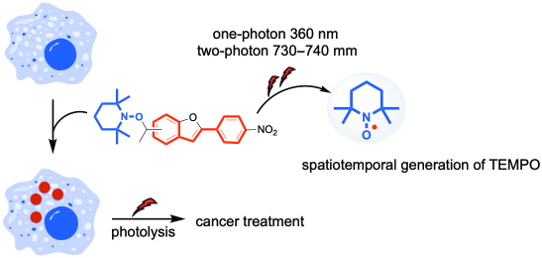
- ultraviolet (355 nm) irradiation (Scheme 1) [33]. De-aerated conditions are necessary for the triplet-sensitized generation of TEMPO due to the triplet quenching ability of O2. The polymerization reactions were initiated via photochemical reaction [34][35][36]. For physiological studies, however, the






Cobalt- and rhodium-catalyzed carboxylation using carbon dioxide as the C1 source
Beilstein J. Org. Chem. 2018, 14, 2435–2460, doi:10.3762/bjoc.14.221
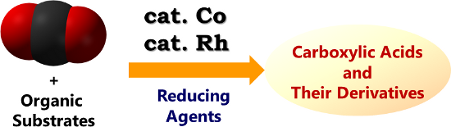
- importance, since the highly reactive intermediate can be generated by photochemical reaction such as electron transfer and energy transfer [43][44][45]. Among them, light-energy-driven CO2 fixation reactions via C–C bond formation are promising in terms of mimicking photosynthesis. In 2015, Murakami et al





Novel photochemical reactions of carbocyclic diazodiketones without elimination of nitrogen – a suitable way to N-hydrazonation of C–H-bonds
Beilstein J. Org. Chem. 2018, 14, 2250–2258, doi:10.3762/bjoc.14.200

- irradiation conditions one can direct the photochemical reaction of diazo compounds at the alternative way, which provides the retention of ‘dinitrogen’ in the structure of molecule formed. It is reasonable that a question arises on the scope and limitations of this new light-induced reaction of diazo
- yields of hydrazones 2, an effort was undertaken to optimize the photochemical reaction conditions by varying the wavelength of irradiation, sensitizer, as well as the ratio of sensitizer/diazodiketone 1b (Table 1, entries 4–9). As can be seen from the data in Table 1 the most effective sensitizer for


[3 + 2]-Cycloaddition reaction of sydnones with alkynes
Beilstein J. Org. Chem. 2018, 14, 1317–1348, doi:10.3762/bjoc.14.113
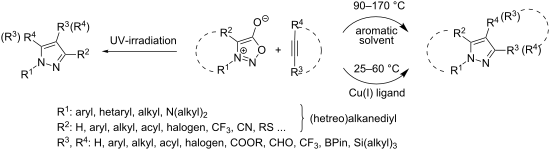
- its slow decomposition to pyrazole and CO2. Such ambiguous substitution effects are therefore worthy of further investigations. Photochemical reaction of sydnones with symmetrical alkynes In 1966 Krauch et al. [59] dealt with irradiation (using a high-pressure Hg lamp) of benzene or dioxane solutions
- their corresponding trimethylsilyl triflates was recently used by Garg et al. [115] and Bräse et al. [116] in expanding the utility of oxygen- or nitrogen-containing strained heterocycloalkynes (Scheme 15) but the regioselectivity was poor in most cases. Photochemical reaction of sydnones with non
- -symmetrical alkynes As mentioned in the previous section, Gotthardt and Reiter [63][64] studied the photochemical reaction of sydnones with terminal alkynes. They have also studied the reaction with phenylacetylene, methyl propiolate and ethyl phenylpropiolate in a batch reactor under irradiation with 300 nm


One-pot preparation of 4-aryl-3-bromocoumarins from 4-aryl-2-propynoic acids with diaryliodonium salts, TBAB, and Na2S2O8
Beilstein J. Org. Chem. 2018, 14, 345–353, doi:10.3762/bjoc.14.22
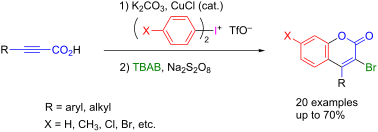
- acid-catalyzed reaction of phenols and propynoic acids [22] and the (−)-riboflavin-catalyzed photochemical reaction of cinnamic acids [23] were reported recently. Moreover, the use of radical cyclization for the construction of the coumarin skeleton has become widespread. Examples include the radical




Chemical systems, chemical contiguity and the emergence of life
Beilstein J. Org. Chem. 2017, 13, 1551–1563, doi:10.3762/bjoc.13.155
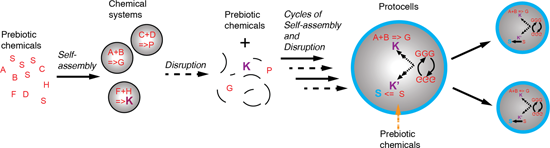
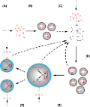
- ]. Such vesicles with associated ribozymes could eventually prove to be novel functional chemical systems. The production of fatty acids from non-amphiphilic picolylesters performed using a photochemical reaction involving a ruthenium tris(bipyridine), functioning as photosensitizer and redox catalyst


Automating multistep flow synthesis: approach and challenges in integrating chemistry, machines and logic
Beilstein J. Org. Chem. 2017, 13, 960–987, doi:10.3762/bjoc.13.97
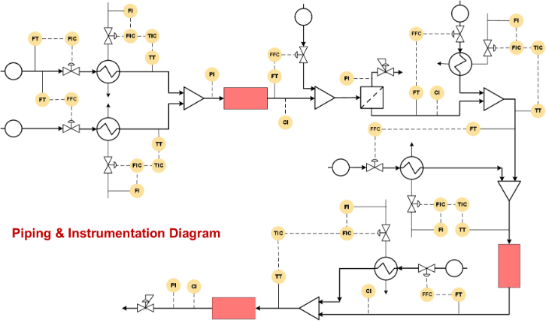
- , electrochemical reaction, photochemical reaction, microwave, etc. On the other hand, it is also possible and in many times necessary to classify the reactions on the basis of the number of phases (gas G, liquid L, and solid S) involved in the reaction (viz. single-phase or homogeneous reaction and multiphase




Efficient syntheses of climate relevant isoprene nitrates and (1R,5S)-(−)-myrtenol nitrate
Beilstein J. Org. Chem. 2016, 12, 1081–1095, doi:10.3762/bjoc.12.103

- has led to uncertainty in quantifying the true effect of isoprene on the NOx cycle and subsequent O3 enhancement. Shepson et al. sought to deconvolute this process replicating the atmospheric synthesis of IPN using a photochemical reaction chamber to determine IPN yield from isoprene photooxidation
- nitrates underwent rapid pseudohydrolysis; a process that generates corrosive nitric acid and non-volatile SOA [13]. Similar to the isoprene studies by Pye et al. the role of organic nitrates derived from terpenes is starting to gain traction. Rindelaub et al. undertook a photochemical reaction chamber


Synthesis of 2,1-benzisoxazole-3(1H)-ones by base-mediated photochemical N–O bond-forming cyclization of 2-azidobenzoic acids
Beilstein J. Org. Chem. 2016, 12, 874–881, doi:10.3762/bjoc.12.86

- a molecular form of 1 produced azepine 3 (path II) by irradiation. The detailed mechanism of the formation of 3 is shown in Scheme 2. Thus, in the photochemical reaction both ionic and molecular forms of 1 can be used. To increase the yield of 2, it is necessary to shift the equilibrium towards the


The chemical behavior of terminally tert-butylated polyolefins
Beilstein J. Org. Chem. 2015, 11, 1246–1258, doi:10.3762/bjoc.11.139
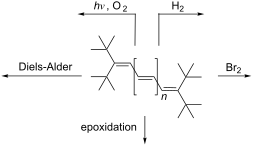
- -orbitals of the double bonds are hence prevented from overlap [1][2]. So far we have only been successful in observing a single photochemical reaction between 19 and an “external” reagent: the photoaddition of oxygen to its unhindered, inner diene unit. After 20 h irradiation with a daylight lamp in


Synthesis of nanodiamond derivatives carrying amino functions and quantification by a modified Kaiser test
Beilstein J. Org. Chem. 2014, 10, 2729–2737, doi:10.3762/bjoc.10.288
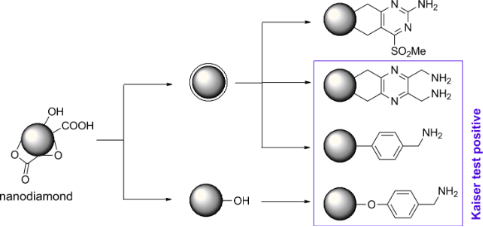
- and dispersion behaviour due to their protic character and the possibility to protonate the nitrogen. In the case of diamond the direct amination of the surface has rarely been reported. Sotowa et al. used the photochemical reaction of ammonia with chlorinated diamond [3]. However, the termination


Visible light photoredox-catalyzed deoxygenation of alcohols
Beilstein J. Org. Chem. 2014, 10, 2157–2165, doi:10.3762/bjoc.10.223
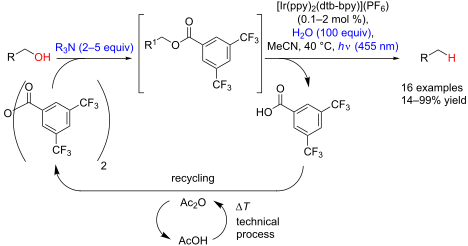
- substitution pattern of benzoates we intended to shift the electrochemical reduction potentials of the substances into a region that could be accessed by common visible light photocatalysts. The substituents should be as inert as possible in order not to interfere with the photochemical reaction itself


On the mechanism of photocatalytic reactions with eosin Y
Beilstein J. Org. Chem. 2014, 10, 981–989, doi:10.3762/bjoc.10.97
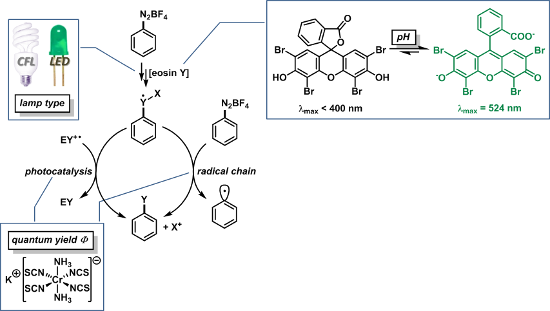
- photochemical reaction in the studied system: Φ = (rate of substrate conversion)/(absorbed photon flux) Theoretically, if a simple photocatalytic process is considered, the quantum yield would be in the range 0 < Φ ≤ 1. It approaches unity as the efficiency of the photocatalytic step increases. In reality


Tailoring of organic dyes with oxidoreductive compounds to obtain photocyclic radical generator systems exhibiting photocatalytic behavior
Beilstein J. Org. Chem. 2014, 10, 936–947, doi:10.3762/bjoc.10.92
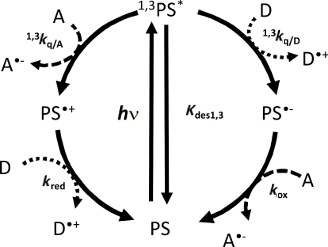
- responsible for the higher efficiency of PCIS [9][31][53][54][55] in photopolymerization reactions. Therefore, as the dye is regenerated during the photochemical reaction, a catalytic behavior appears, leading to the so-called photocatalytic system. In this paper an experimental and mechanistic study of Type


![[Graphic 1]](/bjoc/content/inline/1860-5397-10-92-i10.png?max-width=637&scale=1.18182) ), b) excited state...
), b) excited state...


Direct and indirect single electron transfer (SET)-photochemical approaches for the preparation of novel phthalimide and naphthalimide-based lariat-type crown ethers
Beilstein J. Org. Chem. 2014, 10, 514–527, doi:10.3762/bjoc.10.47

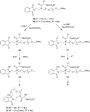
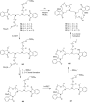
- ethers 34 and 35 or 36. A similar factor operates to control the regioselectivity of the photochemical reaction of the bis-acceptor tethered α-silyl ether 38 (Scheme 9) [65]. In this case, photoirradiation of an acidic methanol solution results in exclusive formation of 39 via a mechanistic route
- . Photochemical reaction pathways of N-alkylphthalimides. Photoreactions of N-methylnaphthalimides 8 and 12 with allylsilane 9. Regioselective generation of carbon-centered free radicals through sequential SET-desilylation processes. Mechanistic pathway of photochemical reactions of α-silyl n-electron donor




A combined continuous microflow photochemistry and asymmetric organocatalysis approach for the enantioselective synthesis of tetrahydroquinolines
Beilstein J. Org. Chem. 2013, 9, 2457–2462, doi:10.3762/bjoc.9.284
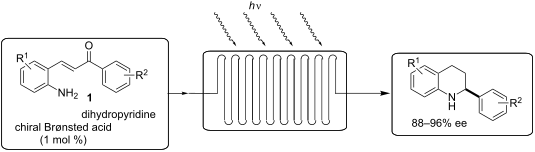
- uniform irradiation through the entire reactor and the complete reaction medium, in comparison with reactions performed in conventional batch systems. Here we report the development of continuous-flow photochemical reaction in combination with asymmetric Brønsted acid catalysis for the synthesis of


Thermochemistry and photochemistry of spiroketals derived from indan-2-one: Stepwise processes versus coarctate fragmentations
Beilstein J. Org. Chem. 2013, 9, 1668–1676, doi:10.3762/bjoc.9.191
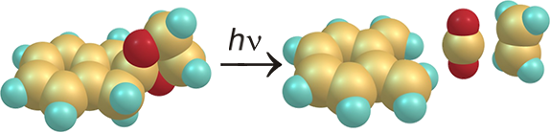
- by the spiro connection of the three- and the five-membered rings. Following these rules, a Möbius type coarctate fragmentation with two five-ring terminators (10 electrons) should proceed as a photochemical reaction, and a corresponding fragmentation with a seven- and a five-ring (12 electrons


Spin state switching in iron coordination compounds
Beilstein J. Org. Chem. 2013, 9, 342–391, doi:10.3762/bjoc.9.39
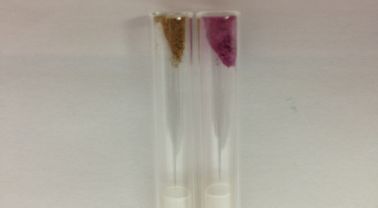
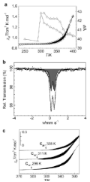
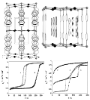
- primary step of LD-LISC is a photochemical reaction on the ligand molecules, for instance a photo-induced cis/trans-isomerization on 4-styrylpyridine (stpy) as a ligand, e.g., in [Fe(II)(stpy)4(NCS)2], which modulates the ligand field strength at the metal center and eventually leads to spin state


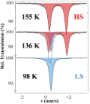


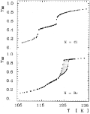

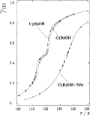


![[Graphic 1]](/bjoc/content/inline/1860-5397-9-39-i3.png?max-width=637&scale=1.18182) ) modes versus the anion volu...
) modes versus the anion volu...






Flow photochemistry: Old light through new windows
Beilstein J. Org. Chem. 2012, 8, 2025–2052, doi:10.3762/bjoc.8.229
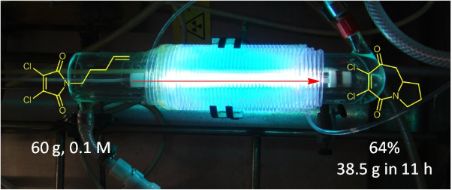
- the glassware to achieve a very effective level of shielding. UV goggles/visor should be worn if unshielded apparatus is operated, and especially during sampling of the reaction mixture. Once all this is in place the lamp is then switched on and the progress of the photochemical reaction can be


Control over molecular motion using the cis–trans photoisomerization of the azo group
Beilstein J. Org. Chem. 2012, 8, 1071–1090, doi:10.3762/bjoc.8.119
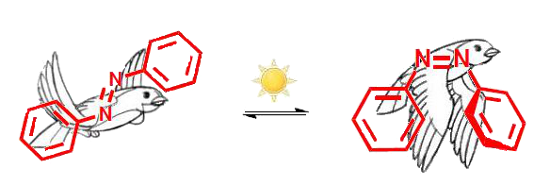
- ,cis) to (trans,cis) is forbidden. The half-life of (trans,cis)-isomer is only 28 s at 23 °C. In these systems, in which the photochemical reaction intermediate has a short half-life and the final (cis,cis)-product is more stable than the intermediate, the photochemical yield is highly dependent on the


Intraannular photoreactions in pseudo-geminally substituted [2.2]paracyclophanes
Beilstein J. Org. Chem. 2011, 7, 658–667, doi:10.3762/bjoc.7.78

- experimental elucidation of solid-state photochemistry. This showed that the supramolecular arrangement of molecules in the crystal plays a more important role for reaction control than the simple alignment of double bonds. Long-range molecular movements within crystals upon photochemical reaction and even
- starting materials of a photochemical reaction are used and the supramolecular arrangement [10] may control the regio- and stereoselectivity of the photo-process. The enantioselective photochemical conversion of chiral crystals into optically active products has also been described [11]. Some approaches
- generally preferred reaction mode for derivatives of type 3 (Scheme 2). The production of 24, however, proves that the stereochemical information contained in the first double bond (E or Z) can be lost in the course of the photochemical reaction. Whereas this Z→E-isomerization process must involve a


Photoinduced homolytic C–H activation in N-(4-homoadamantyl)phthalimide
Beilstein J. Org. Chem. 2011, 7, 270–277, doi:10.3762/bjoc.7.36
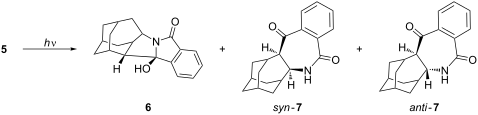
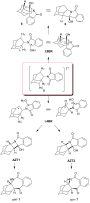
- % yield. Products 7 decomposed on prolonged irradiation. The photochemical reaction was more efficient in solvent system containing acetone rather than CH3CN. After 18 h irradiation in acetone–H2O, complete conversion of 5 was achieved, whereas under the same photolysis conditions in CH3CN–H2O, 72% of
- -configuration. Conclusion N-(4-homoadamantyl)phthalimide (5) was synthesized and its photochemistry investigated. On excitation and population of the triplet state, 5 undergoes intramolecular homolytic C–H activation and gives products 6 and 7. The major product of the photochemical reaction is exo-alcohol 6


Formation of macrocyclic lactones in the Paternò–Büchi dimerization reaction
Beilstein J. Org. Chem. 2011, 7, 265–269, doi:10.3762/bjoc.7.35
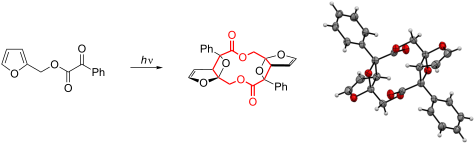
- 10.3762/bjoc.7.35 Abstract Furan-2-ylmethyl 2-oxoacetates 1a,b, in which the furan ring and the carbonyl moiety were embedded intramolecularly, were synthesized from commercially available furan-2-ylmethanol and their photochemical reaction (hν > 290 nm) was investigated. Twelve-membered macrocyclic
- : furans; macrocyclic lactone; oxetane; Paternò–Büchi reaction; photochemical reaction; Findings Photochemical [2 + 2] cycloaddition reaction of alkenes with carbonyls, so-called Paternò–Büchi reaction [1][2][3][4][5][6][7][8][9][10][11][12][13], is one of the most efficient methods for preparing
- , although intramolecular cyclization products are known to be products in the photoreaction of 3-substituted furan derivatives [11][21]. Furan-2-carbaldehyde (3) was the only assignable product during the photochemical reaction, which was monitored by 1H NMR spectroscopy (Figure 2). The intermolecular


Synthesis of cationic dibenzosemibullvalene-based phase-transfer catalysts by di-π-methane rearrangements of pyrrolinium-annelated dibenzobarrelene derivatives
Beilstein J. Org. Chem. 2011, 7, 119–126, doi:10.3762/bjoc.7.17

- heterocycles; however, for clarity and to keep the focus on the photochemical reaction we chose to name these compounds dibenzobarrelene and dibenzosemibullvalene derivatives throughout the text. Results and Discussion The cationic dibenzobarrelene derivatives 2a–g were synthesized by the base-catalyzed


Photocycloadditions and photorearrangements
Beilstein J. Org. Chem. 2011, 7, 111–112, doi:10.3762/bjoc.7.15

- that use electronic excitation are photocycloadditions and photochemical rearrangements. These reactions have been intensively investigated in recent decades in terms of regio-, stereo-, spin- and (electronic) configurational selectivities. Prior to every photochemical reaction, an electronically



