Search results
Search for "reductive cleavage" in Full Text gives 62 result(s) in Beilstein Journal of Organic Chemistry.
Synthesis of new fluorescent molecules having an aggregation-induced emission property derived from 4-fluoroisoxazoles
Beilstein J. Org. Chem. 2020, 16, 1411–1417, doi:10.3762/bjoc.16.117
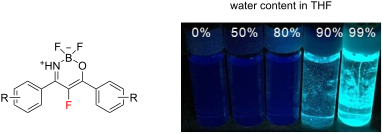
- diketone (Scheme 5). As an alternative method to synthesize F-BKIs 9, we turned our attention to the ring-opening reaction of isoxazoles. The reductive cleavage of the N–O bond in isoxazoles can be achieved by transition metals or their complexes to give the corresponding enaminoketones [35][37
- in the aggregated state and exhibited a redshift in the emission intensity. We also achieved the first synthesis of α-fluorinated boron ketoiminates (F-BKIs) by the reductive cleavage of the N–O bond in 4-fluorinated isoxazoles and demonstrated that F-BKIs exhibited AIE property similarly to their


Synthesis of 3-substituted isoxazolidin-4-ols using hydroboration–oxidation reactions of 4,5-unsubstituted 2,3-dihydroisoxazoles
Beilstein J. Org. Chem. 2020, 16, 1313–1319, doi:10.3762/bjoc.16.112
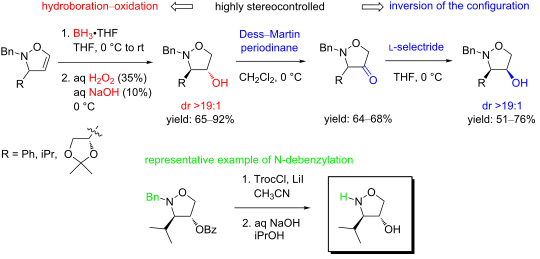
- readily obtained through the reductive cleavage of benzoylated isoxazolidines, employing the Lewis acid-catalyzed SN reaction with triethylsilane as the hydride source (Scheme 1). For this reason, the benzoates 6a and 6b were readily prepared from the corresponding 2,3-dihydroisoxazoles 5a and 5b
- showed the applicability of the reductive cleavage of anomeric isoxazolidinyl carboxylates in the synthesis of the respective 5-unsubstituted 4-hydroxyisoxazolidines, this pioneering approach mainly suffered from a large number of synthetic steps starting from 2,3-dihydroisoxazoles, leading to the target
- 8b resulted only in a reductive cleavage of the N–O bond. A successful debenzylation was achieved in a two-step procedure using 2,2,2-trichloroethyl chloroformate (TrocCl). However, the protection of the hydroxy group was required first (for the reaction of 8b with benzoyl chloride, see Supporting


Photocatalysis with organic dyes: facile access to reactive intermediates for synthesis
Beilstein J. Org. Chem. 2020, 16, 1163–1187, doi:10.3762/bjoc.16.103
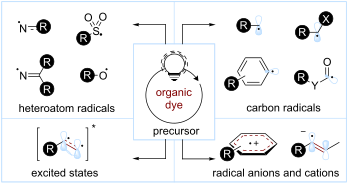
- , rendering the development of efficient methodologies for their formation of paramount importance. Building on the seminal work of Zard [124], NCRs have emerged as key reactive intermediates. The reductive cleavage of weak N–X (X = halogen, S, O) bonds using a stoichiometric initiator or high temperatures
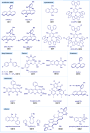
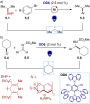
- wide redox window (E = 3.22 eV, +1.65 V/−1.77 V), can be exploited as photocatalysts for various transformations, including the reductive dehalogenation of benzylic halides (Scheme 7) [52]. In this protocol, the excited state photocatalyst OD18 can generate C(sp3) radicals through the reductive
- cleavage of various benzyl halides 7.1 (I, Br, Cl). The radical is then intercepted by an H atom donor (Hantzsch ester), which delivers the corresponding toluene derivative 7.2. Other organic dyes can promote the reductive fragmentation of alkyl halides. For instance, König and Zeitler demonstrated that a





Visible-light-induced addition of carboxymethanide to styrene from monochloroacetic acid
Beilstein J. Org. Chem. 2020, 16, 398–408, doi:10.3762/bjoc.16.38
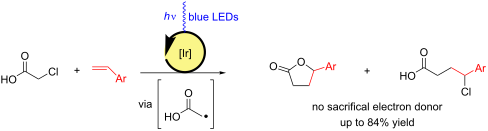
- formed. However, when using this substrate only 13% of the ATRA product were observed. Hence, there thus seems to be a positive effect of the acid on the activation of the C–Cl bond. The precise mechanism of this reductive cleavage is currently unclear. Besides the direct reduction of a carbon chlorine


The reaction of arylmethyl isocyanides and arylmethylamines with xanthate esters: a facile and unexpected synthesis of carbamothioates
Beilstein J. Org. Chem. 2020, 16, 159–167, doi:10.3762/bjoc.16.18
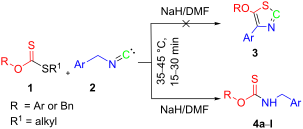
- undergone a reductive cleavage to give the corresponding benzylamines, which might have reacted with 1 to give 4. A control experiment was therefore conducted with only the isocyanide under standard reaction conditions. Only unchanged isocyanide was found under these conditions, thus ruling out this initial


N-(1-Phenylethyl)aziridine-2-carboxylate esters in the synthesis of biologically relevant compounds
Beilstein J. Org. Chem. 2019, 15, 1722–1757, doi:10.3762/bjoc.15.168

- (2S,1'S)-6 correspond to (S)- or ʟ-serinal (Figure 3) [13]. Furthermore, since the aziridine ring openings can be accomplished with other nucleophiles and the reductive cleavage is also known [14][15] the aziridines 5–8 offer a plethora of opportunities for enantioselective synthesis of structurally


Efficient resolution of racemic crown-shaped cyclotriveratrylene derivatives and isolation and characterization of the intermediate saddle isomer
Beilstein J. Org. Chem. 2019, 15, 1339–1346, doi:10.3762/bjoc.15.133
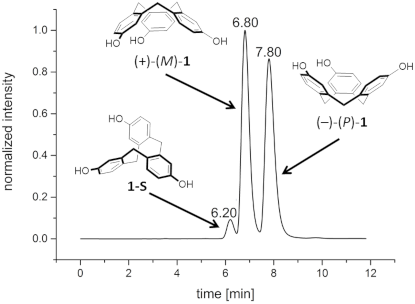
- 1984 [62]. At that time, they converted the racemic triol into diastereomeric triesters upon reaction with (R)-(+)-2-phenoxypropionic acid, separated those via column chromatography, and received the desired enantiomers upon reductive cleavage of the esters. Similar synthetic approaches through the


A chemoenzymatic synthesis of ceramide trafficking inhibitor HPA-12
Beilstein J. Org. Chem. 2019, 15, 490–496, doi:10.3762/bjoc.15.42
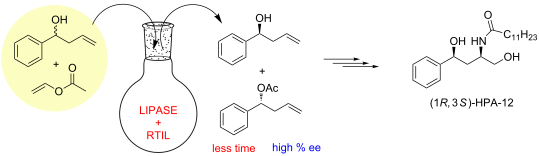
- the amine using LiAlH4 with concomitant debenzoylation, followed by the acylation of the amine with lauric acid to afford 9a, and finally, ii) reductive cleavage by hydrogenolysis using Pd–C/H2 leading to debenzylation (Scheme 3). However, during hydrogenolysis, the elimination of the -OBn group led


Volatiles from the hypoxylaceous fungi Hypoxylon griseobrunneum and Hypoxylon macrocarpum
Beilstein J. Org. Chem. 2018, 14, 2974–2990, doi:10.3762/bjoc.14.277
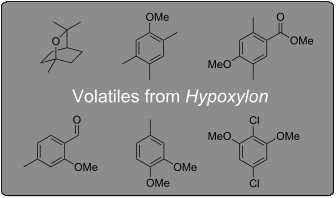
- the carboxylic acid result in 26, while reductive cleavage and methylation of the phenol give 25. The aldehyde 25 was commercially available and matched the natural product in terms of mass spectrum and retention time. Compound 25 was transformed into the corresponding methyl ester by treatment with




Synthesis of unnatural α-amino esters using ethyl nitroacetate and condensation or cycloaddition reactions
Beilstein J. Org. Chem. 2018, 14, 2846–2852, doi:10.3762/bjoc.14.263
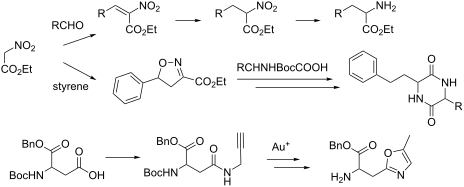
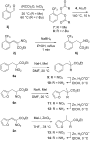
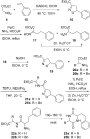
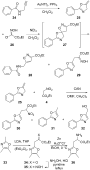
- [21] between two equivalents of ethyl nitroacetate (4) and styrene (15), gave the isoxazoline 16 in a 72% yield as a latent α-amino ester [22][23][24]. From this compound, a reductive cleavage of the isoxazoline ring was initiated using palladium over charcoal and a large excess of ammonium formate in



β-Hydroxy sulfides and their syntheses
Beilstein J. Org. Chem. 2018, 14, 1668–1692, doi:10.3762/bjoc.14.143
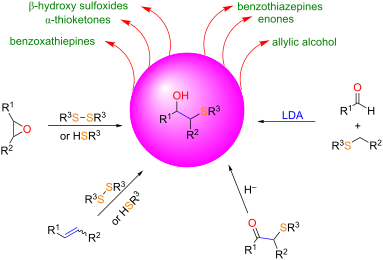
- benzyltriethylammonium tetrathiomolybdate, [C6H5CH2NEt3]2MoS4 over 4–12 hours produced the desired hydroxy sulfides in yields of 48–90% (Scheme 24). The authors proposed that the reaction proceeds via a reductive cleavage of the in situ-generated disulfide (RSSR). The resulting thiolate then undergoes thiolysis of the


Atom-economical group-transfer reactions with hypervalent iodine compounds
Beilstein J. Org. Chem. 2018, 14, 1263–1280, doi:10.3762/bjoc.14.108
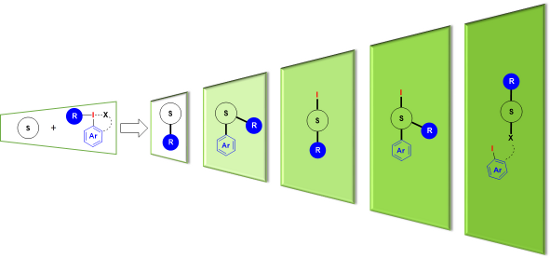
- bisoxazoline ligand, diazo compounds 42’ with various electron-withdrawing groups were efficiently oxyalkynylated affording highly enantioenriched propargyl esters 44 (Scheme 23). Subsequent reductive cleavage of the ester gave direct access to enantiopure propargyl alcohols. Besides EBX reagents






Recent advances in synthetic approaches for medicinal chemistry of C-nucleosides
Beilstein J. Org. Chem. 2018, 14, 772–785, doi:10.3762/bjoc.14.65
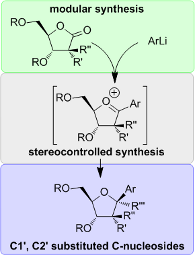
- condensation of alkyl-substituted silyl ketene acetals (32) with enantioenriched α-2,2,6,6-tetramethylpiperidinyl-β-benzyloxypropionaldehyde (33) in presence of TiCl2(OiPr)2 to give the β-hydroxyester 34 that is diastereomerically enriched [75][95]. Reductive cleavage of the 2,2,6,6-tetramethylpiperidinyl (TMP


Synthetic and semi-synthetic approaches to unprotected N-glycan oxazolines
Beilstein J. Org. Chem. 2018, 14, 416–429, doi:10.3762/bjoc.14.30
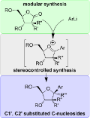
- conditions for their cleavage. Secondly some glycosyl oxazolines are also prone to reductive cleavage by catalytic hydrogenation [41], presenting a significant further limitation as to which OH-protecting groups may be employed. Most of the reports in the literature have therefore used a protecting group


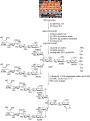

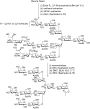
Preparation of trinucleotide phosphoramidites as synthons for the synthesis of gene libraries
Beilstein J. Org. Chem. 2018, 14, 397–406, doi:10.3762/bjoc.14.28
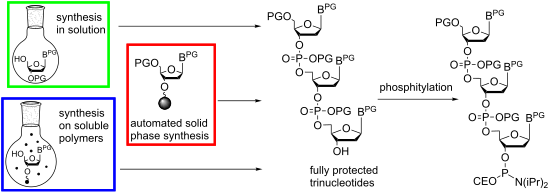
- dimer was then extended to the trimer by another cycle of detritylation, precipitation, coupling and precipitation. During reductive cleavage of the disulfide bond to release the fully protected trimer from the support, unfortunately the loss of the 5'-DMTr group was observed. To overcome this hurdle


Aminomethylation/hydrogenolysis as an alternative to direct methylation of metalated isoquinolines – a novel total synthesis of the alkaloid 7-hydroxy-6-methoxy-1-methylisoquinoline
Beilstein J. Org. Chem. 2018, 14, 130–134, doi:10.3762/bjoc.14.8
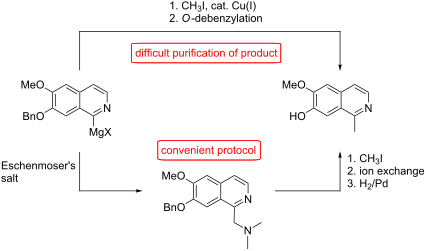
- derivative 5 in reasonable yield. Later on, hydrogenolytic cleavage of the generated benzylamine-type group at C1 should give the desired 1-methyl moiety. Related reductive cleavage reactions have been published earlier by Möhrle [20] for phenolic Mannich bases in the course of the total synthesis of the


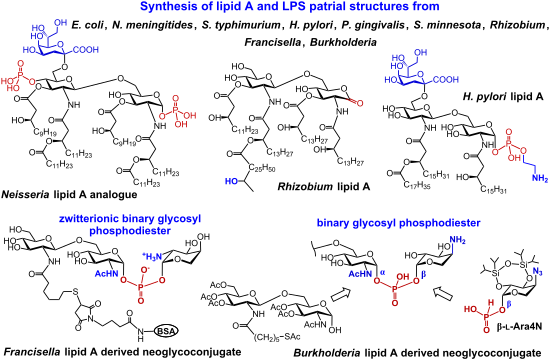
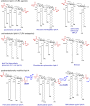
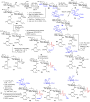
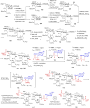
Aminosugar-based immunomodulator lipid A: synthetic approaches
Beilstein J. Org. Chem. 2018, 14, 25–53, doi:10.3762/bjoc.14.3






Phosphorus pentasulfide mediated conversion of organic thiocyanates to thiols
Beilstein J. Org. Chem. 2017, 13, 1184–1188, doi:10.3762/bjoc.13.117

- systems and by the breakdown of sulfur-containing amino acids and lignin [4][5][6][7]. In laboratory, thiols can be synthesized from alcohols [8][9], alkyl halides [10], alkenes [11] and through reductive cleavage of organic thiocyanates (or simply thiocyanates hereafter) by means of alkali metals–ammonia


Total syntheses of the archazolids: an emerging class of novel anticancer drugs
Beilstein J. Org. Chem. 2017, 13, 1085–1098, doi:10.3762/bjoc.13.108
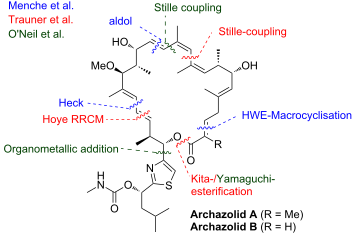
- an original sequence involving a reductive cleavage of the auxiliary. Synthesis of the southern fragment The same southern fragment 6 was independently chosen by the Menche group in their total synthesis of archazolid A and by the Trauner group in their total synthesis of archazolid B. Both groups


The reductive decyanation reaction: an overview and recent developments
Beilstein J. Org. Chem. 2017, 13, 267–284, doi:10.3762/bjoc.13.30
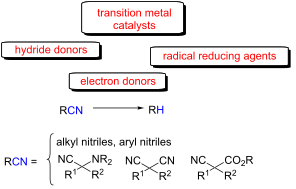
- -BuOH could act as a proton donor and so prevent the olefin isomerization. Alkali metals can also be used in suspension. As mentioned above, highly dispersed potassium over neutral alumina (K/Al2O3) in hexane is able to effect the reductive cleavage of alkylnitriles [18][34]. Zárraga et al. described an


Diastereoselective anodic hetero- and homo-coupling of menthol-, 8-methylmenthol- and 8-phenylmenthol-2-alkylmalonates
Beilstein J. Org. Chem. 2017, 13, 33–42, doi:10.3762/bjoc.13.5
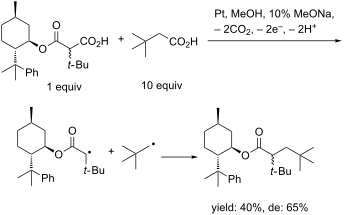
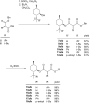
- /b to diesters 26a/b/c–29a/b/c (n.d.: not determined). Reductive cleavage of 30a–c to 8-phenylmenthol (3) and 31a–c. 13C NMR data of compounds 23, 24 and 25. Facial selectivities for 26–29. Comparison of the diastereoselectivity in hetero- and homo-coupling reactions. Supporting Information




Synthesis of a deuterated probe for the confocal Raman microscopy imaging of squalenoyl nanomedicines
Beilstein J. Org. Chem. 2016, 12, 1127–1135, doi:10.3762/bjoc.12.109

- directly the alcohol 28 in 41% yield through concomitant reduction of the intermediate allylic chloride and cleavage of the silyl protecting group. The reductive cleavage of tert-butyldiphenylsilyl ethers by LiAlH4 has been previously noticed [39]. Jones oxidation straightforwardly completed the synthesis


Towards the total synthesis of keramaphidin B
Beilstein J. Org. Chem. 2016, 12, 1096–1100, doi:10.3762/bjoc.12.104
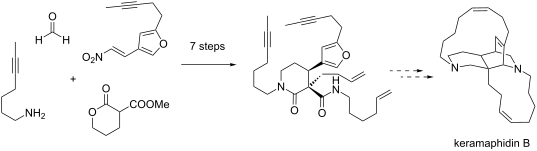
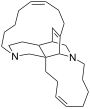
- . Having played a key role in the Michael addition reaction and the nitro-Mannich lactamisation cascade, at this stage the nitro functionality had fully served its purpose. Accordingly, traceless reductive cleavage of the nitro group [22] using tributyltin hydride and AIBN was carried out to afford



Synthesis of Xenia diterpenoids and related metabolites isolated from marine organisms
Beilstein J. Org. Chem. 2015, 11, 2521–2539, doi:10.3762/bjoc.11.273
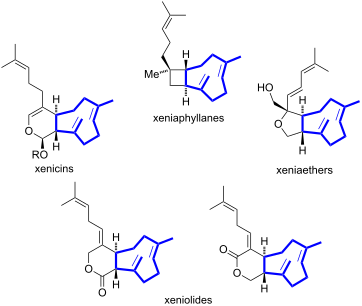
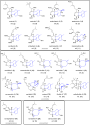
- -catalyzed and base-mediated cyclization of carbonate 71 [45]. Reductive cleavage of the sulfone using aluminium amalgam afforded a ketone, which was converted to an exocyclic double bond by treatment with Tebbe’s reagent [42]. In order to convert the methoxy acetal to the corresponding lactone, without




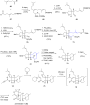


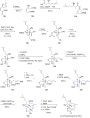

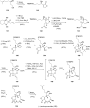
Preparation of a disulfide-linked precipitative soluble support for solution-phase synthesis of trimeric oligodeoxyribonucleotide 3´-(2-chlorophenylphosphate) building blocks
Beilstein J. Org. Chem. 2015, 11, 1553–1560, doi:10.3762/bjoc.11.171
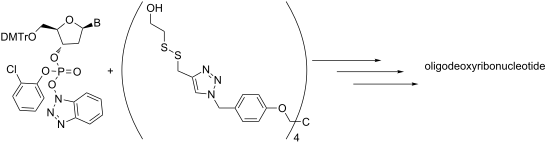
- -protected oligodeoxyribonucleotide trimer 3’-pTpdCBzpdGibu-5’ as its 3’-(2-chlorophenyl phosphate) was achieved by reductive cleavage of the disulfide bond. Keywords: disulfide linker; oligodeoxyribonucleotides; phosphotriester chemistry; precipitation; soluble support; Introduction Synthetic nucleic
- introduced in a 5´-O-(4-methoxytrityl) protected form to prevent detritylation during the reductive cleavage of the trimer from the support. Experimental General: NMR spectra were recorded on a Bruker Avance spectrometer (500 or 400 MHz) at 25 °C. Chemical shifts are given in ppm and referenced relative to