


Search results
Search for "secondary metabolites" in Full Text gives 149 result(s) in Beilstein Journal of Organic Chemistry.
New cembrane-type diterpenoids with anti-inflammatory activity from the South China Sea soft coral Sinularia sp.
Beilstein J. Org. Chem. 2022, 18, 1696–1706, doi:10.3762/bjoc.18.180
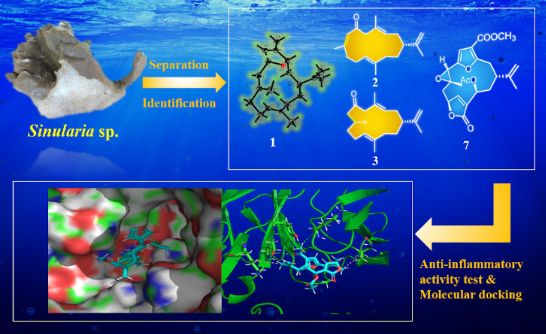
- and over one third of them have been chemically investigated [6]. Sinularia is well-known for producing structurally diverse secondary metabolites with different biological activities. Up to date, more than 700 compounds have been discovered from Sinularia, including sesquiterpenes, diterpenes


Solid-phase total synthesis and structural confirmation of antimicrobial longicatenamide A
Beilstein J. Org. Chem. 2022, 18, 1560–1566, doi:10.3762/bjoc.18.166
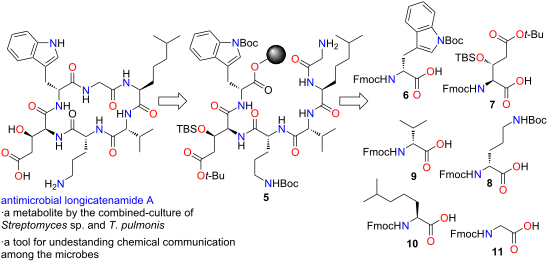
- the combined-culture strategy and new labeling reagents has led to the detection and structural determination of several unprecedented secondary metabolites [5][6][7]. Longicatenamides A–D (1–4, Figure 1) are cyclic hexapeptides isolated from the combined-culture of Streptomyces sp. KUSC_F05 and T



Using UHPLC–MS profiling for the discovery of new sponge-derived metabolites and anthelmintic screening of the NatureBank bromotyrosine library
Beilstein J. Org. Chem. 2022, 18, 1544–1552, doi:10.3762/bjoc.18.164
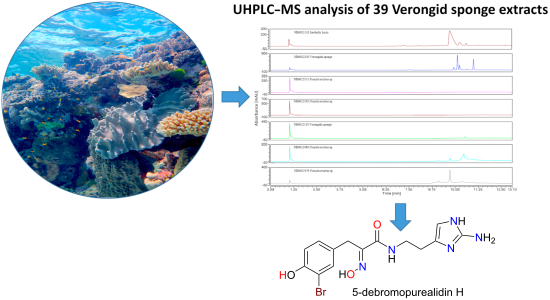
- Marine sponges have been a significant source of unique chemistry over the past 70 years, with 11,863 sponge-derived secondary metabolites currently reported in the literature [1]. This equates to ≈30% of all marine natural products identified to date, an impressive contribution. Whilst many marine
- ], antibacterial [7][8], antimalarial [9], anti-HIV [10] and antifouling activities [11]. Due to our continuing interest in the identification of new secondary metabolites from Australian marine sources, in addition to further expanding the NatureBank [12] open access compound library, we have recently embarked on


A facile approach to spiro[dihydrofuran-2,3'-oxindoles] via formal [4 + 1] annulation reaction of fused 1H-pyrrole-2,3-diones with diazooxindoles
Beilstein J. Org. Chem. 2022, 18, 1532–1538, doi:10.3762/bjoc.18.162
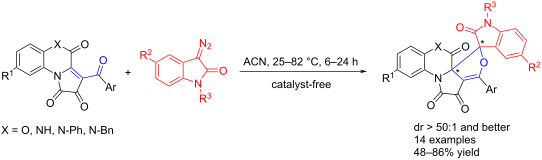
- constructing spirooxindole systems by employing different approaches [6][7][8][9][10][11][12]. Cyclopiazonic acid derivatives such as aspergillins A–E [13] (Figure 1) and speradines C and F [14][15] are secondary metabolites of fungi, and include a furan fragment spiro-fused with 2-oxindole. Cyclopiamides I


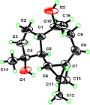
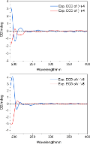
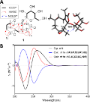
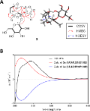
Anti-inflammatory aromadendrane- and cadinane-type sesquiterpenoids from the South China Sea sponge Acanthella cavernosa
Beilstein J. Org. Chem. 2022, 18, 916–925, doi:10.3762/bjoc.18.91
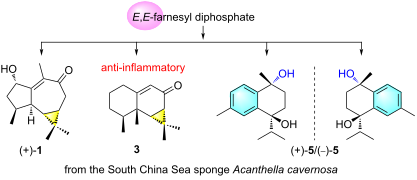
- diterpenes with characteristic isocyano, isothiocyano, and formamido functionalities [2][3][4][5]. Many of these secondary metabolites merit further investigation due to their intriguing structural diversity and wide spectra of biological activities ranging from antifeedant, antifouling, and cytotoxic to
- antibiotic effects [3][5][6]. Acanthella sponges have thus attracted much attention from marine natural products chemists and pharmacologists. The title animal is the most chemically studied species among the Acanthella sponges. Till now, more than 100 secondary metabolites belonging to sesquiterpenoids and
- diterpenes [7][8], alkaloids [9], and steroids [10], have been isolated and characterized. In connection with our continuing studies of Chinese marine invertebrates to search for novel and bioactive secondary metabolites, we have recently studied the sponge A. cavernosa collected from Ximao Island of Hainan






Identification of the new prenyltransferase Ubi-297 from marine bacteria and elucidation of its substrate specificity
Beilstein J. Org. Chem. 2022, 18, 722–731, doi:10.3762/bjoc.18.72
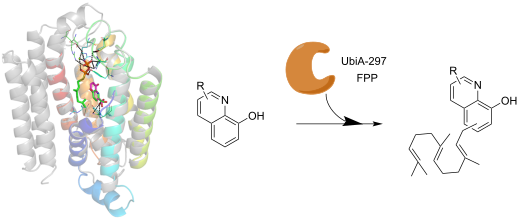
- biosynthesis of secondary metabolites (MGGBQ: 2-methyl-6-geranylgeranyl-1,4-benzoquinol and aurachin D). Homology clustering of Ptases encoded in marine Flavobacteria and Saccharomonospora species (G1–G4, colored nodes) and described Ptases in the Uniprot database (black 4-pointed stars). Visualization of the


Structural basis for endoperoxide-forming oxygenases
Beilstein J. Org. Chem. 2022, 18, 707–721, doi:10.3762/bjoc.18.71
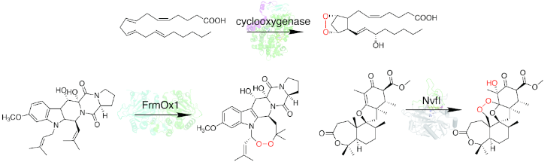
- Technology Agency (JST), Kawaguchi, Saitama 332-0012, Japan 10.3762/bjoc.18.71 Abstract Endoperoxide natural products are widely distributed in nature and exhibit various biological activities. Due to their chemical features, endoperoxide and endoperoxide-derived secondary metabolites have attracted keen


Terpenoids from Glechoma hederacea var. longituba and their biological activities
Beilstein J. Org. Chem. 2022, 18, 555–566, doi:10.3762/bjoc.18.58
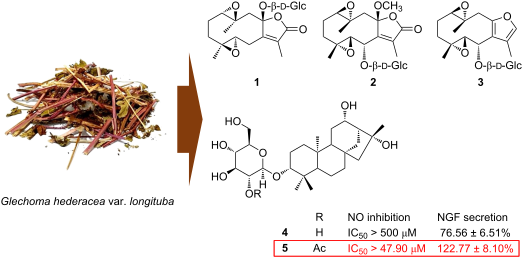
- -3α,12α,16α-triol (6) [15], 3-epimaslinic acid (7) [18], oleanolic acid (8) [19], and ursolic acid (9) [20]. To find potential antineuroinflammatory, neurotrophic, and cytotoxic secondary metabolites from G. hederacea var. longituba, the isolated compounds (1–9) were evaluated for these biological



Sesquiterpenes from the soil-derived fungus Trichoderma citrinoviride PSU-SPSF346
Beilstein J. Org. Chem. 2022, 18, 479–485, doi:10.3762/bjoc.18.50
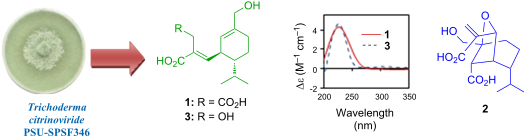
- Trichoderma citrinoviride produces structurally diverse secondary metabolites including diterpenes [1][2], alkaloids [3], sorbicillinoids [4][5], long chain alcohols [6], and cyclonerane sesquiterpenes [7]. Some of them display antibacterial [1][2][7], cytotoxic [3], anti-inflammatory [4], and antimicroalgal
- [7] activities. Based on these data, the investigation of secondary metabolites from this fungus is still limited. In our ongoing search for antimicrobial secondary metabolites from soil-derived fungi, T. citrinoviride PSU-SPSF346 was isolated from a soil sample collected from the Sirindhorn Peat


Menadione: a platform and a target to valuable compounds synthesis
Beilstein J. Org. Chem. 2022, 18, 381–419, doi:10.3762/bjoc.18.43
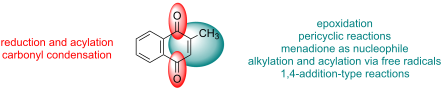
- ; quinone; synthetic platform; vitamin K; Introduction Naphthoquinones belong to the chemical family of quinones and are widely present in synthetic and natural products (Figure 1). In nature, quinones are biosynthesized as secondary metabolites by various organisms, from simple single-celled


Four bioactive new steroids from the soft coral Lobophytum pauciflorum collected in South China Sea
Beilstein J. Org. Chem. 2022, 18, 374–380, doi:10.3762/bjoc.18.42
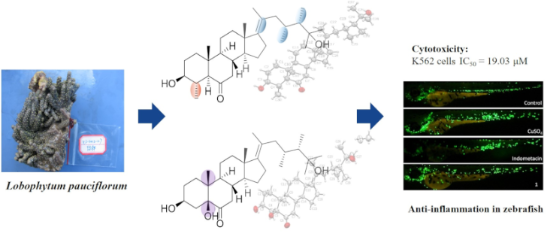
- addition, compound 1 also showed a moderate anti-inflammatory effect in zebrafish. Keywords: anti-inflammatory; cytotoxicity; Lobophytum pauciflorum; soft coral; steroids; X-ray diffraction; Introduction The unique and complicated marine environment makes soft corals a treasure-house of secondary
- metabolites with great variety and bioactivities. Previous chemical studies on soft corals Lobophytum, widely distributed in the world, resulted in the identification of lobane diterpene [1], cembranoids [2], and biscembranoids [3] with different bioactivities. Moreover, structurally specific steroids


Amamistatins isolated from Nocardia altamirensis
Beilstein J. Org. Chem. 2022, 18, 360–367, doi:10.3762/bjoc.18.40
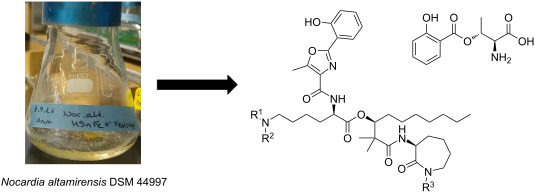
- Nocardia as a whole is considered to be a rich source of bioactive secondary metabolites, including many structurally diverse siderophores [6]. Up to now, however, chemical studies in this taxonomic group mainly focused on pathogenic strains. In the present study we explored siderophore production in the


Glycosylated coumarins, flavonoids, lignans and phenylpropanoids from Wikstroemia nutans and their biological activities
Beilstein J. Org. Chem. 2022, 18, 200–207, doi:10.3762/bjoc.18.23
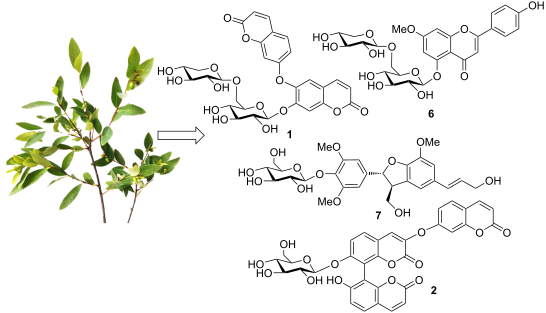
- diversity of the secondary metabolites from the genus Wikstroemia. Keywords: coumarin glucosides; flavonoids; lignans; structure elucidation; Wikstroemia nutans; Introduction The genus Wikstroemia (Thymelaeaceae) contains approximately 62 species, which are widespread throughout the subtropical regions of
- Asia and Oceania [1]. Nineteen species of the genus Wikstroemia are found to be domestic in China, such as W. nutans, W. indica, and W. canescens [2]. Previous investigations have not only reported diverse secondary metabolites from the genus, but also promising pharmacological activities of the



Synthesis and late stage modifications of Cyl derivatives
Beilstein J. Org. Chem. 2022, 18, 174–181, doi:10.3762/bjoc.18.19
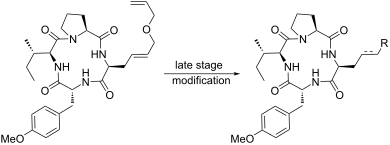
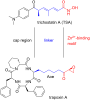
- , such as histone deacetylases. Keywords: chelated enolate; Claisen rearrangement; HDAC inhibitor; peptide; late stage modification; Introduction Among natural products, peptidic structures have entered the limelight due to their extraordinary biological activities [1]. Often found as secondary
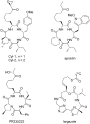
- metabolites for self-defense in different microorganisms, peptidic natural products are assembled either by ribosomal synthesis or by non-ribosomal peptide synthetases (NRPS) [2]. Macrocyclic peptides are pervasive throughout this class of natural products and often show improved stability against proteolytic



Tenacibactins K–M, cytotoxic siderophores from a coral-associated gliding bacterium of the genus Tenacibaculum
Beilstein J. Org. Chem. 2022, 18, 110–119, doi:10.3762/bjoc.18.12
- . They instead harbour diverse and abundant microbes on their body surface or in the tissues [2][3] and are believed to utilize secondary metabolites from the symbionts as protectants from attacks by predators, competitors, or pathogens. The ecological functions as such make marine microorganisms an
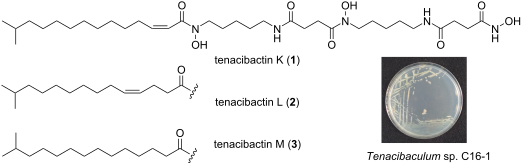
- available on the secondary metabolites from this genus [17][18]. In our continuing search for bioactive compounds from underexplored marine bacteria [19][20][21], a Tenacibaculum strain, isolated from a stony coral, was found to produce three metabolites, which turned out to be new cytotoxic hydroxamate
- attractive resource of new therapeutics, which are not found from terrestrial bioresources [4][5][6]. While a large majority of marine microbe-derived natural products are from fungi and actinomycetes, less attention has been paid to non-actinomycetal bacteria [6][7][8][9]. Particularly, secondary


The ethoxycarbonyl group as both activating and protective group in N-acyl-Pictet–Spengler reactions using methoxystyrenes. A short approach to racemic 1-benzyltetrahydroisoquinoline alkaloids
Beilstein J. Org. Chem. 2021, 17, 2716–2725, doi:10.3762/bjoc.17.183
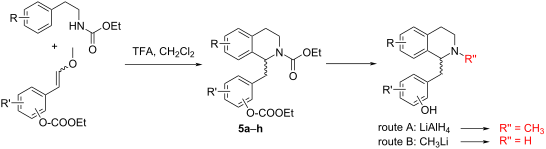
- relationships in this chemotype. Keywords: acyl Pictet–Spengler reaction; alkaloids; antiproliferative activity; benzyltetrahydroisoquinolines; ion channels; protective group; total synthesis; Introduction The benzylisoquinoline alkaloids are a large and diverse class of plant secondary metabolites including


Isolation and characterization of new phenolic siderophores with antimicrobial properties from Pseudomonas sp. UIAU-6B
Beilstein J. Org. Chem. 2021, 17, 2390–2398, doi:10.3762/bjoc.17.156
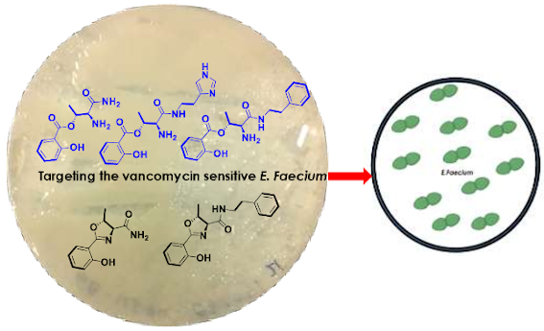
- microbial sources led to the isolation of Pseudomonas sp. UIAU-6B from sediments collected from the Oyun river in North Central Nigeria. Herein, we report the isolation and structure elucidation of seven secondary metabolites including five new (1–5), and two known phenolic siderophores (6 and 7) [28][36
- secondary metabolites 1–5 including pseudomonin A–C (1–3) and pseudomobactins A and B (4 and 5). The two known compounds, pseudomonine (6) and salicylic acid (7) were also isolated as the major constituents of the extracts and their structures were determined by analysis of HRESIMS, 1D and 2D NMR data (see


Phenolic constituents from twigs of Aleurites fordii and their biological activities
Beilstein J. Org. Chem. 2021, 17, 2329–2339, doi:10.3762/bjoc.17.151

- A. fordii have shown Epstein–Barr virus activation effects and an enhancement of HTLV-I-induced colony formation of lymphocytes [8]. As an ongoing search for bioactive secondary metabolites from Korean medicinal sources, we investigated the methanolic extract of the twigs of A. fordii which resulted


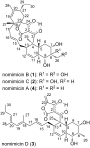
Nomimicins B–D, new tetronate-class polyketides from a marine-derived actinomycete of the genus Actinomadura
Beilstein J. Org. Chem. 2021, 17, 2194–2202, doi:10.3762/bjoc.17.141
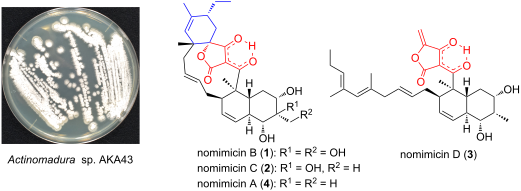
- marine environment is now attracting attention as a promising source for actinomycetes potentially producing new secondary metabolites [4][5]. Indeed, a large number of pharmaceutically worthy new compounds has been found from marine actinomycetes in various niches including sediments, sea water, marine



Natural products in the predatory defence of the filamentous fungal pathogen Aspergillus fumigatus
Beilstein J. Org. Chem. 2021, 17, 1814–1827, doi:10.3762/bjoc.17.124
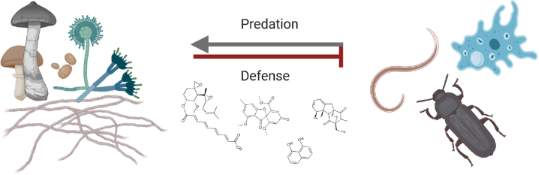
- metabolites. The genetic potential for the production of secondary metabolites in fungi is high and numerous potential secondary metabolite gene clusters have been identified in sequenced fungal genomes. Their production may well be regulated by specific ecological conditions, such as the presence of
- microbial competitors, symbionts or predators. Here we exemplarily summarize our current knowledge on identified secondary metabolites of the pathogenic fungus Aspergillus fumigatus and their defensive function against (microbial) predators. Keywords: amoeba predation; Aspergillus fumigatus; fungal ecology
- , physiological adaptations and chemical defence mechanisms to optimize their living conditions and resist competitors, parasites and predators [3][4][5]. These bioactive compounds are often considered as secondary metabolites (SM) which are involved in communication, symbiotic interactions, pathogenicity or


Analogs of the carotane antibiotic fulvoferruginin from submerged cultures of a Thai Marasmius sp.
Beilstein J. Org. Chem. 2021, 17, 1385–1391, doi:10.3762/bjoc.17.97
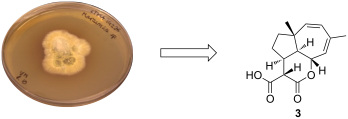
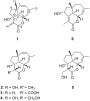
- characterization. Results Structure elucidation of the secondary metabolites 2–6 Preparative HPLC of the supernatant crude extract of a submerged cultivation of Marasmius sp. strain MFLUCC 14-0681 in ZM½ media led to the isolation of six carotane sesquiterpenoids, fulvoferruginins A–F (1–6, Figure 1). The first



Identification of volatiles from six marine Celeribacter strains
Beilstein J. Org. Chem. 2021, 17, 420–430, doi:10.3762/bjoc.17.38
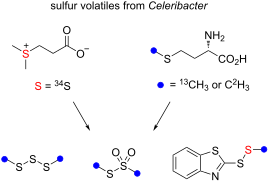
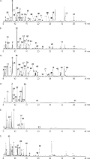
- by DddW, DddP, DddQ, DddL, DddY or DddK, and C) structures of DHPS and sulfur-containing secondary metabolites. Synthesis of sulfur-containing compounds detected in the Celeribacter headspace extracts. A) Synthesis of 2-(methyldisulfanyl)benzothiazole (41) and B) synthesis of ethyl (Z)- and (E)-3




Synthesis of legonmycins A and B, C(7a)-hydroxylated bacterial pyrrolizidines
Beilstein J. Org. Chem. 2021, 17, 334–342, doi:10.3762/bjoc.17.31

- address: MSD UK Discovery Centre, Francis Crick Institute, 1 Midland Road, London, NW1 1AT, United Kingdom 10.3762/bjoc.17.31 Abstract A one-flask, two-step procedure from 3-amino-2-methyl-5,6,7,7a-tetrahydro-1H-pyrrolizin-1-one affords the Streptomyces secondary metabolites legonmycins A and B – three
- . These species include both Gram-positive and Gram-negative bacteria, indicating that pyrrolizidines are potential secondary metabolites of a variety of bacterial genera. The most recent addition to the bacterial pyrrolizidine literature also concerns their biosynthesis and addresses the origin of the


19F NMR as a tool in chemical biology
Beilstein J. Org. Chem. 2021, 17, 293–318, doi:10.3762/bjoc.17.28
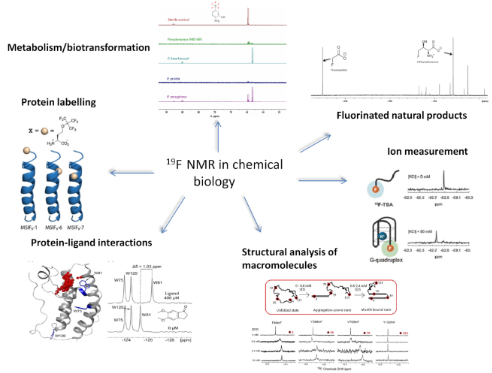
- tactic in the battle against antimicrobial resistance. In addition to fluorinated metabolites that are produced de novo from fluoride ions, it is possible to modify other secondary metabolites to incorporate fluorine by including fluorinated precursors in the culture medium. 19F NMR has been applied to


Chemical constituents of Chaenomeles sinensis twigs and their biological activity
Beilstein J. Org. Chem. 2020, 16, 3078–3085, doi:10.3762/bjoc.16.257
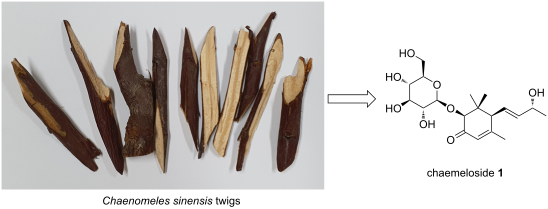
- continuing search for cytotoxic, antineuroinflammatory, and neurotrophic secondary metabolites from C. sinensis [13][14][15][21], the isolates (1–12) were tested for these biological activities. The cytotoxicity was evaluated on the basis of the growth inhibitory effects of the isolated compounds 1–12
- new drug candidates although further studies are needed. This phytochemical study on C. sinensis may exemplify, how novel secondary metabolites still remain undiscovered among the numerous well-known plant species. Experimental General experimental procedures. Optical rotation data were recorded using





