


Search results
Search for "vapor pressure" in Full Text gives 31 result(s) in Beilstein Journal of Organic Chemistry.
Space filling of β-cyclodextrin and β-cyclodextrin derivatives by volatile hydrophobic guests
Beilstein J. Org. Chem. 2013, 9, 1185–1191, doi:10.3762/bjoc.9.133
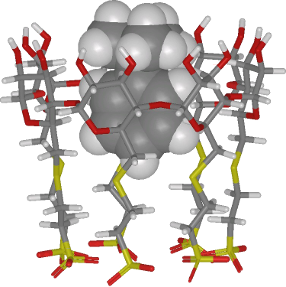
- indirectly by the reduction of its vapor pressure due to complexation. This HS-GC method is applicable for a great variety of volatile guests [37]. The aim of this study was to investigate the binding ability of β-CD-thioethers toward hydrophobic VOCs in comparison to commercial β-CDs and to interpret the
- constants strongly increase with the amount of space filling of the CD cavity and the salt concentration. β-CD thioethers show a 3–10 times higher binding potential than native β-CD. Keywords: cyclodextrins; inclusion compound; molecular modelling; space filling; static headspace gas chromatography; vapor
- pressure; Introduction β-Cyclodextrin (β-CD, 1), the cyclic α(1→4) heptamer of glucose, is known to form inclusion compounds with a great variety of guests [1], such as derivatives of benzene [2][3], cyclohexane [4], adamantane [5][6], other alicyclic guests [7], and also inorganic molecules or ions [1][8


Polysiloxane ionic liquids as good solvents for β-cyclodextrin-polydimethylsiloxane polyrotaxane structures
Beilstein J. Org. Chem. 2012, 8, 1610–1618, doi:10.3762/bjoc.8.184
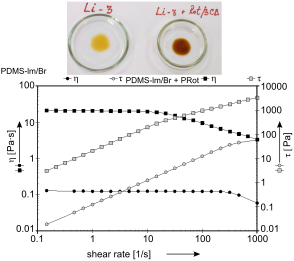
- damaging them, through the use of partial water vapor pressure in the microscope specimen chamber. Samples preparation A holey-carbon-coated copper grid was placed on a TEM sample holder and positioned on a Peltier cooling stage. The samples were diluted in THF, and then a small amount of solution was


Intramolecular hydroxycarbene C–H-insertion: The curious case of (o-methoxyphenyl)hydroxycarbene
Beilstein J. Org. Chem. 2010, 6, 1061–1069, doi:10.3762/bjoc.6.121
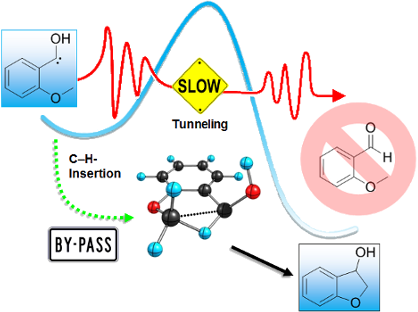
- used without further purification. For matrix isolation studies, the sample was cooled to −35 °C to reduce its vapor pressure. Computational methods All computations were performed with the Gaussian09 [27] or Cfour suite [28] of programs. All structures were computed employing the M06 density


Insights into the mechanical properties of a silicone oil gel with a ‘latent’ gelator, 1-octadecylamine, and CO2 as an ‘activator’
Beilstein J. Org. Chem. 2010, 6, 984–991, doi:10.3762/bjoc.6.111
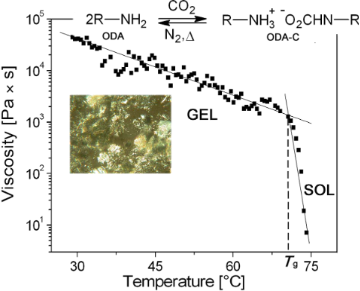
- LMOG, 1-octadecylamine (ODA), and a triatomic molecular ‘activator’, carbon dioxide, with silicone oil, tetramethyltetraphenyltrisiloxane, as the liquid component [10][11]. This liquid has been selected because its very low vapor pressure avoids a potential complication, i.e., evaporation of a portion





Flow through reactors for organic chemistry: directly electrically heated tubular mini reactors as an enabling technology for organic synthesis
Beilstein J. Org. Chem. 2009, 5, No. 70, doi:10.3762/bjoc.5.70
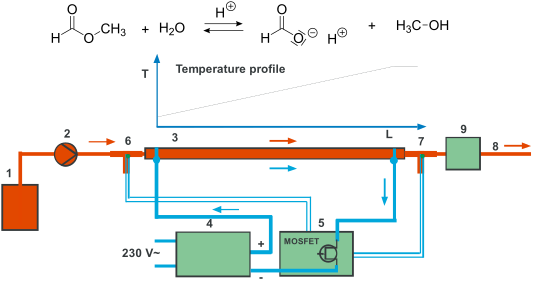
- ][20][21][22][23][24]. The reaction scheme for the model reaction is given in Scheme 1. This reaction was chosen for several reasons: Due to the low boiling point of the ester (32 °C) kinetic measurements in traditional equipment are limited to an upper temperature of about 25 °C, otherwise the vapor
- pressure would lead to loss of reactant in an open system. Measurements at temperatures higher than 32 °C are not possible at all. The progress of the reaction can be measured easily online by determining the electrical conductivity of the reaction mixture leaving the reactor. Electrical conductivity is


Study of thioglycosylation in ionic liquids
Beilstein J. Org. Chem. 2006, 2, No. 12, doi:10.1186/1860-5397-2-12
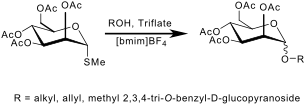
- volatile organic solvents that have broader environmental concerns.[3] These drawbacks have been well documented and have driven, in part, the quest for alternative solvent systems. Ionic liquids possess several attractive properties such as, no measurable vapor pressure, nonflammable, water and air


Other Beilstein-Institut Open Science Activities



