


Search results
Search for "α-amino acids" in Full Text gives 89 result(s) in Beilstein Journal of Organic Chemistry.
Strecker degradation of amino acids promoted by a camphor-derived sulfonamide
Beilstein J. Org. Chem. 2016, 12, 732–744, doi:10.3762/bjoc.12.73
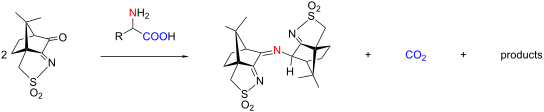
- degradation of amino acids to reactions with oxo-sulfonimine compounds and investigate the reaction mechanism of its formation by computational means. Results and Discussion Synthesis and characterization The α-amino acids (H2NCHRCOOH) react with 3-oxocamphorsulfonylimine (O2SNC10H13O, 1, oxoimine) forming a





Cupreines and cupreidines: an established class of bifunctional cinchona organocatalysts
Beilstein J. Org. Chem. 2016, 12, 429–443, doi:10.3762/bjoc.12.46
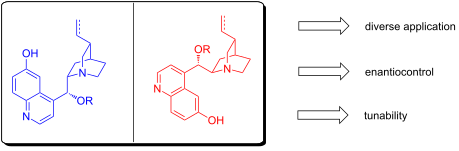
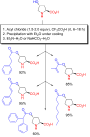
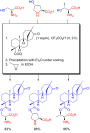
- -amination using β-ICPD. Meng’s cupreidine catalyzed α-hydroxylation. Shi’s biomimetic transamination process for the synthesis of α-amino acids. β-Isocupreidine catalyzed [4 + 2] cycloadditions. β-Isocupreidine catalyzed [2+2] cycloaddition. A domino reaction catalyst by cupreidine catalyst CPD-30. (a


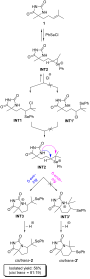
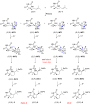
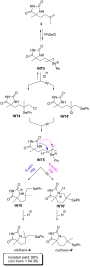
Mechanism, kinetics and selectivity of selenocyclization of 5-alkenylhydantoins: an experimental and computational study
Beilstein J. Org. Chem. 2015, 11, 1865–1875, doi:10.3762/bjoc.11.200

- heterocyclic compounds with cyclic urea core, are widely used as intermediates in industrial production of α-amino acids [1]. They exhibit various biological activities making them attractive candidates for drug discovery [2][3][4][5][6][7][8][9][10][11]. In the most cases, the observed biological activities





Preparative semiconductor photoredox catalysis: An emerging theme in organic synthesis
Beilstein J. Org. Chem. 2015, 11, 1570–1582, doi:10.3762/bjoc.11.173

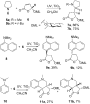
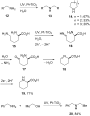
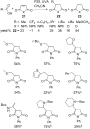
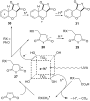
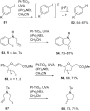
- yield of 75%. Phenyl- and 2-thienylacetic acids afforded adducts accompanied by the dimers bibenzyl (18%) and 1,2-di(thiophen-2-yl)ethane (27%), respectively. Significantly, Boc-protected α-amino acids also proved amenable and yielded adducts as 1:1 mixtures of stereoisomers. Chirality was not preserved







A new method for the synthesis of α-aminoalkylidenebisphosphonates and their asymmetric phosphonyl-phosphinyl and phosphonyl-phosphinoyl analogues
Beilstein J. Org. Chem. 2015, 11, 1418–1424, doi:10.3762/bjoc.11.153

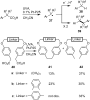
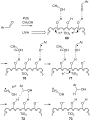
- -phosphinylation or α-phosphinoylation of 1-(N-acylamino)alkylphosphonates, that, in turn, are easily accessible from N-acyl-α-amino acids. Effective electrophilic activation of the α-position of 1-(N-acetylamino)alkylphosphonates was achieved by electrochemical α-methoxylation of these compounds in methanol
- acid phosphorus analogues; electrochemical α-methoxylation; 1-phosphinoylalkylphosphonate; 1-phosphinylalkylphosphonate; Introduction α-Aminophosphonic and α-aminophosphinic acids, as phosphorus analogues and bioisosters of α-amino acids, exhibit a variety of important biological properties [1][2][3
- Discussion Recently we developed a simple and effective two-step transformation of N-acyl-α-amino acids into their phosphonic analogues that allows for easy access to a variety of structurally diversified N-acyl-α-aminophosphonates 5 (Scheme 1) [36][37]. Despite the electron-withdrawing inductive effect of N


Chemoselective O-acylation of hydroxyamino acids and amino alcohols under acidic reaction conditions: History, scope and applications
Beilstein J. Org. Chem. 2015, 11, 446–468, doi:10.3762/bjoc.11.51
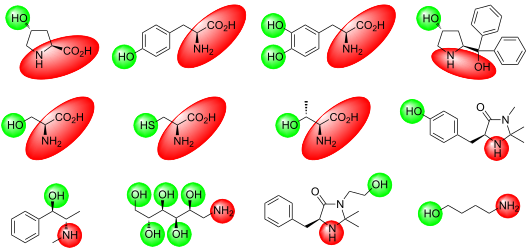
- starting materials for synthesis. For example, side-chain chemical manipulation of the most common α-amino acids is routinely preceded by protection of one or both of the amino acid functionalities. In addition to lengthening the synthetic sequence by adding auxiliary steps, protective groups for amino
- acids can also impart a reduced tendency for crystallinity in the resulting amino acid derivatives, prohibiting, or at least, severely restricting the use of convenient recrystallization for purification on a multigram-scale. In the case of hydroxy-α-amino acids, any side-chain acylation will, often for




(2R,1'S,2'R)- and (2S,1'S,2'R)-3-[2-Mono(di,tri)fluoromethylcyclopropyl]alanines and their incorporation into hormaomycin analogues
Beilstein J. Org. Chem. 2014, 10, 2844–2857, doi:10.3762/bjoc.10.302

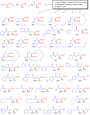
- desirable as the incorporation of conformationally constrained α-amino acids such as 3 into peptides is frequently used to study structure–activity relationships [38][39][40]. Several methods have been developed for the preparation of analogues of β-methylphenylalanine in enantiopure form. These include




Automated solid-phase peptide synthesis to obtain therapeutic peptides
Beilstein J. Org. Chem. 2014, 10, 1197–1212, doi:10.3762/bjoc.10.118

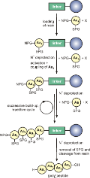
- generally no tertiary, three-dimensional structure compared to proteins [1]. In nature, the oligomers or polymers are assembled at ribosomes by aminoacyl-tRNAs (transfer ribonucleic acid) [2]. Basically, a condensation reaction of a carboxylic acid moiety with a functional amine of trifunctional α-amino
- acids leads to regioisomeric amide bond (peptide bond) formation (Scheme 1). The individual building blocks occur as L-enantiomers throughout living organisms in case of ribosomal synthesis and only 20 monomers are generally found in peptides and proteins with few rare exceptions. Those canonical amino




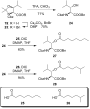
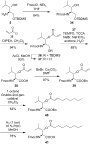
Amino acid motifs in natural products: synthesis of O-acylated derivatives of (2S,3S)-3-hydroxyleucine
Beilstein J. Org. Chem. 2014, 10, 1135–1142, doi:10.3762/bjoc.10.113
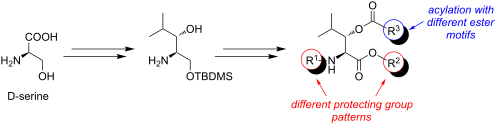
- opening up an excellent approach for the synthesis of bioactive natural products and derivatives thereof for structure activity relationship (SAR) studies. Keywords: chiral pool; cross metathesis; esterification; β-hydroxy-α-amino acids; natural products; Introduction Besides the proteinogenic β-hydroxy
- -α-amino acids serine and threonine, (2S,3S)-3-hydroxyleucine can be found as a substructure of several bioactive natural products. This structural motif often serves as a 'three-way-junction', as for instance in azinothricin [1], citropeptin [2], kettapeptin [3], pipalamycin [4], dentigerumycin [5
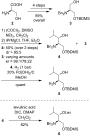
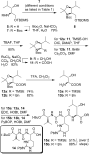
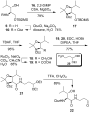
- -Fmoc-protected building blocks potentially suitable for solid-phase peptide synthesis (SPPS). It is well established that O-acylated β-hydroxy-α-amino acids can be used in Fmoc-strategy peptide syntheses without migration of the acyl unit [37][38][39]. Based on these findings, we have desired to




A novel family of (1-aminoalkyl)(trifluoromethyl)- and -(difluoromethyl)phosphinic acids – analogues of α-amino acids
Beilstein J. Org. Chem. 2014, 10, 722–731, doi:10.3762/bjoc.10.66
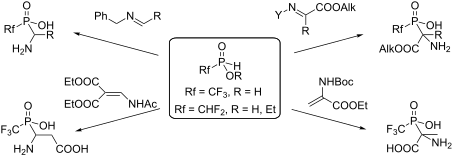
- proteinogenic and nonproteinogenic α-amino acids were prepared. The synthetic methodology was based on nucleophilic addition of (trifluoromethyl)phosphinic acid or (difluoromethyl)phosphinic acid or its ethyl ester to substrates with C=N or activated C=C double bonds. Analogues of glycine, phenylglycine


Synthesis of chiral N-phosphinyl α-imino esters and their application in asymmetric synthesis of α-amino esters by reduction
Beilstein J. Org. Chem. 2014, 10, 653–659, doi:10.3762/bjoc.10.57
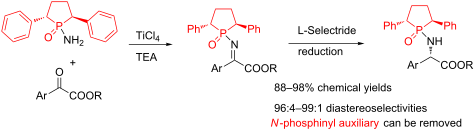
- resulted α-amino acid derivatives are useful building blocks in modern organic synthetic and medicinal chemistry [21][22]. For example, we can easily find the active participation of α-imino esters in the total synthesis of the bioactive molecule fumimycin [23]. Moreover, α-amino acids are the most general


Isocyanide-based multicomponent reactions towards cyclic constrained peptidomimetics
Beilstein J. Org. Chem. 2014, 10, 544–598, doi:10.3762/bjoc.10.50



Synthesis and stereochemical assignments of diastereomeric Ni(II) complexes of glycine Schiff base with (R)-2-(N-{2-[N-alkyl-N-(1-phenylethyl)amino]acetyl}amino)benzophenone; a case of configurationally stable stereogenic nitrogen
Beilstein J. Org. Chem. 2014, 10, 442–448, doi:10.3762/bjoc.10.41

- Since the beginning of organic chemistry, α-amino acids (α-AAs) have been an attractive target for synthetic chemists. The reported synthetic methods for assembling the RCH(NH2)COOH units have been explored in great detail. Structurally complex natural or tailor-made [1] α-AAs can be prepared using the


Additive-assisted regioselective 1,3-dipolar cycloaddition of azomethine ylides with benzylideneacetone
Beilstein J. Org. Chem. 2014, 10, 352–360, doi:10.3762/bjoc.10.33

- employed as starting materials to conduct 1,3-dipolar cycloadditions to yield spirooxindole core structures [16][17][18][19][20]. Owing to the ease of preparation, the azomethine ylides generated from isatin with α-amino acids or amines were frequently chosen as important 1,3-dipolar intermediates to react




The regioselective synthesis of spirooxindolo pyrrolidines and pyrrolizidines via three-component reactions of acrylamides and aroylacrylic acids with isatins and α-amino acids
Beilstein J. Org. Chem. 2014, 10, 117–126, doi:10.3762/bjoc.10.8
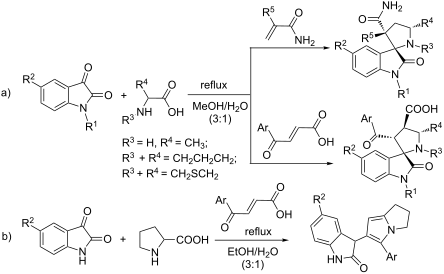
- , A.V. Bogatsky physico-chemical institute of the National Academy of Sciences of Ukraine, 86, Lustdorfskaya doroga, 65080, Odessa, Ukraine 10.3762/bjoc.10.8 Abstract The regioselective three-component condensation of azomethine ylides derived from isatins and α-amino acids with acrylamides or
- inhibitors [9][10]. The multicomponent 1,3-dipolar cycloaddition of azomethine ylides, generated in situ via decarboxylative condensation of isatins and α-amino acids with olefinic and acetylenic dipolarophiles, represents a key approach for the regio- and stereoselective construction of a variety of complex
- nonnatural α-amino acids [11][12][13], more than fifteen isatins [14], and 1,3-dipolarophiles, e.g. α,β-unsaturated ketones [15][16][17], maleimides [18][19], benzo[b]thiophene-1,1-dioxide [20], bis(arylmethylidene)acetones and -cycloalkanones [21][22], 1,4-naphthoquinone [23], arylidenemalonodinitriles [24




Synthetic scope and DFT analysis of the chiral binap–gold(I) complex-catalyzed 1,3-dipolar cycloaddition of azlactones with alkenes
Beilstein J. Org. Chem. 2013, 9, 2422–2433, doi:10.3762/bjoc.9.280
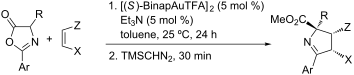
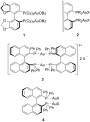
- : asymmetric catalysis; DFT; 1,3-dipolar cycloaddition; gold catalysis; NICS; NTR; oxazolones; prolines; Introduction The synthesis of α-amino acids employing an α-amino carbonyl template constitutes the most straightforward route to introduce the α-side chain [1]. As a valid example, oxazol-5-(4H)-ones
- enantioselective and/or diastereoselective processes have been focussed on the elaboration of enantiomerically enriched new non-proteinogenic α-amino acids, such as Michael-type additions [6][7], transition metal-catalyzed allylations [8], Mannich-type additions [9], aldol-type reactions [10], and for other





Synthesis of enantiomerically pure (2S,3S)-5,5,5-trifluoroisoleucine and (2R,3S)-5,5,5-trifluoro-allo-isoleucine
Beilstein J. Org. Chem. 2013, 9, 2009–2014, doi:10.3762/bjoc.9.236
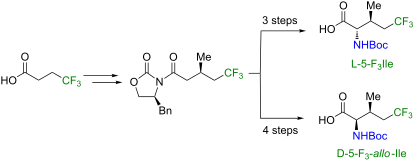
- sodium cyanide to afford nitrile 3. Acid hydrolysis of 3 provided the enantiomerically pure carboxylic acid (R)-4 [19], which was then coupled to the oxazolidinone via the mixed anhydride (Scheme 1). With N-acyloxazolidinone 5 in hand, the optically active fluorinated α-amino acids (L-5,5,5


A versatile and efficient approach for the synthesis of chiral 1,3-nitroamines and 1,3-diamines via conjugate addition to new (S,E)-γ-aminated nitroalkenes derived from L-α-amino acids
Beilstein J. Org. Chem. 2013, 9, 832–837, doi:10.3762/bjoc.9.95

- Janeiro, 21941-902, Rio de Janeiro, Brazil Instituto Federal de Educação, Ciência e Tecnologia do Rio de Janeiro, 26530-060, Nilópolis, RJ, Brazil 10.3762/bjoc.9.95 Abstract New chiral (S,E)-γ-N,N-dibenzylated nitroalkenes 2a–c were synthesized from natural L-(α)-amino acids in five steps with overall
- . Results and discussion The preparation of 2a–c (Scheme 1) was initiated with the synthesis of Reetz’s α-aminoaldehydes [69][70]. In this manner, the α-amino acids 1a–c were perbenzylated using a slight modification in the experimental procedures described by Beaulieu [71] and Warren [72] leading to


A peptidic hydrogel that may behave as a “Trojan Horse”
Beilstein J. Org. Chem. 2013, 9, 417–424, doi:10.3762/bjoc.9.44

- the xerogel, making a complex network. The gelator is derived from α-amino acids (Thr, Phe) and a fatty acid (azelaic acid) and is biocompatible: it was dosed to IGROV-1 cells, which internalized it, without significantly affecting the cell proliferation. To check the internalization process by


A new synthetic protocol for coumarin amino acid
Beilstein J. Org. Chem. 2013, 9, 254–259, doi:10.3762/bjoc.9.30
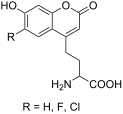
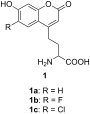
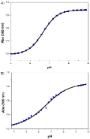
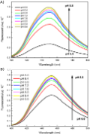
- experimental results, DBU is the best base among the three, and the reaction can be carried out at room temperature to obtain a relatively good yield. Alkylation of DEAM is widely used to synthesize α-amino acids [13], which was also applied here to prepare the coumarin amino acids. Through Michael addition



Palladium-catalyzed C–N and C–O bond formation of N-substituted 4-bromo-7-azaindoles with amides, amines, amino acid esters and phenols
Beilstein J. Org. Chem. 2012, 8, 2004–2018, doi:10.3762/bjoc.8.227

- -research chemists. Therefore, transition metal-catalyzed coupling of amino acids and its derivatives finds popularity in various coupling protocols [58]. A copper(I) iodide catalyzed coupling reaction of haloindoles with α-amino acids was reported by Ishikawa et al. [59]. Indole and azaindole moieties


Design and synthesis of quasi-diastereomeric molecules with unchanging central, regenerating axial and switchable helical chirality via cleavage and formation of Ni(II)–O and Ni(II)–N coordination bonds
Beilstein J. Org. Chem. 2012, 8, 1920–1928, doi:10.3762/bjoc.8.223
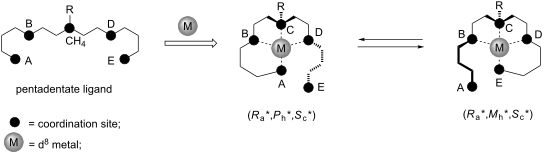
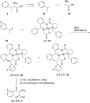
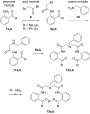
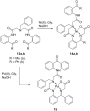
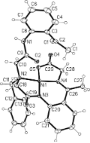
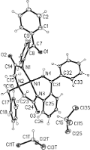
- framework of our recently described methodology for applying a new generation of nucleophilic glycine equivalents [27][28][29][30][31][32] to a general asymmetric synthesis of α-amino acids [33][34][35][36][37][38]. In this manner, modular assembly of achiral C2-symmetric pentadentate ligands 12 was carried



Organocatalytic tandem Michael addition reactions: A powerful access to the enantioselective synthesis of functionalized chromenes, thiochromenes and 1,2-dihydroquinolines
Beilstein J. Org. Chem. 2012, 8, 1668–1694, doi:10.3762/bjoc.8.191

- employing a chiral pyrrolidine bearing a 2-mercaptopyridine moiety as organocatalyst (VII) and simple α-amino acids, such as tert-leucine, as co-catalyst. The asymmetric transformation proceeds by simultaneous activation of cyclic enones 13 and aldehyde 1 by the bifunctional catalyst VII and the amino acid






Synthesis of conformationally restricted glutamate and glutamine derivatives from carbonylation of orthopalladated phenylglycine derivatives
Beilstein J. Org. Chem. 2012, 8, 1569–1575, doi:10.3762/bjoc.8.179
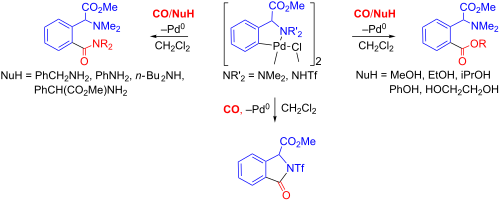
- -amino acids [11][12][13], due to the extraordinary interest in these delicate molecules as building blocks of peptides and proteins, and because of their relevant biological activity. In this context, we have recently reported C–H bond activation processes on a variety of arylglycines substituted at the
- reaction and, in general, allows for the reactions to occur under mild conditions and tolerates a variety of functional groups [5][6][7][8][9][10]. This is advantageous when reactive or sensitive fragments are present in the molecular scaffold. We are interested in the regioselective functionalization of α


N-Heterocyclic carbene-catalyzed direct cross-aza-benzoin reaction: Efficient synthesis of α-amino-β-keto esters
Beilstein J. Org. Chem. 2012, 8, 1499–1504, doi:10.3762/bjoc.8.169
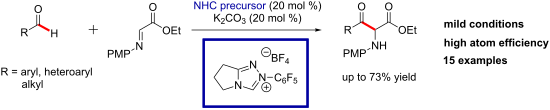
- synthesis of a variety of heterocyclic compounds [2] and pharmaceutically active products [3][4][5]. In addition, they are valuable intermediates for chiral α-amino acids [6][7], including β-hydroxy-α-amino acids [8][9][10][11][12][13][14]. Consequently, significant efforts have been devoted to synthesizing





