


Search results
Search for "activation barrier" in Full Text gives 71 result(s) in Beilstein Journal of Organic Chemistry.
Azirinium ylides from α-diazoketones and 2H-azirines on the route to 2H-1,4-oxazines: three-membered ring opening vs 1,5-cyclization
Beilstein J. Org. Chem. 2015, 11, 302–312, doi:10.3762/bjoc.11.35

- -1,3-dienes with the C=C bond in Z-configuration have a sufficiently high activation barrier for cyclization and are usually stable up to 90–100 °C. Oxazine 4b was synthesized in a similar way from azirine 1b and diazo compound 2a (Table 1, entry 2), but in this case no traces of azadiene Z-3b were
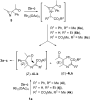
- is thermodynamically more stable than ylide 9j, by ca. 15 kcal/mol, but the barrier to the reverse reaction 10j→9j is not too high (22.6 kcal/mol). The ring opening in azirinium ylide 9j into azadiene 3j, too, has a low activation barrier but occurs irreversibly. Therefore, azirenooxazole 10j might
- in energy, the reaction sequence 10j→13j→14j leading to [3.2.1] adduct 6j seems to be more reasonable than 10j→15j→14j due to the much higher concentrations of the reacting species. Actually, the activation barrier to the bicyclic C–N bond cleavage in 10j is very low, but the equilibrium between 10j


Isoxazolium N-ylides and 1-oxa-5-azahexa-1,3,5-trienes on the way from isoxazoles to 2H-1,3-oxazines
Beilstein J. Org. Chem. 2014, 10, 1896–1905, doi:10.3762/bjoc.10.197

- a small chance of detecting their formation even in cases where they can theoretically be formed. If the starting isoxazole contains substituent R3, an attack of a carbene on the isoxazole nitrogen leads to (3Z)-1-oxa-5-azahexa-1,3,5-triene without an activation barrier. The latter derived from
- isoxazoles without a methoxy substituent in position 5 can cyclize via a low activation barrier (<12.5 kcal/mol) to the corresponding 2H-1,3-oxazines. All calculated 1-oxa-5-azahexa-1,3,5-trienes, excluding the ones derived from 5-methoxy-substituted isoxazoles, are thermodynamically less stable than 2H-1,3


Synthesis, characterization and initial evaluation of 5-nitro-1-(trifluoromethyl)-3H-1λ3,2-benziodaoxol-3-one
Beilstein J. Org. Chem. 2014, 10, 1–6, doi:10.3762/bjoc.10.1
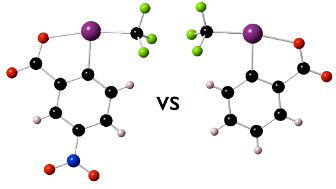
- of the I–CF3 bond should display a higher activation barrier. Recently, differential scanning calorimetry (DSC) measurements for reagent 2 and its precursors were published indicating a decomposition energy of 159 kJ/mol (502 J/g) for 2 [17]. Furthermore, a Koenen test suggested explosiveness


Less reactive dipoles of diazodicarbonyl compounds in reaction with cycloaliphatic thioketones – First evidence for the 1,3-oxathiole–thiocarbonyl ylide interconversion
Beilstein J. Org. Chem. 2013, 9, 2751–2761, doi:10.3762/bjoc.9.309

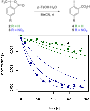
- ylide 6e' and 1,3-oxathiole 3e interconversion in this process most likely results from a relatively low activation barrier (26.6 kcal·mol−1). It is slowly overcoming even at room temperature giving rise to a gradual accumulation of alkene 5e during the storage of 1,3-oxathiole 3e in sealed ampoule




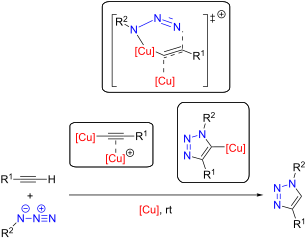
Advancements in the mechanistic understanding of the copper-catalyzed azide–alkyne cycloaddition
Beilstein J. Org. Chem. 2013, 9, 2715–2750, doi:10.3762/bjoc.9.308




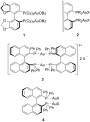
Synthetic scope and DFT analysis of the chiral binap–gold(I) complex-catalyzed 1,3-dipolar cycloaddition of azlactones with alkenes
Beilstein J. Org. Chem. 2013, 9, 2422–2433, doi:10.3762/bjoc.9.280
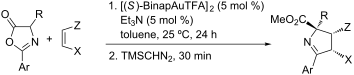
- the 4e− Pauli repulsion between the reactives in TSNPMdown compared to TSNPMup, and thus an increase of the activation barrier. Moreover, lower energy to deform the initial ylide (strain energy) is required in the latter TS. With that energetic diference, the computed ee is about 99%, in good
- is TS11exo (Figure 7), is in good agreement with the experimental results in which a high ee of the corresponding stereoisomer was observed. The formation of the enantiomer (TS11ent) was found to have an activation barrier of 4.5 kcal mol−1 higher in energy. That difference can be a consequence of





Cyclization of substitued 2-(2-fluorophenylazo)azines to azino[1,2-c]benzo[d][1,2,4]triazinium derivatives
Beilstein J. Org. Chem. 2013, 9, 1873–1880, doi:10.3762/bjoc.9.219
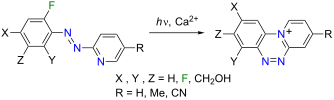
- electronegativity of the bridging group. The analysis of the data of three fluoro derivatives 4b–4d in Table 1 demonstrates that the addition of one or two fluorine atoms at the benzene ring in 4b significantly lowers the activation barrier for the cyclization, by about 4.5 kcal/mol, for 4c-Z and 4d-Z, which is


Thermochemistry and photochemistry of spiroketals derived from indan-2-one: Stepwise processes versus coarctate fragmentations
Beilstein J. Org. Chem. 2013, 9, 1668–1676, doi:10.3762/bjoc.9.191
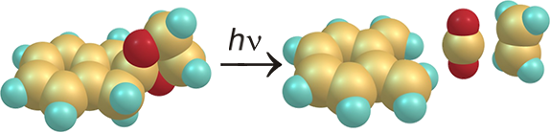
- useful, but suitable to check the coarctate stereochemical rules, is a peculiar fragmentation reaction that we discovered 15 years ago (Scheme 1) [9][10]. The reaction proceeds spontaneously at temperatures below −80 °C. Quantum chemical calculations of the parent reaction predict an activation barrier


Computational study of the rate constants and free energies of intramolecular radical addition to substituted anilines
Beilstein J. Org. Chem. 2013, 9, 1620–1629, doi:10.3762/bjoc.9.185

- calculated values of the rate constant for the 5-exo cyclization of the hexenyl radical with the experimental values. The dispersion-corrected PW6B95-D3 functional provided very good results with deviations for the free activation barrier compared to the experimental values of only about 0.5 kcal mol−1 and
- clear that the semi-local TPSS and BP86 functionals strongly underestimate the activation energy of the 5-exo cyclization (by about 3 kcal mol−1) due to the SIE but this behavior is as expected for functionals of this type. The hybrid functional B3LYP slightly overestimates the activation barrier when


Mechanistic studies on the CAN-mediated intramolecular cyclization of δ-aryl-β-dicarbonyl compounds
Beilstein J. Org. Chem. 2013, 9, 1472–1479, doi:10.3762/bjoc.9.167
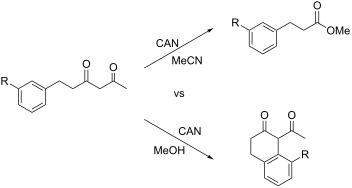
- ’. The stability of the cyclized radical is reflected in the activation barrier, and rotational transition structure TS1g’ has a barrier of 2.5 kcal/mol. For the electron-withdrawing chloro-substituted arene 1h’, the energy barrier for the cyclization on the aromatic ring is 16.9 kcal/mol, nearly 5 kcal


Electron self-exchange activation parameters of diethyl sulfide and tetrahydrothiophene
Beilstein J. Org. Chem. 2013, 9, 1448–1454, doi:10.3762/bjoc.9.164
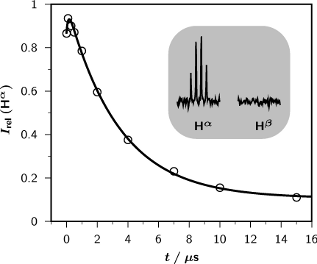
- entropies provide evidence for an associative–dissociative electron exchange involving dimeric radical cations. Despite this mechanistic complication, the free energies of activation were found to be well reproduced by the Marcus theory of electron transfer, with the activation barrier still dominated by
- this reaction type, the relationship between its thermodynamic driving force and its rate is well understood [1][2]; it only depends on a single parameter for each reagent involved, namely, the activation barrier of its self-exchange, e.g., Observing these key reactions is complicated by the fact that


Gold-catalyzed oxycyclization of allenic carbamates: expeditious synthesis of 1,3-oxazin-2-ones
Beilstein J. Org. Chem. 2013, 9, 818–826, doi:10.3762/bjoc.9.93
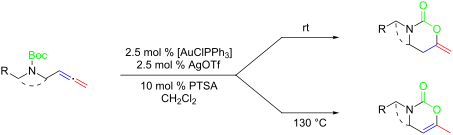
- reaction in view of the computed lower activation barrier of the former process (ΔΔG≠298 = +7.4 kcal/mol). However, the cyclic reaction product INT2-B is thermodynamically more stable than the counterpart INT2-A (ΔΔG = 2.5 kcal/mol), which is in agreement with the experimental findings (see above). The



Photoionisation of the tropyl radical
Beilstein J. Org. Chem. 2013, 9, 681–688, doi:10.3762/bjoc.9.77
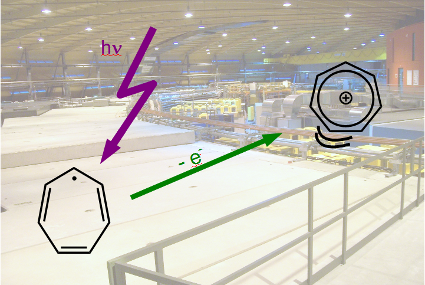
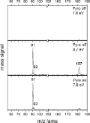
- an isomerisation in the pyrolysis. Benzyl is by about 70 kJ mol−1 more stable than tropyl [12][37][38], but a high activation barrier can be assumed for the isomerisation reaction in the pyrolysis source. Although we cannot exclude that the signal in the m/z = 91 mass channel might have some




Asymmetric Diels–Alder reaction with >C=P– functionality of the 2-phosphaindolizine-η1-P-aluminium(O-menthoxy) dichloride complex: experimental and theoretical results
Beilstein J. Org. Chem. 2013, 9, 392–400, doi:10.3762/bjoc.9.40

- DA reactions of 2-phosphaindolizine-η1-P-AlEtCl2 complexes [21]. Theoretical calculations at the DFT (B3LYP/6-31+G**) level indicated lowering of the activation barrier by 6 kcal mol–1 for the reaction of σ2,λ3-P-coordinated 2-phosphindolizine to methylaluminium dichloride with 1,3-butadiene as
- diastereoselectivity to afford [2 + 4] cycloadducts. Calculation of the model substrate, 3-methoxycarbonyl-1-methyl-2-phosphaindolizine-P-aluminium(O-menthoxy) dichloride (7a), at the DFT (B3LYP/6-31+G*) level reveals that the O-menthoxy moiety blocks the Re face of the >C=P– functionality, due to which the activation
- barrier of the Diels–Alder reaction of 7a with 1,3-butadiene, involving its attack from the Si face, is lower. It is found that in this case, the exo approach of the diene is slightly preferred over the endo approach. Keywords: aluminium(O-menthoxy) dichloride; asymmetric synthesis; >C=P– functionality


Amino-substituted diazocines as pincer-type photochromic switches
Beilstein J. Org. Chem. 2013, 9, 1–7, doi:10.3762/bjoc.9.1
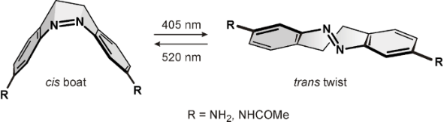
- rings can rotate with a low activation barrier, and isomerization of the trans form can occur in two different directions, forming two different isomers (enantiomers in the parent system) [4]. Power transmission to neighbouring molecules is inefficient because of energy transfer to internal




Synthesis and evaluation of new guanidine-thiourea organocatalyst for the nitro-Michael reaction: Theoretical studies on mechanism and enantioselectivity
Beilstein J. Org. Chem. 2012, 8, 1485–1498, doi:10.3762/bjoc.8.168
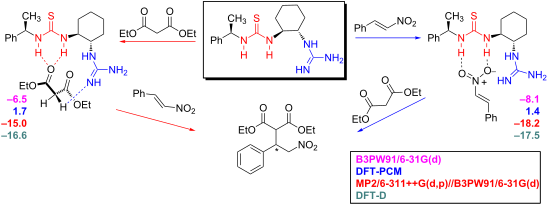
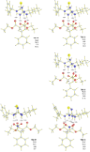
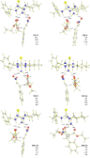
- state with a rather low activation barrier of 4.4 kcal·mol−1 at the B3PW91/6–31G(d) level. Inclusion of PCM, MP2 and DFT-D corrections increases the activation barrier to 12.2, 9.4 and 8.0 kcal·mol−1, in the DFT-PCM, MP2 and DFT-D results, respectively. We were also able to find a second complex



Thermodynamic and kinetic stabilization of divanadate in the monovanadate/divanadate equilibrium using a Zn-cyclene derivative: Towards a simple ATP synthase model
Beilstein J. Org. Chem. 2012, 8, 81–89, doi:10.3762/bjoc.8.8
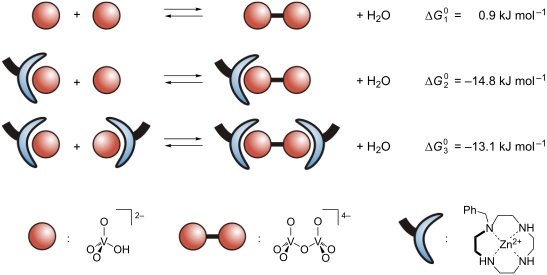
- ). To further simplify the system, we chose the dimerization of vanadate as a model for the phosphate condensation for the following reasons: The condensation of phosphate has a very high activation barrier (disodium phosphate condensates to pyrophosphate at temperatures >250 °C) which is likely
- presence of metal cations such as Zn2+, Mg2+ and Mn2+ in the active site [9]. It is generally assumed that the coordination of the metal cations to the phosphate oxygen atoms reduces the Coulomb repulsion in the transition states or in the intermediates, thus, lowering the activation barrier [10]. In




Valence isomerization of cyclohepta-1,3,5-triene and its heteroelement analogues
Beilstein J. Org. Chem. 2011, 7, 1713–1721, doi:10.3762/bjoc.7.201
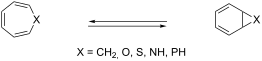
- was the first to observe norcaradiene (2) directly, by employing low-temperature photolysis, and an activation barrier of 11 ± 2 kcal·mol−1 was determined for the formation of 2 from 1, with the product being 4 kcal·mol−1 less stable [25]. Strong electron-withdrawing groups at the methylene bridge
- = 52.9°, β = 25.4°; same level of theory) [14]. Using 1H NMR spectroscopy, Vogel and Günther determined that 7-oxa-bicyclo[4.1.0]hepta-2,4-diene (4, benzene oxide; Scheme 4) is 1.7 kcal·mol−1 more stable than monocyclic 3 in apolar solvents [38][39], with an activation barrier for the conversion of 3 to
- due to the low activation barrier for sulfur extrusion [40][48][70], which occurs through a sequence of low-energy processes involving several sulfur-containing intermediates [71][72]. Thiepine (5) can be stabilized by Fe(CO)3 complexation (15; Figure 2) [73] or by decorating the seven-membered ring


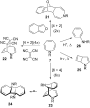


An efficient and practical entry to 2-amido-dienes and 3-amido-trienes from allenamides through stereoselective 1,3-hydrogen shifts
Beilstein J. Org. Chem. 2011, 7, 410–420, doi:10.3762/bjoc.7.53
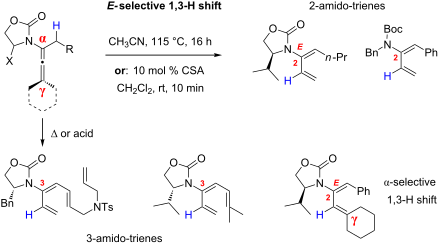
- significantly lowered thermal activation barrier of 1,3-hydrogen-shifts of allenamides is that the nitrogen atom can serve to stabilize the biradical intermediate [2][4][5][6][7][8][9][10][11][12] (for another leading reference on related radical intermediates see [78]) which are presumed to be electron
- state through increasing negative charge density at the β-carbon. This action would lead to an N-acyl iminium ion-like character with the migrating hydrogen being proton-like with the α-position being favoured. This polarized transition state should also have a lower thermal activation barrier for the


Recent advances in the development of alkyne metathesis catalysts
Beilstein J. Org. Chem. 2011, 7, 82–93, doi:10.3762/bjoc.7.12
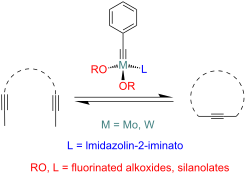
- more active than 9. This is supported by DFT calculations for the metathesis of 2-butyne as the model reaction, which reveal that the activation barrier for the three catalysts follows the order 9 > 10 > 5. ACM reactions with more complex substrates bearing different functional groups were studied in
- -pentynyl)phthalate (20) (Table 4). The results showed that the tungsten benzylidyne complex can catalyze both reactions with high efficiency, whereas the molybdenum counterpart had a significantly lower activity, in agreement with a theoretically predicted higher activation barrier for the Mo system [70


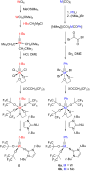


The first organocatalytic carbonyl- ene reaction: isomerisation- free C-C bond formations catalysed by H-bonding thio- ureas
Beilstein J. Org. Chem. 2007, 3, No. 24, doi:10.1186/1860-5397-3-24
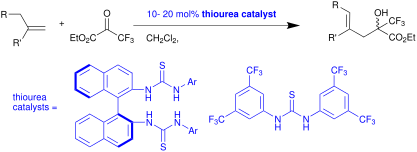
- , Ni and Pt catalysts.[7][8] The importance of such reactions is derived from the ever-increasing occurrence of trifluoromethyl substituents in drugs and biologically active compounds.[9][10] Given that trifluoropyruvate ene reactions seemingly have a low activation barrier, and as part of our ongoing





