Search results
Search for "all-carbon" in Full Text gives 70 result(s) in Beilstein Journal of Organic Chemistry.
Copper-catalysed asymmetric allylic alkylation of alkylzirconocenes to racemic 3,6-dihydro-2H-pyrans
Beilstein J. Org. Chem. 2015, 11, 2435–2443, doi:10.3762/bjoc.11.264
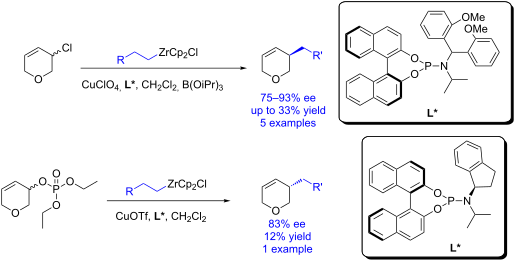
- obtained by ring-closing methods [29][30]. To extend our previously reported DYKATs beyond all-carbon electrophiles we decided to examine 3-chloro-3,6-dihydro-2H-pyran (2a, Scheme 1b). This was envisaged to be a challenging substrate. The presence of oxygen in the ring would modify the electronics, and


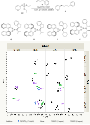


Copper-catalyzed asymmetric conjugate addition of organometallic reagents to extended Michael acceptors
Beilstein J. Org. Chem. 2015, 11, 2418–2434, doi:10.3762/bjoc.11.263
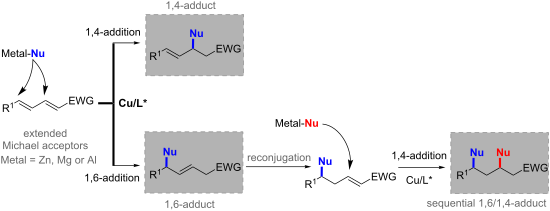
- /L13) resulted in a surprising inversion of the regioselectivity. Indeed, the addition of ethylmagnesium bromide onto cyclic dienones occurred at the 1,4-position, affording compounds featuring an all-carbon quaternary center. The authors suggested that the chelating hydroxyalkyl chain was at the


Interactions between tetrathiafulvalene units in dimeric structures – the influence of cyclic cores
Beilstein J. Org. Chem. 2015, 11, 930–948, doi:10.3762/bjoc.11.104
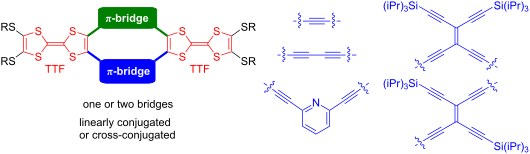
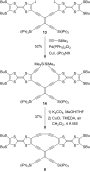
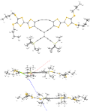
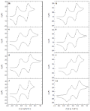
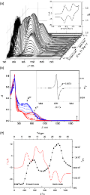
- , but the interaction can here also be increased by “doubly-bridging” them [13]. Those redox groups that have shown the best interaction along the all-carbon bridges are the organometallic metal centres Re(NO)(PPh3)Cp* [24], Ru(dppe)Cp* [25], and Fe(dppe)Cp* [26] (Cp* = 1,2,3,4,5






Attempts to prepare an all-carbon indigoid system
Beilstein J. Org. Chem. 2015, 11, 363–372, doi:10.3762/bjoc.11.42

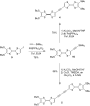
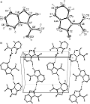
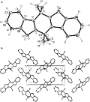
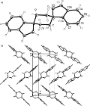
- Braunschweig, Germany, Fax: (+49)531-391-5387 10.3762/bjoc.11.42 Abstract First attempts are described to prepare a precursor for an all-carbon analog of indigo, the tetracyclic triene 4. Starting from indan-2-one (9) the α-methylene ketone 13 was prepared. Upon subjecting this compound to a McMurry coupling
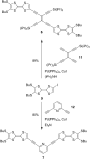
- only been described more recently [14]. As far as we are aware, however, no attempt to prepare an all-carbon equivalent of indigo has ever been described. A system that could qualify as such an all-carbon analog of 1 is the bis-anion 5, which itself should be obtainable by anionization of the linearly
- mirror symmetry (rmsd 0.04 Å). Our final attempt for the present to prepare a precursor hydrocarbon for an all-carbon indigoid system rests on the observation that the Thiele condensation of indene (6) with acetone in pyrrolidine/methanol yields the benzofulvene 29 (Scheme 6). A suitable methylene







Formal total syntheses of classic natural product target molecules via palladium-catalyzed enantioselective alkylation
Beilstein J. Org. Chem. 2014, 10, 2501–2512, doi:10.3762/bjoc.10.261

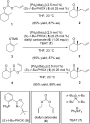
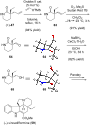
- dust mite deterrent; thus, in addition to its ornamental value, the hiba tree also provides and environmentally benign means of pest control [23][24]. (−)-Thujopsene (10) has attractive features to the synthetic chemist. Its tricyclo[5.4.0.01,3]undecane skeleton contains three contiguous all-carbon
- bromolactonization of 22 to build in the requisite syn relationship between the carboxylate group and the 3-hydroxy group, ultimately leading to quinic acid. Unlike the allylic alkylations in Scheme 1, which form all-carbon stereocenters, we envisioned a unique modification of the silyl enol ether version to access
- [71]. It features a tetracyclic scaffold with a nine-membered ring and an all-carbon quaternary stereocenter. This alkaloid is a microtubule-disrupting agent that displays similar cellular effects to paclitaxel [72][73]. Because of its biological activities and potential pharmaceutical use, many




Derivatives of the triaminoguanidinium ion, 3. Multiple N-functionalization of the triaminoguanidinium ion with isocyanates and isothiocyanates
Beilstein J. Org. Chem. 2014, 10, 2255–2262, doi:10.3762/bjoc.10.234
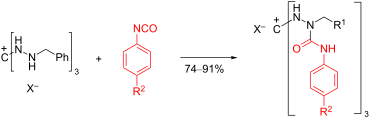
- CH2 group are found to be diastereotopic, that is, the cation permanently exists in a chiral conformation; severe steric hindrance obviously excludes a conformation with all carbon and nitrogen atoms in a common plane. In contrast to the spectra of 7a–c, those of 7d–f are characterized by strong line


C–H-Functionalization logic guides the synthesis of a carbacyclopamine analog
Beilstein J. Org. Chem. 2014, 10, 1564–1569, doi:10.3762/bjoc.10.161
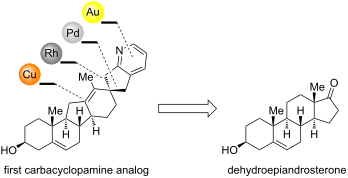
- States 10.3762/bjoc.10.161 Abstract The chemical synthesis of carbacyclopamine analog 2, a cyclopamine analog with an all-carbon E-ring, is reported. The use of C–H-functionalization logic and further metal-catalyzed transformations allows for a concise entry to this new class of acid-stable cyclopamine
- intermediate in the synthesis of 2 (see Scheme 1). We envisioned a rhodium-catalyzed C–H-insertion into the C17–H bond to occur with a high degree of selectivity (both regio- and stereoselectivity) to form the all-carbon E-ring (for its structure see 11, Scheme 2). Furthermore, a Wagner–Meerwein rearrangement
- -functionalization logic [11]. In addition, the rational design and chemical synthesis of several analogs and derivatives by this [12][13] and other groups [14][15][16][17] have been disclosed. Here, we report the synthesis of a carbacyclopamine analog (2, Figure 1), an analog of the natural product with an all


Synthesis of the B-seco limonoid core scaffold
Beilstein J. Org. Chem. 2014, 10, 194–208, doi:10.3762/bjoc.10.15
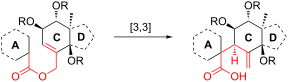
- quaternary centers at the ring junction. We decided to start the sequence with known enone 15 [39] and intended to construct the all-carbon quaternary center at C13 by substrate controlled α-functionalization. The second quaternary center at C14 might be established by 1,2-addition and finally, ring-closing




Gold(I)-catalyzed enantioselective cycloaddition reactions
Beilstein J. Org. Chem. 2013, 9, 2250–2264, doi:10.3762/bjoc.9.264
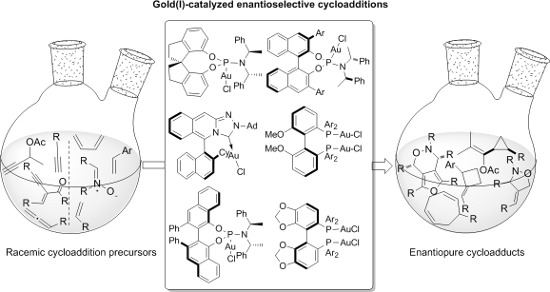
- complex, encompasses internally monosubstituted allenes, as well as disubstituted counterparts, offering a direct entry to 5,7 bicyclic systems including those with all-carbon quaternary stereocenters at the ring fusion. In contrast to the intramolecular counterpart, gold-catalyzed intermolecular


Linkage of α-cyclodextrin-terminated poly(dimethylsiloxanes) by inclusion of quasi bifunctional ferrocene
Beilstein J. Org. Chem. 2013, 9, 1278–1284, doi:10.3762/bjoc.9.144
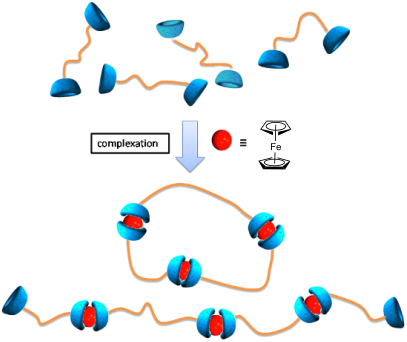
- structure of the α-CD:ferrocene complex has been analyzed by X-ray-diffraction [6]. These studies showed that the ferrocene molecule is encapsulated by two α-CD rings in a tail-to-tail orientation, where all carbon atoms of the cyclopentadienyl rings are in close contact with the cavity of the cyclodextrin


Ring opening of 2-aza-3-borabicyclo[2.2.0]hex-5-ene, the Dewar form of 1,2-dihydro-1,2-azaborine: stepwise versus concerted mechanisms
Beilstein J. Org. Chem. 2013, 9, 761–766, doi:10.3762/bjoc.9.86
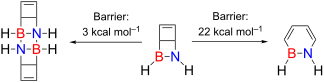
- connect the Dewar form 3 to 1,2-dihydro-1,2-azaborine. These transition states are similar in geometry to those described earlier for the all-carbon system (see Figure 1 and Figure 2) [14]. The C1–C4 distance is shorter in TS1 (2.247 Å) than it is in TS2 (2.313 Å). The BN unit is a bystander in these two
- mechanisms as it is not involved in the ring-opening process. The energies of these transition states were refined with multireference perturbation theory (MRMP2). In agreement with the results obtained for the all-carbon system [14], the barrier for the orbital-symmetry-allowed conrotatory ring opening is
- lower (26.5 kcal mol−1) than it is for the forbidden disrotatory reaction (30.1 kcal mol−1) (Table 1). The energy difference of about 4 kcal mol–1 is slightly smaller than that reported for the all-carbon system (7 kcal mol−1) [14]. Due to the use of different levels of theory (MRMP2 in the present work


Intramolecular carbonickelation of alkenes
Beilstein J. Org. Chem. 2013, 9, 710–716, doi:10.3762/bjoc.9.81
- % GC yield, 28% isolated yield) is obtained together with the indoline 11c, in an indol/indoline 10c/11c ratio of 80/20. Creation of an all-carbon quaternary center at a ring junction The success of the above experiments prompted us to conduct this reaction with trisubstituted olefins, in an effort to
- construct tricyclic skeletons with an all-carbon quaternary center at a ring junction. This pattern is found in important natural products such as morphine whose ACE ring system exhibits a tetrahydrodibenzofuran motif with an angular ethylamino chain on C13. We thought that the nickel-catalyzed
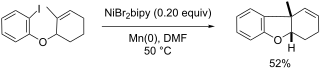
- the expected (and sole) tricyclic product 14 in 52% isolated yield, resulting from a nickel-catalyzed intramolecular base-free Heck-type coupling and exhibiting an all-carbon quaternary center at a cis-ring junction (as established by NOESY experiments). This result, added to that obtained above with


The chemistry of bisallenes
Beilstein J. Org. Chem. 2012, 8, 1936–1998, doi:10.3762/bjoc.8.225
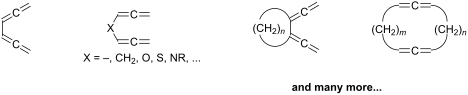
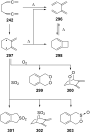
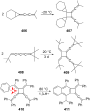
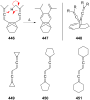
- in 7 (n = 1) is replaced by a heteroatom, the heteroorganic bisallenes 16 result, in their simplest form as ethers (X = O), amines (X = NR), thioethers (X = S), etc. Analogously bisallenic epoxides (17, X = O) or aziridines (17, X = NR) can formally be generated from the corresponding all-carbon
















Iridium-catalyzed intramolecular [4 + 2] cycloadditions of alkynyl halides
Beilstein J. Org. Chem. 2012, 8, 1765–1770, doi:10.3762/bjoc.8.201
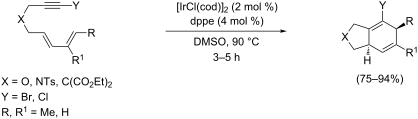
- nitrogen-tethered substrates (Table 3, entries 4 and 5) when changing R1 = H to R1 = Me, as the reaction time increased from 3 to 4 h and the yield decreased slightly. The all-carbon tethered substrates (Table 3, entries 6 and 7) required longer reaction times, but the cycloadditions occurred in good


Valence isomerization of cyclohepta-1,3,5-triene and its heteroelement analogues
Beilstein J. Org. Chem. 2011, 7, 1713–1721, doi:10.3762/bjoc.7.201
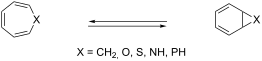
- Helen Jansen J. Chris Slootweg Koop Lammertsma Department of Chemistry and Pharmaceutical Sciences, VU University Amsterdam, De Boelelaan 1083, 1081 HV, Amsterdam, The Netherlands 10.3762/bjoc.7.201 Abstract The valence isomerization of the all-carbon and heteroelement analogues of cyclohepta
- necessitates a brief overview of the parent all-carbon system. This section is followed by one in which experimental data on the oxepine, thiepine, 1H-azepine, and 1H-phosphepine valence isomerizations are compared with those obtained by theoretical calculations. Computational methods have the advantage that
- -oxabicyclo[2.3.0]hepta-3,6-diene (13) [38][51], while under thermal, photochemical or acidic conditions, the three-membered ring of bicyclic 4 opens, generating phenol [67][68], in analogy to the all-carbon norcaradiene (2), which gives toluene. In addition, 4 undergoes highly selective Diels–Alder reactions




Recent developments in gold-catalyzed cycloaddition reactions
Beilstein J. Org. Chem. 2011, 7, 1075–1094, doi:10.3762/bjoc.7.124
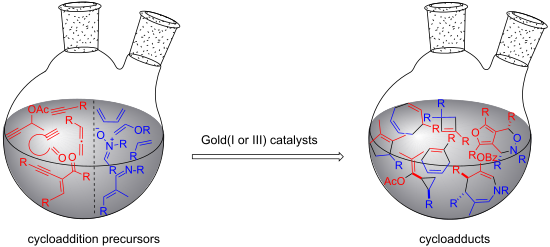
- authors proposed that these intermediates formally behave as an all-carbon 1,4-dipole that intermolecularly reacts with the indole providing the final polycyclic furan adducts 9 in a regioselective fashion (Scheme 4) [46]. In 2009, J. Zhang reported a gold(I)-catalyzed tandem cyclization/(3 + 3


Metathesis access to monocyclic iminocyclitol-based therapeutic agents
Beilstein J. Org. Chem. 2011, 7, 699–716, doi:10.3762/bjoc.7.81

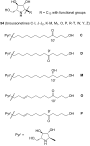
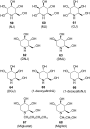
- iminocyclitols is dictated by the stereochemistry at all carbon atoms of the pyrrolidine ring system which can adopt either a manno or a galacto conformation, therefore inhibiting either α-mannosidases (e.g., 11–13) or α-galactosidases (e.g., 14) (Scheme 2). A characteristic feature in 11–14 is the presence of a





Palladium-catalyzed formation of oxazolidinones from biscarbamates: a mechanistic study
Beilstein J. Org. Chem. 2011, 7, 246–253, doi:10.3762/bjoc.7.33
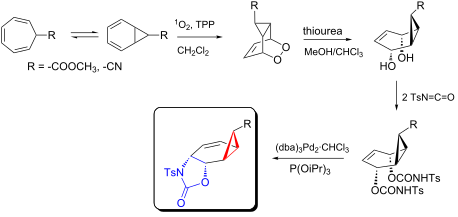
- of 6 [18]. Selective reduction of the peroxide linkage in 6 was carried out with thiourea under very mild conditions to give the diol 7 [19]. Since only the oxygen–oxygen bond is broken in this reaction, the configuration at all carbon atoms is preserved. Oxazolidinone 9 was synthesized by two


The allylic chalcogen effect in olefin metathesis
Beilstein J. Org. Chem. 2010, 6, 1219–1228, doi:10.3762/bjoc.6.140
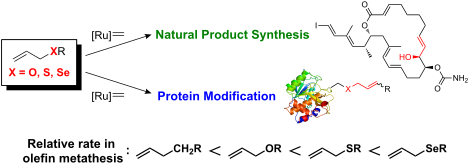
- amino acids with allyl alcohol mediated by catalyst 4 was investigated. Unexpectedly, S-allylcysteine derivative 21a was the only substrate that afforded a synthetically useful amount of CM product, whereas the reaction of the all carbon analogue homoallylglycine (20) and sulfide derivatives, S-butenyl


Methods for the synthesis of polyhydroxylated piperidines by diastereoselective dihydroxylation: Exploitation in the two-directional synthesis of aza-C-linked disaccharide derivatives
Beilstein J. Org. Chem. 2005, 1, No. 2, doi:10.1186/1860-5397-1-2
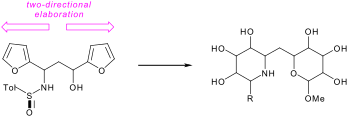
- which saturated polyhydroxylated nitrogen and oxygen heterocycles are linked by an all-carbon tether. The saturated oxygen heterocycle has the potential to mimic the departing sugar in a glycosidase-catalysed reaction and aza-C-linked disaccharide mimetics may, therefore, be more potent inhibitors of