


Search results
Search for "asymmetric reactions" in Full Text gives 63 result(s) in Beilstein Journal of Organic Chemistry.
Asymmetric one-pot sequential Friedel–Crafts-type alkylation and α-oxyamination catalyzed by a peptide and an enzyme
Beilstein J. Org. Chem. 2012, 8, 1333–1337, doi:10.3762/bjoc.8.152
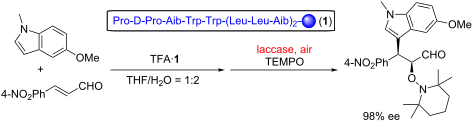
- diastereomer was 96% (Table 1, entry 1). It is noteworthy that the ee of the major diastereomer was higher than that of each single reaction [33][37]. Such enantio-enrichment is generally caused in consecutive catalytic asymmetric reactions through the formation of diastereomeric pairs [17][41]. From the


Continuous-flow catalytic asymmetric hydrogenations: Reaction optimization using FTIR inline analysis
Beilstein J. Org. Chem. 2012, 8, 300–307, doi:10.3762/bjoc.8.32
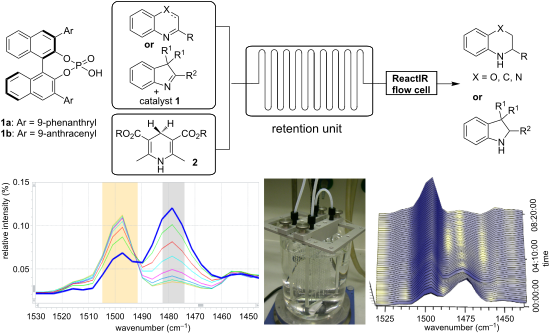
- synthesis [56][57][58][59][60][61][62][63][64][65][66][67][68][69][70][71][72][73][74][75][76][77][78][79][80]; however, examples regarding asymmetric reactions as well as organocatalytic reactions are scarce [81][82][83][84][85][86][87][88][89][90][91][92][93][94][95][96]. Herein, we present the first


Continuous-flow hydration–condensation reaction: Synthesis of α,β-unsaturated ketones from alkynes and aldehydes by using a heterogeneous solid acid catalyst
Beilstein J. Org. Chem. 2011, 7, 1680–1687, doi:10.3762/bjoc.7.198
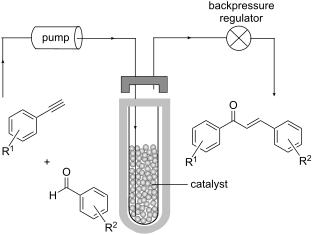
- has been shown that even asymmetric reactions can be conducted in a continuous-flow fashion [35][36][37][38][39][40]. Recently, the combination of flow processes and microwave technology has become an interesting endeavour in both academia and in industry. The combination of continuous-flow technology


Directed ortho,ortho'-dimetalation of hydrobenzoin: Rapid access to hydrobenzoin derivatives useful for asymmetric synthesis
Beilstein J. Org. Chem. 2011, 7, 1315–1322, doi:10.3762/bjoc.7.154
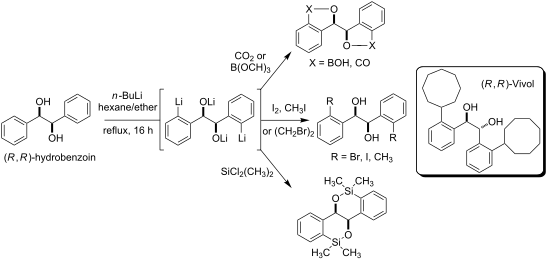
- The discovery of new chiral ligands and auxiliaries continues to expand the frontiers of catalytic asymmetric synthesis. In particular, C2-symmetric diols, such as (S)-BINOL (1) [1] and (−)-TADDOL (2) [2] (Figure 1), have garnered considerable attention owing to the wide variety of asymmetric
- reactions promoted by these ligands and/or their derivatives. Although hydrobenzoin (e.g., 3) has not been utilized to the same extent, it has also demonstrated utility as both a chiral ligand [3][4][5][6][7][8] and auxiliary [9][10][11][12][13][14][15][16][17]. For example, Hall reported that the


Recent advances in the gold-catalyzed additions to C–C multiple bonds
Beilstein J. Org. Chem. 2011, 7, 897–936, doi:10.3762/bjoc.7.103
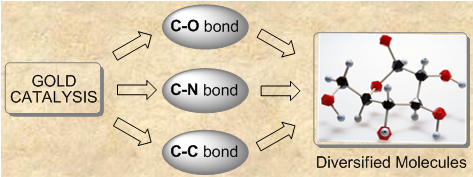
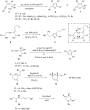
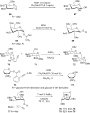
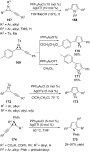
- -catalyzed reactions are the main determinant of enantioselectivity. Although asymmetric catalysis using chiral organometal complexes and chiral organomolecules have shown many advantages and a range of catalytic asymmetric reactions have been well documented [175], gold-catalyzed asymmetric addition












Alkene selenenylation: A comprehensive analysis of relative reactivities, stereochemistry and asymmetric induction, and their comparisons with sulfenylation
Beilstein J. Org. Chem. 2011, 7, 744–758, doi:10.3762/bjoc.7.85

- methyl substituents upon the rates of reaction in several other electrophilic additions to alkenes, including arenesulfenyl chlorides. This is due to steric effects predominating in the former, while electronic effects predominate in the latter. Stereochemical outcomes in the asymmetric reactions of
- chiral arenesulfenyl chlorides [91] generally feature both lower diastereoselectivity and chemical yields as compared with analogous asymmetric reactions of areneselenenyl chlorides. Each of these differences is in agreement with the findings discussed in this work, that increasing the degree of


Synthesis of chiral mono(N-heterocyclic carbene) palladium and gold complexes with a 1,1'-biphenyl scaffold and their applications in catalysis
Beilstein J. Org. Chem. 2011, 7, 555–564, doi:10.3762/bjoc.7.64
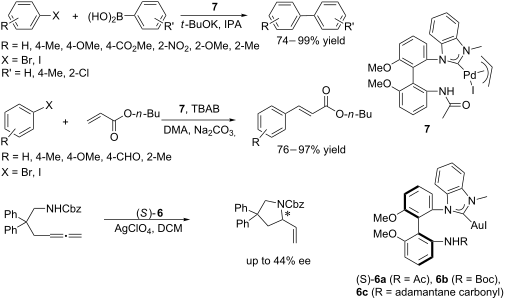
- allylic acetates [75][76], carbene-transfer reactions from ethyl diazoacetate [77], formation of conjugated enones and enals [78], regio- and stereoselective synthesis of fluoroalkenes [79], and so on [80][81][82][83][84][85]. However, reports on NHC–Au catalyzed asymmetric reactions are rare [86]. The




Concise methods for the synthesis of chiral polyoxazolines and their application in asymmetric hydrosilylation
Beilstein J. Org. Chem. 2010, 6, No. 29, doi:10.3762/bjoc.6.29

- ; Introduction The design and development of effective chiral oxazoline ligands have played a significant role in the advancement of asymmetric catalysis and have attracted a great deal of attention. Various chiral oxazoline ligands have been developed and applied in many catalytic asymmetric reactions to
- prepare enantiomerically pure compounds; in particular, a range of mono- and bisoxazolines have been widely used as effective templates for metal-catalyzed asymmetric reactions over the last 30 years [1][2][3][4][5][6][7][8][9][10][11][12][13]. Previously, polyoxazoline ligands were reported to have good
- catalytic activities and high enantioselectivities in various asymmetric reactions [14][15][16][17][18][19][20]. For example, chiral 1,2,2-tris[2-(4-isopropyloxazolinyl)]propane was shown to lead to high enantioselectivities in the Cu(II)-catalyzed asymmetric Michael addition reaction between indole and


Can we measure catalyst efficiency in asymmetric chemical reactions? A theoretical approach
Beilstein J. Org. Chem. 2009, 5, No. 67, doi:10.3762/bjoc.5.67

- comparisons that summarise the diverse features of catalytic, asymmetric reactions? In this paper we focus on a definition of catalyst efficiency that takes into account the number of atoms involved in effecting the relevant reaction. We evaluate the proposed formula for several well-known catalytic systems
- , molecular weight, and by extension, cost, can be considered. Many catalytic, asymmetric reactions that are of preparative interest to chemists have time frames ranging from minutes to hours, and where the ability of the catalyst to turn over substrate is reflected in the amount of catalyst that needs to be


Asymmetric reactions in continuous flow
Beilstein J. Org. Chem. 2009, 5, No. 19, doi:10.3762/bjoc.5.19
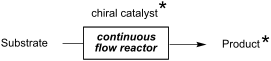
- conditions and in the case of heterogeneous catalysis, potential long term use of the catalysts. This review will highlight some of the continuous flow asymmetric reactions described to date. Review Homogeneous catalysis Only a few examples of homogeneous enantioselective reactions in continuous flow have
- in continuous flow asymmetric reactions using immobilized catalyst systems. An asymmetric reaction that has been examined extensively in continuous flow using supported catalysts is the enantioselective addition of diethylzinc to benzaldehyde [23][24][25][26][27][28]. A fast, single pass continuous
- yield observed between each run and without the need for catalyst regeneration, providing 78% total yield of 14 with 88% ee. Cinchona alkaloid derivatives have been featured in a number of solid support-based continuous flow asymmetric reactions. For example, a Wang-resin supported quinine derivative


Recent progress on the total synthesis of acetogenins from Annonaceae
Beilstein J. Org. Chem. 2008, 4, No. 48, doi:10.3762/bjoc.4.48
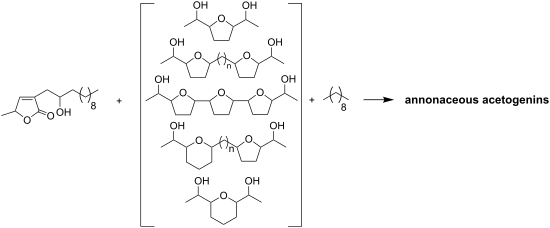
- materials (e.g. amino acids, sugars, tartaric acid, etc.) or on asymmetric reactions {e.g. Sharpless asymmetric epoxidation (AE), Sharpless asymmetric dihydroxylation (AD), diastereoselective Williamson etherification, etc.}. Semi-synthesis of natural ACGs as well as derivatised ACGs (e.g. amines, esters


Understanding the mechanism of Pd-catalyzed allylic substitution of the cyclic difluorinated carbonates
Beilstein J. Org. Chem. 2008, 4, No. 18, doi:10.3762/bjoc.4.18
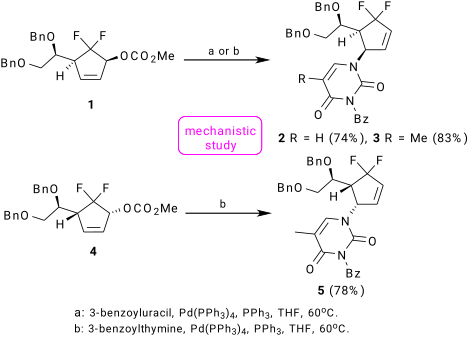
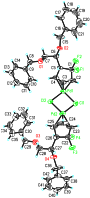
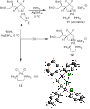
- our knowledge, the effect of gem-difluoromethylene group on Pd-catalyzed cyclic allylic substitution has never been addressed so far. The regioselectivity was totally different from those of nonfluorinated substrates [18]. Unexpected and specific regioselectivity of Pd-catalytic asymmetric reactions



Stereoselective α-fluoroamide and α-fluoro- γ-lactone synthesis by an asymmetric zwitterionic aza-Claisen rearrangement
Beilstein J. Org. Chem. 2005, 1, No. 13, doi:10.1186/1860-5397-1-13
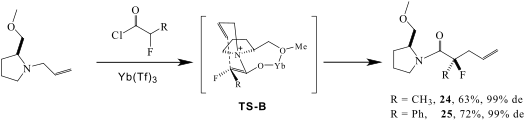
- utilising α-fluorocarboxylic acid chlorides with N-allylmorpholine and N-allypyrrolidines. The reaction with N-allylmorpholine is efficient, however by using homochiral pyrrolidine auxiliaries, successful asymmetric reactions were achieved with (R)-N-allyl-2-(diphenylmethyl)pyrrolidine 15, but particularly





