


Search results
Search for "crystallization" in Full Text gives 321 result(s) in Beilstein Journal of Organic Chemistry. Showing first 200.
Light-responsive rotaxane-based materials: inducing motion in the solid state
Beilstein J. Org. Chem. 2023, 19, 873–880, doi:10.3762/bjoc.19.64
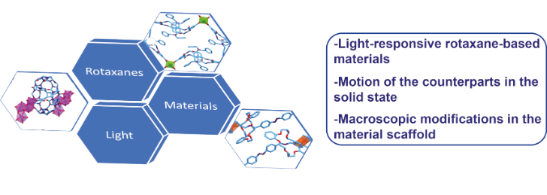
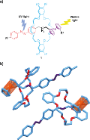
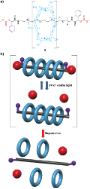
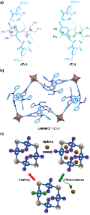
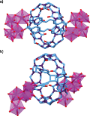
- Photoresponsive rotaxane discrete crystals A complete understanding of the crystallization mechanisms accompanied by a rational design can lead to the obtention of crystalline molecular materials which allow the dynamics of the counterparts to take place [35][36][37]. Indeed, the motion of the cyclic counterparts

Nucleophile-induced ring contraction in pyrrolo[2,1-c][1,4]benzothiazines: access to pyrrolo[2,1-b][1,3]benzothiazoles
Beilstein J. Org. Chem. 2023, 19, 646–657, doi:10.3762/bjoc.19.46
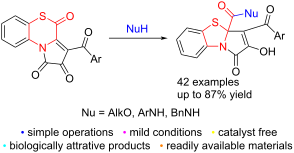
- reaction of APBTT 1a with benzylamine (Scheme 11). As we expected, this reaction proceeded similarly to the reaction of APBTTs 1 with alcohols 2, and we obtained the desired PBTA 7a in a good isolated yield (44%). The product 7a was isolated by simple crystallization from the reaction mixture. Next, the
- (11a, Scheme 16). This reaction proceeded similarly to reactions of APBTTs 1 with alcohols 2 and benzylamine, and we obtained the desired PBTA 12aa in a moderate isolated yield (40%). The product 12aa was isolated by simple crystallization from the reaction mixture. Next, the conditions (Table 3) of
- isolated by a simple crystallization from the reaction mixture. Moreover, we observed the formation of compounds 17 during acylation of enamines 15 with oxalyl chloride to prepare the starting APBTTs 1 (Scheme 21). We noticed that in this case, compounds 17 were formed when HCl was not effectively removed




Combretastatins D series and analogues: from isolation, synthetic challenges and biological activities
Beilstein J. Org. Chem. 2023, 19, 399–427, doi:10.3762/bjoc.19.31
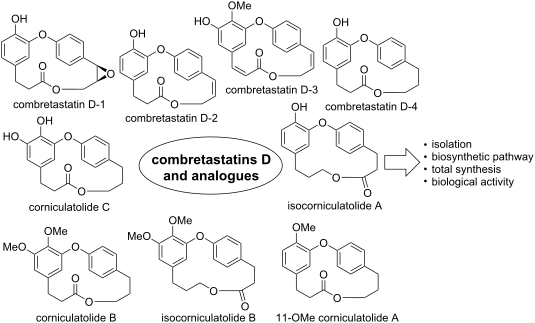
- -methylcorniculatolide A (5, 10 mg), 12-hydroxy-11-O-methylcorniculatolide A (6, 1 mg) and 11-O-methylisocorniculatolide A (8, 2 mg). The authors had some difficulties to isolate isocorniculatolide A (5) using chromatography, however, it was obtained by crystallization from hexane and acetone (4 mg). The same strategy




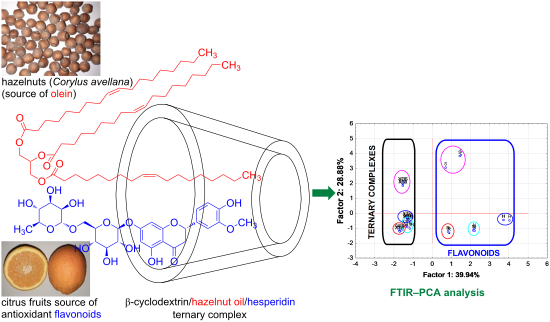
Discrimination of β-cyclodextrin/hazelnut (Corylus avellana L.) oil/flavonoid glycoside and flavonolignan ternary complexes by Fourier-transform infrared spectroscopy coupled with principal component analysis
Beilstein J. Org. Chem. 2023, 19, 380–398, doi:10.3762/bjoc.19.30
- -crystallization [10]. Omega-3 FA glycerides such as eicosapentaenoic and docosahexaenoic acid glycerides (EPA and DHA glycerides) from fish oil are less stable against oxidation. Their thermal and oxidative stabilities were significantly increased by CD nanoencapsulation as was shown for fish oil from common
- kneading method as the most appropriate one for obtaining β-CD/hazelnut (Corylus avellana L.) oil/flavonoid glycoside or flavonolignan ternary complexes. Kneading allows for higher recovery yields of complexes in comparison with the co-crystallization method because only small amounts of solvent are needed
- (common barbel, Pontic shad, European wels catfish, common bleak) by CDs [11][17]. Moreover, this TG behavior does not depend on the method of synthesis (kneading or co-crystallization) or the method of water determination (TG as mass loss or Karl Fischer water titration, KFT) [6][68]. It was observed



Continuous flow synthesis of 6-monoamino-6-monodeoxy-β-cyclodextrin
Beilstein J. Org. Chem. 2023, 19, 294–302, doi:10.3762/bjoc.19.25
- most cases, the preparation of these compounds is based on the use of a limited amount of the reagent. However, due to the very similar reactivity of hydroxy groups, oversubstitution cannot be avoided during the reaction, thus chromatography or crystallization steps are essential for the preparation of
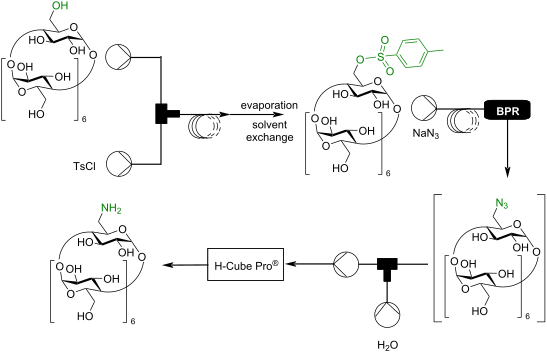
- -CD (2), overreacted byproducts, and starting β-CD (1). However, in previous studies this has been reported as a clean product with a yield of almost 50% [31][33]. Recrystallization is mandatory to obtain pure Ts-β-CD (2) [38][39]. The best results are obtained by crystallization of the crude product
- monosubsituted compound was performed after this last modification. After precipitation, an apparent yield of more than 90% was noted; however, this value did not take into account native β-CD (1) as byproduct. On the other hand, if purification by column chromatography or crystallization is also used, yields of


Revisiting the bromination of 3β-hydroxycholest-5-ene with CBr4/PPh3 and the subsequent azidolysis of the resulting bromide, disparity in stereochemical behavior
Beilstein J. Org. Chem. 2023, 19, 91–99, doi:10.3762/bjoc.19.9
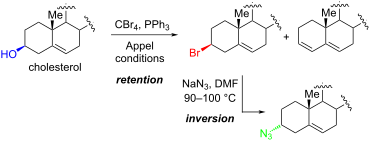
- flash chromatography (petroleum ether) to afford compound 5 (2.47 g, 63%) as faint creamy sticks upon crystallization from Et2O. Rf = 0.26 (petroleum ether); mp: 98 °C [10] (reported mp: 114−115 °C [18]; IR: ν 2081 (N3 str) cm−1; 1H NMR (600 MHz, CDCl3) δ 5.39 (t, J = 2.3, 4.8 Hz, 1H, H-6), 3.87 (t, J




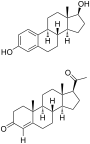
Inclusion complexes of the steroid hormones 17β-estradiol and progesterone with β- and γ-cyclodextrin hosts: syntheses, X-ray structures, thermal analyses and API solubility enhancements
Beilstein J. Org. Chem. 2022, 18, 1749–1762, doi:10.3762/bjoc.18.184
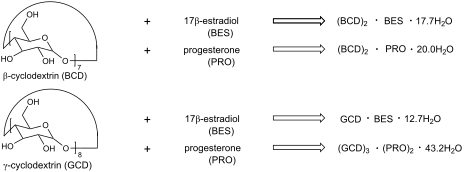
- to prepare complexes by spray-drying, freeze-drying, co-grinding, kneading and solution-based crystallization; however, this modest type of ‘fingerprinting’ has not generally been pursued further to deduce important features of CD complexes such as the crystal packing of the CD host molecules



Inline purification in continuous flow synthesis – opportunities and challenges
Beilstein J. Org. Chem. 2022, 18, 1720–1740, doi:10.3762/bjoc.18.182
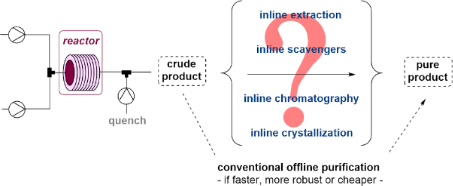
- exploited to achieve effective and reliable flow processes. This perspective article summarizes recent applications of different inline purification techniques such as chromatography, extractions, and crystallization from academic and industrial laboratories. A discussion of the advantages and drawbacks of
- stationary phases is simulated by periodically shifting the two inlet and outlet ports in the direction of the mobile phase flow after a certain time. This technique was also applied to isolate artemisinin from a continuously produced reaction mixture. However, an offline crystallization had to be added to
- , this strategy is attractive for rapid small-scale syntheses of such scaffolds and the optimization of the used solvents can broaden the uptake of this strategy. Inline precipitation and crystallization One of the most widely acknowledged challenges within the field of flow chemistry is the necessity to




Design, synthesis, and evaluation of chiral thiophosphorus acids as organocatalysts
Beilstein J. Org. Chem. 2022, 18, 1471–1478, doi:10.3762/bjoc.18.154
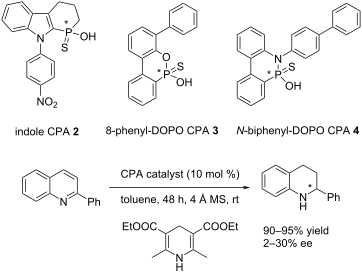
- intermediates 13a and 13b, respectively. Next, conversion of ethyl phosphinate 13 into phosphinamide 14 was accomplished uneventfully [38] with inexpensive (S)-1-phenylethylamine (15 $/mol) as the chiral element. A single diastereoisomer of phosphinamide 14b was easily obtained by crystallization in 20% yield
- obtained in moderate yield. Crystallization gave a single diastereoisomer in 20% yield. Stec reaction [38][39][40] finally gave the desired CPA 4. Although the entire sequence proceeded in only 6% overall yield, it was conducted on a multigram-scale so that more than 0.4 g of 4 was obtained. Evaluation of
- accomplished easily, either by chromatography over silica gel or crystallization. Subsequent Stec reaction proved to be a reliable method to convert the resolved amide into the chiral thiophosphorus acids. The CPAs synthesized clearly failed to induce any significant asymmetry. It is interesting to note


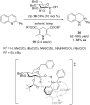
Derivatives of benzo-1,4-thiazine-3-carboxylic acid and the corresponding amino acid conjugates
Beilstein J. Org. Chem. 2022, 18, 1195–1202, doi:10.3762/bjoc.18.124
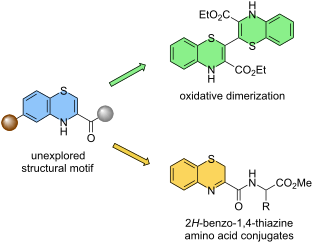
- decomposed in solution. During the preparation of 10ac, dimers 11a and 11b were also detected in most experiments (TLC analysis), and they could be isolated by crystallization from MeOH or hexane. Performing the reaction in the dark with freshly degassed ethanol at lower temperature did bring about somewhat
Facile and diastereoselective arylation of the privileged 1,4-dihydroisoquinolin-3(2H)-one scaffold
Beilstein J. Org. Chem. 2022, 18, 1070–1078, doi:10.3762/bjoc.18.109
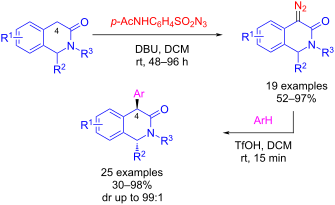
- anticancer cytotoxic agents. Diverse bioactive compounds based on the privileged 1,4-DHIQ scaffold. Strategy investigated in this work. Preparation of 3(2H)-isoquinolones 11. aObtained as a 10:1 mixture of regioisomers; purified by crystallization. bEmployed in the next step without purification (not





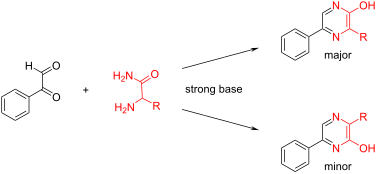
On Reuben G. Jones synthesis of 2-hydroxypyrazines
Beilstein J. Org. Chem. 2022, 18, 935–943, doi:10.3762/bjoc.18.93
- set up to run chromatography at 60 °C, a description of the crystallization, data collection, for the structural determination of compound 4{1,2} as well as copies of the 1H and 13C NMR spectra of all compounds described. Acknowledgements We thank Dr. Ahmed Haouz of the PF6 core facility of the


Inductive heating and flow chemistry – a perfect synergy of emerging enabling technologies
Beilstein J. Org. Chem. 2022, 18, 688–706, doi:10.3762/bjoc.18.70
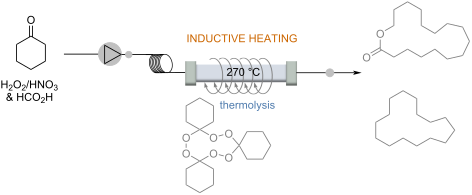
- was then mixed with a 1 M HCl solution in iPrOH that initiated crystallization of the hydrochloride salt of amitryptiline (84) (Scheme 15). Iso E Super® (88) [89] is one of the most successful synthetic fragrances ever developed [90]. It is a component of a variety of perfumes with varying ratios and




The asymmetric Henry reaction as synthetic tool for the preparation of the drugs linezolid and rivaroxaban
Beilstein J. Org. Chem. 2022, 18, 438–445, doi:10.3762/bjoc.18.46
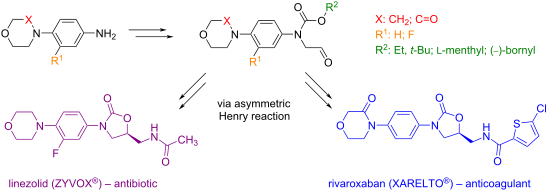
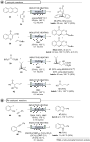
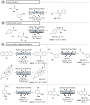
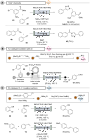
- /waxy solid material, what made the attempts of recrystallization impossible. On the other hand, the corresponding amides 27 and 28 were obtained as fine crystalline solids. Their crystallization was successfully performed from several solvents. However, the de values of the isolated recrystallized


Trichloroacetic acid fueled practical amine purifications
Beilstein J. Org. Chem. 2022, 18, 225–231, doi:10.3762/bjoc.18.26
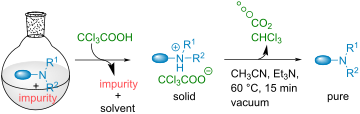
- this mixture dissolved in EtOAc, precipitation of the amine salt enabled the removal of naphthalene in the solvent. Beside the choice of the solvent for the crystallization which strongly depends on the solubility of the protonated amine salts involved, we first focused on the optimization of the
- isolated in its pure form starting from model mixtures containing various aromatics, phenols, alkanes or alkenes in overall purification yields ranging from 53 to 98%. The lower yields are observed for coordinating phenol and catechol (Table 2, entries 3 and 4), probably impacting the crystallization
- importance, this technique is also efficient for the isolation of highly complex natural amines such as brucin, isolated in 57% yield using TCA (Table 3, entry 14). As mentioned, identification of a suitable solvent solubilizing the initial mixture and enabling precipitation/crystallization of the amine salt


Stepwise PEG synthesis featuring deprotection and coupling in one pot
Beilstein J. Org. Chem. 2021, 17, 2976–2982, doi:10.3762/bjoc.17.207

- reaction, which mainly include styrene and p-toluenesulfonic acid. As a result, when the reaction is performed at large scales, there is a high probability that the product can be purified by methods such as partition, precipitation and crystallization. The major advantage of using a base-labile protecting


Effect of a twin-emitter design strategy on a previously reported thermally activated delayed fluorescence organic light-emitting diode
Beilstein J. Org. Chem. 2021, 17, 2894–2905, doi:10.3762/bjoc.17.197
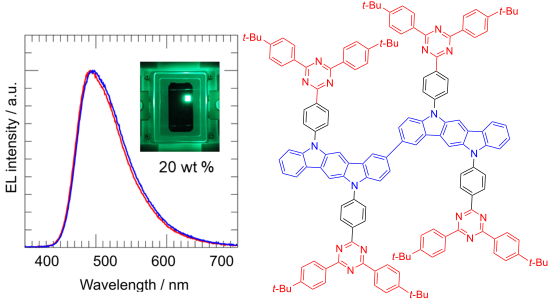
- with a low-Tg host like CBP, which is prone to crystallization, the obtained emitter orientation even turned vertical with the a factor approaching 0.40 [39]. Thus, measurements of the anisotropy factor were accordingly carried out for both ICzTRZ and DICzTRZ. Polarization and angle dependent


Highly stereocontrolled total synthesis of racemic codonopsinol B through isoxazolidine-4,5-diol vinylation
Beilstein J. Org. Chem. 2021, 17, 2781–2786, doi:10.3762/bjoc.17.188
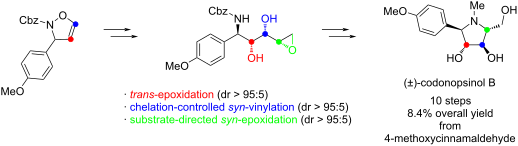
- -catalyzed hydrolysis of 10 with concentrated hydrochloric acid in acetone/water afforded diol 3 in excellent 93% yield. The crystallization of the crude product from a hexanes/CH2Cl2 mixture led to the preferential formation of the thermodynamically more stable 4,5-cis isomer (determined on the basis of a


Synthetic strategies toward 1,3-oxathiolane nucleoside analogues
Beilstein J. Org. Chem. 2021, 17, 2680–2715, doi:10.3762/bjoc.17.182
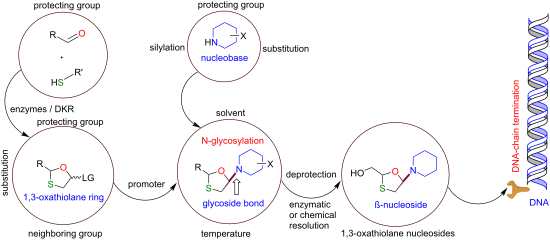
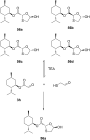
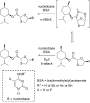
- highly effective crystallization-induced DKR to achieve an efficient synthesis of enantiomerically pure oxathiolane-based lactol 56a from ʟ-menthyl glyoxylate (3h) monohydrate and 1,4-dithiane-2,5-diol (3q, Scheme 17). The investigation proved that the base TEA was capable of effecting the equilibration
- at C-2 but advantageous for the crystallization process. A number of bases was also evaluated by this research group: pyridine gave only a small amount of interconversion, whereas TEA caused rapid interconversion. Furthermore, it was discovered that instant interconversion and crystallization of 56a
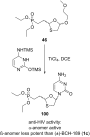
- (1), as summarized in the next section. Access to crystalline 5-acetoxyoxathiolane 35a was accomplished either by selective crystallization in the presence of the remaining diastereoisomers, although in only 16% yield, or by a classical resolution method using the norephedrine salt 58 (Scheme 19








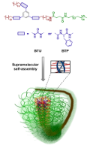
Adjusting the length of supramolecular polymer bottlebrushes by top-down approaches
Beilstein J. Org. Chem. 2021, 17, 2621–2628, doi:10.3762/bjoc.17.175
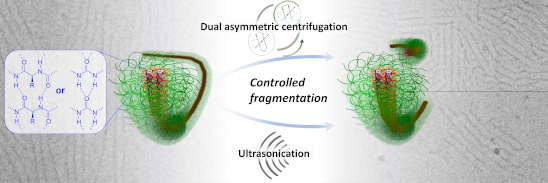
- desired applications in nanomedicine [4][5]. A key factor in this regard are formulation strategies, which allow a straightforward implementation into established processes that are, e.g., in accordance with good manufacturing practice (GMP) [6]. Approaches such as the crystallization-driven self-assembly



Synthesis of new bile acid-fused tetrazoles using the Schmidt reaction
Beilstein J. Org. Chem. 2021, 17, 2611–2620, doi:10.3762/bjoc.17.174
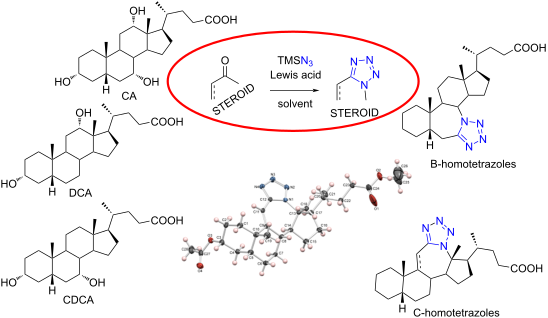
- of protected B-homotetrazoles were not obtained after repeated attempts of crystallization, while obtaining high-quality crystals of C-homotetrazoles was straightforward. In the final part of our synthetic work, all tetrazole compounds were converted to free bile acid-fused tetrazoles with ethanolic


Enantioselective PCCP Brønsted acid-catalyzed aminalization of aldehydes
Beilstein J. Org. Chem. 2021, 17, 2433–2440, doi:10.3762/bjoc.17.160
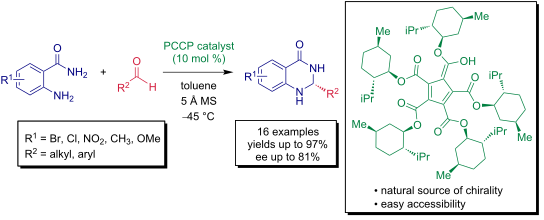
- crystallization from ethyl acetate. This was demonstrated for products 3a and 3f, that were obtained in enantiomeric purities of 93% and 97% ee, respectively (Scheme 1). Next, we turned our attention to the substitution of anthranilamide (Scheme 2). First, the effect of bromine as a slightly electron-withdrawing
- enantiomeric excess of 66% ee. We also increased the enantiomeric purity of 3l from 70% to 80% ee after crystallization from ethyl acetate. When anthranilamide substituted with a chlorine in the “5” position was used, the enantioselectivity of the reaction reached a value of 76% ee, and the yield of the
- enantiocontrol of the process, and highly enantiomerically enriched dihydroquinazolinones can be achieved by crystallization (up to 97% ee). The developed methodology can also be used to form tetrahydrobenzodiazepinones; however, a significant drop in the yield and enantioselectivity was observed. Synthetic


(Phenylamino)pyrimidine-1,2,3-triazole derivatives as analogs of imatinib: searching for novel compounds against chronic myeloid leukemia
Beilstein J. Org. Chem. 2021, 17, 2260–2269, doi:10.3762/bjoc.17.144
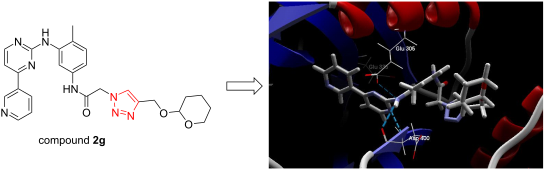
- crystallization and X-ray diffraction experiments for compound 2b were performed. All samples evaluated had low scattering patterns and germinated crystals. This resulted in poor quality data, which limited the quality of the refinement. Structure illustrations were generated using ORTEP-3 for Mercury [45], and


Transition-metal-free intramolecular Friedel–Crafts reaction by alkene activation: A method for the synthesis of some novel xanthene derivatives
Beilstein J. Org. Chem. 2021, 17, 2203–2208, doi:10.3762/bjoc.17.142
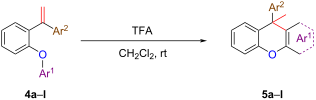
- synthesized by Grignard reaction of 1a–l and aryl(or alkyl)magnesium bromides. Then 3a–l were prepared by oxidation of 2a–l using PCC. The final alkene compounds 4a–l were obtained by Wittig reaction using Me(Ph)3PBr, t-BuOK, and NaH. All substrates were purified by crystallization or column chromatography


Co-crystallization of an organic solid and a tetraaryladamantane at room temperature
Beilstein J. Org. Chem. 2021, 17, 1476–1480, doi:10.3762/bjoc.17.103
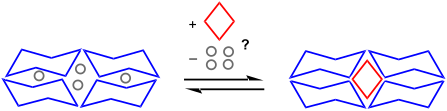
- Fabian Rami Jan Nowak Felix Krupp Wolfgang Frey Clemens Richert Institute of Organic Chemistry, University of Stuttgart, Pfaffenwaldring 55, 70569 Stuttgart, Germany 10.3762/bjoc.17.103 Abstract Tetraaryladamantanes have proven useful as chaperones for the co-crystallization of small molecules
- that do not readily crystallize by themselves. The co-crystals are often useful for structure elucidation. Usually, the small molecules are encapsulated in the crystal lattice of the aryladamantane that forms during rapid thermal crystallization. Thus far, co-crystallization has been limited to liquids
- evaporation or diffusion. The implications for generating other co-crystals of two solids are briefly discussed. Keywords: adamantanes; crystallization; organic solids; structure elucidation; X-ray crystallography; Introduction Obtaining a crystal suitable for X-ray crystallography can be a challenge for





