Search results
Search for "cytotoxicity" in Full Text gives 292 result(s) in Beilstein Journal of Organic Chemistry. Showing first 200.
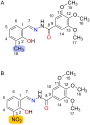
Effects of the aldehyde-derived ring substituent on the properties of two new bioinspired trimethoxybenzoylhydrazones: methyl vs nitro groups
Beilstein J. Org. Chem. 2023, 19, 1713–1727, doi:10.3762/bjoc.19.125
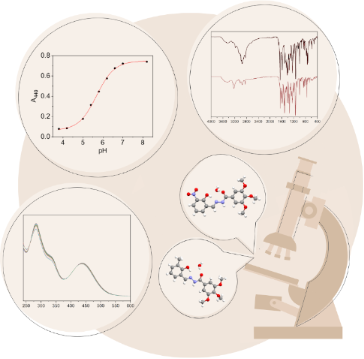
- cell membrane integrity [21]. In the context of cancer therapy development, metal complexes of N-acylhydrazones stand out. For example, Firmino et al. demonstrated that gallium(III) complexes of isoniazid-derived hydrazones exhibit strong cytotoxicity against HL-60 and HCT-116 cancer cell lines [22





Sulfur-containing spiroketals from Breynia disticha and evaluations of their anti-inflammatory effect
Beilstein J. Org. Chem. 2023, 19, 1604–1614, doi:10.3762/bjoc.19.117
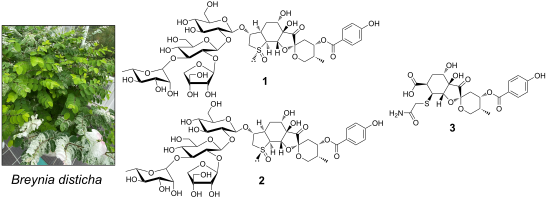
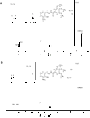
- revealed that compound 7 was cytotoxic to RAW 264.7 cells at concentrations above 25 μM (Figure 6d). Furthermore, 7 suppressed the LPS-induced increases in IL-1β and IL-6 transcriptional levels in a concentration-dependent manner from 1 or 2.5 μM (Figure 6e). Thus, while cytotoxicity was likely involved in
- the suppression of mRNA levels at high concentrations (>25 μM) of compound 7, anti-inflammatory effects occurred at lower concentrations without cytotoxicity. The production of IL-1β and IL-6 was also evaluated by an enzyme-linked immunosorbent assay (ELISA) using culture supernatants. The LPS
- the LPS-only group)]; d) concentration-dependent cytotoxicity of 7 in RAW 264.7 cells (cell viability was detected by an MTT-based colorimetric assay); e) mRNA levels of IL-1β and IL-6 in RAW 264.7 cells preincubated with different concentrations of compound 7 for 24 h, followed by treatment with LPS



Synthesis and biological evaluation of Argemone mexicana-inspired antimicrobials
Beilstein J. Org. Chem. 2023, 19, 1511–1524, doi:10.3762/bjoc.19.108
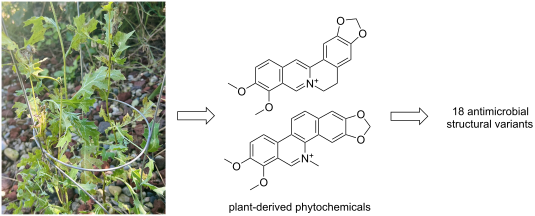
- tumor cytotoxicity effects for a number of the berberine derivatives. Keywords: benzylisoquinoline; berberine; chelerythrine; drug discovery; plant-derived antimicrobials; Introduction The isolation, or creation of novel antimicrobial agents is currently at the forefront of modern healthcare due to
- unique compounds at a set concentration against T84 human colon cancer cells has provided useful preliminary comparative cytotoxicity data, which can be directly compared to our previous publication showing the effects of crude A. mexicana extracts against this same cell line [9]. However, further


Synthesis of ether lipids: natural compounds and analogues
Beilstein J. Org. Chem. 2023, 19, 1299–1369, doi:10.3762/bjoc.19.96
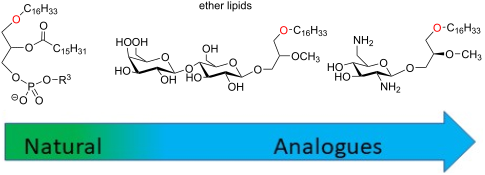
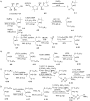
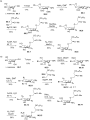
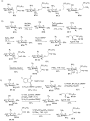
- has similar cell toxicity than edelfosine-C18 on HL-60 leukemic cells [129][130]. The authors also reported that the sulfone 26.5 (Figure 26B) had similar cytotoxicity than edelfosine-C18. In 1987, the group of E. J. Modest reported that the thioether 26.4 featured comparable cytotoxicity than C18
- . The replacement of the oxygen atom located in sn-1 position by a methylamino group corresponds to a compound known as BN52211 (30.6, Figure 30). This compound was used in many studies for its antitumor cytotoxicity [136] or its immunologic properties [137]. To the best of our knowledge, the synthesis






Two new lanostanoid glycosides isolated from a Kenyan polypore Fomitopsis carnea
Beilstein J. Org. Chem. 2023, 19, 1161–1169, doi:10.3762/bjoc.19.84
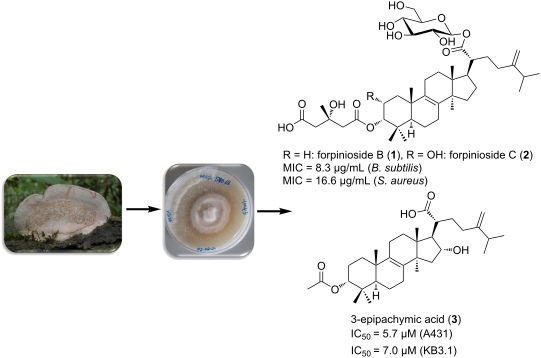
- (Table S1 in Supporting Information File 1). However, 3-epipachymic acid (3) demonstrated significant cytotoxicity against epidermoid carcinoma cells (A431) (IC50 = 5.7 µM) and HeLa cells (KB-3-1) (IC50 = 7.0 µM). Moderate cytotoxic effects for compound 3 were also recorded against mouse fibroblasts
- cytotoxicity assay. Recent structure–activity relationship (SAR) studies have indicated a key role played by the hydroxy group at C-3 in cytotoxic effects of lanostane triterpenoids [23][36]. According to a study by Wang et al. (2023) [36], synthetic derivatives of pachymic acid demonstrated moderate to high
- hydroxy group [33]. In our case, the C-16 hydroxy group seemed to play a major role in the cytotoxicity instead, as indicated by the active compound 3-epipachymic acid (3). Intriguingly, other compounds lacking the hydroxy group at C-16 were inactive, suggesting the probable role played by a 16-OH in


Five new sesquiterpenoids from agarwood of Aquilaria sinensis
Beilstein J. Org. Chem. 2023, 19, 998–1007, doi:10.3762/bjoc.19.75
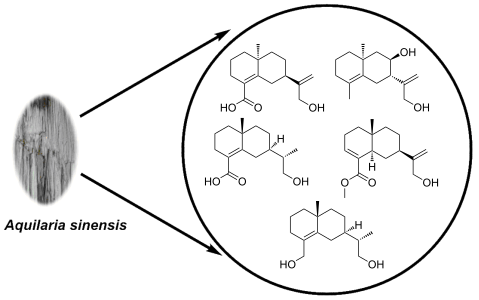
- ]. Previous studies have shown that 2-(2-phenylethyl)chromones and sesquiterpenes are the characteristic and main bioactive components of agarwood [5][6]. Various bioactivities, including neuroactive [4], gastrointestinal modulation [7], cytotoxicity [8], antibacterial [9], antifungal, acetylcholinesterase


Clauson–Kaas pyrrole synthesis using diverse catalysts: a transition from conventional to greener approach
Beilstein J. Org. Chem. 2023, 19, 928–955, doi:10.3762/bjoc.19.71
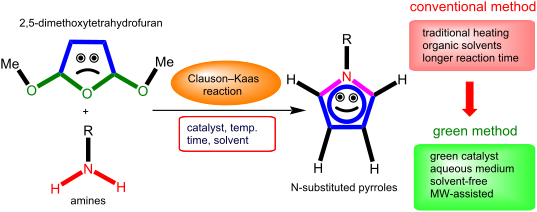
- /instruments. Some of these synthesized N-substituted pyrrole derivatives were evaluated for in vitro cytotoxicity for various cancer cell lines. In 2014, Wang et al. [78] demonstrated a modified Clauson–Kaas reaction to synthesize various N-substituted pyrroles 53 in 75–95% yields by reacting various aromatic




Non-peptide compounds from Kronopolites svenhedini (Verhoeff) and their antitumor and iNOS inhibitory activities
Beilstein J. Org. Chem. 2023, 19, 789–799, doi:10.3762/bjoc.19.59
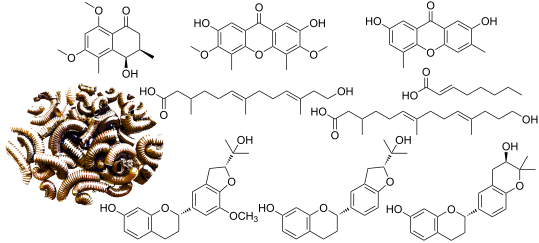
- compounds, cytotoxic and anti-inflammatory properties were evaluated. In particular, a mouse pancreatic cancer cell line (Panc02-h7-GP-GFP) was used to determine cytotoxicity. Additionally, LPS-induced pro-inflammatory expression of iNOS and COX-2 in RAW264.7 cells was evaluated. Antitumor activity of


Cassane diterpenoids with α-glucosidase inhibitory activity from the fruits of Pterolobium macropterum
Beilstein J. Org. Chem. 2023, 19, 658–665, doi:10.3762/bjoc.19.47
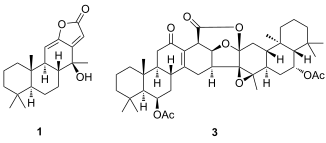
- species known in Thailand [7], and some of them have been applied as antihemorrhoid [8]. Some species of this genus have revealed cassane diterpenoids as mainly secondary metabolites, which have shown interesting biological activities such as cytotoxicity and anti-inflammatory activity [9][10][11


Combretastatins D series and analogues: from isolation, synthetic challenges and biological activities
Beilstein J. Org. Chem. 2023, 19, 399–427, doi:10.3762/bjoc.19.31
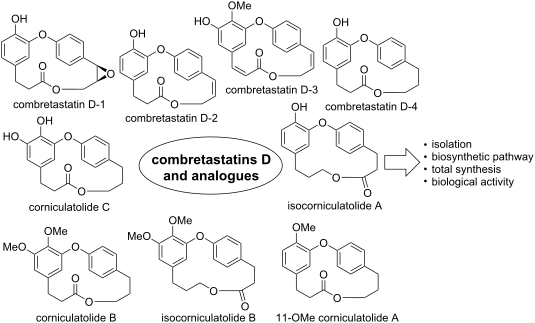
- with a median effective dose values (ED50) of 3.3 and 5.2 μg·mL−1 (10.56 and 17.55 μM), respectively [16][17]. Vongvanich and co-workers performed a cytotoxicity assay of combretastatins D-3 (3) and D-4 (4) against human breast cancer cells (BC-1), human epidermoid carcinoma of the mouth (KB), a small
- authors suggested that the presence of hydroxy substituents at C-11 and C-12 played a significant role in the α-glucosidase inhibition [19]. The cytotoxicity of the aforementioned compounds was also evaluated using the sulforhodamine B (SRB) assay against MIAPaCa-2, DU145, MCF-7, and HTC-116 human cancer
- cell lines. The compounds were tested in five different concentrations (ranging from 1 to 100 μM) and showed no in vitro cytotoxicity. However, compound 10 was found to possess anti-inflammatory activity. It showed effects on LPS-induced activation of NF-κB and COX-2 similar to the Bay 11-7082 molecule




CuAAC-inspired synthesis of 1,2,3-triazole-bridged porphyrin conjugates: an overview
Beilstein J. Org. Chem. 2023, 19, 349–379, doi:10.3762/bjoc.19.29
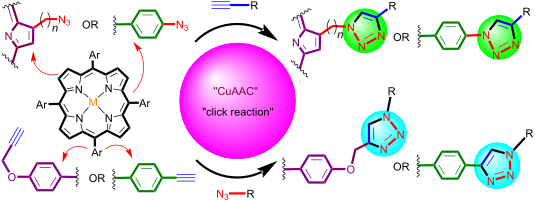
- albumin and LDL. Furthermore, the Zn and Pd porphyrin complexes revealed a good capability to yield singlet oxygen (quantum yield >70%) and exhibited significant photoinduced cytotoxicity. In another report, Prakash Rao et al. [65] highlighted the click protocol to accomplish the synthesis of hydrogenated
- -soluble nanowires, nanorods, and nanospheres. In addition, these triazoloporphyrins have a wide range of medical applications, including photoinduced cytotoxicity against cancer cells, drug delivery, as phototherapeutic agents, and PDT applications. I believe this review will be useful and encourage




Strategies to access the [5-8] bicyclic core encountered in the sesquiterpene, diterpene and sesterterpene series
Beilstein J. Org. Chem. 2023, 19, 245–281, doi:10.3762/bjoc.19.23
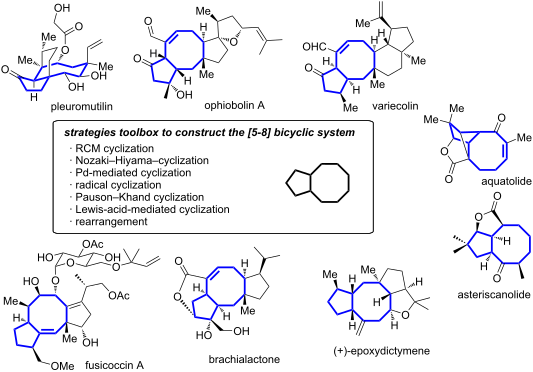
- . Further functionalization steps finally furnished (+)-ophiobolin A (8). In the fusicoccanes family, cotylenol (50), the aglycon of cotylenin A (131) (see section 3.1), is a fungal metabolite which displays various interesting biological activities [28]. For example, it expresses a moderate cytotoxicity
- the D-ring. It was isolated in 1958 from the fungus Ophiobolus miyabeanus, and displayed a remarkable cytotoxicity against several cancer cell lines [50]. Meanwhile, variecolin (3) was isolated from the fermentation broth of the fungus Aspergillus variecolor in 1991, and it appears to be a potent


Investigation of cationic ring-opening polymerization of 2-oxazolines in the “green” solvent dihydrolevoglucosenone
Beilstein J. Org. Chem. 2023, 19, 217–230, doi:10.3762/bjoc.19.21
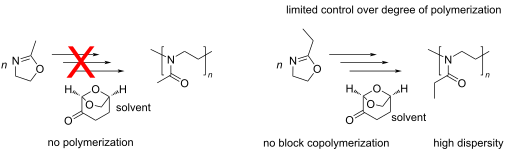
- biomedical applications, in particular as an alternative to the hydrophilic poly(ethylene glycol) (PEG), which is the polymer of choice for many biomedical applications due to its high solubility, low cytotoxicity and biocompatibility [3][4][5][6][7][8][9]. However, an ongoing discussion about pre-existing


An accelerated Rauhut–Currier dimerization enabled the synthesis of (±)-incarvilleatone and anticancer studies
Beilstein J. Org. Chem. 2023, 19, 204–211, doi:10.3762/bjoc.19.19
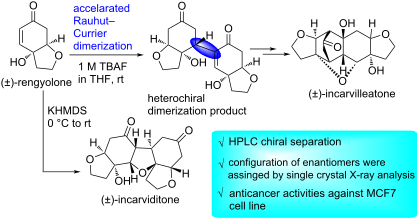
- isolated from I. delavayi along with known (±)-rengyolone (3) [2]. (±)-Incarviditone (2) presents a new carbon-skeleton by being the first benzofuranone dimer connected by a C–C bond. The cytotoxicity of (±)-incarviditone (2) has been assayed against cell lines A549, LOVO, HL-60, 6TCEM, and HepG2 and
- displayed cytotoxicity against the HL-60 cell line with an IC50 value of 14.8 mg/mL and against the 6T-CEM cell line with an IC50 value of 22.2 mg/mL. Lawrence et al. [3] and Tang et al. [4] have reported the synthesis of (±)-incarvilleatone (1) and (±)-incarviditone (2) via biomimetic dimerization of


Sequential hydrozirconation/Pd-catalyzed cross coupling of acyl chlorides towards conjugated (2E,4E)-dienones
Beilstein J. Org. Chem. 2023, 19, 176–185, doi:10.3762/bjoc.19.17
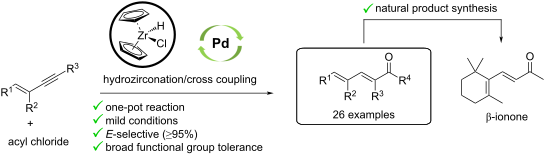
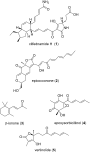
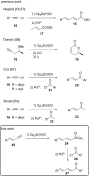
- displays pronounced cytotoxicity against two human cancer cell lines [1], epicocconone (2), a fluorescent compound from the fungus Epicoccum nigrum [2], β-ionone (3) from many plant-derived sources [3], epoxysorbicillinol (4) from the saltwater culture of the fungus Trichoderma longibrachiatum separated



Insight into oral amphiphilic cyclodextrin nanoparticles for colorectal cancer: comprehensive mathematical model of drug release kinetic studies and antitumoral efficacy in 3D spheroid colon tumors
Beilstein J. Org. Chem. 2023, 19, 139–157, doi:10.3762/bjoc.19.14
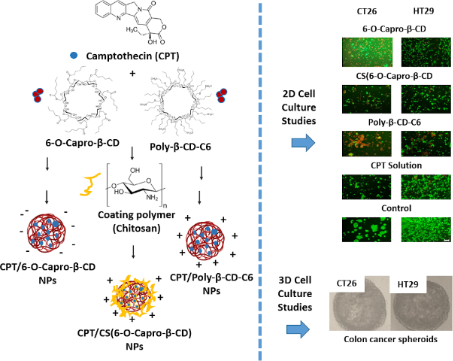
- formulation approaches for targeting the colon through oral administration. In our previous studies, oral chemotherapy for colon tumors was aimed and promising results were obtained with formulation development studies, mucin interaction, mucus penetration, cytotoxicity, and permeability in 2D cell culture
- also had better release, physical stability, and cytotoxicity [13]. CPT is an anticancer small molecule drug that inhibits the topoisomerase I enzyme, which has a critical role in cellular DNA functions [14], and is effective in a wide spectrum of cancers such as metastatic colon cancer, breast cancer
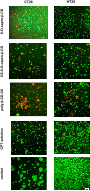
- simulated colon. When compared to the equivalent CPT dose in solution, CPT-loaded poly-β-CD-C6 nanoparticles exhibited higher cytotoxicity in HT-29 cells. Permeability studies performed with the Caco-2 cell line revealed a 276% increase in drug permeability and significantly higher intestinal penetration




Synthesis and characterisation of new antimalarial fluorinated triazolopyrazine compounds
Beilstein J. Org. Chem. 2023, 19, 107–114, doi:10.3762/bjoc.19.11
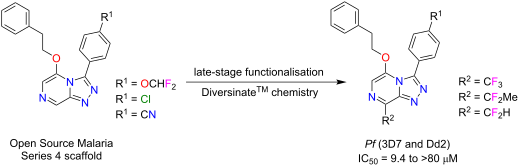
- and Dd2 strains) and the cytotoxicity against a human embryonic kidney (HEK293) cell line were tested. Some of the compounds demonstrated moderate antimalarial activity with IC50 values ranging from 0.2 to >80 µM; none of the compounds displayed any cytotoxicity against HEK293 cells at 80 µM
- hepatic intrinsic clearance of <8.1 µL/min/mg [5]. Furthermore, minimal poly-pharmacology and cytotoxicity have been identified for this series to date, giving confidence in its specificity and tolerability, and thus supporting on-going efforts towards the continued development of this unique antimalarial
- triazolopyrazines were all evaluated in vitro for antimalarial activity and cytotoxicity. Results and Discussion Previous structure–activity relationship (SAR) studies reported that any substitution at the C8 position of Series 4 triazolopyrazines can lower the potency for P. falciparum [14][15][16]. However, a


Digyalipopeptide A, an antiparasitic cyclic peptide from the Ghanaian Bacillus sp. strain DE2B
Beilstein J. Org. Chem. 2022, 18, 1763–1771, doi:10.3762/bjoc.18.185
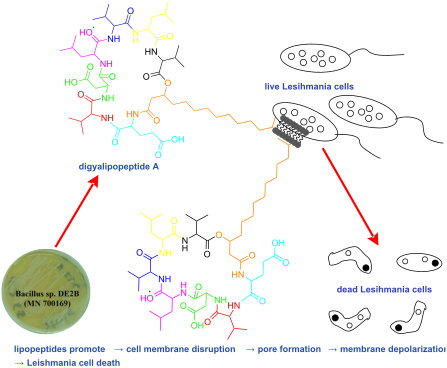
- data for compound 1 in DMSO-d6. Antiparasitic activity data for compound 1. Antibacterial activity data for compound 1. Cytotoxicity and selectivity profiles of compound 1 using normal macrophages. Supporting Information Supporting Information File 338: Experimental protocols, phylogenetic data


Rhodium-catalyzed intramolecular reductive aldol-type cyclization: Application for the synthesis of a chiral necic acid lactone
Beilstein J. Org. Chem. 2022, 18, 1642–1648, doi:10.3762/bjoc.18.176
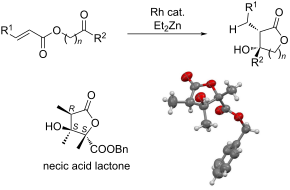
- monocrotaline There are several reports of bioactive natural products that have a 3-hydroxy-2-methyllactone scaffold in the molecular structure. For example, cytospolide K2 [50] containing a 10-membered lactone and feigrisolide [51] containing a 7-membered lactone are known to exhibit cytotoxicity and


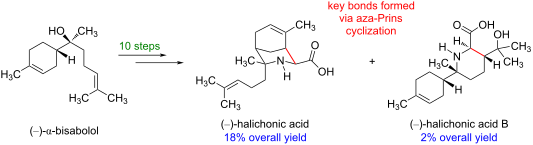
Synthesis of (−)-halichonic acid and (−)-halichonic acid B
Beilstein J. Org. Chem. 2022, 18, 1629–1635, doi:10.3762/bjoc.18.174
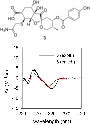
- compound was determined based on calculated electronic circular dichroism (ECD) spectra that were compared to the experimental ECD spectra of (+)-1 and (+)-2. Although these natural products did not exhibit antimicrobial activity or cytotoxicity against HeLa cells, their biological activities in other


Using UHPLC–MS profiling for the discovery of new sponge-derived metabolites and anthelmintic screening of the NatureBank bromotyrosine library
Beilstein J. Org. Chem. 2022, 18, 1544–1552, doi:10.3762/bjoc.18.164
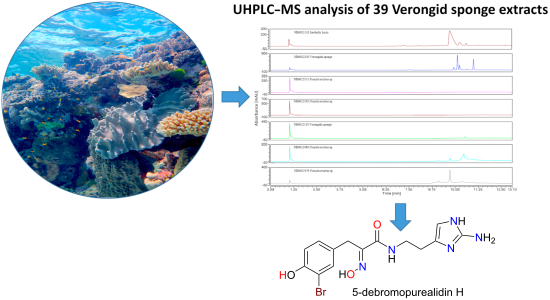
- bromotyrosine derivatives, more complex natural products containing spirocyclohexadienylisoxazolines, spirooxepinisoxazolines and oximes have been reported [3][4]. This class of marine alkaloids possess unique functional groups, 3D architecture and interesting pharmacology such as cytotoxicity [5][6
- activity [31] and antimicrobial activity [32]; ianthesine E has rarely been tested for bioactivity, however, some weak binding has been identified for this molecule against human adenosine A1 receptor 19, along with some weak cytotoxicity towards HeLa cells [15]. Limited testing has also been conducted on
- ][36]. The psammaplysin structure class has also had antimalarial [28], cytotoxicity [37] and antimicrobial data reported, albeit with low to moderate potencies [7]. More recently psammaplysin F and several semi-synthetic analogues have been shown to cause loss of mitochondrial membrane potential


New triazole-substituted triterpene derivatives exhibiting anti-RSV activity: synthesis, biological evaluation, and molecular modeling
Beilstein J. Org. Chem. 2022, 18, 1524–1531, doi:10.3762/bjoc.18.161
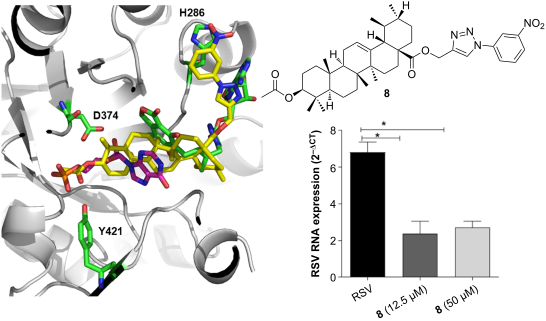
- = 44.4 and 14.29 µM, respectively). Although betulinic acid (1) exhibited greater antiviral activity than ursolic acid (2), the introduction of a nitroaryl-1,2,3-triazole substituent in 2 was more efficient than its introduction in scaffold 1. Moreover, all tested compounds showed low cytotoxicity in
- A549 cells, compared to the positive control (A549 cells infected with RSV without treatment). Furthermore, derivative 8 had low cytotoxicity in all non-infected cells tested, which is different to that observed for other derivatives where TI was expressively lower (Table 1 and Figure 2A). The effect


Sinensiols H–J, three new lignan derivatives from Selaginella sinensis (Desv.) Spring
Beilstein J. Org. Chem. 2022, 18, 1410–1415, doi:10.3762/bjoc.18.146
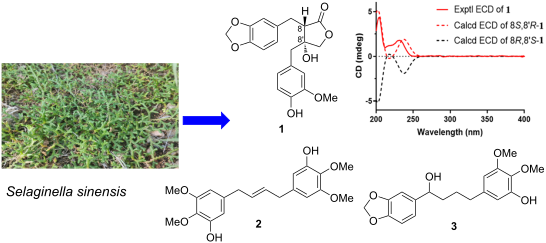
- cytotoxicity of the test compounds before the nitric oxide (NO) production assay. NO production in each well was assessed by measuring the accumulation of nitrite in the culture supernatants using Griess reagent. After 5 min of incubation, the absorbance was measured using a microplate reader (Thermo, Bio-rad


Facile and diastereoselective arylation of the privileged 1,4-dihydroisoquinolin-3(2H)-one scaffold
Beilstein J. Org. Chem. 2022, 18, 1070–1078, doi:10.3762/bjoc.18.109
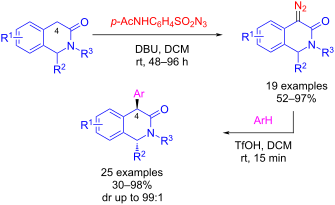
- readily available 3(2H)-isoquinolones followed by TfOH-promoted hydroarylation by an arene molecule. Screening of the novel 1,2,4-trisubstituted 1,4-DHIQs against cancer cell lines confirmed high cytotoxicity of selected analogs, which validates this new chemotype for further investigations as anticancer
- probe for protein–protein interactions, including oncogenic ones [26]. As the first step towards biological characterization of compounds 9, they were screened for cytotoxicity against the NCI-H460 lung carcinoma cell line. The most potent cytotoxic agent (9j) reduced the number of viable cells by >95
- -DHIQ adducts synthesized in this work, they were deemed efficient probes for the perturbation of vital cellular targets. Screening of these compounds against lung carcinoma cancer cell lines confirmed high cytotoxicity of selected analogs, which validates this new chemotype for further investigation as





New azodyrecins identified by a genome mining-directed reactivity-based screening
Beilstein J. Org. Chem. 2022, 18, 1017–1025, doi:10.3762/bjoc.18.102
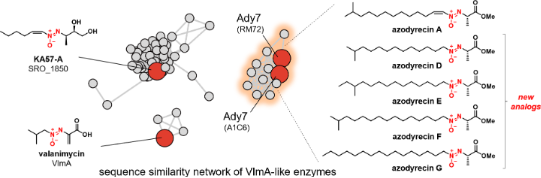
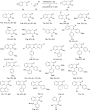
- . Azodyrecins D–G, four new analogs of aliphatic azoxides, were identified from two Streptomyces species by a reactivity-based screening that targets azoxy bonds. A biological activity evaluation demonstrated that the double bond in the alkyl side chain is important for the cytotoxicity of azodyrecins. An in
- previous report demonstrated the cytotoxic activity of azodyrecins [21]; however, the relationships between the structure and cytotoxicity were not determined. With new azodyrecin analogs with saturated alkyl chains in hand, we attempted to gain insights into the effects of the double bond on cytotoxicity
- lymphocyte Jurkat cells, and P388 murine leukemia cells. The results revealed that the derivatives with unsaturated side chains, 2 and 5, exhibited moderate cytotoxicity against all tested cell lines, with the highest potency against Jurkat cells (IC50 at 3.36 μM for 5) (Table 2 and Figure S5 in Supporting