Search results
Search for "desilylation" in Full Text gives 134 result(s) in Beilstein Journal of Organic Chemistry.
Sigmatropic rearrangements of cyclopropenylcarbinol derivatives. Access to diversely substituted alkylidenecyclopropanes
Beilstein J. Org. Chem. 2019, 15, 333–350, doi:10.3762/bjoc.15.29
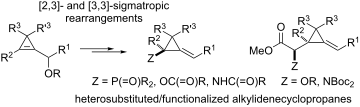
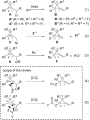
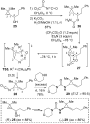
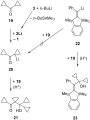
- substitution at C3 [63]. As illustrated with the preparation of alcohol 60, the strategy relies on a sila-Morita–Baylis–Hillman reaction between cyclopropenylsilane 59 and 3-phenylpropanal catalyzed by electron-rich tris(2,4,6-trimethoxyphenyl)phosphine (TTMPP) [63]. After desilylation, cyclopropenylcarbinol







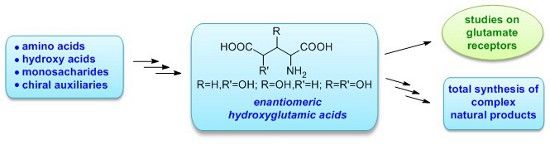
Synthesis of nonracemic hydroxyglutamic acids
Beilstein J. Org. Chem. 2019, 15, 236–255, doi:10.3762/bjoc.15.22
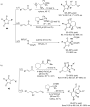
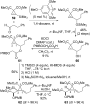
- nitrogen was protected as N-Boc to furnish (4R,5R)-47. Under basic conditions the pyrrolidin-2-one ring was cleaved to provide a five-carbon chain of the target molecule. The final steps included esterification, desilylation and selective oxidation of the hydroxymethyl group followed by esterification


Synthesis, biophysical properties, and RNase H activity of 6’-difluoro[4.3.0]bicyclo-DNA
Beilstein J. Org. Chem. 2019, 15, 79–88, doi:10.3762/bjoc.15.9
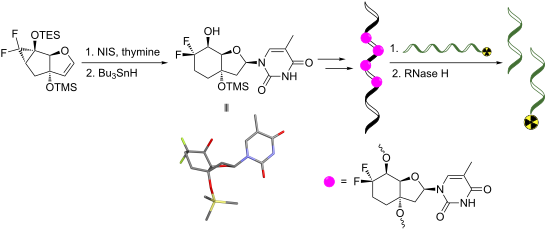
- 2’-position in the reaction mechanism. Having attained nucleoside 6, the synthesis towards the building block for DNA-synthesis continued by subsequent desilylation of this derivative producing intermediate 7 (Scheme 2). DMTr-protection of compound 7 at the 5’-oxygen with in situ prepared DMTr-OTf


6’-Fluoro[4.3.0]bicyclo nucleic acid: synthesis, biophysical properties and molecular dynamics simulations
Beilstein J. Org. Chem. 2018, 14, 3088–3097, doi:10.3762/bjoc.14.288
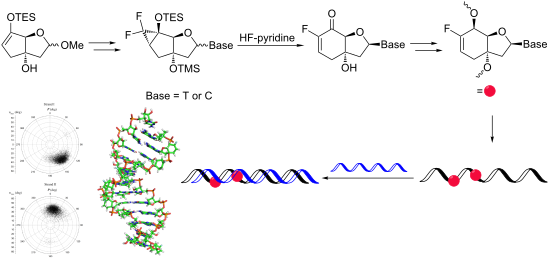
- either by a NIS-mediated or Vorbrüggen nucleosidation yielded in both cases the β-tricyclic nucleoside as major anomer. Subsequent desilylation and cyclopropane ring opening of these tricyclic intermediates afforded the unsaturated 6’F-bc4,3 nucleosides. The successful incorporation of the corresponding
- 6α/β were subjected to the next reaction step, where the simultaneous desilylation and cyclopropane ring opening to the bicyclic fluoroenone 7 occurred. HF-pyridine smoothly facilitated this conversion. At this stage the two anomers of fluoroenone 7 were separable. The configurational assignment of
- -ROESY experiments (Supporting Information File 1). The gem-difluorinated tricyclic nucleoside 12β was then converted into the bicyclic fluoroenone 13 via desilylation and ring-enlargement by short exposure to HF-pyridine. During the following Luche reduction of derivative 13 the benzoyl protecting group


Nucleofugal behavior of a β-shielded α-cyanovinyl carbanion
Beilstein J. Org. Chem. 2018, 14, 3018–3024, doi:10.3762/bjoc.14.281

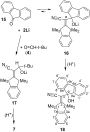
- fission may also be used to generate different metal derivatives of the nucleofugal anions as equilibrium components. Fluoride-catalyzed, metal-free desilylation admitted carbonyl addition but blocked the retro-addition. Keywords: alkoxide fission; desilylation; fragmentation; retro-addition; reversible
- compounds: Generated through desilylation of 24 (Scheme 6) by tetrabutylammonium fluoride (Bu4N+F−; ≤0.05 equiv), the ion pair 25 was trapped by pivalaldehyde (4) with formation of 7 along with a comparable amount of the alkene 1. However, the primary alkoxide product, as formed by 25 and 4, was supposedly
- desilylation with Bu4N+ F−.



Domino ring-opening–ring-closing enyne metathesis vs enyne metathesis of norbornene derivatives with alkynyl side chains. Construction of condensed polycarbocycles
Beilstein J. Org. Chem. 2018, 14, 2708–2714, doi:10.3762/bjoc.14.248
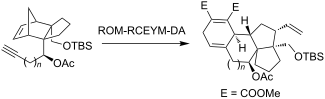
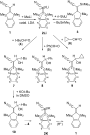
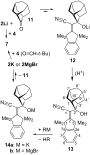
- Information File 2) of the 3,5-dinitrobenzoate derivative 13, mp 171–172 °C, prepared in two steps (51%) from the metathesis product on reaction with 3,5-dinitrobenzoyl chloride (DNBC) followed by acid-induced desilylation. Thus compound 7b on metathesis produced exclusively triene 11 and accordingly the
- retigeranic acids, the norbornene derivative 16 was chosen. Addition of lithium (trimethylsilyl)acetylide to the lactol 5 followed by desilylation by using methanolic K2CO3 afforded diol 15 (Scheme 4). The primary hydroxy group in compound 15 was selectively protected to produce the silyl ether 16 in 95




Stereoselective total synthesis and structural revision of the diacetylenic diol natural products strongylodiols H and I
Beilstein J. Org. Chem. 2018, 14, 2313–2320, doi:10.3762/bjoc.14.206
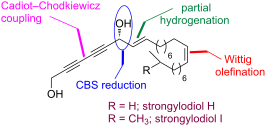
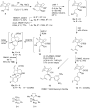
- , respectively, followed by the desilylation (TBDPS removal) to yield the title products. The intermediate aldehyde 14 can be synthesized from ketone 17 in a four-step sequence by a stereoselective keto reduction, TBDPS protection, TBS deprotection and an oxidation reaction. The ketone 17 can be easily
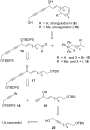
- to Wittig olefination reaction with triphenylphosphonium salt of n-nonyl bromide 15 in presence of n-BuLi to produce the corresponding Z-olefin 28 exclusively in 83% yield. Di-desilylation of compound 28 was easily achieved with n-tetrabutylammonium fluoride to furnish the target molecule



Synthesis of spirocyclic scaffolds using hypervalent iodine reagents
Beilstein J. Org. Chem. 2018, 14, 1778–1805, doi:10.3762/bjoc.14.152
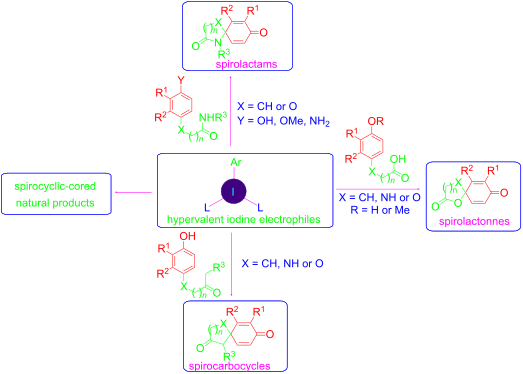
- discorhabdin A (112). In 2006, Honda and co-workers [115] reported the total synthesis of spiro-isoquinoline alkaloid (±)-annosqualine (1). In this report, the substrate 113 was cyclized to form spirocyclic compound 114 via desilylation with TBAF in THF followed by reaction with n-BuLi in hexafluoroisopropanol


Three-component coupling of aryl iodides, allenes, and aldehydes catalyzed by a Co/Cr-hybrid catalyst
Beilstein J. Org. Chem. 2018, 14, 1413–1420, doi:10.3762/bjoc.14.118
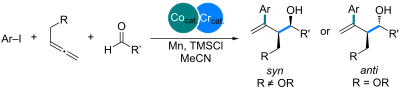
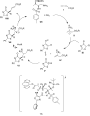
- give the chromium alkoxide L [24]. Finally, the Cr–O bond is cleaved by TMSCl, generating the active chromium salt for the transmetalation and the silyl ether M, the desilylation of which with a fluoride anion results in the formation of a homoallylic alcohol 4. Conclusion The cobalt/chromium-catalyzed


Mechanochemistry of nucleosides, nucleotides and related materials
Beilstein J. Org. Chem. 2018, 14, 955–970, doi:10.3762/bjoc.14.81
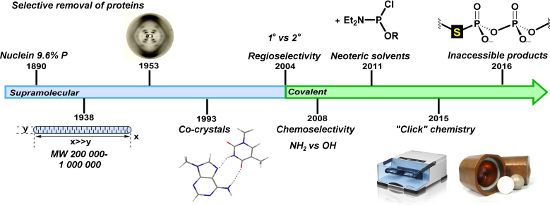
- were found to be relatively stable under anhydrous conditions and could be readily prepared via Michaelis–Arbusov (M–A) chemistry (Scheme 15) [23][56]. Transfer of crude M–A reaction mixtures to a zirconia ball mill vessel and removal of volatiles enabled the concomitant partial hydrolytic desilylation
- MBM. Synthesis of pyrophosphorothiolate-linked dinucleoside cap analogues in a MBM to effect hydrolytic desilylation and phosphate coupling. Co-crystal grinding of alkylated nucleobases in an amalgam mill (N.B. no frequency was recorded in the experimental description). Preparation of DNA-SWNT complex


Aminosugar-based immunomodulator lipid A: synthetic approaches
Beilstein J. Org. Chem. 2018, 14, 25–53, doi:10.3762/bjoc.14.3






A permutation approach to the assignment of the configuration to diastereomeric tetrads by comparison of experimental and ab initio calculated differences in NMR data
Beilstein J. Org. Chem. 2017, 13, 2478–2485, doi:10.3762/bjoc.13.245

- 1 and 2 were obtained by epimerization at C9. Mixtures of the isomers of 1 were formed in TBAF desilylation of Cinchona 4-TMS-triazole derivatives. Partial isomerisation of 2a into 2b was performed by transient deprotonation using in situ generated sodium methylsulfinylmethylide (Scheme 1). Both


Asymmetric synthesis of propargylamines as amino acid surrogates in peptidomimetics
Beilstein J. Org. Chem. 2017, 13, 2428–2441, doi:10.3762/bjoc.13.240
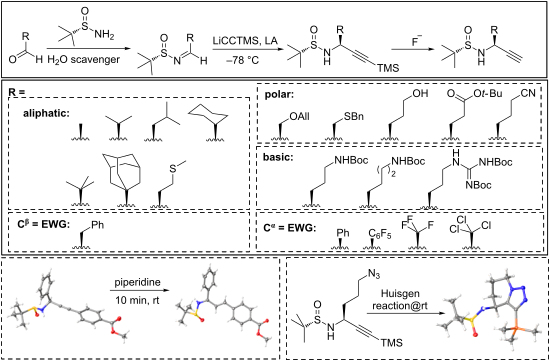
- groups is accessible for the use as precursors of peptidomimetics. Keywords: amino acid analogous side chains; desilylation; Ellman’s chiral sulfinamide; intramolecular Huisgen reaction; peptidomimetics; propargylamines; rearrangement to α,β-unsaturated imines; Introduction Terminal alkynes display an
- assume that strong bases do not only lead to desilylation, but also induce decomposition of the propargylamine system (see below). Kracker et al. recently demonstrated the substitution of the labile tert-butylsulfinyl group of compounds 7a–c by the more versatile Boc protective group in yields of 56–94
- imine 5h) after desilylation with TBAF (Table 2). As the benzylic proton of sulfinylimine 5h is quite acidic, approach II was not pursued for the synthesis of propargylamines analogous to tyrosine, histidine, tryptophan, and aspartate. Proteinogenic amino acids do not contain substituents, which


Conjugated nitrosoalkenes as Michael acceptors in carbon–carbon bond forming reactions: a review and perspective
Beilstein J. Org. Chem. 2017, 13, 2214–2234, doi:10.3762/bjoc.13.220
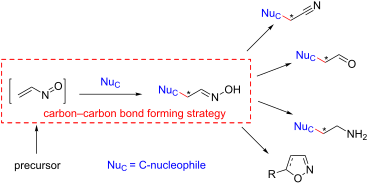
- reaction with trimethylsilylcyanide in the presence of triethylamine as catalyst (Scheme 32) [81]. Interestingly, the initial addition products are intercepted by TMSCN forming stable TMS ethers of α-cyanooximes 87, which can be isolated by vacuum distillation. Mild desilylation of 87 initiates the


A novel application of 2-silylated 1,3-dithiolanes for the synthesis of aryl/hetaryl-substituted ethenes and dibenzofulvenes
Beilstein J. Org. Chem. 2017, 13, 1900–1906, doi:10.3762/bjoc.13.185
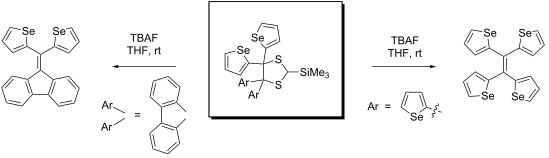
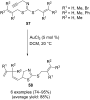
- + 2]-cycloadduct 8, which only at ca. −40 °C extruded N2 [23]. The goal of the present study was the preparation of a series of 2-trimethylsilyl-1,3-dithiolanes of type 6, which, after desilylation, should be applied for nucleophilic additions of the 1,3-dithiolane anion with some electrophilic agents
- the reagents in a ratio of 3:1. Under these conditions, 1,3-dithiolane 6a was formed almost exclusively with only traces of 1,4-dithiane 7 as revealed by 1H NMR analysis of the crude reaction mixture. Desilylation of 6a occurred quantitatively and the known tetraphenylethylene (9a) [26] was obtained
- desilylation conditions differs significantly from that of 4,5-unsubstituted 1,3-dithiolane 13c (Scheme 5). In the latter case, the desilylation leads to the corresponding carbanion, which can be trapped with an aldehyde to give 14 [24][25]. In contrast, the carbanion 11 undergoes a spontaneous cycloreversion


Effect of uridine protecting groups on the diastereoselectivity of uridine-derived aldehyde 5’-alkynylation
Beilstein J. Org. Chem. 2017, 13, 1533–1541, doi:10.3762/bjoc.13.153

- these compounds and notably reported that TES was better than TMS for efficient separation of both isomers, resulting in an improved 42% yield for the isolated major diastereomer (5’R)-11ab [12]. Then, subsequent acidic hydrolysis afforded (5’R)-16 and (5’S)-16 and alkyne desilylation under basic


Synthesis of oligonucleotides on a soluble support
Beilstein J. Org. Chem. 2017, 13, 1368–1387, doi:10.3762/bjoc.13.134
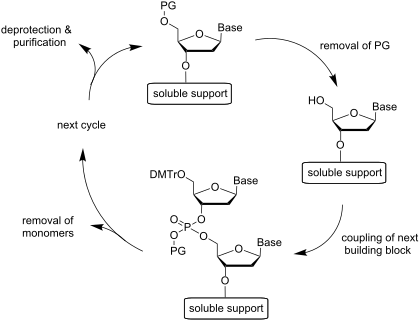
- . With 15–21-mer oligomers, some support-bound material, however, remained in solution and was recovered by adsorption to C18-coated silica gel. The cycle was completed by detritylation with DCA (3%) in DCM. Cleavage and deprotection was conventional: ammonolysis in aqueous EtOH, followed by desilylation






Total synthesis of elansolids B1 and B2
Beilstein J. Org. Chem. 2017, 13, 1280–1287, doi:10.3762/bjoc.13.124
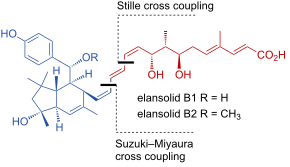
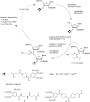
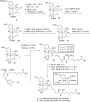
- desired (Z,E,Z)-configured triene 19. Again, we did not encounter formation of stereoisomers in the triene unit. The configuration of the triene was unequivocally assigned by analysis of coupling constants (J) and by measuring nuclear Overhauser effects (nOe). Finally, desilylation and global


N-Propargylamines: versatile building blocks in the construction of thiazole cores
Beilstein J. Org. Chem. 2017, 13, 625–638, doi:10.3762/bjoc.13.61
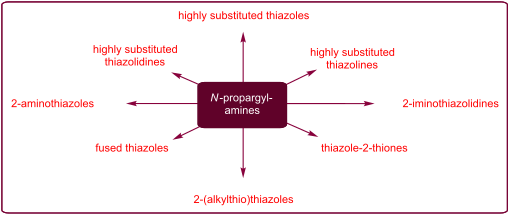
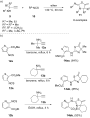
- (Scheme 13). The proposed mechanism for the reaction starts with the generation of the N-(propargyl)thioamide intermediates A through a thioacylation of N-propargylamine 47 with benzotriazolylthione 48. Then N-desilylation of A furnishes intermediate B which undergoes a base-promoted cyclization to give




Iodination of carbohydrate-derived 1,2-oxazines to enantiopure 5-iodo-3,6-dihydro-2H-1,2-oxazines and subsequent palladium-catalyzed cross-coupling reactions
Beilstein J. Org. Chem. 2016, 12, 2898–2905, doi:10.3762/bjoc.12.289

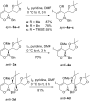
- 1,2,3-triazoles [50]. After the desilylation of syn-5 using potassium fluoride in methanol (Scheme 8) the resulting mono-substituted alkyne was subjected to an established protocol using benzyl azide, copper(I) iodide, triethylamine and TBTA [51] (for a recent review see [52]). The cycloaddition
- . Cross-coupling reaction of 1,2-oxazine anti-4d leading to 5-cyano-substituted 1,2-oxazine anti-25. Desilylation of 1,2-oxazine syn-5 and subsequent click reaction with benzyl azide leading to 5-(1,2,3-triazolyl)-substituted 1,2-oxazine syn-26. Hydrogenation of 1,2-oxazine syn-21 leading to γ-amino




Synthesis of polyhydroxylated decalins via two consecutive one-pot reactions: 1,4-addition/aldol reaction followed by RCM/syn-dihydroxylation
Beilstein J. Org. Chem. 2016, 12, 2602–2608, doi:10.3762/bjoc.12.255
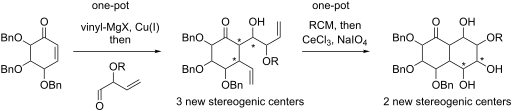
- ]. After desilylation followed by protection of the free hydroxy with a benzoyl group and deprotection of the isopropylidene moiety, diols 20 and 24 were obtained. With α,β-unsaturated ketones 17 and 18 and two enantiomeric, optically pure aldehydes (R)- and (S)-10 in hand, we started to study the 1,4


Synthesis of medronic acid monoesters and their purification by high-performance countercurrent chromatography or by hydroxyapatite
Beilstein J. Org. Chem. 2016, 12, 2145–2149, doi:10.3762/bjoc.12.204
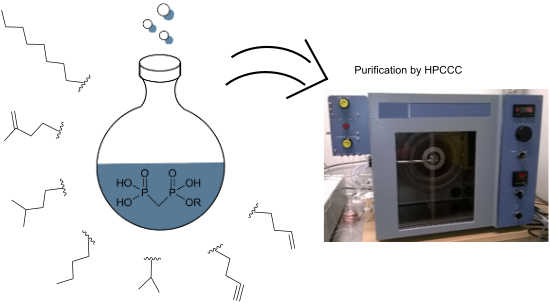
- before the purification. Conclusion Mixed tetraesters of medronic acid were prepared with relatively high yields (60–78%) and used as starting material for the synthesis of monoesters of medronic acid. A series of medronic acid monoesters were synthesized by using a silylation and desilylation procedure


NeoPHOX – a structurally tunable ligand system for asymmetric catalysis
Beilstein J. Org. Chem. 2016, 12, 1185–1195, doi:10.3762/bjoc.12.114
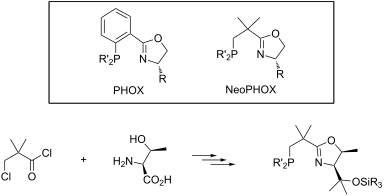
- , decreasing in the series t-BuMe2Si > Et3Si > Me3Si. It has been shown that Ir-hydride complexes that are formed as intermediates during hydrogenation are strong Brønsted acids [32], which can cause cleavage of trimethylsilyl ethers under hydrogenation conditions [33]. So partial desilylation liberating a


Chiral cyclopentadienylruthenium sulfoxide catalysts for asymmetric redox bicycloisomerization
Beilstein J. Org. Chem. 2016, 12, 1136–1152, doi:10.3762/bjoc.12.110
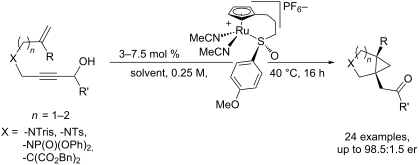
- length via stereospecific nucleophilic displacement of the chiral auxiliary with complete inversion of configuration at the sulfur center [46][47]. Sulfoxide 3 is incorporated into the catalyst via a [3 + 2] oxidative cycloaddition with allylruthenium complex 4. Desilylation of cationic complex 5, ion




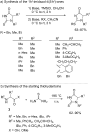
1H-Imidazol-4(5H)-ones and thiazol-4(5H)-ones as emerging pronucleophiles in asymmetric catalysis
Beilstein J. Org. Chem. 2016, 12, 918–936, doi:10.3762/bjoc.12.90
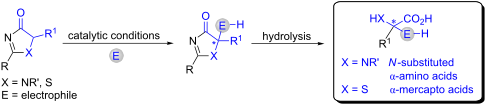
- -dimethylimidazolone 4 (R1 = R2 = Me) in the presence of catalyst C1 afforded, after desilylation, the Michael adduct 30 in good yield (74%) but in moderate enantioselectivity (−84%). Improved selectivity (91%) was observed using C2 in the reaction with 4 (R 1= R2 = Me) and even better enantioselectivity was obtained