


Search results
Search for "dimer" in Full Text gives 381 result(s) in Beilstein Journal of Organic Chemistry. Showing first 200.
Multi-redox indenofluorene chromophores incorporating dithiafulvene donor and ene/enediyne acceptor units
Beilstein J. Org. Chem. 2024, 20, 59–73, doi:10.3762/bjoc.20.8
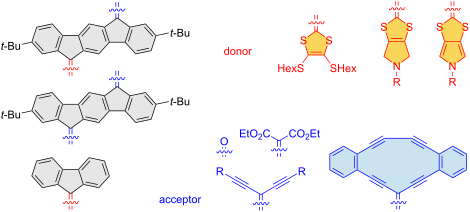
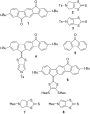
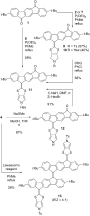
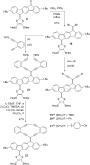
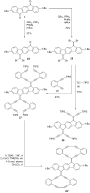
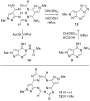
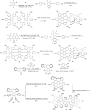
- -annelated IF-DTF 12 by removal of the tosyl (Ts) group under alkaline conditions, followed by nucleophilic substitution to incorporate the hexyl chain on the pyrrole. Furthermore, treatment of the IF-DTF ketone 4 with Lawesson’s reagent (using a recently established protocol [20]) yielded the large dimer 13
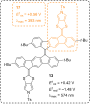
- wavelength. These compounds have blueshifted longest-wavelength absorptions relative to the donor–acceptor scaffolds incorporating a pyrrolo-annelated DTF unit. Of these compounds, the large dimer 13 stands out with a significantly redshifted and intense longest-wavelength absorption maximum (λmax at 574 nm
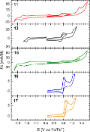
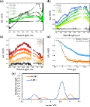
- reduction. The pyrrolo-annelated dimer 13 showed a reversible oxidation at +0.42 V followed by an irreversible oxidation at +1.01 V, and two reversible reductions at −1.48 V and −1.81 V. Here, the acceptor properties are not promoted by incorporating an acceptor unit as in 15, but instead by the







Beyond n-dopants for organic semiconductors: use of bibenzo[d]imidazoles in UV-promoted dehalogenation reactions of organic halides
Beilstein J. Org. Chem. 2023, 19, 1912–1922, doi:10.3762/bjoc.19.142
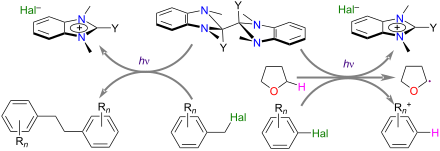
- , as the substrate (RX), anhydrous THF (without stabilizer) as the solvent, and (N-DMBI)2 or (Cyc-DMBI)2 as a stoichiometric reductant (0.5 equiv, assuming one electron is needed for each substrate molecule and that each dimer molecule contributes two electrons). Reaction outcomes were analyzed by GC
- remaining unidentified product may be R2 (C36H74), but this product is not easily detected by GC–MS. In sharp contrast to the case of benzyl derivatives, where the use of dimer reductants primarily affords R2 products, biaryls are not observed as dehalogenation products of aryl halides by dimeric reductants
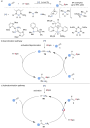
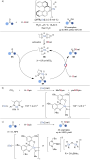
- radicals [42][43], are known to proceed by two distinct pathways. When the dimer (D2) is relatively weakly bound, its dissociation to D• can be the initial step (“cleavage-first”), which is then followed by fast electron-transfer (ET) reactions (Scheme 2). On the other hand, in the “electron-transfer first


Biphenylene-containing polycyclic conjugated compounds
Beilstein J. Org. Chem. 2023, 19, 1895–1911, doi:10.3762/bjoc.19.141
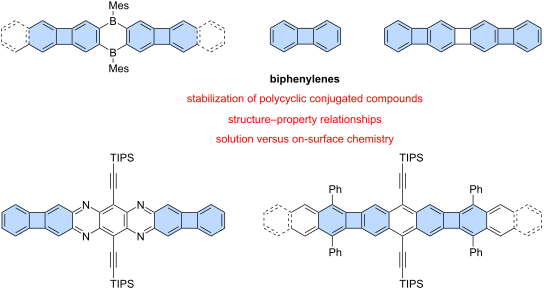
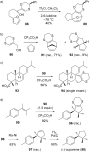
- via [2 + 2] and [2 + 2 + 2] cycloadditions. In a closely related study conducted by Grill et al., the behavior of 2,3-dibromoanthracene (89) was examined on two distinct surfaces [Au(100) and Au(111)] (Scheme 19) [52]. Notably, on the Au(111) substrate, nearly equivalent quantities of dimer 91
- resulting from a [2 + 2] cycloaddition and trimer 90 formed via a [2 + 2 + 2] cycloaddition pathway were observed. In contrast, when applied to Au(100), only the dimer structure 91 was generated through the [2 + 2] cycloaddition process. In a recent study in this field, Izydorczyk et al. were able to



Anion–π catalysis on carbon allotropes
Beilstein J. Org. Chem. 2023, 19, 1881–1894, doi:10.3762/bjoc.19.140
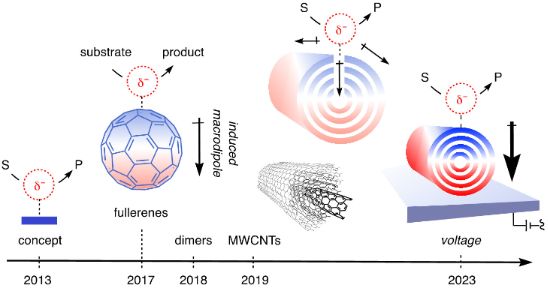
- intermediates and anionic transition states on top of fullerenes dimers should thus induce a larger macrodipole which should in turn strengthen their binding to the expanded π system and thus increase anion–π catalysis (Figure 1B). Fullerene dimer 37 was equipped with the tethered tertiary amine needed to
- deprotonate the substrate 4 and produce the conjugate bases I and II as the first reactive intermediates directly on the active π surface (Figure 2 and Figure 7) [80]. Calibrated against triethylamine 23, fullerene dimer 37 catalyzed enolate addition with an A/D37/23 = 12.5. This is more than twice the A/D22
- /23 = 4.6 of the respective monomer 22, which was already best among fullerene monomers. In computational simulations, the positive maximum of the MEP surface next to the amine base was the same for dimer 37 (+13.9 kJ mol−1) and monomer 22 (+13.8 kJ mol−1), supporting that the dramatic increase in




Unprecedented synthesis of a 14-membered hexaazamacrocycle
Beilstein J. Org. Chem. 2023, 19, 1728–1740, doi:10.3762/bjoc.19.126
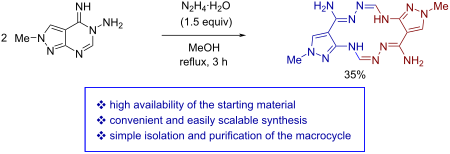
- calculations was proposed. It involves nucleophilic attack of hydrazine on the C2 carbon of the pyrimidine ring followed by cleavage of the C2–N3 bond, dimerization of the bis-amidrazone formed, and macrocyclization of the dimer. The DFT calculations also showed that the hydrazine-promoted transformation of


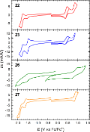
Benzoimidazolium-derived dimeric and hydride n-dopants for organic electron-transport materials: impact of substitution on structures, electrochemistry, and reactivity
Beilstein J. Org. Chem. 2023, 19, 1651–1663, doi:10.3762/bjoc.19.121
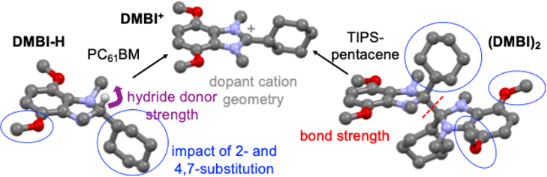
- stable DMBI+ (1+) species, a hydrogen atom must be lost from the dopant, in some cases resulting in the incorporation of hydrogen-reduced side products into the semiconductor film [9], although in other cases it may be lost as H2 [8][10][11]. The first report of a (DMBI)2 dimer (12, Figure 1) was of 1a2
- more soluble than the iodides in THF, so were reductively dimerized to 12 in THF using Na:Hg, although reduction of 1i+PF6− failed to afford 1i2. As we have noted before for other 12 species, amides (V, Scheme 1) are encountered as both byproducts of dimer synthesis and dimer decomposition products [14
- molecular C2 symmetry, while the Y–C–C–Y torsion angles for 1h2 and 1e2 are 149.4° and 140.3°, respectively, and thus both intermediate between the perfectly staggered (180° torsion) and neighboring eclipsed conformation (120°). The imidazole rings in the previously reported and present dimer structures are


Tying a knot between crown ethers and porphyrins
Beilstein J. Org. Chem. 2023, 19, 1630–1650, doi:10.3762/bjoc.19.120
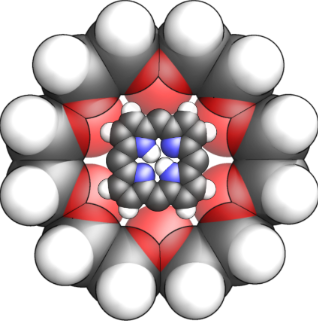
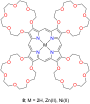
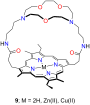
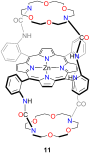
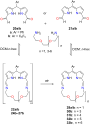
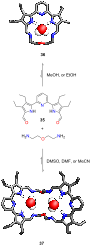
- to a dimer 37 was achieved using N,N-dimethylformamide, dimethyl sulfoxide, or acetonitrile. Interestingly, the dissolution of compound 37 in CHCl3, MeOH, or EtOH resulted in the interconversion to 36 within 1–2 days, as evidenced by 1H NMR spectroscopy. The Ravikanth group has developed an
- applications. Porphyrin and crown ether. Timeline demonstrating the contributions into the crown ether–porphyrin chemistry. Tetra-crowned porphyrin 1 and dimer 2 formed upon K+ binding. meso-Crowned 25-oxasmaragdyrins 3a–c and their boron(III) complexes (3a–c)-BF2. CsF ion pair binding by 5. The molecular









A series of perylene diimide cathode interlayer materials for green solvent processing in conventional organic photovoltaics
Beilstein J. Org. Chem. 2023, 19, 1620–1629, doi:10.3762/bjoc.19.119
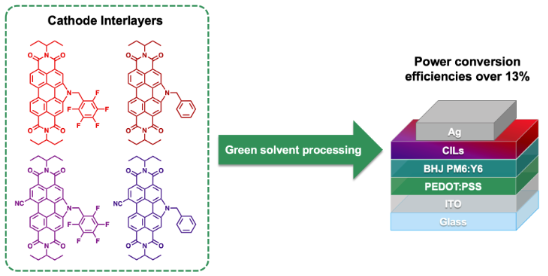
- the CILs PDIN-FB, PDIN-B, CN-PDIN-FB, and CN-PDIN-B. Evolution of the dimer tPDI2N-R [23] as an NFA to PDIN-B/PDIN-FB monomers to serve as CILs, where the addition of nitrile functional group on the monomeric PDIN-B/PDIN-FB materials serve to stabilize FMOs. a) Structures of PDIN-FB, PDIN-B, CN-PDIN


Radical chemistry in polymer science: an overview and recent advances
Beilstein J. Org. Chem. 2023, 19, 1580–1603, doi:10.3762/bjoc.19.116
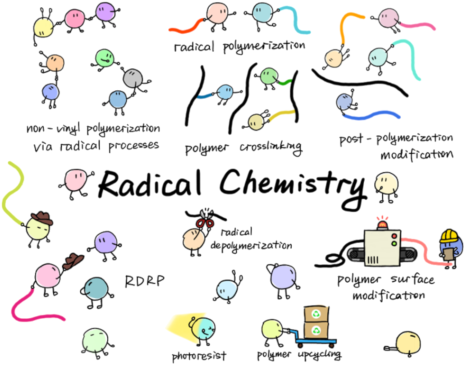
- action of laccase enzymes [5]. The radical then rearranges to form a semiquinone radical and reacts rapidly with a neighboring urushiol molecule to produce a biphenyl dimer. The dimers further polymerize to form the polymer [8]. Radical processes also occur in oceans. The mussel attachment system




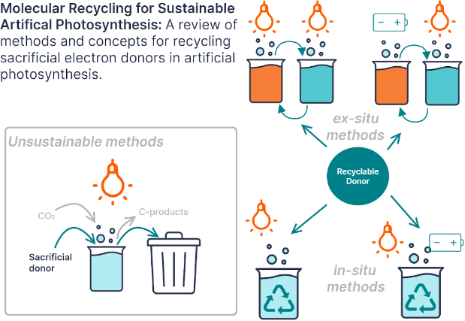
Enabling artificial photosynthesis systems with molecular recycling: A review of photo- and electrochemical methods for regenerating organic sacrificial electron donors
Beilstein J. Org. Chem. 2023, 19, 1198–1215, doi:10.3762/bjoc.19.88


Linker, loading, and reaction scale influence automated glycan assembly
Beilstein J. Org. Chem. 2023, 19, 1015–1020, doi:10.3762/bjoc.19.77
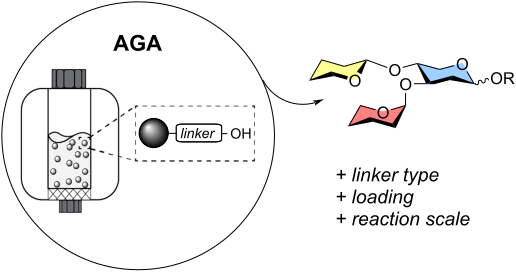
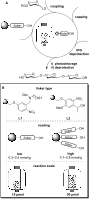
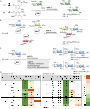
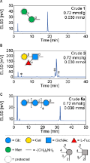
- observed in the chromatograms of the crudes (Figure 3B). MS analysis showed the presence of capped linker (*), capped dimer (†), and Lev-containing dimer (‡) (see Figures S5 and S7 in Supporting Information File 1). No significant variations were noticed within each series of experiments, with slightly
- showed the presence of capped linker (*), capped dimer (†), and Lev-containing dimer (‡). The monosaccharides are represented following the symbol nomenclature for glycans (SNFG). Supporting Information Supporting Information File 120: Experimental procedures and characterization data. Funding We thank

Construction of hexabenzocoronene-based chiral nanographenes
Beilstein J. Org. Chem. 2023, 19, 736–751, doi:10.3762/bjoc.19.54
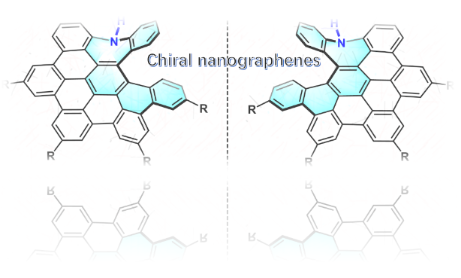
- pursuit of HBC-tetramer-based supertwistacene (compound 115 in Scheme 12), Wang and co-workers synthesized a chiral HBC-dimer 46 [46], in which two HBC units structurally shared one benzene ring (Scheme 6). 1,4-Bis((4-(tert-butyl)phenyl)ethynyl)benzene reacted with tetracyclone 2 through a two-fold Diels
- the P,P, and M,M enantiomers. The isomerization barrier was determined as 44.7 kcal/mol at 260 °C by HPLC analysis. Meanwhile, Campaña and co-workers reported a similar chiral, tropone-containing HBC-dimer 53 [47]. Ketone 47 was transformed to compound 48 by reacting with 1-iodo-4-(phenylethynyl
- trimethylsilylacetylene and monobromo 78 afforded HBD-dimer 79. Then the Diels–Alder reaction of compound 79 and tetracyclone 80 gave compound 81 in a medium yield. Due to the crowdedness of adjacent HBC units, a chiral [7]helicene 82 was formed during the Scholl reaction of precursor 81. Campaña and co-workers




Cassane diterpenoids with α-glucosidase inhibitory activity from the fruits of Pterolobium macropterum
Beilstein J. Org. Chem. 2023, 19, 658–665, doi:10.3762/bjoc.19.47
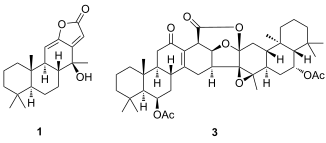
- resulted in the isolation of one new cassane diterpenoid, 14β-hydroxycassa-11(12),13(15)-dien-12,16-olide (1), one new caged cassane diterpenoid dimer featuring a 6/6/6/6/6/5/6/6/6 nonacyclic ring system, 6′-acetoxypterolobirin B (3), and one known compound (Figure 1). Results and Discussion The fruits of
- diterpenoid dimer with unique 6/6/6/6/6/5/6/6/6 nonacyclic ring system. The minor difference was the additional acetoxy group (δH 2.10) at C-6′. This conclusion was suggested by the HMBC correlations (Figure 2) from H-6′ to 6′-OCOCH3 (δC 170.4) and C-10′ (δC 36.8), and from H3-20′ to C-5′ (δC 55.1) and C-10


Phenanthridine–pyrene conjugates as fluorescent probes for DNA/RNA and an inactive mutant of dipeptidyl peptidase enzyme
Beilstein J. Org. Chem. 2023, 19, 550–565, doi:10.3762/bjoc.19.40
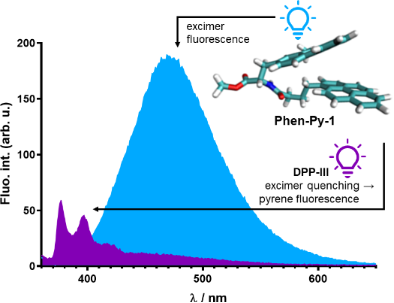
- Information File 1). Compound Phen-Py-1 showed high, micromolar/submicromolar affinities for all examined polynucleotides. The binding of Phen-Py-1 to polynucleotides possibly led to the unstacking of intramolecular pyrene–phenanthridine dimer and consequent excimer fluorescence quenching independently of the




Transition-metal-catalyzed domino reactions of strained bicyclic alkenes
Beilstein J. Org. Chem. 2023, 19, 487–540, doi:10.3762/bjoc.19.38



















Transition-metal-catalyzed C–H bond activation as a sustainable strategy for the synthesis of fluorinated molecules: an overview
Beilstein J. Org. Chem. 2023, 19, 448–473, doi:10.3762/bjoc.19.35
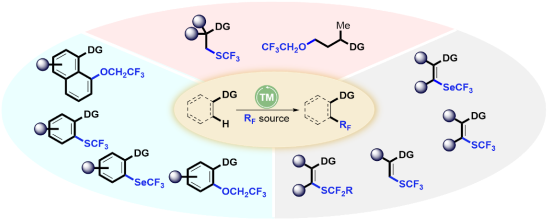
- 30% yield. A careful monitoring of the reaction unveiled the rapid formation of the CF3SeSeCF3 dimer, which could be the active trifluoromethylselenolating reagent in this transformation. In 2022, Magnier, Billard and co-workers applied the previous methodology to the trifluoromethylselenolation of


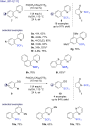
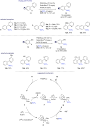

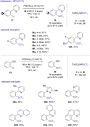


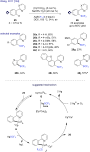

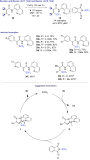

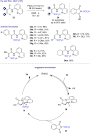


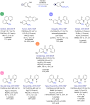
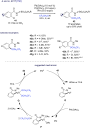
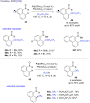
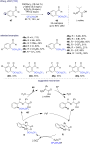


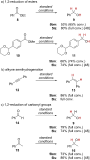
Mechanochemical solid state synthesis of copper(I)/NHC complexes with K3PO4
Beilstein J. Org. Chem. 2023, 19, 440–447, doi:10.3762/bjoc.19.34
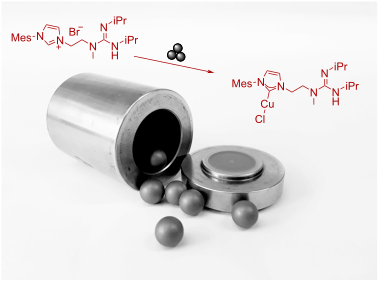
- procedure: steel vessel (12 mL), 6 steel balls (1 cm diameter), 450 rpm, 4 h). (dimer = [(NHC)2Cu+]Cl−). Supporting Information Supporting Information File 36: General procedures, experimental details, analytical data and copies of NMR spectra. Acknowledgements Prof. Dr. Martin Oestreich (TU Berlin) is


Combretastatins D series and analogues: from isolation, synthetic challenges and biological activities
Beilstein J. Org. Chem. 2023, 19, 399–427, doi:10.3762/bjoc.19.31
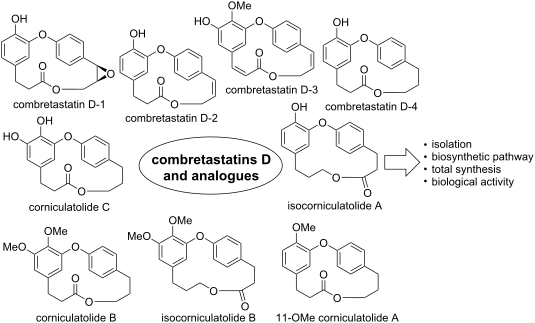
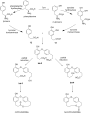
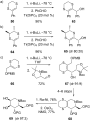
- ether moiety. The best result was obtained when phenol 101 was subjected to anodic oxidation, leading to the formation of spiro-dimer 102 in 61% yield. Protection of the alcohol using TBSOTf followed by cyclic ether cleavage and re-aromatization gave compound 104. Subsequent dehalogenation followed by




CuAAC-inspired synthesis of 1,2,3-triazole-bridged porphyrin conjugates: an overview
Beilstein J. Org. Chem. 2023, 19, 349–379, doi:10.3762/bjoc.19.29
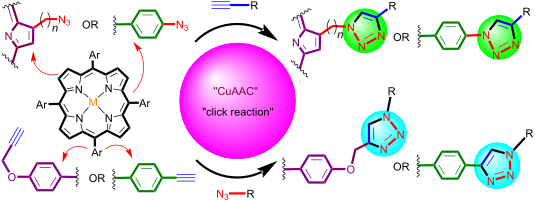
- ascorbate in DMSO (Scheme 9). According to UV–vis and circular dichroism (CD) spectrum measurements, the authors state that the formation of the dimer of porphyrin 50 can be attributed to DNA hybridization and through-space electronic interactions. In this investigation, it was found that the DNA serves as
- -porphyrin and copper-corrole moieties upon photoexcitation. Moreover, the theoretical calculations suggested that the porphyrin moiety acted as a donor while the corrole unit acted as an acceptor in dimer 60. Recently S. Y. Yap and co-workers [38] used “click chemistry” to link a water-soluble porphyrin




Group 13 exchange and transborylation in catalysis
Beilstein J. Org. Chem. 2023, 19, 325–348, doi:10.3762/bjoc.19.28
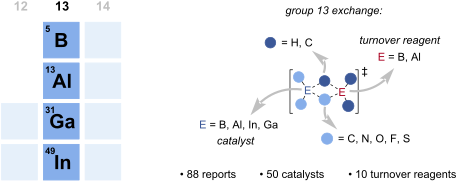
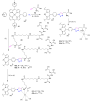
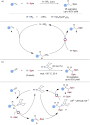
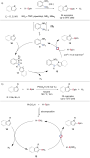
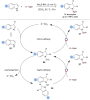
- frustrated Lewis pair (FLP)-mediated C‒H functionalisation (Scheme 4a). Using computational analysis, the mechanism of the reaction was proposed to occur by borane dimer [9]2 dissociation, followed by a concerted deprotonation of the heterocycle 10 to give a zwitterionic intermediate 11. The zwitterion then










Synthesis and reactivity of azole-based iodazinium salts
Beilstein J. Org. Chem. 2023, 19, 317–324, doi:10.3762/bjoc.19.27
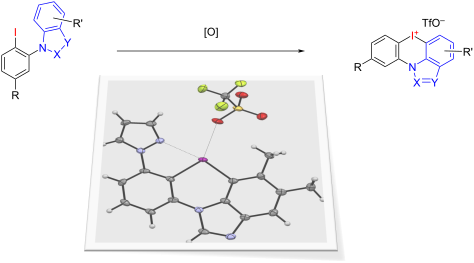
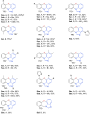
- mixture was stirred for 14 d at 65 °C. a6.00 mmol scale, T = 50 °C, bT = 40 °C, cT = 80 °C, t = 6 d, dt = 7 d, e0.3 equiv of DCM were included in the product. Single crystal structures (ORTEP drawing with 50% probability) of the pyrazole-coordinated salt 5bb (dimer, a second structure was omitted for




An accelerated Rauhut–Currier dimerization enabled the synthesis of (±)-incarvilleatone and anticancer studies
Beilstein J. Org. Chem. 2023, 19, 204–211, doi:10.3762/bjoc.19.19
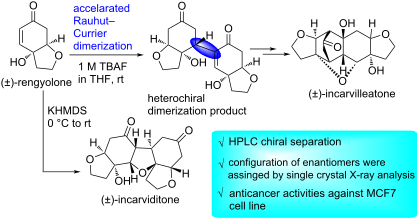
- structure of rac-incarvilleatone (1) was determined by spectroscopic methods and single crystal X-ray analysis. However, they were unable to obtain single crystals of either of the enantiomers (−)-incarvilleatone [(−)-1] and (+)-incarvilleatone [(+)-1]. (±)-Incarviditone (2), a novel benzofuranone dimer was
- isolated from I. delavayi along with known (±)-rengyolone (3) [2]. (±)-Incarviditone (2) presents a new carbon-skeleton by being the first benzofuranone dimer connected by a C–C bond. The cytotoxicity of (±)-incarviditone (2) has been assayed against cell lines A549, LOVO, HL-60, 6TCEM, and HepG2 and


1,4-Dithianes: attractive C2-building blocks for the synthesis of complex molecular architectures
Beilstein J. Org. Chem. 2023, 19, 115–132, doi:10.3762/bjoc.19.12
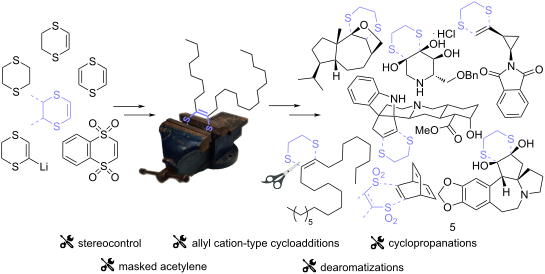
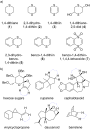
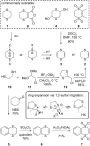
- cyclic hemithioacetal dimer). The chemistry and synthetic applications of reagent 4 and related α-thiocarbonyl substances have been reviewed in detail elsewhere [27], and they are rarely used as building blocks for 1,4-dithiane-type targets. For the synthesis of 5,6-dihydro-1,4-dithiin (2), several
- dependence [95]. On the other hand, simple benzyl cations can undergo more controlled (3 + 2) annulations, as is illustrated by the long-known Friedel–Crafts-type acid-catalyzed cascade reaction of styrene leading to the cyclic styrene dimer 86 (Scheme 13c) [96][97]. This (3 + 2) cycloaddition reactivity of











A novel spirocyclic scaffold accessed via tandem Claisen rearrangement/intramolecular oxa-Michael addition
Beilstein J. Org. Chem. 2022, 18, 1649–1655, doi:10.3762/bjoc.18.177
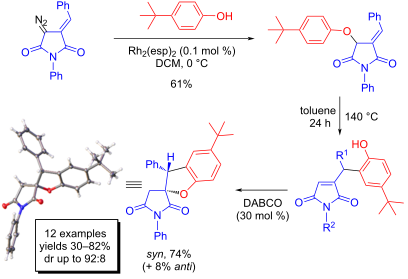
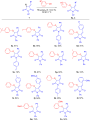
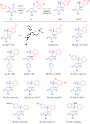
- synthesized as detailed in Scheme 3. The O–H insertion reaction worked well for electron-neutral or electron-rich phenols. The presence of chlorine substituents (such as 4-Cl or 2,4-diCl) in the phenol component drastically diminished the yield and led to the formation of the earlier reported DAS dimer [16



Preparation of β-cyclodextrin-based dimers with selectively methylated rims and their use for solubilization of tetracene
Beilstein J. Org. Chem. 2022, 18, 1596–1606, doi:10.3762/bjoc.18.170
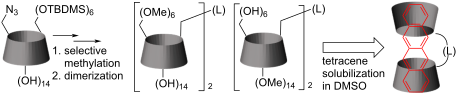
- better effectiveness than other tested supramolecular hosts. Keywords: cyclodextrin; dimer; methylation; solubilization; tetracene; Introduction Cyclodextrins (CDs) are cyclic oligomers of glucose that play an important role in supramolecular chemistry [1]. The structure of any CD contains a
- propargyl-containing compounds, including other CDs, to form a dimer [12]. Usually, such reactions proceed with a Cu(I) catalyst [27]; however, Cu(I) can be generated in situ by the reduction of Cu(II) [12][28] or by the dissolution of metal copper [29]. Moreover, the load of the catalyst varies from
- catalytical amounts (0.02 equiv) [27] to semi-equivalent [12]. Optimal conditions for a click reaction are a subject to discovery in every case, because temperature, microwave or ultrasonic irradiation, and type of catalyst strongly influence the reaction time and yields. In the preparation of dimer 4, the





