


Search results
Search for "linkers" in Full Text gives 193 result(s) in Beilstein Journal of Organic Chemistry.
Heteroleptic metallosupramolecular aggregates/complexation for supramolecular catalysis
Beilstein J. Org. Chem. 2022, 18, 597–630, doi:10.3762/bjoc.18.62
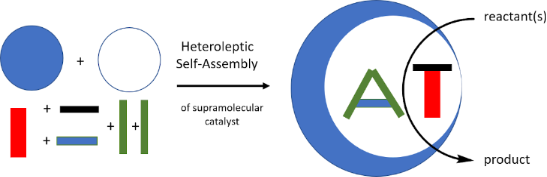
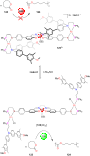
- advantages of utilizing self-assembly to construct discrete nanocages with predetermined geometry and function is the use of a one-pot reaction employing complementary organic linkers with inorganic metal ions. Although the one-pot synthesis of homoleptic metallacages has been thoroughly investigated over


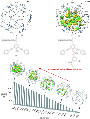


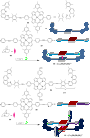


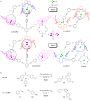



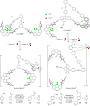


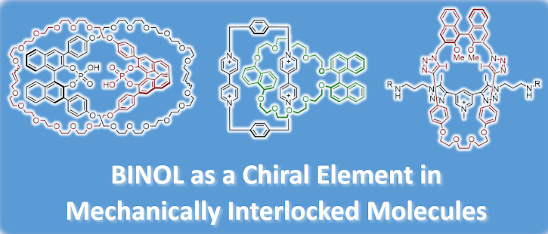
BINOL as a chiral element in mechanically interlocked molecules
Beilstein J. Org. Chem. 2022, 18, 508–523, doi:10.3762/bjoc.18.53
- -alkylene-linkers, the diastereoselectivity decreases with increasing linker length (79/33/12% de for C3/C6/C12-linkers, respectively). This is in line with an expected localization of the macrocycle around the ester functionality due to weak [C–H···O] interactions from the COOCH2 group to the macrocycle
- ) and in the substitution pattern of the macrocycle (R = H or iPr in the 3,5-positions of the phenylene linkers, for 56 or 57; see Figure 14). These heterobifunctional chiral catalysts were studied for the asymmetric Michael addition of malonic acid diethyl ester (59) to cinnamaldehydes 58. While the


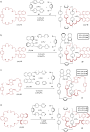


Stepwise PEG synthesis featuring deprotection and coupling in one pot
Beilstein J. Org. Chem. 2021, 17, 2976–2982, doi:10.3762/bjoc.17.207

- obtained. However, for many other applications, which include as linkers in organic synthesis and bioconjugation [8], as ingredients in nanomedicines to stabilize nanoparticles and to assist nanoparticle cell entry [9][10][11], and as PEGylation agents to stabilize drugs based on biologic molecules such as
- protecting groups would be preferred. Such routes can double the length of the PEG in three easy steps and the PEG product is asymmetric. It is noted that the use of base-labile protecting groups or linkers in organic synthesis involving carrying out reactions under less basic reactions and removing the
- protecting group or cleaving the linker under more basic conditions is not common. In contrast, the use of acid-labile protecting groups or linkers involving carrying out reactions under less acidic conditions and removing the protecting group or cleaving the linker under more acidic conditions is more


Total synthesis of the O-antigen repeating unit of Providencia stuartii O49 serotype through linear and one-pot assemblies
Beilstein J. Org. Chem. 2021, 17, 2915–2921, doi:10.3762/bjoc.17.199
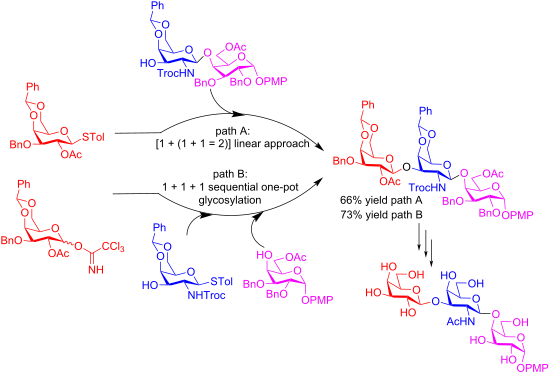
- for further conjugation to other moieties towards the synthesis of vaccine conjugates by removal of the anomeric PMP group. This has been previously demonstrated by removal of the anomeric PMP group, conversion to a glycosidic donor, and further conjugation to either linkers or amino acids by several


Constrained thermoresponsive polymers – new insights into fundamentals and applications
Beilstein J. Org. Chem. 2021, 17, 2123–2163, doi:10.3762/bjoc.17.138



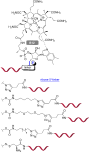
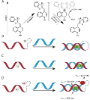
Chemical approaches to discover the full potential of peptide nucleic acids in biomedical applications
Beilstein J. Org. Chem. 2021, 17, 1641–1688, doi:10.3762/bjoc.17.116
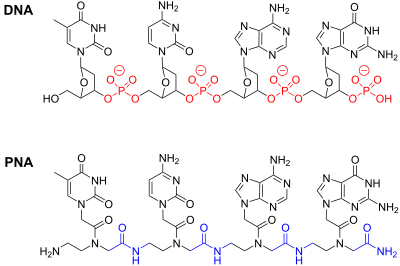


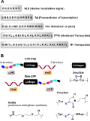


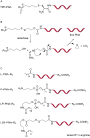

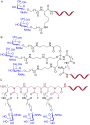




Recent advances in the application of isoindigo derivatives in materials chemistry
Beilstein J. Org. Chem. 2021, 17, 1533–1564, doi:10.3762/bjoc.17.111
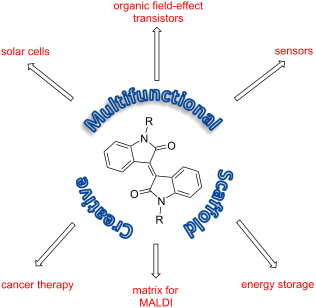
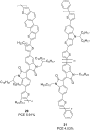
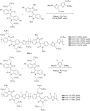
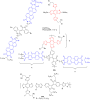
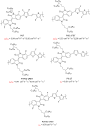
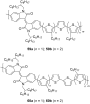
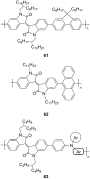
- , and polymeric isoindigos as agents for photoacoustic and photothermal cancer therapy. Processing conditions and additive influence on OSC performance based on monoisoindigos 9a–c. Structures of linkers in bisisoindigos 14 and 15 and the performance of OSCs based on these. Photovoltaic properties of














Double-headed nucleosides: Synthesis and applications
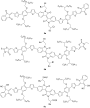
Beilstein J. Org. Chem. 2021, 17, 1392–1439, doi:10.3762/bjoc.17.98





Synthesis and physicochemical evaluation of fluorinated lipopeptide precursors of ligands for microbubble targeting
Beilstein J. Org. Chem. 2021, 17, 511–518, doi:10.3762/bjoc.17.45
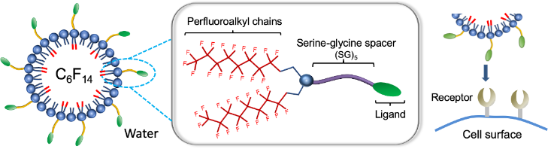
- serine–glycine (SG)n segments rather than classical poly(oxyethylene) linkers between the lipid polar head and a targeting ligand were proposed for the liposome-mediated, selective delivery of anticancer drugs. Here, we report the synthesis of perfluoroalkylated lipopeptides (F-lipopeptides) bearing two


Supramolecular polymers with reversed viscosity/temperature profile for application in motor oils
Beilstein J. Org. Chem. 2021, 17, 105–114, doi:10.3762/bjoc.17.11
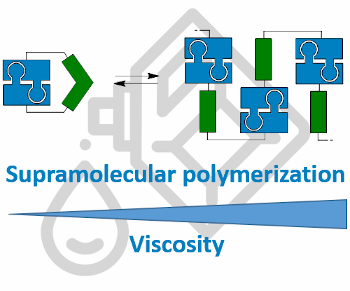
- transformation at elevated temperatures, leading to the desired viscosity effect. The direct comparison of the linkers in A and B strongly suggests that the Thorpe–Ingold effect induced by the gem-dimethyl unit is crucial for the supramolecular polymerization, thus indicating that indeed a ring–chain


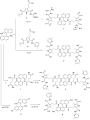



Changed reactivity of secondary hydroxy groups in C8-modified adenosine – lessons learned from silylation
Beilstein J. Org. Chem. 2020, 16, 2854–2861, doi:10.3762/bjoc.16.234

- synthesized a number of pyrimidine and purine derivatives carrying amino linkers of different length and flexibility [13][20]. Linker-modified uridine derivatives, upon conversion into phosphoramidite building blocks, were incorporated in RNA and used for a systematic study of distance determination of


Water-soluble host–guest complexes between fullerenes and a sugar-functionalized tribenzotriquinacene assembling to microspheres
Beilstein J. Org. Chem. 2020, 16, 2551–2561, doi:10.3762/bjoc.16.207
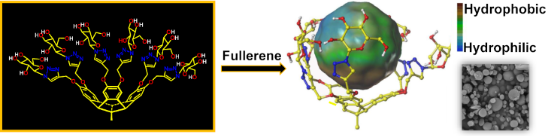
- ]. The acetyl protons of the protected glucose residues appear as eight distinct resonances. The 13C NMR spectrum shows a similar splitting. The triazole carbons resonate at δ = 123.71 and δ = 123.69 ppm and at δ = 143.88 and δ = 143.79 ppm, indicating two sets of magnetically nonequivalent linkers. This


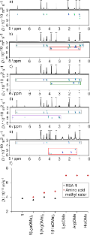
![[Graphic 2]](/bjoc/content/inline/1860-5397-16-207-i3.svg?max-width=637&scale=1.18182) C60 [TBTQ-(OG)6: 50 μM; C60: 50 μM] and (b) TBTQ-(OG)6
C60 [TBTQ-(OG)6: 50 μM; C60: 50 μM] and (b) TBTQ-(OG)6 


NMR Spectroscopy of supramolecular chemistry on protein surfaces
Beilstein J. Org. Chem. 2020, 16, 2505–2522, doi:10.3762/bjoc.16.203
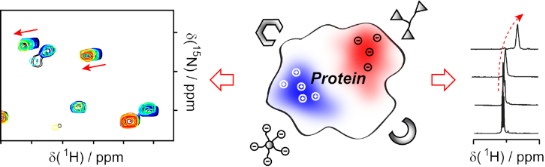
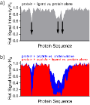
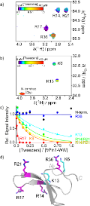
- combination of two or more GCP moieties with variable linkers enables the construction of multivalent ligands geared towards a specific spot on protein surface, which by design can lead to either stabilization [42][43][44][45] or inhibition [46] of a given protein–protein interaction. The inhibition of the




Tools for generating and analyzing glycan microarray data
Beilstein J. Org. Chem. 2020, 16, 2260–2271, doi:10.3762/bjoc.16.187
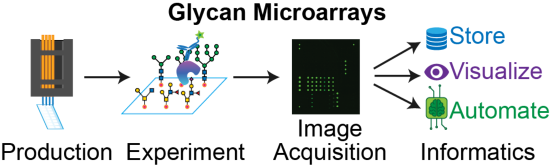
- specialized surface types (e.g., nitrocellulose PATH® slides) which have lower background signals at this wavelength. A decision chart is provided in Figure 2 which can help to decide which surface would be best for a variety of situations. A more detailed discussion of recent glycan linkers and surfaces was
- approach. It is also possible that the results from automated software could be confounding rather than illuminating, if parameters of the experiment or even array fabrication (such as surface chemistry, etc.) are changed. In fact, the various chemical linkers through which glycans are attached to the


Clickable azide-functionalized bromoarylaldehydes – synthesis and photophysical characterization
Beilstein J. Org. Chem. 2020, 16, 1683–1692, doi:10.3762/bjoc.16.139
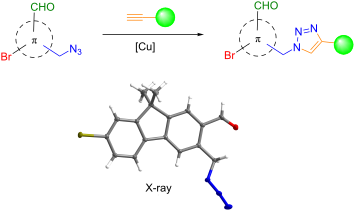
- alkynes, exhibiting different degrees of steric demand, was performed in high efficiency. Finally, we investigated the photophysical properties of the azide-functionalized arenes and their covalently linked triazole derivatives to gain deeper insight towards the effect of these covalent linkers on the



Pauson–Khand reaction of fluorinated compounds
Beilstein J. Org. Chem. 2020, 16, 1662–1682, doi:10.3762/bjoc.16.138
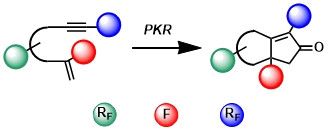
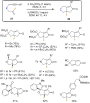
- compounds in the PK reaction started with fluorinated enynes derived from malonates and those containing heteroatoms as linkers. The synthesis of the starting enynes 37 was accomplished following various approaches (Scheme 19). The first of these (via a) was based on a report by Hammond and co-workers, in
- ). Alkyl-substituted derivatives proved to be similarly successful substrates; however, the TMS-substituted derivative was obtained in a significantly lower yield. In terms of linkers, heteroatoms were well-tolerated, although the use of malononitrile resulted exclusively in the elimination product despite
- testing a variety of reaction conditions. More complex biorelevant examples such as isatin derivatives were also suitable substrates, affording the corresponding spirocyclic derivatives, albeit in low yields (Scheme 21) [59]. Unfortunately, thioether and sulfone-based linkers were unsuitable in this




A smart deoxyribozyme-based fluorescent sensor for in vitro detection of androgen receptor mRNA
Beilstein J. Org. Chem. 2020, 16, 1135–1141, doi:10.3762/bjoc.16.100
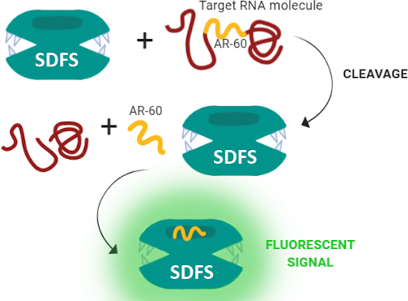
- strand), that combined the components into a single structure. The T1–T4 strands were connected with the platform by polythymidine or hexaethylene glycol linkers, which provided flexibility of SDFS. All nucleotide sequences are presented in Table S2 of Supporting Information File 1. A calculation of the
- target 60-AR_RNA, and connected with T2 and T3 strands through polythymidine linkers (Figure 1A). The MGA strands can hybridize with each other and attach a molecule of malachite green dye (Figure 1C and D) only in the presence of target mRNA. It provided the high specificity of SDFS. After being
- biological material. SDFS main components and its work model. A) Schematic representation of the SDFS structure. Dotted lines indicate hexaethylene glycol linkers in T1 and T4, and polythymidines linker in T2 and T3; Dz1 and Dz2 – deoxyribozyme sequences. B) The detailed structure of the Dz catalytic core



Towards triptycene functionalization and triptycene-linked porphyrin arrays
Beilstein J. Org. Chem. 2020, 16, 763–777, doi:10.3762/bjoc.16.70

- porphyrin units have been connected in a number of different ways; from phenylene, ethynyl, ethenyl or alkane linkers [5][6][7][8], to meso–β- [9] or β–β-linkages [10] or alternatively by connecting two or more meso–meso-linked porphyrin units via oxidative fusing reactions [11][12][13][14][15]. However
- linked which, theoretically, can cause a significant energy/charge sink. Moreover, the use of π-conjugated linkers in porphyrin arrays results in significantly altered UV–vis spectra, indicating very strong electronic coupling that causes the loss of individual unit characteristics through delocalization
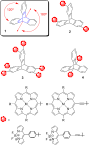
- directly to the periphery of triptycene or via various linkers; arrays with six chromophores 3 have thus far eluded us [26][27]. While much work has been done on the functionalization of the aromatic rings of triptycene as in 2 or 3 [24][25][26][27][28][29][30], the attachment of chromophores at the





Fluorinated maleimide-substituted porphyrins and chlorins: synthesis and characterization
Beilstein J. Org. Chem. 2019, 15, 2704–2709, doi:10.3762/bjoc.15.263

- heterocycles have also been used as linkers and for labeling biomolecules in chemical biology [43]. Moreover, this synthetic approach provides high yields, selectivity, mild reaction conditions and simple purification methods. It was demonstrated that the CuAAC reaction of porphyrins 3a and 3b with N


Effect of ring size on photoisomerization properties of stiff stilbene macrocycles
Beilstein J. Org. Chem. 2019, 15, 2408–2418, doi:10.3762/bjoc.15.233
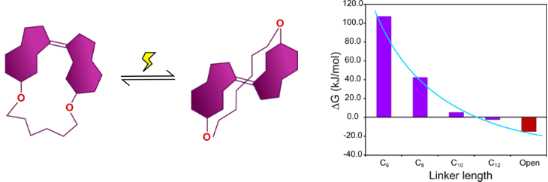
- diethers into noncyclic diethers (Supporting Information File 1) and the results are visualized in Figure 4. For (E)-1a–d the ring strain decreases with increased linker length. For the less strained (Z)-1a–d the ring strain increases slightly with increased linker length and for the longer linkers (1c,d


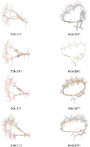


Complexation of chiral amines by resorcin[4]arene sulfonic acids in polar media – circular dichroism and diffusion studies of chirality transfer and solvent dependence
Beilstein J. Org. Chem. 2019, 15, 1913–1924, doi:10.3762/bjoc.15.187
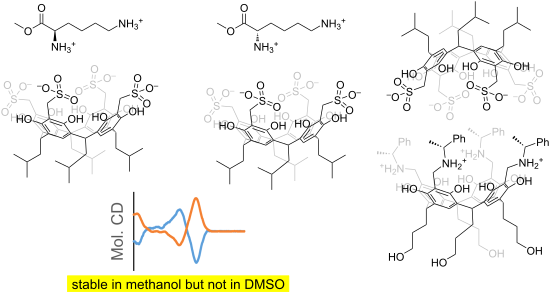
- capable of forming electrostatic interactions. However, in CSAs polar groups are positioned directly on a macrocyclic scaffold, while for RSAs at conformationally labile methylene linkers. Therefore, we think that RSAs are more adaptable than CSAs and are able to enclose guest molecules more tightly (by




An azobenzene container showing a definite folding – synthesis and structural investigation
Beilstein J. Org. Chem. 2019, 15, 1534–1544, doi:10.3762/bjoc.15.156
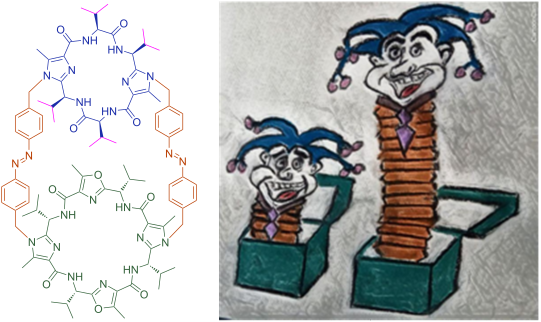
- macrocycles: In the elongated trans,trans-isomer this distance shows a value of 14.1 Å, in the more compact cis,cis-isomer the distance amounts to 11.3 Å. The replace of the isopropyl groups by recognition units and the enlargement of the two linkers, which makes a shielding of a guest from the environment


2,3-Dibutoxynaphthalene-based tetralactam macrocycles for recognizing precious metal chloride complexes
Beilstein J. Org. Chem. 2019, 15, 1460–1467, doi:10.3762/bjoc.15.146
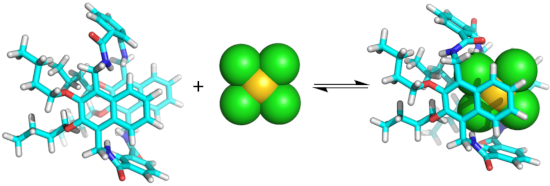
- File 1). Conclusion In summary, we reported the synthesis of two new tetralactam macrocycles with 2,3-dibutoxynaphthalenes as the sidewalls. The macrocycle with isophthalamide as the linkers is able to bind chloride ions and precious metal chloride complexes in nonpolar solvent, while the macrocycle


Synthesis of dipolar molecular rotors as linkers for metal-organic frameworks
Beilstein J. Org. Chem. 2019, 15, 1331–1338, doi:10.3762/bjoc.15.132

- linkers in MOFs with potential applications as ferroelectric materials and for optical signal processing. Keywords: benzothiadiazole; dipolar rotor; fluorescence; large dipole moment; metal organic framework linker; Introduction Rotors are among the fundamental functional units in engineering in our
- compromise between the size and dipole moment of the rotor/linker has to be aimed at, and care has to be taken that the rotational barriers are as low as possible. Figure 1 shows the interaction of a pair of dipolar rotors with parallel axes at a distance of 10 Å, which is a typical distance of the linkers
- . We interpret these data as the lower limits of the rotational barriers in a MOF environment. Interactions with other linkers or neighbouring dipoles probably will increase the barriers. The dipole moments of the cyano-substituted rotors are considerably higher than those with fluoride substitution


Insertion of [1.1.1]propellane into aromatic disulfides
Beilstein J. Org. Chem. 2019, 15, 1172–1180, doi:10.3762/bjoc.15.114
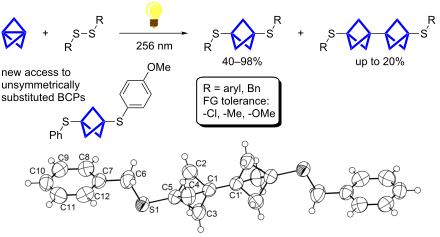
- , 76344 Eggenstein-Leopoldshafen, Germany 10.3762/bjoc.15.114 Abstract Herein we present the synthesis of symmetrically and unsymmetrically substituted 1,3-bissulfanylbicyclo[1.1.1]pentanes from disulfides and [1.1.1]propellane. Bicyclo[1.1.1]pentanes (BCPs) recently gained interest as rigid linkers and
- in most cases. Single crystal X-ray diffraction analysis confirms the rod-like structure of the [2]staffanes that is often required in material applications. Keywords: bicyclo[1.1.1]pentane; bioisosteres; disulfides; linkers; [1.1.1]propellane; Introduction Rigid structures are emerging in both





