


Search results
Search for "network" in Full Text gives 338 result(s) in Beilstein Journal of Organic Chemistry. Showing first 200.
GlAIcomics: a deep neural network classifier for spectroscopy-augmented mass spectrometric glycans data
Beilstein J. Org. Chem. 2023, 19, 1825–1831, doi:10.3762/bjoc.19.134
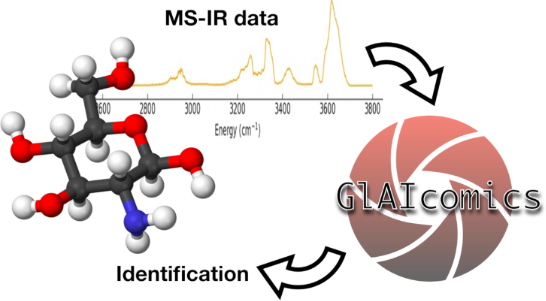
- been proposed as a very promising sequencing approach. However, its use as a generic analytical tool relies on the development of recognition techniques that can analyse complex vibrational fingerprints for a large number of monomers. In this study, we used a Bayesian deep neural network model to
- intelligence in combination with spectroscopy-augmented mass spectrometry for carbohydrates sequencing and glycomics applications. Keywords: Bayesian neural network; deep learning; glycomics; IR; spectroscopy; Introduction DNA and protein sequencing technologies that aim at determining the structure of a
- probabilistic deep neural network (Bayesian deep neural networks [12]) to support automated monosaccharide recognition for carbohydrate sequencing. We obtained a highly performing algorithm that we called "GlAIcomics", specifically trained on carbohydrates. Methodology Data production Our carbohydrate analysis


Effects of the aldehyde-derived ring substituent on the properties of two new bioinspired trimethoxybenzoylhydrazones: methyl vs nitro groups
Beilstein J. Org. Chem. 2023, 19, 1713–1727, doi:10.3762/bjoc.19.125
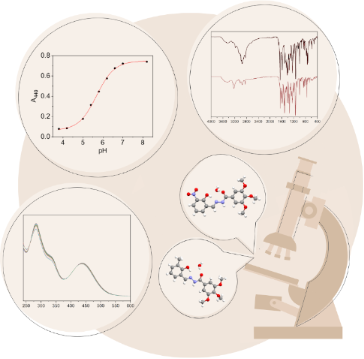
- water molecules in the network (calcd.: 9.47% for C18H20O5N2·2H2O, MW = 380.39 g mol−1). On the other hand, hdz-NO2 did not show any mass loss below 250 °C, indicating the absence of solvation molecules in the sample (C17H17O7N3, MW = 375.34 g mol−1). Single crystals of both compounds, as monohydrates





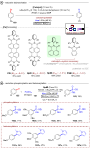
A series of perylene diimide cathode interlayer materials for green solvent processing in conventional organic photovoltaics
Beilstein J. Org. Chem. 2023, 19, 1620–1629, doi:10.3762/bjoc.19.119
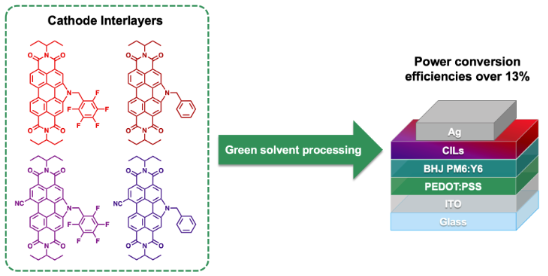
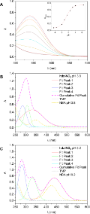
- (EQE corrected). Here, the short circuit current is JSC; the open circuit voltage is VOC; the fill factor is FF, and the power conversion efficiency is η. Supporting Information Supporting Information File 14: Experimental part. Funding This work was supported by the NSERC Green Electronics Network


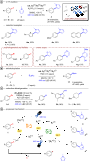
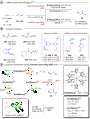
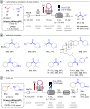
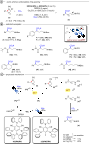
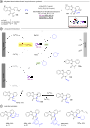
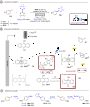
Photoredox catalysis harvesting multiple photon or electrochemical energies
Beilstein J. Org. Chem. 2023, 19, 1055–1145, doi:10.3762/bjoc.19.81













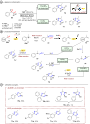
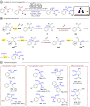


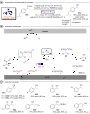


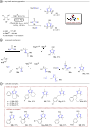








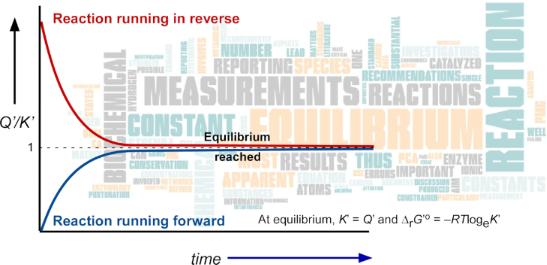
Recommendations for performing measurements of apparent equilibrium constants of enzyme-catalyzed reactions and for reporting the results of these measurements
Beilstein J. Org. Chem. 2023, 19, 303–316, doi:10.3762/bjoc.19.26
- with T, pH, pMg, and I [21]. 3.11. Comparisons with values from the literature, network calculations, and the use of other methods A standard part of reporting any measurement is to make a comparison of the value(s) obtained in the current study with previously reported values of the measured quantity
- network or thermodynamic cycle calculations. It is recommended that the use of this approach be considered and, if the necessary data are present in the literature, that the thermodynamic pathway calculations be performed. Details regarding thermodynamic network calculations for biochemical substances are

Digyalipopeptide A, an antiparasitic cyclic peptide from the Ghanaian Bacillus sp. strain DE2B
Beilstein J. Org. Chem. 2022, 18, 1763–1771, doi:10.3762/bjoc.18.185
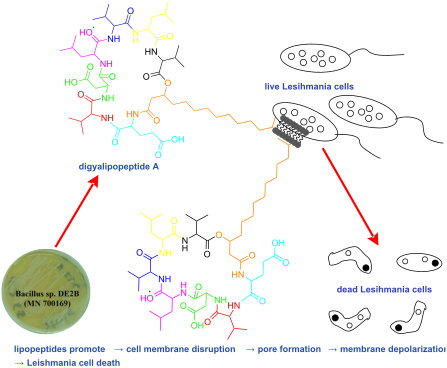
- to confirm the presence of the cyclic ester and the possible absolute stereochemistry around C-39 (δC 71.6) of the fatty acid chain we first of all consulted the global natural products social molecular networking (GNPS) [19][20][21]. The GNPS network data (Figure 6) provided the opportunity to


Synthetic study toward tridachiapyrone B
Beilstein J. Org. Chem. 2022, 18, 1741–1748, doi:10.3762/bjoc.18.183
- helpful discussions. Funding MC thanks Ministère de la Recherche et de l’Education Nationale for a Ph.D. fellowship. This work has been partially supported by CNRS, Normandie University, INSA Rouen, Labex SynOrg (ANR-11-LABX-0029) and Région Normandie (CRUNCh network).


Navigating and expanding the roadmap of natural product genome mining tools
Beilstein J. Org. Chem. 2022, 18, 1656–1671, doi:10.3762/bjoc.18.178
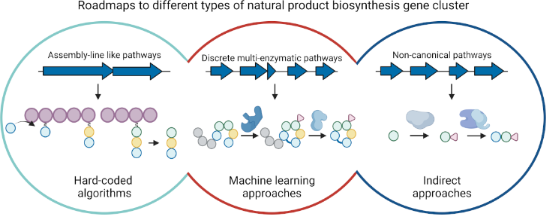
- ). An example of a deep learning architecture is the artificial neural network inspired by the human brain architecture. It consists of artificial neurons processing information organized in different layers and connected by synapses [73]. These advanced algorithms often provide higher accuracy in their
- prediction but are no longer interpretable as a result of their high level of abstraction [73]. NeuRiPP, for instance, utilizes a parallel convolutional neural network to predict novel RiPP precursor genes independent of their RiPP family. The neural network is trained on a RiPP precursor training set that
- annotations into numeric vectors using a shallow two-layer neural network, an approach adopted from natural language processing [41][72]. These high-dimensional vectors are then used as input for a second two-layer neural network trained on a set of BGC and non-BGC sequences to predict NP BGCs. In the last




Using UHPLC–MS profiling for the discovery of new sponge-derived metabolites and anthelmintic screening of the NatureBank bromotyrosine library
Beilstein J. Org. Chem. 2022, 18, 1544–1552, doi:10.3762/bjoc.18.164
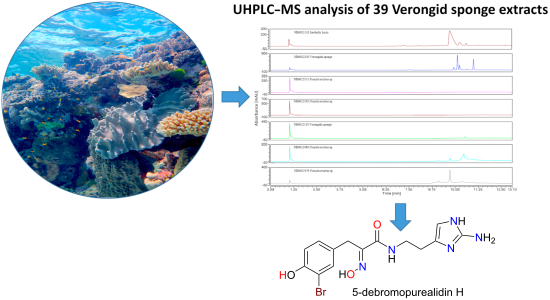
- , fragmentation of the mitochondrial tubular network, chromosome misalignment, and cell cycle arrest in mitosis in LNCaP prostate cancer cells [38]. The bastadin structure class is well-documented within the literature for their cytotoxic activity [37][39][40][41], with both bastadins 4 and 8 exhibiting in vitro


An alternative C–P cross-coupling route for the synthesis of novel V-shaped aryldiphosphonic acids
Beilstein J. Org. Chem. 2022, 18, 1518–1523, doi:10.3762/bjoc.18.160
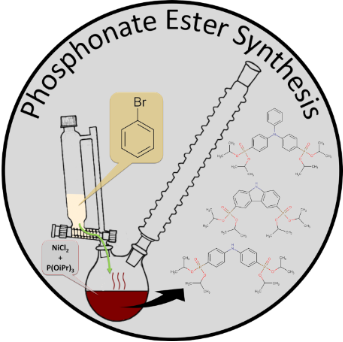
- construction of metal phosphonate frameworks, two main considerations were made when selecting these substrates with regards to rigidity and geometry (Figure S1, Supporting Information File 1). In the compounds considered here, rigidity is ensured by the network of sp2-hybridized carbon atoms, or aromatic


Microelectrode arrays, electrosynthesis, and the optimization of signaling on an inert, stable surface
Beilstein J. Org. Chem. 2022, 18, 1488–1498, doi:10.3762/bjoc.18.156
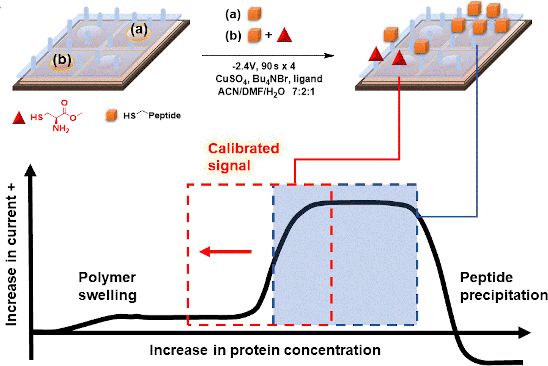
- other block is used to provide a site for cross-linking the polymer in order to render the surface more stable once it is coated onto an array (the cinnamate block is used to make a polymer network through photochemical cross-linking). The use of the borate ester surface provides a tunable surface that
- detection methods in the subsequent binding studies. The polymer network is not permeable to molecules tethered to its surface or proteins in solution. The synthetic problem was solved by using the electrodes in an array to generate chemical reagents and catalysts and then confining those reagents and


1,4,6,10-Tetraazaadamantanes (TAADs) with N-amino groups: synthesis and formation of boron chelates and host–guest complexes
Beilstein J. Org. Chem. 2022, 18, 1424–1434, doi:10.3762/bjoc.18.148
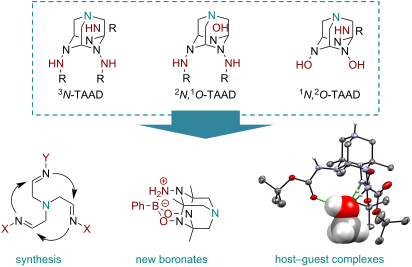
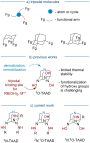
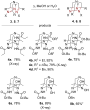
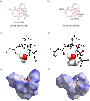
- of the obtained TAAD derivatives were performed, and the formation of boron chelates and host–guest complexes having an unusual intramolecular H-bonded network was showcased in this work. Results and Discussion Synthesis of 3N-TAADs, 2N,1O-TAADs and 1N,2O-TAADs Our strategy to construct TAAD






On drug discovery against infectious diseases and academic medicinal chemistry contributions
Beilstein J. Org. Chem. 2022, 18, 1355–1378, doi:10.3762/bjoc.18.141
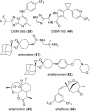
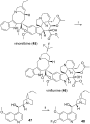
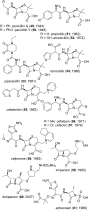
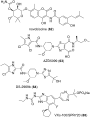
- , amongst many other uses, provided the background for fragment-based drug design [2][3]. – An ever-increasing computer processing speed leading to an ever-growing list of software-based approaches to try to help in various aspects of drugs discovery. The neural network-based software AlphaFold [4], which







Polymer and small molecule mechanochemistry: closer than ever
Beilstein J. Org. Chem. 2022, 18, 1225–1235, doi:10.3762/bjoc.18.128
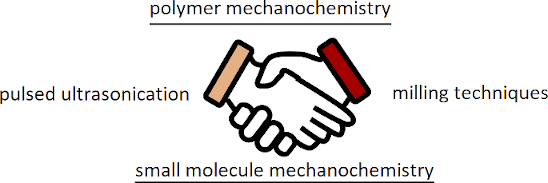
- fluorescent 9-fluorenone (3) via β-scission (Scheme 1b). To highlight the importance of the polymer network in the transduction of the mechanical stimulus to the mechanophore, the authors demonstrated that ball milling monomeric BMPF-OH at 30 Hz for 3 h only generated traces of 3 (1% after isolation
- Sons. Copyright © 2019 WILEY‐VCH Verlag GmbH & Co. KGaA, Weinheim. (a) Mechanochemical activation of anthracene–endoperoxide mechanophore incorporated in the cross-linked polyacrylate polymer 1 by cryomilling in a mixer mill. (b) Mechanochemical activation of a polymer network matrix, bis(9


Mechanochemical bottom-up synthesis of phosphorus-linked, heptazine-based carbon nitrides using sodium phosphide
Beilstein J. Org. Chem. 2022, 18, 1203–1209, doi:10.3762/bjoc.18.125
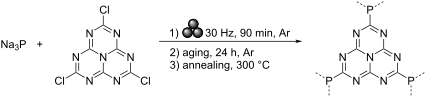
- previous work [38] of substituting bridging nitrogen atoms for phosphorus in previously reported heptazine-based graphitic carbon nitrides. We adapted the ab initio predicted structures for a network of corrugated sheets [46] (Figure 4a and 4b) and planar sheets (Figure 4c) [47]. Additionally, we modelled
- a chlorine terminated monomeric unit based on an experimentally resolved, nitrogen-bridged, paddlewheel structure (Figure 4d) [48]. Calculations resulted in a single chemical environment for the phosphorus atoms in the three model structures. The corrugated and planar network structures have


New azodyrecins identified by a genome mining-directed reactivity-based screening
Beilstein J. Org. Chem. 2022, 18, 1017–1025, doi:10.3762/bjoc.18.102
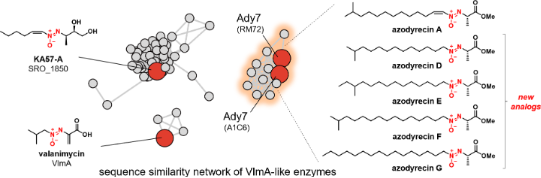
- sequence similarity network (SSN) generated by all-vs-all blastp with E-value at 1 × 10−70 classified these “VlmAs'' into more than fourteen groups (Figure 5). In this network, the two Ady7s from Streptomyces sp. RM72 and Streptomyces sp. A1C6 belong to group 3, while VlmA and SRO_1850 belong to groups 12
- –G (7–10) (b). Key correlations in 2D NMR are shown. In vitro characterization of Ady1. Extracted ion chromatograms at m/z 329.3 (black) and m/z 343.3 (blue), corresponding to compound 11 and 8, respectively, are shown. Sequence similarity network of VlmA-like enzymes in the actinobacterial genomes




First series of N-alkylamino peptoid homooligomers: solution phase synthesis and conformational investigation
Beilstein J. Org. Chem. 2022, 18, 845–854, doi:10.3762/bjoc.18.85
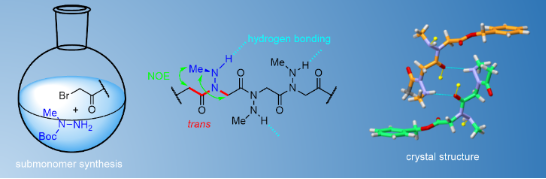
- second group of molecules (conformation B). In the crystal lattice, each molecule establishes four intermolecular CO···HN hydrogen bonds. Only the inter-residue carbonyl (oxygen atom labeled O2, Figure 3C) participates in this network, making two hydrogen bonds with two different molecules and different
- ); (C) overview of the hydrogen bonding network (conformation A depicted in blue, conformation B in orange), hydrogen bonds (light blue dashed lines), hanging hydrogen bonds (light green dashed lines). NOE effect interaction observed in the 2D-NOESY spectra of monomer 1 and dimer 2 in DMSO-d6


Identification of the new prenyltransferase Ubi-297 from marine bacteria and elucidation of its substrate specificity
Beilstein J. Org. Chem. 2022, 18, 722–731, doi:10.3762/bjoc.18.72
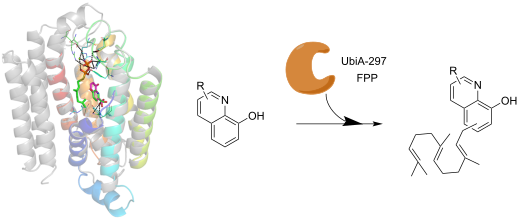
- network with Ptases deposited in the Uniprot database (Figure 2 and Table S1 in Supporting Information File 1). A subsequent network analysis uncovered that the genomes of analyzed bacterial genera encoded only four (G1–G4) out of eight previously reported Ptase groups. The first group of Ptases (G1
- gene sequences are deposited at GenBank with the accession numbers ON075815 and ON075816, respectively. Accession number or ID of all other sequences used to infer the pairwise similarity network and phylogenetic tree are provided in Supporting Information File 1, Table S1. Bacterial strains, plasmids


Structural basis for endoperoxide-forming oxygenases
Beilstein J. Org. Chem. 2022, 18, 707–721, doi:10.3762/bjoc.18.71
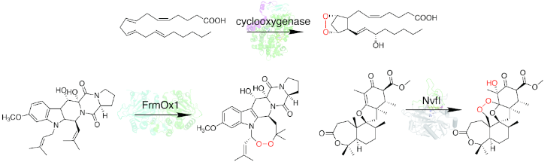
- the substrate. The substrate asnovolin A binds in the closed conformation through a hydrogen bond network with active site residues (Figure 4D). In this binding mode, C7' of the substrate is 4.2 Å away from the iron center, which is shorter than the distance between the iron center and C13 (6.5 Å


Bioinspired tetraamino-bisthiourea chiral macrocycles in catalyzing decarboxylative Mannich reactions
Beilstein J. Org. Chem. 2022, 18, 486–496, doi:10.3762/bjoc.18.51
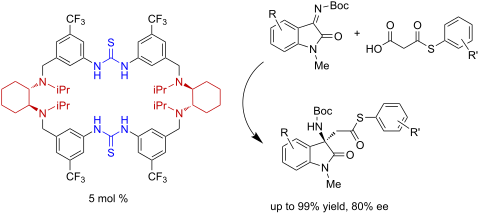
- report a systematic synthesis of tetraamino-bisthiourea chiral macrocycles and their performance in catalyzing the decarboxylative Mannich addition of malonic acid half thioesters (MAHTs) to isatin-derived ketimines. The macrocycle-enabled hydrogen-bonding activation network and the associated confined


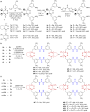


A resorcin[4]arene hexameric capsule as a supramolecular catalyst in elimination and isomerization reactions
Beilstein J. Org. Chem. 2022, 18, 337–349, doi:10.3762/bjoc.18.38
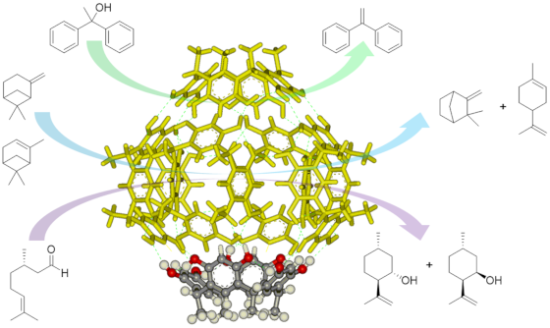
- stabilized more effectively by the more symmetric and tighter capsule A (16·8H2O), which is held on by the minimum amount of water to form the network of hydrogen bonds with hydroxy moieties. Indeed, the capsule B, is looser because of the presence of extra water molecules that can arguably interact with


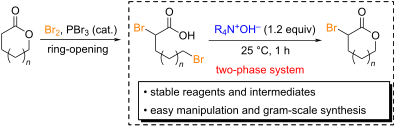
A two-phase bromination process using tetraalkylammonium hydroxide for the practical synthesis of α-bromolactones from lactones
Beilstein J. Org. Chem. 2021, 17, 2906–2914, doi:10.3762/bjoc.17.198
- suggestion and experimental support. Funding This research was supported by JSPS KAKENHI (B, 19H02791) and (B, 19H02756), from the Ministry of Education, Culture, Sports, Science and Technology, Japan, and by Kyoto-Advanced Nanotechnology Network.


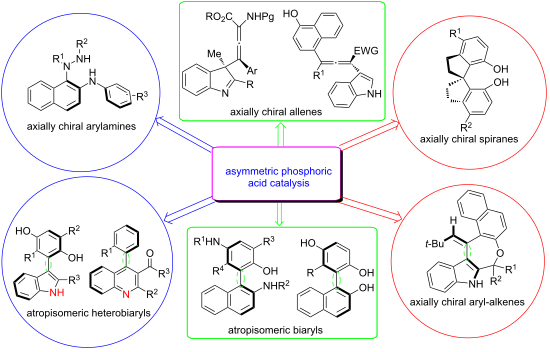
Recent advances in the asymmetric phosphoric acid-catalyzed synthesis of axially chiral compounds
Beilstein J. Org. Chem. 2021, 17, 2729–2764, doi:10.3762/bjoc.17.185
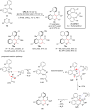
- asymmetric bromination reaction afforded monobrominated biaryls with excellent enantioselectivities up to 99% ee (Scheme 4). The experimental and computational studies showed that the highly organized hydrogen-bonding network between a substrate, a chiral phosphoric acid catalyst (CPA 3), and a brominating












Cryogels: recent applications in 3D-bioprinting, injectable cryogels, drug delivery, and wound healing
Beilstein J. Org. Chem. 2021, 17, 2553–2569, doi:10.3762/bjoc.17.171
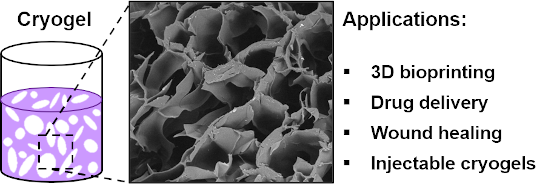
- ; Introduction Gels can be defined as polymer networks that are expanded throughout their whole volume by a fluid. In the case of hydrogels, the network component is a hydrophilic polymer, and the swelling agent is water [1]. However, their lack of interconnected macropores and elasticity, required properties
- solution is then cooled to below the freezing point of water, whereby ice crystals form. Importantly, here the solvent (water) solidifies (freezes) and forms solid solvent porogens within the structure allowing the polymer network to form around these crystals, templating the porous structure of the final
- cryogel. In chemically crosslinked cryogels (Figure 1a), the monomers polymerise and crosslink (in the presence of a crosslinker) around the ice crystals to form a network. In physically crosslinked cryogels (Figure 1b), once the solution is cooled below the freezing temperature the polymeric precursors






In-depth characterization of self-healing polymers based on π–π interactions
Beilstein J. Org. Chem. 2021, 17, 2496–2504, doi:10.3762/bjoc.17.166
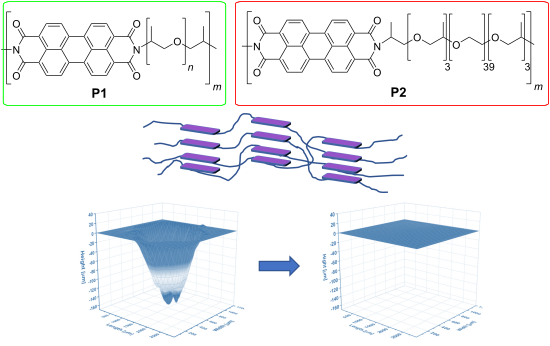
- thermo-analysis (DMTA). The DMTA of P1 and P2 is depicted in Figure 2, revealing a network structure below temperatures of 120 °C. Above this temperature, a sharp transition (within a very small temperature range) and a significant drop of storage and loss modulus could be observed. Accordingly, this
- transition at 125–130 °C, no crossover of G' and G'' could be observed indicating no active supramolecular bonds. Furthermore, at this temperature (80 °C) G' is higher than G'' indicating a network structure of the polymers. This finding correlates with the DSC results, since the π–π interactions are not
- activated and, therefore, the polymer network is intact. Within the transition, the frequency sweeps revealed a crossover of storage and loss modulus showing the activation of the π–π interactions, which goes hand in hand with the DSC results. Thus, a dynamic network structure could be revealed. The





