


Search results
Search for "phosphites" in Full Text gives 52 result(s) in Beilstein Journal of Organic Chemistry.
An exceptional P-H phosphonite: Biphenyl- 2,2'-bisfenchylchlorophosphite and derived ligands (BIFOPs) in enantioselective copper- catalyzed 1,4-additions
Beilstein J. Org. Chem. 2005, 1, No. 6, doi:10.1186/1860-5397-1-6
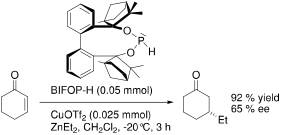
- -catalyzed 1,4-additions of ZnEt2 to 2-cyclohexen-1-one, this P-H phosphonite (yielding 65% ee) exceeds even the corresponding phosphite and phosphoramidite. Keywords: phosphorus ligands; chirality; biaryls; asymmetric conjugate additions; phosphoramidites; phosphites; phosphonites; X-ray analyses
- ][13][14][15][16][17][18] Such asymmetric conjugate additions of diethylzinc to enones are often highly enantioselective, especially with phosphoramidites (amidophosphites) and phosphites. [2][19][20][21][22][23][24][25][26][27][28][29][30][31][32][33][34][35][36][37][38][39][40][41] These chiral
- phosphites are highly reactive chlorophosphites. [48][49][50][51] These intermediates are converted usually in situ with amines or alcohols to the modular, enantiopure ligands (Scheme 2). [2][19][20][21][22][23][24][25][26][27][28][29][30][31][32][33][34][35][36][37][38][39][40][41]. Modular fencholates were


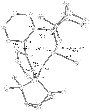
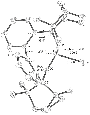

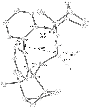






Mixtures of monodentate P-ligands as a means to control the diastereoselectivity in Rh-catalyzed hydrogenation of chiral alkenes
Beilstein J. Org. Chem. 2005, 1, No. 3, doi:10.1186/1860-5397-1-3
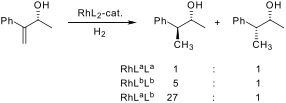
- involves the use of additives, catalyst poisons or catalyst activators.[10][11] Based on the discovery that monodentate BINOL-derived phosphites,[12][13] phosphonites[14][15] and phosphoramidites [16][17][18] are excellent ligands in enantioselective Rh-catalyzed olefin-hydrogenation, we proposed in 2003 a
- (Scheme 1). If the hetero-combination dominates due to enhanced activity and enantioselectivity, a superior catalytic profile can be expected. A mechanistic study of Rh-catalyzed olefin-hydrogenation using BINOL-derived monodentate phosphites (homo-combination) has shown that two such ligands are bound to
- the metal in the transition state of the reaction,[13] and it is certain that in the case of mixtures analogous species are involved.[19][20] This new strategy was first employed in Rh-catalyzed olefin-hydrogenation using mixtures of BINOL-derived phosphites and phosphonites[19][20] and was then


Other Beilstein-Institut Open Science Activities



