


Search results
Search for "pyrazole" in Full Text gives 144 result(s) in Beilstein Journal of Organic Chemistry.
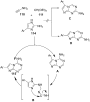
Synthesis of novel [1,2,4]triazolo[1,5-b][1,2,4,5]tetrazines and investigation of their fungistatic activity
Beilstein J. Org. Chem. 2022, 18, 243–250, doi:10.3762/bjoc.18.29
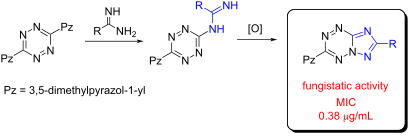
- can also be used as an oxidant for the oxidation of benzamidine derivatives 2b,c in acetonitrile under microwave irradiation. Along with the cyclization reaction, bromination of the pyrazole ring proved to occur at position C(4) to give the products 3j,k, as evidenced by disappearance of the


Regioselective synthesis of methyl 5-(N-Boc-cycloaminyl)-1,2-oxazole-4-carboxylates as new amino acid-like building blocks
Beilstein J. Org. Chem. 2022, 18, 102–109, doi:10.3762/bjoc.18.11
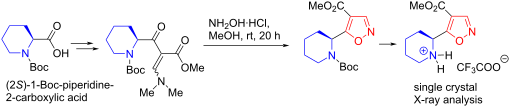
- peptide-like structure. Heterocyclic amino acids and related compounds have been used to prepare synthetic DNA-encoded compound libraries for the discovery of small molecule protein ligands [23][24][25]. Recently, a highly specific and potent p38α kinase inhibitor containing a 3-amino-1-phenyl-1H-pyrazole
- combining thiazole, selenazole, pyrazole, indazole, and indole moieties with both carboxyl functional groups and cycloaminyl units [27][28][29][30][31]. In recent decades, various methods of constructing 1,2-oxazole ring systems have been developed [1][2][3][4][5][6][7][32]. The two primary pathways to 1,2


Synthesis of new pyrazolo[1,2,3]triazines by cyclative cleavage of pyrazolyltriazenes
Beilstein J. Org. Chem. 2021, 17, 2773–2780, doi:10.3762/bjoc.17.187
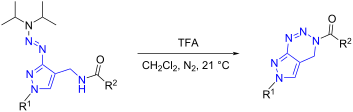
- synthetically and successful syntheses of different manifold isomers. 3,6-Dihydro-4H-pyrazolo[3,4-d][1,2,3]triazin-4-ones 2, as one example of the diverse compound class, can be gained via diazotization of 3-amino-1H-pyrazole-4-carboxamides 1a or 3-amino-1H-pyrazole-4-carbonitriles 1b and subsequent cyclization
- the starting 3-amino-1H-pyrazole-4-carboxamides 1a or 3-amino-1H-pyrazole-4-carbonitriles 1b is altered [26]. Furthermore, several 2,7-dihydro-3H-imidazo[1,2-c]pyrazolo[4,3-e][1,2,3]triazines 4 were described. However, while 3,6-substituted-3,6-dihydro-4H-pyrazolo[3,4-d][1,2,3]triazin-4-ones 2 and 3,7
- have a major influence on the outcome of the reaction: (1) the addition of side chains R1 to the core pyrazole ring system, which can occur in position N-6 or N-7, and (2) the cyclative cleavage of the triazene group of compounds 9 and 10 which should lead to the target compounds 5 and 6. To carry out


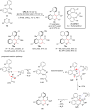
Recent advances in the asymmetric phosphoric acid-catalyzed synthesis of axially chiral compounds
Beilstein J. Org. Chem. 2021, 17, 2729–2764, doi:10.3762/bjoc.17.185
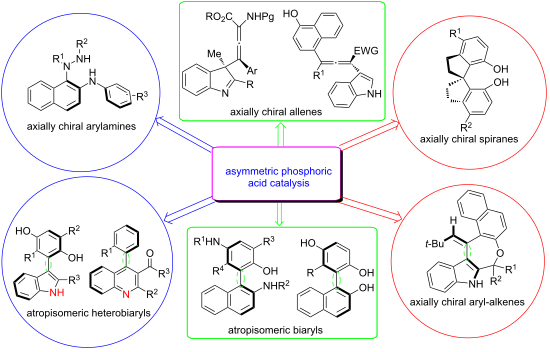
- produce an ion-pair interaction with CPA 15 in addition to the hydrogen-bonding interaction. 2.2. Synthesis of miscellaneous atropisomeric heterobiaryls Axially chiral pyrazole scaffolds are commonly found in natural products and drugs and are often used as valuable building blocks in organic synthesis
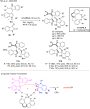
- [69]. Herein, Li and co-workers developed a new asymmetric synthesis of atropisomeric pyrazole derivatives 56 via an enantioselective reaction of azonaphthalene 54 with pyrazolone 55 using 5 mol % chiral phosphoric acid CPA 16. Substrates bearing electron-donating and electron-withdrawing groups gave
- the desired axially chiral pyrazole derivatives 56 in good yields (up to 99%) with excellent enantioselectivities (up to 98% ee, Scheme 19). Density functional theory calculations revealed that the chiral phosphoric acid acts as a proton-transfer shuttle to assist proton transfer from the OH group of












Regioselective N-alkylation of the 1H-indazole scaffold; ring substituent and N-alkylating reagent effects on regioisomeric distribution
Beilstein J. Org. Chem. 2021, 17, 1939–1951, doi:10.3762/bjoc.17.127
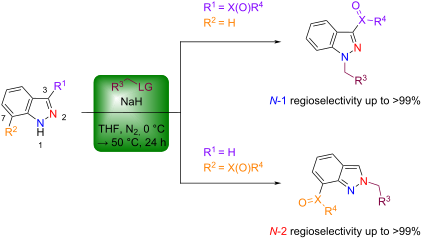
- electrophiles, while maintaining a high degree of N-1 regioselectivity. Keywords: indazole; N-alkylation; regioselective; sodium hydride; tetrahydrofuran; Introduction Indazole (benzo[c]pyrazole) is an aromatic bicyclic heterocycle and can be viewed as a (bio)isostere of indole [1]. While only a few naturally
- , respectively (Table 2, entry 3). Apart from the 1H-indazole scaffold [36][37], the steric influence of adjacent substituent(s) on N-alkylation regioselectivity has previously been described for other nitrogen-containing heterocycles, such as pyrazole [38], purine, and related 1,3-azoles [39]. Although the N


Copper-mediated oxidative C−H/N−H activations with alkynes by removable hydrazides
Beilstein J. Org. Chem. 2021, 17, 1591–1599, doi:10.3762/bjoc.17.113
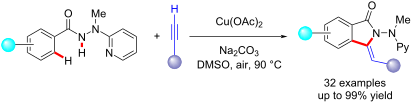
- context, You [25], Huang [26], Liu [27], Li [28], and co-workers elegantly disclosed copper-mediated/catalyzed cascade C−H alkynylation and annulation with terminal alkynes to afford 3-methyleneisoindolinone derivatives, through the assistance of 8-aminoquinoline [29] or 2-aminophenyl-1H-pyrazole [30


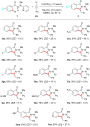


A straightforward conversion of 1,4-quinones into polycyclic pyrazoles via [3 + 2]-cycloaddition with fluorinated nitrile imines
Beilstein J. Org. Chem. 2021, 17, 1509–1517, doi:10.3762/bjoc.17.108
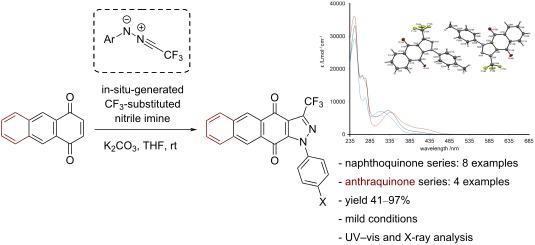
- fused pyrazole derivatives as the exclusive products. The reactions proceed via the initially formed [3 + 2]-cycloadducts, which undergo spontaneous aerial oxidation to give aromatized heterocyclic products. Only for 2,3,5,6-tetramethyl-1,4-benzoquinone, the expected [3 + 2]-cycloadduct exhibited fair
- considerable attention of other groups [18][19] and recently has been applied for the preparation of some π-extended pyrazole derivatives, which exhibited promising biological activity [20]. In a series of our recent publications, efficient syntheses of fluoromethylated five- and six-membered N,S-heterocycles
- respective hydrazonoyl bromides 8 and smoothly undergo [3 + 2]-cycloadditions with both electron-rich C=C dipolarophiles [27][28][29] and arynes [30], yielding the corresponding pyrazole derivatives. Unexpectedly, they reacted also with electron-deficient polyfluorinated thioamides to give the desired 1,3,4


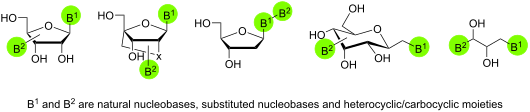
Double-headed nucleosides: Synthesis and applications
Beilstein J. Org. Chem. 2021, 17, 1392–1439, doi:10.3762/bjoc.17.98





Synthetic accesses to biguanide compounds
Beilstein J. Org. Chem. 2021, 17, 1001–1040, doi:10.3762/bjoc.17.82
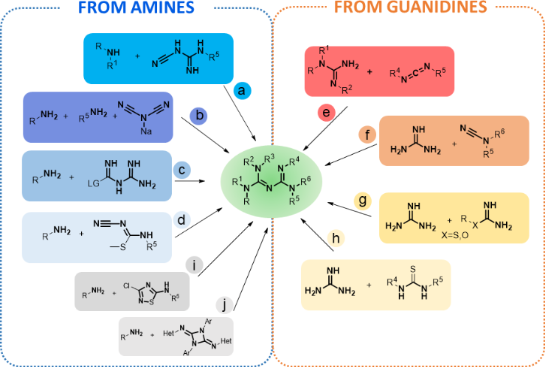
- alkylbiguanides with yields up to 97%, despite great variability in the case of alkylbiguanides (Scheme 8A) [24]. Recently, Zhou et al. reported similar conditions applied for the synthesis of anticancer biguanides [25]. The conditions chosen for the synthesis of a small library of pyrazole‐containing biguanide
- can act as a “bisamidine transfer agent” by the addition of an amine, and subsequent elimination of the leaving group. Two types of “biguanide transfer agents” have been developed so far. Depending on the nature of the leaving group they can be separated into either pyrazole or thiomethyl agents
- -amidinopyrazole hydrochloride from cyanoguanidine, by the addition of pyrazole hydrochloride in refluxing pyridine, refluxing 3 M aqueous HCl or by a direct fusion at 140–200 °C (no yields disclosed) [66]. Later in 1992, Bernatowicz et al., in an attempt to produce guanidine derivatives of ornithine-containing


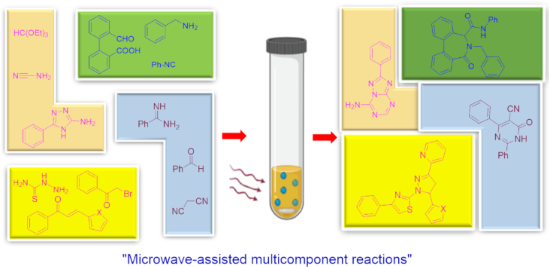
Microwave-assisted multicomponent reactions in heterocyclic chemistry and mechanistic aspects
Beilstein J. Org. Chem. 2021, 17, 819–865, doi:10.3762/bjoc.17.71






Synthesis of bis(aryloxy)fluoromethanes using a heterodihalocarbene strategy
Beilstein J. Org. Chem. 2021, 17, 813–818, doi:10.3762/bjoc.17.70

- . Unfortunately, several methods of halodecarboxylation [11][12][13] failed to yield the desired product 10 (X = Cl, Br), likely due to the presence, in the pyrazole, of moieties sensitive to these conditions or to the instability of the product to the reaction conditions. Pursuing the heterodihalocarbene


Effective microwave-assisted approach to 1,2,3-triazolobenzodiazepinones via tandem Ugi reaction/catalyst-free intramolecular azide–alkyne cycloaddition
Beilstein J. Org. Chem. 2021, 17, 678–687, doi:10.3762/bjoc.17.57
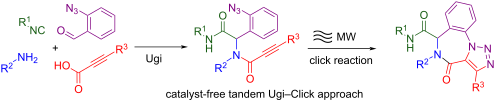
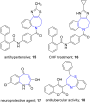
- molecular frameworks in medicinal chemistry. Of these, 1,4-benzodiazepines fused with pyrazole or triazole cycles are the base for many drugs (Figure 1) [1]. The spectrum of their biological activity includes tranquilizing, muscular relaxant, anticonvulsant, and sedative effects [2]. The general application


Synthesis of trifluoromethyl ketones by nucleophilic trifluoromethylation of esters under a fluoroform/KHMDS/triglyme system
Beilstein J. Org. Chem. 2021, 17, 431–438, doi:10.3762/bjoc.17.39
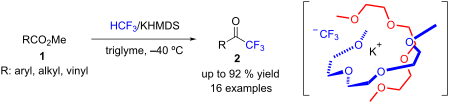
- common nitrogen-containing compounds such as pyridine, pyrazine, 1H-pyrazole, 1H-indole, 1-methyl-1H-indole, piperidine, and piperazine were subjected to screening. Pyridine and piperidine slightly hamper the reaction of 1g (Table 2, entries 2 and 7, 80–82%). Other nitrogen-containing compounds have more


Selective and reversible 1,3-dipolar cycloaddition of 6-aryl-1,5-diazabicyclo[3.1.0]hexanes with 1,3-diphenylprop-2-en-1-ones under microwave irradiation
Beilstein J. Org. Chem. 2020, 16, 2679–2686, doi:10.3762/bjoc.16.218
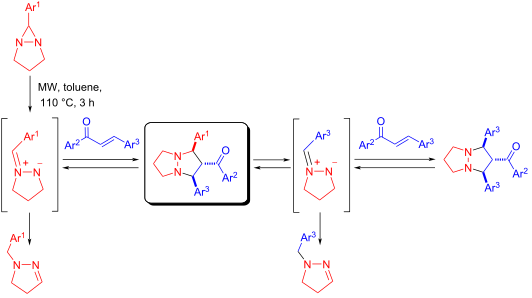
- the hexahydropyrazolo[1,2-a]pyrazole ring, respectively, apparently through zwitterionic intermediates [28][29]. At the same time, the cycloaddition of azomethine imine to 1,3-diphenylprop-2-en-1-ones (chalcones) in IL proceeds stereo- and regioselectively giving two diastereomeric bicyclic anti




Access to highly substituted oxazoles by the reaction of α-azidochalcone with potassium thiocyanate
Beilstein J. Org. Chem. 2020, 16, 2108–2118, doi:10.3762/bjoc.16.178
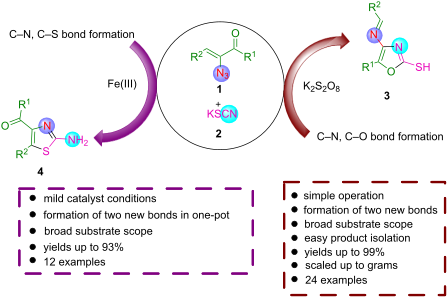
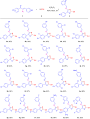
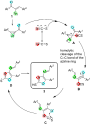
- synthesis of 2,4,5-trisubstituted oxazole from azirine. a) I2, PPh3; b) NaH, 1H-pyrazole; c) 2-bromoacetyl bromide, NaN3; d) heating; e) t-BuOK; f) Ph-CHO, visible light; g) KSCN, K2S2O8. Scope of the α-azidochalcones. The reactions were carried out at reflux temperature, using 1 (1 mmol), 2 (3 mmol






Anthelmintic drug discovery: target identification, screening methods and the role of open science
Beilstein J. Org. Chem. 2020, 16, 1203–1224, doi:10.3762/bjoc.16.105
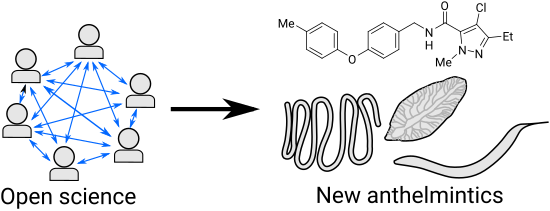
- . mansoni [161]) and the cestode E. multilocularis [162]. Perhaps the most promising lead from the Pathogen Box so far is tolfenpyrad, a pyrazole-5-carboxamide insecticide, which was first identified as an anthelmintic with activity against exsheathed L3 and L4 parasitic life stages of Haemonchus contortus
- follow-up study identified two additional pyrazole-5-carboxamide compounds with activity against H. contortus, although not improving on the potency of tolfenpyrad [166]. Tolfenpyrad acts in arthropods as an inhibitor of mitochondrial complex I [167]. It will be interesting if a tolfenpyrad derivative
- through systematic alteration of the pyrazole-5-carboxamide and phenoxybenzyloxy moieties within tolfenpyrad 19 (Table 4). The systematic variation of the p-methylphenyl ring within 19 gave rise to a number of aromatic and heteroaromatic analogues with similar levels of potency to tolfenpyrad (Table 4





Recent advances in photocatalyzed reactions using well-defined copper(I) complexes
Beilstein J. Org. Chem. 2020, 16, 451–481, doi:10.3762/bjoc.16.42
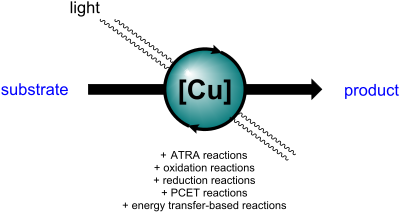
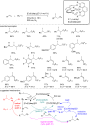
- avoided the presence of a Brønsted acid in the reaction media. As such, Collins and co-workers developed the catalyst [Cu(I)(pypzs)(BINAP)]BF4 where the ligand (5-(4-fluorosulfonyl)amino-3-(2pyridyl)pyrazole)) (pypzs) had an acidic proton prone to activate the carbonyl group during the pinacol coupling














Synthesis of 4-amino-5-fluoropyrimidines and 5-amino-4-fluoropyrazoles from a β-fluoroenolate salt
Beilstein J. Org. Chem. 2020, 16, 445–450, doi:10.3762/bjoc.16.41

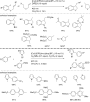
- -methylisourea hemisulfate. dReaction time of 24 h. eProduct detected by LC–MS. Cyclization with phenylhydrazine (12a) to obtain the desired pyrazole 13a and the byproducts 13b and 13c (detected via LC–MS). Testing of different counter ions. Synthesis of fluorinated pyrazoles. Supporting Information Supporting


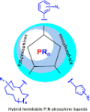
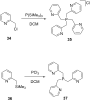
Architecture and synthesis of P,N-heterocyclic phosphine ligands
Beilstein J. Org. Chem. 2020, 16, 362–383, doi:10.3762/bjoc.16.35
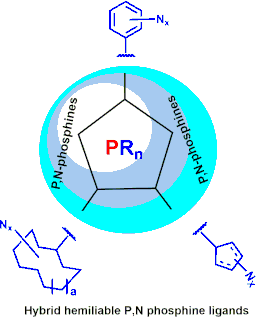
- selective metalation can be achieved by varying reaction conditions and reagents. α-Lithiation of the methylene bridge and pyrazole ring in compound 77 allows for the synthesis of tris- and bis(pyrazole)phosphines. Antiñollo et al. [80] and Otero et al. [81] (Scheme 15) demonstrated the effect of varying




Ultrasonic-assisted unusual four-component synthesis of 7-azolylamino-4,5,6,7-tetrahydroazolo[1,5-a]pyrimidines
Beilstein J. Org. Chem. 2020, 16, 281–289, doi:10.3762/bjoc.16.27
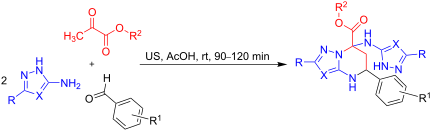
- Republic 10.3762/bjoc.16.27 Abstract Four-component reactions of 3-amino-1,2,4-triazole or 5-amino-1H-pyrazole-4-carbonitrile with aromatic aldehydes and pyruvic acid or its esters under ultrasonication were studied. Unusual for such a reaction type, a cascade of elementary stages led to the formation of
- 7-azolylaminotetrahydroazolo[1,5-a]pyrimidines. Keywords: 5-amino-1H-pyrazole-4-carbonitrile; 3-amino-1,2,4-triazole; 7-azolylaminotetrahydroazolo[1,5-a]pyrimidines; heterocycle; multicomponent reaction; ultrasonication; Introduction Tetrahydropyrimidines are heterocycles of high pharmacological
- -pyrazole-4-carbonitrile with aromatic aldehydes and pyruvic acid or its esters under ultrasonication led to the formation of 4,5,6,7-tetrahydroazolo[1,5-a]pyrimidines 4a–u (Scheme 4) containing an azolylamino substituent in the 7-position via an unusual pseudo four-component reaction, rather than two


Synthesis and herbicidal activities of aryloxyacetic acid derivatives as HPPD inhibitors
Beilstein J. Org. Chem. 2020, 16, 233–247, doi:10.3762/bjoc.16.25
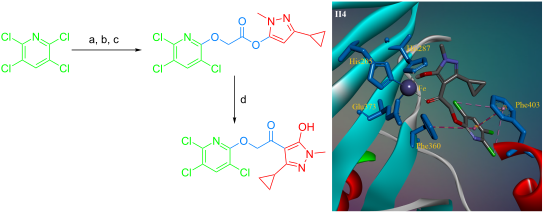
- modifying pyrazole derivatives and the carbon−carbon bond between 1,3-dicarbonyl and aroyl moieties. Previously, a series of 2-(aryloxyacetyl)cyclohexane-1,3-diones was synthesized by Wang et al. [24]. We have been interested in inserting a carbon−oxygen bond between the triketone and aroyl moieties of HPPD
- of commercial mesotrione. Inspired by the above revelations, we synthesized a group of new HPPD inhibitors that contain pyrazole and triketone moieties to study their bioactivities; the design strategy is shown in Figure 2. By combining the two bioactive structures, namely the aromatic moieties of
- substituted 1,3-dimethyl-1H-pyrazole-5-ol, using DMAP as the catalyst. Subsequently, the key enol ester E and M were respectively obtained. Finally, Fries-type rearrangements were performed in anhydrous DCM at room temperature to afford the title compounds I and III [31]. As shown in Scheme 4, the title




A combinatorial approach to improving the performance of azoarene photoswitches
Beilstein J. Org. Chem. 2019, 15, 2753–2764, doi:10.3762/bjoc.15.266
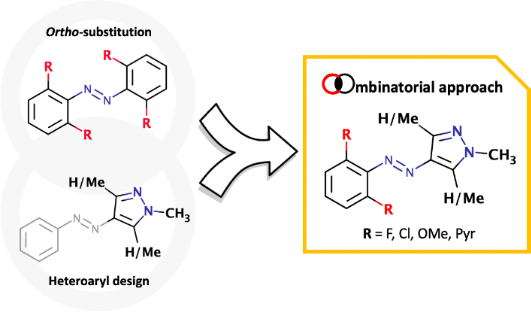
- azoarenes have been ortho-substitution of the benzene ring(s) or replacement of one of the benzenes for a pyrazole (to give arylazopyrazole switches). Here we study the combination of such high-performance features within a single switch architecture. Through computational analysis and experimental
- . An emerging alternative approach to tune the properties of azoarene photoswitches is to replace one or both of the benzene rings with a heteroaromatic ring [15][16]. While several useful heteroaromatic azo scaffolds have been reported, we previously identified such photoswitches containing a pyrazole
- study, was substitution on the benzene ring [18]. Since our work, Venkataramani and co-workers [28] have explored how substitution on the benzene ring of azopyrazoles can impact their properties. However, in their study they focused on dimethylpyrazoles not methylated on the pyrazole ring N–H; compounds




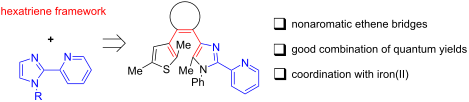
Photochromic diarylethene ligands featuring 2-(imidazol-2-yl)pyridine coordination site and their iron(II) complexes
Beilstein J. Org. Chem. 2019, 15, 2428–2437, doi:10.3762/bjoc.15.235
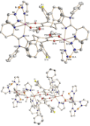
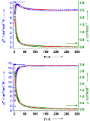
- bridging unit via its remaining methoxy group and the pyrazole moiety. The octahedral coordination environment is completed with the β-keto ester moiety of one ligand 6 and by the imidazole and pyridine groups of the second ligand 6. The Fe–O and Fe–N bond lengths to the bridging unit are 2.1687(15) Å and
- photodecomposition. Both 8 and 9 share a common structural motif that prevents photocyclization. Coordination of the β-keto ester moiety and the imidazole/pyrazole moiety to two different iron(II) ions puts the ligand under severe strain. Thus, the structural reorganization necessary to accommodate a new planar


Reversible switching of arylazopyrazole within a metal–organic cage
Beilstein J. Org. Chem. 2019, 15, 2398–2407, doi:10.3762/bjoc.15.232
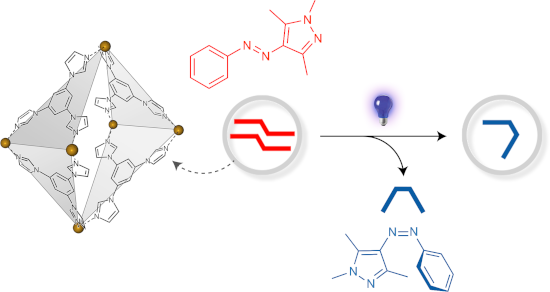
- (Figure 8c, step i). Coordination of Pd2+ to the azo moiety, combined with the strongly electron-donating pyrazole moiety, affords (Figure 8c, step ii) a system akin to push–pull azobenzenes, whose Z isomers can back-isomerize rapidly due to a reduced order of the N=N bond [52][53][54] (Figure 8c, step


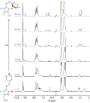
![[Graphic 1]](/bjoc/content/inline/1860-5397-15-232-i3.svg?max-width=637&scale=1.18182) 2 (500 MHz, D2O, 298 K).
2 (500 MHz, D2O, 298 K).




Thermal stability of N-heterocycle-stabilized iodanes – a systematic investigation
Beilstein J. Org. Chem. 2019, 15, 2311–2318, doi:10.3762/bjoc.15.223
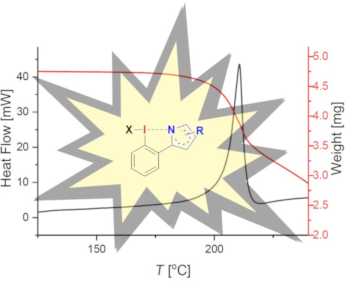
- . However, even the triazoles 2, 3, and 5 can be considered as safe compounds, but still deserve a common precaution due to the narrow decomposition process. Pyrazoles 6 and 7 are thermally more stable (Tpeak = 168.9 and 196.5 °C) with a remarkably lower ΔHdec value. NH-pyrazole 6 shows the lowest ΔHdec
- model reaction, especially N-substituted triazoles 4 and 5. In contrast, the reactivity of triazole 3 is comparable to that of benzoxazoles 13 and 14 as well as pyrazole 7 and indazole 8. In our view thiazole 12 is the best compromise in this regard since it is thermally even more stable than 7 and 8
- with a significant higher reactivity. However, pyrazole 6 still shows a good reactivity in this model reaction with a concurrent outstanding thermal stability. If safety issues are a major concern, for example on a very large-scale synthesis, NHIs 6 or 12 should be the first choices. Except of 15 and 9





