Search results
Search for "silver" in Full Text gives 325 result(s) in Beilstein Journal of Organic Chemistry. Showing first 200.
Synthesis of ether lipids: natural compounds and analogues
Beilstein J. Org. Chem. 2023, 19, 1299–1369, doi:10.3762/bjoc.19.96
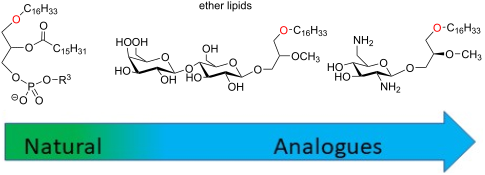
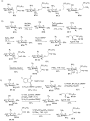
- derivative 2.6. The treatment of 2.6 with trimethylamine produced an ammonium salt. A treatment with silver carbonate was applied to remove any traces of bromide salts. Then, the secondary alcohol was deprotected by hydrogenolysis to produce 2.7 (lyso-PAF). Finally, the acetylation of the secondary alcohol
- remove the acetal protecting group thus producing 22.2. Then, the primary alcohol was protected by reaction with tritylpyridinium tetrafluoroborate salt to produce 22.3. In the next step, the secondary alcohol was methylated with iodomethane in the presence of silver salts (AgBF4) and silver base (Ag2CO3






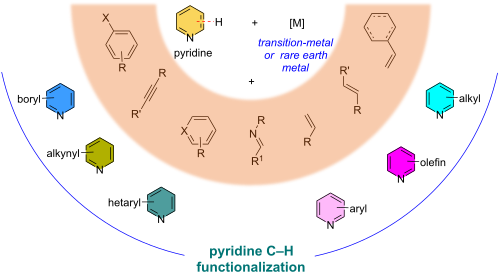
Pyridine C(sp2)–H bond functionalization under transition-metal and rare earth metal catalysis
Beilstein J. Org. Chem. 2023, 19, 820–863, doi:10.3762/bjoc.19.62
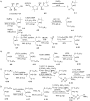
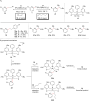
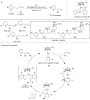
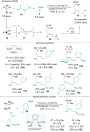
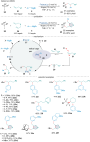
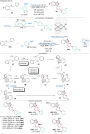
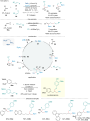
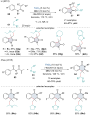
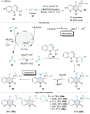
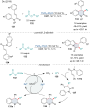
- (Scheme 30). The reaction showed good compatibility with various functional groups. The proposed mechanism (Scheme 30b) involves the silver-catalyzed decarboxylation of heteroaryl acid 156 followed by transmetalation providing palladium intermediate 160. Further, C–H activation of pyridine N-oxide 9
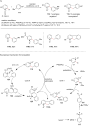
- and 163 through a two-fold C–H activation under palladium catalysis. Silver carbonate and 2,6-lutidine were found to be an effective base and ligand, respectively, for providing the desired products 164 and 165 in good yields (Scheme 31). In 2015, an economic route for copper-catalyzed biaryl coupling
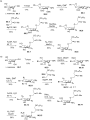
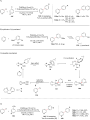
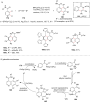
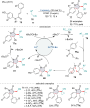
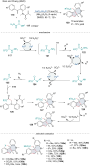
- of pyridine at the C2 and C3 position (Scheme 35a). Further, during optimization when silver additives like Ag2CO3, Ag2O, and AgOAc were used the reaction resulted in the formation of isoquinoline derivative 181. In addition, the reaction showed high regioselectivity in the presence of unsymmetrical
















Strategies in the synthesis of dibenzo[b,f]heteropines
Beilstein J. Org. Chem. 2023, 19, 700–718, doi:10.3762/bjoc.19.51
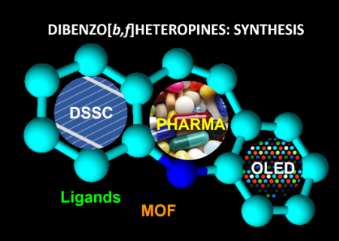
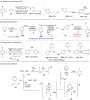
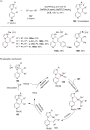
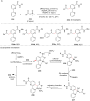
- % yield via a gold/silver catalyst system (Scheme 27). 4 Oxidative C–C coupling Whereas oxidative C–C coupling precedes amination in the industrial route to 5H-dibenzo[b,f]azepine, oxidative C–C coupling may also be the final step in the construction of the dibenzo[b,f]heteropine skeleton. Comber and


Mechanochemical solid state synthesis of copper(I)/NHC complexes with K3PO4
Beilstein J. Org. Chem. 2023, 19, 440–447, doi:10.3762/bjoc.19.34
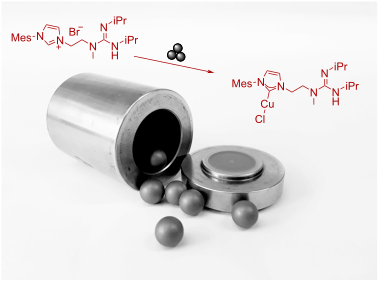
- sophisticated copper(I)/N-heterocyclic carbene complex bearing a guanidine moiety. In this way, the present approach circumvents commonly employed silver(I) complexes which are associated with significant and undesired waste formation and the excessive use of solvents. The resulting bifunctional catalyst has
- “built-in base” route relies on the use of Cu2O which can be directly reacted with a suitable NHC precursor 1 (Scheme 1c) [28]. In any case, the most common approach hinges upon the use of the preliminary preparation of an intermediate silver(I)/NHC complex followed by facile transmetallation to copper(I
- simultaneous organocatalytic activation of the ester on the other hand. Following a previously established synthetic pathway [49], we have found that transmetallation via silver(I)/NHC complex 4 was the only viable synthetic entry point to this sophisticated bifunctional catalyst (Scheme 2) [10][12][14][50


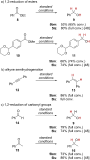
Group 13 exchange and transborylation in catalysis
Beilstein J. Org. Chem. 2023, 19, 325–348, doi:10.3762/bjoc.19.28
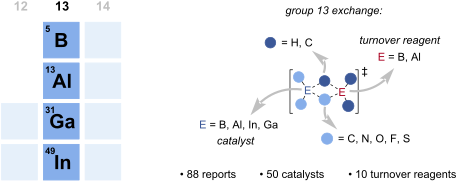
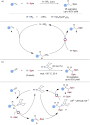
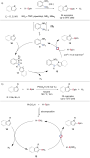
- achieved. When AgOTf was replaced with silver (R)-BINOL phosphate, the asymmetric allylation proceeded in a moderate yield (60%) and enantioselectivity (40% ee). The structure of the ‘GaIOTf’ species was explored in more detail by Slattery, and a monovalent [GaI(18-crown-6)OTf] complex was isolated and










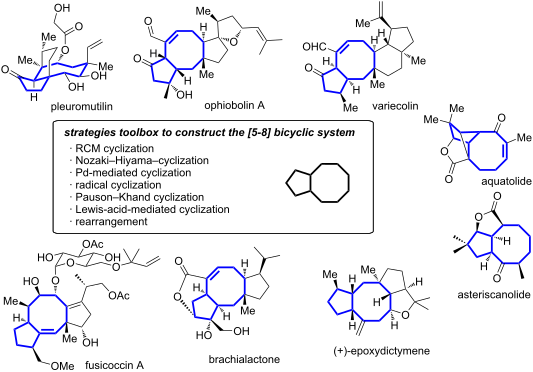
Strategies to access the [5-8] bicyclic core encountered in the sesquiterpene, diterpene and sesterterpene series
Beilstein J. Org. Chem. 2023, 19, 245–281, doi:10.3762/bjoc.19.23
- rhodium-based catalysts and 5% of [Rh(CO)2Cl]2 were found to be the best catalyst loading (28% yield). The addition of a silver additive, to make the reaction quicker and to remove a CO ligand, appeared to be useless in this case, with no reaction, and the use of 50% dppp as ligand allowed the formation


Germacrene B – a central intermediate in sesquiterpene biosynthesis
Beilstein J. Org. Chem. 2023, 19, 186–203, doi:10.3762/bjoc.19.18

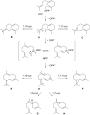
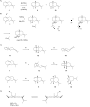
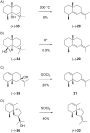
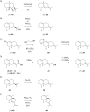
- -workers [19], through a sequence of reduction to the alcohol, acetylation and reduction with lithium in ammonia (Scheme 3A) [20], and its structure was unambiguously assigned by X-ray crystallography of a silver nitrate adduct [21]. From natural sources, the compound was first obtained from Humulus








Catalytic aza-Nazarov cyclization reactions to access α-methylene-γ-lactam heterocycles
Beilstein J. Org. Chem. 2023, 19, 66–77, doi:10.3762/bjoc.19.6

- the synthesis of tricyclic α-methylene-γ-lactams 7 as single diastereomers and in good to high yields through the use of a catalytic amount of AgOTf (silver trifluoromethanesulfonate) as an anion-exchange agent (Scheme 1d) [35]. In this transformation, treatment of 3,4-dihydroisoquinolines 5 with acyl



Formal total synthesis of macarpine via a Au(I)-catalyzed 6-endo-dig cycloisomerization strategy
Beilstein J. Org. Chem. 2022, 18, 1589–1595, doi:10.3762/bjoc.18.169
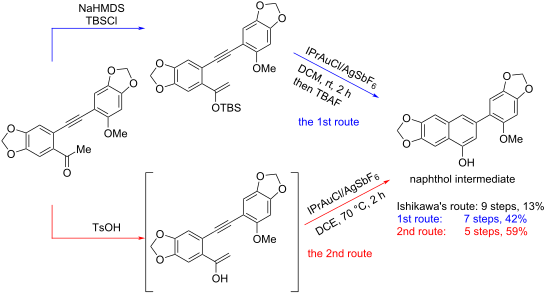
- ) itself failed to catalyze the cycloisomerization (Table 1, entry 1). Evaluation of a number of silver salts illustrated that silver hexafluoroantimonate (AgSbF6) was the optimal additive to activate the gold catalyst (Table 1, entries 2, 3, and 7). Screening of the other ligands of Au(I) catalysts
- ). The Au(I)-catalyzed cycloisomerization reaction of substrate 10 occurred under the catalysis of 5 mol % [1,3-bis(2,6-diisopropylphenyl)imidazol-2-ylidene]gold(I) chloride (IPrAuCl) and 5 mol % silver hexafluoroantimonate (AgSbF6) [25][26] in anhydrous DCM at room temperature for 2 h forming a benzene


Design, synthesis, and evaluation of chiral thiophosphorus acids as organocatalysts
Beilstein J. Org. Chem. 2022, 18, 1471–1478, doi:10.3762/bjoc.18.154
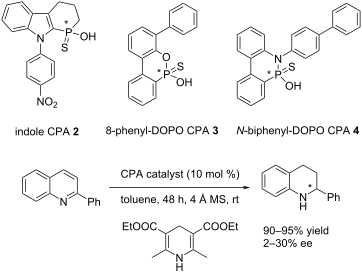
- based on silver either gave a complex mixture or unreacted starting material. Phosphonate 8 was converted into the corresponding thiophosphonate 9 in moderate yield using Lawesson's reagent. Cleavage of the methyl ester was easily accomplished in quantitative yield, producing racemic tryptophol CPA 1
- -catalyzed hydrophosphinylation [45]. The key heterocyclization of 11 into 12 was accomplished using silver-promoted homolytic aromatic substitution [46], which was superior to our own manganese methodology (43% yield) [36]. Copper-catalyzed arylation [34] of 12 with iodobenzene and 4-nitroiodobenzene gave


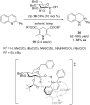
Preparation of an advanced intermediate for the synthesis of leustroducsins and phoslactomycins by heterocycloaddition
Beilstein J. Org. Chem. 2022, 18, 1385–1395, doi:10.3762/bjoc.18.143
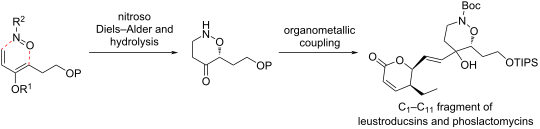
- groups. Several conditions were tested: silver oxide on celite [33] failed to give any conversion. PCC with sodium acetate [34] gave only traces of the target lactone 25. However, the use of the Jones’ reagent gave reproducible yields of 25, together with the deprotected alcohol 26. Under optimized


Enantioselective total synthesis of putative dihydrorosefuran, a monoterpene with an unique 2,5-dihydrofuran structure
Beilstein J. Org. Chem. 2022, 18, 1264–1269, doi:10.3762/bjoc.18.132
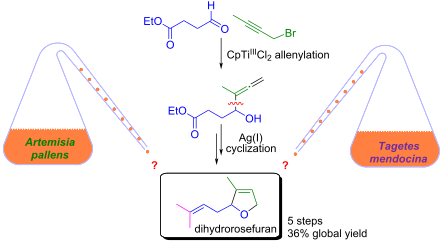
- , 3H) ppm; 13C{1H} NMR (75 MHz, CDCl3, DEPT) δ 206.0 (C), 177.0 (C), 98.0 (C), 80.4 (CH), 77.5 (CH2), 28.5 (CH2), 26.1 (CH2), 15.0 (CH3) ppm; HRMS–ESI (Q-TOF, m/z): [M + H]+ calcd for C8H11O2,139.0759; found, 139.0782. Silver(I)-promoted cyclization of ethyl 4-hydroxy-5-methylhepta-5,6-dienoate (3) A


Scope of tetrazolo[1,5-a]quinoxalines in CuAAC reactions for the synthesis of triazoloquinoxalines, imidazoloquinoxalines, and rhenium complexes thereof
Beilstein J. Org. Chem. 2022, 18, 1088–1099, doi:10.3762/bjoc.18.111
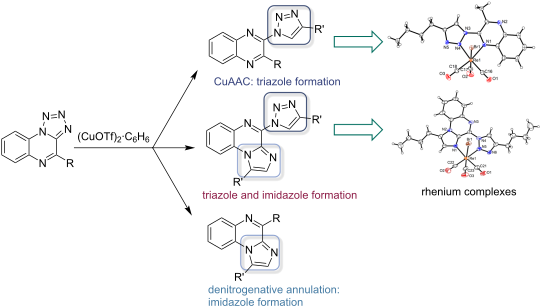
- ). Improving this route provides an alternative to the literature-known method [11] that requires both a special porphyrin complex and glovebox conditions. Using neither silver(I) triflate nor copper(I) iodide yielded the imidazole product, indicating that the use of copper(I) triflate is crucial for the


First example of organocatalysis by cathodic N-heterocyclic carbene generation and accumulation using a divided electrochemical flow cell
Beilstein J. Org. Chem. 2022, 18, 979–990, doi:10.3762/bjoc.18.98
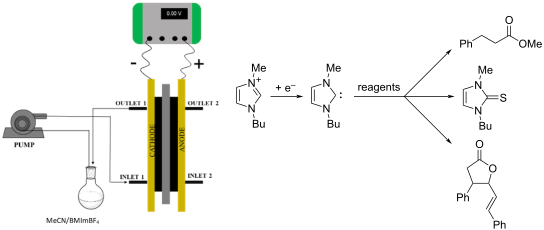
- (Table 1, entry 4). However, using a silver electrode the corresponding thione was not observed (Table 1, entry 3) [37]. In view of the acidic character of the perfluorosulfonic acid Nafion® membrane, and possible NHC protonation to form the imidazolium cation, the Nafion® membrane was pretreated with an


Complementarity of solution and solid state mechanochemical reaction conditions demonstrated by 1,2-debromination of tricyclic imides
Beilstein J. Org. Chem. 2022, 18, 746–753, doi:10.3762/bjoc.18.75

- , a synthetic methodology for the preparation of 1–3 was developed by Warrener and co-workers by a Zn/Ag couple debromination [13][14][15]. However, this methodology has some disadvantages, such as tedious preparation of the catalyst, the use of dry solvent and expensive silver acetate as well as side
- usual procedure from Zn and silver acetate. Several simplifications of the Zn/Ag couple preparation were tested and showed that simple milling with Zn dust and Ag dust or wire can be also applied (Table 1, entries 5–8) [21]. Further improvement in the procedure was the replacement of the Ag dust with Cu




Menadione: a platform and a target to valuable compounds synthesis
Beilstein J. Org. Chem. 2022, 18, 381–419, doi:10.3762/bjoc.18.43
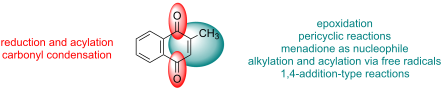
- useful alkylation approach is the Kochi–Anderson method [76] (or also known as Jacobsen–Torssell method [77][78]), via oxidative decarboxylation, where the quinone reacts with a carboxylic acid in the presence of silver(I) nitrate and ammonium or potassium peroxydisulfate. Nucleophilic free radicals are
- -workers [79]. 1,4-Naphthoquinone (1) was treated with acetic acid in the presence of ammonium persulfate, as oxidizing agent, and silver(I) catalysis for only 1 hour, furnishing menadione (10) in 47% yield (Scheme 1). After this pioneering work, some adaptations were reported. As an example, Liu and co
- -dimethoxyarenes is another valid synthetic approach to achieve 1,4-quinones, with the oxidative demethylation of 2-methyl-1,4-dimethoxynaphthalene (19) can be used to synthesize menadione (10). The oxidizing agents most commonly used in oxidative demethylation are cerium(IV) ammonium nitrate (CAN), and silver(II


Synthesis of piperidine and pyrrolidine derivatives by electroreductive cyclization of imine with terminal dihaloalkanes in a flow microreactor
Beilstein J. Org. Chem. 2022, 18, 350–359, doi:10.3762/bjoc.18.39
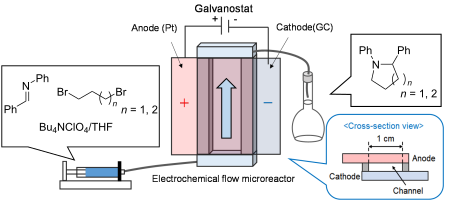
- of the cathode material on the yield of 3a using three different cathode materials: platinum (Pt), glassy carbon (GC), and silver (Ag). As shown in Table 1, the yield of 3a was higher using GC than that of the other cathode materials. The yield of the hydromonomeric product 4 was also highest when GC


Organocatalytic asymmetric nitroso aldol reaction of α-substituted malonamates
Beilstein J. Org. Chem. 2022, 18, 217–224, doi:10.3762/bjoc.18.25

- using a silver-BINAP catalyst combination [25]. Later, the same group could successfully tune the catalytic system to control the regioselectivity in the addition of metal enolate to nitrosoarenes to achieve an α-hydroxyamination [26]. Since then, several groups have shown the use of metal-catalyzed


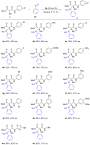


Study on the interactions between melamine-cored Schiff bases with cucurbit[n]urils of different sizes and its application in detecting silver ions
Beilstein J. Org. Chem. 2021, 17, 2950–2958, doi:10.3762/bjoc.17.204

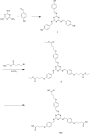
- host–guest interactions. Among them, Q[7]-TBT is selected as a UV detector for the detection of silver ions (Ag+). This work makes full use of the characteristics of each cucurbituril and melamine-cored Schiff base to construct a series of complexes and these are applied to metal detection. Keywords
- : cucurbiturils; melamine; Schiff base; silver ion; Introduction Schiff bases [1] are usually synthesized by the condensation of amines and active carbonyl compounds, endowing them both nitrogen and oxygen donor atoms [2][3][4][5]. Schiff bases are not only easy to coordinate with various transition metal ions
- supermolecule polymer with TBT due to its larger cavity. Since Q[7] and TBT form a host–guest complex, the carboxyl group at the end of TBT and the carbonyl group of the Q[7] still have a strong ability to coordinate with metals. Therefore, Q[7]-TBT is selected for the detection of silver ions (Ag+) [32][33


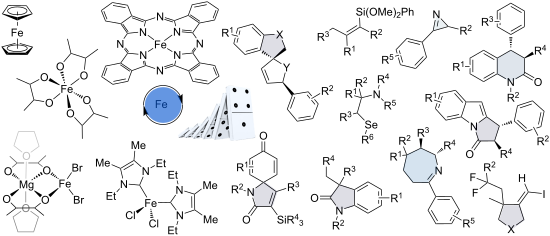
Iron-catalyzed domino coupling reactions of π-systems
Beilstein J. Org. Chem. 2021, 17, 2848–2893, doi:10.3762/bjoc.17.196


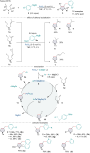











Host–guest interaction and properties of cucurbit[8]uril with chloramphenicol
Beilstein J. Org. Chem. 2021, 17, 2832–2839, doi:10.3762/bjoc.17.194
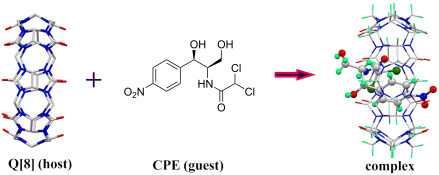
- in water and has a bitter taste. Upon forming an inclusion complex with cyclodextrin, the solubility and bitter taste of CPE can be improved [4][5]. Ramesh Gannimani et al. [6] reported that the inclusion complex of cyclodextrin and CPE loaded silver nanoparticles possessed stronger antibacterial


Selective sulfonylation and isonitrilation of para-quinone methides employing TosMIC as a source of sulfonyl group or isonitrile group
Beilstein J. Org. Chem. 2021, 17, 2822–2831, doi:10.3762/bjoc.17.193
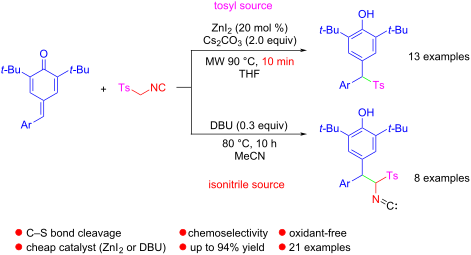
- reaction without adding bases, and unexpectedly found Ag salts could catalyze the 1,6-conjugate addition of TosMIC (2a) and p-QM 1a to provide aryl(phenol)methane isonitrile 4a under base-free conditions (Table 1, entries 6–8). When the silver salt was removed from the reaction conditions, the reaction did


Synthesis of highly substituted fluorenones via metal-free TBHP-promoted oxidative cyclization of 2-(aminomethyl)biphenyls. Application to the total synthesis of nobilone
Beilstein J. Org. Chem. 2021, 17, 2668–2679, doi:10.3762/bjoc.17.181
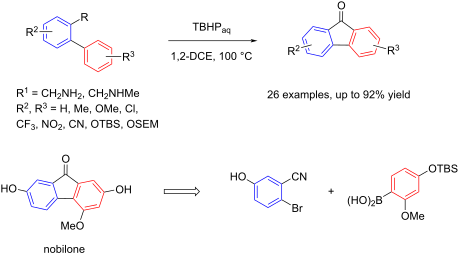
- . Benzylamines and derivatives thereof have been described in literature to be susceptible to oxidation by diverse reagents (tritylium ion [40], silver [38] and cerium salts [41], peroxides [42][43][44] and persulfates [45], nitroxyls [46], hypervalent iodine compounds [39][47], or tetrahalomethanes [48]) to





Copper-catalyzed monoselective C–H amination of ferrocenes with alkylamines
Beilstein J. Org. Chem. 2021, 17, 2488–2495, doi:10.3762/bjoc.17.165
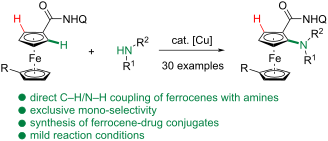
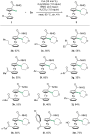
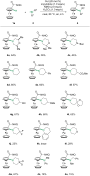
- Fukuzawa and Kanemoto [50]. Notably, our method proceeded under silver-free conditions at relatively lower temperature and in shorter time, providing a complementary alternative to the work of Fukuzawa and Kanemoto. Results and Discussion We initiated our study by investigating the C–H amination of




Recent advances in the tandem annulation of 1,3-enynes to functionalized pyridine and pyrrole derivatives
Beilstein J. Org. Chem. 2021, 17, 2462–2476, doi:10.3762/bjoc.17.163
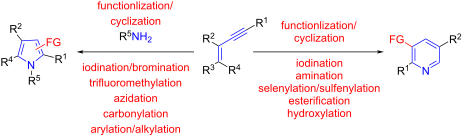
- -annulation of (E)-2-en-4-ynyl azides 1 was considered to involve 6-endo-dig cyclization to give a corresponding N-N2-substituted 1,2-dihydropyridine silver salt 5. This was protonated by TFA and the following species neutralized by base to provide a final 3,6-disubstituted pyridine product 2 (Scheme 2
- yield. Aliphatic amines were also tolerated, providing the desired products in only moderate yield. The plausible mechanism involves a tandem base-promoted aza-Michael addition, 1,2-iodocyclization, and iodine-mediated oxidative aromatization. In 2017, Zhang and co-workers reported a silver-catalyzed