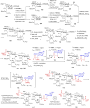
Search for "stereoselective synthesis" in Full Text gives 172 result(s) in Beilstein Journal of Organic Chemistry.
Beilstein J. Org. Chem. 2019, 15, 1722–1757, doi:10.3762/bjoc.15.168
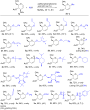
Graphical Abstract
Figure 1: Examples of three-carbon chirons.
Figure 2: Structures of derivatives of N-(1-phenylethyl)aziridine-2-carboxylic acid 5–8.
Figure 3: Synthetic equivalency of aziridine aldehydes 6.
Scheme 1: Synthesis of N-(1-phenylethyl)aziridine-2-carboxylates 5. Reagents and conditions: a) TEA, toluene,...
Scheme 2: Absolute configuration at C2 in (2S,1'S)-5a. Reagents and conditions: a) 20% HClO4, 80 °C, 30 h the...
Scheme 3: Major synthetic strategies for a 2-ketoaziridine scaffold [R* = (R)- or (S)-1-phenylethyl; R′ = Alk...
Scheme 4: Synthesis of cyanide (2S,1'S)-13. Reagents and conditions: a) NH3, EtOH/H2O, rt, 72 h; b) Ph3P, CCl4...
Scheme 5: Synthesis of key intermediates (R)-16 and (R)-17 for (R,R)-formoterol (14) and (R)-tamsulosin (15)....
Scheme 6: Synthesis of mitotic kinesin inhibitors (2R/S,1'R)-23. Reagents and conditions: a) H2, Pd(OH)2, EtO...
Scheme 7: Synthesis of (R)-mexiletine ((R)-24). Reagents and conditions: a) TsCl, TEA, DMAP, CH2Cl2, rt, 1 h;...
Scheme 8: Synthesis of (−)-cathinone ((S)-27). Reagents and conditions: a) PhMgBr, ether, 0 °C; b) H2, 10% Pd...
Scheme 9: Synthesis of N-Boc-norpseudoephedrine ((1S,2S)-(+)-29) and N-Boc-norephedrine ((1R,2S)-29). Reagent...
Scheme 10: Synthesis of (−)-ephedrine ((1R,2S)-31). Reagents and conditions: a) TfOMe, MeCN then NaBH3CN, rt; ...
Scheme 11: Synthesis of xestoaminol C ((2S,3R)-35), 3-epi-xestoaminol C ((2S,3S)-35) and N-Boc-spisulosine ((2S...
Scheme 12: Synthesis of ʟ-tryptophanol ((S)-41). Reagents and conditions: a) CDI, MeCN, rt, 1 h then TMSI, MeC...
Scheme 13: Synthesis of ʟ-homophenylalaninol ((S)-42). Reagents and conditions: a) NaH, THF, 0 °C to −78 °C, 1...
Scheme 14: Synthesis of ᴅ-homo(4-octylphenyl)alaninol ((R)-47) and a sphingolipid analogue (R)-48. Reagents an...
Scheme 15: Synthesis of florfenicol ((1R,2S)-49). Reagents and conditions: a) (S)-1-phenylethylamine, TEA, MeO...
Scheme 16: Synthesis of natural tyroscherin ((2S,3R,6E,8R,10R)-55). Reagents and conditions: a) I(CH2)3OTIPS, t...
Scheme 17: Syntheses of (−)-hygrine (S)-61, (−)-hygroline (2S,2'S)-62 and (−)-pseudohygroline (2S,2'R)-62. Rea...
Scheme 18: Synthesis of pyrrolidine (3S,3'R)-68, a fragment of the fluoroquinolone antibiotic PF-00951966. Rea...
Scheme 19: Synthesis of sphingolipid analogues (R)-76. Reagents and conditions: a) BnBr, Mg, THF, reflux, 6 h;...
Scheme 20: Synthesis of ᴅ-threo-PDMP (1R,2R)-81. Reagents and conditions: a) TMSCl, NaI, MeCN, rt, 1 h 50 min,...
Scheme 21: Synthesis of the sphingolipid analogue SG-14 (2S,3S)-84. Reagents and conditions: a) LiAlH4, THF, 0...
Scheme 22: Synthesis of the sphingolipid analogue SG-12 (2S,3R)-88. Reagents and conditions: a) 1-(bromomethyl...
Scheme 23: Synthesis of sphingosine-1-phosphate analogues DS-SG-44 and DS-SG-45 (2S,3R)-89a and (2S,3R)-89a. R...
Scheme 24: Synthesis of N-Boc-safingol ((2S,3S)-95) and N-Boc-ᴅ-erythro-sphinganine ((2S,3R)-95). Reagents and...
Scheme 25: Synthesis of ceramide analogues (2S,3R)-96. Reagents and conditions: a) NaBH4, ZnCl2, MeOH, −78 °C,...
Scheme 26: Synthesis of orthogonally protected serinols, (S)-101 and (R)-102. Reagents and conditions: a) BnBr...
Scheme 27: Synthesis of N-acetyl-3-phenylserinol ((1R,2R)-105). Reagents and conditions: a) AcOH, CH2Cl2, refl...
Scheme 28: Synthesis of (S)-linezolid (S)-107. Reagents and conditions: a) LiAlH4, THF, 0 °C to reflux; b) Boc2...
Scheme 29: Synthesis of (2S,3S,4R)-2-aminooctadecane-1,3,4-triol (ᴅ-ribo-phytosphingosine) (2S,3S,4R)-110. Rea...
Scheme 30: Syntheses of ᴅ-phenylalanine (R)-116. Reagents and conditions: a) AcOH, CH2Cl2, reflux, 4 h; b) MsC...
Scheme 31: Synthesis of N-Boc-ᴅ-3,3-diphenylalanine ((R)-122). Reagents and conditions: a) PhMgBr, THF, −78 °C...
Scheme 32: Synthesis of ethyl N,N’-di-Boc-ʟ-2,3-diaminopropanoate ((S)-125). Reagents and conditions: a) NaN3,...
Scheme 33: Synthesis of the bicyclic amino acid (S)-(+)-127. Reagents and conditions: a) BF3·OEt2, THF, 60 °C,...
Scheme 34: Synthesis of lacosamide, (R)-2-acetamido-N-benzyl-3-methoxypropanamide (R)-130. Reagents and condit...
Scheme 35: Synthesis of N-Boc-norfuranomycin ((2S,2'R)-133). Reagents and conditions: a) H2C=CHCH2I, NaH, THF,...
Scheme 36: Synthesis of MeBmt (2S,3R,4R,6E)-139. Reagents and conditions: a) diisopropyl (S,S)-tartrate (E)-cr...
Scheme 37: Synthesis of (+)-polyoxamic acid (2S,3S,4S)-144. Reagents and conditions: a) AD-mix-α, MeSO2NH2, t-...
Scheme 38: Synthesis of the protected 3-hydroxy-ʟ-glutamic acid (2S,3R)-148. Reagents and conditions: a) LiHMD...
Scheme 39: Synthesis of (+)-isoserine (R)-152. Reagents and conditions: a) AcCl, MeCN, rt, 0.5 h then Na2CO3, ...
Scheme 40: Synthesis of (3R,4S)-N3-Boc-3,4-diaminopentanoic acid (3R,4S)-155. Reagents and conditions: a) Ph3P...
Scheme 41: Synthesis of methyl (2S,3S,4S)-4-(dimethylamino)-2,3-dihydroxy-5-methoxypentanoate (2S,3S,4S)-159. ...
Scheme 42: Syntheses of methyl (3S,4S) 4,5-di-N-Boc-amino-3-hydroxypentanoate ((3S,4S)-164), methyl (3S,4S)-4-N...
Scheme 43: Syntheses of (3R,5S)-5-(aminomethyl)-3-(4-methoxyphenyl)dihydrofuran-2(3H)-one ((3R,5S)-168). Reage...
Scheme 44: Syntheses of a series of imidazolin-2-one dipeptides 175–177 (for R' and R'' see text). Reagents an...
Scheme 45: Syntheses of (2S,3S)-N-Boc-3-hydroxy-2-hydroxymethylpyrrolidine ((2S,3S)-179). Reagents and conditi...
Scheme 46: Syntheses of enantiomers of 1,4-dideoxy-1,4-imino-ʟ- and -ᴅ-lyxitols (2S,3R,4S)-182 and (2R,3S,4R)-...
Scheme 47: Synthesis of 1,4-dideoxy-1,4-imino-ʟ-ribitol (2S,3S,4R)-182. Reagents and conditions: a) AcOH, CH2Cl...
Scheme 48: Syntheses of 1,4-dideoxy-1,4-imino-ᴅ-arabinitol (2R,3R,4R)-182 and 1,4-dideoxy-1,4-imino-ᴅ-xylitol ...
Scheme 49: Syntheses of natural 2,5-imino-2,5,6-trideoxy-ʟ-gulo-heptitol ((2S,3R,4R,5R)-184) and its C4 epimer...
Scheme 50: Syntheses of (−)-dihydropinidine ((2S,6R)-187a) (R = C3H7) and (2S,6R)-isosolenopsins (2S,6R)-187b ...
Scheme 51: Syntheses of (+)-deoxocassine ((2S,3S,6R)-190a, R = C12H25) and (+)-spectaline ((2S,3S,6R)-190b, R ...
Scheme 52: Synthesis of (−)-microgrewiapine A ((2S,3R,6S)-194a) and (+)-microcosamine A ((2S,3R,6S)-194b). Rea...
Scheme 53: Syntheses of ʟ-1-deoxynojirimycin ((2S,3S,4S,5R)-200), ʟ-1-deoxymannojirimycin ((2S,3S,4S,5S)-200) ...
Scheme 54: Syntheses of 1-deoxy-ᴅ-galacto-homonojirimycin (2R,3S,4R,5S)-211. Reagents and conditions: a) MeONH...
Scheme 55: Syntheses of 7a-epi-hyacinthacine A1 (1S,2R,3R,7aS)-220. Reagents and conditions: a) TfOTBDMS, 2,6-...
Scheme 56: Syntheses of 8-deoxyhyacinthacine A1 ((1S,2R,3R,7aR)-221). Reagents and conditions: a) H2, Pd/C, PT...
Scheme 57: Syntheses of (+)-lentiginosine ((1S,2S,8aS)-227). Reagents and conditions: a) (EtO)2P(O)CH2COOEt, L...
Scheme 58: Syntheses of 8-epi-swainsonine (1S,2R,8S,8aR)-231. Reagents and conditions: a) Ph3P=CHCOOMe, MeOH, ...
Scheme 59: Synthesis of a protected vinylpiperidine (2S,3R)-237, a key intermediate in the synthesis of (−)-sw...
Scheme 60: Synthesis of a modified carbapenem 245. Reagents and conditions: a) AcOEt, LiHMDS, THF, −78 °C, 1.5...
Beilstein J. Org. Chem. 2019, 15, 1275–1280, doi:10.3762/bjoc.15.125
Graphical Abstract
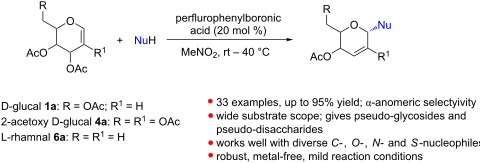
Figure 1: Perfluorophenylboronic acid-catalyzed reaction between 3,4,6-tri-O-acetyl-D-glucal 1a and O-, C-, S...
Figure 2: Perfluorophenylboronic acid-catalyzed reaction between 2,3,4,6-tetra-O-acetyl-D-glucal 4a and O- an...
Figure 3: Perfluorophenylboronic-acid-catalyzed reaction between 3,4-di-O-acetyl-L-rhamnal (6a) and O- and S-...
Figure 4: Plausible perfluorophenylboronic acid-catalyzed activation of glycal 1a.
Beilstein J. Org. Chem. 2019, 15, 577–583, doi:10.3762/bjoc.15.53
Graphical Abstract
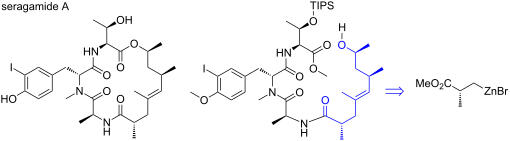
Scheme 1: Actin-binding cyclodepsipeptides, photo amino acids, retrosynthetic cuts of polyketide 7 leading to...
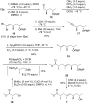
Scheme 2: Synthesis of γ-hydroxy esters 11 and 12, followed by Mitsunobu inversion.
Scheme 3: Synthesis of the polyketide section 7.
Scheme 4: Access to methylated D-iodotyrosine derivatives 22, 23, and 25.
Scheme 5: Synthesis of the doubly protected open chain peptide-polyketide 31.
Beilstein J. Org. Chem. 2019, 15, 401–430, doi:10.3762/bjoc.15.36
Graphical Abstract
Figure 1: Structural formulas of Nam, NA, NR+, NMN, and NAD+.
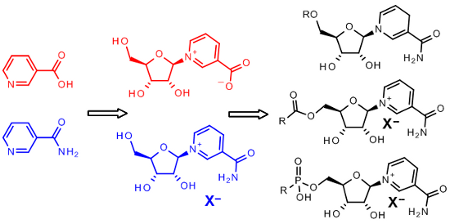
Figure 2: Main synthetic routes to nicotinamide riboside (NR+X−).
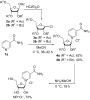
Scheme 1: Synthesis of NR+Cl− based on the reaction of peracylated chlorosugars with Nam.
Figure 3: Predominant formation of β-anomer over α-anomer of NR+X−.
Scheme 2: Synthesis of NR+Cl− by reacting 3,5-di-O-benzoyl-D-ribofuranosyl chloride (5) with Nam (1a).
Figure 4: Mechanism of the formation of the β-anomer of the glycosylated product in the case of the reaction ...
Scheme 3: Synthesis of NR+Br− by reacting bromosugars with Nam (1a).
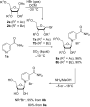
Scheme 4: Synthesis of NR+OTf− based on the glycosylation of Nam (1a) with tetra-O-acetyl-β-D-ribofuranose (2a...
Scheme 5: Improved synthesis of NR+OTfˉ and NAR+OTfˉ based on the glycosylation of pre-silylated Nam or NA wi...
Scheme 6: Synthesis of triacetylated NAR+OTf− by glycosylation of nicotinic acid trimethylsilyl ester with te...
Scheme 7: Synthesis of NR+Cl− from NR+OTf− by means of ion exchange with sodium chloride solution.
Scheme 8: Synthesis of acylated NR+OTf− by means of ion exchange with sodium chloride.
Scheme 9: Synthesis of triacetylated derivatives of NAR+ by glycosylation of nicotinic acid esters with ribos...
Scheme 10: Synthesis of NR+OTf− from the triflate salt of ethyl nicotinate-2,3,5-triacetyl-β-D-riboside in met...
Scheme 11: Reaction of 2,3,5-tri-O-acetyl-β-phenyl nicotinate riboside triflate salt with secondary and tertia...
Scheme 12: Synthesis of NMN based on the Zincke reaction of N-(2,4-dinitrophenyl)-3-carbamoylpyridinium chlori...
Scheme 13: Synthesis of NMN based on the Zincke reaction of N-(2,4-dinitrophenyl)-3-carbamoylpyridinium chlori...
Scheme 14: Efficacious protection of 2′,3′-hydroxy groups of NR+X−.
Scheme 15: Protection of the 2′,3′-hydroxy groups of NR+Cl– with a mesitylmethylene acetal group.
Figure 5: Reduction of derivatives of NR+Xˉ into corresponding 1,2-; 1,4-; 1,6-NRH derivatives.
Figure 6: Mechanism of the reduction of the pyridinium core with dithionite as adapted from [67].
Scheme 16: Reduction of triacylated NR+OTf– derivatives by sodium dithionite followed by complete removal of a...
Figure 7: Structural formulas of iridium and rhodium catalysts (a)–(d) for regeneration of NAD(P)H from NAD(P)...
Figure 8: Two approaches to synthesis of 5′-derivatives of NR+.
Scheme 17: Synthesis of NMN starting from NR+ salt.
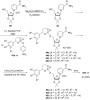
Scheme 18: Efficient synthesis of NMN by phosphorylation of 2′,3′-O-isopropylidene-NR+ triflate followed by re...
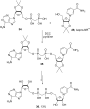
Scheme 19: Synthesis of a bisphosphonate analogue of β-NAD+ based on DCC-induced conjugation of 2′,3′-O-isopro...
Scheme 20: Synthesis of 5′-acyl and 2′,3′,5′-triacyl derivatives of NR+.
Figure 9: Structural formulas of NMN analogues 39–41.
Scheme 21: Synthesis of 5′-phosphorylated derivatives of NR+ using a “reduction–modification–oxidation” approa...
Scheme 22: Synthesis of 5′-phosphorylated derivatives of NR+ using a “reduction–modification–reoxidation” appr...
Figure 10: Structural formulas of 5′-phosphorylated derivatives of NR+.
Scheme 23: Synthesis of 5′-phosphorylated derivatives of NR+ using a direct NR+ phosphorylation approach.
Figure 11: Structural formulas of amino acid NR+ conjugates.
Scheme 24: Synthesis of amino acid NR+ conjugates using NRH and protected amino acid under CDI-coupling condit...
Figure 12: Chemical structures of known isotopically labelled NR+ analogues and derivatives.
Scheme 25: Synthesis of [2′-3H]-NR+ and [2′-3H]-NMN.
Scheme 26: Synthesis of α- and β-anomers of [1′-2H]-NMN.
Beilstein J. Org. Chem. 2019, 15, 333–350, doi:10.3762/bjoc.15.29
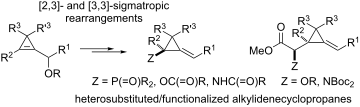
Graphical Abstract
Scheme 1: Representative strategies for the formation of alkylidenecyclopropanes from cyclopropenes and scope...
Scheme 2: [2,3]-Sigmatropic rearrangement of phosphinites 2a–h.
Scheme 3: [2,3]-Sigmatropic rearrangement of a phosphinite derived from enantioenriched cyclopropenylcarbinol...
Scheme 4: Selective reduction of phosphine oxide (E)-3f.
Scheme 5: Attempted thermal [2,3]-sigmatropic rearrangement of phosphinite 6a.
Scheme 6: Computed activation barriers and free enthalpies.
Scheme 7: [2,3]-Sigmatropic rearrangement of phosphinites 6a–j.
Scheme 8: Proposed mechanism for the Lewis base-catalyzed rearrangement of phosphinites 6.
Scheme 9: [3,3]-Sigmatropic rearrangement of tertiary cyclopropenylcarbinyl acetates 10a–c.
Scheme 10: [3,3]-Sigmatropic rearrangement of secondary cyclopropenylcarbinyl esters 10d–h.
Scheme 11: [3,3]-Sigmatropic rearrangement of trichoroacetimidates 12a–i.
Scheme 12: Reaction of trichloroacetamide 13f with pyrrolidine.
Scheme 13: Catalytic hydrogenation of (arylmethylene)cyclopropropane 13f.
Scheme 14: Instability of trichloroacetimidates 21a–c derived from cyclopropenylcarbinols 20a–c.
Scheme 15: [3,3]-Sigmatropic rearrangement of cyanate 27 generated from cyclopropenylcarbinyl carbamate 26.
Scheme 16: Synthesis of alkylidene(aminocyclopropane) derivatives 30–37 from carbamate 26.
Scheme 17: Scope of the dehydration–[3,3]-sigmatropic rearrangement sequence of cyclopropenylcarbinyl carbamat...
Scheme 18: Formation of trifluoroacetamide 50 from carbamate 49.
Scheme 19: Formation of alkylidene[(N-trifluoroacetylamino)cyclopropanes] 51–54.
Scheme 20: Diastereoselective hydrogenation of alkylidenecyclopropane 51.
Scheme 21: Ireland–Claisen rearrangement of cyclopropenylcarbinyl glycolates 56a–l.
Scheme 22: Synthesis and Ireland–Claisen rearrangement of glycolate 61 possessing gem-diester substitution at ...
Scheme 23: Synthesis of alkylidene(gem-difluorocyclopropanes) 66a–h, and 66k–n from propargyl glycolates 64a–n....
Scheme 24: Ireland–Claisen rearrangement of N,N-diBoc glycinates 67a and 67b.
Scheme 25: Diastereoselective hydrogenation of alkylidenecyclopropanes 58a and 74.
Scheme 26: Synthesis of functionalized gem-difluorocyclopropanes 76 and 77 from alkylidenecyclopropane 66a.
Scheme 27: Access to oxa- and azabicyclic compounds 78–80.
Beilstein J. Org. Chem. 2019, 15, 310–332, doi:10.3762/bjoc.15.28
Graphical Abstract
Figure 1: Cubic octasilsesquioxane.
Scheme 1: Reactivity of vinylsilanes in the presence of ruthenium alkylidene complexes; a) cross metathesis, ...
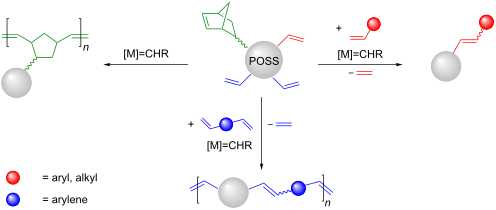
Figure 2: The scope and limitations of metathesis in transformations of vinyl-substituted siloxanes and silse...
Scheme 2: Application of olefin metathesis in the synthesis and modification of POSS-based materials: a) func...
Figure 3: Olefin metathesis catalysts used in transformations of silsesquioxanes.
Figure 4: Octavinyl-substituted cubic silsesquioxane (OVS) and spherosilicate.
Scheme 3: Cross metathesis of OVS with terminal olefins (stereoselectivity as discussed in the text).
Scheme 4: Cross metathesis of OVS with substituted styrenes.
Scheme 5: Modification of OVS via CM with styrenes.
Figure 5: Vinylbiphenyl chromophore-decorated cubic silsesquioxanes.
Scheme 6: Cross metathesis of OVS with carboranylstyrene.
Scheme 7: Synthesis of octakis[2-(p-carboxyphenyl)ethyl]silsesquioxane via CM and subsequent hydrogenation.
Scheme 8: Cross metathesis of monovinyl-POSS with olefins.
Scheme 9: Cross metathesis of monovinyl-POSS with highly π-conjugated substituted styrenes.
Scheme 10: Cross metathesis of monovinylgermasilsesquioxane with styrenes.
Scheme 11: Cross metathesis of DDSQ-2SiVi with olefins.
Scheme 12: Cross metathesis of DDSQ-2SiVi with substituted styrenes.
Scheme 13: Cross metathesis of (DDSQ-2GeVi) with olefins.
Scheme 14: CM of divinyl-substituted T10 and T12 with 4-bromostyrene (selected isomers are shown).
Scheme 15: Synthesis of vinylstilbene derivatives of T10 and T12 via a sequence of CM and Heck coupling.
Scheme 16: Cross metathesis of allyl-POSS with tert-butyl acrylate and (Z)-1,4-diacetoxy-but-2-ene.
Scheme 17: Cross metathesis of allyl-POSS with olefins.
Scheme 18: Acyclic diene metathesis copolymerization of DDSQ-2SiVi with diolefins.
Scheme 19: Acyclic diene metathesis copolymerization of DDSQ-2GeVi with diolefins.
Scheme 20: Ring-opening metathesis copolymerization of norbornenylethyl-POSS with norbornene.
Scheme 21: Synthesis of a polyethylene–POSS copolymer via ring-opening metathesis copolymerization of norborne...
Scheme 22: ROMP of norbornenylethyl-POSS with 1,5-cyclooctadiene.
Scheme 23: Copolymerization of POSS-functionalized norbornene with DCPD.
Scheme 24: Copolymerization of tris(norbornenylethyl)-POSS with DCPD.
Scheme 25: Copolymerization of N-(propyl-POSS)-7-oxanorbornene-5,6-dicarboximide with 3-(trifluoromethyl)pheny...
Figure 6: Homopolymers and copolymers having POSS groups attached to the main chain via flexible spacers of d...
Scheme 26: Ring-opening metathesis copolymerization of POSS-NBE with methyltetracyclododecene.
Scheme 27: Synthesis of block copolymer via ROMP by sequential monomer addition.
Scheme 28: Synthesis of a liquid crystalline polymer with POSS core in the side chain.
Scheme 29: Sequential synthesis of copolymers of polynorbornene containing POSS and PEO pendant groups.
Scheme 30: Synthesis of rodlike POSS−bottlebrush block copolymers [54].
Scheme 31: Surface-initiated ROMP producing copolymer layers on the surface of CdSe/ZnS quantum dots.
Beilstein J. Org. Chem. 2018, 14, 2923–2930, doi:10.3762/bjoc.14.271
Graphical Abstract
Figure 1: Chemical structures of analogues.
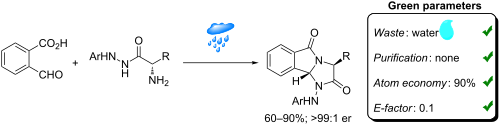
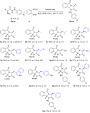
Scheme 1: Strategy for the formation of 1-(arylamino)-1H-imidazo[2,1-a]isoindole-2,5(3H,9bH)-diones.
Scheme 2: Synthesis of the starting (L)-α-amino acid phenylhydrazides and 4-chlorophenylhydrazides 3a–m under...
Scheme 3: Cyclocondensation of 2-formylbenzoic acid (4) with (L)-alanine phenylhydrazide (3a).
Scheme 4: Synthesis of the nitrogenated tricyclic compounds 5a–m. Diastereoisomeric (dr) and enantiomeric (er...
Figure 2: NOEs correlation showing the stereochemistry of the compound 5a.
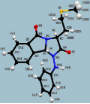
Figure 3: X-ray crystal structure of 5f shown at the 30% probability level.
Scheme 5: Proposed partial mechanism with a selectivity model.
Beilstein J. Org. Chem. 2018, 14, 2384–2393, doi:10.3762/bjoc.14.214
Graphical Abstract
Figure 1: Structures of stereoisomers of 3,4,5-tris(2-methoxyphenyl)-2,6-dimethylpyridines determined by X-ra...
Figure 2: Graphical representation of kinetic, time-dependent 1H NMR analysis of (syn)-7 (100 °C).
Figure 3: Graphical representation of kinetic, time-dependent 1H NMR analysis of (syn)-10 (120 °C).
Figure 4: HT-NMR (300 MHz, DMSO-d6) spectra of A) (syn)-7. B) (syn)-10. Only the upfield (ca. 3.4–4 ppm) regi...
Figure 5: Summary of the results for coupling with ortho-substituted phenylboronic acid for triaryl products.
Figure 6: Summary of results for coupling with ortho-substituted phenylboronic acid for diaryl products.
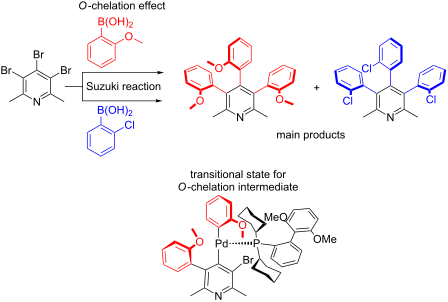
Figure 7: Proposed intermediates for the 1,2-addition of 5 with methoxy group. A) Oxidative addition step. B)...
Figure 8: Proposed intermediates for the 1,3-addition with methoxy group. A) Oxidative addition step. B) Tran...
Figure 9: Proposed intermediates for the 1,2-addition with chlorine atom. A) Oxidative addition step. B) Tran...
Figure 10: Proposed intermediates for the 1,3-addition with chlorine atom. A) Oxidative addition step. B) Tran...
Beilstein J. Org. Chem. 2018, 14, 2313–2320, doi:10.3762/bjoc.14.206
Graphical Abstract
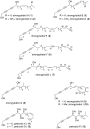
Figure 1: Proposed structures of a selection of diacetylenic polyol natural products.
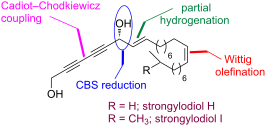
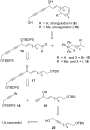
Scheme 1: Retrosynthesis of strongylodiols H and I.
Scheme 2: Synthesis of alkyne 19 and iodo intermediate 21. Reagents and conditions: (a) n-BuLi, THF, −78 °C t...
Scheme 3: Stereoselective synthesis of (R)-25. Reagents and conditions: (a) CuCl, NH2OH·HCl, 30% n-BuNH2, Et2...
Figure 2: Absolute configuration analysis of alcohol 25. ∆δ = δS − δR for the (R)- and (S)-MTPA ester of alco...
Scheme 4: Synthesis of strongylodiol H (9). Reagents and conditions: (a) TBDPSCl, imidazole, CH2Cl2, 0 °C to ...
Figure 3: Previously proposed and revised structure of strongylodiol H (9).
Scheme 5: Synthesis of compound 25a. Reagents and conditions: (a) (R)-CBS catalyst, BH3·DMS, −50 °C, 16 h, 86...
Scheme 6: Synthesis of strongylodiol I (10a). Reagents and conditions: (a) (i) TBDPSCl, imidazole, CH2Cl2, 0 ...
Beilstein J. Org. Chem. 2018, 14, 2082–2089, doi:10.3762/bjoc.14.182
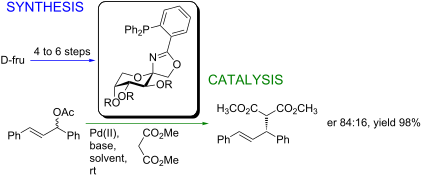
Graphical Abstract
Figure 1: General structure of PHOX ligands 1 and structures of annulated glucosamine-based PHOX and PyOx lig...
Scheme 1: Preparation of 1,2-isopropylidene-protected D-fructose derivatives with different substitution patt...
Scheme 2: Activation of 7 to oxocarbenium ion 9 in the Ritter reaction.
Scheme 3: Zemplén deacetylation of 10i.
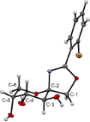
Figure 2: Molecular structure of 10j. Ellipsoids are given at the 50% probability level. Grey = carbon, red =...
Scheme 4: Benzylation of 10j to give 10b.
Scheme 5: Plausible mechanism of the Ritter reaction. For better clarity C-2 is not shown in conformers 9a an...
Scheme 6: Neighboring group participation of ester protective groups. For better clarity C-2 is not shown in ...
Scheme 7: Pd catalyzed Tsuji–Trost reation. BSA: N,O-bis(trimethylsilyl)acetamide, DMM: dimethyl malonate.
Beilstein J. Org. Chem. 2018, 14, 1813–1825, doi:10.3762/bjoc.14.154
Graphical Abstract
Figure 1: The structures of hypervalent iodine (III) reagents [8].
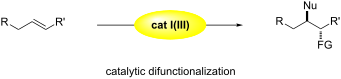
Scheme 1: Hypervalent iodine(III)-catalyzed functionalization of alkenes.
Scheme 2: Catalytic sulfonyloxylactonization of alkenoic acids [43].
Scheme 3: Catalytic diacetoxylation of alkenes [46].
Scheme 4: Intramolecular asymmetric dioxygenation of alkenes [48,50].
Scheme 5: Intermolecular asymmetric diacetoxylation of styrenes [52].
Scheme 6: Diacetoxylation of alkenes with ester groups containing catalysts 17 [55].
Scheme 7: Intramolecular diamination of alkenes [56].
Scheme 8: Intramolecular asymmetric diamination of alkenes [57].
Scheme 9: Intermolecular asymmetric diamination of alkenes [58].
Scheme 10: Iodoarene-catalyzed aminofluorination of alkenes [60,61].
Scheme 11: Iodoarene-catalyzed aminofluorination of alkenes [62].
Scheme 12: Catalytic difluorination of alkenes with Selectfluor [63].
Scheme 13: Iodoarene-catalyzed 1,2-difluorination of alkenes [64].
Scheme 14: Iodoarene-catalyzed asymmetric fluorination of styrenes [64,65].
Scheme 15: Gem-difluorination of styrenes [67].
Scheme 16: Asymmetric gem-difluorination of cinnamic acid derivatives [68].
Scheme 17: Oxyarylation of alkenes [71].
Scheme 18: Asymmetric oxidative rearrangements of alkenes [72].
Scheme 19: Bromolactonization of alkenes [75].
Scheme 20: Bromination of alkenes [77,78].
Scheme 21: Cooperative strategy for the carbonylation of alkenes [79].
Beilstein J. Org. Chem. 2018, 14, 1778–1805, doi:10.3762/bjoc.14.152
Graphical Abstract
Figure 1: The structures of biologically active natural and synthetic products having spirocyclic moiety.
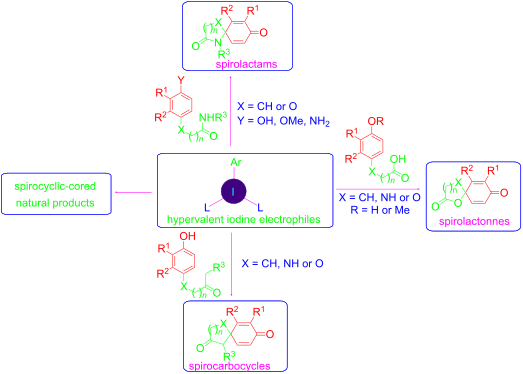
Scheme 1: Iodine(III)-mediated spirocyclization of substituted phenols 7 and 11 to 10 and 13, respectively.
Scheme 2: PIDA-mediated spirolactonization of N-protected tyrosine 14 to spirolactone 16.
Figure 2: The structures of polymer-supported iodine(III) reagents 17a and 17b.
Scheme 3: Spirolactonization of substrates 14 to spirolactones 16 using polymer-supported reagents 17a and 17b...
Scheme 4: PIDA-mediated spirolactonization of 1-(p-hydroxyaryl)cyclobutanols 18 to spirolactones 19.
Scheme 5: Iodine(III)-mediated spirocyclization of aryl alkynes 24 to spirolactones 26 by the reaction with b...
Scheme 6: Bridged iodine(III)-mediated spirocyclization of phenols 27 to spirodienones 29.
Scheme 7: Iodine(III)-mediated spirocyclization of arnottin I (30) to its spirocyclic analogue arnottin II (32...
Scheme 8: Iodine(III)-catalyzed spirolactonization of p-substituted phenols 27 to spirolactones 29 using iodo...
Scheme 9: Iodine(III)-catalyzed oxylactonization of ketocarboxylic acid 34 to spirolactone 36 using iodobenze...
Scheme 10: Iodine(III)-mediated asymmetric oxidative spirocyclization of naphthyl acids 37 to naphthyl spirola...
Scheme 11: Oxidative cyclization of L-tyrosine 14 to spirocyclic lactone 16 using PIDA (15).
Scheme 12: Oxidative cyclization of oxazoline derivatives 41 to spirolactams 42 using PIDA (15).
Scheme 13: Oxidative cyclization of oxazoline 43 to spirolactam 44 using PIDA 15 as oxidant.
Scheme 14: PIFA-mediated spirocyclization of amides 46 to N-spirolactams 47 using PIFA (31) as an electrophile....
Scheme 15: Synthesis of spirolactam 49 from phenolic enamide 48 using PIDA (15).
Scheme 16: Iodine(III)-mediated spirocyclization of alkyl hydroxamates 50 to spirolactams 51 using stoichiomet...
Scheme 17: PIFA-mediated cyclization of substrate 52 to spirocyclic product 54.
Scheme 18: Synthesis of spiro β-lactams 56 by oxidative coupling reaction of p-substituted phenols 55 using PI...
Scheme 19: Iodine(III)-mediated spirocyclization of para-substituted amide 58 to spirolactam 59 by the reactio...
Scheme 20: Iodine(III)-mediated synthesis of spirolactams 61 from anilide derivatives 60.
Scheme 21: PIFA-mediated oxidative cyclization of anilide 60 to bis-spirobisoxindole 61.
Scheme 22: PIDA-mediated spirocyclization of phenylacetamides 65 to spirocyclic lactams 66.
Scheme 23: Oxidative dearomatization of arylamines 67 with PIFA (31) to give dieniminium salts 68.
Scheme 24: PIFA-mediated oxidative spirocarbocyclization of 4-methoxybenzamide 69 with diphenylacetylene (70) ...
Scheme 25: Synthesis of spiroxyindole 75 using I2O5/TBHP oxidative system.
Scheme 26: Iodine(III)-catalyzed spirolactonization of functionalized amides 76 to spirolactones 77 using iodo...
Scheme 27: Intramolecular cyclization of alkenes 78 to spirolactams 80 using Pd(II) 79 and PIDA (15) as the ox...
Scheme 28: Iodine(III)-catalyzed spiroaminocyclization of amides 76 to spirolactam 77 using bis(iodoarene) 81 ...
Scheme 29: Iodine(III)-catalyzed spirolactonization of N-phenyl benzamides 82 to spirolactams 83 using iodoben...
Scheme 30: Iodine(III)-mediated asymmetric oxidative spirocyclization of phenols 84 to spirolactams 86 using c...
Scheme 31: Iodine(III)-catalyzed asymmetric oxidative spirocyclization of N-aryl naphthamides 87 to spirocycli...
Scheme 32: Cyclization of p-substituted phenolic compound 89 to spirolactam 90 using PIDA (15) in TFE.
Scheme 33: Iodine(III)-mediated synthesis of spirocyclic compound 93 from substrates 92 using PIDA (15) as an ...
Scheme 34: Iodine(III)-mediated spirocyclization of p-substituted phenol 48 to spirocyclic compound 49 using P...
Scheme 35: Bridged iodine(III)-mediated spirocyclization of O-silylated phenolic compound 96 in the synthesis ...
Scheme 36: PIFA-mediated approach for the spirocyclization of ortho-substituted phenols 98 to aza-spirocarbocy...
Scheme 37: Oxidative cyclization of para-substituted phenols 102 to spirocarbocyclic compounds 104 using Koser...
Scheme 38: Iodine(III)-mediated spirocyclization of aryl alkynes 105 to spirocarbocyclic compound 106 by the r...
Scheme 39: Iodine(III)-mediated spirocarbocyclization of ortho-substituted phenols 107 to spirocarbocyclic com...
Scheme 40: PIFA-mediated oxidative cyclization of substrates 110 to spirocarbocyclic compounds 111.
Scheme 41: Iodine(III)-mediated cyclization of substrate 113 to spirocyclic compound 114.
Scheme 42: Iodine(III)-mediated spirocyclization of phenolic substrate 116 to the spirocarbocyclic natural pro...
Scheme 43: Iodine(III)-catalyzed spirocyclization of phenols 117 to spirocarbocyclic products 119 using iodoar...
Scheme 44: PIFA-mediated spirocyclization of 110 to spirocyclic compound 111 using PIFA (31) as electrophile.
Scheme 45: PIDA-mediated spirocyclization of phenolic sulfonamide 122 to spiroketones 123.
Scheme 46: Iodine(III)-mediated oxidative spirocyclization of 2-naphthol derivatives 124 to spiropyrrolidines ...
Scheme 47: PIDA-mediated oxidative spirocyclization of m-substituted phenols 126 to tricyclic spiroketals 127.
Figure 3: The structures of chiral organoiodine(III) catalysts 129a and 129b.
Scheme 48: Iodine(III)-catalyzed oxidative spirocyclization of substituted phenols 128 to spirocyclic ketals 1...
Scheme 49: Oxidative spirocyclization of para-substituted phenol 131 to spirodienone 133 using polymer support...
Scheme 50: Oxidative cyclization of bis-hydroxynaphthyl ether 135 to spiroketal 136 using PIDA (15) as an elec...
Scheme 51: Oxidative spirocyclization of phenolic compound 139 to spirodienone 140 using polymer-supported PID...
Scheme 52: PIFA-mediated oxidative cyclization of catechol derived substrate 142 to spirocyclic product 143.
Scheme 53: Oxidative spirocyclization of p-substituted phenolic substrate 145 to aculeatin A (146a) and aculea...
Scheme 54: Oxidative spirocyclization of p-substituted phenolic substrate 147 to aculeatin A (146a) and aculea...
Scheme 55: Oxidative spirocyclization of p-substituted phenolic substrate 148 to aculeatin D (149) using elect...
Scheme 56: Cyclization of phenolic substrate 131 to spirocyclic product 133 using polymer-supported PIFA 150.
Scheme 57: Iodine(III)-mediated oxidative intermolecular spirocyclization of 7-methoxy-α-naphthol (152) to spi...
Scheme 58: Oxidative cyclization of phenols 155 to spiro-ketals 156 using electrophilic species PIDA (15).
Scheme 59: Iodine(III)-catalyzed oxidative spirocyclization of ortho-substituted phenols 158 to spirocyclic ke...
Beilstein J. Org. Chem. 2018, 14, 1595–1618, doi:10.3762/bjoc.14.137
Graphical Abstract
Figure 1: Design of potential antineoplastic nucleosides.
Scheme 1: Synthesis of 4’-thioDMDC.
Scheme 2: Synthesis of 4’-thioribonucleosides by Minakawa and Matsuda.
Scheme 3: Synthesis of 4’-thioribonucleosides by Yoshimura.
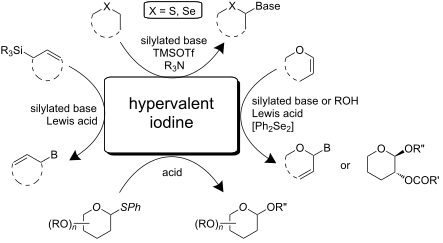
Figure 2: Concept of the Pummerer-type glycosylation and hypervalent iodine-mediated glycosylation.
Scheme 4: Oxidative glycosylation of 4-thioribose mediated by hypervalent iodine.
Figure 3: Speculated mechanism of oxidative glycosylation mediated by hypervalent iodine.
Scheme 5: Synthesis of purine 4’-thioribonucleosides using hypervalent iodine-mediated glycosylation.
Scheme 6: Unexpected glycosylation of a thietanose derivative.
Scheme 7: Speculated mechanism of the ring expansion of a thietanose derivative.
Scheme 8: Synthesis of thietanonucleosides using the Pummerer-type glycosylation.
Scheme 9: First synthesis of 4’-selenonucleosides.
Scheme 10: The Pummerer-type glycosylation of 4-selenoxide 74.
Scheme 11: Synthesis of purine 4’-selenonucleosides using hypervalent iodine-mediated glycosylation.
Figure 4: Concept of the oxidative coupling reaction applicable to the synthesis of carbocyclic nucleosides.
Scheme 12: Oxidative coupling reaction mediated by hypervalent iodine.
Scheme 13: Synthesis of cyclohexenyl nucleosides using an oxidative coupling reaction.
Figure 5: Concept of the oxidative coupling reaction of glycal derivatives.
Scheme 14: Oxidative coupling reaction of silylated uracil and DHP using hypervalent iodine.
Scheme 15: Proposed mechanism of the oxidative coupling reaction mediated by hypervalent iodine.
Figure 6: Synthesis of 2’,3’-unsaturated nucleosides using hypervalent iodine and a co-catalyst.
Scheme 16: Synthesis of dihydropyranonucleoside.
Scheme 17: Synthesis of acetoxyacetals using hypervalent iodine and addition of silylated base.
Scheme 18: One-pot fragmentation-nucleophilic additions mediated by hypervalent iodine.
Figure 7: The reaction of thioglycoside with hypervalent iodine in the presence of Lewis acids.
Scheme 19: Synthesis of disaccharides employing thioglycosides under an oxidative coupling reaction mediated b...
Scheme 20: Synthesis of disaccharides using disarmed thioglycosides by hypervalent iodine-mediated glycosylati...
Scheme 21: Glycosylation using aryl(trifluoroethyl)iodium triflimide.
Figure 8: Expected mechanism of hypervalent iodine-mediated glycosylation with glycals.
Scheme 22: Synthesis of oligosaccharides by hypervalent iodine-mediated glycosylation with glycals.
Scheme 23: Synthesis of 2-deoxy amino acid glycosides.
Figure 9: Rationale for the intramolecular migration of the amino acid unit.
Beilstein J. Org. Chem. 2018, 14, 1421–1427, doi:10.3762/bjoc.14.119
Graphical Abstract
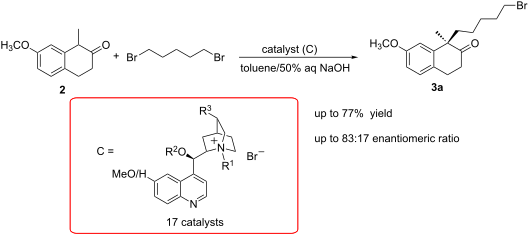
Scheme 1: Synthesis of dezocine by resolution.
Scheme 2: Synthesis of catalysts C1–C17.
Scheme 3: The proposed catalytic mechanism of stereoselective alkylation.
Beilstein J. Org. Chem. 2018, 14, 1293–1308, doi:10.3762/bjoc.14.111
Graphical Abstract
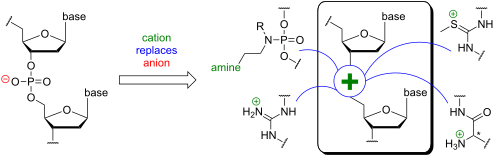
Figure 1: Biological action of single-stranded oligonucleotides (ON): antigene and antisense pathways.
Figure 2: Selected examples 1–6 of nucleic acid modifications based on additionally attached positively charg...
Figure 3: Oligonucleotide analogues with artificial cationic backbone linkages discussed in this review: amin...
Scheme 1: Structure of Letsinger's modified deoxyadenosyl dinucleotide 11 and synthesis of cationic oligonucl...
Figure 4: Artificial cationic backbone linkages 19 and 20 which are structurally related to aminoalkylated ph...
Scheme 2: Bruice's synthesis of guanidinium-linked DNG oligomer 29 in the 5'→3' direction (Troc = 2,2,2-trich...
Scheme 3: Bruice's synthesis of purine-containing guanidinium-linked DNG oligomer 36 in the 3'→5' direction (...
Scheme 4: Bruice's synthesis of S-methylthiourea-linked DNmt oligomer 43.
Figure 5: Structure of the natural product muraymycin A1 (44) and design concept of nucleosyl amino acid (NAA...
Scheme 5: Retrosynthetic summary of Ducho's synthesis of partially zwitterionic NAA-modified oligonucleotides ...
Scheme 6: Retrosynthetic summary of Ducho's and Grossmann's synthesis of fully cationic NAA-modified oligonuc...
Beilstein J. Org. Chem. 2018, 14, 772–785, doi:10.3762/bjoc.14.65
Graphical Abstract
Figure 1: Structural components of nucleic acids. Shown is the monomeric building block of nucleic acids. Cha...
Figure 2: Formation of oxocarbenium ion during glycosidic bond cleavage in nucleosides [31]. The extent of leavin...
Figure 3: Structural modifications to nucleobase-sugar connectivity. The O–C–N bond between nucleobase and su...
Figure 4: Examples of natural and synthetic C-nucleosides. Pseudouridine and formcycin are among several natu...
Figure 5: Synthetic approaches to C-nucleosides. A. Two common strategies for C-nucleoside synthesis involve ...
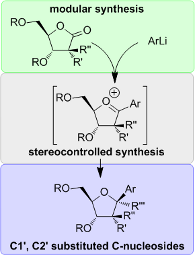
Figure 6: Steroselective C-nucleoside synthesis using D-ribonolactone. A. Nucleophilic substitution of D-ribo...
Figure 7: Synthesis of C1'-substituted 4-aza-7,9-dideazaadenine C-nucleosides [63-65,69,70]. A. Reaction of D-ribonolacton...
Figure 8: Pyrrolo- and imidazo[2,1-f][1,2,4]triazine C-nucleosides. A series of sugar- and nucleobase-substit...
Figure 9: Synthesis of 1',2'-cyclopentyl C-nucleoside [73]. Functional groups at C1' and C2' were installed and e...
Figure 10: Anti-influenza C-nucleosides mimicking favipiravir riboside [74]. A. Structure of favipiravir and its r...
Figure 11: Alternative method for synthesis of 2'-substituted C-nucleosides [75]. A. Synthesis of C2'-substituted ...
Figure 12: Synthesis of carbocyclic C-nucleosides using cyclopentanone [53]. A. Nucleophlic substitution on cyclop...
Figure 13: Synthesis of carbocyclic C-nucleosides via Suzuki coupling [53]. A. Synthesis of OTf-cyclopentene that ...
Beilstein J. Org. Chem. 2018, 14, 553–559, doi:10.3762/bjoc.14.42
Graphical Abstract
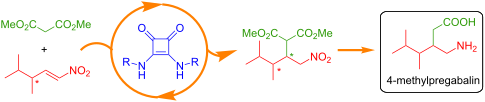
Figure 1: Structures of pregabalin and methylpregabalin.
Scheme 1: Synthesis of the nitroalkene 6.
Scheme 2: Catalyst screening in the Michael addition of dimethyl malonate to nitroalkene 6.
Scheme 3: Synthesis of catalysts (Sa,R,R)-C8 and (Sa,S,S)-C8.
Figure 2: Transition state models for the reaction of (R)-6 with dimethyl malonate using catalyst C7 (M06-2X/...
Scheme 4: Synthesis of 4-methylpregabalin (1).
Beilstein J. Org. Chem. 2018, 14, 531–536, doi:10.3762/bjoc.14.39
Graphical Abstract
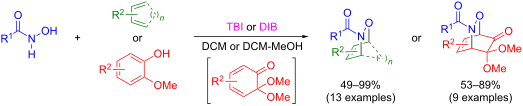
Scheme 1: Hetero-Diels–Alder (HDA) reactions of N-acylnitroso species.
Scheme 2: DIB-mediated oxidative HDA reactions of 1a–c with various guaiacols.
Beilstein J. Org. Chem. 2018, 14, 25–53, doi:10.3762/bjoc.14.3
Graphical Abstract
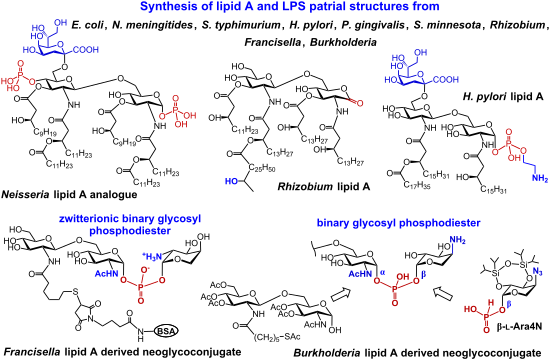
Figure 1: (A) Gram-negative bacterial membrane with LPS as major component of the outer membrane; (B) structu...
Figure 2: Structures of representative TLR4 ligands: TLR4 agonists (E. coli lipid A, N. meningitidis lipid A ...
Figure 3: (A) Co-crystal structure of the homodimeric E. coli Ra-LPS·hMD-2∙TLR4 complex (PDB code: 3FXI); (B)...
Figure 4: Co-crystal structures of (A) hybrid TLR4·hMD-2 with the bound antagonist eritoran (PDB: 2Z65, TLR4 ...
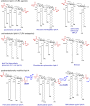
Scheme 1: Synthesis of E. coli and S. typhimurium lipid A and analogues with shorter acyl chains.
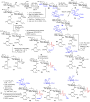
Scheme 2: Synthesis of N. meningitidis Kdo-lipid A.
Scheme 3: Synthesis of fluorescently labeled E. coli lipid A.
Scheme 4: Synthesis of H. pylori lipid A and Kdo-lipid A.
Scheme 5: Synthesis of tetraacylated lipid A corresponding to P. gingivalis LPS.
Scheme 6: Synthesis of pentaacylated P. gingivalis lipid A.
Scheme 7: Synthesis of monophosphoryl lipid A (MPLA) and analogues.
Scheme 8: Synthesis of tetraacylated Rhizobium lipid A containing aminogluconate moiety.
Scheme 9: Synthesis of pentaacylated Rhizobium lipid A and its analogue containing ether chain.
Scheme 10: Synthesis of pentaacylated Rhizobium lipid A containing 27-hydroxyoctacosanoate lipid chain.
Scheme 11: Synthesis of zwitterionic 1,1′-glycosyl phosphodiester: a partial structure of GalN-modified Franci...
Scheme 12: Synthesis of a binary 1,1′-glycosyl phosphodiester: a partial structure of β-L-Ara4N-modified Burkh...
Scheme 13: Synthesis of Burkholderia lipid A containing binary glycosyl phosphodiester linked β-L-Ara4N.
Beilstein J. Org. Chem. 2017, 13, 2710–2738, doi:10.3762/bjoc.13.269
Graphical Abstract
Scheme 1: Generation of phosphorus ylides from vinylphosphonium salts.
Scheme 2: Intramolecular Wittig reaction with the use of vinylphosphonium salts.
Scheme 3: Alkylation of diphenylvinylphosphine with methyl or benzyl iodide.
Scheme 4: Methylation of isopropenyldiphenylphosphine with methyl iodide.
Scheme 5: Alkylation of phosphines with allyl halide derivatives and subsequent isomerization of intermediate...
Scheme 6: Alkylation of triphenylphosphine with vinyl triflates in the presence of (Ph3P)4Pd.
Scheme 7: Mechanism of alkylation of triphenylphosphine with vinyl triflates in the presence of (Ph3P)4Pd as ...
Scheme 8: β-Elimination of phenol from β-phenoxyethyltriphenylphosphonium bromide.
Scheme 9: β-Elimination of phenol from β-phenoxyethylphosphonium salts in an alkaline environment.
Scheme 10: Synthesis and subsequent dehydrohalogenation of α-bromoethylphosphonium bromide.
Scheme 11: Synthesis of tributylvinylphosphonium iodides via Peterson-type olefination of α-trimethylsilylphos...
Scheme 12: Synthesis of 1-cycloalkenetriphenylphosphonium salts by electrochemical oxidation of triphenylphosp...
Scheme 13: Suggested mechanism for the electrochemical synthesis of 1-cycloalkenetriphenylphosphonium salts.
Scheme 14: Generation of α,β-(dialkoxycarbonyl)vinylphosphonium salts by addition of triphenylphosphine to ace...
Scheme 15: Synthesis of 2-(N-acylamino)vinylphosphonium halides by imidoylation of β-carbonyl ylides with imid...
Scheme 16: Imidoylation of β-carbonyl ylides with imidoyl halides generated in situ.
Scheme 17: Synthesis of 2-benzoyloxyvinylphosphonium bromide from 2-propynyltriphenylphosphonium bromide.
Scheme 18: Synthesis of 2-aminovinylphosphonium salts via nucleophilic addition of amines to 2-propynyltriphen...
Scheme 19: Deacylation of 2-(N-acylamino)vinylphosphonium chlorides to 2-aminovinylphosphonium salts.
Scheme 20: Resonance structures of 2-aminovinylphosphonium salts and tautomeric equilibrium between aminovinyl...
Scheme 21: Synthesis of 2-aminovinylphosphonium salts by reaction of (formylmethyl)triphenylphosphonium chlori...
Scheme 22: Generation of ylides by reaction of vinyltriphenylphosphonium bromide with nucleophiles and their s...
Scheme 23: Intermolecular Wittig reaction with the use of vinylphosphonium bromide and organocopper compounds ...
Scheme 24: Intermolecular Wittig reaction with the use of ylides generated from vinylphosphonium bromides and ...
Scheme 25: Direct transformation of vinylphosphonium salts into ylides in the presence of potassium tert-butox...
Scheme 26: A general method for synthesis of carbo- and heterocyclic systems by the intramolecular Wittig reac...
Scheme 27: Synthesis of 2H-chromene by reaction of vinyltriphenylphosphonium bromide with sodium 2-formylpheno...
Scheme 28: Synthesis of 2,5-dihydro-2,3-dimethylfuran by reaction of vinylphosphonium bromide with 3-hydroxy-2...
Scheme 29: Synthesis of 2H-chromene and 2,5-dihydrofuran derivatives in the intramolecular Wittig reaction wit...
Scheme 30: Enantioselective synthesis of 3,6-dihydropyran derivatives from vinylphosphonium bromide and enanti...
Scheme 31: Synthesis of 2,5-dihydrothiophene derivatives in the intramolecular Wittig reaction from vinylphosp...
Scheme 32: Synthesis of bicyclic pyrrole derivatives in the reaction of vinylphosphonium halides and 2-pyrrolo...
Scheme 33: Stereoselective synthesis of bicyclic 2-pyrrolidinone derivatives in the reaction of vinylphosphoni...
Scheme 34: Stereoselective synthesis of 3-pyrroline derivatives in the intramolecular Wittig reaction from vin...
Scheme 35: Synthesis of cyclic alkenes in the intramolecular Wittig reaction from vinylphosphonium bromide and...
Scheme 36: Synthesis of 1,3-cyclohexadienes by reaction of 1,3-butadienyltriphenylphosphonium bromide with eno...
Scheme 37: Synthesis of bicyclo[3.3.0]octenes by reaction of vinylphosphonium salts with cyclic diketoester.
Scheme 38: Synthesis of quinoline derivatives in the intramolecular Wittig reaction from 2-(2-acylphenylamino)...
Scheme 39: Stereoselective synthesis of γ-aminobutyric acid in the intermolecular Wittig reaction from chiral ...
Scheme 40: Synthesis of allylamines in the intermolecular Wittig reaction from 2-aminovinylphosphonium bromide...
Scheme 41: A general route towards α,β-di(alkoxycarbonyl)vinylphosphonium salts and their subsequent possible ...
Scheme 42: Generation of resonance-stabilized phosphorus ylides via the reaction of triphenylphosphine with di...
Scheme 43: Synthesis of resonance-stabilized phosphorus ylides in the reaction of triphenylphosphine, dialkyl ...
Scheme 44: Synthesis of resonance-stabilized phosphorus ylides via the reaction of triphenylphosphine with dia...
Scheme 45: Generation of resonance-stabilized phosphorus ylides in the reaction of acetylenedicarboxylate, tri...
Scheme 46: Synthesis of resonance-stabilized phosphorus ylides via the reaction of dialkyl acetylenedicarboxyl...
Scheme 47: Synthesis of resonance-stabilized ylides derived from semicarbazones, aromatic amides, and 3-(aryls...
Scheme 48: Synthesis of resonance-stabilized ylides via the reaction of triphenylphosphine with dialkyl acetyl...
Scheme 49: Synthesis of resonance-stabilized ylides in the reaction of triphenylphosphine, dialkyl acetylenedi...
Scheme 50: Synthesis of N-acylated α,β-unsaturated γ-lactams via resonance-stabilized phosphorus ylides derive...
Scheme 51: Synthesis of resonance-stabilized phosphorus ylides derived from 6-amino-N,N'-dimethyluracil and th...
Scheme 52: Generation of resonance-stabilized phosphorus ylides in the reaction of triphenylphosphine, dialkyl...
Scheme 53: Synthesis of resonance-stabilized phosphorus ylides via the reaction of triphenylphosphine with dia...
Scheme 54: Synthesis of 1,3-dienes via intramolecular Wittig reaction with the use of resonance-stabilized yli...
Scheme 55: Synthesis of 1,3-dienes in the intramolecular Wittig reaction from ylides generated from dimethyl a...
Scheme 56: Synthesis of 4-(2-quinolyl)cyclobutene-1,2,3-tricarboxylic acid triesters and isomeric cyclopenteno...
Scheme 57: Synthesis of 4-arylquinolines via resonance-stabilized ylides in the intramolecular Wittig reaction....
Scheme 58: Synthesis of furan derivatives via resonance-stabilized ylides in the intramolecular Wittig reactio...
Scheme 59: Synthesis of 1,3-indanedione derivatives via resonance-stabilized ylides in the intermolecular Witt...
Scheme 60: Synthesis of coumarin derivatives via nucleophilic displacement of the triphenylphosphonium group i...
Scheme 61: Synthesis of 6-formylcoumarin derivatives and their application in the synthesis of dyads.
Scheme 62: Synthesis of di- and tricyclic coumarin derivatives in the reaction of pyrocatechol with two vinylp...
Scheme 63: Synthesis of mono-, di-, and tricyclic derivatives in the reaction of pyrogallol with one or two vi...
Scheme 64: Synthesis of 1,4-benzoxazine derivative by nucleophilic displacement of the triphenylphosphonium gr...
Scheme 65: Synthesis of 7-oxo-7H-pyrido[1,2,3-cd]perimidine derivative via nucleophilic displacement of the tr...
Scheme 66: Application of vinylphosphonium salts in the Diels–Alder reaction with dienes.
Scheme 67: Synthesis of pyrroline derivatives from vinylphosphonium bromide and 5-(4H)-oxazolones.
Scheme 68: Synthesis of pyrrole derivatives in the reactions of vinyltriphenylphosphonium bromide with protona...
Scheme 69: Synthesis of dialkyl 2-(alkylamino)-5-aryl-3,4-furanedicarboxylates via intermediate α,β-di(alkoxyc...
Scheme 70: Synthesis of 1,4-benzoxazine derivatives from acetylenedicarboxylates, phosphines, and 1-nitroso-2-...
Beilstein J. Org. Chem. 2017, 13, 2637–2658, doi:10.3762/bjoc.13.262
Graphical Abstract
Figure 1: Selected amide bond isosteres.
Figure 2: Monofluoroalkene as an amide bond isostere.
Scheme 1: Synthesis of Cbz-Gly-ψ[(Z)-CF=CH]-Gly using a HWE olefination by Sano and co-workers.
Scheme 2: Synthesis of Phth-Gly-ψ[CF=CH]-Gly using the Julia–Kocienski olefination by Lequeux and co-workers.
Scheme 3: Synthesis of Boc-Nva-ψ[(Z)-CF=CH]-Gly by Taguchi and co-workers.
Figure 3: Mutant tripeptide containing two different peptide bond isosteres.
Scheme 4: Chromium-mediated synthesis of Boc-Ser(PMB)-ψ[(Z)-CF=CH]-Gly-OMe by Konno and co-workers.
Scheme 5: Synthesis of Cbz-Gly-ψ[(E)-CF=C]-Pro by Sano and co-workers.
Scheme 6: Synthesis of Cbz-Gly-ψ[(Z)-CF=C]-Pro by Sano and co-workers.
Scheme 7: Stereoselective synthesis of Fmoc-Gly-ψ[(Z)-CF=CH]-Phe by Pannecoucke and co-workers.
Scheme 8: Ring-closure metathesis to prepare Gly-ψ[(E)-CF=CH]-Phg by Couve-Bonnaire and co-workers.
Scheme 9: Stereoselective synthesis of Fmoc-Gly-ψ[(Z)-CF=CH]-Phe by Dory and co-workers.
Scheme 10: Diastereoselective addition of Grignard reagents to sulfinylamines derived from α-fluoroenals by Pa...
Scheme 11: NHC-mediated synthesis of monofluoroalkenes by Otaka and co-workers.
Scheme 12: Stereoselective synthesis of Boc-Tyr-ψ[(Z)-CF=CH]-Gly by Altman and co-workers.
Scheme 13: Synthesis of the tripeptide Boc-Asp(OBn)-Pro-ψ[(Z)-CF=CH)-Val-CH2OH by Miller and co-workers.
Scheme 14: Copper-catalyzed synthesis of monofluoralkenes by Taguchi and co-workers.
Scheme 15: One-pot intramolecular redox reaction to access amide-type isosteres by Otaka and co-workers.
Scheme 16: Copper-mediated reduction, transmetalation and asymmetric alkylation by Fujii and co-workers.
Scheme 17: Synthesis of (E)-monofluoroalkene-based dipeptide isostere by Fujii and co-workers.
Scheme 18: Diastereoselective synthesis of MeOCO-Val-ψ[(Z)-CF=C]-Pro isostere by Chang and co-workers.
Scheme 19: Asymmetric synthesis of Fmoc-Ala-ψ[(Z)-CF=C]-Pro by Pannecoucke and co-workers.
Scheme 20: Synthesis of Fmoc-Val-ψ[(E)-CF=C]-Pro by Pannecoucke and co-workers.
Figure 4: BMS-790052 and its fluorinated analogue.
Figure 5: Bioactivities of pentapeptide analogues based on the relative maximum agonistic activity at 10 nM o...
Figure 6: Structures and affinities of the Leu-enkephalin and its fluorinated analogue. The affinity towards ...
Figure 7: Activation of the opioid receptor DOPr by Leu-enkephaline and a fluorinated analogue.
Beilstein J. Org. Chem. 2017, 13, 2316–2325, doi:10.3762/bjoc.13.228
Graphical Abstract
Figure 1: Examples of conformationally biased amino acids [1-10]. Compound 6 is a target of this work.
Scheme 1: The first synthetic approach.
Scheme 2: The second synthetic approach.
Scheme 3: The third synthetic approach.
Scheme 4: The fourth synthetic approach (partially reproduced from ref. [17]).
Figure 2: Selected J values and the inferred molecular conformations of 6a and 6b.
Beilstein J. Org. Chem. 2017, 13, 1753–1769, doi:10.3762/bjoc.13.170
Graphical Abstract
Scheme 1: Generally accepted ion-pairing mechanism between the chiral cation Q+ of a PTC and an enolate and s...
Scheme 2: Reported asymmetric α-fluorination of β-ketoesters 1 using different chiral PTCs.
Scheme 3: Asymmetric α-fluorination of benzofuranones 4 with phosphonium salt PTC F1.
Scheme 4: Asymmetric α-fluorination of 1 with chiral phosphate-based catalysts.
Scheme 5: Anionic PTC-catalysed α-fluorination of enamines 7 and ketones 10.
Scheme 6: PTC-catalysed α-chlorination reactions of β-ketoesters 1.
Scheme 7: Shioiri’s seminal report of the asymmetric α-hydroxylation of 15 with chiral ammonium salt PTCs.
Scheme 8: Asymmetric ammonium salt-catalysed α-hydroxylation using oxygen together with a P(III)-based reduct...
Scheme 9: Asymmetric ammonium salt-catalysed α-photooxygenations.
Scheme 10: Asymmetric ammonium salt-catalysed α-hydroxylations using organic oxygen-transfer reagents.
Scheme 11: Asymmetric triazolium salt-catalysed α-hydroxylation with in situ generated peroxy imidic acid 24.
Scheme 12: Phase-transfer-catalysed dearomatization of phenols and naphthols.
Scheme 13: Ishihara’s ammonium salt-catalysed oxidative cycloetherification.
Scheme 14: Chiral phase-transfer-catalysed α-sulfanylation reactions.
Scheme 15: Chiral phase-transfer-catalysed α-trifluoromethylthiolation of β-ketoesters 1.
Scheme 16: Chiral phase-transfer-catalysed α-amination of β-ketoesters 1 using diazocarboxylates 38.
Scheme 17: Asymmetric α-fluorination of benzofuranones 4 using diazocarboxylates 38 in the presence of phospho...
Scheme 18: Anionic phase-transfer-catalysed α-amination of β-ketoesters 1 with aryldiazonium salts 41.
Scheme 19: Triazolium salt L-catalysed α-amination of different prochiral nucleophiles with in situ activated ...
Scheme 20: Phase-transfer-catalysed Neber rearrangement.
Beilstein J. Org. Chem. 2017, 13, 1596–1660, doi:10.3762/bjoc.13.159
Graphical Abstract
Figure 1: Initial proposal for the core macrolactone structure (left) and the established complete structure ...
Figure 2: Mycolactone congeners and their origins.
Figure 3: Misassigned mycolactone E structure according to Small et al. [50] (11) and the correct structure (6) f...
Figure 4: Schematic illustration of Kishi’s improved mycolactone TLC detection method exploiting derivatizati...
Figure 5: Fluorescent probes derived from natural mycolactone A/B (1a,b) or its synthetic 8-desmethyl analogs...
Figure 6: Tool compounds used by Pluschke and co-workers for elucidating the molecular targets of mycolactone...
Figure 7: Synthetic strategies towards the extended mycolactone core. A) General strategies. B) Kishi’s appro...
Scheme 1: Kishi’s 1st generation approach towards the extended core structure of mycolactones. Reagents and c...
Scheme 2: Kishi’s 2nd generation approach towards the extended core structure of mycolactones. Reagents and c...
Scheme 3: Kishi’s 3rd generation approach towards the extended core structure of mycolactones. Reagents and c...
Scheme 4: Negishi’s synthesis of the extended core structure of mycolactones. Reagents and conditions: a) (i) ...
Scheme 5: Burkart’s (incomplete) 1st generation approach towards the extended core structure of mycolactones....
Scheme 6: Burkart’s (incomplete) 1st, 2nd and 3rd generation approach towards the extended mycolactone core s...
Scheme 7: Altmann’s synthesis of alkyl iodide 91. Reagents and conditions: a) (i) PMB-trichloroacetimidate, T...
Scheme 8: Final steps of Altmann’s synthesis of the extended core structure of mycolactones. Reagents and con...
Scheme 9: Basic principles of the Aggarwal lithiation–borylation homologation process [185,186].
Scheme 10: Aggarwal’s synthesis of the C1–C11 fragment of the mycolactone core. Reagents and conditions: a) Cl...
Scheme 11: Aggarwal’s synthesis of the linear C1–C20 fragment of the mycolactone core. Reagents and conditions...
Figure 8: Synthetic strategies towards the mycolactone A/B lower side chain.
Scheme 12: Gurjar and Cherian’s synthesis of the C1’–C8’ fragment of the mycolactone A/B pentaenoate side chai...
Scheme 13: Gurjar and Cherian’s synthesis of the benzyl-protected mycolactone A/B pentaenoate side chain. Reag...
Scheme 14: Kishi’s synthesis of model compounds for elucidating the stereochemistry of the C7’–C16’ fragment o...
Scheme 15: Kishi’s synthesis of the mycolactone A/B pentaenoate side chain. (a) (i) NaH, (EtO)2P(O)CH2CO2Et, T...
Scheme 16: Feringa and Minnaard's incomplete synthesis of mycolactone A/B pentaenoate side chain. Reagents and...
Scheme 17: Altmann’s approach towards the mycolactone A/B pentaenoate side chain. Reagents and conditions: a) ...
Scheme 18: Negishi’s access to the C1’–C7’ fragment of mycolactone A. Reagents and conditions: a) (i) n-BuLi, ...
Scheme 19: Negishi’s approach to the C1’–C7’ fragment of mycolactone B. Reagents and conditions: a) (i) DIBAL-...
Scheme 20: Negishi’s synthesis of the C8’–C16’ fragment of mycolactone A/B. Reagents and conditions: a) 142, BF...
Scheme 21: Negishi’s assembly of the mycolactone A and B pentaenoate side chains. Reagents and conditions: a) ...
Scheme 22: Blanchard’s approach to the mycolactone A/B pentaenoate side chain. a) (i) Ph3P=C(Me)COOEt, CH2Cl2,...
Scheme 23: Kishi’s approach to the mycolactone C pentaenoate side chain exemplified for the 13’R,15’S-isomer 1...
Scheme 24: Altmann’s (unpublished) synthesis of the mycolactone C pentaenoate side chain. Reagents and conditi...
Scheme 25: Blanchard’s synthesis of the mycolactone C pentaenoate side chain. Reagents and conditions: a) (i) ...
Scheme 26: Kishi’s synthesis of the tetraenoate side chain of mycolactone F exemplified by enantiomer 165. Rea...
Scheme 27: Kishi’s synthesis of the mycolactone E tetraenoate side chain. Reagents and conditions: a) (i) CH2=...
Scheme 28: Wang and Dai’s synthesis of the mycolactone E tetraenoate side chain. Reagents and conditions: a) (...
Scheme 29: Kishi’s synthesis of the dithiane-protected tetraenoate side chain of the minor oxo-metabolite of m...
Scheme 30: Kishi’s synthesis of the mycolactone S1 and S2 pentaenoate side chains. Reagents and conditions: a)...
Scheme 31: Kishi’s 1st generation and Altmann’s total synthesis of mycolactone A/B (1a,b) and Negishi’s select...
Scheme 32: Kishi’s 2nd generation total synthesis of mycolactone A/B (1a,b). Reagents and conditions: a) 2,4,6...
Scheme 33: Blanchard’s synthesis of the 8-desmethylmycolactone core. Reagents and conditions: a) (i) TsCl, TEA...
Scheme 34: Altmann’s (partially unpublished) synthesis of the C20-hydroxylated mycolactone core. Reagents and ...
Scheme 35: Altmann’s and Blanchard’s approaches towards the 11-isopropyl-8-desmethylmycolactone core. Reagents...
Scheme 36: Blanchard’s synthesis of the saturated variant of the C11-isopropyl-8-desmethylmycolactone core. Re...
Scheme 37: Structure elucidation of photo-mycolactones generated from tetraenoate 224.
Scheme 38: Kishi’s synthesis of the linear precursor of the photo-mycolactone B1 lower side chain. Reagents an...
Scheme 39: Kishi’s synthesis of the photo-mycolactone B1 lower side chain. Reagents and conditions: a) LiTMP, ...
Scheme 40: Kishi’s synthesis of a stabilized lower mycolactone side chain. Reagents and conditions: a) (i) TBD...
Scheme 41: Blanchard’s variation of the C12’,C13’,C15’ stereocluster. Reagents and conditions: a) (i) DIBAL-H,...
Scheme 42: Blanchard’s synthesis of aromatic mycolactone polyenoate side chain analogs. Reagents and condition...
Scheme 43: Small’s partial synthesis of a BODIPY-labeled mycolactone derivative and Demangel’s partial synthes...
Scheme 44: Blanchard’s synthesis of the BODIPY-labeled 8-desmethylmycolactones. Reagents and conditions: a) (i...
Scheme 45: Altmann’s synthesis of biotinylated mycolactones. Reagents and conditions: a) (i) CDI, THF, rt, 2 d...
Figure 9: Kishi’s elongated n-butyl carbamoyl mycolactone A/B analog.
Beilstein J. Org. Chem. 2017, 13, 1064–1070, doi:10.3762/bjoc.13.105
Graphical Abstract
Figure 1: Structure of ipragliflozin L-proline.
Scheme 1: Stereoselective synthesis of C-aryl glycoside by Lemarie.
Scheme 2: Stereoselective synthesis of β-C-arylglucoside 5.
Scheme 3: Synthesis of 1.
Scheme 4: Synthesis of diastereomer 6’ and 5’.