Search results
Search for "switching" in Full Text gives 332 result(s) in Beilstein Journal of Organic Chemistry. Showing first 200.
Advancements in hydrochlorination of alkenes
Beilstein J. Org. Chem. 2024, 20, 787–814, doi:10.3762/bjoc.20.72
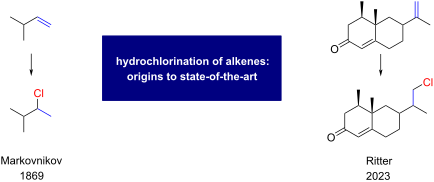
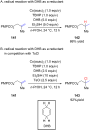
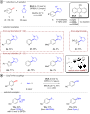
- ) could be prevented when switching to BCl3 (10 mol %). Interestingly, toluene (94), which is generated as a byproduct of the Grob fragmentation, must react more sluggishly with the generated cationic intermediates compared to chloride, as no alkylations of toluene were reported. In 2017, the Snyder group












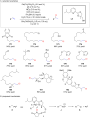
SOMOphilic alkyne vs radical-polar crossover approaches: The full story of the azido-alkynylation of alkenes
Beilstein J. Org. Chem. 2024, 20, 701–713, doi:10.3762/bjoc.20.64
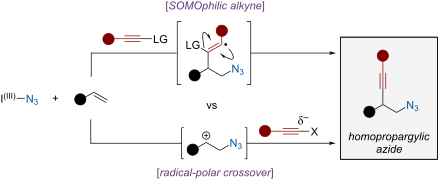
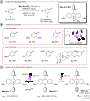
- discovery and development of the synthesis of homopropargylic azides by the azido-alkynylation of alkenes. Initially, a strategy involving SOMOphilic alkynes was adopted, but only resulted in a 29% yield of the desired product. By switching to a radical-polar crossover approach and after optimization, a
- reagents as SOMOphilic alkynes but this only afforded a 29% yield of the desired product. After switching to a radical-polar crossover approach the yield could be significantly improved. Key to the reaction optimization was the reduction of the temperature to −20 °C and the addition of BF3·Et2O. A large


Switchable molecular tweezers: design and applications
Beilstein J. Org. Chem. 2024, 20, 504–539, doi:10.3762/bjoc.20.45

- reactions. Electrochemical stimuli, while generating no waste when employing electrodes, may face limitations due to the electroactive window of the solvent and require the incorporation of redox-active switching units, which can impose constraints on design and functionality. It is worth noting that the
- proximity, either by direct interaction or via a small intercalating molecule. Therefore, switchable molecular tweezers can be considered a prototype of a mechanical molecular device capable of allosteric regulation and dual control through switching and guest binding. While the primary application of
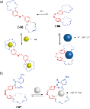
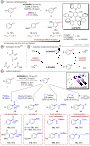
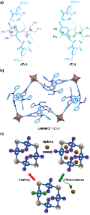
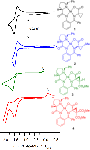
- mainly driven by intramolecular hydrogen bonds. The methoxyphenyl-pyridine-methoxyphenyl moiety, developed by Petitjean et al. [19], demonstrates conformational switching upon the addition of acid in aqueous media (Figure 2). The neutral tweezers adopt a "U"-shaped conformation with both arms pointing in




Ligand effects, solvent cooperation, and large kinetic solvent deuterium isotope effects in gold(I)-catalyzed intramolecular alkene hydroamination
Beilstein J. Org. Chem. 2024, 20, 479–496, doi:10.3762/bjoc.20.43
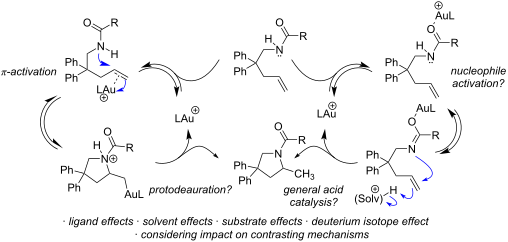
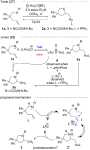
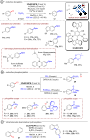
- concentrations of 1a, solutions became turbid as the substrate became less soluble, thus limiting the range of concentrations that could be used for relative rate plots. Switching to carbamate 1b alleviated the solubility problem, but the significantly slower reactions required switching to a more reactive
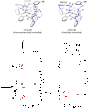
- opposite effect is observed [60]. Ligand effects. Early studies identified two key strategies for improving alkene hydroamination, switching from an electron-withdrawing catalyst (Ph3PAuCl/AgOTf) to an electron-donating catalyst (IPrAuCl/AgOTf (IPr = 1,3-bis(2,6-diisopropylphenyl)imidazol-2-ylidene), or by






Photochromic derivatives of indigo: historical overview of development, challenges and applications
Beilstein J. Org. Chem. 2024, 20, 228–242, doi:10.3762/bjoc.20.23
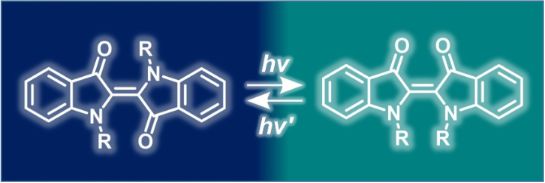
- substituents in the isatin ring showed pronounced negative photochromism upon irradiation with red light (625−650 nm). Supramolecular complexation with Schreiner’s thiourea organocatalyst (STC) allowed to reach better conversion with the isomeric ratio in PSS increased from 46% to 84%. The backward switching
- appealing due to the possibility of performing the switching within the biooptical transparency window (650–900 nm) [87]. Additionally, significant structural differences (180° flip) between the E- and Z-isomers of the compounds provide a prerequisite of light-controllable geometry control in biomolecular
- assemblies as well as precise switching of the biological activity of the photoswitchable derivative. Along these lines, in 2023, Leung and co-workers prepared amphiphilic indigo-based photoswitches and incorporated them into vesicles [88]. Irradiation of the vesicles with red light resulted in the E–Z





Optimizations of lipid II synthesis: an essential glycolipid precursor in bacterial cell wall synthesis and a validated antibiotic target
Beilstein J. Org. Chem. 2024, 20, 220–227, doi:10.3762/bjoc.20.22
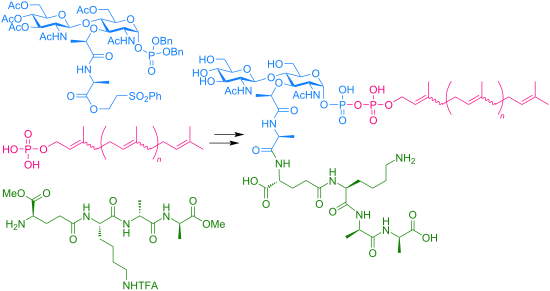
- reaction (Table 1, entries 6, 8, and 9). A slight improvement in the yield of 3a was observed when switching from TMSOTf to TfOH as the activator (Table 1, entry 5 vs entry 10). However, substituting TMSOTf with BF3·OEt2 did not yield any target product 3a (Table 1, entry 3 vs entry 12). In our


Chiral phosphoric acid-catalyzed transfer hydrogenation of 3,3-difluoro-3H-indoles
Beilstein J. Org. Chem. 2024, 20, 205–211, doi:10.3762/bjoc.20.20
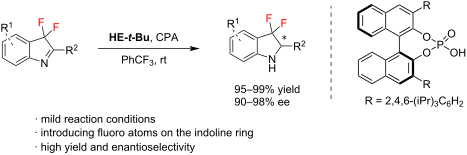
- steric hinderance of Hantzsch ester raised (Table 2, entries 1–3) and switching from ethyl to tert-butyl esters the desired product was obtained in excellent yield and enantioselectivity (Table 2, entry 3). Subsequently, we investigated the effect of the amounts of HE-t-Bu and chiral phosphoric acid on


Metal-catalyzed coupling/carbonylative cyclizations for accessing dibenzodiazepinones: an expedient route to clozapine and other drugs
Beilstein J. Org. Chem. 2024, 20, 193–204, doi:10.3762/bjoc.20.19
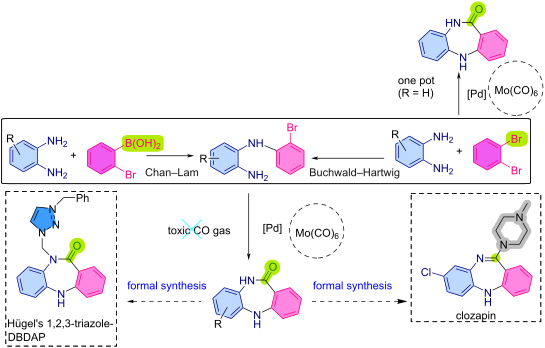
- , did not provide any improvement of the reaction outcome as only traces of the intermediate 3a were obtained (entry 3, Table 1). Switching to DBU as the base under these conditions, gave intermediate 3a in 35% yield (entry 4, Table 1). In fact, DBU was previously shown by Wannberg and Larhed to be an


Synthesis of the 3’-O-sulfated TF antigen with a TEG-N3 linker for glycodendrimersomes preparation to study lectin binding
Beilstein J. Org. Chem. 2024, 20, 173–180, doi:10.3762/bjoc.20.17
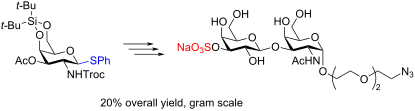
- in formation of a homogenous solution, but still no conversion to the sulfated product, even when the temperature was raised to 80 °C [28][29]. Switching the sulfating reagent to SO3·Py or performing the reaction at 150 °C in a microwave did not improve the outcome [30][31]. Since there was no


Synthesis of N-acyl carbazoles, phenoxazines and acridines from cyclic diaryliodonium salts
Beilstein J. Org. Chem. 2024, 20, 12–16, doi:10.3762/bjoc.20.2
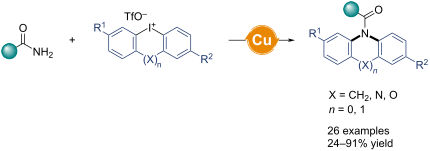
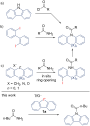
- turnover of the desired reaction [35]. To mitigate this, using silver salts as iodide scavengers in the reaction was attempted but yielded none of the desired product (Table 1, entry 2). DMF as a solvent lowered the yield to 16% (Table 1, entry 3). Switching the catalyst system to Cu(OTf)2/glyme gave a
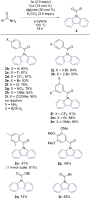
- optimized conditions in hand, the substrate scope was explored. The variations of amides are outlined in Scheme 2. Switching from valeramide to benzamide as a substrate gave a more advantageous yield of 85% of 2b. We tested para-substituted benzamides in the reaction to further assess the diversity of

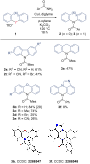
Quinoxaline derivatives as attractive electron-transporting materials
Beilstein J. Org. Chem. 2023, 19, 1694–1712, doi:10.3762/bjoc.19.124
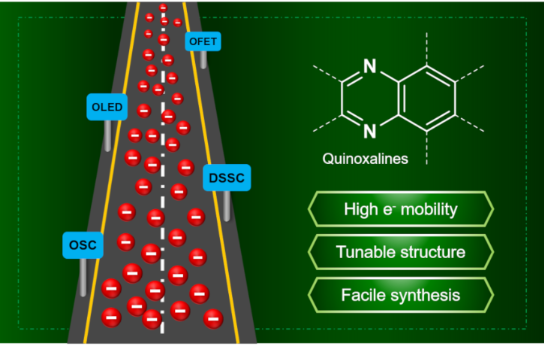
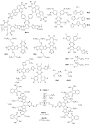
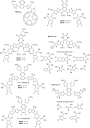
- charge separation in all-PSCs such as switching from p-type dominated behaviour of polymer Qx5 to n-type dominated behaviour of Q6, with no off state due to presence of free charge carriers in the latter case [21]. Besides optimizing polymer structures, side chain engineering, introduction of electron




Visible-light-induced nickel-catalyzed α-hydroxytrifluoroethylation of alkyl carboxylic acids: Access to trifluoromethyl alkyl acyloins
Beilstein J. Org. Chem. 2023, 19, 1372–1378, doi:10.3762/bjoc.19.98
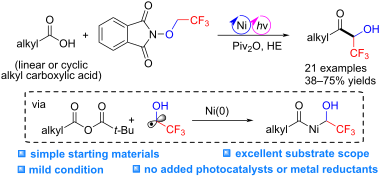
- of H2O were added to the reaction mixture [40] (Table 1, entry 6), but the addition of more water did not improve the reaction efficiency further (Table 1, entry 7). The structure of nickel catalysts played a significant role in the reaction efficiency. Switching the Ni catalyst to NiCl2(dtbbpy


Photoredox catalysis harvesting multiple photon or electrochemical energies
Beilstein J. Org. Chem. 2023, 19, 1055–1145, doi:10.3762/bjoc.19.81
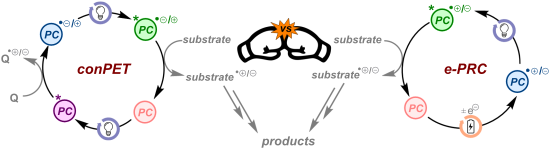
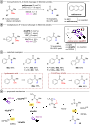
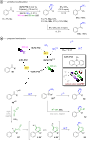
- products (e.g., 7) whereas irradiation with blue light (λ = 455 nm) provided disubstituted products 8 (Figure 5A). Additionally, adding a different trapping reagent before switching from green to blue light allows for a sequential and controlled substitution in a one-pot reaction (Figure 5B). 2,4,6

























Aromatic C–H bond functionalization through organocatalyzed asymmetric intermolecular aza-Friedel–Crafts reaction: a recent update
Beilstein J. Org. Chem. 2023, 19, 956–981, doi:10.3762/bjoc.19.72

- -ketimino esters 62 as potential electrophiles. The chiral phosphoric acid P21 catalyzed this process facilitating the formation of a quaternary stereocenter containing α-amino esters. Switching the solvent from non-polar to polar showed a regioselectivity shift to a C7 alkylation of the indole ring. The




Light-responsive rotaxane-based materials: inducing motion in the solid state
Beilstein J. Org. Chem. 2023, 19, 873–880, doi:10.3762/bjoc.19.64
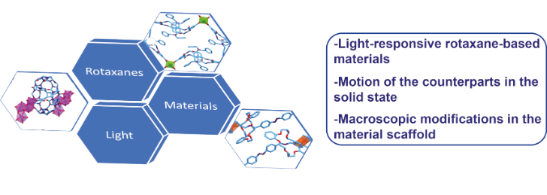
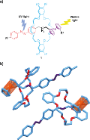
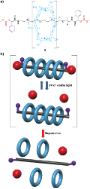
- lead to an increased interest of several researchers are: (i) the remote and simple switching tunability; (ii) the different possibilities by varying different parameters, including irradiation time, wavelength and intensity; and (iii) the clean and nonthreatening performance. In search of new organic
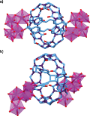
- scaffolds [11]. In particular, rotaxanes and pseudorotaxanes have led to a greater number of applications due to their inherent dynamics and the switching possibility through a rational design [12]. Thus, rotaxane-based materials have attracted the interest of the scientific community due to their enhanced

Pyridine C(sp2)–H bond functionalization under transition-metal and rare earth metal catalysis
Beilstein J. Org. Chem. 2023, 19, 820–863, doi:10.3762/bjoc.19.62
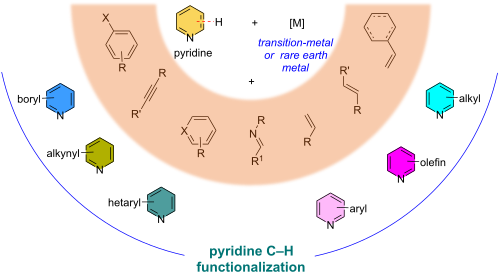
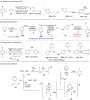
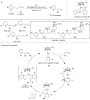
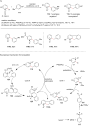
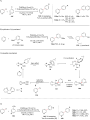
- . Except lately, in 2020, Chen and group [82] reported a Pd/Cu-catalyzed regio- and stereoselective synthesis of C2-alkenylated pyridines starting from internal alkynes 84 and pyridinium salts in a stereodivergent manner (Scheme 17a). The interesting part of this work was the switching of the alkene
- through the trans-effect (Scheme 18). The trans-effect is the switching of the metal coordination between the π-ring system and the hetero-(nitrogen) atom of pyridine [84][85]. In comparison to coordination with nitrogen, which is strong in nature, the coordination with the ring is weaker and cleavable
















Access to cyclopropanes with geminal trifluoromethyl and difluoromethylphosphonate groups
Beilstein J. Org. Chem. 2023, 19, 541–549, doi:10.3762/bjoc.19.39
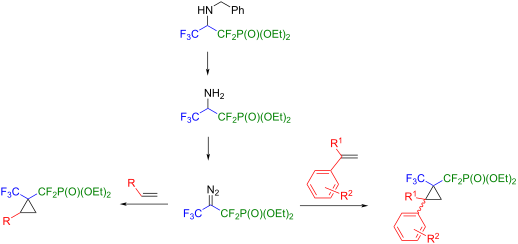
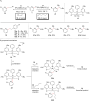
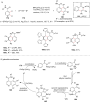
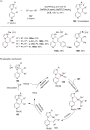
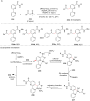
- surprise, the application of Rh2(OAc)4 did not lead to the desired product neither in dichloromethane nor in toluene (Table 1, entries 1 and 2). Switching the catalyst to copper(I) iodide in refluxing DCM, did not result in the formation of product 6a, as well (Table 1, entry 3). However, when CuI was used

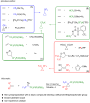


Modern flow chemistry – prospect and advantage
Beilstein J. Org. Chem. 2023, 19, 33–35, doi:10.3762/bjoc.19.3

- typically call for an optimized or even specifically designed reactor built, the modularity of flow reactor is vital for quick reconfiguration and switching between different reactions. This argument is particularly true when natural product synthesis is to be performed in continuous flow. The need for
Inline purification in continuous flow synthesis – opportunities and challenges
Beilstein J. Org. Chem. 2022, 18, 1720–1740, doi:10.3762/bjoc.18.182
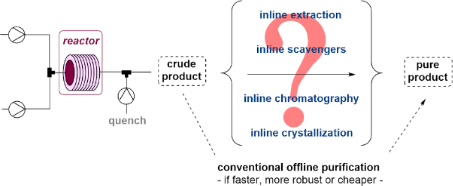
- an arrangement of ten columns with an automated system to facilitate solvent switching and column loading [98]. As the product is being trapped in one column, a secondary HPLC pump, which is monitored online, regenerates the previous column. However, in the example described, final offline




Preparation of an advanced intermediate for the synthesis of leustroducsins and phoslactomycins by heterocycloaddition
Beilstein J. Org. Chem. 2022, 18, 1385–1395, doi:10.3762/bjoc.18.143
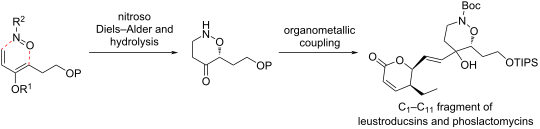
- reaction. However, switching the solvent from THF to toluene afforded 21% of product 23 with CeCl3 as additive. It appeared that the solvent had more influence on the course of the reaction than the metal. Indeed, reaction between vinyl iodide and ketone with n-BuLi in toluene [32] without any additive


Polymer and small molecule mechanochemistry: closer than ever
Beilstein J. Org. Chem. 2022, 18, 1225–1235, doi:10.3762/bjoc.18.128
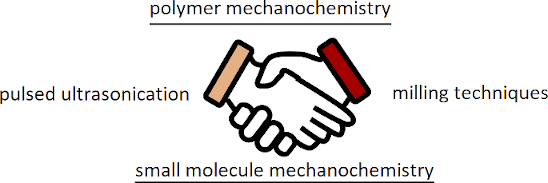
- , ideas on how polymer mechanochemistry could bias small molecule reactions were instantaneously provided by Prof. Stephen Craig [15], which included the possibility to mechanically control catalytic cycles in the future by switching the state of reactants or catalysts. Some approximations to this


From amines to (form)amides: a simple and successful mechanochemical approach
Beilstein J. Org. Chem. 2022, 18, 1210–1216, doi:10.3762/bjoc.18.126
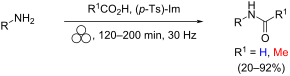
- ). Switching to sodium sulfate as a grinding additive significantly enhanced the reaction performance (Table 1, entries 3 and 4). At this stage, we wondered, if using a more efficient dehydrating agent would be mandatory for the reaction to occur. Therefore, we turned our attention toward p-tosylimidazole (p
Thermally activated delayed fluorescence (TADF) emitters: sensing and boosting spin-flipping by aggregation
Beilstein J. Org. Chem. 2022, 18, 1177–1187, doi:10.3762/bjoc.18.122
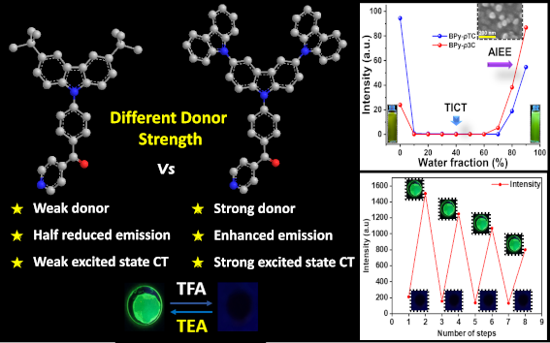
- sensitive to acidic protons. Hence, the exposure to acid and base vapors using trifluoroacetic acid (TFA) and triethylamine (TEA) led to solid-phase fluorescence switching with fatigue resistance. The current study demonstrates the role of the donor strength and size in tuning ΔEST in the aggregated state
- . Therefore, an appropriate molecular design to suppress π–π stacking should help to obtain a strong emission in solution as well as in the solid state. Solid-state organic emitters with reversible fluorescence switching are emerging for the sensing of pollutant acid vapor [21][22][23]. However, quickly
- detecting organic acid vapor at ambient conditions is challenging for solid-state detectors. Therefore, developing a solid-state emitter with reversible switching of the optical properties by external stimuli, such as acid and base vapors, is important. As per the recent literature, such sensors are being


Reductive opening of a cyclopropane ring in the Ni(II) coordination environment: a route to functionalized dehydroalanine and cysteine derivatives
Beilstein J. Org. Chem. 2022, 18, 1166–1176, doi:10.3762/bjoc.18.121
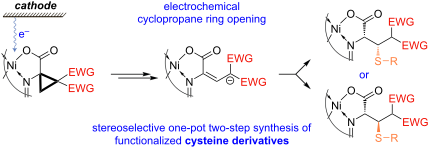
- simplifies the synthetic procedure; the multistep process can be performed in an electrochemical cell, with the potential switching off prior to the addition of nucleophiles (thiols in our case). Complexes 10–12 were obtained as pure diastereomers (a set of signals corresponding to the individual compound is



Heterogeneous metallaphotoredox catalysis in a continuous-flow packed-bed reactor
Beilstein J. Org. Chem. 2022, 18, 1123–1130, doi:10.3762/bjoc.18.115
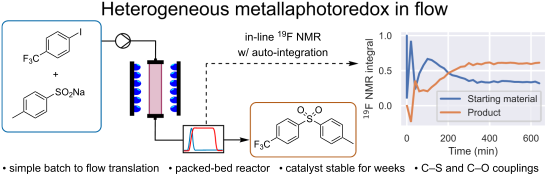
- ). With the in-line analytical data in hand, it was clear that the sample loop volume was too low to reach steady-state conditions. By switching to a continuous operation mode, we realized that a residence time of around 3 hours was necessary to reach steady-state conditions and the yield improved