


Search results
Search for "transesterification" in Full Text gives 114 result(s) in Beilstein Journal of Organic Chemistry.
Heck- and Suzuki-coupling approaches to novel hydroquinone inhibitors of calcium ATPase
Beilstein J. Org. Chem. 2019, 15, 971–975, doi:10.3762/bjoc.15.94
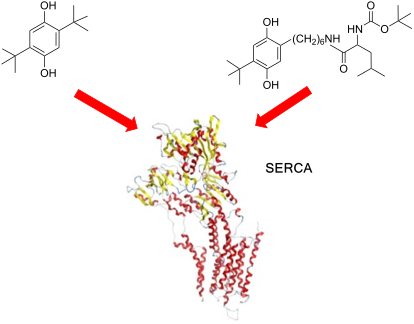
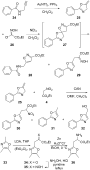
- synthetic route to BHQ analogues with a tether that could serve as the basis for future efforts aimed at the attachment of deactivating peptides. The rationale is analogous to the Denmeade group’s strategy for circumventing TG’s toxicity to healthy cells by selective transesterification of the ester group


A chemoenzymatic synthesis of ceramide trafficking inhibitor HPA-12
Beilstein J. Org. Chem. 2019, 15, 490–496, doi:10.3762/bjoc.15.42
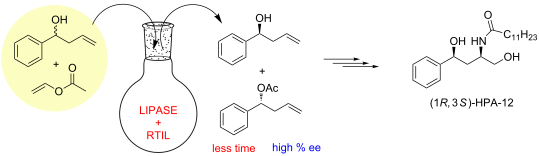
- least three times without any significant loss of enzyme activity. There are similar instances in literature [48] for a substantial slow-down of the transesterification reaction rate in organic solvents. This issue can be overcome by using room temperature ionic liquids, which not only substitute the


Syntheses and chemical properties of β-nicotinamide riboside and its analogues and derivatives
Beilstein J. Org. Chem. 2019, 15, 401–430, doi:10.3762/bjoc.15.36
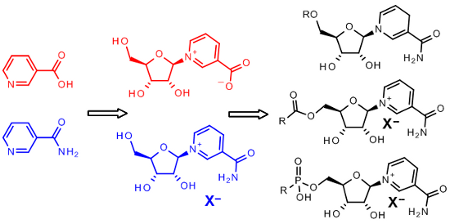
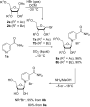
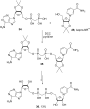
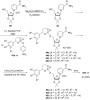
- corresponding N-alkyl-nicotinamides. A more reactive 2,3,5-tri-O-acetyl-β-phenyl nicotinate riboside 20 was therefore generated. To limit transesterification and favor amidation, trifluoroethanol was used as solvent instead of methanol, and as a result, amides 21 were prepared in good yields (Scheme 11). In










Synthesis of nonracemic hydroxyglutamic acids
Beilstein J. Org. Chem. 2019, 15, 236–255, doi:10.3762/bjoc.15.22
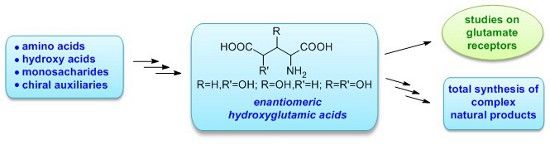
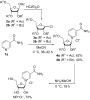
- final step transesterification of methyl to benzyl esters was successfully performed in the presence of titanium(IV) benzyloxide to afford dibenzyl esters 102 and 103, respectively. Their hydrogenolysis cleanly produced (2S,3S,4S)-104 and (2S,3S,4S)-105 [103]. From tartaric acids Four-carbon chirons


Gold-catalyzed ethylene cyclopropanation
Beilstein J. Org. Chem. 2019, 15, 67–71, doi:10.3762/bjoc.15.7
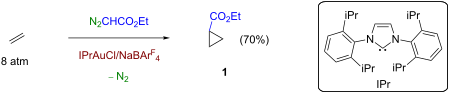
- ], electroreductive dehalogenation [7] and decarboxylation of diethyl 1,1-cyclopropyldicarboxylate [8]. Other methods include the transesterification of other alkyl cyclopropanecarboxylates [9] and the esterification with ethanol of the cyclopropanecarboxylic acid [10]. This product finds applications as lubricant


Synthesis of unnatural α-amino esters using ethyl nitroacetate and condensation or cycloaddition reactions
Beilstein J. Org. Chem. 2018, 14, 2846–2852, doi:10.3762/bjoc.14.263
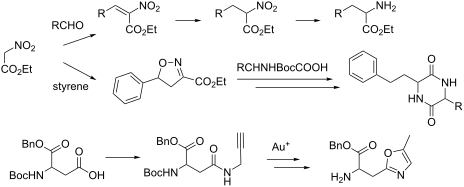
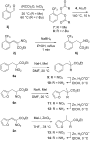
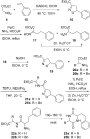
- 4.6 ppm and 3.4 ppm, but eluded our purification efforts). Moreover, one minute in refluxing isopropanol was found to be sufficient to complete the reduction especially for the fairly insoluble acrylate 2e, and also avoided most of the undesired transesterification byproducts that could form upon long



Copolymerization of epoxides with cyclic anhydrides catalyzed by dinuclear cobalt complexes
Beilstein J. Org. Chem. 2018, 14, 2779–2788, doi:10.3762/bjoc.14.255
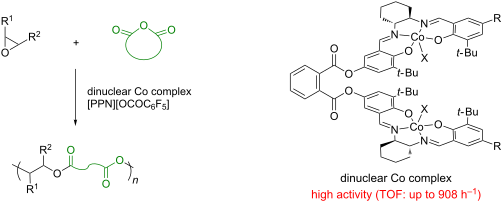
- , terminal group) + 23.0 (Na+ ion)]. Thus, the expected α-C6F5COO,ω-OH-terminated copolymer was obtained as a main product. As a minor distribution, the α-C6F5COO,ω-COOH-terminated copolymer was observed, while the cyclic polyester via intramolecular transesterification was not detected (Supporting


An overview on recent advances in the synthesis of sulfonated organic materials, sulfonated silica materials, and sulfonated carbon materials and their catalytic applications in chemical processes
Beilstein J. Org. Chem. 2018, 14, 2745–2770, doi:10.3762/bjoc.14.253
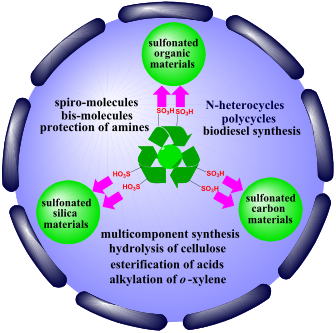
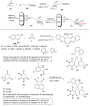
- , triazolo[1,2-a]indazoletrione derivatives, tetrasubstituted imidazole derivatives, aromatic/aliphatic sulfide derivatives, and N-substituted pyrrole derivatives. These catalysts were used in cellulose hydrolysis, cellobiose hydrolysis, production of fatty acid ethyl ester, the transesterification of
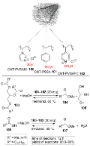
- sulfonated polymer-carbon nanotubes composites (CNT-P-SO3H) 100–102 were described as outstanding catalysts for liquid phase transesterification of triglycerides 103 with methanol. The catalysts were also used for the esterification of oleic acid (106) with methanol. The important feature of this study is
- that these reactions are considered as typical model reactions in biodiesel production. To highlight the effect of acid groups, authors investigated the imidazolyl and pyridinyl polymers grafted on MWCTs for the transesterification of triglyceride 103 and low desired product (ranging from 12.3 to 15.1









Spectroelectrochemical studies on the effect of cations in the alkaline glycerol oxidation reaction over carbon nanotube-supported Pd nanoparticles
Beilstein J. Org. Chem. 2018, 14, 1428–1435, doi:10.3762/bjoc.14.120
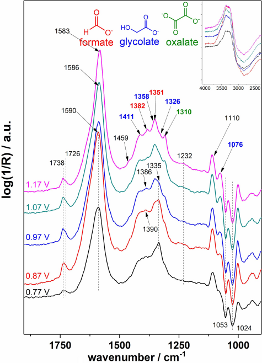
- from starch, sugar or oils and fats [2][3]. The transesterification of oils and fats produces glycerol as a byproduct, which requires further processing to reduce the costs of biofuels [4]. The comparably high energy density of glycerol of 5965 Wh L−1 assuming its total oxidation to CO2 suggests its


An efficient and facile access to highly functionalized pyrrole derivatives
Beilstein J. Org. Chem. 2018, 14, 884–890, doi:10.3762/bjoc.14.75
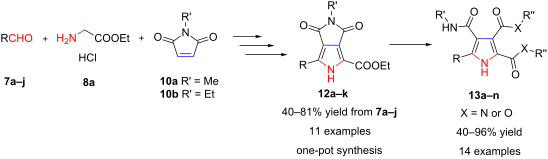
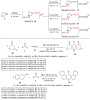
- with MeONa in MeOH or EtONa in EtOH at room temperature in moderate to good yields (40–66%, Scheme 3). It was noted that the ethyl ester in 12a was replaced by methyl ester through transesterification when 12a was treated with MeONa in MeOH to afford 13m. Therefore, this efficient protocol developed



Phosphodiester models for cleavage of nucleic acids
Beilstein J. Org. Chem. 2018, 14, 803–837, doi:10.3762/bjoc.14.68
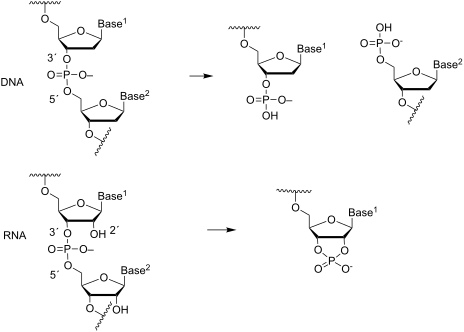
- the next one are cleaved by a variety of enzymes [1]. The phosphodiester bonds of DNA are hydrolyzed, depending on the enzyme, either to a 3´- or 5´-phosphate, whereas the bonds in RNA, with few exceptions (above all RNase H-catalyzed cleavages) undergo transesterification to a 2´,3´-cyclic phosphate
- with phosphodiester models are aimed at providing firm mechanistic understanding of the hydrolysis and transesterification reactions of nucleic acids. Such information is indispensable for critical evaluation of mechanistic proposals of more complicated enzymatic processes and for the development of
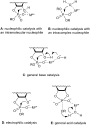
- reactions of RNA phosphodiester linkages at physiological pH (pH 6–8) are pH-independent isomerization to 2´,5´-bonds (red line in Figure 6) and hydroxide-ion-catalyzed transesterification to a 2´,3´-cyclic phosphate by departure of the 5´-linked nucleoside, followed by subsequent hydrolysis to a mixture of



Stimuli-responsive oligonucleotides in prodrug-based approaches for gene silencing
Beilstein J. Org. Chem. 2018, 14, 436–469, doi:10.3762/bjoc.14.32


Preparation of trinucleotide phosphoramidites as synthons for the synthesis of gene libraries
Beilstein J. Org. Chem. 2018, 14, 397–406, doi:10.3762/bjoc.14.28
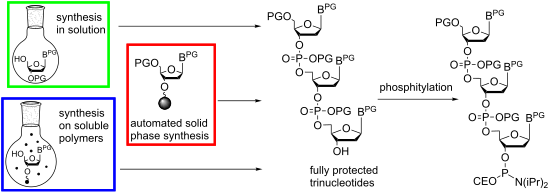
- released by a transesterification mechanism [35]. The 3'-start nucleoside is bound to one of the primary hydroxy groups of CPG-linked glycerol via an H-phosphonate linkage (Figure 5B). The removal of the TBDMS group from the remaining primary alcohol of glycerol induces the spontaneous cleavage of the H
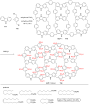
- anchor (A) and by a transesterification mechanism (B). Release of the trinucleotide from the support under reductive conditions. Phosphitylation of trimers. Reaction conditions, in particular the choice of the phosphitylation reagent, are dependent on the nature of the protecting group at the


Synthesis of naturally-derived macromolecules through simplified electrochemically mediated ATRP
Beilstein J. Org. Chem. 2017, 13, 2466–2472, doi:10.3762/bjoc.13.243
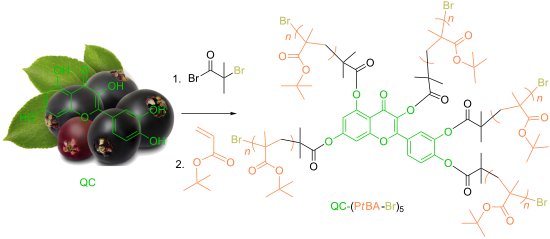
- macroinitiator was received for the first time by the transesterification reaction of quercetin with 2-bromoisobutyryl bromide. In accordance with the “grafting from” strategy, a naturally-occurring star-like polymer with a polar 3,3',4',5,6-pentahydroxyflavone core and hydrophobic poly(tert-butyl acrylate
- -defined star-like polymers, consisting of a quercetin core and hydrophobic PtBA arms with narrow MWDs by ATRP under multiple-step potential electrolysis conditions. Results and Discussion A flavonoid-based macromolecule initiator with 5 Br atoms (QC-Br5) was synthesized by the transesterification reaction


Phosphonic acid: preparation and applications
Beilstein J. Org. Chem. 2017, 13, 2186–2213, doi:10.3762/bjoc.13.219
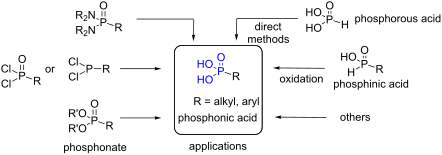
- phosphonate involves trialkyl phosphite, the subsequent dealkylation of dialkyl phosphonate under mild conditions was of a great importance. The group of C. E. McKenna reported in 1977 the use of bromotrimethylsilane as a reagent that permitted an efficient transesterification of dialkyl phosphonate to bis
- was almost quantitative. Other studies indicated that this reaction can be also applied to diisopropyl phosphonate, or di-tert-butyl phosphonate leading to the conclusion that all dialkyl phosphonates can be dealkylated by the transesterification followed by a methanolysis or hydrolysis subsequent


Regiodivergent condensation of 5-alkoxycarbonyl-1H-pyrrol-2,3-diones with cyclic ketazinones en route to spirocyclic scaffolds
Beilstein J. Org. Chem. 2017, 13, 2179–2185, doi:10.3762/bjoc.13.218
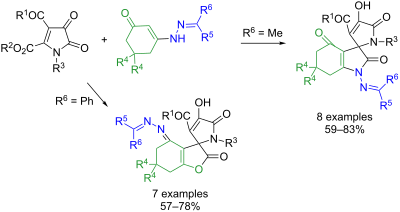
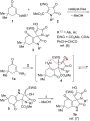
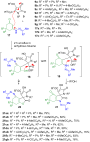
- involving Michael addition followed by intramolecular transesterification. Remarkably, the resulting bridged products 12 have reversed regiochemistry as compared to the earlier-described cycloadducts 5 (Scheme 1). It should also be pointed out that all of these products were formed as single 10-endo
- ]. Keeping this in mind we decided to test the reactivity of ketazinones 17 that were obtained via condensation of cyclohexanediones 8 with hydrazone of acetophenone. We anticipated the formation of spirolactones 20 in this process, resulting from intramolecular transesterification involving the enol moiety





Mechanochemical synthesis of small organic molecules
Beilstein J. Org. Chem. 2017, 13, 1907–1931, doi:10.3762/bjoc.13.186
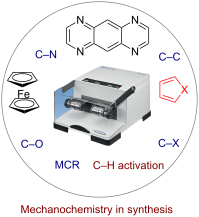
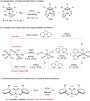
- ) technique for the synthesis of dialkyl carbonates [90]. Using potassium carbonate, alkyl halide and 2 equiv of phase-transfer catalyst 18-crown-6 yielded dialkyl carbonate in 74%. However, in absence of 18-crown-6 the yield was only 2% at 17 h (Scheme 20). Transesterification is a synthetic approach mostly
- being used for making higher homologous esters from the simpler ones. Ranu and co-workers developed simple method for transesterification under mechanomilling [91]. The mixture of ester and alcohols were adsorbed on the surface of basic alumina and followed by milling of the materials for 2–3 h led to
- dialkyl carbonates [90]. Mechanochemical transesterification reaction using basic Al2O3 [91]. Mechanochemical carbamate synthesis [92]. Mechanochemical bromination reaction using NaBr and oxone [96]. Mechanochemical aryl halogenation reactions using NaX and oxone [97]. Mechanochemical halogenation




The chemistry and biology of mycolactones
Beilstein J. Org. Chem. 2017, 13, 1596–1660, doi:10.3762/bjoc.13.159


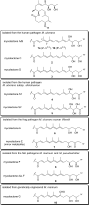


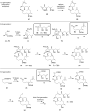


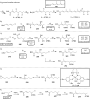


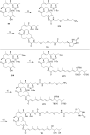

Synthesis of oligonucleotides on a soluble support
Beilstein J. Org. Chem. 2017, 13, 1368–1387, doi:10.3762/bjoc.13.134
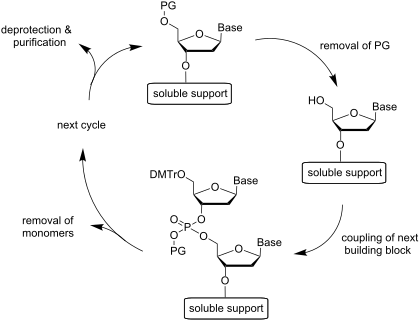
- commercially available building blocks turned out to be too hydrophobic to allow precipitation of the support-bound oligonucleotides from MeOH. The 1-methoxy-1-methylethyl group could be removed quantitatively as a dimethyl acetal of acetone upon acid-catalyzed transesterification in MeOH. The 3'-terminal






An improved preparation of phorbol from croton oil
Beilstein J. Org. Chem. 2017, 13, 1361–1367, doi:10.3762/bjoc.13.133
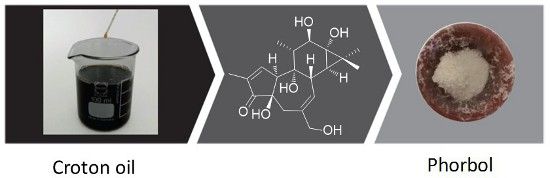
- crystallization step. A solution for these issues is provided, suggesting that the poor-reproducibility of croton oil-based anti-inflammatory assays are the result of poor quality and/or inconsistent composition of croton oil. Keywords: croton oil; diterpenoids; natural products; phorbol; transesterification
- of phorbol from the transesterification reaction mixture, a viscous oil for the presence of glycerol, that requires extended periods (four weeks according to ref. [6]). Furthermore, the unstable ethanol solvate has to be transformed into a more stable hydrate by recrystallization from hot water, a
- , problematic for the multigram isolation of phorbol due to the extensive handling of the toxic croton oil and the ultra-toxic mixture of phorbol diesters obtained in the acidic transesterification step. Furthermore, the tritylation of the crude mixture of phorbol diesters suffered from interference from


First total synthesis of kipukasin A
Beilstein J. Org. Chem. 2017, 13, 855–862, doi:10.3762/bjoc.13.86
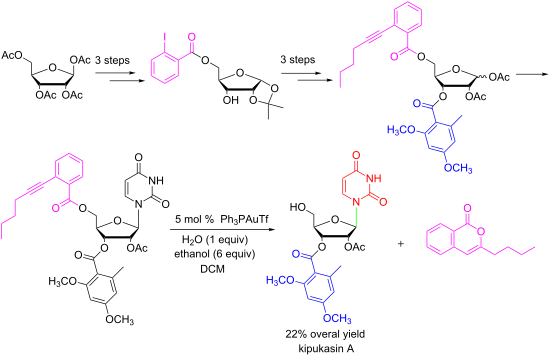
- ’-transesterification is inevitable to occur in nucleosides [19][20][21]. The synthetic route would be lengthy and cumbersome. Therefore, a practical total synthesis is in high demand to facilitate the preparation of other kipukasins and their analogues. The retrosynthetic analysis is shown in Figure 2 (path b
- . Various spectral analyses (NMR, HPLC) showed no evidence that 2,3-O-transesterification occurred during the esterification reaction. After cleavage of the acetonide group with acetic acid/acetic anhydride/H2SO4, the key glycosylation donor 16 was obtained in 74% yield as a mixture of isomers (α/β = 1:8


Cyclodextrins tethered with oligolactides – green synthesis and structural assessment
Beilstein J. Org. Chem. 2017, 13, 779–792, doi:10.3762/bjoc.13.77
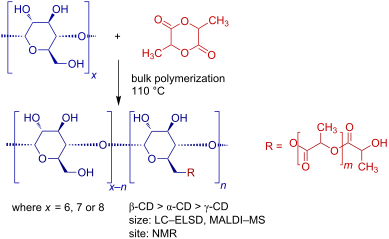
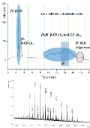
- oligomers with odd number of monomer units could be observed as well. These oligomer species with odd number of lactates resulted from intramolecular and/or intermolecular transesterification reactions and are in lower amount, when compared with the oligomers containing even number of monomers. This
- signifies that the predominance of transesterification is rather low in the employed reaction conditions. The presented spectrum was measured directly from the HPLC collected fraction with rather low concentration of products, thus resulting in a poor spectrum quality. The f7 fraction (Figure 1 – LC–ELSD
- number of lactate monomer units. These species could be formed as a result of transesterification reactions (intra- or intermolecular), which may occur in the melt reaction system. The presence of PLA homopolymers was also observed, their corresponding m/z being calculated by the following equation: m/z




Synthesis of structurally diverse 3,4-dihydropyrimidin-2(1H)-ones via sequential Biginelli and Passerini reactions
Beilstein J. Org. Chem. 2017, 13, 54–62, doi:10.3762/bjoc.13.7
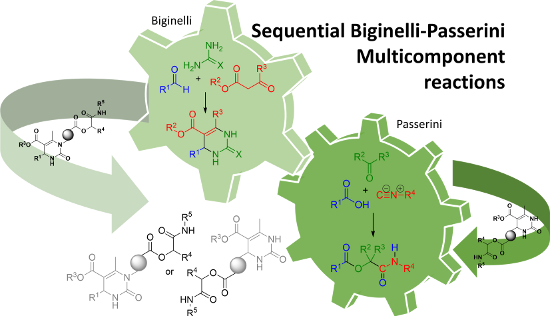
- performed first, in order to avoid undesired transesterification reactions (of the Passerini product) due to the acidic conditions of the Biginelli reaction [33]. A general challenge, which has to be faced in this context, is the choice of solvent and the selection of bifunctional components (which can



Electron-transfer-initiated benzoin- and Stetter-like reactions in packed-bed reactors for process intensification
Beilstein J. Org. Chem. 2016, 12, 2719–2730, doi:10.3762/bjoc.12.268
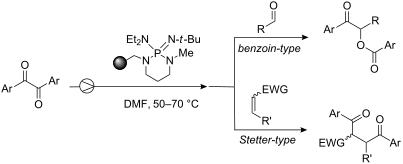
- homogeneous conditions and their subsequent utilization in transesterification and amidation processes by the reaction telescoping approach [12]. Similarly, the group of Brown reported on the oxidative esterification and amidation of aldehydes in undivided microfluidic electrolysis cells mediated by
- reaction setup [22][23][24]. An integrated flow system for the synthesis of biodiesel employing an uninterrupted sequence of two fixed-bed reactors packed with a supported acid for esterification of free fatty acids and with an immobilized imidazolidene catalyst for transesterification has been recently


Synthesis of medronic acid monoesters and their purification by high-performance countercurrent chromatography or by hydroxyapatite
Beilstein J. Org. Chem. 2016, 12, 2145–2149, doi:10.3762/bjoc.12.204
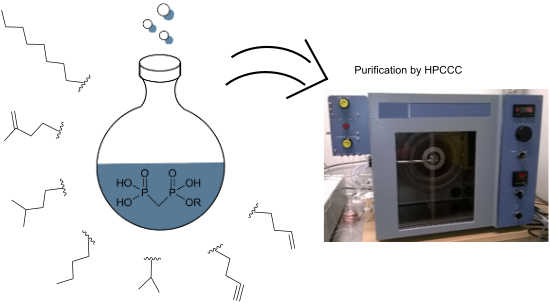
- ] and medronic acid [30] can also be used as the starting material for the synthesis of mixed tetraesters. If the starting point is a tetraester of medronic acid, several routes can be taken, for example transesterification [31]. In addition, after dealkylation, the corresponding triester can be





