


Search results
Search for "α-amino acids" in Full Text gives 89 result(s) in Beilstein Journal of Organic Chemistry.
Approaches to α-amino acids via rearrangement to electron-deficient nitrogen: Beckmann and Hofmann rearrangements of appropriate carboxyl-protected substrates
Beilstein J. Org. Chem. 2012, 8, 1393–1399, doi:10.3762/bjoc.8.161

- confirmation of final products was conducted with X-ray diffraction in selected cases. The final N-benzoyl and N-(methoxycarbonyl) products are α-amino acids with both carboxyl and amino protection; hence, they are of great interest in peptide synthesis. Keywords: amino acid; Beckmann rearrangement; Hofmann
- rearrangement; orthoacetate; trioxaadamantane; Introduction The synthesis of α-amino acids remains of continuing interest for at least two reasons: Firstly, obtaining a particular amino acid via protein hydrolysis implies its separation from other amino acids (and their possible wastage, particularly on large
- challenges regarding chiral synthesis. The challenges in the synthesis of α-amino acids essentially stem from the fact that the methods which are normally employed for the independent synthesis of the carboxyl and amine functionalities, are often mutually incompatible. Thus, for example, the oxidation of


Ratiometric fluorescent probe for enantioselective detection of D-cysteine in aqueous solution
Beilstein J. Org. Chem. 2011, 7, 1508–1515, doi:10.3762/bjoc.7.176

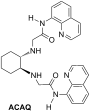
- -mercaptoamino group present in Cys. When the thiol group in Hcy is methylated, as in methionine, its power to bind to the sensor is completely lost. As none of the bifunctional α-amino acids caused any fluorescence quenching of the probe, the presence of β-mercaptoamino moiety in cysteine may confer a




Synthesis of enantiomerically enriched (R)-13C-labelled 2-aminoisobutyric acid (Aib) by conformational memory in the alkylation of a derivative of L-alanine
Beilstein J. Org. Chem. 2011, 7, 1304–1309, doi:10.3762/bjoc.7.152

- product was established. Keywords: amino acid; asymmetric synthesis; conformational memory; isotopic label; isotopomer; quaternary stereogenic centre; Introduction In connection with our work on the control of conformation in helical foldamers [1][2][3] built from quaternary α-amino acids [4][5], we


A straightforward approach towards combined α-amino and α-hydroxy acids based on Passerini reactions
Beilstein J. Org. Chem. 2011, 7, 1299–1303, doi:10.3762/bjoc.7.151

- obtained were better with DMP (82–93%), while under Swern conditions the yields were in the range of 75 ± 3%. With these γ-oxo-α-amino acids 2 in hand, we investigated the Passerini reactions under neat conditions with acetic acid as the (liquid) acidic component and isocyano acetates as the reactive


Photoinduced electron-transfer chemistry of the bielectrophoric N-phthaloyl derivatives of the amino acids tyrosine, histidine and tryptophan
Beilstein J. Org. Chem. 2011, 7, 518–524, doi:10.3762/bjoc.7.60
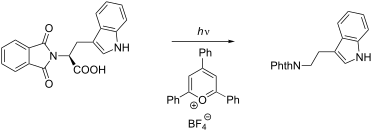
- transfer product 2. On the other hand, phthaloyl derivatives of C-unprotected α-amino acids (e.g., derivatives of Gly, Ala, Val, Ile, Phe) undergo efficient photodecarboxylation to yield the corresponding amines, β-amino acids are converted to benzazepines, and γ-amino acids to benzopyrrolizidines (Scheme


A two step synthesis of a key unit B precursor of cryptophycins by asymmetric hydrogenation
Beilstein J. Org. Chem. 2011, 7, 243–245, doi:10.3762/bjoc.7.32
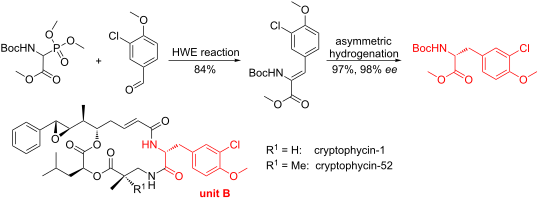
- modified α-amino acids, such as the classical Schöllkopf-method [10] or catalytic approaches [11][12]. The unit B precursor of cryptophycin is a phenylalanine derivative. An asymmetric hydrogenation approach for the synthesis of such α-amino acids is well-established [12]. In the first step of the


Anthracene appended pyridinium amide–urea conjugate in selective fluorometric sensing of L-N-acetylvaline salt
Beilstein J. Org. Chem. 2010, 6, 1211–1218, doi:10.3762/bjoc.6.139

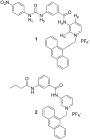
- fluorometric response with L-N-acetylvaline and L-N-acetylalanine salts in CH3CN in contrast to the other salts of L-N-acetyl α-amino acids and (S)-α-hydroxy acids studied. Upon complexation of the tetrabutylammonium salt of L-N-acetylvaline, the emission of 1 increases accompanied by the formation of a new
- ; pyridinium amide–urea conjugate; Introduction The design and synthesis of artificial receptors capable of recognizing α-hydroxy and N-acetyl-α-amino acid carboxylates (i.e., salts of α-amino acids) is an active area of interest in supramolecular chemistry due to the biological significance and practical
- carboxylate functionalities. Examples in this domain are known in the literature [8][9][10][11][12][13][14][15]. To overcome the solubility problem, α-amino acids are sometimes converted into their N-acetyl derivatives which makes their recognition easier in organic solvents [16][17][18][19], as these are non



Expanding the gelation properties of valine-based 3,5-diaminobenzoate organogelators with N-alkylurea functionalities
Beilstein J. Org. Chem. 2010, 6, 1015–1021, doi:10.3762/bjoc.6.114
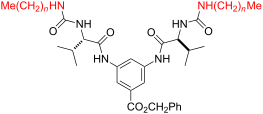
- Synthesis In our earlier report it was shown that, amongst the many α-amino acids used, valine-based 1 (R = CHMe2) possessed much better organogelating properties. Hence in the present study we focused only on valine derivatives 2. A homologous series of N-alkylurea side chain derivatives 2 (n = 3–6, 9, 10


Synthesis of glycosylated β3-homo-threonine conjugates for mucin-like glycopeptide antigen analogues
Beilstein J. Org. Chem. 2010, 6, No. 47, doi:10.3762/bjoc.6.47
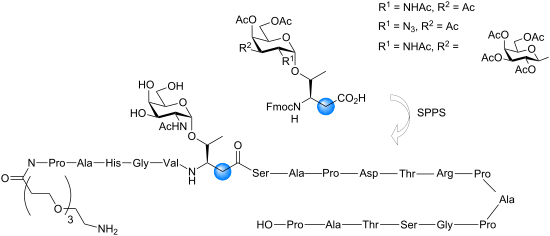
- structural modifications assuming that the conformations remain similar to those of the natural antigens. In this respect, hybrid peptides in which β3-homo-amino acids are used to strategically replace α-amino acids might be of interest as platforms for carbohydrate-based vaccines. That is because such mixed
- -glycosidically linked to the side chain of Fmoc-β3hThr-OH have been prepared by Arndt–Eistert homologation of the corresponding glycosylated α-amino acids 1a and 1b. The resulting β3hThr glycoconjugates are valuable antigen mimetics with potentially enhanced chemical and metabolic stability. They might serve as


The C–F bond as a conformational tool in organic and biological chemistry
Beilstein J. Org. Chem. 2010, 6, No. 38, doi:10.3762/bjoc.6.38
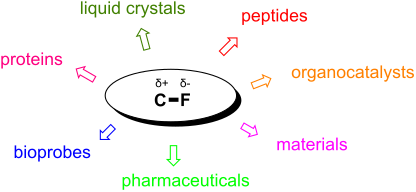
- -CH2- group relative to natural α-amino acids (Figure 18). Despite the increased conformational freedom of β-peptides, they can nevertheless assemble into well-defined secondary structures such as helices, sheets and turns [53]. Certain β-peptidic structural motifs have been developed as effective









Molecular recognition of organic ammonium ions in solution using synthetic receptors
Beilstein J. Org. Chem. 2010, 6, No. 32, doi:10.3762/bjoc.6.32
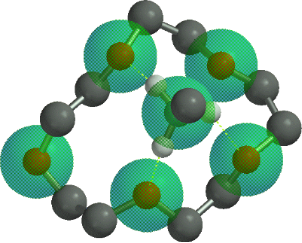
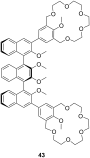
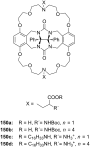
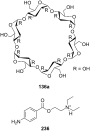
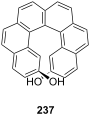
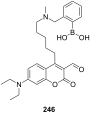
- similar binaphthyl crown recognition systems containing phenylboronic acid 40a and 2,4-dinitrophenylurea 40b as lariat parts [178] (Figure 23). Host 40a had 30% extraction efficiency for γ-aminobutyric acid (GABA) in solid–liquid extraction in DMSO, but showed only much lower selectivities for α-amino
- acids: Boc-R-Lys-OH (18.5%), Boc-S-Lys-OH (14.1%) and H-R-Asp-NH2 (8.2%), H-S-Asp-NH2 (4.3%). The chromogenic host 40b discriminated amino acids by their length. After extraction, the color of the solvent changed from colorless to yellow due to increased absorbance around 460 nm. The extent of the color

































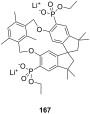
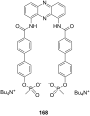

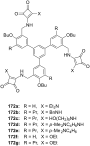
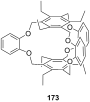














2-Phenyl- tetrahydropyrimidine- 4(1H)-ones – cyclic benzaldehyde aminals as precursors for functionalised β2-amino acids
Beilstein J. Org. Chem. 2009, 5, No. 43, doi:10.3762/bjoc.5.43

- biosynthesis) [16], and fusaristatins A and B [17]. β3-Homoamino acids can be synthesised by Arndt–Eistert homologation of the corresponding proteinogenic α-amino acids [18][19][20]. Contrary to that, no procedure is known yet to enantiospecifically convert α-amino acids into their β2-homologues – although
- auxiliary cleavage or limited substrate tolerance [10][23][24]. Diastereoselective total synthesis starting from N-acylated Evans’ type auxiliaries turned out to be the only universal route to β2-analogues of the 20 most common proteinogenic α-amino acids. (For a recent overview on β2-amino acid syntheses


Synthesis of new Cα-tetrasubstituted α-amino acids
Beilstein J. Org. Chem. 2009, 5, No. 5, doi:10.3762/bjoc.5.5

- Andreas A. Grauer Burkhard Konig Institute for Organic Chemistry, University of Regensburg, Universitätsstrasse 31, 93040 Regensburg, Germany 10.3762/bjoc.5.5 Abstract Cα-Tetrasubstituted α-amino acids are important building blocks for the synthesis of peptidemimetics with stabilized secondary
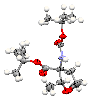
- structure, because of their ability to rigidify the peptide backbone. Recently our group reported a new class of cyclic Cα-tetrasubstituted tetrahydrofuran α-amino acids prepared from methionine and aromatic aldehydes. We now report the extension of this methodology to aliphatic aldehydes. Although such
- aldehydes are prone to give aldol products under the reaction conditions used, we were able to obtain the target cyclic amino acids in low to moderate yields and in some cases with good diastereoselectivity. Keywords: amino acid synthesis; Cα-tetrasubstituted α-amino acids; unnatural amino acids


Stereoselective synthesis of (2S,3S,4Z)-4-fluoro- 1,3-dihydroxy- 2-(octadecanoylamino)octadec- 4-ene, [(Z)-4-fluoroceramide], and its phase behavior at the air/water interface
Beilstein J. Org. Chem. 2008, 4, No. 12, doi:10.3762/bjoc.4.12

- building block has already been used for the preparation of several γ-fluoro-α-amino acids [31]. This methodology, utilizing the corresponding ethyl iminoglycinate instead of 4, was previously applied for the synthesis of natural D-erythro-sphingosine (1a) [32], deuterium and tritium labeled sphingosines





