


Search results
Search for "active sites" in Full Text gives 84 result(s) in Beilstein Journal of Organic Chemistry.
Simple and rapid hydrogenation of p-nitrophenol with aqueous formic acid in catalytic flow reactors
Beilstein J. Org. Chem. 2013, 9, 1156–1163, doi:10.3762/bjoc.9.129
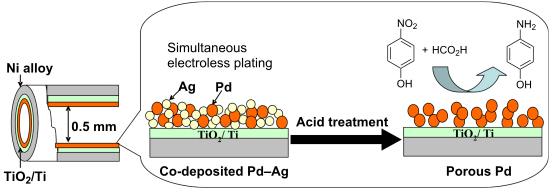
- substrates, with which a much higher surface-area-to-volume ratio can be attained. The total amount of Pd present in the tube inner layer does not represent the concentration of active catalyst, since only surface metal atoms work as active sites. Therefore we estimated the number of surface Pd atoms using


Complete σ* intramolecular aromatic hydroxylation mechanism through O2 activation by a Schiff base macrocyclic dicopper(I) complex
Beilstein J. Org. Chem. 2013, 9, 585–593, doi:10.3762/bjoc.9.63
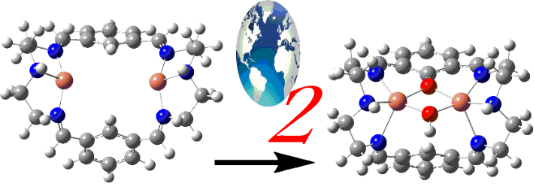
- in mind the key role of dioxygen in biology, in particular toward Cu and Fe metal centers, being involved in the catalytic cycle of proteins, including dinuclear copper-active sites, such as hemocyanin, tyrosinase and catechol oxidases [1][2][3][4][5][6][7], either transporting or activating O2, its


Spin state switching in iron coordination compounds
Beilstein J. Org. Chem. 2013, 9, 342–391, doi:10.3762/bjoc.9.39







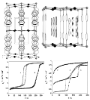
![[Graphic 1]](/bjoc/content/inline/1860-5397-9-39-i3.png?max-width=637&scale=1.18182) ) modes versus the anion volu...
) modes versus the anion volu...






A chemist and biologist talk to each other about caged neurotransmitters
Beilstein J. Org. Chem. 2013, 9, 64–73, doi:10.3762/bjoc.9.8
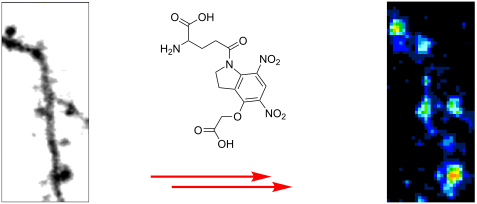
- active molecules to be synthesized with photochemically protecting groups at their active sites were nucleotides [1][2]. Two reports appeared in 1977 and 1978 describing the synthesis of ortho-nitrobenzyl derivatives of cyclic-AMP [1] and ATP [2]. The photolabile cAMP derivative was one member of a


The application of a monolithic triphenylphosphine reagent for conducting Appel reactions in flow microreactors
Beilstein J. Org. Chem. 2011, 7, 1648–1655, doi:10.3762/bjoc.7.194
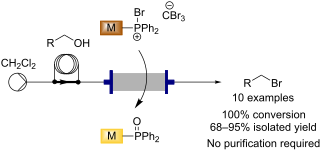
- left on the monolith. This bromine could be present in hard-to-access active sites within the polymeric structure of the monolith, but could also be accounted for by some of the late intermediates in pathway B (10–15 in Scheme 1). The conversion of a particular substrate did not decrease with continued


Anion–π interactions influence pKa values
Beilstein J. Org. Chem. 2011, 7, 320–328, doi:10.3762/bjoc.7.42
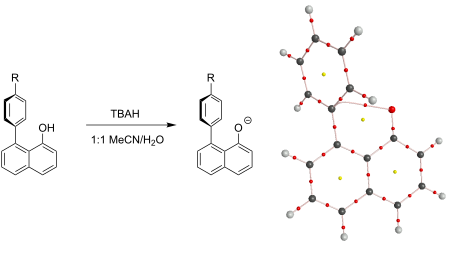
- model systems and in enzyme active sites, in which the interacting species are brought in close proximity to one another, these effects are often amplified because of the reduction of the contribution of entropic factors. This is recognised as a proximity effect and can be measured by an effective


Stereoselectivity of supported alkene metathesis catalysts: a goal and a tool to characterize active sites
Beilstein J. Org. Chem. 2011, 7, 13–21, doi:10.3762/bjoc.7.3
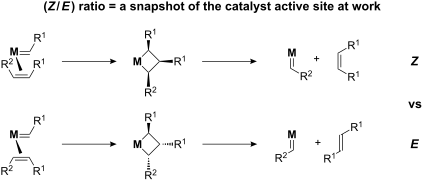
- Abstract Stereoselectivity in alkene metathesis is a challenge and can be used as a tool to study active sites under working conditions. This review describes the stereochemical relevance and problems in alkene metathesis (kinetic vs. thermodynamic issues), the use of (E/Z) ratio at low conversions as a
- tool to characterize active sites of heterogeneous catalysts and finally to propose strategies to improve catalysts based on the current state of the art. Keywords: active sites; metathesis; stereoselectivity; supported catalysts; Introduction Achieving high selectivity and, in particular
- (styrenyl systems or alkenes with electron withdrawing substituents) [19][20][21]. Here the discussion will focus on the stereoselectivity of alkene metathesis in order to delineate the current state of the art in the case of heterogeneous catalysts and show how it can be used to characterize active sites




Flow through reactors for organic chemistry: directly electrically heated tubular mini reactors as an enabling technology for organic synthesis
Beilstein J. Org. Chem. 2009, 5, No. 70, doi:10.3762/bjoc.5.70
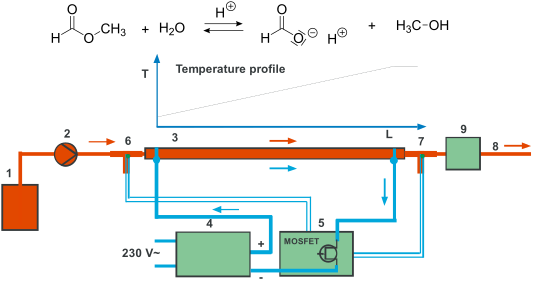
- . We chose a polymer catalyst because polymers are well defined materials which can be functionalized easily with many active groups. This leads to a wide variety of materials, including composites, suitable as catalysts or for anchoring active sites leading to a large number of composites [17][18][19


Synthesis and enzymatic evaluation of 2- and 4-aminothiazole- based inhibitors of neuronal nitric oxide synthase
Beilstein J. Org. Chem. 2009, 5, No. 28, doi:10.3762/bjoc.5.28

- useful nNOS-selective inhibitors is a difficult task as the substrate for all three isoforms is L-arginine, and so they have similar active sites. In recent years, we have developed several potent and highly selective inhibitors of nNOS that have solved this problem by exploiting subtle differences among


Other Beilstein-Institut Open Science Activities



