


Search results
Search for "aldol condensation" in Full Text gives 84 result(s) in Beilstein Journal of Organic Chemistry.
Catalyst-free and solvent-free Michael addition of 1,3-dicarbonyl compounds to nitroalkenes by a grinding method
- Zong-Bo Xie,
- Na Wang,
- Ming-Yu Wu,
- Ting He,
- Zhang-Gao Le and
- Xiao-Qi Yu
Beilstein J. Org. Chem. 2012, 8, 534–538, doi:10.3762/bjoc.8.61

- ], Aldol condensation [18], etc. [1][2][19][20]. The Michael addition is one of the most fundamental and important reactions for the formation of carbon–carbon bonds and carbon–heteroatom bonds in organic synthesis. The conjugate Michael addition of carbon nucleophiles to electron deficient nitroalkenes is

Graphical Abstract

Scheme 1: Michael addition under catalyst- and solvent-free conditions.

Figure 1: The grinding effect of different grinding aids. Conditions: β-nitrostyrene (14.9 mg, 0.1 mmol), 1,3...

Figure 2: Yields of the model reaction in different solvents. Conditions: β-nitrostyrene (14.9 mg, 0.1 mmol),...

Figure 3: The effect of the amount of quartz sand on the yield. Conditions: β-nitrostyrene (14.9 mg, 0.1 mmol...
Syntheses and applications of furanyl-functionalised 2,2’:6’,2’’-terpyridines
- Jérôme Husson and
- Michael Knorr
Beilstein J. Org. Chem. 2012, 8, 379–389, doi:10.3762/bjoc.8.41

- [14]. This strategy was also successfully applied to the preparation of some furanyl-substituted terpyridines. The synthetic sequence starts from furanyl aldehydes 1–3 and 2-acetylpyridine (4). The first step is a base-mediated aldol-condensation that yields the α,β unsaturated ketones 5–7. Reacting

Graphical Abstract

Figure 1: Structure and atomic numbering of 2,2’:6’,2’’-terpyridines.

Scheme 1: Synthesis of furanyl-substituted terpyridines 12–14 by using Kröhnke’s method.

Scheme 2: Synthesis of terpyridines under solvent-free conditions.

Scheme 3: Preparation of 4,4′,4′′-trisubstituted terpyridine containing carboxylate moieties.

Scheme 4: Synthetic pathway for the preparation of a furanyl-functionalised quinquepyridine.

Scheme 5: Utilization of an iminium salt in the preparation of a furanyl-substituted tpy.

Figure 2: Chemical structure of U- and S-shaped isomers.

Scheme 6: Preparation of an asymmetric furanyl-substituted terpyridine.

Scheme 7: Synthesis of tpy by Stille cross-coupling reaction.

Scheme 8: Oxidation of the furan ring of furanyl-substituted terpyridines.
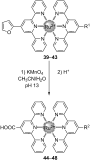
Scheme 9: Direct oxidation of a furan ring attached on Ru(II) tpy complexes.

Figure 3: Example of polyoxometalate frameworks functionalised with tpy ligands and tpy-complex (reprinted wi...

Scheme 10: Synthetic pathway to europium(III) and samarium(III) chelates 56 and 57.
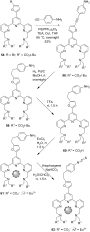
Scheme 11: Synthetic pathway to prepare thiocyanato-functionalised tpys as potential biomolecule-labelling age...
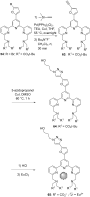
Scheme 12: Synthetic sequence envisioned for biomolecules labelling by click-chemistry.

Figure 4: Structure of pyrrolyl (66), thienyl (67) and bithienyl (68)-substituted complexes analogous to comp...
Aldol elaboration of 4,5,6,7-tetrahydroisoxazolo[4,3-c]pyridin-4-ones, masked precursors to acylpyridones
- Raymond C. F. Jones,
- Abdul K. Choudhury,
- James N. Iley,
- Mark E. Light,
- Georgia Loizou and
- Terence A. Pillainayagam
Beilstein J. Org. Chem. 2012, 8, 308–312, doi:10.3762/bjoc.8.33

- MK7 6AA, United Kingdom EPSRC National Crystallography Service, School of Chemistry, University of Southampton, Highfield, Southampton, SO17 1BJ, United Kingdom 10.3762/bjoc.8.33 Abstract A core 4,5,6,7-tetrahydroisoxazolo[4,3-c]pyridine-4-one scaffold is elaborated at C-3(Me) by base-mediated aldol
- condensation to give new 3-alkenyl-4,5,6,7-tetrahydroisoxazolo[4,3-c]pyridine-4-ones, which are masked forms related to the acylpyridone natural products. Keywords: aldol reaction; fused-ring systems; heterocycles; isoxazole; metalation; pyridone; Introduction The 3-acyl-4-hydroxypyridin-2-one moiety 1

Graphical Abstract

Figure 1: The 3-acyl-4-hydroxypyridin-2-one motif, example natural products and the isoxazolopyridone scaffol...

Scheme 1: Aldol reactions of tetrahydroisoxazolopyridone 6. Reagents: (i) LDA–TMEDA, RCHO, THF, −20 °C; (ii) ...

Figure 2: X-ray crystal structure of 3-(2-phenylethenyl)-4,5,6,7-tetrahydroisoxazolo[4,3-c]pyridin-4-one (8a) ...

Figure 3: Ilicicolin H as an example of a 3-decalinoyl-4-hydroxypyridin-2-one metabolite.

Scheme 2: Retrosynthetic analysis of a model 3-decalinyl-4,5,6,7-tetrahydroisoxazolopyridone 10.

Scheme 3: Synthesis of triene 11. Reagents: (i), LDA, propenal, THF, −78 °C; (ii), LiAlH4, THF, 20 °C (75%); ...
Coupled chemo(enzymatic) reactions in continuous flow
- Ruslan Yuryev,
- Simon Strompen and
- Andreas Liese
Beilstein J. Org. Chem. 2011, 7, 1449–1467, doi:10.3762/bjoc.7.169
- formate decarboxylase (BFD) catalyzing the (S)-selective aldol condensation of benzaldehyde (33) and acetaldehyde (32) with formation of (S)-2-hydroxy-1-phenyl-propanone (34) (Scheme 11). In the second vessel the intermediate (S)-34 was asymmetrically reduced by recLb-alcohol dehydrogenase (ADH) and the
Graphical Abstract

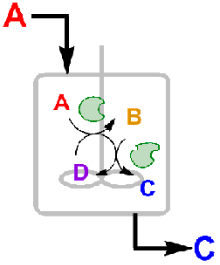
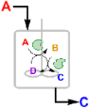
Figure 1: Metabolic pathways in a living cell as an example of efficient coupled-reaction processes. A: Subst...

Figure 2: Four generations of biotransformations. I: Single-reaction processes; II: Single-reaction processes...

Scheme 1: Production of L-leucine (3) in a continuously operating enzyme membrane reactor (EMR). E1: L-Leucin...

Scheme 2: Production of D-mandelic acid (5) in a continuously operating enzyme membrane reactor. E1: D-(−)-Ma...

Scheme 3: Simultaneous synthesis of gluconic acid (9) and glutamic acid (8) in a continuously operated membra...

Scheme 4: Production of L-tert-leucine (11) in a continuously operated enzyme membrane reactor equipped with ...

Scheme 5: Continuous oxidation of lactose (12) to lactobionic acid (13) in a dynamic membrane-aerated reactor...

Scheme 6: Production of N-acetylneuraminic acid (17) in a continuously operated enzyme membrane reactor. E1: ...

Scheme 7: Chemo-enzymatic epoxidation of 1-methylcyclohexene (18) in a packed-bed reactor (PBR) containing No...

Scheme 8: Continuous production of (R)-1-phenylethyl propionate (24) by dynamic kinetic resolution of (rac)-1...

Scheme 9: Synthesis of D-xylulose (28) from D,L-serine (26) and D,L-glyceraldehyde (25) in a continuously ope...

Scheme 10: Continuous production of L-alanine (31) from fumarate (29) in a two-stage enzyme membrane reactor. ...

Scheme 11: Continuous synthesis of 1-phenyl-(1S,2S)-propanediol (35) in a cascade of two enzyme membrane react...

Scheme 12: Production of a dipeptide 39 in a cascade of two continuously operated membrane reactors. E1: Carbo...

Scheme 13: Continuous production of GDP-mannose (43) from mannose 1-phosphate (40) in a cascade of two enzyme ...

Scheme 14: Continuous solvent-free chemo-enzymatic synthesis of ethyl (S)-3-(benzylamino)butanoate (48) in a s...

Scheme 15: Continuous chemo-enzymatic synthesis of grossamide (52) in a cascade of packed-bed reactors. E: Per...

Scheme 16: Chemo-enzymatic synthesis of 2-aminophenoxazin-3-one (56) in a cascade of continuously operating pa...

Scheme 17: Continuous conversion of 3-phospho-D-glycerate (57) into D-ribulose 1,5-bisphosphate (58) in a casc...

Scheme 18: Continuous hydrolysis of 4-cyanopyridine (59) to isonicotinic acid (61) in a cascade of two packed-...

Scheme 19: Continuous fermentative production of ethanol (64) from hardwood lignocellulose (62) in a stirred-t...

Scheme 20: Production of hydrogen by anaerobic fermentation of glucose (7) using Clostridium acetobutylicum ce...

Scheme 21: Continuous production of (2R,5R)-hexanediol (67) in an enzyme membrane reactor containing whole cel...

Scheme 22: Synthesis of L-phenylalanine (69) in a continuously stirred tank reactor equipped with a hollow-fib...

Scheme 23: Continuous epoxidation of 1,7-octadiene (70) to (R)-7-epoxyoctene (72) by a strain of Pseudomonas o...

Scheme 24: Oxidation of styrene (73) to (S)-styrene oxide (74) in a continuously operated biofilm tube reactor...

Scheme 25: Reduction of estrone (75) to β-estradiol (76) by Saccharomyces cerevisiae in a cascade of two stirr...
A racemic formal total synthesis of clavukerin A using gold(I)-catalyzed cycloisomerization of 3-methoxy-1,6-enynes as the key strategy
- Jae Youp Cheong and
- Young Ho Rhee
Beilstein J. Org. Chem. 2011, 7, 740–743, doi:10.3762/bjoc.7.84
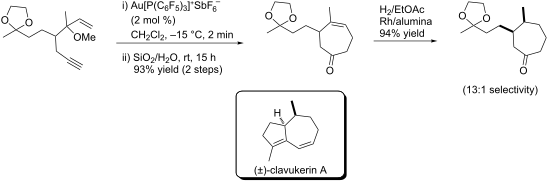
- in the formal synthesis of clavukerin A was explored. We first investigated the cyclization–hydrogenation strategy (path A in Scheme 4). Deprotection of 4 and the aldol condensation of the resulting diketone under basic conditions proceeded smoothly to give the enone 2 in good yield. However

Graphical Abstract

Scheme 1: Retrosynthetic analysis.

Scheme 2: Preparation of compound 5.

Scheme 3: Synthesis of the cycloheptenone 4.

Scheme 4: Completion of the formal synthesis of clavukerin A.
Construction of cyclic enones via gold-catalyzed oxygen transfer reactions
- Leping Liu,
- Bo Xu and
- Gerald B. Hammond
Beilstein J. Org. Chem. 2011, 7, 606–614, doi:10.3762/bjoc.7.71
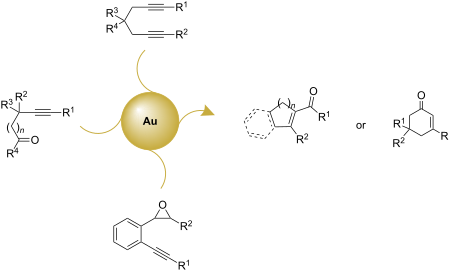
- and the final product 4. The isolated intermediate 5 could be transformed into a mixture of 6 and 4 under the reaction conditions, finally yielding 4 via intramolecular aldol condensation. This gold-catalyzed cyclization of alkynyl ketones to enones was successfully utilized in a cascade reaction by
- before being transformed into the final product via intramolecular aldol condensation. Fiksdahl and co-workers investigated a similar gold-catalyzed transformation of internal 1,6-diynes 18 in methanol at room temperature (Scheme 14) [50][51]. Interestingly, a non-conjugated five-membered cyclic enone 19

Graphical Abstract

Scheme 1: Lewis acid or Brønsted acid-catalyzed alkyne–carbonyl metathesis and a proposed [2 + 2] intermediat...
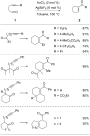
Scheme 2: Gold-catalyzed cyclization of internal alkynyl ketones.

Scheme 3: Proposed [2 + 2] mechanism for the cyclization of alkynyl ketones.

Scheme 4: Gold-catalyzed cyclization of terminal alkynyl ketones.

Scheme 5: Gold-catalyzed tandem oxygen transfer/Nazarov cyclizations.

Scheme 6: TfOH-mediated cyclization of alkynyl ketones.

Scheme 7: Gold-catalyzed cyclizations of 2-alkynyl-1,5-diketones.

Scheme 8: Designed isotopic labeling experiment for mechanistic studies.

Scheme 9: 18O isotopic experiments.

Scheme 10: B2PLYP/6-311+G(d,p)//B2PLYP/6-31G(d) computed reaction profile, relative energies in kcal/mol.

Scheme 11: Gold-catalyzed cyclization of tethered alkynyl arylaldehydes.

Scheme 12: Gold-catalyzed cyclization of terminal diynes.

Scheme 13: Proposed hydrolysis/cyclization mechanism.

Scheme 14: Gold-catalyzed cyclization of internal diynes.

Scheme 15: Proposed solvolysis/cyclization mechanism.

Scheme 16: Gold-catalyzed cyclization of alkynyl epoxides and the 18O isotopic labeling experiment.

Scheme 17: Proposed oxygen transfer mechanism.

Scheme 18: Gold or silver-catalyzed cyclization of alkynyl epoxides and the corresponding deuterium labeling e...
An overview of the key routes to the best selling 5-membered ring heterocyclic pharmaceuticals
- Marcus Baumann,
- Ian R. Baxendale,
- Steven V. Ley and
- Nikzad Nikbin
Beilstein J. Org. Chem. 2011, 7, 442–495, doi:10.3762/bjoc.7.57
- ] (Figure 3). Structurally, this medication consists of a complex pyrrole-substituted 2-indolinone core which can be prepared by a late stage aldol condensation between a 2-indolinone fragment 42 with the corresponding pyrrole aldehyde 41 (Scheme 7). The oxime functionality in compound 38, which is obtained
- ethyl 2,4-dimethylpyrrole-3-carboxylate which can be formylated at the free ring position by trimethyl orthoformate to yield the fully elaborated pyrrole aldehyde (41). The aforementioned aldol condensation unites both key fragments: Ester hydrolysis and amide formation complete the synthesis (Scheme 7
- oxime 38 under reductive conditions. Deprotection and decarboxylation of the remaining tert-butyl ester produces the desired pyrrole intermediate, which upon treatment with Vilsmeier reagent undergoes a formal acylation. This product is not isolated but reacted directly with 41 in an aldol condensation

Graphical Abstract
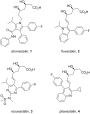
Figure 1: Structures of atorvastatin and other commercial statins.

Figure 2: Structure of compactin.

Scheme 1: Synthesis of pentasubstituted pyrroles.

Scheme 2: [3 + 2] Cycloaddition to prepare 5-isopropylpyrroles.

Scheme 3: Regiospecific [3 + 2] cycloaddition to prepare the pyrrole scaffold.

Scheme 4: Formation of the pyrrole core of atorvastatin via [3 + 2] cycloaddition.

Scheme 5: Formation of pyrrole 33 via the Paal–Knorr reaction.

Scheme 6: Convergent synthesis towards atorvastatin.

Figure 3: Binding pocket of sunitinib in the TRK KIT.

Scheme 7: Synthesis of sunitinib.

Scheme 8: Alternative synthesis of sunitinib.

Scheme 9: Key steps in the syntheses of sumatriptan and zolmitriptan.

Scheme 10: Introduction of the N,N-dimethylaminoethyl side chain.

Scheme 11: Japp–Klingemann reaction in the synthesis of sumatriptan.

Scheme 12: Synthesis of the intermediate sulfonyl chlorides 62 and 63.

Scheme 13: Alternative introduction of the sulfonamide.

Scheme 14: Negishi-type coupling to benzylic sulfonamides.

Scheme 15: Heck reaction used to introduce the sulfonamide side chain of naratriptan.

Scheme 16: Synthesis of the oxazolinone appendage of zolmitriptan.

Scheme 17: Grandberg indole synthesis used in the preparation of rizatriptan.

Scheme 18: Improved synthesis of rizatriptan.

Scheme 19: Larock-type synthesis of rizatriptan.

Scheme 20: Synthesis of eletriptan.

Scheme 21: Heck coupling for the indole system in eletriptan.

Scheme 22: Attempted Fischer indole synthesis of elatriptan.

Scheme 23: Successful Fischer indole synthesis for eletriptan.
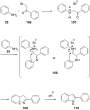
Scheme 24: Mechanistic rationale for the Bischler–Möhlau reaction.

Scheme 25: Bischler-type indole synthesis used in the fluvastatin sodium synthesis.

Scheme 26: Palladium-mediated synthesis of ondansetron.

Scheme 27: Fischer indole synthesis of ondansetron.

Scheme 28: Optimised Pictet–Spengler reaction towards tadalafil.

Figure 4: Structures of carvedilol 136 and propranolol 137.

Scheme 29: Synthesis of the carbazole core of carvedilol.

Scheme 30: Alternative syntheses of 4-hydroxy-9H-carbazole.

Scheme 31: Convergent synthesis of etodolac.

Scheme 32: Alternative synthesis of etodolac.

Figure 5: Structures of imidazole-containing drugs.

Scheme 33: Synthesis of functionalised imidazoles towards losartan.

Scheme 34: Direct synthesis of the chlorinated imidazole in losartan.

Scheme 35: Synthesis of trisubstituted imidazoles.

Scheme 36: Preparation of the imidazole ring in olmesartan.

Scheme 37: Synthesis of ondansetron.

Scheme 38: Alternative route to ondansetron and its analogues.

Scheme 39: Proton pump inhibitors and synthesis of esomeprazole.

Scheme 40: Synthesis of benzimidazole core pantoprazole.

Figure 6: Structure of rabeprazole 194.

Scheme 41: Synthesis of candesartan.

Scheme 42: Alternative access to the candesartan key intermediate 216.

Scheme 43: .Medicinal chemistry route to telmisartan.

Scheme 44: Improved synthesis of telmisartan.

Scheme 45: Synthesis of zolpidem.

Scheme 46: Copper-catalysed 3-component coupling towards zolpidem.

Figure 7: Structure of celecoxib.

Scheme 47: Preparation of celecoxib.

Scheme 48: Alternative synthesis of celecoxib.

Scheme 49: Regioselective access to celecoxib.

Scheme 50: Synthesis of pazopanib.

Scheme 51: Syntheses of anastrozole, rizatriptan and letrozole.

Scheme 52: Regioselective synthesis of anastrozole.

Scheme 53: Triazine-mediated triazole formation towards anastrozole.

Scheme 54: Alternative routes to 1,2,4-triazoles.

Scheme 55: Initial synthetic route to sitagliptin.

Figure 8: Binding of sitagliptin within DPP-IV.

Scheme 56: The process route to sitagliptin key intermediate 280.

Scheme 57: Synthesis of maraviroc.

Scheme 58: Synthesis of alprazolam.

Scheme 59: The use of N-nitrosoamidine derivatives in the preparation of fused benzodiazepines.

Figure 9: Structures of itraconazole, ravuconazole and voriconazole.

Scheme 60: Synthesis of itraconazole.

Scheme 61: Synthesis of rufinamide.

Scheme 62: Representative tetrazole formation in valsartan.

Figure 10: Structure of tetrazole containing olmesartan, candesartan and irbesartan.

Scheme 63: Early stage introduction of the tetrazole in losartan.

Scheme 64: Synthesis of cilostazol.

Figure 11: Structure of cefdinir.

Scheme 65: Semi-synthesis of cefdinir.

Scheme 66: Thiazole syntheses towards ritonavir.

Scheme 67: Synthesis towards pramipexole.

Scheme 68: Alternative route to pramipexole.

Scheme 69: Synthesis of famotidine.

Scheme 70: Efficient synthesis of the hyperuricemic febuxostat.

Scheme 71: Synthesis of ziprasidone.

Figure 12: Structure of mometasone.

Scheme 72: Industrial access to 2-furoic acid present in mometasone.

Scheme 73: Synthesis of ranitidine from furfuryl alcohol.

Scheme 74: Synthesis of nitrofurantoin.

Scheme 75: Synthesis of benzofuran.

Scheme 76: Synthesis of amiodarone.

Scheme 77: Synthesis of raloxifene.

Scheme 78: Alternative access to the benzo[b]thiophene core of raloxifene.

Scheme 79: Gewald reaction in the synthesis of olanzapine.

Scheme 80: Alternative synthesis of olanzapine.
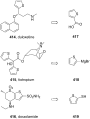
Figure 13: Access to simple thiophene-containing drugs.

Scheme 81: Synthesis of clopidogrel.

Scheme 82: Pictet–Spengler reaction in the preparation of tetrahydrothieno[3,2-c]pyridine (422).

Scheme 83: Alternative synthesis of key intermediate 422.

Figure 14: Co-crystal structures of timolol (left) and carazolol (right) in the β-adrenergic receptor.

Scheme 84: Synthesis of timolol.

Scheme 85: Synthesis of tizanidine 440.

Scheme 86: Synthesis of leflunomide.

Scheme 87: Synthesis of sulfamethoxazole.

Scheme 88: Synthesis of risperidone.

Figure 15: Relative abundance of selected transformations.

Figure 16: The abundance of heterocycles within top 200 drugs (5-membered rings).
Asymmetric reactions in continuous flow
- Xiao Yin Mak,
- Paola Laurino and
- Peter H. Seeberger
Beilstein J. Org. Chem. 2009, 5, No. 19, doi:10.3762/bjoc.5.19
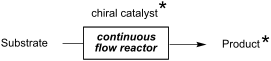
- significantly higher when compared to a carousel-type reactor typically used for parallel synthesis. Organocatalytic asymmetric aldol reactions in microflow devices were recently reported by our laboratory [15]. The aldol condensation of various aromatic aldehydes with acetone was carried out at higher

Graphical Abstract

Scheme 1: Enantioselective addition of trimethylsilyl cyanide to benzaldehyde.

Scheme 2: Asymmetric catalytic hydrogenation in a falling-film microreactor.

Scheme 3: Aldol reaction catalyzed by 5-(pyrrolidine-2-yl)tetrazole.

Scheme 4: Enantioselective addition of diethylzinc to aryl aldehydes.

Scheme 5: Glyoxylate-ene reaction in flow.

Scheme 6: Asymmetric synthesis of ß-lactams.

Scheme 7: α-Chlorination of acid chlorides in flow.

Scheme 8: Asymmetric Michael reaction in continuous flow.

Scheme 9: Enantioselective addition of Et2Zn to benzaldehyde using monolithic chiral amino alcohol.

Scheme 10: Continuous-flow hydrolytic dynamic kinetic resolution of epibromohydrin (32).

Scheme 11: Continuous-flow asymmetric cyclopropanation.

Scheme 12: Continuous asymmetric hydrogenation of dimethyl itaconate in scCO2.

Scheme 13: Continuous asymmetric transfer hydrogenation of acetophenone.

Scheme 14: Asymmetric epoxidation using a continuous flow membrane reactor.

Scheme 15: Enzymatic cyanohydrin formation in a microreactor.

Scheme 16: Resolution of (R/S)- 54 with immobilized lipase in a continuous scCO2- flow reactor.

Scheme 17: Enantioselective separation of Acetyl-D-Phe in a continuous flow reactor.
Recent progress on the total synthesis of acetogenins from Annonaceae
- Nianguang Li,
- Zhihao Shi,
- Yuping Tang,
- Jianwei Chen and
- Xiang Li
Beilstein J. Org. Chem. 2008, 4, No. 48, doi:10.3762/bjoc.4.48

Graphical Abstract

Scheme 1: Total synthesis of longifolicin by Marshall’s group.

Scheme 2: Total synthesis of corossoline by Tanaka’s group.

Scheme 3: Total synthesis of corossoline by Wu’s group.

Scheme 4: Total synthesis of pseudo-annonacin A by Hanessian’s group.

Scheme 5: Total synthesis of tonkinecin by Wu’s group.

Scheme 6: Total synthesis of gigantetrocin A by Shi’s group.

Scheme 7: Total synthesis of annonacin by Wu’s group.

Scheme 8: Total synthesis of solamin by Kitahara’s group.

Scheme 9: Total synthesis of solamin by Mioskowski’s group.

Scheme 10: Total synthesis of cis-solamin by Makabe’s group.

Scheme 11: Total synthesis of cis-solamin by Brown’s group.

Scheme 12: The formal synthesis of (+)-cis-solamin by Donohoe’s group.

Scheme 13: Total synthesis of cis-solamin by Stark’s group.

Scheme 14: Total synthesis of mosin B by Tanaka’s group.

Scheme 15: Total synthesis of longicin by Hanessian’s group.

Scheme 16: Total synthesis of murisolin and 16,19-cis-murisolin by Tanaka’s group.

Scheme 17: Synthesis of a stereoisomer library of (+)-murisolin by Curran’s group.

Scheme 18: Total synthesis of murisolin by Makabe’s group.

Scheme 19: Total synthesis of reticulatain-1 by Makabe’s group.

Scheme 20: Total synthesis of muricatetrocin C by Ley’s group.

Scheme 21: Total synthesis of (4R,12S,15S,16S,19R,20R,34S)-muricatetrocin (146) and (4R,12R,15S,16S,19R,20R,34S...

Scheme 22: Total synthesis of parviflorin by Hoye’s group.

Scheme 23: Total synthesis of parviflorin by Trost’s group.

Scheme 24: Total synthesis of trilobacin by Sinha’s group.

Scheme 25: Total synthesis of 15-epi-annonin I 181b by Scharf’s group.

Scheme 26: Total synthesis of squamocin A and squamocin D by Scharf’s group.

Scheme 27: Total synthesis of asiminocin by Marshall’s group.

Scheme 28: Total synthesis of asiminecin by Marshall’s group.

Scheme 29: Total synthesis of (+)-(30S)-bullanin by Marshall’s group.

Scheme 30: Total synthesis of uvaricin by the group of Sinha and Keinan.

Scheme 31: Formal synthesis of uvaricin by Burke’s group.

Scheme 32: Total synthesis of trilobin by Marshall’s group.

Scheme 33: Total synthesis of trilobin by the group of Sinha and Keinan.

Scheme 34: Total synthesis of asimilobin by the group of Wang and Shi.

Scheme 35: Total synthesis of squamotacin by the group of Sinha and Keinan.

Scheme 36: Total synthesis of asimicin by Marshall’s group.

Scheme 37: Total synthesis of asimicin by the group of Sinha and Keinan.

Scheme 38: Total synthesis of asimicin by Roush’s group.

Scheme 39: Total synthesis of asimicin by Marshall’s group.

Scheme 40: Total synthesis of 10-hydroxyasimicin by Ley’s group.

Scheme 41: Total synthesis of asimin by Marshall’s group.

Scheme 42: Total synthesis of bullatacin by the group of Sinha and Keinan.

Scheme 43: Total synthesis of bullatacin by Roush’s group.

Scheme 44: Total synthesis of bullatacin by Pagenkopf’s group.

Scheme 45: Total synthesis of rollidecins C and D by the group of Sinha and Keinan.

Scheme 46: Total synthesis of 30(S)-hydroxybullatacin by Marshall’s group.

Scheme 47: Total synthesis of uvarigrandin A and 5(R)-uvarigrandin A by Marshall’s group.

Scheme 48: Total synthesis of membranacin by Brown’s group.

Scheme 49: Total synthesis of membranacin by Lee’s group.

Scheme 50: Total synthesis of rolliniastatin 1 and rollimembrin by Lee’s group.

Scheme 51: Total synthesis of longimicin D by the group of Maezaki and Tanaka.

Scheme 52: Total synthesis of the structure proposed for mucoxin by Borhan’s group.

Scheme 53: Modular synthesis of adjacent bis-THF annonaceous acetogenins by Marshall’s group.

Scheme 54: Total synthesis of 4-deoxygigantecin by Tanaka’s group.

Scheme 55: Total synthesis of squamostatins D by Marshall’s group.

Scheme 56: Total synthesis of gigantecin by Crimmins’s group.

Scheme 57: Total synthesis of gigantecin by Hoye’s group.

Scheme 58: Total synthesis of cis-sylvaticin by Donohoe’s group.

Scheme 59: Total synthesis of 17(S),18(S)-goniocin by Sinha’s group.

Scheme 60: Total synthesis of goniocin and cyclogoniodenin T by the group of Sinha and Keinan.

Scheme 61: Total synthesis of jimenezin by Takahashi’s group.

Scheme 62: Total synthesis of jimenezin by Lee’s group.

Scheme 63: Total synthesis of jimenezin by Hoffmann’s group.

Scheme 64: Total synthesis of muconin by Jacobsen’s group.

Scheme 65: Total synthesis of (+)-muconin by Kitahara’s group.

Scheme 66: Total synthesis of muconin by Takahashi’s group.

Scheme 67: Total synthesis of muconin by the group of Yoshimitsu and Nagaoka.

Scheme 68: Total synthesis of mucocin by the group of Sinha and Keinan.

Scheme 69: Total synthesis of mucocin by Takahashi’s group.

Scheme 70: Total synthesis of (−)-mucocin by Koert’s group.

Scheme 71: Total synthesis of mucocin by the group of Takahashi and Nakata.

Scheme 72: Total synthesis of mucocin by Evans’s group.

Scheme 73: Total synthesis of mucocin by Mootoo’s group.

Scheme 74: Total synthesis of (−)-mucocin by Crimmins’s group.

Scheme 75: Total synthesis of pyranicin by the group of Takahashi and Nakata.

Scheme 76: Total synthesis of pyranicin by Rein’s group.

Scheme 77: Total synthesis of proposed pyragonicin by the group of Takahashi and Nakata.

Scheme 78: Total synthesis of pyragonicin by Rein’s group.

Scheme 79: Total synthesis of pyragonicin by Takahashi’s group.

Scheme 80: Total synthesis of squamostanal A by Figadère’s group.

Scheme 81: Total synthesis of diepomuricanin by Tanaka’s group.

Scheme 82: Total synthesis of (−)-muricatacin [(R,R)-373a] and its enantiomer (+)-muricatacin [(S,S)-373b] by ...

Scheme 83: Total synthesis of epi-muricatacin (+)-(S,R)-373c and (−)-(R,S)-373d by Scharf’s group.

Scheme 84: Total synthesis of (−)-muricatacin 373a and 5-epi-(−)-muricatacin 373d by Uang’s group.

Scheme 85: Total synthesis of four stereoisomers of muricatacin by Yoon’s group.

Scheme 86: Total synthesis of (+)-muricatacin by Figadère’s group.

Scheme 87: Total synthesis of (+)-epi-muricatacin and (−)-muricatacin by Couladouros’s group.

Scheme 88: Total synthesis of muricatacin by Trost’s group.

Scheme 89: Total synthesis of (−)-(4R,5R)-muricatacin by Heck and Mioskowski’s group.

Scheme 90: Total synthesis of muricatacin (−)-373a by the group of Carda and Marco.

Scheme 91: Total synthesis of (−)- and (+)-muricatacin by Popsavin’s group.

Scheme 92: Total synthesis of (−)-muricatacin by the group of Bernard and Piras.

Scheme 93: Total synthesis of (−)-muricatacin by the group of Yoshimitsu and Nagaoka.

Scheme 94: Total synthesis of (−)-muricatacin by Quinn’s group.

Scheme 95: Total synthesis of montecristin by Brückner’s group.

Scheme 96: Total synthesis of (−)-acaterin by the group of Franck and Figadère.

Scheme 97: Total synthesis of (−)-acaterin by Singh’s group.

Scheme 98: Total synthesis of (−)-acaterin by Kumar’s group.

Scheme 99: Total synthesis of rollicosin by Quinn’s group.

Scheme 100: Total synthesis of Rollicosin by Makabe’s group.

Scheme 101: Total synthesis of squamostolide by Makabe’s group.

Scheme 102: Total synthesis of tonkinelin by Makabe’s group.



