Search results
Search for "cysteine" in Full Text gives 136 result(s) in Beilstein Journal of Organic Chemistry.
2-Methyl-2,4-pentanediol (MPD) boosts as detergent-substitute the performance of ß-barrel hybrid catalyst for phenylacetylene polymerization
Beilstein J. Org. Chem. 2017, 13, 1498–1506, doi:10.3762/bjoc.13.148
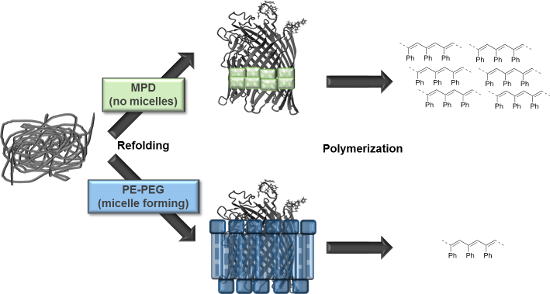
- of the cysteine function of 2 (Cys545) using the fluorescence dye ThioGlo® 1 (fluorescent thiol reagent, Figure S2, Supporting Information File 1). More than 90% of the cysteines are occupied, showing a very high coupling efficiency of the rhodium catalyst. Further, the biohybrid conjugate was
- the β-barrel membrane channel protein FhuA WT co-crystallized with the detergent n-octyl-2-hydroxyethyl sulfoxide [24]. The N-terminal cork domain (residue 1-160) blocking the channel was removed. The amino acid exchanges of the hybrid catalyst model FhuA ΔCVFtev, namely cysteine at position 545


Strategies toward protecting group-free glycosylation through selective activation of the anomeric center
Beilstein J. Org. Chem. 2017, 13, 1239–1279, doi:10.3762/bjoc.13.123

- using the same one-pot strategy [78]. In a follow up work by Novoa et al. [79] by using NEt3 and DMC, S-linked glycopeptides at cysteine residues on a solid phase could also be obtained. This methodology or very similar variations thereof is now being utilized by several laboratories for various
- products to form disulfides. However, it was found that treatment of the crude reaction mixture with PBu3 reduced the disulfides allowing for smoother isolation. Importantly, in a second step the unprotected thiol was able to ligate a selenylsulfide-activated single-cysteine mutant protein (subtilisin




From chemical metabolism to life: the origin of the genetic coding process
Beilstein J. Org. Chem. 2017, 13, 1119–1135, doi:10.3762/bjoc.13.111
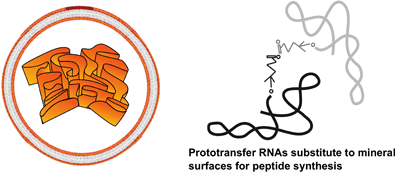
- . Remarkably, most coenzymes –necessary effectors of metabolism, the existence of which is a prerequisite for any plausible scenario of origin– are today synthesised from simple carbon molecules and amino acids. Among those, 4′-phosphopantetheine (cysteine condensed with pantothenate, a derivative of valine



Conformational study of L-methionine and L-cysteine derivatives through quantum chemical calculations and 3JHH coupling constant analyses
Beilstein J. Org. Chem. 2017, 13, 925–937, doi:10.3762/bjoc.13.94

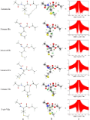
- conformational analysis of esterified and N-acetylated derivatives of L-methionine and L-cysteine using a combination of 1H NMR and electronic structure calculations is reported. The geometries and energies of the most stable conformers in isolated phase and taking into account the implicit solvent effects
- analysis; cysteine; methionine; NMR spectroscopy; quantum chemical calculations; Introduction Amino acids constitute the building blocks of proteins and peptides, which play an important role in numerous biological processes [1][2]. However, their studies in both isolated and condensed phases have been
- been more widely reported, mainly in gas phase [3][4][5][6][7][8]. Among the 20 amino acids incorporated into proteins, L-methionine (L-Met) and L-cysteine (L-Cys) are the only two containing sulfur. The former is an initiator amino acid in the protein synthesis of all eukaryotics cells [9], whereas




Polyketide stereocontrol: a study in chemical biology
Beilstein J. Org. Chem. 2017, 13, 348–371, doi:10.3762/bjoc.13.39
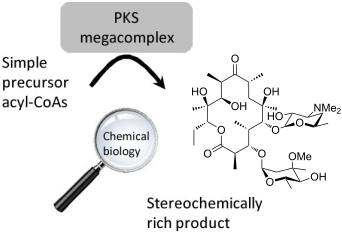
- biosynthetic cycle is KS-catalyzed chain extension. This reaction occurs by nucleophilic attack of an enolate generated by decarboxylation of an ACP-bound extender unit onto the starter unit or chain extension intermediate attached to the active site cysteine of the KS domain. The face of the enolate which is




Posttranslational isoprenylation of tryptophan in bacteria
Beilstein J. Org. Chem. 2017, 13, 338–346, doi:10.3762/bjoc.13.37
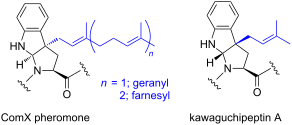
- Masahiro Okada Tomotoshi Sugita Ikuro Abe Graduate School of Pharmaceutical Sciences, The University of Tokyo, Bunkyo-ku, Tokyo 113-0033, Japan 10.3762/bjoc.13.37 Abstract Posttranslational isoprenylation is generally recognized as a universal modification of the cysteine residues in peptides and
- posttranslational isoprenylation of tryptophan in bacteria. In particular, this review will focus on current findings which have not been available at the time we published a review on this topic previously [3]. Review Posttranslational isoprenylation of cysteine Posttranslational isoprenylation is generally
- referred to as the farnesylation or geranylgeranylation of the thiol group of the C-terminal cysteine residue in peptides and proteins [4][5][6][7]. The isoprenylation of cysteine was first found in the peptide pheromones of basidiomycetous yeast [8][9][10]. Two peptide pheromones, tremerogen A-10 and




Synthesis of acylhydrazino-peptomers, a new class of peptidomimetics, by consecutive Ugi and hydrazino-Ugi reactions
Beilstein J. Org. Chem. 2016, 12, 2865–2872, doi:10.3762/bjoc.12.285

- compared to a natural peptide. Indeed, these compounds have shown to be a useful class of peptidomimetics with interesting biological activities [21][22][23], including antiviral [25][26] and cysteine protease inhibition [27][28][29][30]. Hydrazinopeptides [31][32][33][34][35][36] (peptide analogs in which


Biochemical and structural characterisation of the second oxidative crosslinking step during the biosynthesis of the glycopeptide antibiotic A47934
Beilstein J. Org. Chem. 2016, 12, 2849–2864, doi:10.3762/bjoc.12.284
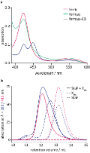
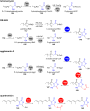
- nm, respectively, as well as a broad minor peak at λ = 548 nm (Figure 2a). The peaks at λ = 420 and 450 nm are caused by different protonation states of the thiol side chain of the proximal heme ligand cysteine: P450 enzymes displaying a protonated thiol ligand (as indicated by a peak at λ = 420 nm
- cysteine residue Cys342, which is a region of poorly defined electron density. The I helix contains the conserved residues responsible for controlling protonation during oxygen activation of the P450 catalytic cycle (Asp235 and Gln236) [34]. Residues projecting into the active site are Thr86 in the B–C




O-Alkylated heavy atom carbohydrate probes for protein X-ray crystallography: Studies towards the synthesis of methyl 2-O-methyl-L-selenofucopyranoside
Beilstein J. Org. Chem. 2016, 12, 2828–2833, doi:10.3762/bjoc.12.282

- was available for molecular replacement and the protein contains only one methionine and no cysteine residues, which is insufficient to consider incorporation of selenomethionine in the protein for the structure elucidation. Its carbohydrate-binding specificity was determined and a preference for O


Chemical probes for competitive profiling of the quorum sensing signal synthase PqsD of Pseudomonas aeruginosa
Beilstein J. Org. Chem. 2016, 12, 2784–2792, doi:10.3762/bjoc.12.277
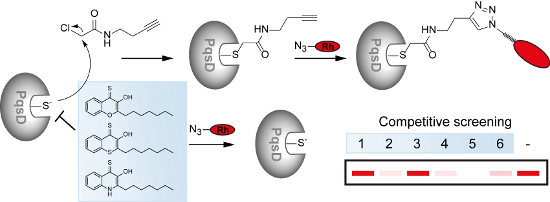
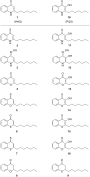
- developed a library of cysteine reactive chemical probes with an alkyne handle for fluorescence tagging and report the selective and highly sensitive in vitro labelling of the active site cysteine of this important enzyme. Interestingly, only one type of probe, with a reactive α-chloroacetamide was capable
- (Figure 1B) [14]. For the condensation step of an anthraniloyl residue with malonyl-CoA by PqsD, a cysteine residue (Cys112) is involved in the formation of a covalent thioester intermediate. We were speculating that activity-based electrophilic probes may be applicable to target this enzyme in vitro
- , Cys112, is engaging in the catalytic process forming a covalent reaction intermediate. We thus aimed at exploring the possibility to selectively label the active site cysteine residue using chemical probes. Activity-based protein profiling (ABPP) has become a powerful tool to study protein function and



Interactions between cyclodextrins and cellular components: Towards greener medical applications?
Beilstein J. Org. Chem. 2016, 12, 2644–2662, doi:10.3762/bjoc.12.261
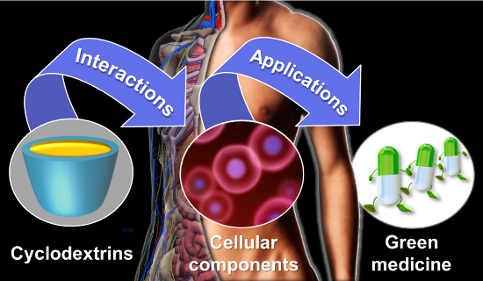
- ., alanine, valine, leucine, isoleucine, proline, phenylalanine, tryptophan, cysteine and methionine), they can be easily included inside the CDs. This complexation leads to modification of the protein. For sake of clarity, only some typical examples are reported in this section. In their paper on the
- NMR signals corresponding to Trp residues were shifted upon the addition of G1-β-CD due to encapsulation of the tryptophan residues in the G1-β-CD cavity [92]. In addition, the 1H NMR signals for cysteine 64 and isoleucine 98 were also influenced to a considerable extent with the addition of G1-β-CD


Economical and scalable synthesis of 6-amino-2-cyanobenzothiazole
Beilstein J. Org. Chem. 2016, 12, 2019–2025, doi:10.3762/bjoc.12.189

- preparation of luciferins 3 involves straightforward condensation of CBTs 1 with D-cysteine (2) (Scheme 1). For BLI applications, luciferins are often generated in vivo from CBTs [4][5][6][7], which are easier to modify and handle due to their higher stability, cell permeability, and reactivity than the full
- bioorthogonal reaction (k ≈ 10 M−1s−1) [9] for site-specific labelling or immobilisation of proteins 4, either at an N-terminal cysteine residue or at a 1,2-aminothiol group incorporated into a non-natural amino acid (Scheme 1) [10][11]. In addition, CBT derivatives have been used for the synthesis of polymeric



Biosynthesis of oxygen and nitrogen-containing heterocycles in polyketides
Beilstein J. Org. Chem. 2016, 12, 1512–1550, doi:10.3762/bjoc.12.148
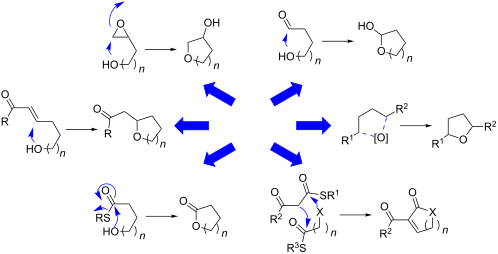
- peptidyl carrier protein (PCP) of the downstream NRPS module is loaded with an L-cysteine, which serves as a sulphur donor. From 177, sulphur is transferred by the NifS-like cysteine desulphurase TlmS to the tRNA-specific and adenosine triphosphate (ATP)-dependent 2-thiouridylase TlmJ, which is thereby






Artificial Diels–Alderase based on the transmembrane protein FhuA
Beilstein J. Org. Chem. 2016, 12, 1314–1321, doi:10.3762/bjoc.12.124
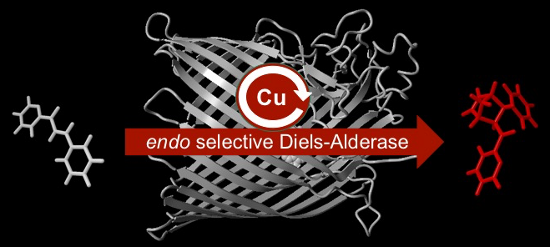
- contains a cysteine residue at position 545 for conjugation [31], an NHC ligand containing a maleimide function was prepared (Scheme 1). The imidazolium salt 3 was synthesized by nucleophilic substitution of mesityl imidazol 1 with maleimide derivative 2. These salts were used to generate the Cu(I) NHC
- using the established anchoring strategy, the Cu(I) and Cu(II) complexes (4 and 10–12) were anchored covalently inside the β-barrel structure. After anchoring, the protein was refolded by dialysis (Scheme 3). Anchoring of all complexes was successful. Titration of the free cysteine with the fluorescence
- dye ThioGlo® indicated that more than 95% of the cysteine residues were conjugated for each catalyst. Renaturing of the protein was successful in the case of the terpy ligand framework (for clarity of the location of the catalyst, see Figure S1 in Supporting Information File 1). After 3 days of


Multicomponent reactions: A simple and efficient route to heterocyclic phosphonates
Beilstein J. Org. Chem. 2016, 12, 1269–1301, doi:10.3762/bjoc.12.121
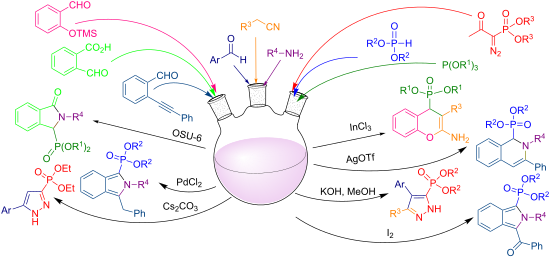
- -2-ylphosphonates showed cysteine protease inhibition activities. 2.2.9 Heterocyclic bisphosphonates: A modified Kabachnik–Fields reaction of the substituted amine 135 with triethyl orthoformate followed by reaction with sodium diethylphosphite afforded bisphosphonate intermediate 136 that was


Cyclisation mechanisms in the biosynthesis of ribosomally synthesised and post-translationally modified peptides
Beilstein J. Org. Chem. 2016, 12, 1250–1268, doi:10.3762/bjoc.12.120
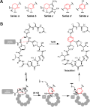
- -translationally modified into the final product, and a heterotrimeric complex that is responsible for both heterocyclisation of serine and cysteine residues, and subsequent oxidation of (ox/thi)azolines into (ox/thi)azoles (Figure 3A). This catalytic complex consists of “C” and “D” proteins (annotated as McbB and
- McbD, respectively, for microcin B17) that cooperate to catalyse heterocyclisation of specific serine and cysteine residues in McbA, and a flavin-dependent dehydrogenase (the “B-protein”, McbC for microcin B17) that oxidises these heterocycles. These early in vitro studies indicated that the “C-protein
- then be attacked by an adjacent serine or cysteine side chain, thus releasing phosphate/AMP and generating the heterocycle. This order of steps was not advocated by either the Naismith or Mitchell groups as it requires a disfavoured 5-endo-trig cyclisation, although this mode of cyclisation is





Conjugate addition–enantioselective protonation reactions
Beilstein J. Org. Chem. 2016, 12, 1203–1228, doi:10.3762/bjoc.12.116
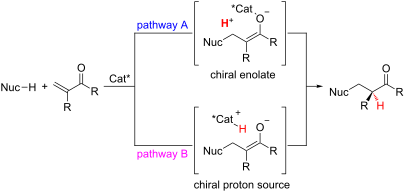
- without significantly affecting the reaction (93–97% yield, 92:8 to 96:4 er). The authors also explored further elaboration of the products to access enantioenriched cysteine analogues. The Glorius lab has made use of N-heterocyclic carbene (NHC) catalysts for intermolecular Stetter reactions between




Gold-catalyzed direct alkynylation of tryptophan in peptides using TIPS-EBX
Beilstein J. Org. Chem. 2016, 12, 745–749, doi:10.3762/bjoc.12.74
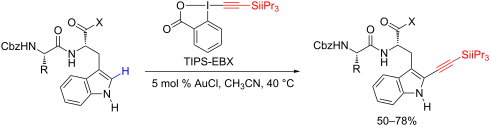
- context, the modification of natural peptides and proteins is highly attractive, and it has been the target of intensive research in the last decades (Figure 1) [6][7][8][9][10][11]. The functionalization of highly reactive cysteine, lysine and the N-terminus has been particularly successful [12][13][14
- using a linker is used, for example an alkylation reaction of cysteine. The direct introduction of an alkyne onto the biomolecule would be interesting to profit from modified electronic and spectroscopic properties. However, the direct alkynylation of peptides or proteins is usually based on the use of
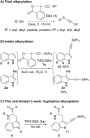
- instantaneous. It was highly chemoselective for thiols in the presence of other nucleophilic functional groups. The alkynylation could be therefore applied to cysteine-containing peptides. The scope of the reaction could be later extended to a broad range of aliphatic and aromatic alkynes [35]. In 2015, the



Biosynthesis of α-pyrones
Beilstein J. Org. Chem. 2016, 12, 571–588, doi:10.3762/bjoc.12.56
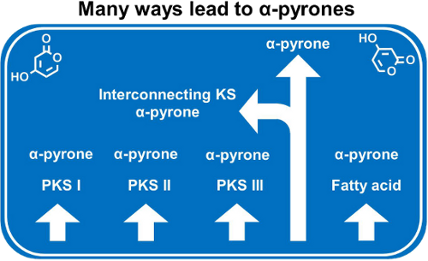
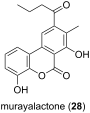
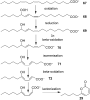
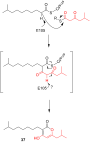
- mechanism for CorB and MxnB closely resembles each other, but certain differences have also been proposed, as will be discussed here. First, one chain is transferred and covalently linked to the active-site cysteine. This results in an activation of the cysteine-tethered chain. In the second step, the other
- chain is placed into the proximal cavity, orienting the α-carbon in a position suitable for the nucleophilic attack by the cysteine-tethered, activated chain. Thereby, the second chain is still attached to the ACP, the phosphopantetheine residue reaching into the T-shaped catalytic cavity, enabling the
- catalytic cysteine. Subsequently, lactonization can take place. It is assumed that an enolate exists as an intermediate in the formation of the C–O bond [88]. Even though for both enzymes no experimental evidences for the chronological order of the two condensation reactions exist, it can be expected that






Mycothiol synthesis by an anomerization reaction through endocyclic cleavage
Beilstein J. Org. Chem. 2016, 12, 328–333, doi:10.3762/bjoc.12.35

- stereochemistry of the glucosamine and cysteine moieties [21][22]. Hung also reported the utility of the 2-azido-2-deoxyglycosyl donor and resolved inositol isomers in a recent MSH synthesis [23]. Knapp et al. reported an intramolecular aglycone delivery method in order to achieve complete α-stereoselectivity [24
- synthesis of MSH was completed as follows (Scheme 5): the carbamate and acetyl groups were removed by alkaline hydrolysis to give known compound 8 [24]; then, benzyl groups were removed by H2/Pd(OH)2/C in AcOH/dioxane/H2O. Although it was reported that the cysteine moiety was introduced by 1-[bis


Recent highlights in biosynthesis research using stable isotopes
Beilstein J. Org. Chem. 2015, 11, 2493–2508, doi:10.3762/bjoc.11.271
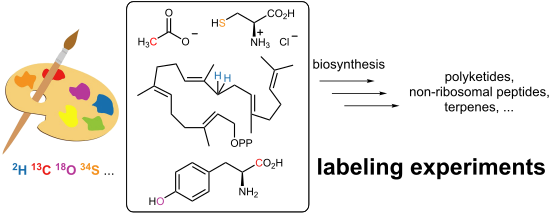
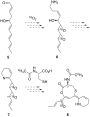
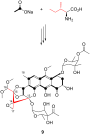
- the product of a polyketide biosynthetic gene cluster [24]. To test whether N-acetylcysteine could be a biosynthetic precursor of the unusual 1,5-oxathiocane structure, feeding experiments using both (2S)- and (2R)-N-((2H3)acetyl)cysteine were performed. The deuterium atoms of both precursors were
- experiments are rare, but can provide interesting insights into the biosynthesis of sulfur containing natural products. Besides the recently presented synthetic developments towards 36S-labeled SAM and methionine [77], also [34S]cysteine has been made accessible by synthesis from elemental 34S8 and used to
- . Oxygen atoms originating from water are labeled as Oa, whereas 18O labels in the hydroxy group of chorismate are annotated as Ob. The XanB2-reaction was not investigated (missing label). Incorporation of sulfur into tropodithietic acid (72) via cysteine. Biosynthetic proposal for the starter unit of









Active site diversification of P450cam with indole generates catalysts for benzylic oxidation reactions
Beilstein J. Org. Chem. 2015, 11, 1713–1720, doi:10.3762/bjoc.11.186
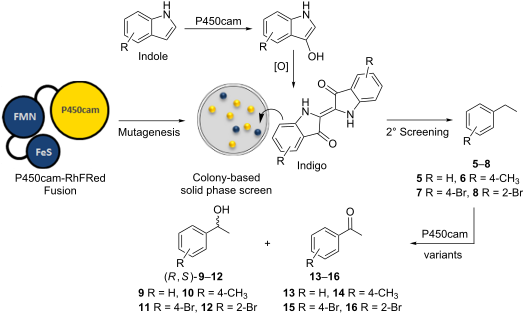
- were identified in seven sub-libraries (Figure 1, bottom). Among this new population, structural and functional diversity was evident as can be seen from the grid structure (Figure 1, bottom) representing all active variant combinations identified across libraries I–VII. Cysteine, asparagine and


Pyridinoacridine alkaloids of marine origin: NMR and MS spectral data, synthesis, biosynthesis and biological activity
Beilstein J. Org. Chem. 2015, 11, 1667–1699, doi:10.3762/bjoc.11.183
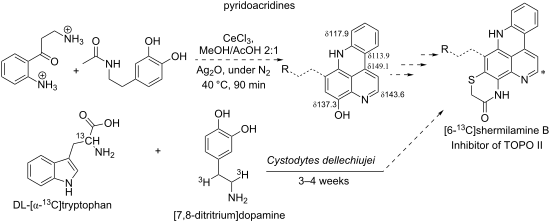
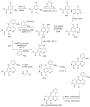
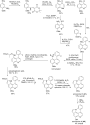
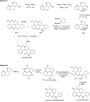
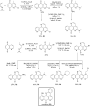
- studies performed on this topic. Riddick showed the oxidation product of tryptophan (61) (kynurenine (62)) as the precursor for the biosynthesis of pyridoacridines (Figure 6) [74]. Kynurenine (62) with acetic acid forms the quinolinone 63, which in presence of amino acids such as cysteine, asparagine
- decarboxylated to give kynuramine (65). The latter, by reaction with dopamine, forms the benzo-3,6-phenanthroline intermediate 68, which in turn gave shermilamine B (67) upon reaction with cysteine (Figure 8) [76]. The compounds 13-didemethylaminocycloshermilamine D (31) and demethyldeoxyamphimedine (9) (Figure
- 9) were presumably formed by reaction of a related benzophenanthroline (styelsamine D, 6) with cysteine and formaldehyde, respectively [47]. This reaction was followed by cyclization and oxidation to afford the alkaloids (Figure 9). The analysis of different biosynthesis pathways clearly suggested









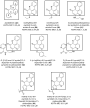


A novel and widespread class of ketosynthase is responsible for the head-to-head condensation of two acyl moieties in bacterial pyrone biosynthesis
Beilstein J. Org. Chem. 2015, 11, 1412–1417, doi:10.3762/bjoc.11.152
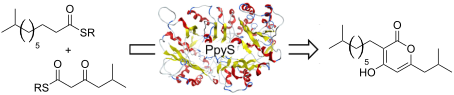
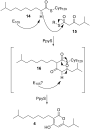
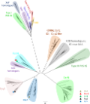
- using stable isotope labeled precursors [7] suggested a two-chain biosynthesis mechanism for photopyrone biosynthesis (Scheme 1): First, thioester-activated 9-methyldecanoic acid 14 is covalently bound to an active site cysteine. Deprotonation of the α-carbon of 14 results in the formation of a



Regulation of integrin and growth factor signaling in biomaterials for osteodifferentiation
Beilstein J. Org. Chem. 2015, 11, 773–783, doi:10.3762/bjoc.11.87
- peptide, a prodomain and a mature domain. The proproteins dimerize after the signal peptide has been removed and are enzymatically cleaved to yield the biologically active dimeric mature protein [57]. The amino acid sequence of BMPs and their "cystine knot" motif, which is composed of seven cysteine units
- , is highly conserved [50]. Six of the seven cysteine residues Cys14/Cys79, Cys47/Cys113, and Cys43/Cys111 form intramolecular disulfide bonds to stabilize the monomer, whereas the seventh cysteine (Cys78) contributes to the formation of an intermolecular bond between the two monomers for dimerization
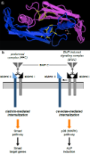
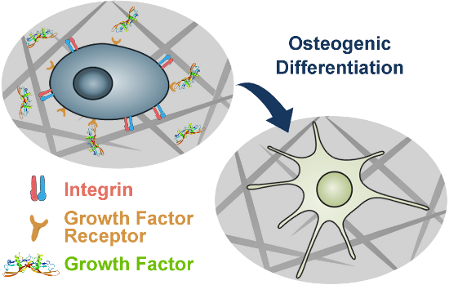
- focal adhesion and actin fibers is hindered (b). Reprinted with permission from [29]. Copyright 2009 American Chemical Society. (a) BMP-2 homodimer. 3D-Structure of a BMP-2 homodimer (blue and pink) with cysteine residues, highlighted in yellow to show the intra- and intermolecular disulfide bonds