


Search results
Search for "oxazoline" in Full Text gives 107 result(s) in Beilstein Journal of Organic Chemistry.
Regioselective synthesis of chiral dimethyl-bis(ethylenedithio)tetrathiafulvalene sulfones
Beilstein J. Org. Chem. 2015, 11, 1105–1111, doi:10.3762/bjoc.11.124

- ethylenedithiotetrathiafulvalene-oxazoline (EDT-TTF-Ox) donors [5][6], due to a structural disorder effect [7]. Evidence was thus provided, and confirmed later on with a second complete series of conducting salts based on the same donors [8], that the presence of chiral centers can modulate the structural disorder of radical


Diastereoselective and enantioselective conjugate addition reactions utilizing α,β-unsaturated amides and lactams
Beilstein J. Org. Chem. 2015, 11, 530–562, doi:10.3762/bjoc.11.60

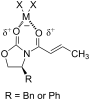
- and co-workers developed various N-sulfinyl homoallylic amines (76) [160] and N-cinnamyl sulfonamides (77) [161] ligands for the rhodium-catalyzed asymmetric 1,4-arylation of a variety of α,β-unsaturated carbonyl compounds. Finally, in 2012, Franzén and co-workers designed an indole-olefin-oxazoline
- either a Sc(OTf)3–3,3′-bis(diethylaminomethyl)-1,1′-bi-2-naphthol complex (85) or Cu(OTf)2–(S,S)-2,2′-isopropylidene-bis(4-tert-butyl-2-oxazoline) complex (86) (Figure 6). The latter bis(oxazoline) and its derivatives have become common chiral ligands in Lewis acid-mediated reactions [179]. The Evans
- group has developed several methods for Diels–Alder and aldol reactions that employed chiral bis(oxazoline) copper(II) complexes [180]. Starting in 1999, Evans and co-workers published a series of papers which reported the Mukaiyama–Michael addition to various α,β-unsaturated Michael acceptors [181][182




Inherently chiral calix[4]arenes via oxazoline directed ortholithiation: synthesis and probe of chiral space
Beilstein J. Org. Chem. 2014, 10, 2751–2755, doi:10.3762/bjoc.10.291

- Simon A. Herbert Laura J. van Laeren Dominic C. Castell Gareth E. Arnott Department of Chemistry and Polymer Science, Stellenbosch University, Private Bag X1, Matieland 7602, South Africa 10.3762/bjoc.10.291 Abstract The diastereoselective oxazoline-directed lithiation of calix[4]arenes is
- reported with diastereoselective ratios of greater than 100:1 in some instances. Notably, it has been found that the opposite diastereomer can be accessed via this approach merely through the choice of an alkyllithium reagent. The inherently chiral oxazoline calix[4]arenes have also been preliminarily
- examined as ligands in the palladium-catalyzed Tsuji–Trost allylation reaction, returning results comparable to their planar chiral ferrocene counterparts pointing towards future application of these types of compounds. Keywords: calix[4]arene; inherently chiral; ortholithiation; oxazoline; Tsuji–Trost


Photochemical approach to functionalized benzobicyclo[3.2.1]octene structures via fused oxazoline derivatives from 4- and 5-(o-vinylstyryl)oxazoles
Beilstein J. Org. Chem. 2014, 10, 2222–2229, doi:10.3762/bjoc.10.230

- the van Leusen reaction from trans-3-(2-vinylphenyl)acrylaldehyde which is prepared from o-vinylbenzaldehyde and (formylmethylene)triphenylphosphorane. The 4- and 5-(2-vinylstyryl)oxazoles afford, by photochemical intramolecular cycloaddition, diverse fused oxazoline-benzobicyclo[3.2.1]octadienes
- , which are identified and characterized by spectroscopic methods. The photoproducts formed are relatively unstable and spontaneously or on silica gel undergo oxazoline ring opening followed by formation of formiato- or formamido-benzobicyclo[3.2.1]octenone derivatives. On irradiation of 4-(2-vinylstyryl
- intramolecular photocycloaddition to diverse fused tetracyclic oxazoline compounds which further spontaneously or during the work-up procedure hydrolyze to benzobicyclo[3.2.1]octenone derivatives. This is a new method for the synthesis of functionalized benzobicyclo[3.2.1]octenes. Results and Discussion cis


Rational design of cyclopropane-based chiral PHOX ligands for intermolecular asymmetric Heck reaction
Beilstein J. Org. Chem. 2014, 10, 1536–1548, doi:10.3762/bjoc.10.158
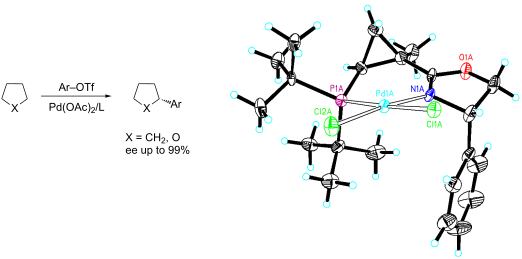
- Abstract A novel class of chiral phosphanyl-oxazoline (PHOX) ligands with a conformationally rigid cyclopropyl backbone was synthesized and tested in the intermolecular asymmetric Heck reaction. Mechanistic modelling and crystallographic studies were used to predict the optimal ligand structure and helped
- regio- and enantioselectivities. On the other hand, superior results were obtained using chiral ligands of the P,N-type [15][41][42][43][44]. Particularly, excellent enantioselectivities were achieved using different variations of phosphanyl-oxazoline (PHOX) ligands [45][46][47][48][49][50][51][52
- substrates [59]. A highly efficient asymmetric arylation in the presence of sugar-derived phosphite-oxazoline ligands was reported by Diéguez and Pàmies [47][48]. PHOX ligands are very appealing due to their high catalytic potential and modular design, which permits easy preparation of a series of analogues


Design, automated synthesis and immunological evaluation of NOD2-ligand–antigen conjugates
Beilstein J. Org. Chem. 2014, 10, 1445–1453, doi:10.3762/bjoc.10.148

- attached to the anomeric center of the glucosamine moiety using oxazoline 6 [37][38][39]. Deacetylation and subsequent installation of the benzylidene protective group then gave alcohol 9. Coupling of 9 with (S)-2-chloropropanoic acid in the presence of sodium hydride resulted in the formation of protected


Synthesis of 1-[bis(trifluoromethyl)phosphine]-1’-oxazolinylferrocene ligands and their application in regio- and enantioselective Pd-catalyzed allylic alkylation of monosubstituted allyl substrates
Beilstein J. Org. Chem. 2014, 10, 1261–1266, doi:10.3762/bjoc.10.126
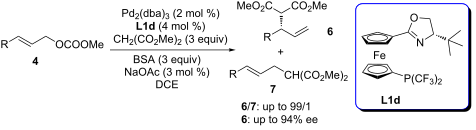
- branched monosubstituted allyl acetate favoring the branched products. However, linear products were favored when the linear allyl substrates were employed [23][24]. The chiral oxazoline–phosphite ligands introduced by Pfaltz and coworkers proved to be highly efficient for regio- and enantiocontrol in the
- an elegant synthesis of bis(perfluoroalkyl)phosphine-oxazoline ligands where small but strongly electron-withdrawing substituents were introduced at the phosphorus [34]. 1,2-Ferrocene based P,N-ligands were synthesized and gave excellent regio- and enantioselectivities in the Pd-catalyzed allylic
- ). Good regioselectivity (b/l: 81/19) was obtained with 2-buten-3-yl carbonate as a substrate (entry 14, Table 2). We conducted some control experiments to probe the effect of the bis(trifluoromethyl) group in the ligands (Scheme 3). With ferrocence-based biphenyl phosphine-oxazoline L2 as the ligand, the


Organocatalytic asymmetric fluorination of α-chloroaldehydes involving kinetic resolution
Beilstein J. Org. Chem. 2014, 10, 323–331, doi:10.3762/bjoc.10.30
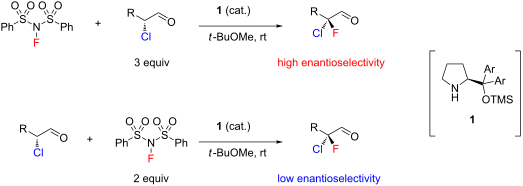
- α-chloro-α-fluoro-β-keto esters via the sequential chlorination–fluorination of β-keto esters with the Cu(II) complex of SPYMOX [9], a spiro chiral oxazoline ligand developed by our research group [9][10][11][12]. In that study, we succeeded in determining the absolute stereochemistry of the α


Recent advances in transition metal-catalyzed Csp2-monofluoro-, difluoro-, perfluoromethylation and trifluoromethylthiolation
Beilstein J. Org. Chem. 2013, 9, 2476–2536, doi:10.3762/bjoc.9.287
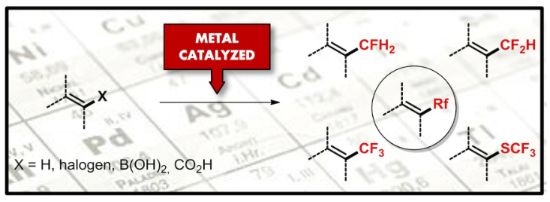
- reaction conditions showed that cesium fluoride proved the best base. PhI(OAc)2 was the preferred oxidant over other hypervalent iodine compounds or sources of F+ or CF3+; additionally, the presence of a bis(oxazoline) as a ligand was beneficial to the reaction, as well as that of TEMPO to prevent


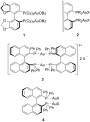
Synthetic scope and DFT analysis of the chiral binap–gold(I) complex-catalyzed 1,3-dipolar cycloaddition of azlactones with alkenes
Beilstein J. Org. Chem. 2013, 9, 2422–2433, doi:10.3762/bjoc.9.280
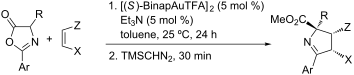
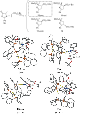
- point of the oxazoline [42]. The NICS value of −7.3 ppm pointed to the aromaticity of that ring in Ylide I. These results explain the existence of different regioselectivities for both ylides. Following the same calculation patterns previously shown for the reaction with NPM, the results of the main





A one-pot synthesis of 3-trifluoromethyl-2-isoxazolines from trifluoromethyl aldoxime
Beilstein J. Org. Chem. 2013, 9, 2387–2394, doi:10.3762/bjoc.9.275
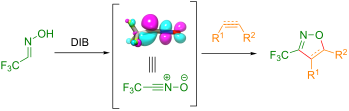
- and 3). Interestingly, the protecting groups were not cleaved, which indicated that reaction conditions are very mild. With allyltrimethylsilane oxazoline 1g was obtained in good yield (82%). From ester and acid derivatives of undecen, isoxazolines were obtained in good yields too (64% and 51


Synthesis and characterization of novel bioactive 1,2,4-oxadiazole natural product analogs bearing the N-phenylmaleimide and N-phenylsuccinimide moieties
Beilstein J. Org. Chem. 2013, 9, 2202–2215, doi:10.3762/bjoc.9.259
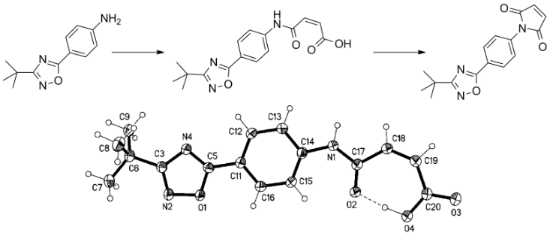
- compounds 4 and 5 were also confirmed by X-ray structure analysis (Figure 7, Figure 8 and Figure 9). In compound 4 the oxazoline and phenyl rings are approximately coplanar (6°), but the pyrrolidine ring is rotated by 52° with respect to the phenyl ring. The main packing interaction is an offset stacking



Catalytic asymmetric tandem Friedel–Crafts alkylation/Michael addition reaction for the synthesis of highly functionalized chromans
Beilstein J. Org. Chem. 2013, 9, 1210–1216, doi:10.3762/bjoc.9.137

- diphenylamine-linked bis(oxazoline)-Zn(OTf)2 complex was investigated. This tandem reaction afforded functionalized chiral chromans in good yields with moderate to high stereoselectivities (up to 95:5 dr, up to 99% ee). Keywords: asymmetric catalysis; bis(oxazoline); chroman; Friedel–Crafts alkylation; tandem
- -linked bis(oxazoline)-Zn(II) complexes. On the other hand, indole and its derivatives are one of the most intensively investigated classical heterocycles owing to their prevalence in bioactive compounds. Indoles have been successfully utilized in asymmetric Friedel–Crafts reactions with nitroolefin and
- reaction has appeared [50]. Herein, we wish to detail our independent research on the asymmetric tandem Friedel–Crafts alkylation/Michael addition reaction of indoles with nitroolefin enoates catalyzed by bis(oxazoline)-Zn(OTf)2 complexes, resulting in functionalized chiral chromans (dihydrobenzopyrans) in


Rh(III)-catalyzed directed C–H bond amidation of ferrocenes with isocyanates
Beilstein J. Org. Chem. 2012, 8, 1844–1848, doi:10.3762/bjoc.8.212
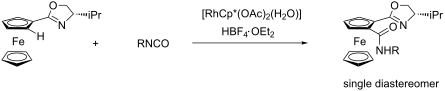
- enantioselective if chiral bisoxazoline ligands were used. However, the substrate scope of this reaction is narrow because of intramolecular reaction. More recently, chiral oxazoline-directed diastereoselective arylation of ferrocenes was reported based on a Pd(II)-catalyzed oxidative coupling reaction [8]. Most


Palladium-catalyzed dual C–H or N–H functionalization of unfunctionalized indole derivatives with alkenes and arenes
Beilstein J. Org. Chem. 2012, 8, 1730–1746, doi:10.3762/bjoc.8.198
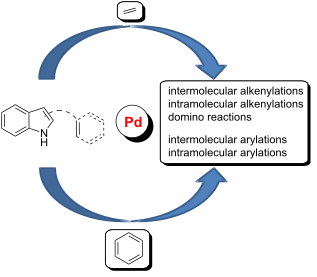
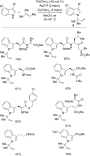
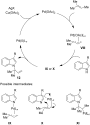
- elimination. Palladium–pyridine systems were subsequently investigated with chiral ligands to catalyze enantioselective processes involving alkenylindoles. Several enantioselective indole annulations with formation of a stereogenic quaternary carbon atom were performed by using chiral oxazoline ligands with




Synthetic glycopeptides and glycoproteins with applications in biological research
Beilstein J. Org. Chem. 2012, 8, 804–818, doi:10.3762/bjoc.8.90
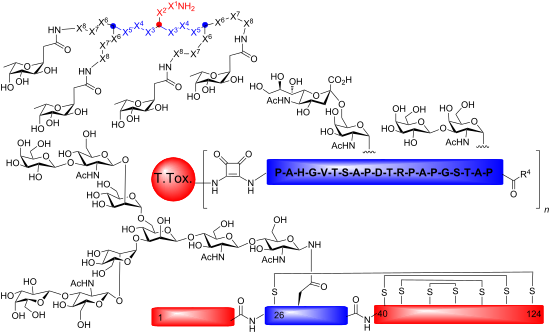
- recently, the application of the transglycosylation reaction was of limited use, due to competing enzyme hydrolysis of the formed glycopeptide/protein. By use of oxazoline transition-state analogue substrates, the rate for the transglycosylation reaction was increased and thereby the slower product
- hydrolysis reaction could be avoided [84][85]. A number of successful preparations of N-glycopeptides and N-glycoproteins have since then been successfully prepared by using oxazoline oligosaccharide donors; the synthesis of a HIV gp120 glycopeptide fragment, the HIV gp41 peptide, and the RNase B
- 39 used in this study contained a mixture of high-mannose glycoforms; by treatment with endoglycosidase H (Endo-H), these glycans could be hydrolytically cleaved leaving the GlcNAc monosaccharide still attached to the protein. By treatment with a complex type glycan oxazoline donor and an Endo-M


Synthesis of axially chiral oxazoline–carbene ligands with an N-naphthyl framework and a study of their coordination with AuCl·SMe2
Beilstein J. Org. Chem. 2012, 8, 726–731, doi:10.3762/bjoc.8.81
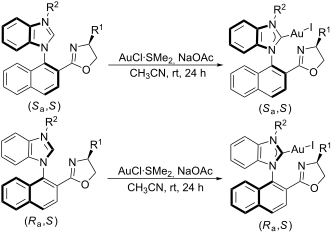
- Institute of Organic Chemistry, Chinese Academy of Sciences, 354 Fenglin Road, Shanghai 200032, P. R. China 10.3762/bjoc.8.81 Abstract Axially chiral oxazoline–carbene ligands with an N-naphthyl framework were successfully prepared, and their coordination behavior with AuCl·SMe2 was also investigated
- % ee of the (E)-allylation products and 92% ee of the recovered Morita–Baylis–Hillman adducts. These intriguing results stimulated us to further develop the axially chiral oxazoline–carbene ligands 7 with an N-naphthyl framework and to evaluate their coordination with AuCl·SMe2. Results and Discussion
- amide 14a as a mixture of diastereomeric isomers successfully in 91% yield. To our delight, the two diastereomeric isomers with a chiral N-naphthyl axis, (Sa,S)-15a and (Ra,S)-15a, were synthesized from amide 14a according to the classical synthetic method for the preparation of an oxazoline ring, and



Facile synthesis of nitrophenyl 2-acetamido-2-deoxy-α-D-mannopyranosides from ManNAc-oxazoline
Beilstein J. Org. Chem. 2012, 8, 428–432, doi:10.3762/bjoc.8.48
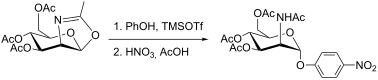
- , Czech Republic 10.3762/bjoc.8.48 Abstract The synthetic procedures for a large-scale preparation of o- and p-nitrophenyl 2-acetamido-2-deoxy-α-D-mannopyranoside are described. The synthetic pathway employs the glycosylation of phenol with ManNAc oxazoline, followed by nitration of the aromatic moiety
- yielding a separable mixture of the o- and p-nitrophenyl derivative in a 2:3 ratio. Keywords: α-ManNAc; glycosidase; glycosylation; nitrophenyl; oxazoline; Introduction Hexosamines are fundamental structural elements and precursors of the peptidoglycan and membrane lipopolysaccharide layer as well as of
- preparation of glycoproteins [9][10], various alcohol glycosides [11][12], phosphates [13] and oligosaccharides [12]. To the best of our knowledge, glycosylation of phenolic OH with oxazoline has not been accomplished so far. Therefore, we decided to test oxazoline 3 [14] glycosylation in our synthetic


Efficient and selective chemical transformations under flow conditions: The combination of supported catalysts and supercritical fluids
Beilstein J. Org. Chem. 2011, 7, 1347–1359, doi:10.3762/bjoc.7.159
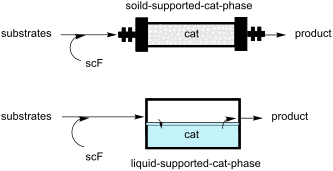
- the enantioselective cyclopropanation with supported copper–bisoxazoline (Cu–BOX) or copper-pyridineoxazoline (Cu–PyOX) complexes and related systems. The oxazoline ligands can be introduced in polystyrene–divinylbenzene (PS–DVB) matrices either by grafting, by reaction with chloromethyl groups of


An overview of the key routes to the best selling 5-membered ring heterocyclic pharmaceuticals
Beilstein J. Org. Chem. 2011, 7, 442–495, doi:10.3762/bjoc.7.57
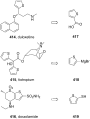
- has been replaced by an oxazolinone ring. The original synthesis utilised 4-nitro-L-phenylalanine (73) as the precursor for the oxazoline moiety (Scheme 16) [19]. The resulting Fischer indole synthesis is similar to that used for sumatriptan (Scheme 9). More recent reports [20] deal with improvements







Molecular rearrangements of superelectrophiles
Beilstein J. Org. Chem. 2011, 7, 346–363, doi:10.3762/bjoc.7.45
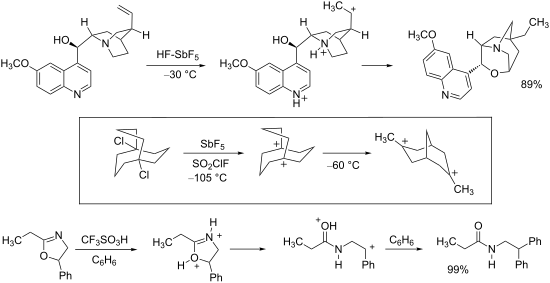
- -dication 14. Subsequent reaction with benzene yields the final product. Using the same chemistry, a chiral 2-oxazoline was shown to give a Friedel–Crafts product in modest diastereoselectivity. A similar reaction was reported [15] in the AlCl3-catalyzed reactions of isoxazolidines (Scheme 3). Product


Synthesis and crystal structures of multifunctional tosylates as basis for star-shaped poly(2-ethyl-2-oxazoline)s
Beilstein J. Org. Chem. 2010, 6, 773–783, doi:10.3762/bjoc.6.96
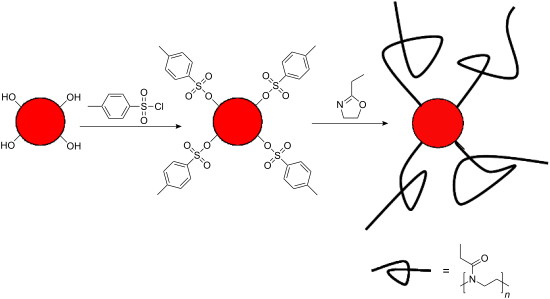
- reported. The use of tetra- and hexa-tosylates, based on (di)pentaerythritol as initiators for the CROP of 2-ethyl-2-oxazoline, resulted in very slow initiation and ill-defined polymers, which is most likely caused by steric hindrance in these initiators. As a consequence, a porphyrin-cored tetra-tosylate
- initiator was prepared, which yielded a well-defined star-shaped poly(2-ethyl-2-oxazoline) by CROP as demonstrated by SEC with RI, UV and diode-array detectors, as well as by 1H NMR spectroscopy. Keywords: cationic polymerization; crystal structure; living polymerization; star-polymer; tosylate
- their linear analogues with regard to, e.g., number of functional end-groups, hydrodynamic volume and thermal properties [1][2]. Poly(2-oxazoline)s represent a class of versatile polymer structures that can be prepared by the (CROP) of 2-substituted-2-oxazoline monomers (see the bottom right corner of




Molecular recognition of organic ammonium ions in solution using synthetic receptors
Beilstein J. Org. Chem. 2010, 6, No. 32, doi:10.3762/bjoc.6.32


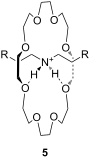


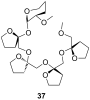


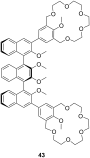


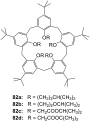


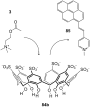


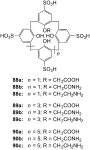


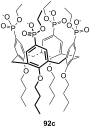


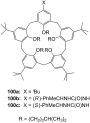


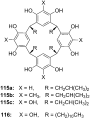
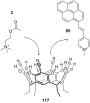


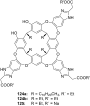
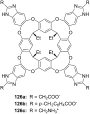


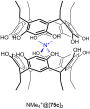


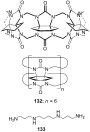


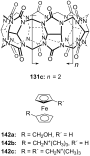


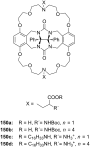
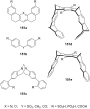


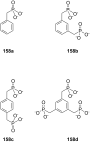

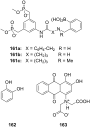


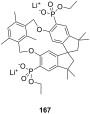
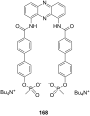

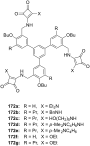
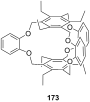


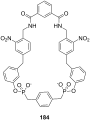


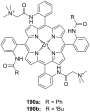


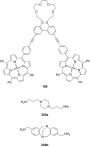


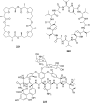


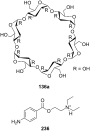
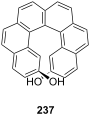


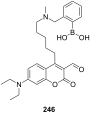


Concise methods for the synthesis of chiral polyoxazolines and their application in asymmetric hydrosilylation
Beilstein J. Org. Chem. 2010, 6, No. 29, doi:10.3762/bjoc.6.29

- the linkers and the substituents present on the oxazoline rings on the yield and enantioselectivity investigated. Compound 2 was identified as the best ligand of this family for the hydrosilylation of aromatic ketones. Keywords: aromatic ketone; hydrosilylation; polyoxazoline; rhodium; synthesis
- ; Introduction The design and development of effective chiral oxazoline ligands have played a significant role in the advancement of asymmetric catalysis and have attracted a great deal of attention. Various chiral oxazoline ligands have been developed and applied in many catalytic asymmetric reactions to
- the coordination of 5 to [Rh(COD)Cl]2. In addition, the experimental results also show that flexible linkers of oxazoline rings result in low enantioselectivities (entries 11, 12, 14, 15). Table 2 shows that bisoxazoline 2 with benzyl group (entry 10) gave a higher ee than its counterpart


Ring opening metathesis polymerization-derived block copolymers bearing chelating ligands: synthesis, metal immobilization and use in hydroformylation under micellar conditions
Beilstein J. Org. Chem. 2010, 6, No. 28, doi:10.3762/bjoc.6.28
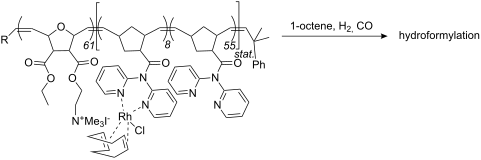
- . [34]. Using a poly(2-oxazoline)-based amphiphilic copolymer and a RhBr(1,3-dialkylimidazol-2-ylidene-based catalyst, selectivities (n:iso) of ~3 at 40% conversion and an activity (TOF0) of 1630 h−1 in the hydroformylation of 1-octene was observed [35]. Here, we used poly(M1-b-M2)-Rh for the





