Search results
Search for "oxidative cleavage" in Full Text gives 102 result(s) in Beilstein Journal of Organic Chemistry.
Cyclization–endoperoxidation cascade reactions of dienes mediated by a pyrylium photoredox catalyst
Beilstein J. Org. Chem. 2014, 10, 1272–1281, doi:10.3762/bjoc.10.128
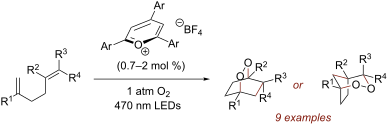
- to examine the scope of the reaction with respect to the diene structure. Miyashi’s 1,5-diene (2b; E1/2Ox = 1.22 V vs SCE [12]) afforded a 50% yield of the expected endoperoxide along with ~5% of a 1,4-dione, presumably from double oxidative cleavage of the 1,5-diene (Table 2, entry 1). Unfortunately
- , attempts to move away from 2b to less electron-rich dienes such as 2c, 2d and 2e (Table 1, entries 2–4), failed to produce any of the desired endoperoxide products and mainly oxidative cleavage adducts were observed. Given the lack of reactivity of this alkene substitution pattern, we turned our attention
- intermediate. The competing 6-endo cyclization mode and formation of distonic cation radical 9 ultimately provides access to the more stabilized cation radical 10, which undergoes oxidative cleavage to afford the corresponding α-allyl ketones (Scheme 4). In the absence of the geminal dimethyl group (2r, 2s


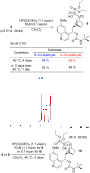
Addition of H-phosphonates to quinine-derived carbonyl compounds. An unexpected C9 phosphonate–phosphate rearrangement and tandem intramolecular piperidine elimination
Beilstein J. Org. Chem. 2014, 10, 883–889, doi:10.3762/bjoc.10.85
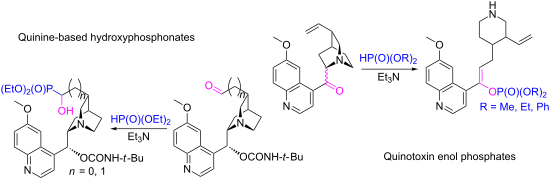
- amounts of osmium tetroxide to obtain the vicinal diol 3 [27]. This intermediate was preparatively separated as a 60:40 (R/S) mixture of epimers at C10. The diol compound was subsequently oxidized with NaIO4 to the aldehyde 4 with simultaneous C–C bond breakage. According to the literature an oxidative
- cleavage on silica in a two-phase system led predominantly to the C3 epimer of the R configuration 90:10 (yield 93%) in a short reaction time [27]. In our case, when the reaction time was prolonged to 2 hours, the overall yield remained at the same level while the diastereoselectivity was reduced to 71:29




Synthesis of (2S,3R)-3-amino-2-hydroxydecanoic acid and its enantiomer: a non-proteinogenic amino acid segment of the linear pentapeptide microginin
Beilstein J. Org. Chem. 2014, 10, 667–671, doi:10.3762/bjoc.10.59
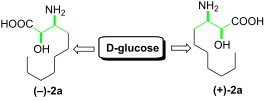
- methanol:ethyl acetate (3:2) at balloon pressure gave 4-heptyl-L-threose derivative 5a as a viscous oil in 99% yield [33]. Removal of the 1,2-acetonide group with TFA–water in 5a provided an anomeric mixture of the hemiacetal, which was directly subjected to oxidative cleavage by using sodium metaperiodate in
- -pentodialdo-1,4-furanose (3b) which was obtained from D-glucose in good yield as reported earlier [33]. Thus, the Wittig reaction of 3b followed by hydrogenation (10% Pd/C) gave 4-heptyl-D-threose derivative 5b (Scheme 3). Hydrolysis of 1,2-O-isopropylidene (TFA:H2O) followed by oxidative cleavage of the


Concise, stereodivergent and highly stereoselective synthesis of cis- and trans-2-substituted 3-hydroxypiperidines – development of a phosphite-driven cyclodehydration
Beilstein J. Org. Chem. 2014, 10, 369–383, doi:10.3762/bjoc.10.35
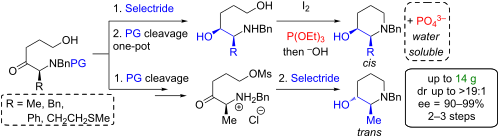
- piperidine cis-11c and its N-deprotected derivative were converted to (2S,3R)-3-hydroxypipecolic acid through protecting group manipulation and oxidative cleavage of the phenyl group with RuCl3 and NaIO4 [38][40]. Conclusion Herein we presented a highly stereodivergent (dr up to 19:1), scalable and practical


Decandrinin, an unprecedented C9-spiro-fused 7,8-seco-ent-abietane from the Godavari mangrove Ceriops decandra
Beilstein J. Org. Chem. 2014, 10, 276–281, doi:10.3762/bjoc.10.23
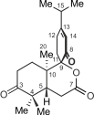
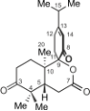
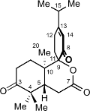
- shown in Figure 4. A plausible biogenetic precursor of decandrinin (1) might be the naturally more common β-diastereomer of 7,13-ent-abietadien-3-ol (2). Accordingly, its 3β-OH group would be oxidized to yield int A, whose C-9 would then be hydroxylated to afford int B. Oxidative cleavage at the ∆7,8


Recent applications of the divinylcyclopropane–cycloheptadiene rearrangement in organic synthesis
Beilstein J. Org. Chem. 2014, 10, 163–193, doi:10.3762/bjoc.10.14
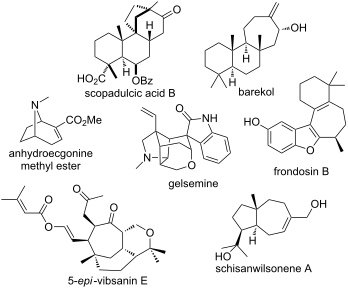
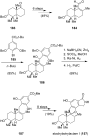
- 96, for which the yield and enantioselectivity was determined starting from 93. Standard functional group interconversion first provided exo-methylene 97, followed by ruthenium-catalyzed oxidative cleavage of the installed exo-methylene moiety [94] to give tricyclic ketone 98, which can be converted
- quarternary carbon center, the resulting amide cyclized during the purification on silica to give amide 174. Reduction of this amide to the aminal was followed by dehydration and Lemieux–Johnson [149] oxidative cleavage to give dialdehyde 175. The liberated alcohol moiety was reprotected, followed by cleavage




The chemistry of isoindole natural products
Beilstein J. Org. Chem. 2013, 9, 2048–2078, doi:10.3762/bjoc.9.243
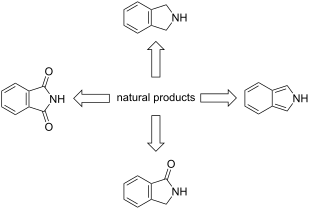
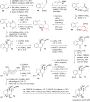
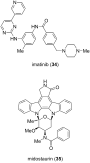
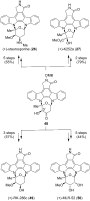
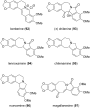
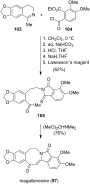
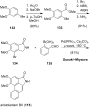
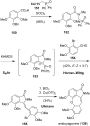
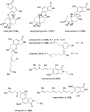
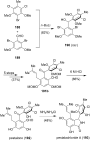
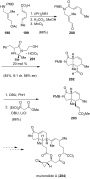
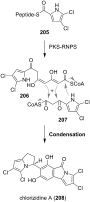
- assembled from nine acetate units and glycine, respectively N-methylglycine derivative, which contributes both carbon atoms and the nitrogen to the skeleton of 210 (position 12 and 12a). The latter are uncommon starter units in a type II polyketide assembly line [160]. Upon oxidative cleavage of the D-ring
















A practical synthesis of long-chain iso-fatty acids (iso-C12–C19) and related natural products
Beilstein J. Org. Chem. 2013, 9, 1807–1812, doi:10.3762/bjoc.9.210

- triethylsilane and BF3·Et2O [53], affording 11. Oxidative cleavage of 11 with KMnO4/Bu4NBr [54] afforded iso-C12 acid 1. Alternatively, anti-Markovnikov hydration of 11, using I2/NaBH4 then hydrogen peroxide [55], afforded the alcohol 12, and oxidation of 12 with KMnO4/Bu4NBr afforded iso-C13 acid 2
- ] followed by Chugaev elimination afforded the terminal alkene 19. Oxidative cleavage of 19 using KMnO4/Bu4NBr [54] afforded iso-C16 acid 5. Reduction of 5 (BH3·Me2S) [59] afforded the alcohol 20 that when subjected to the same transformations as before, via the xanthate ester 21, delivered the terminal
- alkene 22. Finally, oxidative cleavage (KMnO4/Bu4NBr) [54] of 22 afforded iso-C15 acid 4. The iso-C18 7 and iso-C19 8 fatty acids were synthesized through similar approaches from the related C16 lactone hexadecanolide 23 [60] (Scheme 3). Reaction of 23 with methylmagnesium bromide afforded 24


A reductive coupling strategy towards ripostatin A
Beilstein J. Org. Chem. 2013, 9, 1533–1550, doi:10.3762/bjoc.9.175
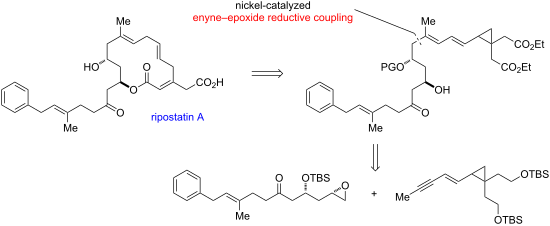
- material throughput. In order to proceed with the synthesis, we needed a more robust route, with the following criteria: (1) no protecting groups requiring oxidative cleavage, and (2) introduction of the C13 hydroxy group at an early stage. Iodocyclization approaches to epoxide In the preparation of model


Metal-free aerobic oxidations mediated by N-hydroxyphthalimide. A concise review
Beilstein J. Org. Chem. 2013, 9, 1296–1310, doi:10.3762/bjoc.9.146
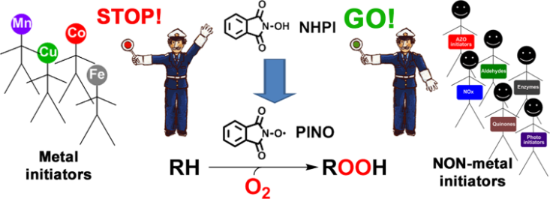
- decreased from 24.5 to 21.3%. Very recently NHPI was reported to catalyze selective transformations without requiring additional initiators. Jiao et al. described the catalyzed oxidative cleavage of C=C double bonds using molecular oxygen as the final oxidant [72]. Following this approach α-methylstyrene
- from N-alkoxyphthalimides. Visible-light/g-C3N4 induced metal-free oxidation of allylic substrates. NHPI/o-phenanthroline-mediated organocatalytic system. NHPI/DMG-mediated organocatalytic system. NHPI catalyzed oxidative cleavage of C=C bonds. Synthesis of hydrazine derivatives. Acknowledgements We


Synthesis of the tetracyclic core of Illicium sesquiterpenes using an organocatalyzed asymmetric Robinson annulation
Beilstein J. Org. Chem. 2013, 9, 1135–1140, doi:10.3762/bjoc.9.126
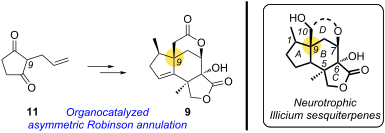
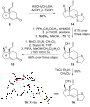
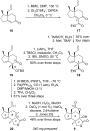
- (0)-catalyzed carbomethoxylation [87][88][89][90] produced the desired C-ring lactone 20 in 61% yield. Epoxidation of the C-6/C-7 enone with NaOH/H2O2 followed by oxidative cleavage of the C-11 terminal alkene under OsO4/NaIO4 conditions [91][92] afforded the corresponding C-11 aldehyde. Exposure of


Development of peptidomimetic ligands of Pro-Leu-Gly-NH2 as allosteric modulators of the dopamine D2 receptor
Beilstein J. Org. Chem. 2013, 9, 204–214, doi:10.3762/bjoc.9.24
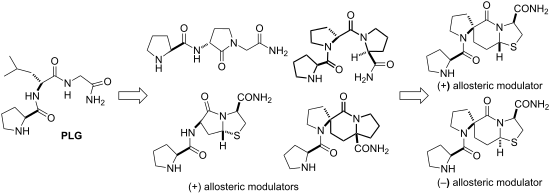
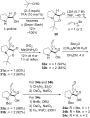
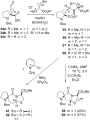
- accomplished by initial esterification of 33a and 33b, respectively, followed by oxidative cleavage of the double bond in each case with OsO4/NaIO4 [46]. An efficient and reproducible conversion of 33b into 34c was developed that consisted of the following three-step route: (1) benzyl ester formation, (2
- ) oxidative cleavage of the double bond with OsO4/NaIO4, and (3) hydrogenolysis of the benzyl ester [36][48]. Although the Seebach methodology provides a highly stereoselective way to α-alkylated prolines, there are several shortcomings to the originally developed protocols [47]. In the oxazolidinone




A Wittig-olefination–Claisen-rearrangement approach to the 3-methylquinoline-4-carbaldehyde synthesis
Beilstein J. Org. Chem. 2012, 8, 1725–1729, doi:10.3762/bjoc.8.197

- underwent Claisen rearrangement to give 4-pentenals 3a–h. Protection of the aldehyde group of the 4-pentenals as acetals 4a–h and subsequent oxidative cleavage of the terminal olefin furnished nitroaldehydes 5a–h. Reductive cyclization of these nitroaldehydes yielded the required 3-methylquinoline-4
- -carbaldehydes 6a–h in excellent yields. Therefore, an efficient method was developed for the preparation of 3-methylquinoline-4-carbaldehydes from o-nitrobenzaldehydes in a simple five-step procedure. Keywords: acetal; Claisen rearrangement; oxidative cleavage; ring-closure; Wittig olefination; Introduction
- unsuccessful. Subjecting these acetals to oxidative cleavage in aq THF furnished the aldehydes 5a–h in good yields (Table 1). The NMR of these aldehydes revealed them again to be a mixture of diastereomers, although they appeared to be homogeneous on TLC. Reductive cyclization of these nitroaldehydes furnished


Syntheses and applications of furanyl-functionalised 2,2’:6’,2’’-terpyridines
Beilstein J. Org. Chem. 2012, 8, 379–389, doi:10.3762/bjoc.8.41

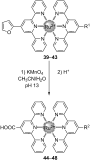
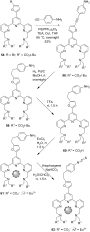
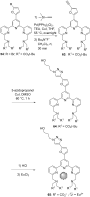
- fact, the furan ring can readily undergo oxidative cleavage under various conditions, thus providing an interesting route to carboxylates [35]. In the case of tpys, oxidation of the furanyl ring was performed by using potassium permanganate in a basic reaction medium, followed by acidification to





Directed aromatic functionalization in natural-product synthesis: Fredericamycin A, nothapodytine B, and topopyrones B and D
Beilstein J. Org. Chem. 2011, 7, 1475–1485, doi:10.3762/bjoc.7.171
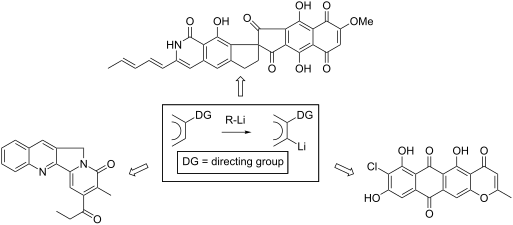
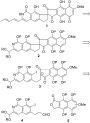
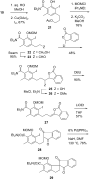
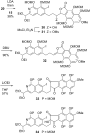
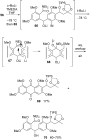
- more electrophilic quinolyl ketone would direct an initial conjugate addition of the anion of a suitable cyanoacetamide to its own β-position. A particularly direct way to produce 41 seemed to be the oxidative cleavage of the furan ring in 42, which thus became the first subgoal of our study. In that







A straightforward approach towards combined α-amino and α-hydroxy acids based on Passerini reactions
Beilstein J. Org. Chem. 2011, 7, 1299–1303, doi:10.3762/bjoc.7.151

- by chelated enolate Claisen rearrangement [22][23] or transition metal-catalyzed allylic alkylation of chelated enolates [24] and subsequent oxidative cleavage of the γ–δ-unsaturated amino acids obtained. Results and Discussion An alternative approach is based on regioselective ring opening of


Gold-catalyzed oxidation of arylallenes: Synthesis of quinoxalines and benzimidazoles
Beilstein J. Org. Chem. 2011, 7, 860–865, doi:10.3762/bjoc.7.98

- particular, water as a nucleophilic reagent has been used in the addition of alkynes and allenes [16][17][18]. In contrast, gold-catalyzed oxidation chemistry has been less well developed [25][26][27][28][29][30][31][32][33][34][35][36], although oxidative cleavage of carbon–carbon double bonds and carbon
- /hydration and oxidative cleavage of allenes to form α-diketones and aldehydes, and the synthesis of quinoxalines and benzimidazoles via the condensation of the resulting α-diketones and aldehydes with benzene-1,2-diamine [45][46][47][48][49][50][51][52][53][54][55][56]. Results and Discussion Our initial
- of quinoxalines and benzimidazoles via the condensation of the resulting α-diketones and aldehydes with benzene-1,2-diamine was achieved in high yields. This reaction appears to proceed via oxidation/hydration and oxidative cleavage of the allene, and investigations into the mechanism of this


Total synthesis of (±)-coerulescine and (±)-horsfiline
Beilstein J. Org. Chem. 2010, 6, 876–879, doi:10.3762/bjoc.6.103

- in clean cyclization leading to oxindole 9. After protecting the amide nitrogen with Boc, the oxindole 10 was treated with NaH, followed by ethyl chloroformate at 0 °C to give 11 in 80% yield. Oxidative cleavage of the allyl group was accomplished by catalytic osmium tetroxide and N-methylmorpholine


Addition of lithiated enol ethers to nitrones and subsequent Lewis acid induced cyclizations to enantiopure 3,6-dihydro-2H-pyrans – an approach to carbohydrate mimetics
Beilstein J. Org. Chem. 2010, 6, No. 75, doi:10.3762/bjoc.6.75

- to a tricarboxylic acid core. Keywords: aminopyrans; carbohydrate mimetics; Lewis acids; lithiated enol ethers; nitrones; oxidative cleavage; stereodivergent synthesis; Introduction The pyran structural motif can be found in numerous bioactive natural products. Possible strategies towards their
- enantiopure aminopyrans. An additional option for the use of the enol ether moiety is oxidative cleavage [21]. Thus, benzyl protection of compound cis-5b followed by treatment of the resulting 19 with RuCl3 and NaIO4 gave the ten-membered ring lactone 20 by selective cleavage of the internal double bond
- moiety of trans-5a leading to products 13–15. Bromination of bicyclic dihydropyran trans-5b affording 16. Synthesis of epoxypyran 18 by bromination of cis-5d. Oxidative cleavage of dihydropyran 19 to lactone 20. Transformation of α-bromoketone 15 into nitrone 21 by an internal redox reaction


Mitomycins syntheses: a recent update
Beilstein J. Org. Chem. 2009, 5, No. 33, doi:10.3762/bjoc.5.33






Recent progress on the total synthesis of acetogenins from Annonaceae
Beilstein J. Org. Chem. 2008, 4, No. 48, doi:10.3762/bjoc.4.48
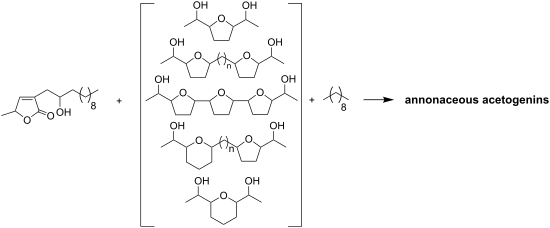
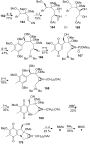
- 21 and oxidative cleavage of the resulting diol, the resultant aldehyde was treated with chiral allenylboronic ester to afford 22. The terminal epoxides 24 and 26 were prepared from the same intermediate 23. Coupling of 22 with 24 (or 26) in the same manner followed by hydrogenation and removal of


Radical cascades using enantioenriched 7-azabenzonorbornenes and their applications in synthesis
Beilstein J. Org. Chem. 2008, 4, No. 38, doi:10.3762/bjoc.4.38
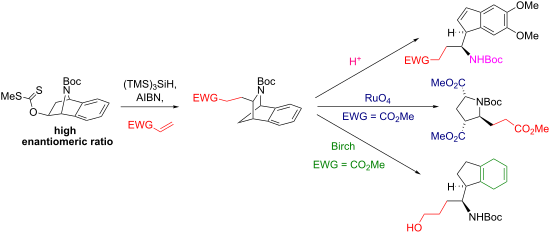
- -disubstituted pyrrolidine (Scheme 6). This transformation was of interest because the pyrrolidine ring is a common nitrogen-containing motif in natural products and pharmaceutically relevant molecules [33]. Ruthenium tetraoxide was first examined as a reagent for the oxidative cleavage of the aromatic ring
- –oxidation with (−)-Ipc2BH to be determined by chemical correlation. Pyrrolidine 35 was independently prepared from (1R)-(−)-2-azabicyclo[2.2.1]hept-5-en-3-one (Vince’s lactam [36], 37) via reduction with LiAlH4, Boc-protection and oxidative cleavage [37] (Scheme 9). The pyrrolidines prepared from rearranged
- azacycle (+)-8 and lactam 37 were both dextrorotatory, confirming the provisional assignment of configuration that had been made by analogy with Laschat’s work [29]. Since attempts to effect RuO4-mediated oxidative cleavage of 2-azabenzonorbornene 8 employing periodic acid as the stoichiometric co-oxidant


End game strategies towards the total synthesis of vibsanin E, 3-hydroxyvibsanin E, furanovibsanin A, and 3-O-methylfuranovibsanin A
Beilstein J. Org. Chem. 2008, 4, No. 34, doi:10.3762/bjoc.4.34

- ) by a Claisen rearrangment (via the silyl enol ether) was not high yielding and produced many side products. Ozonolysis of 25 afforded the acetone sidechain (i.e. 26) in acceptable yield (50%). Other methods to unmask the ketone functionality failed, for example, dihydroxylation followed by oxidative
- cleavage. Nevertheless, the acetone sidechain could be introduced in ~20% overall yield allowing end game functionalisation (as discussed below). α-Hydroxylation was next investigated. Considering the observed preference for regiospecific enolate formation in our system we devised a simple two pot


Total synthesis of the indolizidine alkaloid tashiromine
Beilstein J. Org. Chem. 2008, 4, No. 8, doi:10.1186/1860-5397-4-8
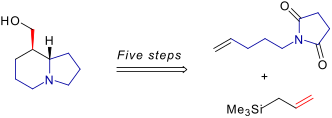
- of the allylsilane to the N-acyliminium ion occurs through a chair-like transition state with the nascent alkene equatorially disposed. All that remained to complete the synthesis of tashiromine 1 was to effect the oxidative cleavage of the C5 vinyl substituent, then carry out a global reduction of


Combining two-directional synthesis and tandem reactions, part 11: second generation syntheses of (±)-hippodamine and (±)-epi-hippodamine
Beilstein J. Org. Chem. 2008, 4, No. 4, doi:10.1186/1860-5397-4-4
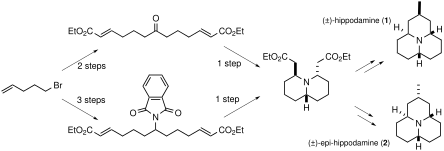
- intermediate 7 and try to realise an improvement over our earlier work. This paper discloses two such improvements. The first of these is the conversion of dialkene 4 into the diacrylate derivative 6 . Originally this was achieved by oxidative cleavage of the two alkene moieties of 4 to form the rather
- immediately after isolation of the dialdehyde 5 (this was found to decompose upon storage, even at low temperature), and also the oxidative cleavage reaction produced large amounts of toxic osmium waste. During our recent synthesis of histrionicotoxin [11], we found that two-directional homologation of a