Search for "phosphonates" in Full Text gives 104 result(s) in Beilstein Journal of Organic Chemistry.
Beilstein J. Org. Chem. 2014, 10, 1967–1980, doi:10.3762/bjoc.10.205
Graphical Abstract
Figure 1: Examples of biologically active acyclic and cyclic nucleotide analogs.
Figure 2: The pyrrolidine nucleotide analogs investigated in this study.
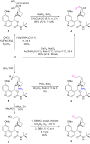
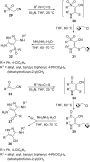
Scheme 1: The synthesis of pyrrolidine nucleotides 7–14.
Figure 3: The numbering of the pyrrolidine ring, the nucleobase and the endocyclic phase angles for the purpo...
Figure 4: The aliphatic part (pyrrolidine protons) of the 1H NMR spectra of 9 measured in D2O at different pD...
Figure 5: Changes of selected 1H and 13C chemical shifts of 9 upon pD change.
Figure 6: The deuteration equilibria of phosphonomethyl derivatives 7–10.
Figure 7: The aliphatic part (pyrrolidine protons) of the 1H NMR spectra of 13 measured in D2O at different p...
Figure 8: Amide rotamers of phosphonoformyl derivatives 11–14.
Figure 9: The 31P NMR spectra (202.3 MHz) of 14 measured (the black curve) and simulated (the red curve) at v...
Figure 10: A part of the H,C-HSQC spectrum of derivative 13, showing the assignment of rotamers A and B.
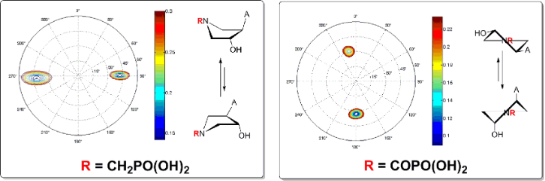
Figure 11: The pseudorotation pathway of the pyrrolidine ring in the compounds studied. The sign B stands for ...
Figure 12: An example of the stereospecific assignment of pyrrolidine-ring protons of 14 in the H,H-ROESY spec...
Figure 13: The energy profile of the five-membered pyrrolidine ring pseudorotation for adenine derivatives 9 a...
Figure 14: The most stable conformations of adenine derivatives 9 and 13A calculated by the B3LYP/6-31++G* met...
Beilstein J. Org. Chem. 2014, 10, 1933–1941, doi:10.3762/bjoc.10.201
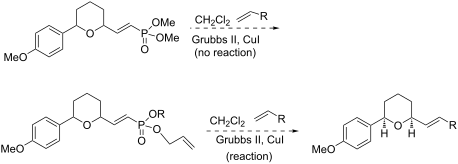
Graphical Abstract
Scheme 1: Palladium catalysed reaction of phosphono allylic carbonates.
Figure 1: Natural products prepared using vinyl phosphonate intermediates.
Scheme 2: Approaches to the synthesis of centrolobine.
Scheme 3: Relay ring closing metathesis and relay cross metathesis.
Scheme 4: Cross metathesis reactions of vinyl phosphonates.
Scheme 5: Transesterification of phosphonate esters.
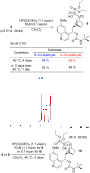
Scheme 6: Relay cross metathesis of mono-allyl vinylphosphonates with methyl acrylate.
Scheme 7: Relay cross metathesis of mono-allyl vinylphosphonates with styrenes.
Scheme 8: Ring closing vs relay cross metathesis.
Scheme 9: Relay cross metathesis of diallyl vinylphosphonates with methyl acrylate.
Scheme 10: A cross metathesis reaction of both mono- and diallyl vinylphosphonates with methyl acrylate.
Scheme 11: A proposed mechanism for the relay cross metathesis reaction of allyl vinylphosphonates.
Scheme 12: A proposed mechanism for the TBAI catalysed transesterification.
Scheme 13: A selective synthesis of mono-allyl phosphonates.
Beilstein J. Org. Chem. 2014, 10, 1339–1346, doi:10.3762/bjoc.10.136
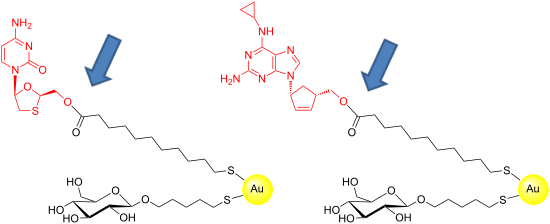
Graphical Abstract
Figure 1: The prepared lamivudine (3TC) and abacavir (ABC) potential prodrugs and the corresponding 3TC- and ...
Figure 2: Time course release of free 3TC and ABC from the corresponding GNPs in 1 N HCl, detected by HPLC–MS...
Figure 3: Cellular experiments: The two graphs show the percentage of luciferase activity decrease in the pre...
Beilstein J. Org. Chem. 2014, 10, 1166–1196, doi:10.3762/bjoc.10.117

Graphical Abstract
Scheme 1: Pioneer works of Atherton, Openshaw and Todd reporting on the synthesis of phosphoramidate starting...
Scheme 2: Mechanisms 1 (i) and 2 (ii) suggested by Atherton and Todd in 1945; adapted from [1].
Scheme 3: Two reaction pathways (i and ii) to produce chlorophosphate 2. Charge-transfer complex observed whe...
Scheme 4: Mechanism of the Atherton–Todd reaction with dimethylphosphite according to Roundhill et al. (adapt...
Scheme 5: Synthesis of dialkyl phosphate from dialkyl phosphite (i) and identification of chloro- and bromoph...
Scheme 6: Synthesis of chiral phosphoramidate with trichloromethylphosphonate as the suggested intermediate (...
Scheme 7: Selection of results that address the question of the stereochemistry of the AT reaction (adapted f...
Scheme 8: Synthesis of phenoxy spirophosphorane by the AT reaction (adapted from [34]).
Scheme 9: Suggested mechanism of the Atherton–Todd reaction, (i) and (ii) formation of chlorophosphate with a...
Scheme 10: AT reaction in biphasic conditions (adapted from [38]).
Scheme 11: AT reaction with iodoform as halide source (adapted from [37]).
Scheme 12: AT reaction with phenol at low temperature in the presence of DMAP (adapted from [40]).
Scheme 13: Synthesis of a triphosphate by the AT reaction starting with the preparation of chlorophosphate (ad...
Scheme 14: AT reaction with sulfonamide (adapted from [42]).
Scheme 15: Synthesis of a styrylphosphoramidate starting from the corresponding aniline (adapted from [43]).
Scheme 16: Use of hydrazine as nucleophile in AT reactions (adapted from [48]).
Scheme 17: AT reaction with phenol as a nucleophilic species; synthesis of dioleyl phosphate-substituted couma...
Scheme 18: Synthesis of β-alkynyl-enolphosphate from allenylketone with AT reaction (adapted from [58]).
Scheme 19: Synthesis of pseudohalide phosphate by using AT reaction (adapted from [67]).
Scheme 20: AT reaction with hydrospirophosphorane with insertion of CO2 in the product (adapted from [69]).
Scheme 21: AT reaction with diaryl phosphite (adapted from [70]).
Scheme 22: AT reaction with O-alkyl phosphonite (adapted from [71]).
Scheme 23: Use of phosphinous acid in AT reactions (adapted from [72]).
Scheme 24: AT reaction with secondary phosphinethiooxide (adapted from [76]).
Scheme 25: Use of H-phosphonothioate in the AT reaction (adapted from [78]).
Scheme 26: AT-like reaction with CuI as catalyst and without halide source (adapted from [80]).
Scheme 27: Reduction of phenols after activation as phosphate derivatives (adapted from [81] i ; [82], ii; and [83], iii).
Scheme 28: Synthesis of medium and large-sized nitrogen-containing heterocycles (adapted from [85]).
Scheme 29: Synthesis of arylstannane from aryl phosphate prepared by an AT reaction (adapted from [86]).
Scheme 30: Synthesis and use of aryl dialkyl phosphate for the synthesis of biaryl derivatives (adapted from [89])....
Scheme 31: Synthesis of aryl dialkyl phosphate by an AT reaction from phenol and subsequent rearrangement yiel...
Scheme 32: Selected chiral phosphoramidates used as organocatalyst; i) chiral phosphoramidate used in the pion...
Scheme 33: Determination of ee of H-phosphinate by the application of the AT reaction with a chiral amine (ada...
Scheme 34: Chemical structure of selected flame retardants synthesized by AT reactions; (BDE: polybrominated d...
Scheme 35: Transformation of DOPO (i) and synthesis of polyphosphonate (ii) by the AT reaction (adapted from [117] ...
Scheme 36: Synthesis of lipophosphite (bisoleyl phosphite) and cationic lipophosphoramidate with an AT reactio...
Scheme 37: Use of AT reactions to produce cationic lipids characterized by a trimethylphosphonium, trimethylar...
Scheme 38: Cationic lipid synthesized by the AT reaction illustrating the variation of the structure of the li...
Scheme 39: Helper lipids for nucleic acid delivery synthesized with the AT reaction (adapted from [130]).
Scheme 40: AT reaction used to produce red/ox-sensitive cationic lipids (adapted from [135]).
Scheme 41: Alkyne and azide-functionalized phosphoramidate synthesized by AT reactions,(i); illustration of so...
Scheme 42: Cationic lipids exhibiting bactericidal action – arrows indicate the bond formed by the AT reaction...
Scheme 43: β-Cyclodextrin-based lipophosphoramidates (adapted from [138]).
Scheme 44: Polyphosphate functionalized by an AT reaction (adapted from [139]).
Scheme 45: Synthesis of zwitterionic phosphocholine-bound chitosan (adapted from [142]).
Scheme 46: Synthesis of AZT-based prodrug via an AT reaction (adapted from [143]).
Beilstein J. Org. Chem. 2014, 10, 1064–1096, doi:10.3762/bjoc.10.106
Graphical Abstract
Scheme 1: Synthesis of P-stereogenic phosphines 5 using menthylphosphinite borane diastereomers 2.
Scheme 2: Enantioselective synthesis of chiral phosphines 10 with ephedrine as a chiral auxiliary.
Scheme 3: Chlorophosphine boranes 11a as P-chirogenic electrophilic building blocks.
Scheme 4: Monoalkylation of phenylphosphine borane 15 with methyl iodide in the presence of Cinchona alkaloid...
Scheme 5: Preparation of tetraphosphine borane 19.
Scheme 6: Using chiral chlorophosphine-boranes 11b as phosphide borane 20 precursors.
Scheme 7: Nickel-catalyzed cross-coupling (dppe = 1,2-bis(diphenylphosphino)ethane).
Scheme 8: Pd-catalyzed cross-coupling reaction with organophosphorus stannanes 30.
Scheme 9: Copper iodide catalyzed carbon–phosphorus bond formation.
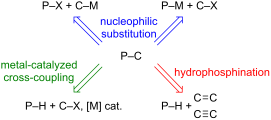
Scheme 10: Thermodynamic kinetic resolution as the origin of enantioselectivity in metal-catalyzed asymmetric ...
Scheme 11: Ru-catalyzed asymmetric phosphination of benzyl and alkyl chlorides 35 with HPPhMe (36a, PHOX = pho...
Scheme 12: Pt-catalyzed asymmetric alkylation of secondary phosphines 36b.
Scheme 13: Different adducts 43 can result from hydrophosphination.
Scheme 14: Pt-catalyzed asymmetric hydrophosphination.
Scheme 15: Intramolecular hydrophosphination of phosphinoalkene 47.
Scheme 16: Organocatalytic asymmetric hydrophosphination of α,β-unsaturated aldehydes 59.
Scheme 17: Preparation of phosphines using zinc organometallics.
Scheme 18: Preparation of alkenylphosphines 71a from alkenylzirconocenes 69 (dtc = N,N-diethyldithiocarbamate,...
Scheme 19: SNAr with P-chiral alkylmethylphosphine boranes 13c.
Scheme 20: Synthesis of QuinoxP 74 (TMEDA = tetramethylethylenediamine).
Scheme 21: Pd-Mediated couplings of a vinyl triflate 76 with diphenylphosphine borane 13e.
Figure 1: Menthone (83) and camphor (84) derived chiral phosphines.
Scheme 22: Palladium-catalyzed cross-coupling reaction of vinyl tosylates 85 and 87 with diphenylphosphine bor...
Scheme 23: Attempt for the enantioselective palladium-catalyzed C–P cross-coupling reaction between an alkenyl...
Scheme 24: Enol phosphates 88 as vinylic coupling partners in the palladium-catalyzed C–P cross-coupling react...
Scheme 25: Nickel-catalyzed cross-coupling in the presence of zinc (dppe = 1,2-bis(diphenylphosphino)ethane).
Scheme 26: Copper-catalyzed coupling of secondary phosphines with vinyl halide 94.
Scheme 27: Palladium-catalyzed cross-coupling of aryl iodides 97 with organoheteroatom stannanes 30.
Scheme 28: Synthesis of optically active phosphine boranes 100 by cross-coupling with a chiral phosphine boran...
Scheme 29: Palladium-catalyzed P–C cross-coupling reactions between primary or secondary phosphines and functi...
Scheme 30: Enantioselective synthesis of a P-chirogenic phosphine 108.
Scheme 31: Enantioselective arylation of silylphosphine 110 ((R,R)-Et-FerroTANE = 1,1'-bis((2R,4R)-2,4-diethyl...
Scheme 32: Nickel-catalyzed arylation of diphenylphosphine 25d.
Scheme 33: Nickel-catalyzed synthesis of (R)-BINAP 116 (dppe = 1,2-bis(diphenylphosphino)ethane, DABCO = 1,4-d...
Scheme 34: Nickel-catalyzed cross-coupling between aryl bromides 119 and diphenylphosphine (25d) (dppp = 1,3-b...
Scheme 35: Stereocontrolled Pd(0)−Cu(I) cocatalyzed aromatic phosphorylation.
Scheme 36: Preparation of alkenylphosphines by hydrophosphination of alkynes.
Scheme 37: Palladium and nickel-catalyzed addition of P–H to alkynes 125a.
Scheme 38: Palladium-catalyzed asymmetric hydrophosphination of an alkyne 128.
Scheme 39: Ruthenium catalyzed hydrophosphination of propargyl alcohols 132 (cod = 1,5-cyclooctadiene).
Scheme 40: Cobalt-catalyzed hydrophosphination of alkynes 134a (acac = acetylacetone).
Scheme 41: Tandem phosphorus–carbon bond formation–oxyfunctionalization of substituted phenylacetylenes 125c (...
Scheme 42: Organolanthanide-catalyzed intramolecular hydrophosphination/cyclization of phosphinoalkynes 143.
Scheme 43: Hydrophosphination of alkynes 134c catalyzed by ytterbium-imine complexes 145 (hmpa = hexamethylpho...
Scheme 44: Calcium-mediated hydrophosphanylation of alkyne 134d.
Scheme 45: Formation and substitution of bromophosphine borane 151.
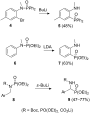
Scheme 46: General scheme for a nickel or copper catalyzed cross-coupling reaction.
Scheme 47: Copper-catalyzed synthesis of alkynylphosphines 156.
Beilstein J. Org. Chem. 2014, 10, 990–995, doi:10.3762/bjoc.10.98
Graphical Abstract
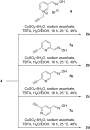
Scheme 1: Synthesis of α-alkylidene-β-hydrazino acid derivatives from MBH adducts.
Scheme 2: Initial investigation.
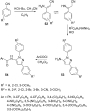
Scheme 3: Synthesis of 1H-pyrazole 7.
Scheme 4: A plausible mechanism for the formations of 3.
Beilstein J. Org. Chem. 2014, 10, 883–889, doi:10.3762/bjoc.10.85
Graphical Abstract
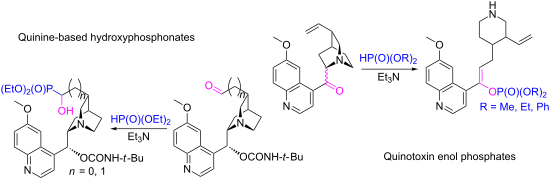
Scheme 1: Quinine (1) and O-9-t-butylcarbamoylquinine (2) as the substrates for oxidation of the C9 hydroxy a...
Scheme 2: Oxidation of the vinyl group of 9-O-tert-butylcarbamoylquinine to homologous aldehydes.
Scheme 3: Addition of diethyl phosphite to aldehydes obtained in oxidation of the vinyl group.
Scheme 4: Oxidation of quinine to quininone and quinidinone and addition of phosphites to the ketones yieldin...
Scheme 5: Spectroscopic features that confirmed the structure of the phosphate ester product of rearrangement...
Scheme 6: Tentative mechanism of the phosphonate–phosphate rearrangement associated with tandem quinuclidine ...
Beilstein J. Org. Chem. 2014, 10, 741–745, doi:10.3762/bjoc.10.68
Graphical Abstract
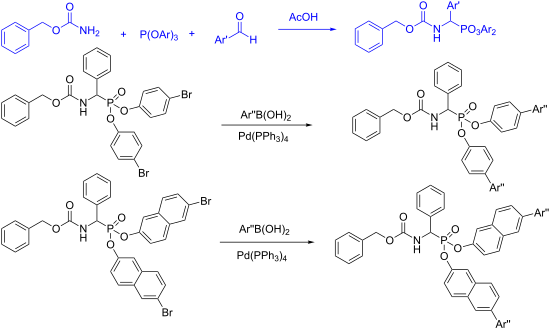
Scheme 1: Diaryl (benzyloxycarbonylamino)(phenyl)methylphosphonates.
Scheme 2: Diaryl (benzyloxycarbonylamino)(aryl)methylphosphonates.
Scheme 3: Diaryl (benzyloxycarbonylamino)(aryl)methylphosphonates obtained by Miyaura–Suzuki approach.
Scheme 4: Synthesis of mixed esters.
Beilstein J. Org. Chem. 2014, 10, 634–640, doi:10.3762/bjoc.10.55
Graphical Abstract
Figure 1: a) Structure of borrelidin (1); b) PKS intermediates are attached to an acyl carrier protein domain...
Scheme 1: Retrosynthetic analysis of surrogate substrates for BorDH3 and reference molecules for enzyme assay...
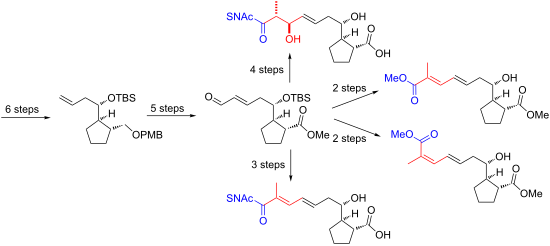
Scheme 2: Synthesis of the common precursor aldehyde 11. Compound 13 was prepared in six steps and with an ov...
Scheme 3: Synthesis of the BorDH3 substrates. a) Thiophenolpropionate, Cy2BCl, Me2EtN, Et2O, −78 °C to −20 °C...
Scheme 4: Synthesis of reference compounds for the BorDH3 assay. a) 24, CH2Cl2, 50 °C, 3 h (88% over two step...
Beilstein J. Org. Chem. 2014, 10, 544–598, doi:10.3762/bjoc.10.50
Graphical Abstract
Scheme 1: The proposed mechanism of the Passerini reaction.
Scheme 2: The PADAM-strategy to α-hydroxy-β-amino amide derivatives 7. An additional oxidation provides α-ket...
Scheme 3: The general accepted Ugi-mechanism.
Scheme 4: Three commonly applied Ugi/cyclization approaches. a) UDC-process, b) UAC-sequence, c) UDAC-combina...
Scheme 5: Ugi reaction that involves the condensation of Armstrong’s convertible isocyanide.
Scheme 6: Mechanism of the U-4C-3CR towards bicyclic β-lactams.
Scheme 7: The Ugi 4C-3CR towards oxabicyclo β-lactams.
Scheme 8: Ugi MCR between an enantiopure monoterpene based β-amino acid, aldehyde and isocyanide resulting in...
Scheme 9: General MCR for β-lactams in water.
Scheme 10: a) Ugi reaction for β-lactam-linked peptidomimetics. b) Varying the β-amino acid resulted in β-lact...
Scheme 11: Ugi-4CR followed by a Pd-catalyzed Sn2 cyclization.
Scheme 12: Ugi-3CR of dipeptide mimics from 2-substituted pyrrolines.
Scheme 13: Joullié–Ugi reaction towards 2,5-disubstituted pyrrolidines.
Scheme 14: Further elaboration of the Ugi-scaffold towards bicyclic systems.
Scheme 15: Dihydroxyproline derivatives from an Ugi reaction.
Scheme 16: Diastereoselective Ugi reaction described by Banfi and co-workers.
Scheme 17: Similar Ugi reaction as in Scheme 16 but with different acids and two chiral isocyanides.
Scheme 18: Highly diastereoselective synthesis of pyrrolidine-dipeptoids via a MAO-N/MCR-procedure.
Scheme 19: MAO-N/MCR-approach towards the hepatitis C drug telaprevir.
Scheme 20: Enantioselective MAO-U-3CR procedure starting from chiral pyrroline 64.
Scheme 21: Synthesis of γ-lactams via an UDC-sequence.
Scheme 22: Utilizing bifunctional groups to provide bicyclic γ-lactam-ketopiperazines.
Scheme 23: The Ugi reaction provided both γ- as δ-lactams depending on which inputs were used.
Scheme 24: The sequential Ugi/RCM with olefinic substrates provided bicyclic lactams.
Scheme 25: a) The structural and dipole similarities of the triazole unit with the amide bond. b) The copper-c...
Scheme 26: The Ugi/Click sequence provided triazole based peptidomimetics.
Scheme 27: The Ugi/Click reaction as described by Nanajdenko.
Scheme 28: The Ugi/Click-approach by Pramitha and Bahulayan.
Scheme 29: The Ugi/Click-combination by Niu et al.
Scheme 30: Triazole linked peptidomimetics obtained from two separate MCRs and a sequential Click reaction.
Scheme 31: Copper-free synthesis of triazoles via two MCRs in one-pot.
Scheme 32: The sequential Ugi/Paal–Knorr reaction to afford pyrazoles.
Scheme 33: An intramolecular Paal–Knorr condensation provided under basic conditions pyrazolones.
Scheme 34: Similar cyclization performed under acidic conditions provided pyrazolones without the trifluoroace...
Scheme 35: The Ugi-4CR towards 2,4-disubstituted thiazoles.
Scheme 36: Solid phase approach towards thiazoles.
Scheme 37: Reaction mechanism of formation of thiazole peptidomimetics containing an additional β-lactam moiet...
Scheme 38: The synthesis of the trisubstituted thiazoles could be either performed via an Ugi reaction with pr...
Scheme 39: Performing the Ugi reaction with DMB-protected isocyanide gave access to either oxazoles or thiazol...
Scheme 40: Ugi/cyclization-approach towards 2,5-disubstituted thiazoles. The Ugi reaction was performed with d...
Scheme 41: Further derivatization of the thiazole scaffold.
Scheme 42: Three-step procedure towards the natural product bacillamide C.
Scheme 43: Ugi-4CR to oxazoles reported by Zhu and co-workers.
Scheme 44: Ugi-based synthesis of oxazole-containing peptidomimetics.
Scheme 45: TMNS3 based Ugi reaction for peptidomimics containing a tetrazole.
Scheme 46: Catalytic cycle of the enantioselective Passerini reaction towards tetrazole-based peptidomimetics.
Scheme 47: Tetrazole-based peptidomimetics via an Ugi reaction and a subsequent sigmatropic rearrangement.
Scheme 48: Resin-bound Ugi-approach towards tetrazole-based peptidomimetics.
Scheme 49: Ugi/cyclization approach towards γ/δ/ε-lactam tetrazoles.
Scheme 50: Ugi-3CR to pipecolic acid-based peptidomimetics.
Scheme 51: Staudinger–Aza-Wittig/Ugi-approach towards pipecolic acid peptidomimetics.
Figure 1: The three structural isomers of diketopiperazines. The 2,5-DKP isomer is most common.
Scheme 52: UDC-approach to obtain 2,5-DKPs, either using Armstrong’s isocyanide or via ethylglyoxalate.
Scheme 53: a) Ugi reaction in water gave either 2,5-DKP structures or spiro compounds. b) The Ugi reaction in ...
Scheme 54: Solid-phase approach towards diketopiperazines.
Scheme 55: UDAC-approach towards DKPs.
Scheme 56: The intermediate amide is activated as leaving group by acid and microwave assisted organic synthes...
Scheme 57: UDC-procedure towards active oxytocin inhibitors.
Scheme 58: An improved stereoselective MCR-approach towards the oxytocin inhibitor.
Scheme 59: The less common Ugi reaction towards DKPs, involving a Sn2-substitution.
Figure 2: Spatial similarities between a natural β-turn conformation and a DKP based β-turn mimetic [158].
Scheme 60: Ugi-based syntheses of bicyclic DKPs. The amine component is derived from a coupling between (R)-N-...
Scheme 61: Ugi-based synthesis of β-turn and γ-turn mimetics.
Figure 3: Isocyanide substituted 3,4-dihydropyridin-2-ones, dihydropyridines and the Freidinger lactams. Bio-...
Scheme 62: The mechanism of the 4-CR towards 3,4-dihydropyridine-2-ones 212.
Scheme 63: a) Multiple MCR-approach to provide DHP-peptidomimetic in two-steps. b) A one-pot 6-CR providing th...
Scheme 64: The MCR–alkylation–MCR procedure to obtain either tetrapeptoids or depsipeptides.
Scheme 65: U-3CR/cyclization employing semicarbazone as imine component gave triazine based peptidomimetics.
Scheme 66: 4CR towards triazinane-diones.
Scheme 67: The MCR–alkylation–IMCR-sequence described by our group towards triazinane dione-based peptidomimet...
Scheme 68: Ugi-4CR approaches followed by a cyclization to thiomorpholin-ones (a) and pyrrolidines (b).
Scheme 69: UDC-approach for benzodiazepinones.
Scheme 70: Ugi/Mitsunobu sequence to BDPs.
Scheme 71: A UDAC-approach to BDPs with convertible isocyanides. The corresponding amide is cleaved by microwa...
Scheme 72: microwave assisted post condensation Ugi reaction.
Scheme 73: Benzodiazepinones synthesized via the post-condensation Ugi/ Staudinger–Aza-Wittig cyclization.
Scheme 74: Two Ugi/cyclization approaches utilizing chiral carboxylic acids. Reaction (a) provided the product...
Scheme 75: The mechanism of the Gewald-3CR includes three base-catalysed steps involving first a Knoevnagel–Co...
Scheme 76: Two structural 1,4-thienodiazepine-2,5-dione isomers by U-4CR/cyclization.
Scheme 77: Tetrazole-based diazepinones by UDC-procedure.
Scheme 78: Tetrazole-based BDPs via a sequential Ugi/hydrolysis/coupling.
Scheme 79: MCR synthesis of three different tricyclic BPDs.
Scheme 80: Two similar approaches both involving an Ugi reaction and a Mitsunobu cyclization.
Scheme 81: Mitsunobu–Ugi-approach towards dihydro-1,4-benzoxazepines.
Scheme 82: Ugi reaction towards hetero-aryl fused 5-oxo-1,4-oxazepines.
Scheme 83: a) Ugi/RCM-approach towards nine-membered peptidomimetics b) Sequential peptide-coupling, deprotect...
Scheme 84: Ugi-based synthesis towards cyclic RGD-pentapeptides.
Scheme 85: Ugi/MCR-approach towards 12–15 membered macrocycles.
Scheme 86: Stereoselective Ugi/RCM approach towards 16-membered macrocycles.
Scheme 87: Passerini/RCM-sequence to 22-membered macrocycles.
Scheme 88: UDAC-approach towards 12–18-membered depsipeptides.
Figure 4: Enopeptin A with its more active derivative ADEP-4.
Scheme 89: a) The Joullié–Ugi-approach towards ADEP-4 derivatives b) Ugi-approach for the α,α-dimethylated der...
Scheme 90: Ugi–Click-strategy for 15-membered macrocyclic glyco-peptidomimetics.
Scheme 91: Ugi/Click combinations provided macrocycles containing both a triazole and an oxazole moiety.
Scheme 92: a) A solution-phase procedure towards macrocycles. b) Alternative solid-phase synthesis as was repo...
Scheme 93: Ugi/cyclization towards cyclophane based macrocycles.
Scheme 94: PADAM-strategy towards eurystatin A.
Scheme 95: PADAM-approach for cyclotheanamide.
Scheme 96: A triple MCR-approach affording RGD-pentapeptoids.
Scheme 97: Ugi-MiBs-approach towards peptoid macrocycles.
Scheme 98: Passerini-based MiB approaches towards macrocycles 345 and 346.
Scheme 99: Macrocyclic peptide formation by the use of amphoteric aziridine-based aldehydes.
Beilstein J. Org. Chem. 2013, 9, 1977–2001, doi:10.3762/bjoc.9.234
Graphical Abstract
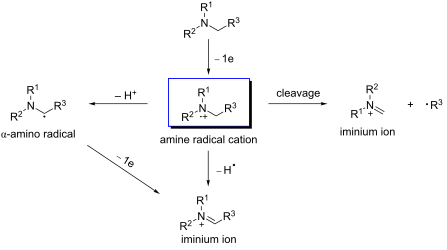
Scheme 1: Amine radical cations’ mode of reactivity.
Scheme 2: Reductive quenching of photoexcited Ru complexes by Et3N.
Scheme 3: Photoredox aza-Henry reaction.
Scheme 4: Formation of iminium ions using BrCCl3 as stoichiometric oxidant.
Scheme 5: Oxidative functionalization of N-aryltetrahydroisoquinolines using Eosin Y.
Scheme 6: Synthetic and mechanistic studies of Eosin Y-catalyzed aza-Henry reaction.
Scheme 7: Oxidative functionalization of N-aryltetrahydroisoquinolines using RB and GO.
Scheme 8: Merging Ru-based photoredox catalysis and Lewis base catalysis for the Mannich reaction.
Scheme 9: Merging Au-based photoredox catalysis and Lewis base catalysis for the Mannich reaction.
Scheme 10: Merging Ru-based photoredox catalysis and Cu-catalyzed alkynylation reaction.
Scheme 11: Merging Ru-based photoredox catalysis and NHC catalysis.
Scheme 12: 1,3-Dipolar cycloaddition of photogenically formed azomethine ylides.
Scheme 13: Plausible mechanism for photoredox 1,3-dipolar cycloaddition.
Scheme 14: Photoredox-catalyzed cascade reaction for the synthesis of fused isoxazolidines.
Scheme 15: Plausible mechanism for the photoredox-catalyzed cascade reaction.
Scheme 16: Photoredox-catalyzed α-arylation of glycine derivatives.
Scheme 17: Photoredox-catalyzed α-arylation of amides.
Scheme 18: Intramolecular interception of iminium ions by sulfonamides.
Scheme 19: Intramolecular interception of iminium ions by alcohols and sulfonamides.
Scheme 20: Intermolecular interception of iminium ions by phosphites.
Scheme 21: Photoredox-catalyzed oxidative phosphonylation by Eosin Y.
Scheme 22: Conjugated addition of α-amino radicals to Michael acceptors.
Scheme 23: Conjugated addition of α-amino radicals to Michael acceptors assisted by a Brønsted acid.
Scheme 24: Conjugated addition of α-amino radicals derived from anilines to Michael acceptors.
Scheme 25: Oxygen switch between two pathways involving α-amino radicals.
Scheme 26: Interception of α-amino radicals by azodicarboxylates.
Scheme 27: α-Arylation of amines.
Scheme 28: Plausible mechanism for α-arylation of amines.
Scheme 29: Photoinduced C–C bond cleavage of tertiary amines.
Scheme 30: Photoredox cleavage of C–C bonds of 1,2-diamines.
Scheme 31: Proposed mechanism photoredox cleavage of C–C bonds.
Scheme 32: Intermolecular [3 + 2] annulation of cyclopropylamines with olefins.
Scheme 33: Proposed mechanism for intermolecular [3 + 2] annulation.
Scheme 34: Photoinduced clevage of N–N bonds of aromatic hydrazines and hydrazides.
Beilstein J. Org. Chem. 2013, 9, 1730–1736, doi:10.3762/bjoc.9.199
Graphical Abstract
Scheme 1: Synthesis of substituted diethyl oxophosphonate 4.
Scheme 2: Synthesis of substituted diethyl aminophosphonate 7.
Scheme 3: Synthesis of fused diazaphospholo-substituted compounds 10a, 10b.
Scheme 4: Synthesis of fused imidazophosphono-substituted compound 13.
Scheme 5: Synthesis of β-enaminobisphosphonate 15.
Scheme 6: Synthesis of fused imidazophosphono-substituted compounds 17 and 19.
Scheme 7: Isomeric forms of diethyl 2-methylallylphosphonate (18).
Figure 1: Percentage inhibition of granuloma for the tested compounds at a dose of 50 mg per kilogram body we...
Beilstein J. Org. Chem. 2013, 9, 1407–1413, doi:10.3762/bjoc.9.157
Graphical Abstract
Scheme 1: Preparation of the diazoacetamides.
Scheme 2: Bromination of the diazoacetamides 3a–f and thermolysis of the α-bromodiazoacetamides 4a–f.
Beilstein J. Org. Chem. 2013, 9, 486–495, doi:10.3762/bjoc.9.52
Graphical Abstract
Scheme 1: Asymmetric synthesis of 2-methyl-6-phenyl piperidine.
Scheme 2: (a) Davies amine, BuLi, THF, −78 °C; dr ≥ 94% ; (b) H2, Pd(OH)2, MeOH; (c) Na2CO3, PhCH2CO2Cl, CH2Cl...
Scheme 3: Modified synthetic route to15.
Scheme 4: Possible pathways to obtain phosphonate 13 (a) Davies amine, BuLi, THF, −78 °C; dr ≥ 95%; (b) H2, P...
Scheme 5: Synthesis of compound 14.
Scheme 6: General synthesis of compound 13 (a) Davies amine, BuLi, THF, −78 °C; (b) H2, Pd(OH)2/C, MeOH; (c) ...
Scheme 7: Optimization of conditions for the Horner–Wadsworth–Emmons reaction.
Beilstein J. Org. Chem. 2012, 8, 1452–1457, doi:10.3762/bjoc.8.165
Graphical Abstract
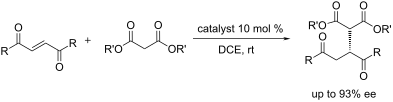
Figure 1: The conjugated addition to unsaturated 1,4-diketone 1.
Figure 2: Organocatalysts screened.
Figure 3: Proposed transition state.
Figure 4: Calculated (red) and experimental (blue) IR (A) and VCD spectrum (B) of compound (R)-3a.
Beilstein J. Org. Chem. 2012, 8, 1185–1190, doi:10.3762/bjoc.8.131
Graphical Abstract
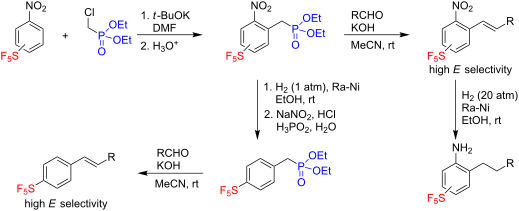
Scheme 1: Proposed synthesis of alkenyl-(pentafluorosulfanyl)benzenes.
Scheme 2: Reactive intermediates involved in HWE reactions to alkenes 5 and 6.
Scheme 3: Diazotization/reduction of 8d to 9d and the formation of unexpected cyclized product 10d.
Scheme 4: Synthesis of substituted phenanthrene 11d.
Scheme 5: Synthesis of phosphonate 12 and SF5-stilbene derivative 13d.
Beilstein J. Org. Chem. 2012, 8, 1105–1111, doi:10.3762/bjoc.8.122
Graphical Abstract
Figure 1: Selected examples of bioactive natural diaryl ethers.
Figure 2: Ligands that were subjected to the ligand screening.
Figure 3: Conversions of the model reaction versus the ligand numbers. For structures of the ligands refer to ...
Beilstein J. Org. Chem. 2011, 7, 1584–1601, doi:10.3762/bjoc.7.187
Graphical Abstract
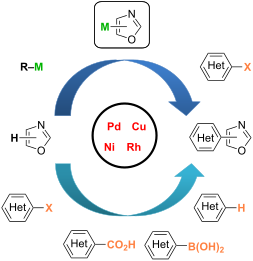
Scheme 1: Stoichiometric and catalytic direct (hetero)arylation of arenes.
Scheme 2: Stille and Negishi cross-coupling methodologies in oxazole series [28,30,31,33,34].
Scheme 3: Stoichiometric direct (hetero)arylation of (benz)oxazole with magnesate bases [35].
Scheme 4: Ohta's pioneering catalytic direct C5-selective pyrazinylation of oxazole [36,37].
Scheme 5: Preparation of pharmaceutical compounds by following the pioneering Ohta protocol [38,39].
Scheme 6: Miura’s pioneering catalytic direct arylations of (benz)oxazoles [40]. aIsolated yield.
Scheme 7: Pd(0)- and Cu(I)-catalyzed direct C2-selective arylation of (benz)oxazoles [41-44].
Scheme 8: Cu(I)-catalyzed direct C2-selective arylations of (benz)oxazoles [40,45-47].
Scheme 9: Copper-free Pd(0)-catalyzed direct C5- and C2-selective arylation of oxazole-4-carboxylate esters [48-50,52].
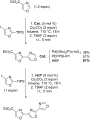
Scheme 10: Iterative synthesis of bis- and trioxazoles [51].
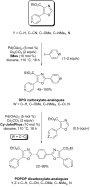
Scheme 11: Preparation of DPO- and POPOP-analogues [53].
Scheme 12: Pd(0)-catalyzed direct arylation of benzoxazole with aryl chlorides [54].
Scheme 13: Pd(0)-catalyzed direct C2-selective arylation of (benz)oxazoles with bromides and chlorides using b...
Scheme 14: Palladium-catalyzed direct arylation of oxazoles under green conditions; (a) Zhuralev direct arylat...
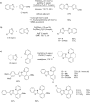
Scheme 15: Pd(0)-catalyzed C2- and C5-selective (hetero)arylation of oxazole [63].
Scheme 16: Pd(0)-catalyzed C2- and C5-selective (hetero)arylation of ethyl oxazole-4-carboxylate [64].
Scheme 17: Pd(0)-catalyzed direct C4-phenylation of oxazoles; (a) Miura’s procedure [65]; (b) Fagnou’s procedure [66].
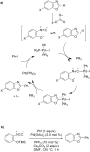
Scheme 18: Catalytic cycles for Cu(I)-catalyzed (routeA) and Pd(0)/Cu(I)-catalyzed (route B) direct arylation ...
Scheme 19: Base-assisted, Pd(0)-catalyzed, C2-selective, direct arylation of benzoxazole proposed by Zhuralev [58]...
Scheme 20: Electrophilic substitution-type mechanism proposed by Hoarau [64].
Scheme 21: CMD-proceeding C5-selective direct arylation of oxazole proposed by Strotman and Chobabian [63].
Scheme 22: DFT calculations on methyl oxazole-4-carboxylate and consequently developed methodologies for the P...
Scheme 23: Pd(0)-catalyzed direct arylation of (benz)oxazoles with tosylates and mesylates [71].
Scheme 24: Pd(0)-catalyzed direct arylation of oxazoles with sulfamates [72].
Scheme 25: Pd(II)- and Cu(II)-catalyzed decarboxylative direct C–H coupling of oxazoles with 4- and 5-carboxyo...
Scheme 26: Pd(II)- and Ag(II)-catalyzed decarboxylative direct arylation of (benzo)oxazoles [74]; (a) procedure; (...
Scheme 27: Pd(II)- and Cu(II)-catalyzed direct arylation of benzoxazole with arylboronic acids [76]; (a) procedure...
Scheme 28: Ni(II)-catalyzed direct arylation of benzoxazoles with arylboronic acids under O2 [76]; (a) procedure; ...
Scheme 29: Rhodium-catalyzed direct arylation of benzoxazole [78,79].
Scheme 30: Ni(II)-catalyzed direct arylation of (benz)oxazoles with aryl halides; (a) Itami's procedure [80]; (b) ...
Scheme 31: Dehydrogenative cross-coupling of (benz)oxazoles; (a) Pd(II)- and Cu(II)-catalyzed cross-coupling o...
Beilstein J. Org. Chem. 2011, 7, 1543–1554, doi:10.3762/bjoc.7.182
Graphical Abstract
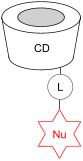
Figure 1: Schematic representation of the general structural design of the investigated cyclodextrin derivati...
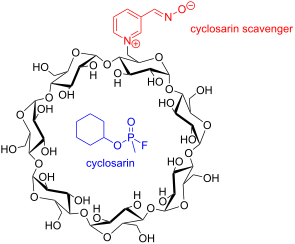
Scheme 1: Structure of cyclosarin (GF).
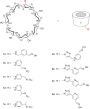
Scheme 2: Cyclodextrin derivatives tested as potential GF scavengers.
Scheme 3: General strategies used for the preparation of the investigated cyclodextrin derivatives.
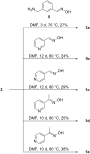
Scheme 4: Reaction conditions used for the preparation of cyclodextrin derivatives 1a–e from tosylate 3.
Scheme 5: Synthesis of 3-(aminomethyl)benzaldehyde oxime (5). Reagents and conditions: i. NaBH4, EtOH, 1 h, 2...
Scheme 6: Synthesis of 3-((hydroxyimino)methyl)-1-(prop-2-ynyl)pyridinium bromide (6). Reagents and condition...
Scheme 7: Syntheses of 6-ethynyl-formylpyridine oximes (7a–c). Reagents and conditions: i. CuI, (PPh3)2PdCl2,...
Scheme 8: Reaction conditions used for the preparation of cyclodextrin derivatives 2a–d from azide 4.
Figure 2: Diagram summarizing the observed Δk1 values for cyclodextrins 1a–e and 2a–d. For comparison, the re...
Figure 3: Time-dependent decrease of GF concentration in the presence of 1b (top row), 1c (middle row), and 2a...
Scheme 9: Schematic protocol for the qualitative assay.
Scheme 10: Schematic protocol of the quantitative assay.
Beilstein J. Org. Chem. 2011, 7, 1189–1197, doi:10.3762/bjoc.7.138
Graphical Abstract
Scheme 1: Proposed catalytic cycle of the lithium phosphonate catalyzed cross benzoin coupling [18].
Scheme 2: Phosphonate as precatalysts in benzoin coupling [18,26].
Scheme 3: Synthesis of diols 1–4, 6–7; diol 5 is commercially available.
Figure 1: X-ray crystal structure of 6. (M)-(S,S) and (P)-(R,R) pair of enantiomers; intermolecular O1–O2 dis...
Figure 2: X-ray crystal structure of 7. (M)-(S,S) and (P)-(R,R) pair of enantiomers; intermolecular O1–O2 dis...
Scheme 4: Synthesis of phosphonates 9–15.
Figure 3: 31P NMR of phosphonate 14 (a) and 15 (b).
Figure 4: X-ray crystal structure of 15. (M)-(R,S) diastereomer; ellipsoids correspond to 50% probability lev...
Scheme 5: Lithium phosphonate catalysts in cross benzoin coupling.
Figure 5: Phosphonate precatalysts 9–15 in cross benzoin coupling.
Beilstein J. Org. Chem. 2011, 7, 364–368, doi:10.3762/bjoc.7.46
Graphical Abstract
Scheme 1: Novel bisphosphonate methacrylate monomers.
Scheme 2: Synthesis of novel bisphosphonate methacrylate monomers 1c–7c, by use of the following reagents and...
Scheme 3: Schematic procedure for phosphonate methacrylate monomer deprotection.
Beilstein J. Org. Chem. 2011, 7, 179–197, doi:10.3762/bjoc.7.25
Graphical Abstract
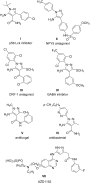
Figure 1: Pharmacologically active 5-aminopyrazoles.
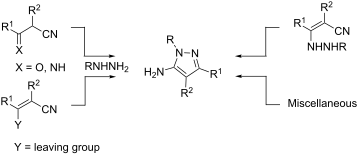
Scheme 1: General equation for the condensation of β-ketonitriles with hydrazines.
Scheme 2: Reaction of hydrazinoheterocycles with α-phenyl-β-cyanoketones (4).
Scheme 3: Condensation of cyanoacetaldehyde (7) with hydrazines.
Scheme 4: Synthesis of 5-aminopyrazoles and their sulfonamide derivatives.
Scheme 5: Synthesis of 5-aminopyrazoles, containing a cyclohexylmethyl- or phenylmethyl- sulfonamido group at...
Scheme 6: Regioselective synthesis of 3-amino-2-alkyl (or aryl) thieno[3,4-c]pyrazoles 19.
Scheme 7: Solid supported synthesis of 5-aminopyrazoles.
Scheme 8: Synthesis of 5-aminopyrazoles from resin supported enamine nitrile 25 as the starting material.
Scheme 9: Two-step “catch and release” solid-phase synthesis of 3,4,5-trisubstituted pyrazoles.
Scheme 10: Synthesis of pyrazolo[5,1-d][1,2,3,5]tetrazine-4(3H)-ones.
Scheme 11: Synthesis of the 5,5-ring system, imidazo[1,2-b]pyrazol-2-ones.
Scheme 12: Synthesis of 5-amino-3-(pyrrol-2-yl)pyrazole-4-carbonitrile.
Scheme 13: Synthesis of N-(1,3-diaryl-1H-pyrazol-5-yl)benzamide.
Scheme 14: Synthesis of 3,7-bis(arylazo)-6-methyl-2-phenyl-1H-imidazo[1,2-b]pyrazoles.
Scheme 15: Synthesis of 3,5-diaminopyrazole.
Scheme 16: Synthesis of 5-amino-4-cyanopyrazole and 5-amino-3-hydrazinopyrazole.
Scheme 17: Synthesis of 3,5-diaminopyrazoles with substituted malononitriles.
Scheme 18: Synthesis of 3,5-diamino-4-oximinopyrazole.
Scheme 19: Synthesis of 4-arylazo-3,5-diaminopyrazoles.
Scheme 20: Synthesis of 3- or 5-amino-4-cyanopyrazoles.
Scheme 21: Synthesis of triazenopyrazoles.
Scheme 22: Synthesis of 5(3)-aminopyrazoles.
Scheme 23: Synthesis of 3-substituted 5-amino-4-cyanopyrazoles.
Scheme 24: Synthesis of 2-{[(1-acetyl-4-cyano-1H-pyrazol-5-yl)amino]methylene}malononitrile.
Scheme 25: Synthesis of 5-aminopyrazole carbodithioates and 5-amino-3-arylamino-1-phenylpyrazole-4-carboxamide...
Scheme 26: Synthesis of 5-amino-4-cyanopyrazoles.
Scheme 27: Synthesis of thiazolylpyrazoles.
Scheme 28: Synthesis of 5-amino-1-heteroaryl-3-methyl/aryl-4-cyanopyrazoles.
Scheme 29: Synthesis of 5-amino-3-methylpyrazole-4-carboxamide.
Scheme 30: Synthesis of 4-acylamino-3(5)-amino-5(3)-arylsulfanylpyrazoles.
Scheme 31: Synthesis of 5-amino-1-aryl-4-diethoxyphosphoryl-3-halomethylpyrazoles.
Scheme 32: Synthesis of substituted 5-amino-3-trifluoromethylpyrazoles 114 and 118.
Scheme 33: Solid-support synthesis of 5-N-alkylamino and 5-N-arylaminopyrazoles.
Scheme 34: Synthesis of 5-amino-1-cyanoacetyl-3-phenyl-1H-pyrazole.
Scheme 35: Synthesis of 3-substituted 5-amino-1-aryl-4-(benzothiazol-2-yl)pyrazoles.
Scheme 36: Synthesis of 5-amino-4-carbethoxy-3-methyl-1-(4-sulfamoylphenyl)pyrazole.
Scheme 37: Synthesis of inhibitors of hsp27-phosphorylation and TNFa-release.
Scheme 38: Synthesis of the diglycylpyrazole 142.
Scheme 39: Synthesis of 5-amino-1-aryl-4-benzoylpyrazole derivatives.
Scheme 40: Synthesis of 4-benzoyl-3,5-diamino-1-(2-cyanoethyl)pyrazole.
Scheme 41: Synthesis of the 5-aminopyrazole derivative 150.
Scheme 42: Synthesis of 3,5-diaminopyrazoles 153.
Scheme 43: Synthesis of 5-aminopyrazoles derivatives 155 via lithiated intermediates.
Scheme 44: Synthesis of 5-amino-4-(1,2,4-oxadiazol-5-yl)-pyrazoles 157.
Scheme 45: Synthesis of a 5-aminopyrazole with anticonvulsant activity.
Scheme 46: Synthesis of tetrasubstituted 5-aminopyrazole derivatives.
Scheme 47: Synthesis of substituted 5-aminopyrazoles from hydrazonoyl halides.
Scheme 48: Synthesis of 3-amino-5-phenylpyrazoles from isothiazoles.
Scheme 49: Synthesis of 5-aminopyrazoles via ring transformation.
Beilstein J. Org. Chem. 2010, 6, 978–983, doi:10.3762/bjoc.6.110
Graphical Abstract
Scheme 1: Proposed aziridinyl anion induced N- to C-phosphonyl migration.
Scheme 2: Selected previously observed N- to C-phosphorous migrations [17,18,21].
Scheme 3: Partial N- to C-migration with N-diphenylphosphinylaziridine 10 [24].
Scheme 4: Synthesis and rearrangement of aziridine 1a.
Figure 1: Aziridines 1h–j.
Scheme 5: Synthesis and rearrangement of aziridine (S)-1k.
Scheme 6: Hydrogenolysis of aziridinylphosphonate (–)-3k.
Beilstein J. Org. Chem. 2010, 6, No. 77, doi:10.3762/bjoc.6.77
Graphical Abstract
Scheme 1: General scheme for the carbocupration reaction.
Scheme 2: Regioselectivity in the carbocupration reaction.
Scheme 3: Carbocupration of α-alkoxyalkynes.
Scheme 4: Carbocupration of substituted α-alkoxyalkynes.
Scheme 5: Formation of the branched isomer.
Scheme 6: Formation of the linear isomer.
Scheme 7: Carbocupration of O-alkynyl carbamates.
Scheme 8: Carbocupration of ynamines.
Scheme 9: Carbocupration of ynamide.
Scheme 10: Formation of aldol products possessing stereogenic quaternary carbon centers.
Scheme 11: Carbocupration of alkynyl sulfonamide.
Scheme 12: Tandem carbocupration-sigmatropic rearrangement.
Scheme 13: Silylcupration of alkynyl sulfonamides.
Scheme 14: Carbocupration of P-substituted alkynes.
Scheme 15: Carbocupration of alkynylphosphonates.
Scheme 16: Carbocupration of thioalkynes.
Scheme 17: Tandem carbocupration-1,2-metalate rearrangement.
Scheme 18: Carbocupration with functionalized organocopper species.
Scheme 19: Carbocupration of alkynyl sulfoxides.
Scheme 20: Carbocupration of alkynyl sulfones.
Scheme 21: Carbocupration of alkynyl sulfoximines.
Scheme 22: Carbocupration of alkynylsilanes.
Scheme 23: Carbocupration of functionalized alkynylsilanes.
Scheme 24: Silyl- and stannyl cupration of silyl- and stannylalkynes.
Beilstein J. Org. Chem. 2010, 6, No. 32, doi:10.3762/bjoc.6.32
Graphical Abstract
Figure 1: Biologically important amines and quaternary ammonium salts: histamine (1), dopamine (2) and acetyl...
Figure 2: Crown ether 18-crown-6.
Figure 3: Conformations of 18-crown-6 (4) in solvents of different polarity.
Figure 4: Binding topologies of the ammonium ion depending on the crown ring size.
Figure 5: A “pseudorotaxane” structure consisting of 24-crown-8 and a secondary ammonium ion (5); R = Ph.
Figure 6: Typical examples of azacrown ethers, cryptands and related aza macrocycles.
Figure 7: Binding of ammonium to azacrown ethers and cryptands [111-113].
Figure 8: A 19-crown-6-ether with decalino blocking groups (11) and a thiazole-dibenzo-18-crown-6-ether (12).
Figure 9: 1,3-Bis(6-oxopyridazin-1-yl)propane derivatives 13 and 14 by Campayo et al.
Figure 10: Fluorescent azacrown-PET-sensors based on coumarin.
Figure 11: Two different pyridino-cryptands (17 and 18) compared to a pyridino-crown (19); chiral ammonium ion...
Figure 12: Pyridino-18-crown-6 ligand (21), a similar acridino-18-crown-6 ligand (22) and a structurally relat...
Figure 13: Ciral pyridine-azacrown ether receptors 24.
Figure 14: Chiral 15-crown-5 receptors 26 and an analogue 18-crown-6 ligand 27 derived from amino alcohols.
Figure 15: C2-symmetric chiral 18-crown-6 amino alcohol derivatives 28 and related macrocycles.
Figure 16: Macrocycles with diamide-diester groups (30).
Figure 17: C2-symmetric chiral aza-18-crown-6 ethers (31) with phenethylamine residues.
Figure 18: Chiral C-pivot p-methoxy-phenoxy-lariat ethers.
Figure 19: Chiral lariat crown ether 34.
Figure 20: Sucrose-based chiral crown ether receptors 36.
Figure 21: Permethylated fructooligosaccharide 37 showing induced-fit chiral recognition.
Figure 22: Biphenanthryl-18-crown-6 derivative 38.
Figure 23: Chiral lariat crown ethers derived from binol by Fuji et al.
Figure 24: Chiral phenolic crown ether 41 with “aryl chiral barriers” and guest amines.
Figure 25: Chiral bis-crown receptor 43 with a meso-ternaphthalene backbone.
Figure 26: Chromogenic pH-dependent bis-crown chemosensor 44 for diamines.
Figure 27: Triamine guests for binding to receptor 44.
Figure 28: Chiral bis-crown phenolphthalein chemosensors 46.
Figure 29: Crown ether amino acid 47.
Figure 30: Luminescent receptor 48 for bis-alkylammonium guests.
Figure 31: Luminescent CEAA (49a), a bis-CEAA receptor for amino acids (49b) and the structure of lysine bindi...
Figure 32: Luminescent CEAA tripeptide for binding small peptides.
Figure 33: Bis crown ether 51a self assembles co-operatively with C60-ammonium ion 51b.
Figure 34: Triptycene-based macrotricyclic dibenzo-[24]-crown-8 ether host 52 and guests.
Figure 35: Copper imido diacetic acid azacrown receptor 53a and the suggested His-Lys binding motif; a copper ...
Figure 36: Urea (54) and thiourea (55) benzo crown receptor for transport and extraction of amino acids.
Figure 37: Crown pyryliums ion receptors 56 for amino acids.
Figure 38: Ditopic sulfonamide bridged crown ether receptor 57.
Figure 39: Luminescent peptide receptor 58.
Figure 40: Luminescent receptor 59 for the detection of D-glucosamine hydrochloride in water/ethanol and lumin...
Figure 41: Guanidinium azacrown receptor 61 for simple amino acids and ditopic receptor 62 with crown ether an...
Figure 42: Chiral bicyclic guanidinium azacrown receptor 63 and similar receptor 64 for the enantioselective t...
Figure 43: Receptors for zwitterionic species based on luminescent CEAAs.
Figure 44: 1,10-Azacrown ethers with sugar podand arms and the anticancer agent busulfan.
Figure 45: Benzo-18-crown-6 modified β-cyclodextrin 69 and β-cyclodextrin functionalized with diaza-18-crown-6...
Figure 46: Receptors for colorimetric detection of primary and secondary ammonium ions.
Figure 47: Porphyrine-crown-receptors 72.
Figure 48: Porphyrin-crown ether conjugate 73 and fullerene-ammonium ion guest 74.
Figure 49: Calix[4]arene (75a), homooxocalix[4]arene (75b) and resorcin[4]arene (75c) compared (R = H, alkyl c...
Figure 50: Calix[4]arene and ammonium ion guest (R = H, alkyl, OAcyl etc.), possible binding sites; A: co-ordi...
Figure 51: Typical guests for studies with calixarenes and related molecules.
Figure 52: Lower rim modified p-tert-butylcalix[5]arenes 82.
Figure 53: The first example of a water soluble calixarene.
Figure 54: Sulfonated water soluble calix[n]arenes that bind ammonium ions.
Figure 55: Displacement assay for acetylcholine (3) with a sulfonato-calix[6]arene (84b).
Figure 56: Amino acid inclusion in p-sulfonatocalix[4]arene (84a).
Figure 57: Calixarene receptor family 86 with upper and lower rim functionalization.
Figure 58: Calix[6]arenes 87 with one carboxylic acid functionality.
Figure 59: Sulfonated calix[n]arenes with mono-substitution at the lower rim systematically studied on their r...
Figure 60: Cyclotetrachromotropylene host (91) and its binding to lysine (81c).
Figure 61: Calixarenes 92 and 93 with phosphonic acids groups.
Figure 62: Calix[4]arene tetraphosphonic acid (94a) and a double bridged analogue (94b).
Figure 63: Calix[4]arene tetraphosphonic acid ester (92c) for surface recognition experiments.
Figure 64: Calixarene receptors 95 with α-aminophosphonate groups.
Figure 65: A bridged homocalix[3]arene 95 and a distally bridged homocalix[4]crown 96.
Figure 66: Homocalix[3]arene ammonium ion receptor 97a and the Reichardt’s dye (97b) for colorimetric assays.
Figure 67: Chromogenic diazo-bridged calix[4]arene 98.
Figure 68: Calixarene receptor 99 by Huang et al.
Figure 69: Calixarenes 100 reported by Parisi et al.
Figure 70: Guest molecules for inclusion in calixarenes 100: DAP × 2 HCl (101a), APA (101b) and Lys-OMe × 2 HC...
Figure 71: Different N-linked peptido-calixarenes open and with glycol chain bridges.
Figure 72: (S)-1,1′-Bi-2-naphthol calixarene derivative 104 published by Kubo et al.
Figure 73: A chiral ammonium-ion receptor 105 based on the calix[4]arene skeleton.
Figure 74: R-/S-phenylalaninol functionalized calix[6]arenes 106a and 106b.
Figure 75: Capped homocalix[3]arene ammonium ion receptor 107.
Figure 76: Two C3 symmetric capped calix[6]arenes 108 and 109.
Figure 77: Phosphorous-containing rigidified calix[6]arene 110.
Figure 78: Calix[6]azacryptand 111.
Figure 79: Further substituted calix[6]azacryptands 112.
Figure 80: Resorcin[4]arene (75c) and the cavitands (113).
Figure 81: Tetrasulfonatomethylcalix[4]resorcinarene (114).
Figure 82: Resorcin[4]arenes (115a/b) and pyrogallo[4]arenes (115c, 116).
Figure 83: Displacement assay for acetylcholine (3) with tetracyanoresorcin[4]arene (117).
Figure 84: Tetramethoxy resorcinarene mono-crown-5 (118).
Figure 85: Components of a resorcinarene based displacement assay for ammonium ions.
Figure 86: Chiral basket resorcin[4]arenas 121.
Figure 87: Resorcinarenes with deeper cavitand structure (122).
Figure 88: Resorcinarene with partially open deeper cavitand structure (123).
Figure 89: Water-stabilized deep cavitands with partially structure (124, 125).
Figure 90: Charged cavitands 126 for tetralkylammonium ions.
Figure 91: Ditopic calix[4]arene receptor 127 capped with glycol chains.
Figure 92: A calix[5]arene dimer for diammonium salt recognition.
Figure 93: Calixarene parts 92c and 129 for the formation molecular capsules.
Figure 94: Encapsulation of a quaternary ammonium cation by two resorcin[4]arene molecules (NMe4+@[75c]2 × Cl−...
Figure 95: Encapsulation of a quaternary ammonium cation by six resorcin[4]arene molecules (NMe3D+@[130]6 × Cl−...
Figure 96: Structure and schematic of cucurbit[6]uril (CB[6], 131a).
Figure 97: Cyclohexanocucurbit[6]uril (CB′[6], 132) and the guest molecule spermine (133).
Figure 98: α,α,δ,δ-Tetramethylcucurbit[6]uril (134).
Figure 99: Structure of the cucurbituril-phthalhydrazide analogue 135.
Figure 100: Organic cavities for the displacement assay for amine differentiation.
Figure 101: Displacement assay methodology for diammonium- and related guests involving cucurbiturils and some ...
Figure 102: Nor-seco-Cucurbituril (±)-bis-ns-CB[6] (140) and guest molecules.
Figure 103: The cucurbit[6]uril based complexes 141 for chiral discrimination.
Figure 104: Cucurbit[7]uril (131c) and its ferrocene guests (142) opposed.
Figure 105: Cucurbit[7]uril (131c) guest inclusion and representative guests.
Figure 106: Cucurbit[7]uril (131c) binding to succinylcholine (145) and different bis-ammonium and bis-phosphon...
Figure 107: Paraquat-cucurbit[8]uril complex 149.
Figure 108: Gluconuril-based ammonium receptors 150.
Figure 109: Examples of clefts (151a), tweezers (151b, 151c, 151d) and clips (151e).
Figure 110: Kemp’s triacid (152a), on example of Rebek’s receptors (152b) and guests.
Figure 111: Amino acid receptor (154) by Rebek et al.
Figure 112: Hexagonal lattice designed hosts by Bell et al.
Figure 113: Bell’s amidinium receptor (156) and the amidinium ion (157).
Figure 114: Aromatic phosphonic acids.
Figure 115: Xylene phosphonates 159 and 160a/b for recognition of amines and amino alcohols.
Figure 116: Bisphosphonate recognition motif 161 for a colorimetric assay with alizarin complexone (163) for ca...
Figure 117: Bisphosphonate/phosphate clip 164 and bisphosphonate cleft 165.
Figure 118: N-Methylpyrazine 166a, N-methylnicotinamide iodide (166b) and NAD+ (166c).
Figure 119: Bisphosphate cavitands.
Figure 120: Bisphosphonate 167 of Schrader and Finocchiaro.
Figure 121: Tweezer 168 for noradrenaline (80b).
Figure 122: Different tripods and heparin (170).
Figure 123: Squaramide based receptors 172.
Figure 124: Cage like NH4+ receptor 173 of Kim et al.
Figure 125: Ammonium receptors 174 of Chin et al.
Figure 126: 2-Oxazolin-based ammonium receptors 175a–d and 176 by Ahn et al.
Figure 127: Racemic guest molecules 177.
Figure 128: Tripods based on a imidazole containing macrocycle (178) and the guest molecules employed in the st...
Figure 129: Ammonium ion receptor 180.
Figure 130: Tetraoxa[3.3.3.3]paracyclophanes 181 and a cyclophanic tetraester (182).
Figure 131: Peptidic bridged paraquat-cyclophane.
Figure 132: Shape-selective noradrenaline host.
Figure 133: Receptor 185 for binding of noradrenaline on surface layers from Schrader et al.
Figure 134: Tetraphosphonate receptor for binding of noradrenaline.
Figure 135: Tetraphosphonate 187 of Schrader and Finocchiaro.
Figure 136: Zinc-Porphyrin ammonium-ion receptors 188 and 189 of Mizutani et al.
Figure 137: Zinc porphyrin receptor 190.
Figure 138: Zinc porphyrin receptors 191 capable of amino acid binding.
Figure 139: Zinc-porphyrins with amino acid side chains for stereoinduction.
Figure 140: Bis-zinc-bis-porphyrin based on Tröger’s base 193.
Figure 141: BINAP-zinc-prophyrin derivative 194 and it’s guests.
Figure 142: Bisaryl-linked-zinc-porphyrin receptors.
Figure 143: Bis-zinc-porphyrin 199 for diamine recognition and guests.
Figure 144: Bis-zinc-porphyrin crown ether 201.
Figure 145: Bis-zinc-porphyrin 202 for stereodiscrimination (L = large substituent; S = small substituent).
Figure 146: Bis-zinc-porphyrin[3]rotaxane and its copper complex and guests.
Figure 147: Dien-bipyridyl ligand 206 for co-ordination of two metal atoms.
Figure 148: The ligand and corresponding tetradentate co-complex 207 serving as enantioselective receptor for a...
Figure 149: Bis(oxazoline)–copper(II) complex 208 for the recognition of amino acids in aqueous solution.
Figure 150: Zinc-salen-complexes 209 for the recognition tertiary amines.
Figure 151: Bis(oxazoline)–copper(II) 211 for the recognition of amino acids in aqueous solution.
Figure 152: Zn(II)-complex of a C2 terpyridine crown ether.
Figure 153: Displacement assay and receptor for aspartate over glutamate.
Figure 154: Chiral complex 214 for a colorimetric displacement assay for amino acids.
Figure 155: Metal complex receptor 215 with tripeptide side arms.
Figure 156: A sandwich complex 216 and its displaceable dye 217.
Figure 157: Lanthanide complexes 218–220 for amino acid recognition.
Figure 158: Nonactin (221), valinomycin (222) and vancomycin (223).
Figure 159: Monesin (224a) and a chiral analogue for enantiodiscrimination of ammonium guests (224b).
Figure 160: Chiral podands (226) compared to pentaglyme-dimethylether (225) and 18-crown-6 (4).
Figure 161: Lasalocid A (228).
Figure 162: Lasalocid derivatives (230) of Sessler et al.
Figure 163: The Coporphyrin I tetraanion (231).
Figure 164: Linear and cyclic peptides for ammonium ion recognition.
Figure 165: Cyclic and bicyclic depsipeptides for ammonium ion recognition.
Figure 166: α-Cyclodextrin (136a) and novocaine (236).
Figure 167: Helical diol receptor 237 by Reetz and Sostmann.
Figure 168: Ammonium binding spherand by Cram et al. (238a) and the cyclic[6]metaphenylacetylene 238b in compar...
Figure 169: Receptor for peptide backbone and ammonium binding (239).
Figure 170: Anion sensor principle with 3-hydroxy-2-naphthanilide of Jiang et al.
Figure 171: 7-bromo-3-hydroxy-N-(2-hydroxyphenyl)naphthalene 2-carboxamide (241) and its amine binding.
Figure 172: Naturally occurring catechins with affinity to quaternary ammonium ions.
Figure 173: Spiropyran (244) and merocyanine form (244a) of the amino acid receptors of Fuji et al.
Figure 174: Coumarin aldehyde (245) and its iminium species with amino acid bound (245a) by Glass et al.
Figure 175: Coumarin aldehyde appended with boronic acid.
Figure 176: Quinolone aldehyde dimers by Glass et al.
Figure 177: Chromogenic ammonium ion receptors with trifluoroacetophenone recognition motifs.
Figure 178: Chromogenic ammonium ion receptor with trifluoroacetophenone recognition motif bound on different m...