


Search results
Search for "singlet oxygen" in Full Text gives 83 result(s) in Beilstein Journal of Organic Chemistry.
Flow photochemistry: Old light through new windows
- Jonathan P. Knowles,
- Luke D. Elliott and
- Kevin I. Booker-Milburn
Beilstein J. Org. Chem. 2012, 8, 2025–2052, doi:10.3762/bjoc.8.229
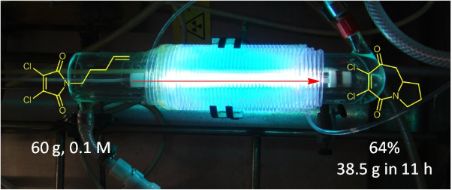
- the lower-power light source. These longer residence times further lowered the reactor productivity to 0.15 mmol/h [24]. Photooxygenations Direct oxygenation of organic molecules through the photosensitised addition of singlet oxygen represents an atom-economic method of functionalisation and is
- of bulk solutions, which combined with the extremely short lifetime of singlet oxygen means that lengthy irradiations are often required. These issues can be overcome through the use of continuous-flow chemistry: reactions performed in this manner have only a small amount of oxygenated solvent and
- peroxide product present at any one time, and this can be reduced immediately upon leaving the reactor. The smaller reactor volumes involved in flow chemistry also mean that irradiation is efficient and hence that the singlet oxygen generated can react within its short lifetime. Falling-film microreactors

Graphical Abstract

Figure 1: An immersion-well batch reactor with 125 W medium pressure Hg lamp.

Figure 2: Transmission profile of a 0.05 M solution, ε = 200 M−1 cm−1.

Figure 3: Schematic of a typical microflow photochemical reactor (above) and detail of a triple-channel micro...

Figure 4: Schematic of a typical macroflow photochemical reactor (above) and images of the FEP photochemical ...

Scheme 1: [2 + 2] photocycloadditions of enones with enol derivatives.

Scheme 2: Competing reactions in an intramolecular [2 + 2] photocycloaddition.

Scheme 3: Diastereocontrolled cycloaddition of a cyclic enone with cyclopentene.

Scheme 4: Comparison of yields and reaction times for a batch reactor with a microflow system.

Scheme 5: Intramolecular [2 + 2] photocycloaddition.

Scheme 6: Paterno–Büchi reaction of benzophenone with an allylic alcohol.

Scheme 7: Photooxygenation of cyclopentadiene.

Scheme 8: Preparation of the anthelmintic ascaridole 23.

Scheme 9: Production of rose oxide 27 from (−)-β-citronellol (24).

Scheme 10: Photocatalytic alkylation of benzylamine.

Scheme 11: Photocatalytic reduction of 4-nitroacetophenone.

Scheme 12: Conversion of L-lysine to L-pipecolinic acid.

Scheme 13: Photocatalytic hydrodehalogenation.

Scheme 14: Photocatalytic aza-Henry reactions.

Scheme 15: Photocatalytic α-alkylation of aliphatic ketones.

Scheme 16: Decarboxylative photochemical additions.

Scheme 17: Photochemical addition of isopropanol to furanones.

Scheme 18: Photochemical addition of methanol to limonene.

Scheme 19: Light-promoted reduction of flavone.

Scheme 20: Photoreduction of benzophenone with benzhydrol.

Scheme 21: Barton reaction in a microflow system.

Scheme 22: Microflow synthesis of vitamin D3.

Scheme 23: photochemical chlorination of cyclohexane.

Scheme 24: photochemical cyanation of pyrene.

Scheme 25: Intermolecular [2 + 2] cycloaddition of maleimide (76) and intramolecular [2 + 2] cycloaddition of ...

Scheme 26: Intramolecular [5 + 2] cycloaddition of maleimide under flow conditions.

Scheme 27: Intramolecular [5 + 2] cycloaddition as a key step in the synthesis of (±)-neostenine.

Scheme 28: In situ generation of a thioaldehyde by photolysis of a phenacyl sulfide.

Scheme 29: Photodimerisation of maleic anhydride.

Scheme 30: [2 + 2] cycloaddition of a chiral enone with ethylene.

Scheme 31: Intramolecular [2 + 2] cycloaddition of a cyclopentenone.

Scheme 32: Photochemical Wolff rearrangement and cyclisation to β-lactams.

Scheme 33: Photochemical rearrangement of aryl azides.

Scheme 34: Rearrangement of quinoline N-oxides to quinolones.

Scheme 35: Photochemical rearrangement of cyclobutenones.

Scheme 36: Photoisomerisation en route to a vitamin-D derivative.

Scheme 37: Schematic of the Seeberger photooxygenation apparatus and sensitised photooxygenation of citronello...

Scheme 38: Sensitised photooxygenation of dihydroartemisinic acid.

Scheme 39: Photochemical preparation of CpRu(MeCN)3PF6.

Scheme 40: In situ photochemical generation and reaction of a [CpRu]+ catalyst.

Scheme 41: Intermolecular alkene–alkyne coupling with photogenerated catalyst.

Scheme 42: PET deoxygenation of nucleosides.

Scheme 43: Photochemical defluorination of DABFT.

Scheme 44: Aromatic azide reduction by visible-light-mediated photocatalysis.

Scheme 45: Examples of visible-light-mediated reactions.

Scheme 46: Visible-light-mediated formation of iminium ions.

Scheme 47: Examples of visible-light-mediated photocatalytic reactions.

Scheme 48: Anhydride formation from a visible-light-mediated process.

Scheme 49: Light-mediated conjugate addition of glycosyl bromide 141 to acrolein.

Scheme 50: Visible-light-mediated photocyclisation to [5]helicene.
The chemistry of bisallenes
- Henning Hopf and
- Georgios Markopoulos
Beilstein J. Org. Chem. 2012, 8, 1936–1998, doi:10.3762/bjoc.8.225

Graphical Abstract

Figure 1: Loschmidt’s structure proposal for benzene (1) (Scheme 181 from [3]) and the corresponding modern stru...

Figure 2: The first isolated bisallenes.

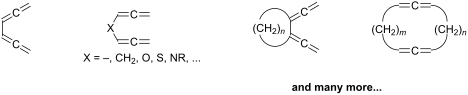
Figure 3: Carbon skeletons of selected bisallenes discussed in this review.

Scheme 1: The preparation of 1,2,4,5-hexatetraene (2).

Scheme 2: The preparation of a conjugated bisallene by the DMS-protocol.

Scheme 3: Preparation of the 3-deuterio- and 3,4-dideuterio derivatives of 24.

Scheme 4: A versatile method to prepare alkylated conjugated bisallenes and other allenes.

Scheme 5: A preparation of 3,4-dimethyl-1,2,4,5-hexatetraene (38).

Scheme 6: A (C6 + 0)-approach to 1,2,4,5-hexatetraene (2).

Scheme 7: The preparation of a fully alkylated bisallenes from a 2,4-hexadiyne-1,6-diol diacetate.

Scheme 8: The preparation of the first phenyl-substituted conjugated bisallenes 3 and 4.

Scheme 9: Selective hydrogenation of [5]cumulenes to conjugated bisallenes: another (C6 + 0)-route.

Scheme 10: Aryl-substituted conjugated bisallenes by a (C3 + C3)-approach.

Scheme 11: Hexaphenyl-1,2,4,5-hexatetraene (59) by a (C3 + C3)-approach.

Scheme 12: An allenation route to conjugated bisallenes.

Scheme 13: The preparation of 3,4-difunctionalized conjugated bisallenes.

Scheme 14: Problems during the preparation of sulfur-substituted conjugated bisallenes.

Scheme 15: The preparation of 3,4-dibromo bisallenes.

Scheme 16: Generation of allenolates by an oxy-Cope rearrangement.

Scheme 17: A linear trimerization of alkynes to conjugated bisallenes: a (C2 + C2 + C2)-protocol.

Scheme 18: Preparation of a TMS-substituted conjugated bisallene by a C3-dimerization route.

Scheme 19: A bis(trimethylsilyl)bisallene by a C3-coupling protocol.

Scheme 20: The rearrangement of highly substituted benzene derivatives into their conjugated bisallenic isomer...

Scheme 21: From fully substituted benzene derivatives to fully substituted bisallenes.

Scheme 22: From a bicyclopropenyl to a conjugated bisallene derivative.

Scheme 23: The conversion of a bismethylenecyclobutene into a conjugated bisallene.

Scheme 24: The preparation of monofunctionalized bisallenes.

Scheme 25: Preparation of bisallene diols and their cyclization to dihydrofurans.

Scheme 26: A 3,4-difunctionalized conjugated bisallene by a C3-coupling process.

Scheme 27: Preparation of a bisallenic diketone by a coupling reaction.

Scheme 28: Sulfur and selenium-substituted bisallenes by a [2.3]sigmatropic rearrangement.

Scheme 29: The biallenylation of azetidinones.

Scheme 30: The preparation of a fully ferrocenylated conjugated bisallene.

Scheme 31: The first isomerization of a 1,5-hexadiyne to a 1,2,4,5-hexatetraene.

Scheme 32: The preparation of alkynyl-substituted bisallenes by a C3-dimerization protocol.

Scheme 33: Preparation of another completely ferrocenylated bisallene.

Scheme 34: The cyclization of 1,5-hexadiyne (129) to 3,4-bismethylenecyclobutene (130) via 1,2,4,5-hexatetraen...
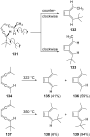
Scheme 35: Stereochemistry of the thermal cyclization of bisallenes to bismethylenecyclobutenes.

Scheme 36: Bisallene→bismethylenecyclobutene ring closures in the solid state.

Scheme 37: A bisallene cyclization/dimerization reaction.

Scheme 38: A selection of Diels–Alder additions of 1,2,4,5-hexatetraene with various double-bond dienophiles.

Scheme 39: The stereochemistry of the [2 + 4] cycloaddition to conjugated bisallenes.

Scheme 40: Preparation of azetidinone derivatives from conjugated bisallenes.

Scheme 41: Cycloaddition of heterodienophiles to a conjugated bisallene.

Scheme 42: Addition of triple-bond dienophiles to conjugated bisallenes.

Scheme 43: Sulfur dioxide addition to conjugated bisallenes.

Scheme 44: The addition of a germylene to a conjugated bisallene.

Scheme 45: Trapping of conjugated bisallenes with phosphinidenes.

Scheme 46: The cyclopropanantion of 1,2,4,5-hexatetraene (2).

Scheme 47: Photochemical reactions involving conjugated bisallenes.

Scheme 48: Base-catalyzed isomerizations of conjugated bisallenes.

Scheme 49: Ionic additions to a conjugated bisallene.

Scheme 50: Oxidation reactions of a conjugated bisallene.
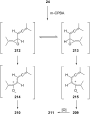
Scheme 51: The mechanism of oxidation of the bisallene 24.

Scheme 52: CuCl-catalyzed cyclization of 1,2,4,5-hexatetraene (2).

Scheme 53: The conversion of conjugated bisallenes into cyclopentenones.

Scheme 54: Oligomerization of a conjugated bisallene by nickel catalysts.
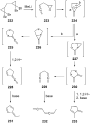
Scheme 55: Generation of 1,2,5,6-heptatetraene (229) as a reaction intermediate.

Scheme 56: The preparation of a stable derivative of 1,2,5,6-heptatetraene.

Scheme 57: A bisallene with a carbonyl group as a spacer element.

Scheme 58: The first preparation of 1,2,6,7-octatetraene (242).

Scheme 59: Preparation of 1,2,6,7-octatetraenes by (C4 + C4)-coupling of enynes.

Scheme 60: Preparation of 1,2,6,7-octatetraenes by (C4 + C4)-coupling of homoallenyl bromides.

Scheme 61: Preparation of 1,2,6,7-octatetraenes by alkylation of propargylic substrates.

Scheme 62: Preparation of two highly functionalized 1,2,6,7-octatetraenes.

Scheme 63: Preparation of several higher α,ω-bisallenes.

Scheme 64: Preparation of different alkyl derivatives of α,ω-bisallenes.

Scheme 65: The preparation of functionalized 1,2,7,8-nonatetraene derivatives.

Scheme 66: Preparation of functionalized α,ω-bisallenes.

Scheme 67: The preparation of an α,ω-bisallene by direct homologation of an α,ω-bisalkyne.

Scheme 68: The gas-phase pyrolysis of 4,4-dimethyl-1,2,5,6-heptatetraene (237).
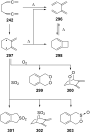
Scheme 69: Gas-phase pyrolysis of 1,2,6,7-octatetraene (242).

Scheme 70: The cyclopropanation of 1,2,6,7-octatetraene (242).

Scheme 71: Intramolecular cyclization of 1,2,6,7-octatetraene derivatives.

Scheme 72: The gas-phase pyrolysis of 1,2,7,8-nonatetraene (265) and 1,2,8,9-decatetraene (266).

Scheme 73: Rh-catalyzed cyclization of a functionalized 1,2,7,8-nonatetraene.

Scheme 74: A triple cyclization involving two different allenic substrates.

Scheme 75: Bicyclization of keto derivatives of 1,2,7,8-nonatetraene.

Scheme 76: The preparation of complex organic compounds from functionalized bisallenes.

Scheme 77: Cycloisomerization of an α,ω-bisallene containing a C9 tether.

Scheme 78: Organoborane polymers from α,ω-bisallenes.

Scheme 79: Preparation of trans- (337) and cis-1,2,4,6,7-octapentaene (341).

Scheme 80: The preparation of 4-methylene-1,2,5,6-heptatetraene (349).

Scheme 81: The preparation of acetylenic bisallenes.

Scheme 82: The preparation of derivatives of hydrocarbon 351.

Scheme 83: The construction of macrocyclic alleno-acetylenes.

Scheme 84: Preparation and reactions of 4,5-bismethylene-1,2,6,7-octatetraene (365).

Scheme 85: Preparation of 1,2-bis(propadienyl)benzene (370).

Scheme 86: The preparation of 1,4-bis(propadienyl)benzene (376).

Scheme 87: The preparation of aromatic and heteroaromatic bisallenes by metal-mediated coupling reactions.

Scheme 88: Double cyclization of an aromatic bisallene.

Scheme 89: Preparation of an allenic [15]paracyclophane by a ring-closing metathesis reaction of an aromatic α...

Scheme 90: Preparation of a macrocyclic ring system containing 1,4-bis(propadienyl)benzene units.

Scheme 91: Preparation of copolymers from 1,4-bis(propadienyl)benzene (376).

Scheme 92: A boration/copolymerization sequence of an aromatic bisallene and an aromatic bisacetylene.

Scheme 93: Formation of a layered aromatic bisallene.

Figure 4: The first members of the semicyclic bisallene series.

Scheme 94: Preparation of the first bis(vinylidene)cyclobutane derivative.
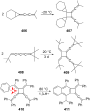
Scheme 95: Dimerization of strain-activated cumulenes to bis(vinylidene)cyclobutanes.

Scheme 96: Photodimerization of two fully substituted butatrienes in the solid state.

Scheme 97: Preparation of the two parent bis(vinylidene)cyclobutanes.

Scheme 98: The preparation of 1,3-bis(vinylidene)cyclopentane and its thermal isomerization.

Scheme 99: The preparation of the isomeric bis(vinylidene)cyclohexanes.

Scheme 100: Bi- and tricyclic conjugated bisallenes.
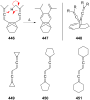
Scheme 101: A selection of polycyclic bisallenes.

Scheme 102: The first endocyclic bisallenes.

Figure 5: The stereochemistry of 1,2,6,7-cyclodecatetraene.

Scheme 103: The preparation of several endocyclic bisallenes.

Scheme 104: Synthesis of diastereomeric derivatives of 1,2,6,7-cyclodecatetraene.

Scheme 105: Preparation of a derivative of 1,2,8,9-cyclotetradecatetraene.

Scheme 106: The preparation of keto derivatives of cyclic bisallenes.

Scheme 107: The preparation of cyclic biscumulenic ring systems.

Scheme 108: Cyclic bisallenes in natural- and non-natural-product chemistry.

Scheme 109: The preparation of iron carbonyl complexes from cyclic bisallenes.

Figure 6: A selection of unknown exocyclic bisallenes that should have interesting chemical properties.

Scheme 110: The thermal isomerization of 1,2-diethynylcyclopropanes and -cyclobutanes.

Scheme 111: Intermediate generation of a cyclooctapentaene.

Scheme 112: Attempted preparation of a cyclodecahexaene.

Scheme 113: The thermal isomerization of 1,5,9-cyclododecatriyne (511) into [6]radialene (514).

Scheme 114: An isomerization involving a diketone derived from a conjugated bisallene.

Scheme 115: Typical reaction modes of heteroorganic bisallenes.

Scheme 116: Generation and thermal behavior of acyclic hetero-organic bisallenes.

Scheme 117: Generation of bis(propadienyl)thioether.

Scheme 118: The preparation of a bisallenic sulfone and its thermal isomerization.

Scheme 119: Bromination of the bisallenic sulfone 535.

Scheme 120: Metalation/hydrolysis of the bisallenic sulfone 535.

Scheme 121: Aromatic compounds from hetero bisallenes.

Scheme 122: Isomerization/cyclization of bispropargylic ethers.

Scheme 123: The preparation of novel aromatic systems by base-catalyzed isomerization of bispropargyl ethers.

Scheme 124: The isomerization of bisacetylenic thioethers to bicyclic thiophenes.

Scheme 125: Aromatization of macrocyclic bispropargylic sulfides.

Scheme 126: Preparation of ansa-compounds from macrocyclic bispropargyl thioethers.

Scheme 127: Alternate route for cyclization of a heterorganic bisallene.
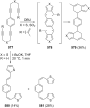
Scheme 128: Multiple isomerization/cyclization of “double” bispropargylic thioethers.

Scheme 129: Preparation of a bisallenyl disulfide and its subsequent bicyclization.

Scheme 130: Thermal cyclization of a bisallenyl thiosulfonate.

Scheme 131: Some reactions of heteroorganic bisallenes with two sulfur atoms.

Scheme 132: Further methods for the preparation of heteroorganic bisallenes.

Scheme 133: Cyclization reactions of heteroorganic bisallenes.

Scheme 134: Thermal cycloadditions of bisallenic tertiary amines.

Scheme 135: Cyclization of a bisallenic tertiary amine in the presence of a transition-metal catalyst.

Scheme 136: A Pauson–Khand reaction of a bisallenic ether.

Scheme 137: Formation of a 2:1adduct from two allenic substrates.

Scheme 138: A ring-forming silastannylation of a bisallenic tertiary amine.

Scheme 139: A three-component cyclization involving a heterorganic bisallene.

Scheme 140: Atom-economic construction of a complex organic framework from a heterorganic α,ω-bisallene.
Triple-channel microreactor for biphasic gas–liquid reactions: Photosensitized oxygenations
- Ram Awatar Maurya,
- Chan Pil Park and
- Dong-Pyo Kim
Beilstein J. Org. Chem. 2011, 7, 1158–1163, doi:10.3762/bjoc.7.134
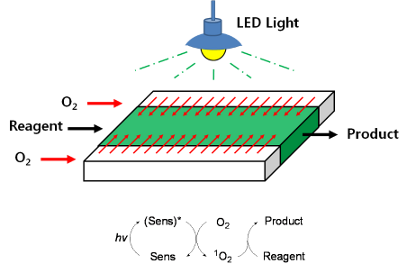
- oxygenations of α-terpinene, citronellol, and allyl alcohols. Keywords: gas–liquid reaction; microreactor; photosensitization; singlet oxygen; Introduction Microreactors have recently attracted much interest among the scientific community for performing laboratory operations on small scales [1][2][3][4][5][6
- from long reaction times due to restricted spatial illumination. In addition, the short lifetime of singlet oxygen in solutions, the low interfacial area between the oxygen and the reaction solution, and the long molecular diffusion distances significantly reduce the reaction efficiency. In this

Graphical Abstract

Figure 1: Schematic the for contacting modes of biphasic gas–liquid in (a) batch reactor, (b) dual-channel, a...

Figure 2: Optical image of the triple-channel microreactor (for demonstration purposes, the inner channel for...

Figure 3: Photosensitized oxygenation in the triple-channel microreactor.

Scheme 1: Photosensitized oxygenation of citronellol (a key step in the synthesis of rose oxide).
Fine-tuning alkyne cycloadditions: Insights into photochemistry responsible for the double-strand DNA cleavage via structural perturbations in diaryl alkyne conjugates
- Wang-Yong Yang,
- Samantha A. Marrone,
- Nalisha Minors,
- Diego A. R. Zorio and
- Igor V. Alabugin
Beilstein J. Org. Chem. 2011, 7, 813–823, doi:10.3762/bjoc.7.93
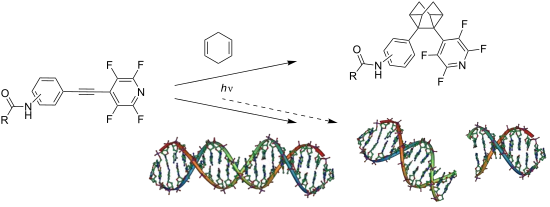
- acetamides. The significant protecting effect of the hydroxyl radical and singlet oxygen scavengers to DNA cleavage was shown only with m-lysine conjugate. All three isomeric lysine conjugates inhibited human melanoma cell growth under photoactivation: The p-conjugate had the lowest CC50 (50% cell
- previous mechanistic studies suggested that neither singlet oxygen nor diffusing oxygen- and carbon-centered radical species play a significant role under the conditions where the most efficient ds cleavage by monoalkynes is observed (pH 6) [25]. From the narrowed list of mechanistic scenarios, base
- on DNA cleavage In order to get further insight into the mechanism of the DNA cleavage by the three conjugates, we used the plasmid relaxation assays for the cleavage with conjugates 1, 6, and 7 in the presence of hydroxyl radicals (glycerol, DMSO) and singlet oxygen (NaN3) scavengers [65]. The

Graphical Abstract

Figure 1: Structure of C-lysine conjugates.

Figure 2: Alternative pathways of enediyne photoreactivity: photo-Bergman cyclization (left), C1–C5 cyclizati...

Figure 3: Summary of possible mechanistic alternatives for the observed DNA cleavage by monoacetylene conjuga...

Scheme 1: Proposed mechanism of photocycloaddition of acetylene with 1,4-CHD.

Figure 4: p-, m-, and o-amidyl acetylenes and respective lysine conjugates.

Scheme 2: Synthesis of amido-substituted monoacetylenes and lysine conjugates. Reagents and conditions: a. Pd...

Scheme 3: Photochemical reactions of TFP-substituted aryl alkynes with selected π-systems. In short, the reac...

Scheme 4: Photocycloaddition of amido acetylenes with 1,4-CHD.

Scheme 5: Possible mechanism for photochemical hydration of diaryl acetylene moiety catalyzed by the ortho-am...

Figure 5: Stern–Volmer plots of three regioisomers, 3 (blue diamond), 4 (red square), and 5 (green triangle),...

Figure 6: Absorption spectra of three isomers, 3, 4, 5, and Ph-TFP in acetonitrile (10 μM).
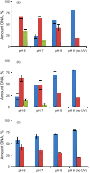
Figure 7: Quantified DNA cleavage data for 1 (a), 6 (b) and 7 (c). Blue: Form I (supercoiled) DNA; red: Form ...
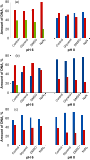
Figure 8: Effect of hydroxyl radical/singlet oxygen scavengers (20 mM) on the efficiency of DNA cleavage at p...

Figure 9: Cell proliferation assay using A375 cells (human melanoma) and compound 1 (green square), 6 (red up...
Palladium-catalyzed formation of oxazolidinones from biscarbamates: a mechanistic study
- Benan Kilbas and
- Metin Balci
Beilstein J. Org. Chem. 2011, 7, 246–253, doi:10.3762/bjoc.7.33
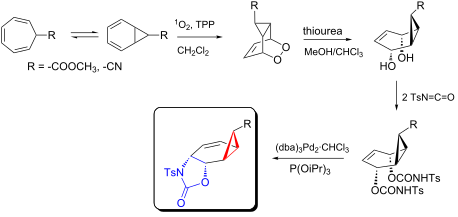
- nucleophile is not necessary to form oxazolidinones. The metal is probably bonded to the allylic system from the same face as the nucleophile. Keywords: bicyclic endoperoxides; biscarbamates; oxazolidinone; Pd-catalyzed allylic reaction; singlet oxygen; Introduction Palladium-catalyzed carbon–carbon bond
- shift the equilibrium to the norcaradiene 4b side, while electron donating substituents, such as –OR, –NR2 favor the cycloheptatriene 4a structure. It has been shown that singlet oxygen and 4-phenyl-1,2,4-triazoline-3,5-dione (PTAD) are sufficiently reactive to intervene in the cycloheptatriene

Graphical Abstract

Scheme 1: General route to oxazolidinones via a palladium-catalyzed reaction.

Figure 1: Metal–olefin complexation from the anti-face of the double bond.

Figure 2: Cyclic systems with enantiotopic leaving groups at allylic positions.

Scheme 2: The cycloheptatriene–norcaradiene equilibrium.

Scheme 3: Synthesis of oxazolidinone 9 starting from carboxymethyl cycloheptatriene 5a.

Scheme 4: Attempted isomerization of 7 to 10.

Scheme 5: Synthesis of oxazolidinones 17 and 20.

Scheme 6: The mechanism for the formation of oxazolidinones [3].
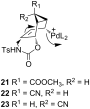
Figure 3: Nucleophilic attack on the double bond from the leaving group's side.
Synthesis of spiroannulated and 3-arylated 1,2,4-trioxanes from mesitylol and methyl 4-hydroxytiglate by photooxygenation and peroxyacetalization
- Axel G. Griesbeck,
- Lars-Oliver Höinck and
- Jörg M. Neudörfl
Beilstein J. Org. Chem. 2010, 6, No. 61, doi:10.3762/bjoc.6.61
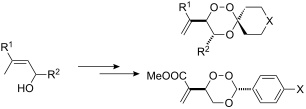
- -hydroperoxy homoallylic alcohols (prepared by the ene reaction of the allylic alcohols mesitylol and methyl 4-hydroxytiglate, respectively, with singlet oxygen) to give spiroannulated 1,2,4-trioxanes 5a–5e and 9a–9e, respectively. A second series of 3-arylated trioxanes 10a–10h, that are available from the
- hydroperoxy alcohol 4 and benzaldehyde derivatives, was investigated by X-ray crystallography. Keywords: ene reaction; peracetalization; peroxides; singlet oxygen; trioxanes; Introduction The antimalaria-active molecule artemisinin (1) is a naturally occurring sesquiterpene peroxide with remarkable
- singlet oxygen ene reaction of allylic alcohols as a route to ß-hydroperoxy alcohols that can be transformed into 1,2,4-trioxanes by reaction with carbonyl compounds in the presence of Lewis acids [11]. This approach leads to simple cyclic peroxides (e.g. 2) which in some cases show similar antimalarial

Graphical Abstract

Figure 1: Antimalaria active natural artemisinin 1 and the spirobicyclic 1,2,4-trioxane derivative 2 show the...

Scheme 1: Singlet oxygen ene reaction of methyl 4-hydroxytiglate (3) and mesitylol (6) under solid-phase cond...

Scheme 2: 1,2,4-trioxane 9c and bis-trioxane 8a,b formation from the bifunctional cyclohexa-1,4-dione.

Figure 2: Structure of the spirobicyclic trioxane 5c in the crystal.

Scheme 3: BF3-catalyzed acetalization of hydroperoxide 4 with benzaldehyde derivatives.

Figure 3: Structure of the 3-arylated trioxane 10b in the crystal.

Figure 4: Structure of the p-bromophenyl derivative 10d in the crystal lattice (disordered water molecules in...

Figure 5: Numbering of 3-aryl-1,2,4-trioxanes 10 and relevant bonds; structure of artemether (AM).
Synthesis of a new class of aminocyclitol analogues with the conduramine D-2 configuration
- Latif Kelebekli,
- Yunus Kara and
- Murat Celik
Beilstein J. Org. Chem. 2010, 6, No. 15, doi:10.3762/bjoc.6.15
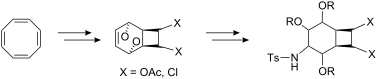
- cyclooctatetraene (8) by the addition of mercury(II) acetate [31]. Tetraphenylporphyrin sensitized photooxygenation of diacetoxydiene 9 with singlet oxygen gave the expected endoperoxide 10. Reduction of the peroxide bond in 10 was performed with thiourea under very mild conditions to give the cis-diol 11 in 99
- -dichlorobicylooctadiene 19 with singlet oxygen gave the expected endoperoxide 20 [19][20][21] (Scheme 4). Since the dichlorobicyclooctadiene 19 has no plane of symmetry, singlet oxygen approaches the diene unit exclusively from the less crowded side of the molecule in accord with previous reports [20][21]. Reduction of

Graphical Abstract

Scheme 1: Synthesis of bis-carbamate 12 and oxazolidinone 13.

Scheme 2: Mechanism of the palladium-catalyzed ionization/cyclization reaction.

Scheme 3: Synthesis of aminocyclitol analogue 6.

Figure 1: The thermal ellipsoid plot of the single crystal X-ray crystallographic structure of 18.

Scheme 4: Synthesis of oxazolidone 23.

Scheme 5: Mechanism of the palladium-catalyzed ionization/cyclization reaction in dichloro biscarbamate 22.

Scheme 6: Synthesis of dichloroaminocyclitol 7.

Figure 2: 1H NMR NOE spectrum of compound 7.
Sordarin, an antifungal agent with a unique mode of action
- Huan Liang
Beilstein J. Org. Chem. 2008, 4, No. 31, doi:10.3762/bjoc.4.31

- al. [20]. The resultant alcohol was converted to the methyl ether using NaH and MeI. The subsequent Cope rearrangement of 10 occurred at 200 °C via a boat-like transition state [18] to yield 11. The elaboration of this material to 12 involved treatment with singlet oxygen and AcCl [21] to yield α,β

Graphical Abstract

Figure 1: Therapeutic antifungal agents.

Figure 2: Structure of sordarin (1) and sordaricin (2).

Scheme 1: Kato’s retrosynthetic plan.

Scheme 2: Synthesis of cyclopentadiene 13.

Scheme 3: Synthesis of sordaricin methyl ester.

Scheme 4: Mander’s retrosynthetic plan.

Scheme 5: Synthesis of iodo compound 27.

Scheme 6: Synthesis of sordaricin (2).

Scheme 7: Retrosynthesis of sordarin and sordaricin.

Scheme 8: Synthesis of ketone 43.

Scheme 9: Synthesis of β-keto ethyl ester 45.

Scheme 10: Synthesis of tetracyclic framework 52.

Scheme 11: Synthesis of sordaricin and sordarin.

Figure 3: Modifications of glycosyl part.

Scheme 12: Simplified model of sordarin.

Scheme 13: Synthesis of cyclopentane analog precursors.

Scheme 14: Synthesis of six cyclopentane analogs.

Scheme 15: Retrosynthetic plan of sordarin analog.

Scheme 16: Synthesis of sordarin analog 98.

Scheme 17: Synthesis of sordarin analog 103.



