


Search results
Search for "this compound" in Full Text gives 515 result(s) in Beilstein Journal of Organic Chemistry. Showing first 200.
Strategies to access the [5-8] bicyclic core encountered in the sesquiterpene, diterpene and sesterterpene series
Beilstein J. Org. Chem. 2023, 19, 245–281, doi:10.3762/bjoc.19.23
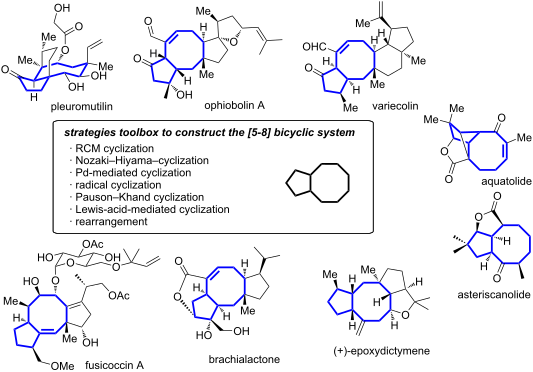
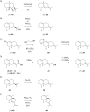
- [20]. Its total synthesis was explored by Srikrishna and Nagaraju in 2012 using a linear strategy (Scheme 4) [20]. Thus, menthene 25 was converted in 16 steps into cyclopentane 26 presenting two unsaturated lateral chains. This compound was then treated with G-I catalyst to give the corresponding [5-8
- introduction of the eight-membered ring: (−)-Teubrevin G (59) is an example of a C5-C8 bicycle in which the C5 unit corresponds to a furan ring (Scheme 9) [34]. Indeed, this compound isolated from aerial parts of Teucrium brevifolium has a unique structure composed of a cyclooctanone, fused with a furan ring
- only in modest amounts even after extensive reaction times (more than 3 days) and high catalyst loadings (30–35 mol %). After reaction optimization, use of G-II catalyst allowed formation of cyclooctene 58 in excellent 90% yield. This compound could ultimately be advanced to 59 in 8 steps. Exhibiting a


Germacrene B – a central intermediate in sesquiterpene biosynthesis
Beilstein J. Org. Chem. 2023, 19, 186–203, doi:10.3762/bjoc.19.18

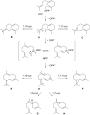
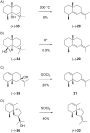
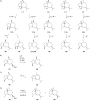
- that 11 can bind to the main protease Mpro of the SARS-CoV-2 virus that is involved in viral reproduction, but experimental tests supporting this finding are lacking [89]. Selina-5,7(11)-diene (20) can arise from I1 through 1,2-hydride shift to I1a and deprotonation (Scheme 7). This compound was first
- ) (Scheme 10A) and upon treatment of 4-epi-maaliol (34) with acid (Scheme 10B). Full 1H and 13C NMR data for 20 were reported [91]. Compound 21 can in theory be formed from I1a by 1,2-methyl group shift to I1b and deprotonation (Scheme 7). However, this compound was only obtained as synthetic material by
- attack of water to I2. As mentioned above, this compound occurs in Cinnamomum camphora [86] and has later also been isolated from Laggera pterodonta ([α]D24 = +4, c 0.5, MeOH) [93]. Compound 38, (+)-eudesma-5,7(11)-diene, could potentially arise from I2 by 1,2-hydride shift to I2a and deprotonation, but








Identification and determination of the absolute configuration of amorph-4-en-10β-ol, a cadinol-type sesquiterpene from the scent glands of the African reed frog Hyperolius cinnamomeoventris
Beilstein J. Org. Chem. 2023, 19, 167–175, doi:10.3762/bjoc.19.16
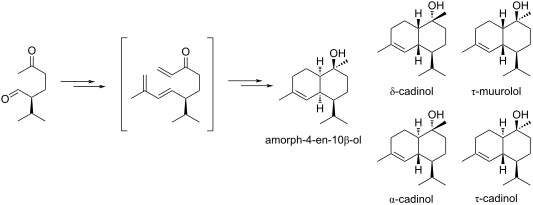
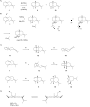
- , in this work, we show that another major constituent of the male specific gland is (10R,1S,6R,7R,10R)-amorph-4-ene-10β-ol [(1R,4R,4aR,8aS)-4-isopropyl-1,6-dimethyl-1,2,3,4,4a,7,8,8a-octahydronaphthalen-1-ol]. This compound was synthesized for the first time and has the opposite configuration to
- configuration. Controlling the stereogenic center C-4 of 4 would allow access to the respective enantiomers. Unfortunately, enantiomerically pure 4 is not easily available, in contrast to ketone 17. This compound can be obtained in high optical purity using Jørgensen’s organocatalyst 16 [20][21]. In addition
- synthesis and characterization showed that this compound is the opposite enantiomer of 14 known from plants. This may indicate biosynthesis in the frog, but more work has to be performed to establish this. Furthermore, a short diversity-oriented synthesis based on the work of Taber and Gunn [13] enabled


Revisiting the bromination of 3β-hydroxycholest-5-ene with CBr4/PPh3 and the subsequent azidolysis of the resulting bromide, disparity in stereochemical behavior
Beilstein J. Org. Chem. 2023, 19, 91–99, doi:10.3762/bjoc.19.9
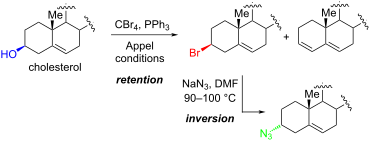
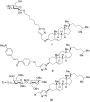
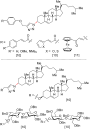
- agreement with those reported by others [20][21][22]. This compound was erroneously assigned as 3α-bromocholest-5-ene [10]. The major, slightly more polar product of the Appel reaction was 3β-bromocholest-5-ene (4, Figure 4). It crystallized as colorless plates, and the structural and stereochemical




Catalytic aza-Nazarov cyclization reactions to access α-methylene-γ-lactam heterocycles
Beilstein J. Org. Chem. 2023, 19, 66–77, doi:10.3762/bjoc.19.6

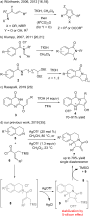
- -heterocycles [39][40][41][42][43][44][45] and specifically α-methylene-γ-lactams as a subset of this compound class, are popular targets in heterocyclic chemistry and drug discovery [46][47][48][49][50][51][52][53][54][55][56]. Against this background, we herein disclose a full account of our studies on the



Improving the accuracy of 31P NMR chemical shift calculations by use of scaling methods
Beilstein J. Org. Chem. 2023, 19, 36–56, doi:10.3762/bjoc.19.4
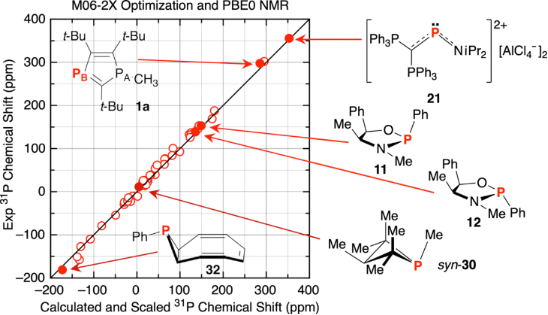
- actual use of this compound requires a fairly extraordinary experimental setup [52][53]. An additional issue with PH3 involves the choice of using the gas-phase or liquid-phase experimental chemical shifts, which differ dramatically: the universally used value for the gas-phase chemical shift is −266.1
- supported by the amide-like CO infrared stretching frequency of 1654 cm−1. This compound further warrants mention since one might suppose that the carbonyl carbon atom would be found near 170 ppm in the 13C NMR spectrum by analogy to amides, but was instead observed at 228 ppm and confirmed by a calculated




Digyalipopeptide A, an antiparasitic cyclic peptide from the Ghanaian Bacillus sp. strain DE2B
Beilstein J. Org. Chem. 2022, 18, 1763–1771, doi:10.3762/bjoc.18.185
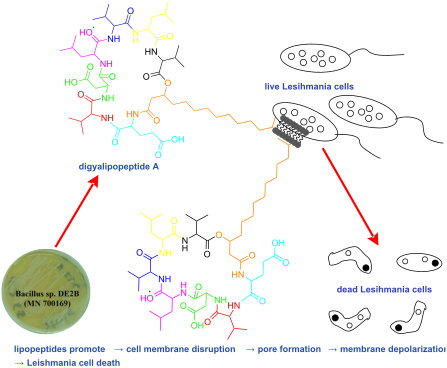
- , and SrfAD on the surfactin synthetase complex [23][24]. We hope to confirm this similarity in the near future as we proceed to further study the whole genome sequence of strain DE2B. Subsequently, using the fully elucidated structure of compound 1, we noticed that this compound was part of a


Synthesis of (−)-halichonic acid and (−)-halichonic acid B
Beilstein J. Org. Chem. 2022, 18, 1629–1635, doi:10.3762/bjoc.18.174
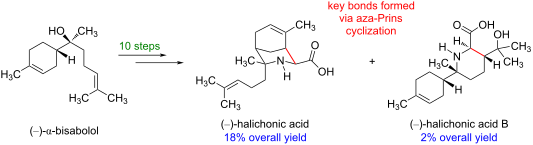
- Axinyssa sp. along with the structurally related compound halichonic acid B ((+)-2) [5]. Structurally, (+)-2 is a pipecolic acid derivative containing a cyclohexenyl ring as a substituent group. This compound also features four stereogenic centers (three of which are located within the piperidine ring) and
- , antifungal, and antimicrobial properties [10][19][20][21][22]. Notably, (+)-4 was also co-isolated with compounds (+)-1 and (+)-2 in sponge extracts, suggesting that these compounds may share a common biosynthetic pathway [4][5]. Both enantiomers of 4 have been previously synthesized [9][23][24], and this
- compound has also been prepared in racemic form [25]. To supply the final two carbon atoms found in the halichonic acids, amine 4 was condensed with a solution of ethyl glyoxylate in toluene, giving imine 7 in 95% yield. We found that imine 7 could be purified by column chromatography on silica gel if the


A study of the DIBAL-promoted selective debenzylation of α-cyclodextrin protected with two different benzyl groups
Beilstein J. Org. Chem. 2022, 18, 1553–1559, doi:10.3762/bjoc.18.165
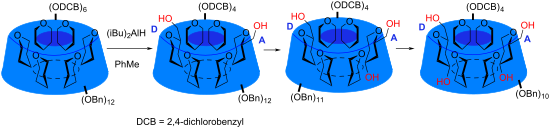
- this compound was not isolated and identified. Carrying out the same reaction with 1.5 M DIBAL gave complete conversion to 8 (Table 1, entry 2). The formation of 8 from 7 is surprising because it contrasts the complete lack of reaction of fully DCB protected 1 with DIBAL [15]. It means that the


Using UHPLC–MS profiling for the discovery of new sponge-derived metabolites and anthelmintic screening of the NatureBank bromotyrosine library
Beilstein J. Org. Chem. 2022, 18, 1544–1552, doi:10.3762/bjoc.18.164
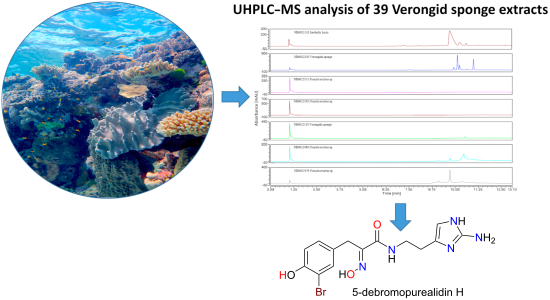
- the past 5 years, the NatureBank open access compound library currently contains only ≈100 pure natural products. In an effort to expand this compound library, we have recently embarked on a program whereby a subset of the NatureBank marine and terrestrial extracts have been analysed by UHPLC–MS in


New triazole-substituted triterpene derivatives exhibiting anti-RSV activity: synthesis, biological evaluation, and molecular modeling
Beilstein J. Org. Chem. 2022, 18, 1524–1531, doi:10.3762/bjoc.18.161
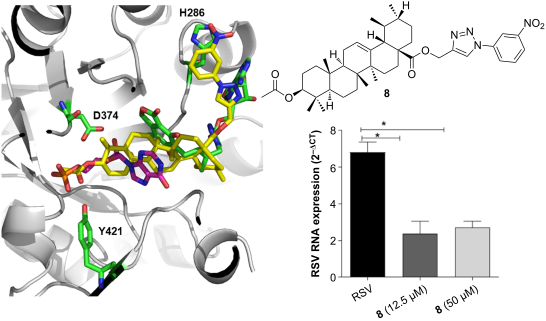
- relied on a comparison of compound 8 with crystallographic ligands of IMPDH, on the basis that it would represent a secure interpretation of the site interactions similarity with inhibitors, thus, suggesting that this compound acts by the same mechanism. Therein, flexible docking for compound 8 to the


Sinensiols H–J, three new lignan derivatives from Selaginella sinensis (Desv.) Spring
Beilstein J. Org. Chem. 2022, 18, 1410–1415, doi:10.3762/bjoc.18.146
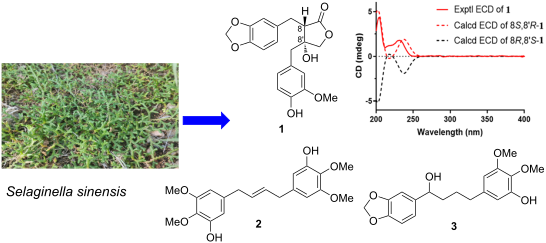
- ) suggested that 3 was possibly a racemic mixture. Enantioseparation of 3 by HPLC using a chiral-pak IA column provided the enantiomers with a ratio about 3:2 (Figure S28, Supporting Information File 1) suggested its mixture feature. Unfortunately, the limited amount available of this compound did not allow


Preparation of an advanced intermediate for the synthesis of leustroducsins and phoslactomycins by heterocycloaddition
Beilstein J. Org. Chem. 2022, 18, 1385–1395, doi:10.3762/bjoc.18.143
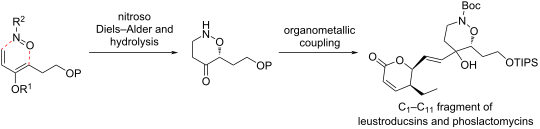
- ) ppm; 13C NMR (90 MHz, CDCl3) δ 162.5, 148.8, 120.3, 77.4, 76.6, 70.7, 38.7, 22.6, 10.9 ppm; HRMS (m/z): [M + Na]+ calcd 173.0573; found, 173.0572; [α]D20 +132.0 (c 1.0, CH2Cl2). (2R,3S,6RS)-3-Ethyl-2-ethynyl-6-methoxy-3,6-dihydro-2H-pyran (19): This compound was prepared according to reference [18]. A
- pressure. Purification by column chromatography (5% Et2O/pentane), gave 19 as a colourless oil (866 mg, 94%, 91/9 mixture of stereoisomers). Analytical data were in agreement with literature data [18]. (2R,3S,6RS)-3-Ethyl-2-((E)-2-iodovinyl)-6-methoxy-3,6-dihydro-2H-pyran (20): This compound was prepared


On drug discovery against infectious diseases and academic medicinal chemistry contributions
Beilstein J. Org. Chem. 2022, 18, 1355–1378, doi:10.3762/bjoc.18.141
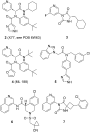
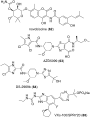
- -bearing substances, endowed with an antibacterial effect [58]. However, this compound was originally patented for a fungicide effect [59] and then found to also inhibit mammalian c-Jun N-terminal kinase [60]. Unsurprisingly, it was also reported in 2022 as a covalent inhibitor for the SARS-CoV-2 main
- the virus protease binding the non-covalent inhibitor X77 (2). Of importance is that this compound derives from inhibitors of SARS-CoV-1 main protease, such as 4 and 5, which were found in 2013 [79][80]. Interestingly, this truly large virtual screening came out with (only) three validated hits
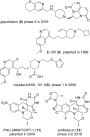
- second original class of bacterial gyrases inhibitors. In 2004, the nitro-bearing derivative 11, resulting from a high-throughput phenotypic-based screening, was patented by Pharmacia/Pfizer for its antibacterial properties [122][123]. Even if this compound was also effective in vivo, many synthesis and







Computational model predicts protein binding sites of a luminescent ligand equipped with guanidiniocarbonyl-pyrrole groups
Beilstein J. Org. Chem. 2022, 18, 1322–1331, doi:10.3762/bjoc.18.137
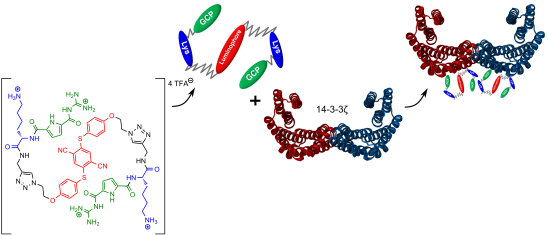
- , Figures S22–S25). This compound 1 was tested in initial binding assays using fluorescence emission as well as native gel electrophoresis. We could indeed show that 1 binds to 14-3-3ζ as detected by native gel electrophoresis and fluorescence titration (Supporting Information File 1). Experiments show that




Ionic multiresonant thermally activated delayed fluorescence emitters for light emitting electrochemical cells
Beilstein J. Org. Chem. 2022, 18, 1311–1321, doi:10.3762/bjoc.18.136
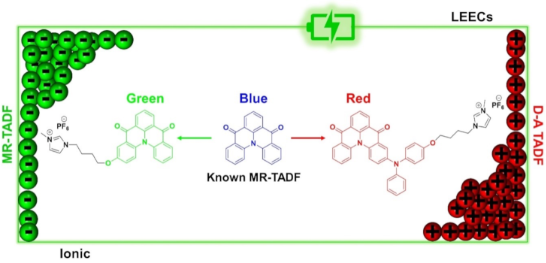
- ). The presence of the DPA group in DiKTa-DPA-OBuIm transforms this compound from one that is MR-TADF to one that is better described as a donor–acceptor TADF, which is reflected in the red-shifted and broadened emission [28]. Results and Discussion DiKTa-OBuIm was obtained in three steps (Scheme 1) in
- same at 0.27 eV. The nature of S1 and T1 resemble to those of its parent DiKTa and so this compound is likely to behave as a MR-TADF emitter. The nature of the S2 state is n–π* in DiKTa-OMe. The excited state picture of DiKTa-DPA-OMe is different to that of other reported D–A-type systems containing



Enantioselective total synthesis of putative dihydrorosefuran, a monoterpene with an unique 2,5-dihydrofuran structure
Beilstein J. Org. Chem. 2022, 18, 1264–1269, doi:10.3762/bjoc.18.132
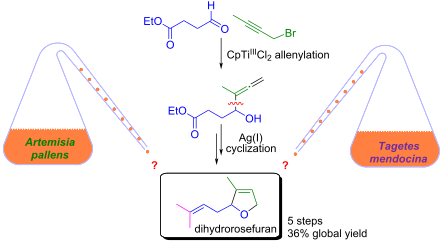
- signals of the oxygenated carbons (C2 and C5). The same behavior pattern can be observed in the 1H NMR data. This made us think that the natural product of T. mendocina could have an acyclic skeleton instead of a dihydrofuran one. For this reason, we propose this compound should be the diol called


Synthesis of tryptophan-dehydrobutyrine diketopiperazine and biological activity of hangtaimycin and its co-metabolites
Beilstein J. Org. Chem. 2022, 18, 1159–1165, doi:10.3762/bjoc.18.120
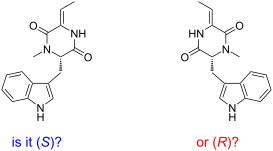
- temperature. Also the addition of base (NEt3) did not promote the reaction. Therefore, the mode of action of TDD towards glutathione S-transferase needs further investigation. Conclusion We have established an efficient synthesis of TDD that makes this compound available from ʟ-tryptophan with a high yield of


Facile and diastereoselective arylation of the privileged 1,4-dihydroisoquinolin-3(2H)-one scaffold
Beilstein J. Org. Chem. 2022, 18, 1070–1078, doi:10.3762/bjoc.18.109
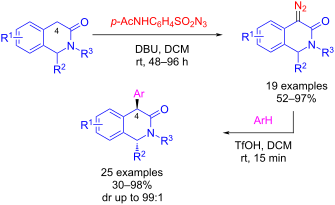
- % at 30 μM concentration. Dose–response testing of this compound against both NCI-H460 and A549 lung carcinoma cell lines resulted in the determination of IC50 values for compound 9j as 31.4 ± 0.48 μM and 13.6 ± 3.34 μM, respectively (see Supporting Information File 1 for details). Conclusion In





Synthesis of α-(perfluoroalkylsulfonyl)propiophenones: a new set of reagents for the light-mediated perfluoroalkylation of aromatics
Beilstein J. Org. Chem. 2022, 18, 788–795, doi:10.3762/bjoc.18.79
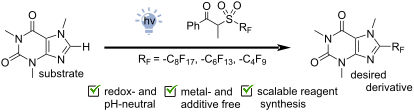
- obtain the corresponding sulfinate in limited yield, the decomposition of this compound after several days at 4 °C, and within a few minutes under heating deemed its applicability impractical. After this first step, we proceeded to test the nucleophilic substitution between our perfluoroalkylsulfinate


Synthesis of bis-spirocyclic derivatives of 3-azabicyclo[3.1.0]hexane via cyclopropene cycloadditions to the stable azomethine ylide derived from Ruhemann's purple
Beilstein J. Org. Chem. 2022, 18, 769–780, doi:10.3762/bjoc.18.77
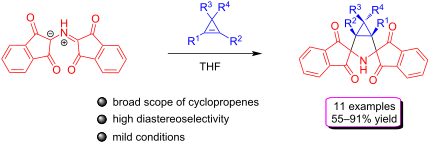
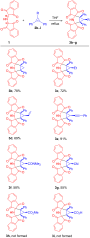
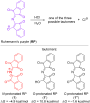
- ] and Domingo [48], we calculated global electrophilicity indexes (GEI, ω) for both PRP (1) and cyclopropenes 2 to determine which type of electron demand takes place during cycloaddition reactions. The global value of the electrophilicity index for azomethine ylide 1 (1.29 eV) revealed that this
- compound displays a moderate electrophilicity (Table 2, entry 1). By comparing the global electrophilicity indexes of reactants 1, 2a–p (Table 2, entries 1–17), we concluded that the cyclopropene cycloadditions to PRP (1) appear to be inverse electron demand (IED) reactions, i.e., they can be considered as






Tri(n-butyl)phosphine-promoted domino reaction for the efficient construction of spiro[cyclohexane-1,3'-indolines] and spiro[indoline-3,2'-furan-3',3''-indolines]
Beilstein J. Org. Chem. 2022, 18, 669–679, doi:10.3762/bjoc.18.68
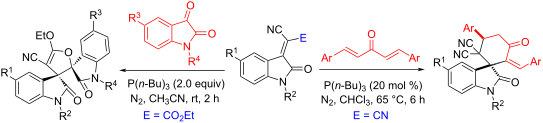
- reaction, the nucleophilic addition of the zwitterion (A) to this compound takes place at the exocyclic position giving the adduct (E), which in turn proceeds with the intermediates (F) and (G) according to the above mentioned similar processes to give the spiro compound 5. The different addition direction


New synthesis of a late-stage tetracyclic key intermediate of lumateperone
Beilstein J. Org. Chem. 2022, 18, 653–659, doi:10.3762/bjoc.18.66

- in various ways (we only show here the path that seems the most advantageous). According to this, compound 17 was N-alkylated at the indoline nitrogen atom with N-methylchloroacetamide to give 18, then cyclized in one pot to derivative 8. Alternate methods for the 17→8 transformation require more


Synthesis of sulfur karrikin bioisosteres as potential neuroprotectives
Beilstein J. Org. Chem. 2022, 18, 549–554, doi:10.3762/bjoc.18.57
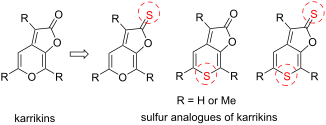
- -b]furan-2-one, has been recently identified as an extremely efficient neuroprotective butenolide. Herein, we report the targeted synthesis of this compound as well as new synthetic protocols toward a class of compounds derived from 2H-furo[2,3-c]pyran-2-ones (karrikins) via bioisosteric exchange of


Menadione: a platform and a target to valuable compounds synthesis
Beilstein J. Org. Chem. 2022, 18, 381–419, doi:10.3762/bjoc.18.43
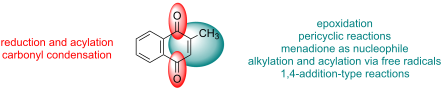
- menadione, a synthetic naphthoquinone belonging to the vitamin K group. This compound can be synthesized by different methods and it has a broad range of biological and synthetic applications, which will be highlighted in this review. Keywords: cancer; chemical reactions; 2-methyl-1,4-naphthoquinone





