


Search results
Search for "DBU" in Full Text gives 325 result(s) in Beilstein Journal of Organic Chemistry. Showing first 200.
All-carbon [3 + 2] cycloaddition in natural product synthesis
Beilstein J. Org. Chem. 2020, 16, 3015–3031, doi:10.3762/bjoc.16.251
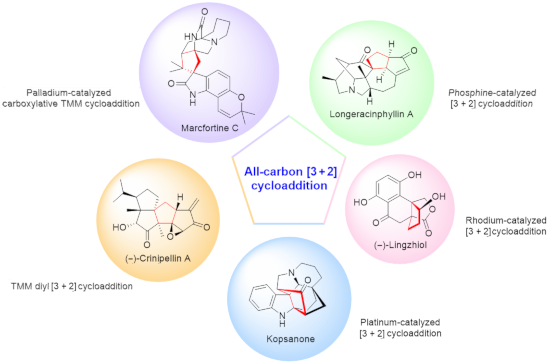
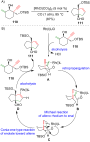
- tetracyclic compound 56. Dihydroxylation of freshly prepared 56 with OsO4 and then selective tosylation afforded 57 in 39% yield over two steps. Exposure of 57 to DBU upon heating gave the elimination product 58, which was subjected to an oxidative rearrangement with PDC to give enone 59 in 68% yield. Copper


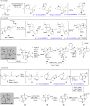
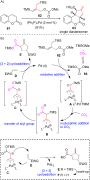

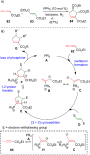




Regioselective synthesis of heterocyclic N-sulfonyl amidines from heteroaromatic thioamides and sulfonyl azides
Beilstein J. Org. Chem. 2020, 16, 2937–2947, doi:10.3762/bjoc.16.243
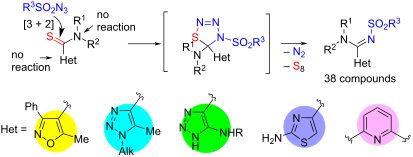
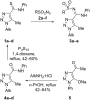
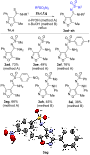
- 3). Thioamides 1f,g,t were converted to 5-arylamino-1,2,3-triazoles 1i–k by heating at reflux in n-propanol in the presence of DBU and these rearranged thioamides were then treated with sulfonyl azide 2c,f and kept at the same temperature for 17‒31 h. After flash column chromatography, pure N







Using multiple self-sorting for switching functions in discrete multicomponent systems
Beilstein J. Org. Chem. 2020, 16, 2831–2853, doi:10.3762/bjoc.16.233
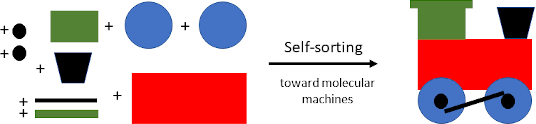
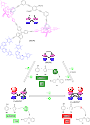
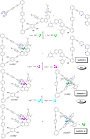
- the complex [Zn(49)]2+. The liberated zinc(II) ions replaced the Li+ ions in the nanoswitch [Li(35)]+ and translocated them onto the luminophore 36, thus finally generating the state SelfSORT-II composed of 49•H+, [Zn(35)]2+, and [Li(36)]+. In the return process, the deprotonation of 49•H+ by DBU









Synthesis of novel fluorinated building blocks via halofluorination and related reactions
Beilstein J. Org. Chem. 2020, 16, 2562–2575, doi:10.3762/bjoc.16.208
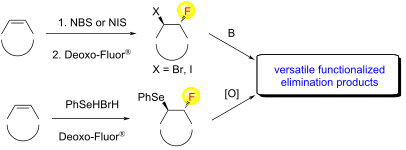
- (bridgehead alkenes are only stable in large ring systems), elimination was attempted only with (rac)-2a,b, (rac)-5a, (rac)-6b, (rac)-8a,b, and (rac)-11a,b. DBU in THF under reflux was insufficient to promote the elimination of the halofluorinated diesters (rac)-2a,b, (rac)-5a, and (rac)-6b. In contrast, the
- that of the corresponding stereoisomers, it is more likely that the epimerization occurs after the formation of (rac)-T10. Concerning (rac)-8a and 8b as well as (rac)-11a and 11b, the reagent preference was exactly the opposite: DBU in THF under reflux was effective, while t-BuOK in THF under reflux
- interactions are marked with blue two-headed arrows. Mechanism of the reaction of the cyclopropanation of the compounds (rac)-2a,b and (rac)-5a with t-BuOK. Presumed mechanism of the reaction of the compound (rac)-6b with t-BuOK. Cyclizations of halofluorinated tetrahydrophthalimides with DBU. Relevant NOESY


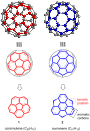
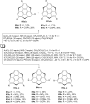
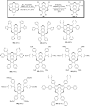
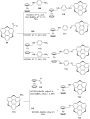
Synthetic approaches to bowl-shaped π-conjugated sumanene and its congeners
Beilstein J. Org. Chem. 2020, 16, 2212–2259, doi:10.3762/bjoc.16.186









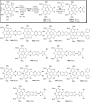


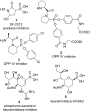
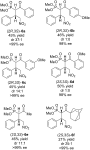
Convenient access to pyrrolidin-3-ylphosphonic acids and tetrahydro-2H-pyran-3-ylphosphonates with multiple contiguous stereocenters from nonracemic adducts of a Ni(II)-catalyzed Michael reaction
Beilstein J. Org. Chem. 2020, 16, 2073–2079, doi:10.3762/bjoc.16.174
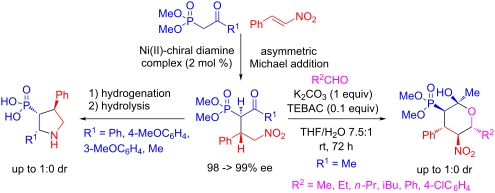
- products were formed when stronger bases such as triethylamine or DBU were used (Table 1, entries 2 and 3). Later on, inorganic bases in combination with a phase transfer agent such as benzyltriethylammonium chloride (TEBAC) were tried as catalysts for the same reaction. Similarly, no products were



Synthesis of monophosphorylated lipid A precursors using 2-naphthylmethyl ether as a protecting group
Beilstein J. Org. Chem. 2020, 16, 1955–1962, doi:10.3762/bjoc.16.162

- -phenyltrifluoroacetimidate glycosyl donor 20 by reaction with 2,2,2-trifluoro-N-phenylacetimidoyl chloride in the presence of base DBU [14]. The monoacylated derivative 15 is also the key building block for the synthesis of lipid X monosaccharide 1 (Scheme 3). After the N-Troc protecting group was removed as described above
- , DMAP, CH2Cl2, rt, 85%; (h) Zn/AcOH, CH2Cl2, rt; (i) DIPEA, FmocCl, CH2Cl2, rt, 80% (2 steps); (j) PhBCl2, Et3SiH, CH2Cl2, MS 4 Å, −78 °C, 80%; (k) HF/pyridine, THF,−40 °C to rt, 93%; (l) DBU, ClCN(Ph)CF3, CH2Cl2, 95%. Synthesis of lipid X monosaccharide 1. Conditions: (a) Zn, AcOH, CH2Cl2, rt; (b) acid


Et3N/DMSO-supported one-pot synthesis of highly fluorescent β-carboline-linked benzothiophenones via sulfur insertion and estimation of the photophysical properties
Beilstein J. Org. Chem. 2020, 16, 1740–1753, doi:10.3762/bjoc.16.146

- observed (Table 1, entry 2). At this stage, we realized that DMSO was a better choice for this transformation as the reaction required a shorter time and afforded the product 2bA in a better yield. Then, other amines such as NMP, Et3N, DBU, and DABCO were also investigated. The use of NMP as an activator
- combination of DABCO and DMSO also afforded the desired product via a clean reaction within 20 min, although only 60% yield of the product was obtained (Table 1, entry 10). This promising result using DABCO encouraged us to explore other amines like DBU, ʟ-proline, pyridine, DMAP, and pyrrolidine as an


Clickable azide-functionalized bromoarylaldehydes – synthesis and photophysical characterization
Beilstein J. Org. Chem. 2020, 16, 1683–1692, doi:10.3762/bjoc.16.139
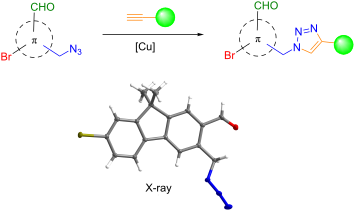
- acidic conditions, rapid aqueous work-up was conducted, followed by reduction with NaBH4, yielding the corresponding primary alcohol 8 in 81% yield over two steps. The transformation to azide 9 was accomplished by deprotonation using 1,8-diazabicyclo[5.4.0]undec-7-ene (DBU) and reaction with
- °C to 25 °C, 1.5 h; c) NaBH4, THF/MeOH 1:1 v/v, 0 °C, 1 h, 81% (2 steps); d) DPPA, DBU, PhMe, 25 °C, 18 h, 98%; e) 1) MeOTf, CH2Cl2, 25 °C, 2.5 h; 2) NaBH4, THF/MeOH 4:1 v/v, 0 °C, 2.5 h; 3) oxalic acid, THF/H2O 4:1 v/v, 25 °C, 20 h, 78%. Overall yield from 4-bromobenzaldehyde to 3: 56% (5 steps
- h, 91%; h) 1) DPPA, DBU, PhMe, 25 °C, 15 h; 2) NaN3, PhMe, 60 °C, 4 h, 87%; i) 1) MeOTf, CH2Cl2, 25 °C, 2.5 h; 2) NaBH4, THF/MeOH 4:1 v/v, 0 °C, 2.5 h; 3) oxalic acid, THF/H2O 4:1 v/v, 25 °C, 20 h, 86%. Overall yield to 5: 45% (8 steps). The molecular structure of 5 shows 50% probability ellipsoids



Pauson–Khand reaction of fluorinated compounds
Beilstein J. Org. Chem. 2020, 16, 1662–1682, doi:10.3762/bjoc.16.138
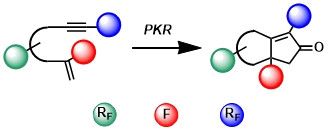
- afforded the corresponding products 59 in good to excellent yields (Scheme 36). The authors then studied the elimination of the trifluoromethyl group from this library of PK adducts, building upon their own experience in the field (vide supra, Scheme 34). Thus, by subjecting enones 59 to treatment with DBU
- aforementioned DBU-mediated detrifluoromethylation (Scheme 37) was achieved for substrates 68 in most cases with low to moderate yields, while the corresponding products could not be isolated starting from substrates 69. In 2012, Konno and co-workers reported the synthesis of 2-fluoralkyl-2-cyclopentenones
- Diels-Alder reactions [70]. Tentative mechanism for the nucleophilic addition/retro-aldol reaction sequence. Catalytic PKR with norbornadiene [70]. Scope of the PKR of trifluoromethylalkynes with norbornadiene [72]. DBU-mediated detrifluoromethylation [72]. A simple route to enone 67, a common




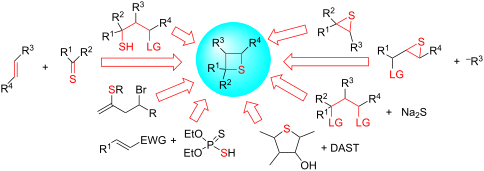
Recent synthesis of thietanes
Beilstein J. Org. Chem. 2020, 16, 1357–1410, doi:10.3762/bjoc.16.116
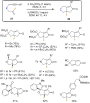
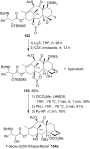
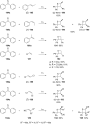
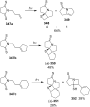
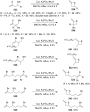
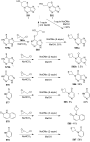
- into two different dimesylated nucleosides. After the deprotection with Hg(OAc)2 in the presence of TFA, the dimesylated thiols 127 and 130 generated companied with the thietane-fused nucleoside 128 in one case. Further the treatment of the dimesylated thiols 127 and 130 with DBU gave rise to the


















Efficient synthesis of dipeptide analogues of α-fluorinated β-aminophosphonates
Beilstein J. Org. Chem. 2020, 16, 756–762, doi:10.3762/bjoc.16.69
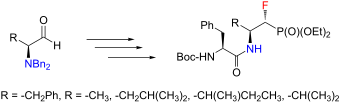
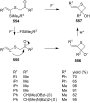
- fluorination reactions with these reagents require the use of a base as an activator [20]. Doyle demonstrated the combination between PyFluor or PBSF and bases such as 1,8-diazabicyclo[5.4.0]undec-7-ene (DBU, 6), 7-methyl-1,5,7-triazabicyclo[4.4.0]dec-5-ene (MTBD, 7), 2-tert-butyl-1,1,3,3-tetramethylguanidine
- 2, for all tested conditions see Table S1 in Supporting Information File 1). In our experience, there was no significant correlation between steric bulkiness of the base (from DBU to BTPP) used, and the yield of α-isomer 11 formation. It is worth mentioning that application of PBSF gives slightly


Synthesis of C70-fragment buckybowls bearing alkoxy substituents
Beilstein J. Org. Chem. 2020, 16, 681–690, doi:10.3762/bjoc.16.66
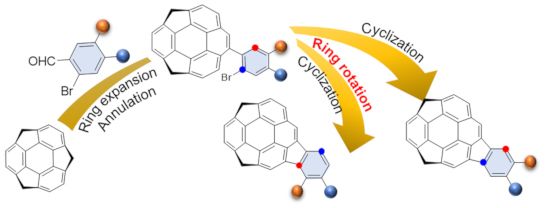
- using 20 mol % of Pd(PPh3)2Cl2 and 150 mol % DBU in DMF at 150 °C under microwave irradiation conditions to afford the desired dimethoxy derivative 5a in 75% yield. In contrast, when the reaction of 4b was performed, not only the desired product 5b but also the unexpected regioisomer 5c was obtained
- described in [18], in a glove box to the microwave vial was added 4 (0.030 mmol), Pd(PPh3)2Cl2 (6.0 μmol), and degassed DMF (3 mL) and prior sealing the vial DBU (6.7 μL, 0.045 mmol) and the mixture was stirred for 40 min at 150 °C using microwave. After the addition of ethyl acetate/hexane, the mixture was


Microwave-assisted efficient and facile synthesis of tetramic acid derivatives via a one-pot post-Ugi cascade reaction
Beilstein J. Org. Chem. 2020, 16, 663–669, doi:10.3762/bjoc.16.63
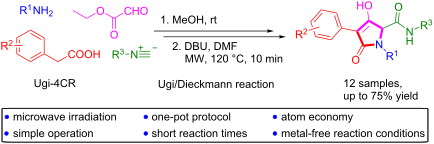
- developed through an Ugi/Dieckmann cyclization strategy with DBU. This two-step one-pot procedure afforded the targeted tetramic acid analogues in good yields. With commercially available Ugi starting materials, microwave irradiation, a simple operation, excellent yields, and a broad scope, this reaction
- ) failed to afford comparable or better yields. However, when DBU, an organic base, was used, the yield of 7a was significantly increased (Table 1, entry 6). We then investigated the effect of solvent and temperature for the reaction. The results tested in different solvent systems were summarized in Table
- then DBU (1.0 mmol) was added. The mixture was then placed in a microwave synthesizer and heated to 120 °C for 10 min. The mixture was then cooled to room temperature, and the residue was dissolved in EtOAc (15.0 mL). The solution was washed with brine, and the organic layer was dried with MgSO4 and



Cascade trifluoromethylthiolation and cyclization of N-[(3-aryl)propioloyl]indoles
Beilstein J. Org. Chem. 2020, 16, 657–662, doi:10.3762/bjoc.16.62
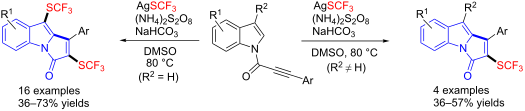
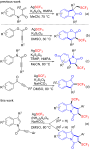
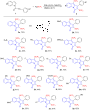
- slightly higher yields, respectively (Table 1, entries 3 and 4). Switching KHCO3 to NaHCO3 could enhance the yield (Table 1, entry 6), whereas K2CO3 and DBU reduced the reaction efficiency (Table 1, entries 5 and 7). Subsequent evaluation of solvents revealed that MeCN and DMF were inferior to DMSO (Table




Rhodium-catalyzed reductive carbonylation of aryl iodides to arylaldehydes with syngas
Beilstein J. Org. Chem. 2020, 16, 645–656, doi:10.3762/bjoc.16.61

- , triphos, dpp-BINAP, dpp-OPh, dppb, dppe, P(PhF5)3, P(4-FPh)3, Cydpp, Bipy, DBU, Im, and PPh3 (their structures are shown in Table 2)), bases (Et3N, 1,4-diaza[2.2.2]bicyclooctane (DABCO), N,N-diisopropylethylamine (DIPEA), N,N,N',N'-tetramethylethylenediamine (TMEDA) and 1,2,2,6,6-pentamethylpiperidine




Preparation and in situ use of unstable N-alkyl α-diazo-γ-butyrolactams in RhII-catalyzed X–H insertion reactions
Beilstein J. Org. Chem. 2020, 16, 607–610, doi:10.3762/bjoc.16.55

- -ethoxalyl-γ-lactams 6a–c, prepared by oxalylation of the respective γ-lactams as decribed previously [1], underwent a rapid diazo transfer reaction via the conventional protocol [4][5] employing 4-nitrobenzenesulfonyl azide and DBU. A quick filtration through a plug of alumina (in lieu of silica gel, which


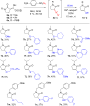

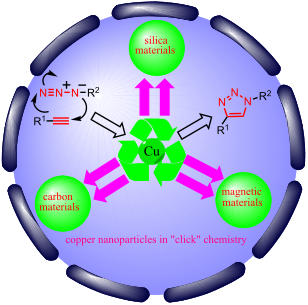
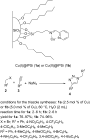
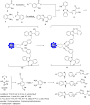
A systematic review on silica-, carbon-, and magnetic materials-supported copper species as efficient heterogeneous nanocatalysts in “click” reactions
Beilstein J. Org. Chem. 2020, 16, 551–586, doi:10.3762/bjoc.16.52







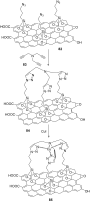


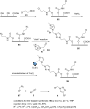
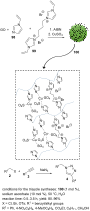
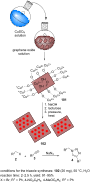


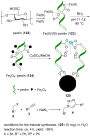
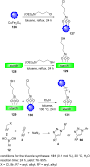
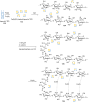


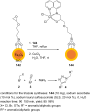
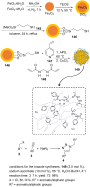
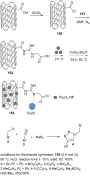
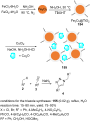
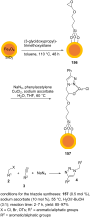
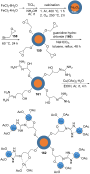



Exploring the scope of DBU-promoted amidations of 7-methoxycarbonylpterin
Beilstein J. Org. Chem. 2020, 16, 509–514, doi:10.3762/bjoc.16.46

- relevant pteridine derivatives. Reactions which expedite the development of new pterins are thus of great importance. Through a dual role of diazabicycloundecene (DBU), 7-carboxymethylpterin is converted to the soluble DBU salt, with additional DBU promoting an ester-to-amide transformation. We have
- yields often >80%. Keywords: amidation; DBU; folate; pterin; Introduction Pteridines are a class of fused bicyclic heterocycles with significant biological relevance. The 2-amino-4-pteridinone core, simply referred to as “pterin”, is present in various biological cofactors like folates, biopterin, and
- new pterins. As such, any reaction which expedites the synthesis of pterin derivatives, especially those which bypass the insolubility, is of great importance to both medicinal and supramolecular chemists. We first reported the application of DBU as a crucial additive in the synthesis of pterins used


Synthesis of 4-amino-5-fluoropyrimidines and 5-amino-4-fluoropyrazoles from a β-fluoroenolate salt
Beilstein J. Org. Chem. 2020, 16, 445–450, doi:10.3762/bjoc.16.41

- investigate the use of non-nucleophilic bases, but with DBU, polymerization of the fluoroenolate took place. When using aqueous sodium hydroxide as the base, a 19% yield could be achieved. Switching the solvent to water led to an improvement of the yield to 36% (Table 2). In water, but without using a base


Oligomeric ricinoleic acid preparation promoted by an efficient and recoverable Brønsted acidic ionic liquid
Beilstein J. Org. Chem. 2020, 16, 351–361, doi:10.3762/bjoc.16.34
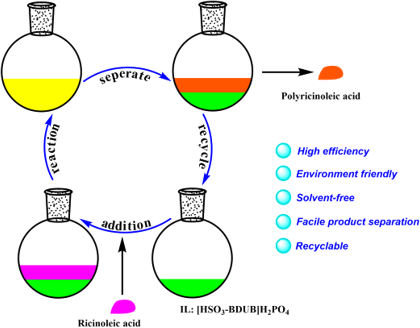
- mol (15.2 g) 1,8-diazobicyclo[5,4,0]undec-7-ene (DBU) in a flask containing 50 mL of acetonitrile. After 24 h reflux at 80 °C, the reaction mixture was cooled to room temperature. Then 30 mL diethyl ether was added to the reaction mixture to precipitate the product. After that, the precipitate was


Copper-catalyzed enantioselective conjugate addition of organometallic reagents to challenging Michael acceptors
Beilstein J. Org. Chem. 2020, 16, 212–232, doi:10.3762/bjoc.16.24
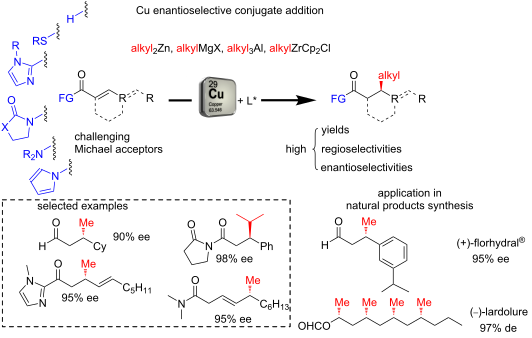
- protocol failed in the case of linear dienoates [29]. Interestingly, after a subsequent reconjugation step in the presence of DBU, the resulting enantioenriched γ-methylated α,β-unsaturated thioester 18a was subsequently reacted in a 1,4-ECA reaction catalyzed by Josiphos (L9)/CuBr·SMe2. Using both




The reaction of arylmethyl isocyanides and arylmethylamines with xanthate esters: a facile and unexpected synthesis of carbamothioates
Beilstein J. Org. Chem. 2020, 16, 159–167, doi:10.3762/bjoc.16.18
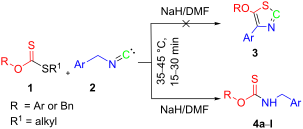
- solvents, such as THF, acetonitrile, dioxane, DMSO, or toluene, in the presence of sodium hydride, none of these reactions afforded the product 4a in a satisfactory yield (Table 1, method A, entries 2–6). Replacement of sodium hydride by DBU did not furnish any product at all (Table 1, method A, entry 7
- ) dithiocarbonate (1f) also afforded the corresponding carbamothioates 4k and 4l in 82% and 88% yields, with benzyl isocyanide (2a) and 4-fluorobenzyl isocyanide (2c), respectively. The use of a weaker base, such as DBU, failed to form any product (Table 1, methods A and B, entry 7). For the purpose of comparison


Regioselectivity of glycosylation reactions of galactose acceptors: an experimental and theoretical study
Beilstein J. Org. Chem. 2019, 15, 2982–2989, doi:10.3762/bjoc.15.294

- byproduct [25]. Glycosylation reactions With acceptors 1α/β and 2α/β in hand, we assayed the glycosylation reactions of glycosyl donors 3–5. Trichloroacetimidates 3 [26] and 4 [27] were prepared by treatment of the corresponding benzoylated hemiacetals with trichloroacetonitrile and DBU, as previously


Why do thioureas and squaramides slow down the Ireland–Claisen rearrangement?
Beilstein J. Org. Chem. 2019, 15, 2948–2957, doi:10.3762/bjoc.15.290

- -N-methylcyclohexanamine (65%, Scheme 2) whereas reactions with trihexylamine and diisopropylethylamine provided the product 3c with lower yields. Rearrangement in the presence of N-methylmorpholine, quinine, and N-methylpyrrolidine afforded only traces of acid 3c and reactions with DBU, DABCO and (S





