


Search results
Search for "Grignard reagent" in Full Text gives 114 result(s) in Beilstein Journal of Organic Chemistry.
The preparation of 3-substituted-1,5-dibromopentanes as precursors to heteracyclohexanes
Beilstein J. Org. Chem. 2011, 7, 386–393, doi:10.3762/bjoc.7.49
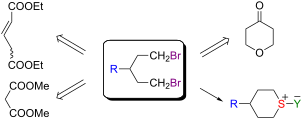
- typically obtained from I or from II by reaction with Na2S [9][10][12][13], whereas the silacyclohexanes V and phosphorinanes VI are prepared by reacting the Grignard reagent derived from I with dichlorosilanes [14] or phosphonous dichlorides [15], respectively (Figure 1). Our research program focuses on
- % [17][38]. The downside to Method 1C is that an excess of Grignard reagent (3–4 equiv) is required; therefore, it is not economical with respect to the alkyl halide. Method 1D also uses glutaconate diester, which is reacted with an aryl iodide in the presence of Pd(0) under Heck conditions. The
- addition of a Grignard reagent to tetrahydro-4H-pyran-4-one, elimination of water, and hydrogenation of the olefin (Method 2A). Typical yields for Method 2A range from 20–30% [39][40]. The second route is the Wittig olefination of tetrahydro-4H-pyran-4-one followed by hydrogenation (Method 2B). Yields for


Photocycloaddition of aromatic and aliphatic aldehydes to isoxazoles: Cycloaddition reactivity and stability studies
Beilstein J. Org. Chem. 2011, 7, 127–134, doi:10.3762/bjoc.7.18
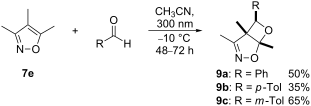
- and benzaldehyde, while at −78 °C, no reaction could be observed. In contrast, the use of an excess of Grignard reagent (3 equiv) at −78 °C again led to decomposition. The application of boron trifluoride at −78 °C also led to decomposition, followed by a normal nucleophilic attack of the Grignard
- reagent on the liberated benzaldehyde. Conclusion The photocycloaddition of electronically excited carbonyl compounds to isoxazoles is clearly less effective than with other five-membered aromatic or non-aromatic heterocycles (furans, thiophenes, pyrroles, oxazoles, dihydrofurans, dihydropyrroles) [1



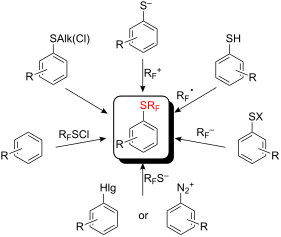
Aromatic and heterocyclic perfluoroalkyl sulfides. Methods of preparation
Beilstein J. Org. Chem. 2010, 6, 880–921, doi:10.3762/bjoc.6.88


Recent advances in carbocupration of α-heterosubstituted alkynes
Beilstein J. Org. Chem. 2010, 6, No. 77, doi:10.3762/bjoc.6.77

- -pyridylsilylalkyne is used, does the copper-catalyzed carbomagnesiation reaction proceed with the formation of the corresponding Grignard reagent. To prove the involvement of the pyridyl coordination, the 3- and 4-pyridylsilyl- and phenylsilyl substituted substrates were prepared and treated under similar reaction
- assumption, the carbometalated adduct was obtained in 83% yield even when using an equimolar amount of CuI with 2.0 equiv of PhMgI. Moreover, yields are drastically affected by the nature of the aryl Grignard reagent used (PhMgI, 74%; PhMgBr, 27%; PhMgCl, 0%; Ph2Mg, 0%): other Grignard derivatives were not


Synthesis and properties of calix[4]arene telluropodant ethers as Ag+ selective sensors and Ag+, Hg2+ extractants
Beilstein J. Org. Chem. 2009, 5, No. 59, doi:10.3762/bjoc.5.59

- literature procedures. 25,27-Dihydroxy-26,28-bis(phenyltelluropropoxy)-5,11,17,23-tetra-tert-butylcalix[4]arene 6 Diphenyl ditelluride (512 mg, 1.25 mmol), prepared from phenyl Grignard reagent with tellurium powder in 78% yield, was dissolved in ethanol (30 ml) and benzene (30 ml) in a 100 ml round-bottomed


Preparation and Diels–Alder/cross coupling reactions of a 2-diethanolaminoboron- substituted 1,3-diene
Beilstein J. Org. Chem. 2009, 5, No. 45, doi:10.3762/bjoc.5.45

- greenish black. The mixture was heated to reflux for an additional 30 min after completion of the addition. The Grignard reagent thus obtained was immediately added dropwise to a solution of trimethoxyborane (4.25 mL, 38.5 mmol) in THF (25 mL) using a double-ended needle. The addition was controlled in
- have begun to prepare diethanolaminoboron substituted dienes and we communicate our first results in this area here. Results and Discussion The diethanolamine boronyl substituted diene 2 was obtained as white needles on a several gram scale from a simple procedure which involved preparing the Grignard
- reagent from chloroprene 1, adding this reagent to trimethoxyborane followed by the addition of dilute HCl and diethanolamine (Scheme 1). The boron substituted diene 2 thus obtained has C1 (δ 5.23 vs δ 5.04, 4.96 (d6-DMSO) and C3 (δ 6.31 vs. δ 6.19) hydrogen atoms which are significantly more deshielded


From discovery to production: Scale- out of continuous flow meso reactors
Beilstein J. Org. Chem. 2009, 5, No. 29, doi:10.3762/bjoc.5.29
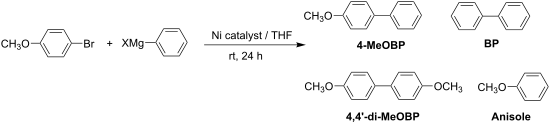
- vessel 1. The reaction studied was the Kumada reaction [11][12] which involves the coupling of an aryl halide and a Grignard reagent, in this case 4-bromoanisole and phenylmagnesium chloride, to produce 4-methoxybiphenyl (4-MeOBP, R-Ar). It was also observed that anisole, 4′,4-dimethoxybyphenyl (4,4′-di
- -MeOBP, Ar-Ar) and biphenyl (BP, R-R) were obtained as reaction by-products. The catalytic cycle that we originally proposed [6] neglects the formation of the other by-products so we investigated the whole scheme in detail. The chloro rather than the bromo Grignard reagent was used, even though it was
- probe the mechanism for the reaction further. If the activation of the catalyst was important then a pre-wash with the Grignard reagent should improve the yield of the desired cross-coupled product. This was indeed found to be the case. Without any pre-wash or with a 4-bromoanisole pre-wash there was no


Continuous flow based catch and release protocol for the synthesis of α-ketoesters
Beilstein J. Org. Chem. 2009, 5, No. 23, doi:10.3762/bjoc.5.23
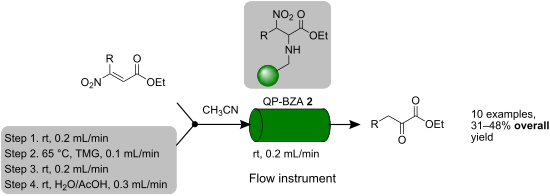
- important products in their own right [82][83][84][85][86][87][88]. Common methods for the preparation of α-ketoesters include the modified Dakin-West reaction [89] and the addition of a Grignard reagent to oxalates or oxalyl chlorides [90][91][92] together with a few alternative syntheses [93][94][95][96


Recent progress on the total synthesis of acetogenins from Annonaceae
Beilstein J. Org. Chem. 2008, 4, No. 48, doi:10.3762/bjoc.4.48
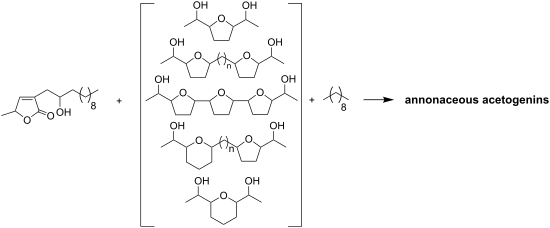
- by oxidation gave the aldehyde 191, which could readily be converted into the aldehyde 192. The bromide 193 was transformed into the corresponding Grignard reagent, which was allowed to react with the aldehyde 192 to afford the two epimers 194 and 195. The dianion of 196 was allowed to react with (S


Synthesis of densely functionalized enantiopure indolizidines by ring- closing metathesis (RCM) of hydroxylamines from carbohydrate- derived nitrones
Beilstein J. Org. Chem. 2007, 3, No. 44, doi:10.1186/1860-5397-3-44

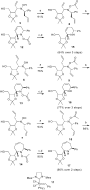
- the addition of organometallic reagents. [21][22] Recently, we developed a general protocol for the synthesis of α,α'-disubstituted enantiopure hydroxylamines 1 through the stereoselective double addition of an excess of a Grignard reagent to C-phenyl-N-erythrosylnitrone 2 (Scheme 1).[23] With this



Synthesis of the Benzo- fused Indolizidine Alkaloid Mimics
Beilstein J. Org. Chem. 2007, 3, No. 42, doi:10.1186/1860-5397-3-42
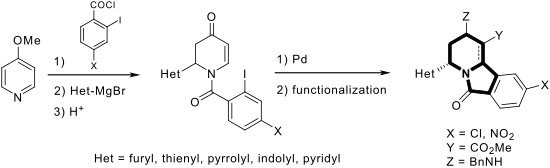
- -acyldihydropyridones 1a-c in good yields (entries 1–3). In addition, the N-methyl-2-indolyl [11] Grignard reagent gave 1d in moderate yield (entry 4). In spite of trying various methods of preparing the 2-pyridyl [12][13][14][15] Grignard reagent, 1e was obtained in only 15% yield (entry 5). Encouraged by these


A divergent asymmetric approach to aza-spiropyran derivative and (1S,8aR)-1-hydroxyindolizidine
Beilstein J. Org. Chem. 2007, 3, No. 41, doi:10.1186/1860-5397-3-41
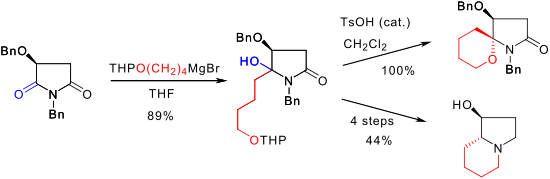
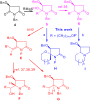
- the reaction of functionalized Grignard reagent with protected (S)-malimide, either aza-spiropyran or (1S,8aR)-1-hydroxyindolizidine skeleton could be constructed in a concise and selective manner. The results presented herein constitute an important extension of our malimide-based synthetic
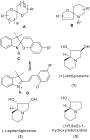
- stereoselectively to either hydroxylactams F or G under appropriate conditions. [36][37][38] It was envisioned that if a C4-bifunctional Grignard reagent was used, both aza-spiroketal H (such as aza-spiropyran, n = 1, path a) and indolizidine ring systems I (path b) could be obtained. The synthesis of aza
- of the O-benzyl group in K is an assumption based on our previous observation on a similar case.[42] Conclusion In summary, we have demonstrated that by the reaction of functionalized Grignard reagent with the protected (S)-malimide 4, either aza-spiropyran derivative 7 or (1S,8aR)-1



Development of potential manufacturing routes for substituted thiophenes – Preparation of halogenated 2-thiophenecarboxylic acid derivatives as building blocks for a new family of 2,6-dihaloaryl 1,2,4-triazole insecticides
Beilstein J. Org. Chem. 2007, 3, No. 23, doi:10.1186/1860-5397-3-23
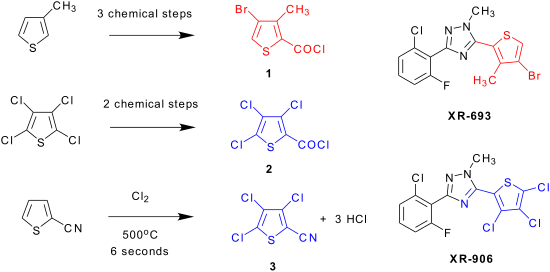
- -methylthiophene 11 in a 64% yield. [10] This reaction has also been reported using aqueous bromine. [11] The carboxyl functionality was then introduced by formation of the 2-thienyl Grignard reagent [8][9][10][11] followed by treatment with dimethylcarbonate (DMC) to give ester 12a. Alternatively, a palladium


The use of silicon- based tethers for the Pauson- Khand reaction
Beilstein J. Org. Chem. 2007, 3, No. 21, doi:10.1186/1860-5397-3-21
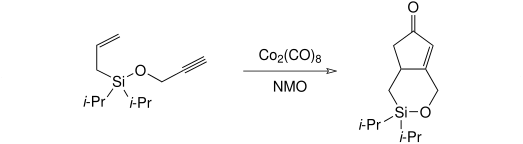
- procedure was developed, initially adding the allyl arm via the allyl Grignard reagent, followed by a more standard silyl ether formation using an acetylenic alcohol and imidazole (without isolating the intermediate silyl chloride). (Isolation of the intermediate diisopropylallylsilyl chloride was





