


Search results
Search for "Staphylococcus aureus" in Full Text gives 115 result(s) in Beilstein Journal of Organic Chemistry.
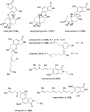
New sesquiterpene hydroquinones from the Caribbean sponge Aka coralliphagum
Beilstein J. Org. Chem. 2014, 10, 613–621, doi:10.3762/bjoc.10.52
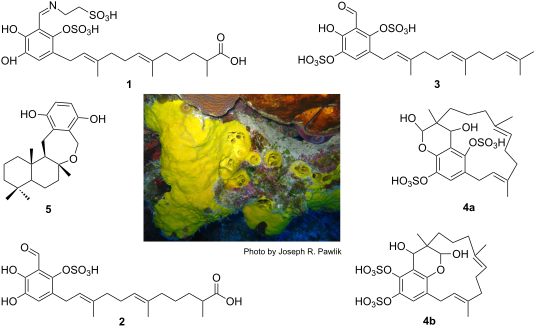
- -positive and Gram-negative bacteria, fungi, and for antiproliferative activity. The results given in Table 4 show that siphonodictyal E3 (3) and cyclosiphonodictyol A (5) exhibited mild activity against the Gram-positive bacteria Staphylococcus aureus and Micrococcus luteus, while siphonodictyal E4 (4


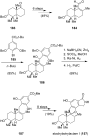
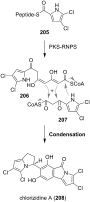
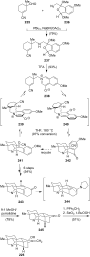
The chemistry of isoindole natural products
Beilstein J. Org. Chem. 2013, 9, 2048–2078, doi:10.3762/bjoc.9.243
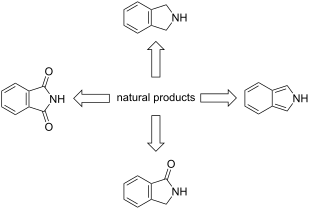
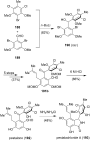
- natural product and synthetic precursor of 193 shows strong antibiotic activity against methicillin-resistant Staphylococcus aureus (MRSA, MIC = 84 nM) and vancomycin-resistant Enterococcus (VRE, MIC = 178 nM) [148]. The structural similarity between pestalachloride A (193) and pestalone (192), which both
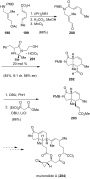
- : Lactonamycin (215) and lactonamycin Z (217) were isolated from Streptomyces rishiriensis and Streptomyces anglieri in 1996 and 2003 [157][158]. Both compounds are potent antibacterial agents against Gram-positive bacteria, including methicillin-resistant Staphylococcus aureus (MRSA) and vancomycin-resistant
















Synthesis and antibacterial activity of monocyclic 3-carboxamide tetramic acids
Beilstein J. Org. Chem. 2013, 9, 1899–1906, doi:10.3762/bjoc.9.224

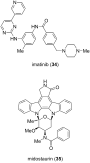
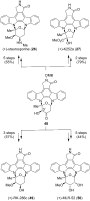
- ). Antibacterial activity The antibiotic activities of tetramates 2a–h and 3a–f along with analogues 1c and 1d (reported by Novartis [8]) were determined against 4 species of Gram-positive bacteria, consisting of 4 strains of Staphylococcus aureus, including a methicillin-resistant strain (MRSA, S2), vancomycin


Synthesis and biological activities of the respiratory chain inhibitor aurachin D and new ring versus chain analogues
Beilstein J. Org. Chem. 2013, 9, 1551–1558, doi:10.3762/bjoc.9.176
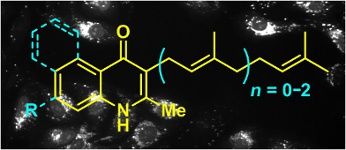
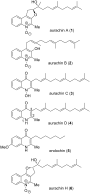
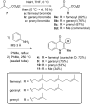
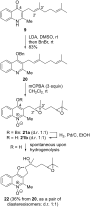
- (Candida albicans) nor on molds (Mucor hiemalis, Fusarium oxysporum, Alternaria alternata). The natural compound 4 was one of the most active compounds, but also shorter chain analogues 9 and 10 inhibited, for instance, the growth of Staphylococcus aureus at concentrations in the low µg/mL range, whereas


A reductive coupling strategy towards ripostatin A
Beilstein J. Org. Chem. 2013, 9, 1533–1550, doi:10.3762/bjoc.9.175
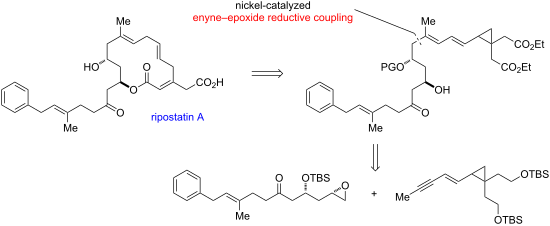
- ribonucleic acid polymerase. These compounds inhibit chain initiation of RNA synthesis in Staphylococcus aureus, a particularly infectious bacterial strain with reported drug resistance to the antibiotics vancomycin and methicillin [3]. Ripostatin A exists as an equilibrium mixture of ketone and hemiketal


Multivalent display of the antimicrobial peptides BP100 and BP143
Beilstein J. Org. Chem. 2012, 8, 2106–2117, doi:10.3762/bjoc.8.237

- phytopathogenic bacteria Erwinia amylovora, Xanthomonas axonopodis pv. vesicatoria, and Pseudomonas syringae pv. syringae, and of human pathogenic bacteria Escherichia coli, Staphylococcus aureus, Lysteria monocytogenes, and Salmonella enterica at 0.6, 1.2, 2.5, 5, 7.5, 10 and 20 μM (Table 1). The antibacterial
- , Staphylococcus aureus subsp. aureus ATCC 9144 and Salmonella enterica subsp. enterica LT2 ATCC 15277. All bacteria were stored in Luria Bertani (LB) broth except for L. monocytogenes, which was stored in Brain Heart Infusion (BHI) broth (Oxoid, Hampshire, United Kingdom) supplemented with glycerol (20%) and


Modulating the activity of short arginine-tryptophan containing antibacterial peptides with N-terminal metallocenoyl groups
Beilstein J. Org. Chem. 2012, 8, 1753–1764, doi:10.3762/bjoc.8.200
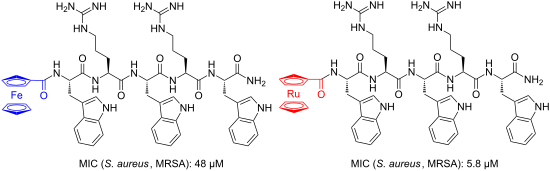
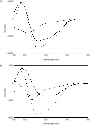
- running dry [1]. For example, the number of methicillin-resistant Staphylococcus aureus (MRSA) infections in hospitals are still very high and new infectious agents like Acinetobacter baumannii are on the rise, both leading to increased numbers of mortality. In view of this, the discovery of host-defense
- in Table 2) The minimal inhibitory concentrations (MIC) were tested against Escherichia coli DSM 30083, Acinetobacter baumannii DSM 30007, Pseudomonas aeruginosa DSM 50071, Bacillus subtilis DSM 402, Staphylococcus aureus DSM 20231 (type strain), and Staphylococcus aureus ATCC 43300 (MRSA) in a


A macrolactonization approach to the total synthesis of the antimicrobial cyclic depsipeptide LI-F04a and diastereoisomeric analogues
Beilstein J. Org. Chem. 2012, 8, 1344–1351, doi:10.3762/bjoc.8.154
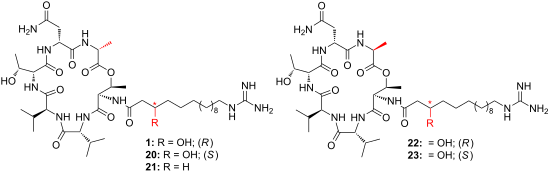
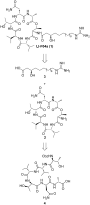
- strains of Bacillus (Paenebacillus) and exhibit antifungal and antibacterial activity against a range of clinically relevant species, including Candida albicans, Cryptococcus neoformans, Staphylococcus aureus and Micrococcus luteus [1][2][3][4][5][6][7]. These compounds have a cyclic hexadepsipeptide core





Binaphthyl-anchored antibacterial tripeptide derivatives with hydrophobic C-terminal amino acid variations
Beilstein J. Org. Chem. 2012, 8, 1265–1270, doi:10.3762/bjoc.8.142
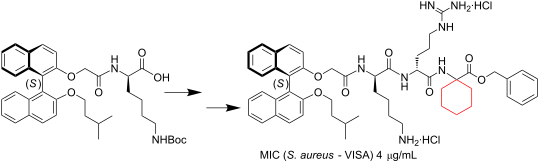
- -terminal amino acid component, is described. Moderate to good activity was seen against Gram-positive bacteria in vitro. One cyclohexyl-substituted compound 2c was tested more widely and showed good potency (MIC values ranging from 2–4 μg/mL) against antibiotic-resistant strains of Staphylococcus aureus
- salts 2a–g were tested against the Gram-positive bacteria Staphylococcus aureus (ATCC 6538) and four clinical isolates of vancomycin-resistant (and sensitive) enterococci (VRE; Enterococcus faecium), and the results are shown in Table 1; some compounds were also tested against Staphylococcus epidermidis
- % pure. Determination of minimum inhibitory concentration (MIC) MIC studies (Table 1) were performed on Staphylococcus aureus wild type (ATCC 6538P), and Staphylococcus epidermidis (ATCC 12228) in Mueller–Hinton broth (Oxoid Ltd, England) supplemented with 50 mg/L CaCl2. As in [6], MIC determinations for


Partial thioamide scan on the lipopeptaibiotic trichogin GA IV. Effects on folding and bioactivity
Beilstein J. Org. Chem. 2012, 8, 1161–1171, doi:10.3762/bjoc.8.129
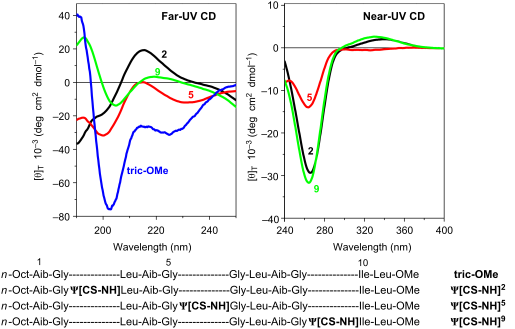
- bacterial strains. We found that [Leu11-OMe] trichogin GA IV is active on the Gram-positive bacteria Staphylococcus aureus and Streptococcus pyrogenes, whereas the spectrum of action of its three analogues is more restricted, as they are not active on the latter strain. The activities of the analogues on S
- activity assay was performed in a similar way to that described in reference [77]. The activity of peptides was tested against clinical isolates of bacteria and reference bacterial strains: Staphylococcus aureus American Type Culture Collection strains (ATCC) 25923, Streptococcus pyogenes ATCC 19615


Similarity analysis, synthesis, and bioassay of antibacterial cyclic peptidomimetics
Beilstein J. Org. Chem. 2012, 8, 1146–1160, doi:10.3762/bjoc.8.128
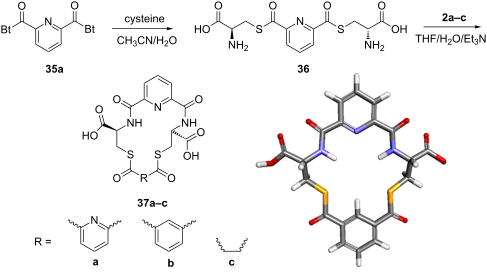
- -, O-, C- and S-acylations. Results and Discussion Similarity analysis Our literature search identified the thirty three cyclic peptides and peptidomimetic structures given in Table 1. All the minimum inhibition constants (MIC) are pertinent to Staphylococcus aureus. These include (i) one 12-membered
- dataset of existing analogues. As abundant data can be found in the literature for Staphylococcus aureus, this was chosen as a reference for antibacterial activity. SciFinder Scholar was used to retrieve the structures of 33 cyclic peptides with reported antibacterial activity (Table 1). The minimum


Synthesis of szentiamide, a depsipeptide from entomopathogenic Xenorhabdus szentirmaii with activity against Plasmodium falciparum
Beilstein J. Org. Chem. 2012, 8, 528–533, doi:10.3762/bjoc.8.60
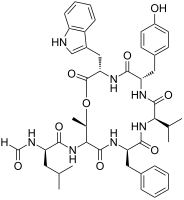
- different Gram-positive (Micrococcus luteus, Bacillus subtilis, Staphylococcus aureus) and Gram-negative (Escherichia coli, Pseudomonas aeroginosa) bacteria, as well as yeast (Candida albicans, Saccharomyces cerivisiae). However, consistent with the published data [12], no antibacterial or antifungal



Synthesis and characterization of new diiodocoumarin derivatives with promising antimicrobial activities
Beilstein J. Org. Chem. 2011, 7, 1688–1696, doi:10.3762/bjoc.7.199
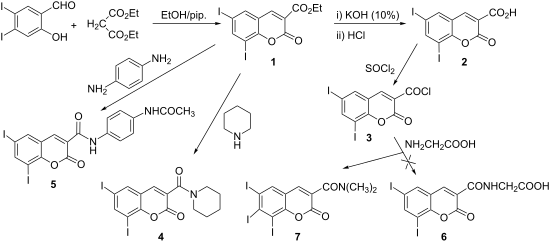
- activity, better than the standard ampicillin, against two species of Gram-positive bacteria, Staphylococcus aureus (NCTC-7447), Bacillus cereus (ATCC-14579) and two Gram-negative bacteria, Escherichia coli (NCTC-10410) and Serratia marcescens (IMRU-70), while the same compounds showed moderate antifungal
- bacteria, namely Staphylococcus aureus (NCTC-7447), Bacillus cereus (ATCC-14579), and two Gram-negative bacteria, namely Escherichia coli (NCTC-10410), Serratia marcescens (IMRU-70); and against two species of fungi, namely Aspergillus fumigatus (MTCC-3008) and Candida albicans (MTCC-227). The tested


Scalable synthesis of (1-cyclopropyl)cyclopropylamine hydrochloride
Beilstein J. Org. Chem. 2011, 7, 1003–1006, doi:10.3762/bjoc.7.113

- )cyclopropylamine (4) have been found to be useful variously for the treatment of hepatitis C [3][4], as pest control agents [5], as inhibitors of methicillin-resistant Staphylococcus aureus [5], as pesticides, insecticides and acaricides [7][8][9][10][11][12][13] and more. This amine has been prepared from


Synthesis, reactivity and biological activity of 5-alkoxymethyluracil analogues
Beilstein J. Org. Chem. 2011, 7, 678–698, doi:10.3762/bjoc.7.80
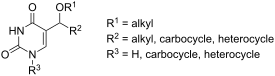
- tested for their antimicrobial activity against standard reference gram-positive and gram-negative bacterial strains such as Enterococcus faecalis CCM 4224, Staphylococcus aureus CCM 3953, Escherichia coli CCM 3954 and Pseudomonas aeruginosa CCM 3955 and against gram-positive and gram-negative bacteria
- obtained from clinical material of patients treated at the University Hospital in Olomouc (methicillin resistant Staphylococcus aureus - MRSA, Staphylococcus haemolyticus, Escherichia coli and Pseudomonas aeruginosa) with resistance to currently used fluoroquinolones. Only the octyl and nonyl derivatives
- 126h, 127h and 126i, 127i showed slight activity against Enterococcus faecalis CCM 4224, Staphylococcus aureus CCM 3953, Staphylococcus aureus (MRSA) and Staphylococcus haemolyticus. Conclusion This review was an attempt to summarize all available information on the synthesis and biological activity of





