


Search results
Search for "acetal" in Full Text gives 284 result(s) in Beilstein Journal of Organic Chemistry. Showing first 200.
Carbazole-functionalized hyper-cross-linked polymers for CO2 uptake based on Friedel–Crafts polymerization on 9-phenylcarbazole
Beilstein J. Org. Chem. 2019, 15, 2856–2863, doi:10.3762/bjoc.15.279
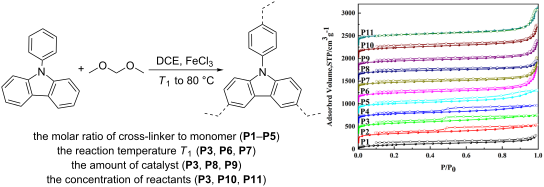
- HCPs include solvent knitting methods [10], Scholl coupling reaction [11], the knitting method with formaldehyde dimethyl acetal (FDA) [12], functional group reactions [2][13] and so on. Among these methods, the knitting method with FDA as external cross-linker is the most time-efficient approach [14


Nanangenines: drimane sesquiterpenoids as the dominant metabolite cohort of a novel Australian fungus, Aspergillus nanangensis
Beilstein J. Org. Chem. 2019, 15, 2631–2643, doi:10.3762/bjoc.15.256
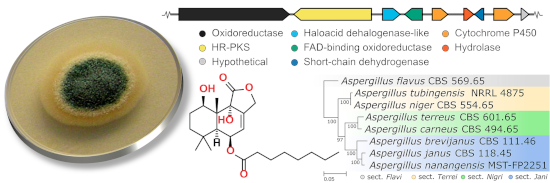
- ) indicative of a molecular formula C22H36O6. The NMR data for 10 (Table 3) were very similar to those for 3, with the main differences being the absence of a signal for the lactone carbonyl group and the presence of additional signals for acetal (δC 101.9; δH 5.31, t) and methoxy (δC 54.1; δH 3.26, s) groups
- . Key HMBC correlations (Table S12 in Supporting Information File 1) from H-7 to C-12 and from 12-OMe to C-12 positioned the methoxy group and acetal proton on C-12. Thus, the structure of 10 was assigned as shown in Figure 1. The configuration of 10 at C-12 was determined to be 12R based on a key ROESY


A review of the total syntheses of triptolide
Beilstein J. Org. Chem. 2019, 15, 1984–1995, doi:10.3762/bjoc.15.194
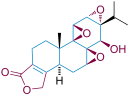
- cationic polyene cyclization, transition-metal- or photocatalyst-mediated radical polyene cyclization [72]. The key to such transformation is to install a proper initiator within the substrate such as an allylic alcohol, an acetal, an aziridine, an N-acetal, a hydroxylactam, or a 1,3-dicarbonyl moiety. van


Application of chiral 2-isoxazoline for the synthesis of syn-1,3-diol analogs
Beilstein J. Org. Chem. 2019, 15, 1840–1847, doi:10.3762/bjoc.15.179
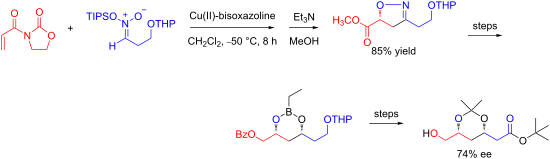
- oxidation conditions. Based on this assumption, the corresponding silyl nitronate from 3-nitropropanal or its acetal were not tried for cycloaddition. We then set to liberate the β-hydroxy ketone synthon by ring opening of the isoxazoline 3 (Scheme 3). Raney-Ni-catalyzed hydrogenolysis in the presence of


N-(1-Phenylethyl)aziridine-2-carboxylate esters in the synthesis of biologically relevant compounds
Beilstein J. Org. Chem. 2019, 15, 1722–1757, doi:10.3762/bjoc.15.168

- . Acetal formation, reduction of the amide function and deprotection completed synthesis of (−)-hygrine (S)-61. To synthesize (−)-hygroline (2S,2'S)-62 and (−)-pseudohygroline (2S,2'R)-62 the carbonyl group in (S)-66 was reduced and the diastereoisomeric alcohols (2S,2'S)-67 and (2S,2'R)-67 were separated


Electrophilic oligodeoxynucleotide synthesis using dM-Dmoc for amino protection
Beilstein J. Org. Chem. 2019, 15, 1116–1128, doi:10.3762/bjoc.15.108
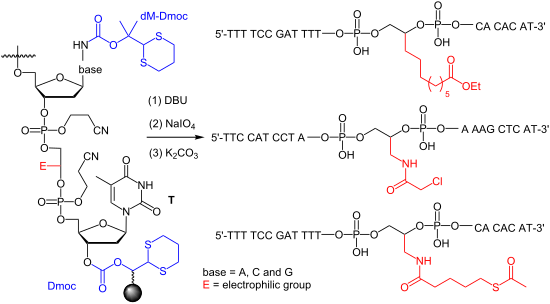
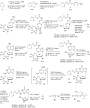
- protected with the 2-cyanoethyl group. These protecting groups and the linker have to be cleaved under strongly basic and nucleophilic conditions. As a result, many sensitive groups including acetal, hemiacetal, vinyl ethers, enol ethers, aldehydes, esters, activated esters, thioesters, aziridines, epoxides
- be protected as a cyclic acetal instead of the more labile acyclic acetal [5][6]. The maleimide group was incorporated into ODNs as a Diels–Alder adduct with dimethylfuran. Besides the need of an additional step for deprotection, only examples of 5'-end modification was given probably due to the





Towards the preparation of synthetic outer membrane vesicle models with micromolar affinity to wheat germ agglutinin using a dialkyl thioglycoside
Beilstein J. Org. Chem. 2019, 15, 937–946, doi:10.3762/bjoc.15.90
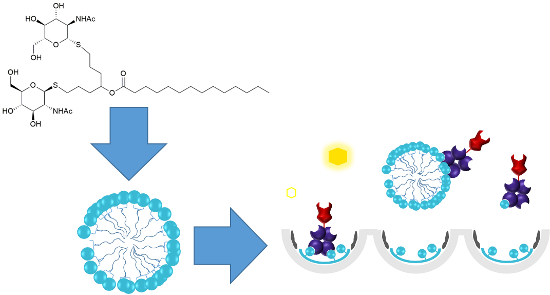
- present several advantages compared to natural and synthetic glycolipids, linked by a chemically and enzymatically non-stable acetal function. Owing to their straightforward access, and the stability of thioether conjugates, 1-thio-β--glucopyranose (1a, Figure 1), and 2-acetamido-2-deoxy-1-thio-β


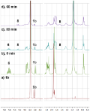


![[Graphic 2]](/bjoc/content/inline/1860-5397-15-90-i4.svg?max-width=637&scale=0.472728) ) and (○) ...
) and (○) ...
An efficient synthesis of the guaiane sesquiterpene (−)-isoguaiene by domino metathesis
Beilstein J. Org. Chem. 2019, 15, 858–862, doi:10.3762/bjoc.15.83
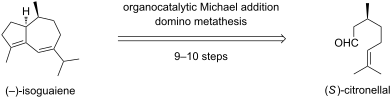
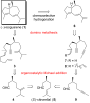
- of the aldehyde function as the dimethyl acetal [16][17][18], hydroboration and oxidative work-up of 10 provided a mixture of epimeric alcohols 11 that was unified by Ley–Griffith oxidation [19] to give ketone 12 [20]. Subsequent Wittig reaction with ylide 13 and acetal cleavage of the resultant
- ), which compares favorably with the previous synthesis of 1 from (+)-dihydrocarvone (10 steps, 6.9% overall yield) [6]. Scheme 3 depicts our first attempts to realize an alternative domino metathesis strategy using enediyne 7. Ozonolysis of the unsaturated acetal 10 gave aldehyde 23 [17][18] that was
- furnish 25 and subsequent acetal hydrolysis provided the known aldehyde 26 [25] in very good overall yield. In our hands, the "demethanation" of (S)-citronellol to produce the primary alcohol corresponding to aldehyde 26 according to the protocol of Abidi (NaNO2, aqueous AcOH) [26] as a potential shortcut




Tuning the stability of alkoxyisopropyl protection groups
Beilstein J. Org. Chem. 2019, 15, 746–751, doi:10.3762/bjoc.15.70

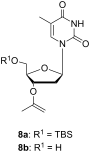
- chromatography without degradation. The compatibility of these protecting groups in parallel use with benzoyl and silyl groups was verified. The stabilities of the different alkoxy acetal protecting groups were compared by following the kinetics of their hydrolysis at 25.0 °C in buffered solutions through an
- of these acetone-based acetal groups are faster removed than a dimethoxytrityl group, and they are easier to cleave completely in solution. The structural variation allows steering of the stability and lipophilicity of the compounds in some range. Keywords: acetal; hydrolysis; protecting groups
- ; Introduction Acetals form one of the most common types of protecting groups for hydroxy functions. They are easily introduced by a rapid acid-catalyzed reaction and they are also readily cleaved under mild acidic hydrolytic conditions. These properties make the acetal structures usable even in other



Convergent synthesis of the pentasaccharide repeating unit of the biofilms produced by Klebsiella pneumoniae
Beilstein J. Org. Chem. 2019, 15, 431–436, doi:10.3762/bjoc.15.37
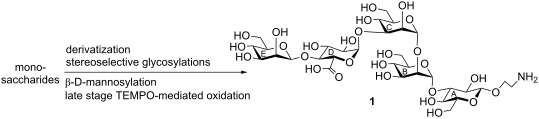
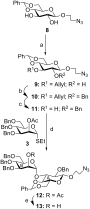
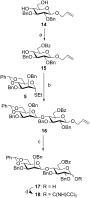
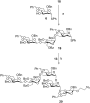
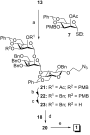
- -azidoethyl 4,6-O-benzylidene-β-D-glucopyranoside (8) [18], prepared from D-glucose, was selectively O-allylated at the 3-hydroxy group by treatment with dibutyltin oxide followed by allyl bromide in the presence of cesium fluoride [19] via the formation of a stannylene acetal to give 2-azidoethyl 3-O-allyl


Syntheses and chemical properties of β-nicotinamide riboside and its analogues and derivatives
Beilstein J. Org. Chem. 2019, 15, 401–430, doi:10.3762/bjoc.15.36
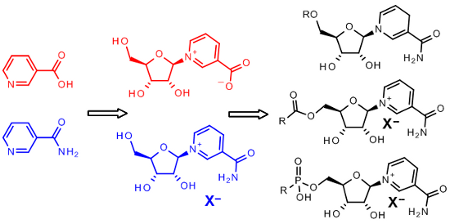
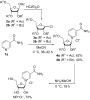
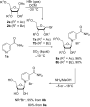
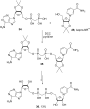
- presence of a 6 M HCl dioxane solution (almost equimolar amount relative to 4-Me-NR+Cl−) to give the corresponding acetonide in 88% yield. The use of dimethyl acetal of mesitylaldehyde in the presence of catalytic amounts of 10-camphorsulfonic acid in dry DMF was reported [58] but the isolated yield for










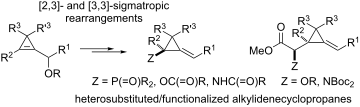
Sigmatropic rearrangements of cyclopropenylcarbinol derivatives. Access to diversely substituted alkylidenecyclopropanes
Beilstein J. Org. Chem. 2019, 15, 333–350, doi:10.3762/bjoc.15.29
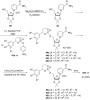
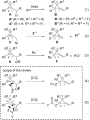
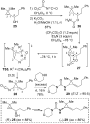
- (7d/7’d = 52:48) were present. An inversion of the face selectivity was detected in favor of diastereomer 7’e (7e/7’e = 43:57) arising from the rearrangement of phosphinite 6e possessing a p-trifluoromethylphenyl substituent. Replacement of the acetal protecting group of the hydroxymethyl substituent





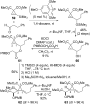


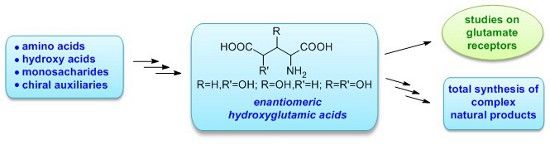
Synthesis of nonracemic hydroxyglutamic acids
Beilstein J. Org. Chem. 2019, 15, 236–255, doi:10.3762/bjoc.15.22
- hydrolysis, formation of methyl ester and silylation to give 7 after separation from the minor diastereoisomer. After selective hydrolysis of the acetal the hydroxymethyl fragment was oxidized and all protective groups were removed to give (2S,3R)-2 as the hydrochloride (Scheme 1). The observed
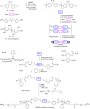
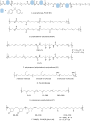
- . Intermediary diacid was first esterified with diazomethane, then the isopropylidene acetal was hydrolyzed, and diester saponification gave N-Boc-protected compound (2S,3R)-35. Via ketopinic acid functionalized 2(3H)-oxazolones When oxazolone 36 derived from (R)-(−)-ketopinic acid was reacted with bromine and
- –Eistert reaction to give the methyl ester 59 from which benzyl ester 60 was obtained for easy hydrogenolytic removal in the last step. Hydrolysis of the isopropylidene acetal was followed by periodate cleavage of the C1–C2 bond in the furanose, oxidation of the already formed aldehyde to the acid and


Olefin metathesis in multiblock copolymer synthesis
Beilstein J. Org. Chem. 2019, 15, 218–235, doi:10.3762/bjoc.15.21

- . Changes in the synthetic stage sequence led to variable layer compositions. Various linear and star-shaped (triarm) ABA and ABCBA amphiphilic multiblock copolymers containing acetal-protected sugars (APS) were prepared by the coupling of an end-functionalized ROMP copolymer of norbornene (NB) and APS
- the initiator efficiency. The sacrificial approach also helps to describe the multiblock copolymer structure: owing to the acid-labile acetal group, polymer scission takes place at the point of the dioxepin insertion thus providing an indirect way to detect the monomer location [73]. Supramolecular






Silanediol versus chlorosilanol: hydrolyses and hydrogen-bonding catalyses with fenchole-based silanes
Beilstein J. Org. Chem. 2019, 15, 167–186, doi:10.3762/bjoc.15.17
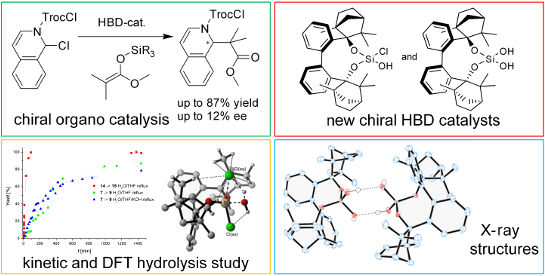
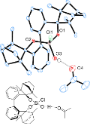
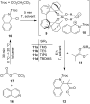
- chloride ion is abstracted from 10 and binds via hydrogen bonding to the catalyst (Scheme 6) [45][47]. This leads to an ion pair [cat•Cl]− and [isoquinolinium cation]+ (Scheme 6). The nucleophilic silyl ketene acetal reacts with the [isoquinolinium cation]+ and forms the C–C bond, yielding product 12
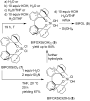
- (Scheme 6 vs Scheme 7). The catalyst abstracts and binds the chloride anion and forms an ion pair [cat•Cl]− and oxocarbenium ion [18]+. Silyl ketene acetal 11 reacts with this ion pair complex to product 19 [77][78]. Only with DCM as solvent, product 19 of the reaction has been isolated (Table 10
- ). Silanediol 9 and silyl ketene acetal 11a provide the highest yield (85%, Table 10, entry 5). The substitution pattern on the silyl ketene has a direct influence on the yield. The highest yield is reached with TMS substitution (silanediol 9, 85% yield, Table 10, entry 5; chlorosilanol 8, 54% yield, Table 10








Adhesion, forces and the stability of interfaces
Beilstein J. Org. Chem. 2019, 15, 106–129, doi:10.3762/bjoc.15.12


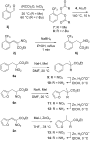
Synthesis of unnatural α-amino esters using ethyl nitroacetate and condensation or cycloaddition reactions
Beilstein J. Org. Chem. 2018, 14, 2846–2852, doi:10.3762/bjoc.14.263
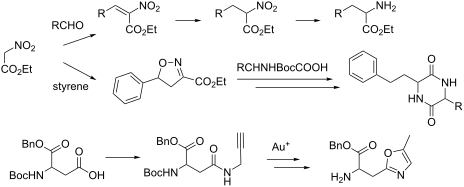
- 6g–i as well as the lack of compounds 6j–l. Similarly, no condensation was observed when starting with the pyridyl-bearing acetal 5m. These disappointing results are plausibly due to two factors: (i) As mentioned above, the condensation of ethyl nitroacetate (4) with aryl acetals 5 takes place along
- . Indeed, the best overall yields are observed when starting from the electronically similar 2-methoxy acetal 5b or the 4-methoxy analog 5d, as well as the 4-benzyloxy acetal 5e. (ii) Secondly, the reduction of acrylates 2a–s to compounds 6a–s was achieved with sodium borohydride and the resulting basic



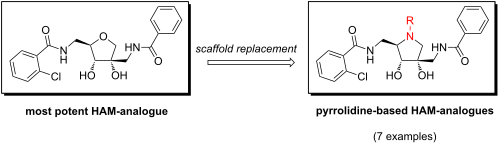
Synthesis of pyrrolidine-based hamamelitannin analogues as quorum sensing inhibitors in Staphylococcus aureus
Beilstein J. Org. Chem. 2018, 14, 2822–2828, doi:10.3762/bjoc.14.260
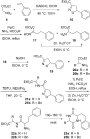
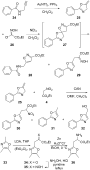
- -closing metathesis of 24 now smoothly afforded 25 in high yield. Dihydroxylation selectively yielded the desired stereoisomer of diol 26, which was subsequently protected as isopropylidene acetal. In the next step, after removal of the TBS group and mesylation, attempted substitution with NaN3 resulted


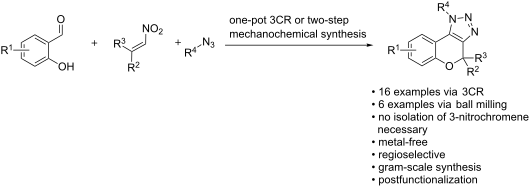
Assembly of fully substituted triazolochromenes via a novel multicomponent reaction or mechanochemical synthesis
Beilstein J. Org. Chem. 2018, 14, 2689–2697, doi:10.3762/bjoc.14.246
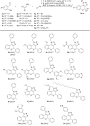
- yielding 13 in 51% yield. Since aldehydes are interesting and versatile functional moieties for further derivatization, e.g., used in the synthesis of heterocyclic scaffolds [33][34][50], several multicomponent reactions [40][51][52][53], etc., we wished to convert dimethyl acetal 5j into aldehyde appended




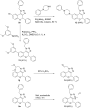
Synthesis of indolo[1,2-c]quinazolines from 2-alkynylaniline derivatives through Pd-catalyzed indole formation/cyclization with N,N-dimethylformamide dimethyl acetal
Beilstein J. Org. Chem. 2018, 14, 2411–2417, doi:10.3762/bjoc.14.218
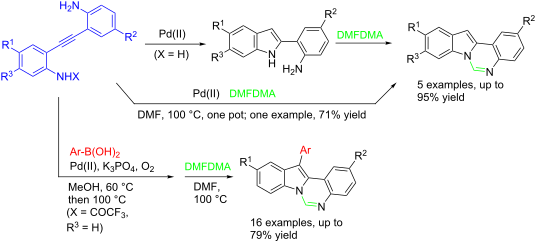
- reaction of o-(o-aminophenylethynyl) trifluoroacetanilides with Ar–B(OH)2 afforded 2-(o-aminophenyl)-3-arylindoles, that were converted to 12-arylindolo[1,2-c]quinazolines by adding dimethylformamide dimethyl acetal (DMFDMA) to the reaction mixture after extractive work-up. This reaction outcome is
- 6a) was also isolated. Then, 9a was treated with dimethylformamide dimethyl acetal (DMFDMA) as a source of an electrophilic one-carbon unit at the formate oxidation level [26][27], affording 12-arylindolo[1,2-c]quinazoline 10a in good yield (Scheme 3). Based on this result, we tested an approach to
- accomplished, without competitive formation of products derived from C-3 functionalization at the indole moiety. Synthesis of 6-trifluoromethyl-12-aryl(vinyl)indolo[1,2-c]quinazolines 4. Present and previously reported reactions starting from 5. DMFDMA: dimethylformamide dimethyl acetal. Two-step synthesis of


Cationic cobalt-catalyzed [1,3]-rearrangement of N-alkoxycarbonyloxyanilines
Beilstein J. Org. Chem. 2018, 14, 1972–1979, doi:10.3762/bjoc.14.172

- , affording the desired product 2z in moderate yield with formation of inseparable byproducts (Table 4, entry 12). Thus, the use of silyl- and acetal-type protective groups is suitable for the present reaction. As reported previously [13], the fact that the present rearrangement reaction proceeds in a [1,3


Glycosylation reactions mediated by hypervalent iodine: application to the synthesis of nucleosides and carbohydrates
Beilstein J. Org. Chem. 2018, 14, 1595–1618, doi:10.3762/bjoc.14.137
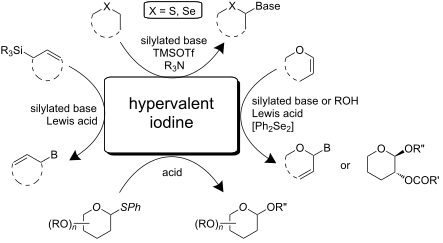
- by manipulations of 5. After acetal hydrolysis and the subsequent hydride reduction, 4-thioarabinose derivative 9 was obtained in good yield. Introduction of a TBDPS group at the primary hydroxy group of 9, oxidation and Wittig reaction, followed by deprotection of the benzyl group, gave allyl


A selective removal of the secondary hydroxy group from ortho-dithioacetal-substituted diarylmethanols
Beilstein J. Org. Chem. 2018, 14, 1229–1237, doi:10.3762/bjoc.14.105
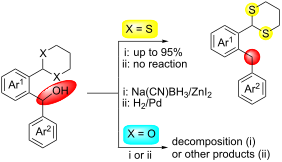
- bond and consequently the reduction of the former should a priori occur preferentially [53][54][55]. According to the best of our knowledge, there are no literature reports concerning selective reductions of dibenzylic hydroxy groups in the presence of ortho-acetal or ortho-thioacetal functions. Such
- , only few applications of the ZnI2-Na(CN)BH3 system in DCE have been described for reduction of diarylmethanols that do not contain acid-sensitive, formyl protecting, acetal or thioacetal groups [20][27][57][58][59][60] and for the reduction of aromatic aldehydes and ketones [28]. The bromo function in


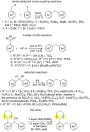


One hundred years of benzotropone chemistry
Beilstein J. Org. Chem. 2018, 14, 1120–1180, doi:10.3762/bjoc.14.98
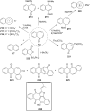
- ]annulenes as a novel series of potent and specific αv integrin antagonists starting from 4,5-benzotropone (11) (Figure 4 and Scheme 13) [73]. TBS-enol ether intermediate 68 was first formed by the Mukaiyama–Michael reaction of O-silyl ketene acetal to 4,5-benzotropone (11) at low temperature in the presence
- synthesis and cycloaddition of tropone ethylene acetal and benzotropone ethylene acetal 157 (Scheme 27) [133]. The ketal 157 was prepared from the reaction of 4,5-benzotropone (11) with ethylene glycol in the presence of triethyloxonium tetrafluoroborate. The cycloaddition of 157 with 4-phenyl-1,2,4
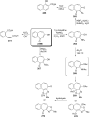
- to 2-cyclopentenone acetal (228) followed by hydrolysis and subsequent oxidation of the resultant ketone 229 with DDQ. Irradiation (>300 nm) of 230 in EPA (a 5:5:2 mixture of ether, isopentane, and ethanol) at −196 °C led to the formation of 13, which exhibited the development of characteristic UV








Selective carboxylation of reactive benzylic C–H bonds by a hypervalent iodine(III)/inorganic bromide oxidation system
Beilstein J. Org. Chem. 2018, 14, 1087–1094, doi:10.3762/bjoc.14.94
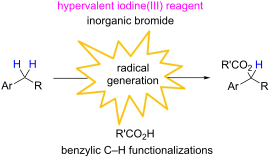
- acetoxylation at the activated benzyl carbon adjacent to an oxygen atom proceeded smoothly as shown by the formation of the pseudo acetal 2g (Table 2, entry 6). Diphenylmethane and its derivatives were very good substrates for our system and were less sensitive to the electronic effects of the aromatic ring





